Wednesday, April 16, 2008

Early Elephants Were Amphibious

Stable isotope evidence for an amphibious phase in early proboscidean evolution. 2008. A. G. S. C. Liu et al. PNAS 105: 5786-5791.


An artist's rendering shows an adult Moeritherium, an ancient elephant ancestor, with its calf. Image:L. B.-Nash, Stony Brook University/PNAS.
A new study of Moeritherium teeth suggests that it was semi-aquatic, eating freshwater plants and dwelling in swamps or river systems.
From National Geographic News:

Moeritherium lived some 37 million years ago, many millions of years after the genetic lineages of elephants and sirenians split. Moeritherium didn't much resemble modern elephants. It was probably about the size of a tapir—74 to 107 cm tall --at the shoulder. It seems to have lacked a trunk but may have had a prehensile upper lip.

World's Oldest Living Tree Discovered in Sweden


Swamp Thing © DC Comics
The world's oldest recorded tree is a 9,550 year old spruce in the Dalarna province of Sweden
From the press release:

The spruce tree has shown to be a tenacious survivor that has endured by growing between erect trees and smaller bushes in pace with the dramatic climate changes over time.

A fascinating discovery was made under the crown of a spruce in Fulu Mountain in Dalarna. Scientists found four “generations” of spruce remains in the form of cones and wood produced from the highest grounds.

The discovery showed trees of 375, 5,660, 9,000 and 9,550 years old and everything displayed clear signs that they have the same genetic makeup as the trees above them. Since spruce trees can multiply with root penetrating braches, they can produce exact copies, or clones.

The tree now growing above the finding place and the wood pieces dating 9,550 years have the same genetic material. The actual has been tested by carbon-14 dating at a laboratory in Miami, Florida, USA. Previously, pine trees in North America have been cited as the oldest at 4,000 to 5,000 years old.

Born This Day: Sir Hans Sloane

From Today In Science History:

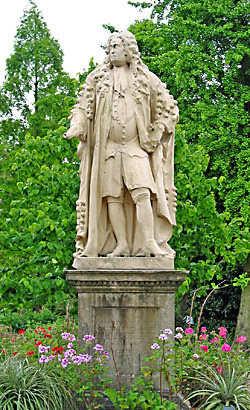
Sloane was a British physician and naturalist whose collection of books,manuscripts, and curiosities formed the basis for the British Museum in London. By the time he died, Sloane had amassed one of the world's largest and most varied collections of natural history specimens. His passion for the collection and his concern for its future upkeep after his death led him to write a will which clearly stated that it must "remain together and not be separated."

He offered it to the British nation, requesting in return a sum of £20,000 for his heirs. Parliament accepted, and King George II gave his royal assent 7 Jun 1753. Thus the British Museum was created and eventually its sister institution, the British Museum of Natural History. image

Died This Day: Comte Georges-Louis Buffon

Sept. 7, 1707 – April 16, 1788

From Today In Science History:

Buffon was a French naturalist, who formulated a crude theory of evolution and was the first to suggest that the earth might be older than suggested by the Bible. In 1739 he was appointed keeper of the Jardin du Roi, a post he occupied until his death. There he worked on a comprehensive work on natural history, for which he is remembered, Histoire naturelle, générale et particulière. He began this work in 1749, and it dominated the rest of his life. It would eventually run to 44 volumes, including quadrupeds, birds, reptiles and minerals. He proposed (1778) that the Earth was hot at its creation and, from the rate of cooling, calculated its age to be 75,000 years, with life emerging some 40,000 years ago.

More info on Buffon from UC-Berkeley.
Stamp from HERE.

Monday, April 14, 2008

Yaoming Hu Passes Away

From Yuanqing Wang via Jorn Hurum:

Dear friends of Yaoming Hu,

It is with deepest regret to announce the passing away of Dr. Yaoming Hu on April 12, 2008, at the age of 42 years, after a heavy illness. He was born on October 27, 1966 in Jiangsu, China. In 1988 he graduated from the Department of Geology of the Peking University, after a four years course in Geology. He was granted the degree of Master of Paleontology in the Institute of Vertebrate Paleontology and Paleoanthropology, Chinese Academy of Sciences in 1992, and the Ph. D. in Biology in the City University of New York in 2006.

Beginning in 1992 Yaoming was working at the Institute of Vertebrate Paleontology and Paleoanthropology of the Chinese Academy of Sciences, as a Research Assistant, an Assistant Research Professor, Associate Research Professor, and a Research Professor. During his scientific life he was engaged in studies on the Mesozoic and Paleogene mammals of China and became a well-known specialist on them. His contributions cover the anatomy, phylogeny, systematics, biostratigraphy and related issues of many Paleogene and Mesozoic mammal groups, including anaglids, yuomyid rodents, rhombomylid glires, leporid and ochotonid lagomorphs, repenomamid and gobiconodontid triconodonts, eobaatarid multituberculates, spalacotheriid symmetrodonts, and the gliding volaticotheriid, etc.

Yaoming has been a hard worker, entirely devoted to science. He had a very kind, serene and modest character, with unusual sense of humor. He had a happy family life with his wife Yanjie, and left behind a four-year-old son. He will be missed and long remembered by those of us who knew and loved him.

Ancient Dragon Has Space-Age Skull

The fearsome Komodo dragon is the world's largest living lizard and can take very large animal prey: now a new international study has revealed how it can be such an efficient killing machine despite having a wimpy bite and a featherweight skull.

Fing Fang Foom © Marvel Comics.
From the press release:

The Komodo dragon (Varanus komodoensis) grows to an average length of two to three metres and weighing around 70 kilograms. The reptile's unusual size is attributed to island gigantism, since there are no other carnivorous mammals to fill the niche on the islands where they live. As a result of their size, these lizards are apex predators, dominating the ecosystems in which they live. Although Komodo dragons eat mostly carrion, they will also hunt and ambush prey including invertebrates, birds, and mammals.

With ancestors dating back more than 100 million years, the dragon uses a combination of 60 razor-sharp serrated teeth, powerful neck muscles and what researchers are calling a "space-frame" skull to butcher prey with awesome efficiency, the study found.

They note that the dragon – inhabiting the central Indonesian islands of Komodo, Rinca, Flores, Gili Motang and Gili Dasami – shares the feeding and dental characteristics of extinct dinosaurs, sharks and sabre-toothed cats. Scientists have used a computer-based technique called Finite Element Analysis (FEA) to test the bite force and feeding mechanics of the predator. The results will be published in an upcoming issue of the Journal of Anatomy.

"The Komodo has a featherweight, space-frame skull and bites like a wimp," according to Wroe, "but a combination of very clever engineering, and wickedly sharp teeth, allow it to do serious damage to even buffalo-sized prey.

“The Komodo displays a unique [really, what about most predatory birds? ed.] hold and pull-feeding technique," says Dr Wroe. "Its delicate skull differs greatly from most living terrestrial large prey specialists, but it’s a precision instrument, beautifully optimised to make the most of its natural cranial and dental properties.

"Unlike most modern predators, Varanus komodoensis applies minimal input from the jaw muscles when killing and butchering prey. But it compensates using a series of actions controlled by its postcranial muscles. A particularly interesting feature of the skull's performance is that it reveals considerably lower overall stress when these additional forces driven by the neck are added to those of the jaw-closing muscles.

Saturday, April 12, 2008

John Agar's "Land of Kong"


Yup, that John Agar (The Mole People, Tarantula, Invisible Invaders, etc.) had a dino theme Park, Dinosaur World, that was originally called “John Agar’s Land of Kong”.

Thanks to Roadside Dinosaurs, and the original link I found at Secret Fun Blog that has lots of photos of the non-dino weirdness in addition to those above.

If Only.....!


Died This Day: Edward Drinker Cope

July 28, 1840 – April 12, 1897


Art © Mark Schultz
From NiagaraMuseum.com:
"What truly assured Cope's (above right) place in the history of paleontology and even eclipsed his science was his bitter feud with Yale University paleontologist O.C. Marsh (above left). What began as a friendly rivalry in the late 1860s, broke out into all out war in 1872 and then raged on until Cope's death in 1897. Both Cope and Marsh were recipients of family fortunes and they used their wealth to discover new fossils and to reconstruct ancient life. This scramble literally propelled American science into the forefront of paleontology."
Read about Cope HERE.

Friday, April 11, 2008

Palaeos on the Radio


Palaeos on the Radio:

Eric Snively on Quirks & Quarks talking about head-buttin' dinos.

Me on goofy AM radio talking about stuff.

Note: the links take you directly to the MP3 file, so if you've got a MP3 player on your computer it should load and start automatically.

(Dr. Evans - when do we get a link to the Rick Mercer Show?)

Hi, Dr. Nick!


Congratulations to Nick Longrich who successfully defended his Ph.D. at the University of Calgary yesterday!

Smaller, Gentler, Cretaceous Impact?

Determining Chondritic Impactor Size from the Marine Osmium Isotope Record. 2008. F. S. Paquay et al. Science 320: 214-218.


From National Geographic News:

Scientists working on the technique used chemical signatures in seawater and ocean sediments to study the dino-killing impact that occurred at the end of the Cretaceous period, about 65 million years ago.

In what could be a major scientific puzzle, the team's new size estimate for the dino-killing meteorite is a mere 4 to 6 kilometers across. The most recent computer models predicted a size of 15 to 19 kilometers across.

Abstract: Decreases in the seawater 187Os/188Os ratio caused by the impact of a chondritic meteorite are indicative of projectile size, if the soluble fraction of osmium carried by the impacting body is known.

Resulting diameter estimates of the Late Eocene and Cretaceous/Paleogene projectiles are within 50% of independent estimates derived from iridium data, assuming total vaporization and dissolution of osmium in seawater. The variations of 187Os/188Os and Os/Ir across the Late Eocene impact-event horizon support the main assumptions required to estimate the projectile diameter.

Chondritic impacts as small as 2 kilometers in diameter should produce observable excursions in the marine osmium isotope record, suggesting that previously unrecognized impact events can be identified by this method.

Heating Up The Cretaceous

Amplification of Cretaceous Warmth by Biological Cloud Feedbacks. 2008. L. R. Kump and David Pollard. Science 320: 195.

Abstract: The extreme warmth of particular intervals of geologic history cannot be simulated with climate models, which are constrained by the geologic proxy record to relatively modest increases in atmospheric carbon dioxide levels.

Recent recognition that biological productivity controls the abundance of cloud condensation nuclei (CCN) in the unpolluted atmosphere provides a solution to this problem.

Our climate simulations show that reduced biological productivity (low CCN abundance) provides a substantial amplification of CO2-induced warming by reducing cloud lifetimes and reflectivity. If the stress of elevated temperatures did indeed suppress marine and terrestrial ecosystems during these times, this long-standing climate enigma may be solved.

Wednesday, April 09, 2008

More Resolution for The Tree of Life

Broad phylogenomic sampling improves resolution of the animal tree of life. 2008. C. W. Dunn et al. Nature 452: 745-749.

The article I reported on HERE is now in print:

Abstract: Long-held ideas regarding the evolutionary relationships among animals have recently been upended by sometimes controversial hypotheses based largely on insights from molecular data. These new hypotheses include a clade of moulting animals (Ecdysozoa) and the close relationship of the lophophorates to molluscs and annelids (Lophotrochozoa).


Click To Enlarge
The figured topology and branch lengths are for the sampled tree with the highest likelihood (1,000 searches, log likelihood = –796,399.2). Support values are derived from 1,000 bootstrap replicates. Leaf stabilities are shown in blue above each branch. Taxa for which we collected new data are shown in green.
Many relationships remain disputed, including those that are required to polarize key features of character evolution, and support for deep nodes is often low. Phylogenomic approaches, which use data from many genes, have shown promise for resolving deep animal relationships, but are hindered by a lack of data from many important groups.

Here we report a total of 39.9 Mb of expressed sequence tags from 29 animals belonging to 21 phyla, including 11 phyla previously lacking genomic or expressed-sequence-tag data. Analysed in combination with existing sequences, our data reinforce several previously identified clades that split deeply in the animal tree (including Protostomia, Ecdysozoa and Lophotrochozoa), unambiguously resolve multiple long-standing issues for which there was strong conflicting support in earlier studies with less data (such as velvet worms rather than tardigrades as the sister group of arthropods), and provide molecular support for the monophyly of molluscs, a group long recognized by morphologists.

In addition, we find strong support for several new hypotheses. These include a clade that unites annelids (including sipunculans and echiurans) with nemerteans, phoronids and brachiopods, molluscs as sister to that assemblage, and the placement of ctenophores as the earliest diverging extant multicellular animals.


We came from where...? Art © Tom Bagley.
A single origin of spiral cleavage (with subsequent losses) is inferred from well-supported nodes. Many relationships between a stable subset of taxa find strong support, and a diminishing number of lineages remain recalcitrant to placement on the tree.

The Fingerprint of Evolution

RNA landscape of evolution for optimal exon and intron discrimination. 2008. C. Zhang et al. PNAS, to be published on-line, April 15
One of the steps in turning genetic information into proteins leaves ‘genetic fingerprints’, even on regions of the DNA that are not involved in coding for the final protein. They estimate that such fingerprints affect at least a third of the genome, suggesting that while most DNA does not code for proteins, much of it is nonetheless biologically important – important enough, that is, to persist during evolution.
To gauge how critical a particular stretch of DNA is, biologists often look at the detailed sequence of “letters” it consists of, and compare it with a corresponding stretch in related creatures like mice. If the stretch serves no purpose, the thinking goes, the two sequences will differ because of numerous mutations since the two species last shared an ancestor. In contrast, it’s believed that the sequences of important genes will be similar, or “conserved,” in different species, because animals with mutations in these genes did not survive. Biologists therefore regard conserved sequences as a sign of biological importance.

Even within a gene, stretches of DNA that code for pieces of the target protein are usually interspersed with much larger noncoding stretches, called introns, that are removed from the RNA working copy of the DNA before the protein is made.

Previous researchers assumed that mutations in the middle of introns do not affect the final protein, so they simply accumulate. In the new work, however, the researchers found signs that evolution rejects some types of mutations even in these regions of the genome. Although the selection is weak, “introns are not neutral,” in their effect on survival, says Michael Zhang.

The scientists found a preference for some “letters” across intron regions, and the opposite preference in coding regions. Together, these regions make up at least a third of the genome, which is thus under selective pressure during evolution. The result supports other recent studies that suggest that, although most DNA does not code for proteins, much of it is nonetheless biologically important.

Tuesday, April 08, 2008

New Mark Schultz Art


Art and Xenozoic Tales © & ™ Mark Schultz
Mark Schultz recently sent along this gorgeous image. It will be colored and issued as both a deluxe limited-edition print and an affordable poster this summer, by Flesk Publications.

New Revision of Iguanodonts

A revised taxonomy of the iguanodont dinosaur genera and species. 2007. Gregory S. Paul. Cretaceous Research 29: 192-216

Abstract: Criteria for designating dinosaur genera are inconsistent; some very similar species are highly split at the generic level, other anatomically disparate species are united at the same rank. Since the mid-1800s the classic genus Iguanodon has become a taxonomic grab-bag containing species spanning most of the Early Cretaceous of the northern hemisphere. Recently the genus was radically redesignated when the type was shifted from nondiagnostic English Valanginian teeth to a complete skull and skeleton of the heavily built, semi-quadrupedal I. bernissartensis from much younger Belgian sediments, even though the latter is very different in form from the gracile skeletal remains described by Mantell.


Currently, iguanodont remains from Europe are usually assigned to either robust I. bernissartensis or gracile I. atherfieldensis, regardless of location or stage. A stratigraphic analysis is combined with a character census that shows the European iguanodonts are markedly more morphologically divergent than other dinosaur genera, and some appear phylogenetically more derived than others.

Two new genera and a new species have been or are named for the gracile iguanodonts of the Wealden Supergroup:

1. The strongly bipedal Mantellisaurus atherfieldensis Paul (2006. Turning the old into the new: a separate genus for the gracile iguanodont from the Wealden of England. In: Carpenter, K. (Ed.), Horns and Beaks: Ceratopsian and Ornithopod Dinosaurs. Indiana University Press, Bloomington, pp. 69–77) (holotype BMNH R5764) which possesses a camptosaur-like ilial shape,

2. The long snouted, long bodied, small hipped, semi-bipedal Dollodon bampingi gen. nov. sp. nov. (holotype IRSNB 1551) which has a shallow ilium.

Insufficiently diagnostic I. hoggii is removed from the earlier Camptosaurus. Poorly described I. dawsoni, I. fittoni and I. hollingtoniensis are removed from the much later and more derived Iguanodon and considered Ornithopoda incertae sedis pending redescription. The synonymy of I. fittoni and I. hollingtoniensis has not been confirmed.

A set of remains of similar age to I. fittoni and I. hollingtoniensis appear to combine a specialized, elongate dentary with massive arms: it either belongs to one of the contemporary taxa, or is a new, unnamed taxon.

There has recently been a tendency to consider iguanodonts spatially remote from I. bernissartensis to be members of or very similar to the type species, but reanalysis finds that I. orientalis is not a junior synonym of I. bernissartensis and is a nomen dubium, and that basal I. lakotaensis is not a member of Iguanodon and accordingly is assigned the new genus Dakotadon gen. nov. (holotype SDSM 8656).

Dakotadon is probably basal to Iguanodon and not an iguanodontoid. The higher taxonomy of iguanodontoids is confused due to phylogenetic problems, and inconsistent definitions of the Iguanodontidae (which as currently defined appears to be limited to Iguanodon) and Hadrosauroidea. Mantellisaurus and especially Dollodon, for instance, are probably more derived than Iguanodon: they may be hadrosauroids depending on which phylogenetic definition of the term is preferred.

Monday, April 07, 2008

'Left-Handed' Aminio Acids Came From Space

In a report at the 235th national meeting of the American Chemical Society, Ronald Breslow, described how our “left-handed” amino acid signature came from outer space.

Chains of amino acids make up the protein found in people, plants, and all other forms of life on Earth. There are two orientations of amino acids, left and right, which mirror each other, known as “chirality.” In order for life to arise, proteins must contain only one chiral form of amino acids, left or right.

With the exception of a few right-handed amino acid-based bacteria, left-handed “L-amino acids” dominate on earth. The amino acids delivered to Earth by meteorite bombardments left us with those left-handed protein units.

“These meteorites were bringing in what I call the ‘seeds of chirality,’” stated Breslow. These amino acids “seeds” formed in interstellar space, possibly on asteroids as they careened through space. At the outset, they have equal amounts of left and right-handed amino acids. But as these rocks soar past neutron stars, their light rays trigger the selective destruction of one form of amino acid. The stars emit circularly polarized light—in one direction, its rays are polarized to the right. 180 degrees in the other direction, the star emits left-polarized light.

All earthbound meteors catch an excess of one of the two polarized rays. Breslow said that previous experiments confirmed that circularly polarized light selectively destroys one chiral form of amino acids over the other. The end result is a five to ten percent excess of one form, in this case, L-amino acids. Evidence of this left-handed excess was found on the surfaces of these meteorites, which have crashed into Earth even within the last hundred years, landing in Australia and Tennessee.

On the prebiotic Earth, this transfer left a slight excess of left-handed amino acids, Breslow said. Experimental evidence indicates that only a 5% excess of left-handed amino acids was enough for it to become ubiquitous as it was used selectively by living organisms. link

Sunday, April 06, 2008

Created This Day: The AMNH

In 1869, the American Museum of Natural History in New York City was officially created with the signing of a bill by the Governor of New York, John Thompson Hoffman.

The museum began from the efforts of Albert Smith Bickmore, one-time student of Harvard zoologist Louis Agassiz, who was successful in his proposal to create a natural history museum in New York City, with the support of William E. Dodge, Jr., Theodore Roosevelt, Sr., Joseph Choate, and J. Pierpont Morgan. It opened to the public 27 Apr 1871.

With a series of exhibits, the Museum’s collection went on view for the first time in the Central Park Arsenal, the Museum’s original home, on the eastern side of Central Park.

Also, on this day in 1930, Hostess Twinkies were invented by bakery executive James Dewar.

From Today in Science History.

Saturday, April 05, 2008

Mongolia To Erect Monument To The Beatles


From the not-quite-completely right translation:

A monument will be erected to the famous "Beatles" group in Ulaanbaatar city, the capital of Mongolia.

In support of the initiative, Prime Minister S.Bayar attended Friday a news conference called on this matter. Saying that the Beatles launched a globalization process, Mr. Premier told that he has been listening the Beatles' sings for over 40 years.

Standing close to a guitar sculptures of four "Beatles" will be made of bronze. Songs of Beatles and of Mongolian groups and singers will sound all day through. Over MNT 100 million is required for this project. On April 26, a donation concert will be given.

I checked the date of this and it was not April 1st. Original link here.

Founded This Day: The British Museum

From Today in Science History:

In 1753, the British Museum was founded by an Act of Parliament. Since then, the museum has been collecting, conserving and studying millions of artifacts. The British Museum was among the first museums to recognize that in-house scientific expertise was essential, both for the care of its collections and for their proper interpretation. Its Research Laboratory was founded in 1920 with the appointment of Dr Alexander Scott as its first scientist.

Friday, April 04, 2008

Jaw Mechanics of the Marsupial Lion, Thylacoleo

Cranial mechanics compared in extinct marsupial and extant African lions using a finite-element approach. 2008. S. Wroe. Journal of Zoology 274(4): 332–339.


Abstract: Few species have generated more or longer running controversy than Australia's extinct marsupial lion Thylacoleo carnifex (Owen, 1859). Over the last century and a half, feeding behaviours as disparate as osteophagy and specialized herbivory have been suggested and T. carnifex has been placed in both phalangeriform and vombatiform clades.

Phylogenetic placement remains uncertain, but broad consensus has been achieved regarding diet, with all recent authors agreeing that T. carnifex was a carnivore. However, the marsupial lion's extraordinary cranial and dental morphologies remain without clear analogy, leaving many questions unanswered regarding how this most atypical mammalian predator killed its prey.

Here I apply a rapidly emerging new approach in comparative biology, finite-element analysis, to the examination of cranial mechanics in T. carnifex. Comparisons are made with an extant lion Panthera leo (Linnaeus, 1758) under simulations designed to model stress distributions imposed by biting (intrinsic loads) and interaction with struggling prey (extrinsic loads).

Modelling that approximates the 3-D architecture of jaw adductors suggests that both the placental and marsupial lions could generate considerably greater bite forces than has been predicted using 2-D approaches, but with relatively greater forces in the marsupial. The distribution of cranial stress is in many respects similar in both species, but results from simulations of extrinsic forces suggest that the marsupial was particularly well adapted to resist the high stresses that would be expected in dealings with relatively large prey.

On the other hand, relatively high stress recorded in the rostrum of T. carnifex under intrinsic loadings suggests that it may have deployed a very different modus operandi, wherein the carnassial teeth played an active role in effecting a kill.

Thursday, April 03, 2008

Born This Day: Ralph A. Bagnold

April 3, 1896 - May 28, 1990

From the always excellent Today in Science History:

English geologist who was a leading authority on the mechanics of sediment transport, especially eolian (wind) transport. While serving as a soldier in Egypt prior to WW II, Bagnold first studied sand dune formation and movement. After retiring from the army (1935), he continued his research and wrote the book "Physics of Blown Sand and Desert Dunes", investigating the physics of particles moving through the atmosphere and deposited by wind.


Art © Darwyn Cooke. Sand Seref & The Spirit © Estate of Will Eisner
He recognized two basic dune types, the crescentic dune, which he called "barchan," and the linear dune, which he called longitudinal or "sief" (Arabic for "sword"). During WW II, his avocational interest in vehicle performance on blowing sand aided the Allies in North Africa.

Jeff Wilson Lecture Today at Case


“Monoliths of the Mesozoic: sauropod dinosaur paleobiology”
If you’re in Cleveland today, Dr. Jeff Wilson from Michigan State University University of Michigan is giving a Biology departmental seminar at 4:15pm, DeGrace Hall, Rm 312 on the Case Western Reserve Campus.

Update: Jeff gave a great talk, as usual! I owe him dinner (at least!) for making him wait to meet up with me this morning. Sorry again, Jeff!

International Congress on Vertebrate Paleobiogeography - Bologna 2009


The Giovanni Capellini Museum of Geology and Palaeontology in Bologna (Italy) is organizingan International Congress that will focus on "Vertebrate palaeobogeography across Tethys, Mesogea, and the Mediterranean Sea" to be held on 28-29 September 2009.

The Conference will follow the Symposium of Vertebrate Palaeontology being hosted by the University of Bristol (U.K.) during 23 - 26 September 2009, in order to offer to participants from all over the world the opportunity to attend two meetings while in Europe.

For more info contact federico.fanti at unibo dot it

Wednesday, April 02, 2008

Stick Insects Support Darwin

Ecological Niche Dimensionality and the Evolutionary Diversification of Stick Insects. 2008. P. Nosil and Cristina P. Sandoval. PLoS ONE 3(4): e1907.

In the first experiment of its kind conducted in nature, an evolutionary biologist has come up with strong evidence for one of Charles Darwin’s cornerstone ideas – adaptation to the environment accelerates the creation of new species.
From the press release:

“A single adaptive trait such as color could move a population towards the process of forming a new species, but adaptation in many traits may be required to actually complete the formation of an entirely new species,” says Patrik Nosil. “The more ways a population can adapt to its unique surroundings, the more likely it will ultimately diverge into a separate species.”

Nosil studied walking-stick insects in the Santa Barbara Chaparral in southern California. Stick insects cannot fly and live and feed on their host plants. Different “eco-types” of walking-stick insects are found on different plants and exhibit different color patterns that match the features of their host plants. For example, insects of the cristinae eco-type, which feed on plants with needle-like leaves, have a white line along their green bodies.

By displacing some eco-types away from their customary host plants and protecting others from their natural predators, Nosil found that color pattern alone could initiate speciation, while natural selection on additional adaptive traits such as the ability to detoxify different host-plant chemicals are required to “seal the deal,” or complete the speciation process initiated by differences in color pattern.

“Natural selection has been widely regarded as the cause of adaptation within existing species while genetics and geography have been the focus of most current research on the driving force of speciation,” says Nosil.

Halszka Osmólska 1930 - 2008

From Zofia Kielan-Jaworowska:

It is with deepest regret to announce the death of Professor Halszka Osmólska on March 31, 2008, at the age of 78 years, after a heavy illness. She was born on September 15, 1930 in Poznań, Poland. In 1952 she graduated from the Faculty of Biology and Earth Sciences of the Poznań University, after a three years course in biology, and then moved to Warsaw, where in 1955 she was granted the degree of Master of Biological Sciences at the University of Warsaw, and in 1962 the Ph. D. in Biological Sciences at the Faculty of Geology of the same University.

Beginning with 1955 she was working at the Institute of Paleobiology of the Polish Academy of Sciences in Warsaw, as an assistant professor, associate professor, docent and a full professor. In 1974 -- 1983 she was the deputy director of the Institute, and in 1984-1989 the director. In 1975 -- 1992 she was the editor of /Acta Palaeontologica Polonica/. She was a member of various scientific societies and committees.

During the first half of her scientific life she was engaged in studies on the Late Devonian and Carboniferous trilobites of Poland and Eurasia and became a well-known specialist on them. Beginning with 1969 she changed her scientific interests and started to study the Late Cretaceous dinosaurs and other reptiles from the Gobi Desert, and soon became an authority in this field. She was a co-author and co-editor (with David W, Weishampel and Peter Dodson) of the famous book "The Dinosauria", published by the University of California Press. The first edition of the book was published in 1990, the second in 2004.

Halszka has been a hard worker, entirely devoted to science. She had a very kind and serene character, with unusual sense of humor, and modesty. She had a long and happy family life with her late husband Tadeusz, and left behind the son, daughter-in-law, and three grandchildren. She will be missed and long remembered by those of us
who knew and loved her.

Today In History: DNA Double Helix Described

From Today in Science History:


On this day in 1953, the journal Nature published a paper from Francis Crick and James Watson, titled Molecular Structure of Nucleic Acids: A Structure for Deoxyribose Nucleic Acid, in which they described a double helix structure for DNA.

Tuesday, April 01, 2008

Seeing Fossil in Opaque Amber

Phase Contrast X-ray Synchrotron Imaging: Opening Access to Fossil Inclusions in Opaque Amber. M. Lak et al. Microscopy and Microanalysis (in press).


From the press release:

Paleontologists have applied to opaque amber a synchrotron X-ray imaging technique known as propagation phase contrast microradiography to look into the interior of opaque amber. Once discovered on the radiographs, some of the organisms were imaged in three dimensions and virtually extracted from the resin.

The scientists imaged 640 pieces of amber from the Charentes region in southwestern France. They discovered 356 fossil animals, going from wasps and flies, to ants or even spiders and acarians. The team was able to identify the family of 53% of the inclusions.

Most of the organisms discovered are tiny. For example, one of the discovered acarians measures 0.8 mm and a fossil wasp is only 4 mm. “The small size of the organisms is probably due to the fact that bigger animals would be able to escape from the resin before getting stuck, whereas little ones would be captured more easily”, explains Malvina Lak.


Click to enlarge
Examples of virtual 3D extraction of organisms embedded in opaque amber: a) Gastropod Ellobiidae; b) Myriapod Polyxenidae; c) Arachnid; d) Conifer branch (Glenrosa); e) Isopod crustacean Ligia; f) Insect hymenopteran Falciformicidae. Credits: M. Lak, P. Tafforeau, D. Néraudeau (ESRF Grenoble and UMR CNRS 6118 Rennes).

Monday, March 31, 2008

Korea-Mongolia International Dinosaur Project


In 2006 and 2007 I had the pleasure of working in Mongolian with the Korea-Mongolia International Dinosaur Project set up by Yuong Nam Lee with Philip Currie and Dr. Barsbold (I’ve posted on it before on this blog).

Yuong now has the official web page up HERE and it includes some of the video that I shot.

You can see more about my past Gobi fieldwork HERE.

You can join me for this year’s Nomadic Expeditions trip to the Gobi. Drop me a line through this Blog or the CMNH for more info.

Sunday, March 30, 2008

Proposed This Day: Geological Classification

In 1759, Italian geologist Giovanni Arduino (1714-1795) dated a letter to Professor A.Vallisneri the younger, in which Arduino proposed a classification of Earth's surface rocks according to four brackets of successively younger orders: Primary, Secondary, Tertiary and Quaternary. These are the four geological eras used today.

Wonder Woman © DC Comics, Feb., 1954
The volcanic rocks without fossils which he saw in the Atesine Alps that formed the cores of large mountains he called Primary. Overlying them, the fossil rich rocks of limestone and clay that were found on the prealpine flanks of the mountains he called Secondary. The less consolidated fossil-bearing rocks of the subalpine foothills, he named Tertiary, and the alluvial rock deposits in the plains were the Quaternary. link.

Saturday, March 29, 2008

Living Fossil Still Lives In Australia

Australia's Oldest Marsupial Fossils and their Biogeographical Implications. 2008. R. M. D. Beck et al. PLoS ONE 3(3)


From the press release:

The fossilised ankle and ear bones found on an Australian farm are those of Australia's earliest known marsupial, Djarthia, a primitive mouse-like creature that lived 55 million years ago.

A new study in the journal PLoS ONE has confirmed that Djarthia is also a primitive relative of the small marsupial known as the Monito del Monte – or "little mountain monkey" – from the dense humid forests of Chile and Argentina.

"The fossil ankle and ear bones of Djarthia make it clear that the Monito del Monte descends from a Djarthia-like ancestor, and so probably returned to South America from Australia before Gondwana broke up. The continents have been separated by deep ocean since about 40 million years ago."

Like the Monito del Monte, Djarthia was a little larger than a mouse and, likewise, its ankle bones show adaptations for climbing trees. It probably had a similar diet as well: the Monito del Monte eats insects and other small invertebrates and some fruits.

The Monito del Monte is nocturnal and its agility and prehensile tail make it an excellent climber. Females carry up to five young in a well-developed pouch.

Friday, March 28, 2008

Not A Triceratops


This photo of a "Triceratops" bone found on a bus in Peru(?) that has been making the rounds is not from a horned dinosaur, despite what the local officials think. Some guy at National Geographic News even goes on record saying that it's not.

Evolution 2008


Evolution 2008, June 20-24, 2008

The University of Minnesota, the Bell Museum of Natural History and its College of Biological Sciences is pleased to host “Evolution 2008," the joint annual meeting of the Society for the Study of Evolution (SSE), the Society of Systematic Biologists (SSB), and the American Society of Naturalists (ASN).

The meeting will be held on the Minneapolis campus of the University of Minnesota.

Head-Butting Pachycephalosaurs

Structural mechanics of pachycephalosaur crania
permitted head-butting behavior
. 2008. Eric Snively and Andrew Cox. Paleontologia Electronica 11 (Free PDF HERE)


Dome-headed pachycephalosaurus might have passed through a combative teenage stage in which they butted heads in violent clashes.
Our friend, Eric Snively, is in the news again. Since I can’t find the press release on either the U of A or Villanova web sites (for shame!), I’ve taken this from LiveScience.com:

To conjure the head-butting scenario, Snively and Cox developed computer models of the skulls of Homalocephale colathoceros and Pachycephalosaurus wyomingensis as well as a skull of a Pachycephalosaurine sub-adult. They based the models on photographs and reconstructions of the skulls.

They simulated the animals moving with closing speeds of both 6.7 mph and 15 mph (3 meters per second and 6.7 m/s), the latter being the maximum ramming speed given the likely hip heights and limb proportions of pachycephalosaurs. The resulting smash-ups provided information on the amount of force, how that stress was distributed along the skulls and ultimately the post-ramming state of the skulls.

The resulting force would rattle any football player today, but in the dino world, human linebackers would have packed a wimpy punch. "The highest forces we got for a large pachycephalosaur were about 14,000 Newtons, or about as much as T. rex would exert with one of its back teeth," Snively said.

"The stresses in big adults were usually far below those that would break the bone," Snively said. However, he noted, research by Goodwin and Jack Horner of Montana State University's Museum of the Rockies has shown that an adult pachycephalosaur would've had almost no blood vessels embedded in its dome.

"I would still argue that there is no evidence to support head-butting in pachycephalosaurs," said Goodwin, who was not involved in the current study.

Thursday, March 27, 2008

New Brazilian Croc - Guarinisuchus munizi

New dyrosaurid crocodylomorph and evidences for faunal turnover at the K–P transition in Brazil. 2008. J.A. Barbosa et al. Proc. Royal Soc. B. Published on-line March 25.

From AFP (Rio de Janeiro):
A fossil of a new species of prehistoric crocodile found in Brazil has led scientists to believe the reptile benefited from the extinction of dinosaurs to migrate from across the Atlantic.
Guarinisuchus munizi -- the "warrior of the seas," as the crocodile has been dubbed -- is believed to have had its origins in Africa some 200 million years ago. But the remains of a jaw, skull and vertebra discovered in Palaeocene deposits of northeastern Brazil suggests the species set off for new territory 62 million years ago, according to researchers.


"They left the African continent and are believed to have occupied zones in South America, and later regions in North America," paleontologist Maria Somalia Viana told a media conference in Rio de Janeiro.

The reptile, which grew to around three meters (10 feet) and was perfectly adapted to living in the ocean, apparently took advantage of the extinction of bigger marine lizards called mosasaurs to dominate the waters, another paleontologist, Alexander Kellner, said.

Wednesday, March 26, 2008

The First Hominin of Europe

The first hominin of Europe. 2008. Eudald Carbonell et al. Nature 452: 465-469.


a, Frontal view. Arrowheads point to the position of the anterior marginal tubercle, and the arch of the marked incisura submentalis. b, Superior view. Arrowheads point to the mental protuberance, the subvertical alveolar planum and the slight alveolar prominence. c, Median sagittal cross-section of the symphysis based on a three-dimensional computed tomography reconstruction. d, Distal view of the LP4 of ATE9-1. e, Occlusal view of the LP4; mesiodistal dimension: 8.9 mm; buccolingual dimension: 11.4 mm (estimated).
Abstract: The earliest hominin occupation of Europe is one of the most debated topics in palaeoanthropology. However, the purportedly oldest of the Early Pleistocene sites in Eurasia lack precise age control and contain stone tools rather than human fossil remains.

Here we report the discovery of a human mandible associated with an assemblage of Mode 1 lithic tools and faunal remains bearing traces of hominin processing, in stratigraphic level TE9 at the site of the Sima del Elefante, Atapuerca, Spain. Level TE9 has been dated to the Early Pleistocene (approximately 1.2–1.1 Myr), based on a combination of palaeomagnetism, cosmogenic nuclides and biostratigraphy. The Sima del Elefante site thus emerges as the oldest, most accurately dated record of human occupation in Europe, to our knowledge.

The study of the human mandible suggests that the first settlement of Western Europe could be related to an early demographic expansion out of Africa. The new evidence, with previous findings in other Atapuerca sites (level TD6 from Gran Dolina), also suggests that a speciation event occurred in this extreme area of the Eurasian continent during the Early Pleistocene, initiating the hominin lineage represented by the TE9 and TD6 hominins.

Earth - Heavy Metal = Delayed Origin of Life

Tracing the stepwise oxygenation of the Proterozoic ocean. 2008. C. Scott et al. Nature 452: 456-459.


A deficiency of oxygen and the heavy metal molybdenum in the ancient deep ocean may have delayed the evolution of animal life on Earth for nearly two billion years.
From the press release:

Following the initial rise of oxygen in the Earth’s atmosphere 2.4 billion years ago, oxygen was transferred to the surface ocean to support oxygen-demanding micro-organisms. However, the diversity of these single-celled life forms remained low, and their multi-cellular ancestors (animals) did not appear until about 600 million years ago.

For animal life to commence, survive and eventually expand on Earth, a threshold amount of oxygen – estimated to be on the order of 1 to 10 percent of present atmospheric levels of oxygen – was needed.

Suspecting that deficiencies in oxygen and molybdenum might explain this evolutionary lag, the team measured the abundance of molybdenum in ancient marine sediments over time to estimate how much of the metal had been dissolved in the seawater in which the sediments formed.


Black circles are euxinic examples; grey diamonds refer to non-euxinic, organic-rich shales. The gradient represents the diffuse stage 1–2 boundary as defined in the text. The arrow marks the Mount McRae 'whiff' interval7; the dashed area is the Great Oxidation Event as defined by the multiple sulphur isotope record.
By tracking molybdenum in shales rich in organic matter, researchers found the deep ocean remained oxygen and molybdenum-deficient after the first step. This condition may have had a negative impact on the evolution of early eukaryotes, our single-celled ancestors. The molybdenum record also shows that the deep ocean only became fully oxygenated by around 550 million years ago.

According to this research, the timing of the oxygenation steps suggests that significant events in Earth’s history are related. Scientists have long speculated that the evolution of the first animals was somehow linked to the so-called Snowball Earth hypothesis, where the Earth was covered from pole to pole in a thick sheet of ice for millions of years. Oxygenation of the oceans and the evolution of animal life occurred shortly after the last of Earth’s global glaciations.

Died This Day: James Hutton

June 3, 1726 – March 26, 1797

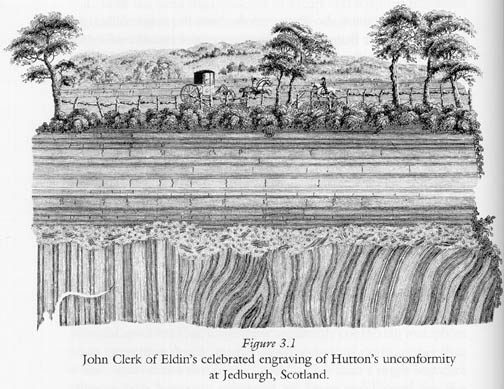
Hutton is the 'Father of Uniformitarianism' which explains the features of the Earth's crust by means of natural processes over geologic time. Link


More Info Here

Tuesday, March 25, 2008

The taxonomic status of Megalosaurus bucklandii

The taxonomic status of Megalosaurus bucklandii (dinosauria, theropoda) from the middle Murassic of Oxfordshire, UK. 2008. R. B. J. Benson et al. Palaeontology 51: 419-424.


Abstract: The lectotype of the Middle Jurassic theropod dinosaur Megalosaurus bucklandii, a right dentary, can be diagnosed on the basis of two unique characters: a longitudinal groove on the ventral part of the lateral surface of the dentary and a slit-like anterior Meckelian foramen. This taxon, the first dinosaur to be scientifically described, is therefore valid.


Currently, however, no further material can be referred to this species with any certainty. Megalosaurus bucklandii occupies an uncertain systematic position but is not an abelisaurid or coelophysoid. Additionally, it does not possess the diagnostic dentary characters that are present in all known spinosauroids. Owing to this uncertainty, use of the family Megalosauridae should be discontinued until such time as its systematic position becomes clearer.

Monday, March 24, 2008

The World's Oldest Plant-Eating Lizard

An early herbivorous lizard from the lower Cretaceous of Japan. 2008. S. Evans and M. Manabe. Palaeontology 51: 487–498.


Kuwajimalla kagaensis. Image courtesy Utako Kikutani
From National Geographic News:

The 130-million-year-old jaw and skull bones from the oldest known plant-eating lizard, Kuwajimalla kagaensis, were unearthed in the Ishikawa Prefecture of Japan.

Prior to the new discovery, the oldest known plant-eating lizard was Dicothodon, which lived in North America about 100 million years ago. Even today, fully herbivorous, or plant-eating, lizards are rare, with only about 3 percent of modern lizards belonging to the group. Most lizards eat flesh, usually insects, or a combination of flesh and plants.

Thus the new fossil species could indicate that angiosperms were already in existence and perhaps widespread millions of years earlier than had been thought, the researchers say.

Currently the oldest evidence a flowering plant is a 125-million-year-old fossil from China.

Permian Extinction Not Due To Hydrogen Sulphide

End-Permian ozone shield unaffected by oceanic hydrogen sulphide and methane releases. 2008. Michael B. Harfoot et al. Nature Geoscience Published online: 23 March 2008


Scientists have ruled out a key hypothesis to explain Earth's greatest extinction, when 95 percent of marine species and 70 percent of land species were wiped out at the end of the Permian 250 million years ago.
From Physorg.com:

Researchers have now ruled out a leading theory that the oceans became starved of oxygen and rich with sulphide, causing marine life to die out. This theory suggests that clouds of hydrogen sulphide, produced as a by-product of intense vulcanism, poisoned life, and by attacking the ozone layer, allowed solar radiation to destroy its DNA.

According to their calculations, the lower levels of the atmosphere in the tropics would have acted as an oxidising buffer, preventing the hydrogen sulphide from seriously damaging the ozone layer.

"These gases seem unlikely to be the cause of coincident terrestrial biotic extinctions," the paper says.

Other theories for the extinction include an asteroid or a long period of vulcanism which caused a lethal mixture of acid rain and global warming.

Saturday, March 22, 2008

World's Oldest Easter Bunny

Early Eocene lagomorph (Mammalia) from Western India and the early diversification of Lagomorpha. K. Rose, et al., Proc. Royal Soc. B., published on-line Tuesday, February 19, 2008


Bones photographs courtesy Rose et al.
Bones that a scientist picked up on a trip to India (including the above ankle bones, far left) were later deemed to be the oldest known rabbit bones ever found, a new study says. The ancient rabbit would not likely have looked similar to the modern-day Spider-Man ‘villian’, White Rabbit (right).

The new bones also show that advanced rabbit-like features evolved earlier than thought—as far back as the early Eocene, which lasted from 54.8 to 33.7 million years ago, experts say.

Born This Day: Adam Sedgwick

March 22, 1785 - January 27, 1873

From Today In Science History:

Adam Sedgwich was an English geologist who first applied the name Cambrian to the geologic period of time, now dated at 570 to 505 million years ago. In 1818 he became Woodwardian Professor of Geology at Cambridge, holding a chair that had been endowed ninety years before by the natural historian John Woodward.

He lacked formal training in geology, but he quickly became an active researcher in geology and paleontology. Many years after Sedgwick's death, the geological museum at Cambridge was renamed the Sedgwick Museum of Geology in his honor. The museum is now part of the Department of Earth Sciences at Cambridge University

Metabolic Rates and Body Scaling

Effects of metabolic level on the body size scaling of metabolic rate in birds and mammals. 2008. D.S. Glazier. Proc. Royal Soc. B., published on-line Tuesday, March 18, 2008


Abstract: Metabolic rate is traditionally assumed to scale with body mass to the 3/4-power, but significant deviations from the ‘3/4-power law’ have been observed for several different taxa of animals and plants, and for different physiological states.

The recently proposed ‘metabolic-level boundaries hypothesis’ represents one of the attempts to explain this variation. It predicts that the power (log–log slope) of metabolic scaling relationships should vary between 2/3 and 1, in a systematic way with metabolic level.

Here, this hypothesis is tested using data from birds and mammals. As predicted, in both of these independently evolved endothermic taxa, the scaling slope approaches 1 at the lowest and highest metabolic levels (as observed during torpor and strenuous exercise, respectively), whereas it is near 2/3 at intermediate resting and cold-induced metabolic levels.

Remarkably, both taxa show similar, approximately U-shaped relationships between the scaling slope and the metabolic (activity) level. These predictable patterns strongly support the view that variation of the scaling slope is not merely noise obscuring the signal of a universal scaling law, but rather is the result of multiple physical constraints whose relative influence depends on the metabolic state of the organisms being analysed.