Friday, March 21, 2008

Krazy Kat: July 6, 1941


Our heroes: Krazy Kat, Ignatz Mouse (with brick) & Officer Pupp.
The July 6, 1941, colour Sunday page (below) comes from arguably the greatest comic strip ever (I would agree), “Krazy Kat”, taken from the Fantagraphics collection, “Krazy & Ignatz: A Ragout of Raspberries”, by George Herriman.


CLICK TO ENLARGE AND READ IN ALL ITS GLORY.
Krazy Kat was set in the mythical and ever changing desert landscape of Coconino County somewhere more or less in Arizona, and the stark beauty of its landscapes informed the strip and its inhabitants.

Pretty much every strip revolved around the desire of a mouse (Ignatz) to bean the Kat (Krazy) with a brick, and the need of the dog (Officer Pupp) to prevent this and put the mouse in jail. Complicating matters is the fact that Krazy is smitten with Ignatz and takes being beaned by the mouse as a sign of affection, much to the chagrin of Pupp who is sweet on Krazy -- ah, the sad beauty of life.

Herriman was part cartoonist & part poet, and ranks up there with Walt Whitman and Mark Twain as a genius storyteller and observer of the human condition. The strip ran from the 1920’s to 1944, always exclusively in Randolph Hearst’s newspapers.

The strip can look somewhat crude to the uninitiated eye, but its charm will win over the discerning mind. In this episode the eternal story of [Mouse + Brick + Kat] plays out even in the fossilized bones of the past.
I’m out of the office over Easter. I’ll post when I can; otherwise I should be back in a week or so

Orrorin tugenensis & The Origin of Bipedalism

Orrorin tugenensis Femoral Morphology and the Evolution of Hominin Bipedalism. 2008. Brian G. Richmond and William L. Jungers. Science 319: 1662 – 1665.


Abstract: Bipedalism is a key human adaptation and a defining feature of the hominin clade. Fossil femora discovered in Kenya and attributed to Orrorin tugenensis, at 6 million years ago, purportedly provide the earliest postcranial evidence of hominin bipedalism, but their functional and phylogenetic affinities are controversial.

We show that the O. tugenensis femur differs from those of apes and Homo and most strongly resembles those of Australopithecus and Paranthropus, indicating that O. tugenensis was bipedal but is not more closely related to Homo than to Australopithecus.


Femoral morphology indicates that O. tugenensis shared distinctive hip biomechanics with australopiths, suggesting that this complex evolved early in human evolution and persisted for almost 4 million years until modifications of the hip appeared in the late Pliocene in early Homo.

Earth's 565 Million Year Old Complex Ecosystem

Synchronous Aggregate Growth in an Abundant New Ediacaran Tubular Organism. 2008. Mary L. Droser and James G. Gehling. Science 319: 1660 – 1662.


Funisia dorothea seen branching in a fossil excavated in South Australia. Image credit: Droser lab, UC Riverside.
Two paleontologists studying ancient fossils they excavated in the South Australian outback argue that Earth’s ecosystem has been complex for hundreds of millions of years – at least since around 565 million years ago.
From the press release:

But in describing the ecology and reproductive strategies of Funisia dorothea, a tubular organism preserved as a fossil, the researchers found that the organism had multiple means of growing and propagating – similar to strategies used by most invertebrate organisms for propagation today.

Funisia dorothea grew in abundance, covering the seafloor, during the Neoproterozoic, a 100 million-year period ending around 540 million years ago in Earth’s history, during which no predators were around.


Droser and Gehling observed that Funisia appears as 30 cm-long tubes in the fossils. They also observed that the tubes commonly occur in closely-packed groups of five to fifteen individuals, displaying a pattern of propagation that often accompanies animal sexual reproduction.

“In Funisia, we are very likely seeing sexual reproduction in Earth’s early ecosystem – possibly the very first instance of sexual reproduction in animals on our planet.”

According to Droser and Gehling, the clusters of similarly sized individuals of Funisia are strongly suggestive of “spats,” huge numbers of offspring an organism gives birth to at once. Besides producing spats, the individual tubular organisms reproduced by budding, and grew by adding bits to their tips.

“Among living organisms, spat production results almost always from sexual reproduction and only very rarely from asexual reproduction,” Droser said.

Thursday, March 20, 2008

Betsy's Plesiosaur, Nichollsia borealis

Nichollsia borealis, one of the oldest and most complete plesiosaur fossils recovered in North America, and the oldest yet discovered from the Cretaceous Period, was uncovered in a Syncrude Canada Ltd. mine near Fort McMurray, Alberta, in 1994.


Two U of Calgary scientists, Dr. Patrick Druckenmiller and Dr. Anthony Russell have named the 2.6m long plesiosaur Nichollsia borealis in memory of the late Elizabeth (Betsy) Nicholls, former curator at the Royal Tyrrell Museum of Palaeontology. Nicholls was a renowned palaeontologist who is credited with transforming the understanding of prehistoric ocean life by describing the largest-ever marine reptile, a 23-metre-long ichthyosaur, discovered in northern British Columbia in 1999.


Elizabeth (Betsy) Nicholls conducting field work in northeastern B.C. Photo:Rolex Awards/Tomas Bertelsen.

“We chose this name because Betsy was a key player in the study of marine reptiles, a mentor to me, a former student of Tony, and a great person,” said Druckenmiller, who is now Curator of Earth Sciences at the University of Alaska Museum of the North in Fairbanks, Alaska. “We felt it was a fitting way to honour both her memory and her accomplishments in palaeontology.”

The fossil was discovered by machine operators Greg Fisher and Lorne Cundal in 1994 during routine mining operations at Syncrude’s Base Mine, about 35 kilometres north of Fort McMurray near the Athabasca River. Amazingly, the specimen was serendipitously exposed by one of Syncrude’s 100-ton electric shovels approximately 60 metres below ground surface. It is complete except for its left forelimb and shoulder blade.

Nichollsia is also very significant because it fills a 40-million-year gap in the plesiosaur fossil record and greatly increases the understanding of the ancient seaway that once split North America in two and whose shores abounded with dinosaurs.

“This individual was a pioneer in the marine waters that would eventually become the Cretaceous Western Interior Seaway, which ran the length of North America during much of the Cretaceous and was home to one of the world’s most diverse communities of marine reptiles,” Druckenmiller said. “It represents the oldest known forerunner of this amazing period in North American prehistory.”

Nichollsia borealis is currently on display in the Discoveries Gallery at the Royal Tyrrell Museum. The paper is published in Palaeontographica Abteilung A, but I can’t find a doi for it.

Balloon Dinosaurs


One of the staff here at the museum knows Swifty the Clown, balloon sculptor extraordinaire. I’m impressed with anyone that can make life size dinosaur balloon sculptures.

Weird Lemurs

New hand bones of Hadropithecus stenognathus: implications for the paleobiology of the Archaeolemuridae. 2008. P. Lemelin et al. J. of Human Evolution 54: 405-413.


The first handbones of Hadropithecus. Photo by Dr. Pierre Lemelin, U. of Alberta.

From the press release:
Analysis of the first hand bones belonging to an ancient lemur has revealed a mysterious joint structure that has scientists puzzled.
Researchers analyzed the first hand bones ever found of Hadropithecus stenognathus, a lemur that lived 2,000 years ago. The bones were discovered in 2003 in a cave in southeastern Madagascar, an island nation off the coast of Africa in the Indian Ocean. Hadropithecus is related to the modern-day sifaka, a type of lemur with acrobatic leaping skills.

Examination revealed a never-before-seen hand joint configuration on the side of the little finger. The same joint configuration is straight in all other primates, including Archaeolemur, a close extinct relative of Hadropithecus. The hand bones also showed that Hadropithecus had very short thumbs and was a quadrupedal species, walking on all fours, much like many primates, such as baboons, do today.

“Our analysis showed a mosaic of lemurid-like, monkey-like and very unique morphological traits,” Lemelin said. Hadropithecus also lacked anatomical traits linked with wrist mobility and strong finger flexion that characterize primate species that climb or cling to trees.

Wednesday, March 19, 2008

1953 Dino Laff


It’s a slow news day and I’m too busy to blog, so here’s an item from Tom Bagley, from a story called, “The Silent Clock”. According to Tom, “the story is from Horrific #3 (infamous bullet-in-the-head cover),but the artist is uncredited.

Go check out The Seven Deadly Sinners where Tom and 6 other artistic sinners blog.

Tuesday, March 18, 2008

Genetic Drift Explains Differences Between Neanderthals & Modern Humans

Close correspondence between quantitative-and molecular-genetic divergence times for Neandertals and modern humans. 2008. T. D. Weaver et al. PNAS, published on-line March 17, 2008.

From the press release:

New research adds to the evidence that chance, rather than natural selection, best explains why the skulls of modern humans and ancient Neanderthals evolved differently. The findings may alter how anthropologists think about human evolution.

The study builds on findings from a study published last year in the Journal of Human Evolution, in which the team compared cranial measurements of 2,524 modern human skulls and 20 Neanderthal specimens. The researchers concluded that random genetic change, or genetic drift, most likely account for the cranial differences.

In their new study, Weaver and his colleagues crunched their fossil data using sophisticated mathematical models -- and calculated that Neanderthals and modern humans split about 370,000 years ago. The estimate is very close to estimates derived by other researchers who have dated the split based on clues from ancient Neanderthal and modern-day human DNA sequences.

The close correlation of the two estimates -- one based on studying bones, one based on studying genes -- demonstrates that the fossil record and analyses of DNA sequences give a consistent picture of human evolution during this time period.

"A take-home message may be that we should reconsider the idea that all morphological (physical) changes are due to natural selection, and instead consider that some of them may be due to genetic drift," Weaver said. "This may have interesting implications for our understanding of human evolution."

Image label:The approximate locations of the cranial measurements used in the analyses are superimposed as red lines on lateral (A), anterior (B), and inferior (C) views of a human cranium. (National Academy of Sciences, PNAS (Copyright 2008)/image)

Increasing Complexity With Evolution

Increasing morphological complexity in multiple parallel lineages of the Crustacea. 2008. S. J. Adamowicz et al. PNAS, published online on March 17, 2008


First ‘rule’ of evolution suggests that life is destined to become more complex
From the press release:

Researchers have found evidence which suggests that evolution drives animals to become increasingly more complex. Looking back through the last 550 million years of the fossil catalogue to the present day, the team investigated the different evolutionary branches of the crustacean family tree.

They found organisms with increasingly more complex structures and features, suggesting that there is some mechanism driving change in this direction.

“If you start with the simplest possible animal body, then there’s only one direction to evolve in – you have to become more complex,” said Dr Matthew Wills. “Sooner or later, however, you reach a level of complexity where it’s possible to go backwards and become simpler again.

“What’s astonishing is that hardly any crustaceans have taken this backwards route. Instead, almost all branches have evolved in the same direction, becoming more complex in parallel.”

“Of course, there are exceptions within the crustacean family tree, but most of these are parasites, or animals living in remote habitats such as isolated marine caves. This is the nearest thing to a pervasive evolutionary rule that’s been found."

Prehistoric Pacman Skull


I'm not sure where this is from originally, but Mike Skrepnick pointed me to HERE

Monday, March 17, 2008

Using Feathers To See

Mechanosensory function for facial ornamentation in the whiskered auklet, a crevice-dwelling seabird. 2008. Sampath S. Seneviratne and Ian L. Jones. Behavioral Ecology, advance access published online on March 7, 2008.


From Nature News:
Biologists have shown that the whiskered auklet uses the plumes on its head like a cat’s whiskers to feel its way through dark crevices.
Summary (from the journal): Showy head plumes in birds are generally thought to be ‘sexy ornaments’ used as a display to seduce choosers and for assessment of the presenter, and thus have evolved as a product of mate choice. An overlooked possibility is that these elongated feathers are used to detect immediate surroundings to facilitate obstacle avoidance through their sensitivity to pressure or touch. We tested this hypothesis using whiskered auklets (Aethia pygmaea), a small, nocturnal seabird that nests in deep rock crevices and has spectacular facial ornaments, including a long forward-curving forehead crest and whisker-like white plumes.

The birds were exposed to an experimental maze devoid of any visible light that simulated the structure and conditions of breeding crevices. With the protruding crest and facial plumes taped down, birds had a 275% increase in head bumps with the walls and roof of the maze. Without the aid of the crest, naturally long-crested birds had more frequent head bumps than short-crested individuals.

These results suggest that whiskered auklet’s elongated feather adornments have a touch sense use for orientation in darkness underground. In addition, individuals with longer ornaments depend more on these traits for navigation. More widely, other bird species inhabiting cluttered environments would benefit from the elongated facial plumage that mechanically detects surrounding obstacles.

Premiered This Day (1970): When Dinosaurs Ruled The Earth


A sequel of sorts to Hammer Films, One Million Years B.C. (1966), WDRTE was directed by Val Guest and based on a story by J.G. Ballard who also invented the 27 word caveman language used in the film. The animated dinosaurs by Jim Danforth were nominated for an Oscar for visual effects.

Sunday, March 16, 2008

Homo floresiensis a Cretin?

Are the small human-like fossils found on Flores human endemic cretins?. 2008. P.J. Obendorf et al. Proceedings of the Royal Society B: Tuesday, March 04, 2008.


Abstract: Fossils from Liang Bua (LB) on Flores, Indonesia, including a nearly complete skeleton (LB1) dated to 18kyr BP, were assigned to a new species, Homo floresiensis. We hypothesize that these individuals are myxoedematous endemic (ME) cretins, part of an inland population of (mostly unaffected) Homo sapiens. ME cretins are born without a functioning thyroid; their congenital hypothyroidism leads to severe dwarfism and reduced brain size, but less severe mental retardation and motor disability than neurological endemic cretins.

We show that the fossils display many signs of congenital hypothyroidism, including enlarged pituitary fossa, and that distinctive primitive features of LB1 such as the double rooted lower premolar and the primitive wrist morphology are consistent with the hypothesis.

We find that the null hypothesis (that LB1 is not a cretin) is rejected by the pituitary fossa size of LB1, and by multivariate analyses of cranial measures. We show that critical environmental factors were potentially present on Flores, how remains of cretins but not of unaffected individuals could be preserved in caves, and that extant oral traditions may provide a record of cretinism.

“1-2-3-4, cretins wanna hop some more!”

Friday, March 14, 2008

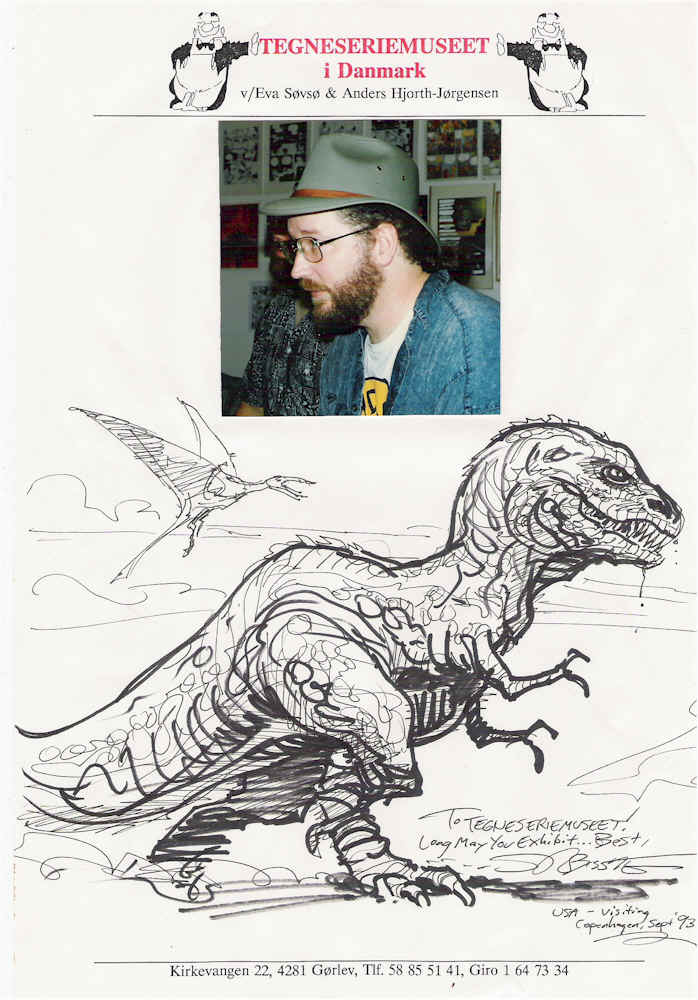
Happy Birthday Steve Bissette!


S. R. Bissette’s Tyrant is © & ® S. R. Bissette.

Steve has an always interesting blog, MyRant, that is worth a read.

Image from HERE.

Thursday, March 13, 2008

Happy Birthday Philip Currie!

Tetsuto sent along this U of A VP group greeting for Phil & told me that I could post it. So I am.


From R to L on the back row, Michael Newbrey (a postdoc at the Wilson lab/Tyrrell), Mark Wilson, Miriam Reichel, Victoria Arbour, Derek Larson, and Eric Snively. From R to L in the front, Tetsuto Miyashita, Lara Shychoski, Michael Burns, Robin Sissons, and Brian Rankin

This, apparently, is an outtake:


Oh, those crazy kids!

New Primative Jurassic Turtle, Condorchelys antiqua

A new, nearly complete stem turtle from the Jurassic of South America with implications for turtle evolution. 2008. Julia Sterli. Biology Letters, Published Monday, March 10, 2008.


Abstract: Turtles have been known since the Upper Triassic (210Myr old); however, fossils recording the first steps of turtle evolution are scarce and often fragmentary. As a consequence, one of the main questions is whether living turtles (Testudines) originated during the Late Triassic (210Myr old) or during the Middle to Late Jurassic (ca 160Myr old).

The discovery of the new fossil turtle, Condorchelys antiqua gen. et sp. nov. from the Middle to Upper Jurassic (ca 160–146Myr old) of South America (Patagonia, Argentina), presented here sheds new light on early turtle evolution. An updated cladistic analysis of turtles shows that C. antiqua and other fossil turtles are not crown turtles, but stem turtles. This cladistic analysis also shows that stem turtles were more diverse than previously thought, and that until the Middle to Upper Jurassic there were turtles without the modern jaw closure mechanism.

The Sex Life of Pterosaurs

Developmental growth patterns of the filter-feeder pterosaur, Pterodaustro guiñazui. 2008. A.Chinsamy et al. Biology Letters, Thursday, February 28, 2008.


Pterodaustro guiñazui illo by Stephanie Abramowicz/Courtesy of the Dinosaur Institute, NHM, LA County.
Pterosaurs, like their dinosaur relatives, didn't wait until they were fully grown to have sex, a new study suggests.
Abstract: Life-history parameters of pterosaurs such as growth and ontogenetic development represent an enigma. This aspect of pterosaur biology has remained perplexing because few pterosaur taxa are represented by complete ontogenetic series. Of these, Pterodaustro is unique in that besides being represented by hundreds of individuals with wing spans ranging from 0.3 to 2.5m, it includes an embryo within an egg. Here we present a comprehensive osteohistological assessment of multiple skeletal elements of a range of ontogenetic sizes of Pterodaustro, and we provide unparalleled insight into its growth dynamics.

We show that, upon hatching, Pterodaustro juveniles grew rapidly for approximately 2 years until they reached approximately 53% of their mature body size, whereupon they attained sexual maturity. Thereafter, growth continued for at least another 3–4 years at comparatively slower rates until larger adult body sizes were attained. Our analysis further provides definitive evidence that Pterodaustro had a determinate growth strategy.

Organic Soup Rained Down on Primordial Earth

Indigenous amino acids in primitive CR meteorites. 2008. Z. Martins et al. Meteoritics and Planetary Science.


The organic soup that spawned life on Earth may have gotten generous helpings from outer space, according to a new study. Scientists have discovered concentrations of amino acids in two meteorites that are more than ten times higher than levels previously measured in other similar meteorites. This result suggests that the early solar system was far richer in the organic building blocks of life than scientists had thought, and that fallout from space may have spiked Earth’s primordial broth.

For the amino acid study, the researchers took small samples from three meteorites of a rare type called CR chondrites, thought to contain the oldest and the most primitive organic materials found in meteorites. CR chondrites date from the time of the solar system’s formation. During an early phase of their history the meteorites were part of a larger “parent body,” such as an asteroid, which later was shattered by impacts.

“The amino acids probably formed within the parent body before it broke up,” says Alexander. “For instance. ammonia and other chemical precursors from the solar nebula, or even the interstellar medium, could have combined in the presence of water to make the amino acids. Then, after the break up, some of the fragments could have showered down onto the Earth and the other terrestrial planets. These same precursors are likely to have been present in other primitive bodies, such as comets, that were also raining material onto the early Earth.”

Wednesday, March 12, 2008

Malcolm C. McKenna Passes Away

From Roger Thomas of the Paleontological Society:

Malcolm C. McKenna has died at the age of 77 in Boulder, Colorado, ending a long and every productive career as a distinguished scholar and enthusiastic mentor of younger paleontologists.

Malcolm McKenna was a long-time member of
our society, with which he remained associated up to the time of his death.

In 1992, Malcolm McKenna was awarded the Paleontological Society Medal in recognition of his important contributions to the paleontology, relating most notably to the systematics, biogeography and evolution of Cenozoic mammals. A detailed appreciation of McKenna’s work up to that time, by John Flynn, with a response by McKenna, appears in the Journal of Paleontology 67 (4): 688-690.

Some of you may also have seen the obituary by John Noble Wilford that appeared on page A19 of the New York Times, on Monday, March 10.

New Info on Digit Formation

Unique SMAD1/5/8 activity at the phalanx-forming region determines digit identity. 2008. T. Suzuki et al. PNAS, Published online on March 11, 2008.


Observations on heterotopic graphs of subridge mesenchyme (A), high magnification of phosphorylated SMAD1/5/8 immunoreactivity (B)

Studying the embryonic chick foot, the developmental biologists have come up with a model that explains how digits grow and why each digit is different from the others.

They have shown that growth begins in a portion of the developing digit they have named the phalanx-forming region (PFR). They illustrated that phalanges, structures that later become finger or toe bones, arise not from cartilage cells but from mesenchymal cells. And they discovered that a complex array of signals from a variety of genes at different times combine to form each phalanx.

In birds and mammals, digits arise in the mitten-shaped autopod, or developing foot, which consists of two alternating regions. The digital rays, made up of cartilage and mesenchyme, become the phalanges in the adult chicken's toes. These alternate with the interdigits, also consisting of mesenchymal tissue, which fill the space between the digit rays and eventually regress.

"Our studies showed that a specific region of mesenchymal cells in the digital ray receive the interdigital signal, and that BMP receptor signaling in this region plays a central role in the process," notes Fallon. "Changes in the levels of signaling lead to different developmental outcomes."

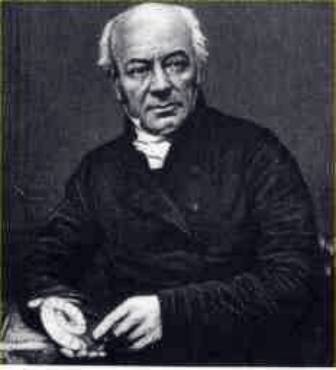
Born This Day: William Buckland

March 12, 1784 – August 15, 1856

From The Victorian Web: Buckland was the first man to identify and name a dinosaur (Megalosaurus), although the name dinosaur had not yet been coined by Richard Owen. Partly in response to the controversial works of Cuvier, Buckland wrote Reliquiae Diluvianae (1823) in which he argued that the evidence of geology alone demonstrated that a great flood had covered the entire globe. This move helped to make geology look more respectable in a religiously conservative England and perhaps to advance Buckland's own career at Oxford by making geology appear to be a respectable companion to the classics.

Buckland was a bit of an eccentric, given to outlandish dress and behavior. Although Buckland was immensely influential as a scientist, his rakish reputation gave many of his staid early Victorian contemporaries considerable difficulty in accepting his work.

More info from HERE. Image from HERE

Tuesday, March 11, 2008

Died This Day: Roy Chapman Andrews

(Jan.26, 1884-Mar.11, 1960)

American naturalist, explorer, and author, who spent his entire career at the American Museum of Natural History. He led many important scientific expeditions with financial support through his public lectures and books, particularly in central Asia and eastern Asia. On his 1925 central Asian expedition, the first known dinosaur eggs were discovered,as well as skull and parts of Baluchitherium, the largest known land mammal. During his career Andrews was the museum's best promoter, creating immense excitement and successfully advancing research there. link

Andrews was also acknowledged as one of the more important inspirations for the creation of the character of Indiana Jones.

Monday, March 10, 2008

ROM Travel Grant Due Saturday


David Evans (L) & Peter May
From David Evans at the Royal Ontario Museum:

M.A. Fritz Travel Grants for the Advancement of Studies in Palaeontology
The Palaeobiology Division of the Royal Ontario Museum’s Department of Natural History is pleased to announce the launch of the annual M.A. Fritz Travel Grants for the Advancement of Studies in Palaeontology. Funded through an endowment created by Madeleine A. Fritz, former curator at the ROM, two awards will be given annually to help offset the costs of visiting and studying ROM palaeontology collections; one award will be for invertebrate fossil study and the other for vertebrate fossil study.

More info HERE.

Note: Deadline: March 15, 2008

David has promised to buy lunch for all successful applicants.

Journey To the Inner Inner Core of the Earth

The inner inner core of the Earth: Texturing of iron crystals from three-dimensional seismic anisotropy. 2008. X. Sun and X. Song. Earth and Planetary Science Letters. Available online 19 February, 2008.


Cave Carson © DC Comics
From the press release:

Scientists have confirmed the discovery of Earth’s inner, innermost core, and have created a three-dimensional model that describes the seismic anisotropy and texturing of iron crystals within the inner core.

Using both newly acquired data and legacy data collected around the world, Song and postdoctoral research associate Xinlei Sun painstakingly probed the shape of Earth’s core.

Composed mainly of iron, Earth’s core consists of a solid inner core about 2,400 kilometers in diameter and a fluid outer core about 7,000 kilometers in diameter. The inner core plays an important role in the geodynamo that generates Earth’s magnetic field.

The solid inner core is elastically anisotropic; that is, seismic waves have different speeds along different directions. The anisotropy has been found to change with hemisphere and with radius. What they found was a distinct change in the inner core anisotropy, clearly marking the presence of an inner inner core with a diameter of about 1,180 kilometers, slightly less than half the diameter of the inner core.

The layering of the core is interpreted as different texturing, or crystalline phase, of iron in the inner core, the researchers say.

Thomas Jefferson on Megaloynx

From Today In Science History:

On this day in 1797, Thomas Jefferson (1743-1826) presented a paper on Megalonyx to the American Philosophical Society. It was published as "A Memoir on the Discovery of Certain Bones of a Quadruped of the Clawed Kind in the Western Parts of Virginia," Transactions of American Philosophical Society 4:255-256, along with an account by Caspar Wistar (1761-1818). In 1822, this huge extinct sloth was named Megalonyx jeffersoni by a French naturalist.

The species name Megalonyx is derived from the Greek language and refers to the large claw on the third digit of each of the sloths hind feet. It was a bear-sized ground sloth, over 2 meters tall, widespread in North America during the last Ice Age. Image from HERE

Sunday, March 09, 2008

Ancient Bats from Cairo


Ancient bat god from Egypt.
From National Geographic:

Six new species of ancient bat dating back 35 million years have been discovered in Egypt, researchers say will be described in an upcoming issue of the Journal of Vertebrate Paleontology.

The new species were found by experts who analyzed 33 fossils—including teeth and jawbones—that had been unearthed over a period of decades in El Faiyum, an oasis region 50 miles southwest of Cairo.


Illustration by Bonnie Miljour
The experts were also surprised to find that the new species were similar to some modern-day microbats, a group of bats that uses sonar waves to navigate and hunt in a process called echolocation.

From the 33 fragments, experts determined that at least six distinct species could be parsed out.

(Nothing beats parsing data!)

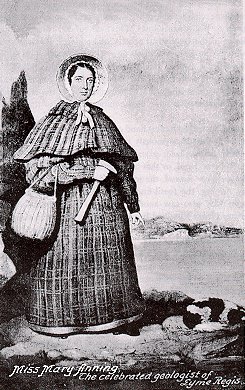
Died This Day: Mary Anning

From Today in Science History:

Mary Anning (May, 21 1799 - March 9, 1847)

English fossil collector who made her first significant discovery at the age of 11 or 12 (sources differ on the details), when she found a complete skeleton of an Ichthyosaurus, from the Jurassic period. The ten-meter (30 feet) long skeleton created a sensation and made her famous. Anning's determination and keen scientific interest in fossils derived from her father's interest in fossil hunting, and a need for the income derived from them to support her family after his death in 1810.

She sold large fossils to noted paleontologists of the day, and smaller ones to the tourist trade. In 1823, Anning made another great discovery, found the first complete Plesiosaurus. Later in her life, the Geological Society of London granted Anning an honorary membership.

Friday, March 07, 2008

The Amazing Missing Links


The latest issue of New Scientist (March 1-7,2008) on the newsstands has a cover article by Don Prothero on “what is a missing link”, and gives succinct, well-illustrated accounts of his ‘Top 10”.


CLICK TO ENLARGE

Born This Day: Stanley Lloyd Miller

From Today in Science History:

Miller (b.1930) is an American chemist who made a series of famous experiments beginning in 1953, to determine the possible origin of life from inorganic chemicals on the primeval earth. He passed electrical discharges (simulating thunderstorms) through mixtures of reducing gases, such as hydrogen, ammonia, methane and water, that were believed to have formed the earliest atmosphere.

An analysis days later showed that the resulting chemicals included glycine and alanine, the simplest amino acids & the basic building blocks of proteins. Other compounds included urea, aldehydes and carboxylic acids. Thus, a "primeval soup" is the currently accepted most plausible explanation, though incomplete, of the origin of the complex organic molecules of life.

Thursday, March 06, 2008

New Light on The Tree of Life

Broad phylogenomic sampling improves resolution of the animal tree of life. 2008. C. W. Dunn et al. Nature, early
on-line publication.


From the press release:

The most comprehensive animal phylogenomic research project to date, involving 40 million base pairs of new DNA data taken from 29 animal species, settles some long-standing debates about the relationships between major groups of animals and offers up a few surprises.

The big shocker: Comb jellyfish – common and extremely fragile jellies with well-developed tissues – appear to have diverged from other animals even before the lowly sponge, which has no tissue to speak of. This finding calls into question the very root of the animal tree of life, which traditionally placed sponges at the base.

“This finding suggests either that comb jellies evolved their complexity independently from other animals, or that sponges have become greatly simplified through the course of evolution. If corroborated by other types of evidence, this would significantly change the way we think about the earliest multicellular animals,” said Dunn.

Charles Darwin introduced the idea of a “tree of life” in his seminal book Origin of Species. A sketch of the tree was the book’s only illustration. Nearly 150 years after its publication, many relationships between animal groups are still unclear. While enormous strides have been made in genomics, offering up a species’ entire genome for comparison, there are millions of animal species on the planet. There simply isn’t the time to sequence all these genomes.

The research also:

•unambiguously confirmed certain animal relationships, including the existence of a group that includes invertebrates that shed their skin, such as arthropods and nematodes;

•convincingly resolved conflicting evidence surrounding other relationships, such as the close relationship of millipedes and centipedes to spiders rather than insects;

•established new animal relationships, such as the close ties between nemerteans, or ribbon worms, and brachiopods, or two-shelled invertebrates.

Tuesday, March 04, 2008

The Oldest North American Primate

The oldest North American primate and mammalian biogeography during the Paleocene–Eocene Thermal Maximum. 2008. K. C. Beard. PNAS, published online on March 3, 2008.

The tiny, 55-million-year-old creature raises the controversial possibility that primates arrived in the Americas thousands of years before they reached Europe
Abstract: Undoubted primates first appear almost synchronously in the fossil records of Asia, Europe, and North America. This temporal pattern has complicated efforts to reconstruct the early dispersal history of primates in relation to global climate change and eustatic fluctuations in sea level. Here, I describe fossils from the Tuscahoma Formation on the Gulf Coastal Plain of Mississippi documenting an anatomically primitive species of Teilhardina that is older than other North American and European primates.


Teilhardina magnoliana image courtesy of PNAS/National Academy of Sciences

Consistent with its antiquity, a phylogenetic analysis of dental characters recognizes Teilhardina magnoliana, sp. nov., as the most basal member of this genus currently known from either North America or Europe. Its stratigraphic provenance demonstrates that primates originally colonized North America near the base of the Paleocene–Eocene Thermal Maximum (PETM), but before an important fall in eustatic sea level. Correlation based on carbon isotope stratigraphy and sequence stratigraphy indicates that the earliest North American primates inhabited coastal regions of the continent for thousands of years before they were able to colonize the Rocky Mountain Interior.

The transient provincialism displayed by early North American primates corresponds to similar biogeographic patterns noted among fossil plants. Decreased precipitation in the Rocky Mountain Interior during the early part of the PETM may have been an important factor in maintaining biotic provincialism within North America at this time. These results underscore the need to obtain multiple, geographically dispersed records bearing on significant macroevolutionary events such as the PETM.

Sunday, March 02, 2008

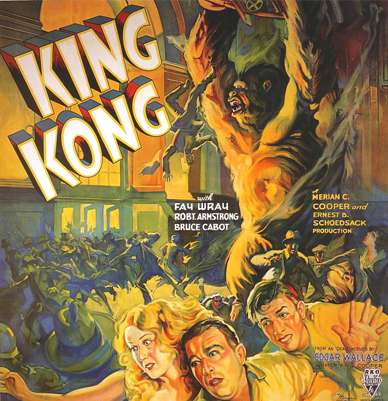
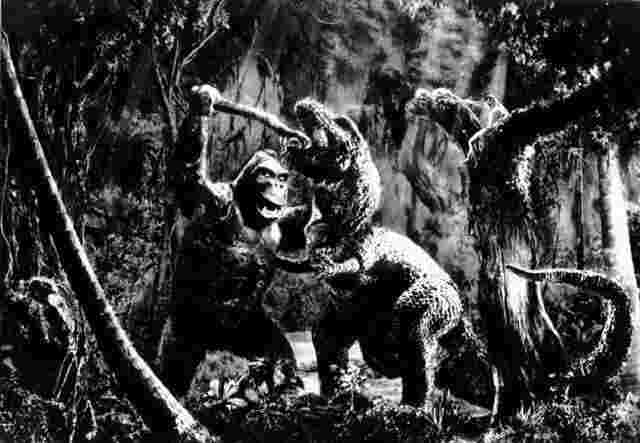
75 Years Ago Today King Kong Was Unleashed On NYC


The movie King Kong was one of the most successful films released in 1933. It went on to inspire many young fans (both in its initial release, numerous re-releases, and on television) to take up the professions of either film-making or paleontology. The field of dinosaur paleobiology would be very different today if King Kong had never met Fay Wray on Skull Island "way west of Sumatra" and been taken to the concrete jungle of New York.

In a remarkable coincidence the artist, Willis O'Brien, who created and brought Kong to life, celebrated his 47th birthday on the day the movie debuted in New York City.

Thanks to Tim Cole for the head's up on this date.

Born This Day: Father of King Kong

A tip of the fedora to the late, great Willis O'Brien who breathed life into the fur and armature that become King Kong, the Seventh Wonder of the World!


His biography from Leonard Maltin's Movie Encyclopedia:

Willis O'Brien (March 2, 1886 - November 8, 1962)
Special effects wizard best known to the world as the man who
created King Kong.
O'Brien was a sculptor and cartoonist for the San Francisco "Daily News" before he first dabbled in the medium of film during the 'teens. His work caught the attention of the Edison company, for whom he produced several short subjects with a prehistoric them. Titles include The Dinosaur and the Missing Link, RFD 10,000 B.C and Prehistoric Poultry. His method of animating small rubber figures, carefully molded over metal skeletons with movable joints, by moving them a fraction of an inch for each frame of film exposed, became the standard process of live-action animation.

In 1918 he made his most ambitious film yet, The Ghost of Slumber Mountain paving the way for The Lost World (1925), a major Hollywood feature which told of a search for prehistoric creatures. O'Brien's dinosaurs were his most realistic yet, and still impress today, even in the wake of Jurassic Park Still, Obie (as he was known) kept experimenting.


When producer Merian C. Cooper saw his work, he hired O'Brien to animate King Kong (which, up to that point, was to have been shot with an actor in a gorilla suit). The extraordinary success of King Kong (1933) spawned an immediate sequel, The Son of Kong (also 1933), and made O'Brien a hero to several generations of fantasy filmmakers to come. O'Brien won his only Oscar for his effects in Mighty Joe Young (1949), another giant-monkey movie, on which his protégé (and successor) Ray Harryhausen worked.

O'Brien worked on other giant-monster movies (including 1957's The Black Scorpion his last) before dying in 1962. Today, O'Brien would be kingpin of his own studio, but even in the wake of King Kong he had trouble launching other film projects, and many promising ideas languished on studio drawing boards for decades to follow. One of the RKO staff with whom he'd worked in the 1930s, Linwood Dunn, gave O'Brien his final employment, doing stop-motion figures for It's a Mad Mad Mad Mad World (1963).


In 1950 O'Brien received (finally!) a special Oscar for his work on Mighty Joe Young which was the first such award ever given for special effects. This film also launched the career of the next great stop-motion animator, Ray Harryhausen.

Saturday, March 01, 2008

Rapid Evolution in Tuatara

Rapid molecular evolution in a living fossil. 2008. J. M. Hay et al. Trends in Genetics 24: 106-109.


From the press release:

In a study of New Zealand’s “living dinosaur” the tuatara has recovered DNA sequences from the bones of ancient tuatara up to 8000 years old. They found that although tuatara, have remained largely physically unchanged over very long periods of evolution, they are evolving - at a DNA level - faster than any other animal yet examined.

The tuatara, Sphendon punctatus, is found only in New Zealand and is the only surviving member of a distinct reptilian order, Sphehodontia, that lived alongside early dinosaurs and separated from other reptiles 200 million years ago in the Upper Triassic period.

“What we found is that the tuatara has the highest molecular evolutionary rate that anyone has measured,” Professor Lambert says.


“Of course we would have expected that the tuatara, which does everything slowly – they grow slowly, reproduce slowly and have a very slow metabolism – would have evolved slowly. In fact, at the DNA level, they evolve extremely quickly, which supports a hypothesis proposed by the evolutionary biologist Allan Wilson, who suggested that the rate of molecular evolution was uncoupled from the rate of morphological evolution.”

“We want to go on and measure the rate of molecular evolution for humans, as well as doing more work with moa and Antarctic fish, to see if rates of DNA change are uncoupled in these species. There are human mummies in the Andes and some very good samples in Siberia where we have some collaborators, so we are hopeful we will be able to measure the rate of human evolution in these too.”