Thursday, March 20, 2008

Betsy's Plesiosaur, Nichollsia borealis

Nichollsia borealis, one of the oldest and most complete plesiosaur fossils recovered in North America, and the oldest yet discovered from the Cretaceous Period, was uncovered in a Syncrude Canada Ltd. mine near Fort McMurray, Alberta, in 1994.


Two U of Calgary scientists, Dr. Patrick Druckenmiller and Dr. Anthony Russell have named the 2.6m long plesiosaur Nichollsia borealis in memory of the late Elizabeth (Betsy) Nicholls, former curator at the Royal Tyrrell Museum of Palaeontology. Nicholls was a renowned palaeontologist who is credited with transforming the understanding of prehistoric ocean life by describing the largest-ever marine reptile, a 23-metre-long ichthyosaur, discovered in northern British Columbia in 1999.


Elizabeth (Betsy) Nicholls conducting field work in northeastern B.C. Photo:Rolex Awards/Tomas Bertelsen.

“We chose this name because Betsy was a key player in the study of marine reptiles, a mentor to me, a former student of Tony, and a great person,” said Druckenmiller, who is now Curator of Earth Sciences at the University of Alaska Museum of the North in Fairbanks, Alaska. “We felt it was a fitting way to honour both her memory and her accomplishments in palaeontology.”

The fossil was discovered by machine operators Greg Fisher and Lorne Cundal in 1994 during routine mining operations at Syncrude’s Base Mine, about 35 kilometres north of Fort McMurray near the Athabasca River. Amazingly, the specimen was serendipitously exposed by one of Syncrude’s 100-ton electric shovels approximately 60 metres below ground surface. It is complete except for its left forelimb and shoulder blade.

Nichollsia is also very significant because it fills a 40-million-year gap in the plesiosaur fossil record and greatly increases the understanding of the ancient seaway that once split North America in two and whose shores abounded with dinosaurs.

“This individual was a pioneer in the marine waters that would eventually become the Cretaceous Western Interior Seaway, which ran the length of North America during much of the Cretaceous and was home to one of the world’s most diverse communities of marine reptiles,” Druckenmiller said. “It represents the oldest known forerunner of this amazing period in North American prehistory.”

Nichollsia borealis is currently on display in the Discoveries Gallery at the Royal Tyrrell Museum. The paper is published in Palaeontographica Abteilung A, but I can’t find a doi for it.

Balloon Dinosaurs


One of the staff here at the museum knows Swifty the Clown, balloon sculptor extraordinaire. I’m impressed with anyone that can make life size dinosaur balloon sculptures.

Weird Lemurs

New hand bones of Hadropithecus stenognathus: implications for the paleobiology of the Archaeolemuridae. 2008. P. Lemelin et al. J. of Human Evolution 54: 405-413.


The first handbones of Hadropithecus. Photo by Dr. Pierre Lemelin, U. of Alberta.

From the press release:
Analysis of the first hand bones belonging to an ancient lemur has revealed a mysterious joint structure that has scientists puzzled.
Researchers analyzed the first hand bones ever found of Hadropithecus stenognathus, a lemur that lived 2,000 years ago. The bones were discovered in 2003 in a cave in southeastern Madagascar, an island nation off the coast of Africa in the Indian Ocean. Hadropithecus is related to the modern-day sifaka, a type of lemur with acrobatic leaping skills.

Examination revealed a never-before-seen hand joint configuration on the side of the little finger. The same joint configuration is straight in all other primates, including Archaeolemur, a close extinct relative of Hadropithecus. The hand bones also showed that Hadropithecus had very short thumbs and was a quadrupedal species, walking on all fours, much like many primates, such as baboons, do today.

“Our analysis showed a mosaic of lemurid-like, monkey-like and very unique morphological traits,” Lemelin said. Hadropithecus also lacked anatomical traits linked with wrist mobility and strong finger flexion that characterize primate species that climb or cling to trees.

Wednesday, March 19, 2008

1953 Dino Laff


It’s a slow news day and I’m too busy to blog, so here’s an item from Tom Bagley, from a story called, “The Silent Clock”. According to Tom, “the story is from Horrific #3 (infamous bullet-in-the-head cover),but the artist is uncredited.

Go check out The Seven Deadly Sinners where Tom and 6 other artistic sinners blog.

Tuesday, March 18, 2008

Genetic Drift Explains Differences Between Neanderthals & Modern Humans

Close correspondence between quantitative-and molecular-genetic divergence times for Neandertals and modern humans. 2008. T. D. Weaver et al. PNAS, published on-line March 17, 2008.

From the press release:

New research adds to the evidence that chance, rather than natural selection, best explains why the skulls of modern humans and ancient Neanderthals evolved differently. The findings may alter how anthropologists think about human evolution.

The study builds on findings from a study published last year in the Journal of Human Evolution, in which the team compared cranial measurements of 2,524 modern human skulls and 20 Neanderthal specimens. The researchers concluded that random genetic change, or genetic drift, most likely account for the cranial differences.

In their new study, Weaver and his colleagues crunched their fossil data using sophisticated mathematical models -- and calculated that Neanderthals and modern humans split about 370,000 years ago. The estimate is very close to estimates derived by other researchers who have dated the split based on clues from ancient Neanderthal and modern-day human DNA sequences.

The close correlation of the two estimates -- one based on studying bones, one based on studying genes -- demonstrates that the fossil record and analyses of DNA sequences give a consistent picture of human evolution during this time period.

"A take-home message may be that we should reconsider the idea that all morphological (physical) changes are due to natural selection, and instead consider that some of them may be due to genetic drift," Weaver said. "This may have interesting implications for our understanding of human evolution."

Image label:The approximate locations of the cranial measurements used in the analyses are superimposed as red lines on lateral (A), anterior (B), and inferior (C) views of a human cranium. (National Academy of Sciences, PNAS (Copyright 2008)/image)

Increasing Complexity With Evolution

Increasing morphological complexity in multiple parallel lineages of the Crustacea. 2008. S. J. Adamowicz et al. PNAS, published online on March 17, 2008


First ‘rule’ of evolution suggests that life is destined to become more complex
From the press release:

Researchers have found evidence which suggests that evolution drives animals to become increasingly more complex. Looking back through the last 550 million years of the fossil catalogue to the present day, the team investigated the different evolutionary branches of the crustacean family tree.

They found organisms with increasingly more complex structures and features, suggesting that there is some mechanism driving change in this direction.

“If you start with the simplest possible animal body, then there’s only one direction to evolve in – you have to become more complex,” said Dr Matthew Wills. “Sooner or later, however, you reach a level of complexity where it’s possible to go backwards and become simpler again.

“What’s astonishing is that hardly any crustaceans have taken this backwards route. Instead, almost all branches have evolved in the same direction, becoming more complex in parallel.”

“Of course, there are exceptions within the crustacean family tree, but most of these are parasites, or animals living in remote habitats such as isolated marine caves. This is the nearest thing to a pervasive evolutionary rule that’s been found."

Prehistoric Pacman Skull


I'm not sure where this is from originally, but Mike Skrepnick pointed me to HERE

Monday, March 17, 2008

Using Feathers To See

Mechanosensory function for facial ornamentation in the whiskered auklet, a crevice-dwelling seabird. 2008. Sampath S. Seneviratne and Ian L. Jones. Behavioral Ecology, advance access published online on March 7, 2008.


From Nature News:
Biologists have shown that the whiskered auklet uses the plumes on its head like a cat’s whiskers to feel its way through dark crevices.
Summary (from the journal): Showy head plumes in birds are generally thought to be ‘sexy ornaments’ used as a display to seduce choosers and for assessment of the presenter, and thus have evolved as a product of mate choice. An overlooked possibility is that these elongated feathers are used to detect immediate surroundings to facilitate obstacle avoidance through their sensitivity to pressure or touch. We tested this hypothesis using whiskered auklets (Aethia pygmaea), a small, nocturnal seabird that nests in deep rock crevices and has spectacular facial ornaments, including a long forward-curving forehead crest and whisker-like white plumes.

The birds were exposed to an experimental maze devoid of any visible light that simulated the structure and conditions of breeding crevices. With the protruding crest and facial plumes taped down, birds had a 275% increase in head bumps with the walls and roof of the maze. Without the aid of the crest, naturally long-crested birds had more frequent head bumps than short-crested individuals.

These results suggest that whiskered auklet’s elongated feather adornments have a touch sense use for orientation in darkness underground. In addition, individuals with longer ornaments depend more on these traits for navigation. More widely, other bird species inhabiting cluttered environments would benefit from the elongated facial plumage that mechanically detects surrounding obstacles.

Premiered This Day (1970): When Dinosaurs Ruled The Earth


A sequel of sorts to Hammer Films, One Million Years B.C. (1966), WDRTE was directed by Val Guest and based on a story by J.G. Ballard who also invented the 27 word caveman language used in the film. The animated dinosaurs by Jim Danforth were nominated for an Oscar for visual effects.

Sunday, March 16, 2008

Homo floresiensis a Cretin?

Are the small human-like fossils found on Flores human endemic cretins?. 2008. P.J. Obendorf et al. Proceedings of the Royal Society B: Tuesday, March 04, 2008.


Abstract: Fossils from Liang Bua (LB) on Flores, Indonesia, including a nearly complete skeleton (LB1) dated to 18kyr BP, were assigned to a new species, Homo floresiensis. We hypothesize that these individuals are myxoedematous endemic (ME) cretins, part of an inland population of (mostly unaffected) Homo sapiens. ME cretins are born without a functioning thyroid; their congenital hypothyroidism leads to severe dwarfism and reduced brain size, but less severe mental retardation and motor disability than neurological endemic cretins.

We show that the fossils display many signs of congenital hypothyroidism, including enlarged pituitary fossa, and that distinctive primitive features of LB1 such as the double rooted lower premolar and the primitive wrist morphology are consistent with the hypothesis.

We find that the null hypothesis (that LB1 is not a cretin) is rejected by the pituitary fossa size of LB1, and by multivariate analyses of cranial measures. We show that critical environmental factors were potentially present on Flores, how remains of cretins but not of unaffected individuals could be preserved in caves, and that extant oral traditions may provide a record of cretinism.

“1-2-3-4, cretins wanna hop some more!”

Friday, March 14, 2008

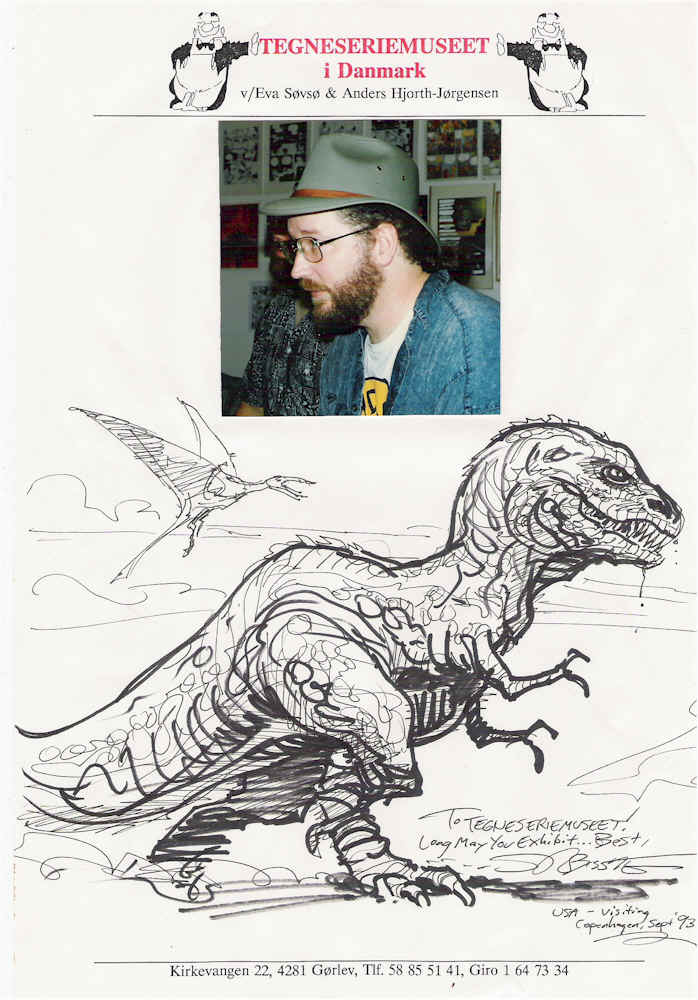
Happy Birthday Steve Bissette!


S. R. Bissette’s Tyrant is © & ® S. R. Bissette.

Steve has an always interesting blog, MyRant, that is worth a read.

Image from HERE.

Thursday, March 13, 2008

Happy Birthday Philip Currie!

Tetsuto sent along this U of A VP group greeting for Phil & told me that I could post it. So I am.


From R to L on the back row, Michael Newbrey (a postdoc at the Wilson lab/Tyrrell), Mark Wilson, Miriam Reichel, Victoria Arbour, Derek Larson, and Eric Snively. From R to L in the front, Tetsuto Miyashita, Lara Shychoski, Michael Burns, Robin Sissons, and Brian Rankin

This, apparently, is an outtake:


Oh, those crazy kids!

New Primative Jurassic Turtle, Condorchelys antiqua

A new, nearly complete stem turtle from the Jurassic of South America with implications for turtle evolution. 2008. Julia Sterli. Biology Letters, Published Monday, March 10, 2008.


Abstract: Turtles have been known since the Upper Triassic (210Myr old); however, fossils recording the first steps of turtle evolution are scarce and often fragmentary. As a consequence, one of the main questions is whether living turtles (Testudines) originated during the Late Triassic (210Myr old) or during the Middle to Late Jurassic (ca 160Myr old).

The discovery of the new fossil turtle, Condorchelys antiqua gen. et sp. nov. from the Middle to Upper Jurassic (ca 160–146Myr old) of South America (Patagonia, Argentina), presented here sheds new light on early turtle evolution. An updated cladistic analysis of turtles shows that C. antiqua and other fossil turtles are not crown turtles, but stem turtles. This cladistic analysis also shows that stem turtles were more diverse than previously thought, and that until the Middle to Upper Jurassic there were turtles without the modern jaw closure mechanism.

The Sex Life of Pterosaurs

Developmental growth patterns of the filter-feeder pterosaur, Pterodaustro guiñazui. 2008. A.Chinsamy et al. Biology Letters, Thursday, February 28, 2008.


Pterodaustro guiñazui illo by Stephanie Abramowicz/Courtesy of the Dinosaur Institute, NHM, LA County.
Pterosaurs, like their dinosaur relatives, didn't wait until they were fully grown to have sex, a new study suggests.
Abstract: Life-history parameters of pterosaurs such as growth and ontogenetic development represent an enigma. This aspect of pterosaur biology has remained perplexing because few pterosaur taxa are represented by complete ontogenetic series. Of these, Pterodaustro is unique in that besides being represented by hundreds of individuals with wing spans ranging from 0.3 to 2.5m, it includes an embryo within an egg. Here we present a comprehensive osteohistological assessment of multiple skeletal elements of a range of ontogenetic sizes of Pterodaustro, and we provide unparalleled insight into its growth dynamics.

We show that, upon hatching, Pterodaustro juveniles grew rapidly for approximately 2 years until they reached approximately 53% of their mature body size, whereupon they attained sexual maturity. Thereafter, growth continued for at least another 3–4 years at comparatively slower rates until larger adult body sizes were attained. Our analysis further provides definitive evidence that Pterodaustro had a determinate growth strategy.

Organic Soup Rained Down on Primordial Earth

Indigenous amino acids in primitive CR meteorites. 2008. Z. Martins et al. Meteoritics and Planetary Science.


The organic soup that spawned life on Earth may have gotten generous helpings from outer space, according to a new study. Scientists have discovered concentrations of amino acids in two meteorites that are more than ten times higher than levels previously measured in other similar meteorites. This result suggests that the early solar system was far richer in the organic building blocks of life than scientists had thought, and that fallout from space may have spiked Earth’s primordial broth.

For the amino acid study, the researchers took small samples from three meteorites of a rare type called CR chondrites, thought to contain the oldest and the most primitive organic materials found in meteorites. CR chondrites date from the time of the solar system’s formation. During an early phase of their history the meteorites were part of a larger “parent body,” such as an asteroid, which later was shattered by impacts.

“The amino acids probably formed within the parent body before it broke up,” says Alexander. “For instance. ammonia and other chemical precursors from the solar nebula, or even the interstellar medium, could have combined in the presence of water to make the amino acids. Then, after the break up, some of the fragments could have showered down onto the Earth and the other terrestrial planets. These same precursors are likely to have been present in other primitive bodies, such as comets, that were also raining material onto the early Earth.”

Wednesday, March 12, 2008

Malcolm C. McKenna Passes Away

From Roger Thomas of the Paleontological Society:

Malcolm C. McKenna has died at the age of 77 in Boulder, Colorado, ending a long and every productive career as a distinguished scholar and enthusiastic mentor of younger paleontologists.

Malcolm McKenna was a long-time member of
our society, with which he remained associated up to the time of his death.

In 1992, Malcolm McKenna was awarded the Paleontological Society Medal in recognition of his important contributions to the paleontology, relating most notably to the systematics, biogeography and evolution of Cenozoic mammals. A detailed appreciation of McKenna’s work up to that time, by John Flynn, with a response by McKenna, appears in the Journal of Paleontology 67 (4): 688-690.

Some of you may also have seen the obituary by John Noble Wilford that appeared on page A19 of the New York Times, on Monday, March 10.

New Info on Digit Formation

Unique SMAD1/5/8 activity at the phalanx-forming region determines digit identity. 2008. T. Suzuki et al. PNAS, Published online on March 11, 2008.


Observations on heterotopic graphs of subridge mesenchyme (A), high magnification of phosphorylated SMAD1/5/8 immunoreactivity (B)

Studying the embryonic chick foot, the developmental biologists have come up with a model that explains how digits grow and why each digit is different from the others.

They have shown that growth begins in a portion of the developing digit they have named the phalanx-forming region (PFR). They illustrated that phalanges, structures that later become finger or toe bones, arise not from cartilage cells but from mesenchymal cells. And they discovered that a complex array of signals from a variety of genes at different times combine to form each phalanx.

In birds and mammals, digits arise in the mitten-shaped autopod, or developing foot, which consists of two alternating regions. The digital rays, made up of cartilage and mesenchyme, become the phalanges in the adult chicken's toes. These alternate with the interdigits, also consisting of mesenchymal tissue, which fill the space between the digit rays and eventually regress.

"Our studies showed that a specific region of mesenchymal cells in the digital ray receive the interdigital signal, and that BMP receptor signaling in this region plays a central role in the process," notes Fallon. "Changes in the levels of signaling lead to different developmental outcomes."

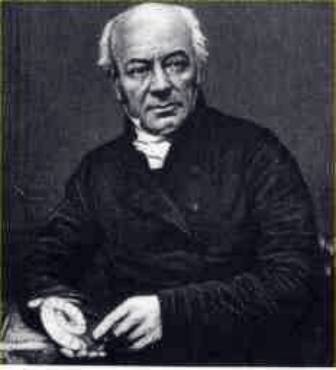
Born This Day: William Buckland

March 12, 1784 – August 15, 1856

From The Victorian Web: Buckland was the first man to identify and name a dinosaur (Megalosaurus), although the name dinosaur had not yet been coined by Richard Owen. Partly in response to the controversial works of Cuvier, Buckland wrote Reliquiae Diluvianae (1823) in which he argued that the evidence of geology alone demonstrated that a great flood had covered the entire globe. This move helped to make geology look more respectable in a religiously conservative England and perhaps to advance Buckland's own career at Oxford by making geology appear to be a respectable companion to the classics.

Buckland was a bit of an eccentric, given to outlandish dress and behavior. Although Buckland was immensely influential as a scientist, his rakish reputation gave many of his staid early Victorian contemporaries considerable difficulty in accepting his work.

More info from HERE. Image from HERE

Tuesday, March 11, 2008

Died This Day: Roy Chapman Andrews

(Jan.26, 1884-Mar.11, 1960)

American naturalist, explorer, and author, who spent his entire career at the American Museum of Natural History. He led many important scientific expeditions with financial support through his public lectures and books, particularly in central Asia and eastern Asia. On his 1925 central Asian expedition, the first known dinosaur eggs were discovered,as well as skull and parts of Baluchitherium, the largest known land mammal. During his career Andrews was the museum's best promoter, creating immense excitement and successfully advancing research there. link

Andrews was also acknowledged as one of the more important inspirations for the creation of the character of Indiana Jones.

Monday, March 10, 2008

ROM Travel Grant Due Saturday


David Evans (L) & Peter May
From David Evans at the Royal Ontario Museum:

M.A. Fritz Travel Grants for the Advancement of Studies in Palaeontology
The Palaeobiology Division of the Royal Ontario Museum’s Department of Natural History is pleased to announce the launch of the annual M.A. Fritz Travel Grants for the Advancement of Studies in Palaeontology. Funded through an endowment created by Madeleine A. Fritz, former curator at the ROM, two awards will be given annually to help offset the costs of visiting and studying ROM palaeontology collections; one award will be for invertebrate fossil study and the other for vertebrate fossil study.

More info HERE.

Note: Deadline: March 15, 2008

David has promised to buy lunch for all successful applicants.