New leptoceratopsids from the Upper Cretaceous of Alberta, Canada. 2012. Cret. Res.:35: 69-80.
Abstract: Two new leptoceratopsid neoceratopsians are described based on partial dentaries collected from the Dinosaur Park (Campanian) and Milk River (Santonian) formations of Alberta. The new Campanian taxon has a unique dentary tooth shape not shared by other leptoceratopsid taxa, which has implications for the evolution of the Leptoceratopsidae. The Santonian specimen represents the oldest known leptoceratopsid (w83 Ma), and probably represents the smallest adult-sized ceratopsian known from North America.
Press release is HERE
Tuesday, March 13, 2012
Died This Day: Charles Lapworth
From Today In Science History:
Lapworth (Sept. 30, 1842 - March 13, 1920) was an English geologist
who proposed what came to be called the Ordovician period (505 to 438 million years old) of geologic strata. Lapworth is famous for his work with marine fossils called graptolites.
By fastidiously collecting the tiny, colonial sea creatures, he figured out the original order of layered rocks that had been faulted and folded in England's Southern Uplands. This method of correlating rocks with graptolites became a model for similar research throughout the world.
In 1879, Lapworth proposed a new classification of Lower Paleozoic rocks with the Ordovician, between the redefined Cambrian and Silurian periods. The name comes from an ancient Welsh tribe, the Ordovices.
Lapworth (Sept. 30, 1842 - March 13, 1920) was an English geologist
who proposed what came to be called the Ordovician period (505 to 438 million years old) of geologic strata. Lapworth is famous for his work with marine fossils called graptolites.By fastidiously collecting the tiny, colonial sea creatures, he figured out the original order of layered rocks that had been faulted and folded in England's Southern Uplands. This method of correlating rocks with graptolites became a model for similar research throughout the world.
In 1879, Lapworth proposed a new classification of Lower Paleozoic rocks with the Ordovician, between the redefined Cambrian and Silurian periods. The name comes from an ancient Welsh tribe, the Ordovices.
Monday, March 12, 2012
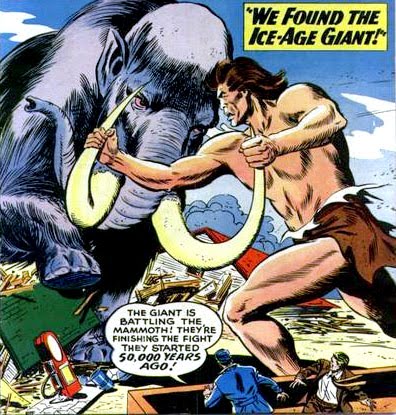
Roarhide!!!
If you're in the UK then check your local newsstand for the new 2000AD prog. 1774 that's worth picking up just for this 'Calvin'-inspired (I would guess) cover by Mark Harrison.
Mark discusses the making of the cover HERE.
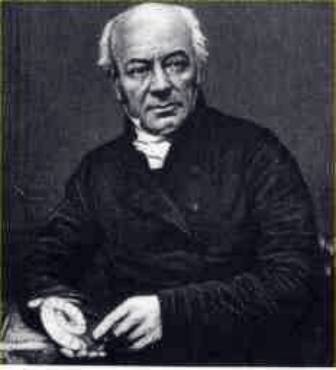
Born This Day: WIlliam Buckland
From The Victorian Web:
Buckland (March 12, 1784 – August 15, 1856) was the first man to identify and name a dinosaur
(Megalosaurus), although the name dinosaur had not yet been coined by Richard Owen.
Partly in response to the controversial works of Cuvier, Buckland wrote Reliquiae Diluvianae (1823) in which he argued that the evidence of geology alone demonstrated that a great flood had covered the entire globe. This move helped to make geology look more respectable in a religiously conservative England and perhaps to advance Buckland's own career at Oxford by making geology appear to be a respectable companion to the classics.
Buckland was a bit of an eccentric, given to outlandish dress and behavior. Although Buckland was immensely influential as a scientist, his rakish reputation gave many of his staid early Victorian contemporaries considerable difficulty in accepting his work.
More info from HERE. Image from HERE
Buckland (March 12, 1784 – August 15, 1856) was the first man to identify and name a dinosaur
(Megalosaurus), although the name dinosaur had not yet been coined by Richard Owen. Partly in response to the controversial works of Cuvier, Buckland wrote Reliquiae Diluvianae (1823) in which he argued that the evidence of geology alone demonstrated that a great flood had covered the entire globe. This move helped to make geology look more respectable in a religiously conservative England and perhaps to advance Buckland's own career at Oxford by making geology appear to be a respectable companion to the classics.
Buckland was a bit of an eccentric, given to outlandish dress and behavior. Although Buckland was immensely influential as a scientist, his rakish reputation gave many of his staid early Victorian contemporaries considerable difficulty in accepting his work.
More info from HERE. Image from HERE
Sunday, March 11, 2012
Bill Stout Teaches How to Draw Mythical Creatures for Kids at CMNH
After William Stout delivered an excellent lecture on Friday evening at the Cleveland Museum of Natural History, he lead a drawing class for kids on Saturday morning.
Joining him as instructors were Jeff Day and Lee Gambol from the CMNH, and visiting medical illustrator & cartoonist, Michael Marcynuk, in town from Toronto.


After the class was over, Bill answered lots of questions and drew sketches for some of the kids.
Joining him as instructors were Jeff Day and Lee Gambol from the CMNH, and visiting medical illustrator & cartoonist, Michael Marcynuk, in town from Toronto.


After the class was over, Bill answered lots of questions and drew sketches for some of the kids.
Died This Day: Roy Chapman Andrews
Andrews (Jan.26, 1884-Mar.11, 1960) was an American naturalist, explorer, and author, who spent his entire career at the American Museum of Natural History.
He led many important scientific expeditions with financial support through his public lectures and books, particularly in central Asia and eastern Asia. On his 1925 central Asian expedition, the first known dinosaur eggs were discovered,as well as skull and parts of Baluchitherium, the largest known land mammal. During his career Andrews was the museum's best promoter, creating immense excitement and successfully advancing research there. link
Andrews was also acknowledged as one of the more important inspirations for the creation of the character of Indiana Jones.
He led many important scientific expeditions with financial support through his public lectures and books, particularly in central Asia and eastern Asia. On his 1925 central Asian expedition, the first known dinosaur eggs were discovered,as well as skull and parts of Baluchitherium, the largest known land mammal. During his career Andrews was the museum's best promoter, creating immense excitement and successfully advancing research there. linkAndrews was also acknowledged as one of the more important inspirations for the creation of the character of Indiana Jones.
Saturday, March 10, 2012
Friday, March 09, 2012
Coronacollina, Harbinger of Skeletons!
The advent of hard-part structural support among the Ediacara biota: Ediacaran harbinger of a Cambrian mode of body construction. 2012. E. C. Clites, et al. Geology, published online February 14, 2012,
Paleontologists have discovered the oldest animal with a skeleton. Called Coronacollina acula, the organism is between 560 million and 550 million years old, which places it in the Ediacaran period, before the explosion of life and diversification of organisms took place on Earth in the Cambrian. The Cambrian Period, marked by a rapid diversification of life-forms on Earth as well as the rise of mineralized organisms, ranges 542-488 million years ago.
Coronacollina acula is seen in the fossils as a depression measuring a few millimeters to 2 centimeters deep. But because rocks compact over time, the organism could have been bigger – 3 to 5 centimeters tall. Notably, it is constructed in the same way that Cambrian sponges were constructed.
Coronacollina acula lived on the seafloor. Shaped like a thimble to which at least four 20-40-centimeter-long needle-like "spicules" were attached, Coronacollina acula most likely held itself up by the spicules. The researchers believe it ingested food in the same manner a sponge does, and that it was incapable of locomotion.
The appearance of Coronacollina acula signals that the initiation of skeletons was not as sudden in the Cambrian as was thought, and that Ediacaran animals like it are part of the evolutionary lineage of animals as we know them.
Paleontologists have discovered the oldest animal with a skeleton. Called Coronacollina acula, the organism is between 560 million and 550 million years old, which places it in the Ediacaran period, before the explosion of life and diversification of organisms took place on Earth in the Cambrian. The Cambrian Period, marked by a rapid diversification of life-forms on Earth as well as the rise of mineralized organisms, ranges 542-488 million years ago.
Coronacollina acula is seen in the fossils as a depression measuring a few millimeters to 2 centimeters deep. But because rocks compact over time, the organism could have been bigger – 3 to 5 centimeters tall. Notably, it is constructed in the same way that Cambrian sponges were constructed.
Coronacollina acula lived on the seafloor. Shaped like a thimble to which at least four 20-40-centimeter-long needle-like "spicules" were attached, Coronacollina acula most likely held itself up by the spicules. The researchers believe it ingested food in the same manner a sponge does, and that it was incapable of locomotion.
The appearance of Coronacollina acula signals that the initiation of skeletons was not as sudden in the Cambrian as was thought, and that Ediacaran animals like it are part of the evolutionary lineage of animals as we know them.
The Black Plummage of Microraptor
Reconstruction of Microraptor and the Evolution of Iridescent Plumage. Q Li, et al. Science 335:1219-1222.
The researchers also made predictions about the purpose of the dinosaur's tail. Once thought to be a broad, teardrop-shaped surface meant to help with flight, Microraptor's tail fan is actually much narrower with two elongate feathers. The researchers think that the tail feather was ornamental and likely evolved for courtship and other social interactions, not for aerodynamics. link
Researchers has revealed the color and detailed feather pattern of Microraptor, a pigeon-sized, four-winged dinosaur that lived about 130 million years ago. The non-avian dinosaur's fossilized plumage, which had hues of black and blue like a crow, is the earliest record of iridescent feather color.In this study, the researchers compared the shape and density of pigment-bearing organelles called melanosomes from a Microraptor using a scanning electron microscopefossil and comparing them to a database of melanosomes from a variety of modern birds. Statistical analysis of the data predicts that Microraptor was completely black with a glossy, weakly iridescent blue sheen.
The researchers also made predictions about the purpose of the dinosaur's tail. Once thought to be a broad, teardrop-shaped surface meant to help with flight, Microraptor's tail fan is actually much narrower with two elongate feathers. The researchers think that the tail feather was ornamental and likely evolved for courtship and other social interactions, not for aerodynamics. link
"The plumage don't enter into it. It's stone dead!"
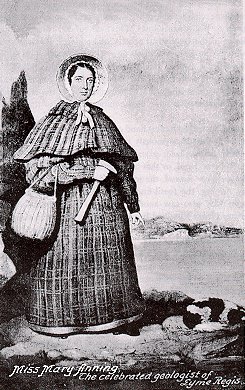
Died This Day: Mary Anning
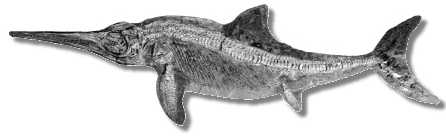
Mary Anning (May, 21 1799 - March 9, 1847) was an English fossil collector who made her first significant discovery at the age of 11 or 12
(sources differ on the details), when she found a complete skeleton of an Ichthyosaurus, from the Jurassic period . The ten-meter (30 feet) long skeleton created a sensation and made her famous. Anning's determination and keen scientific interest in fossils derived from her father's interest in fossil hunting, and a need for the income derived from them to support her family after his death in 1810.
She sold large fossils to noted paleontologists of the day, and smaller ones to the tourist trade. In 1823, Anning made another great discovery, found the first complete Plesiosaurus. Later in her life, the Geological Society of London granted Anning an honorary membership.

From From Today in Science History.
(sources differ on the details), when she found a complete skeleton of an Ichthyosaurus, from the Jurassic period . The ten-meter (30 feet) long skeleton created a sensation and made her famous. Anning's determination and keen scientific interest in fossils derived from her father's interest in fossil hunting, and a need for the income derived from them to support her family after his death in 1810.She sold large fossils to noted paleontologists of the day, and smaller ones to the tourist trade. In 1823, Anning made another great discovery, found the first complete Plesiosaurus. Later in her life, the Geological Society of London granted Anning an honorary membership.

From From Today in Science History.
Thursday, March 08, 2012
William Stout Lecture at CMNH Friday, March 9, 2012
If you're in the Cleveland, Ohio, area on Friday please be sure to come to Bill Stout's lecture at the Cleveland Museum of Natural History.
Step into worlds of fantasy and imagination with artist and filmmaker William Stout. See how he created the drawings that became the basis for such movie icons as the Predator, Skeletor from Masters of the Universe, the Tarman from The Return of the Living Dead, the Faun from Pan's Labyrinth and the big bug known as Edgar from Men In Black. Learn of the problems he has encountered in bringing the fantastic to life and how he solved them.
Nonmembers: $10 for adults; $9 for students and seniors
Series discounts are available.
This program is offered in conjunction with the Mythic Creatures exhibition.
Step into worlds of fantasy and imagination with artist and filmmaker William Stout. See how he created the drawings that became the basis for such movie icons as the Predator, Skeletor from Masters of the Universe, the Tarman from The Return of the Living Dead, the Faun from Pan's Labyrinth and the big bug known as Edgar from Men In Black. Learn of the problems he has encountered in bringing the fantastic to life and how he solved them.
Book signing to follow.
Members: $8 for adults; $7 for students and seniorsNonmembers: $10 for adults; $9 for students and seniors
Series discounts are available.
This program is offered in conjunction with the Mythic Creatures exhibition.
No Gap in the Middle Permian Fossil Record
No gap in the Middle Permian record of terrestrial vertebrates. 2012. M. J. Benton. Geology. posted online 2 Mar. 2012
New work on fossil reptiles from Russia shows a more continuous evolutionary record than had been assumed. A key concern about the fossil record is that it is incomplete. During the Permian period 300-250 million years ago, the basis of modern terrestrial ecosystem was established. Worldwide climates became warmer and drier, and reptiles rose in importance. The first plant-eating reptiles appeared, and Late Permian ecosystems were broadly comparable to modern ones.
Until recently, however, the Permian record of reptiles was said to be incomplete, with a gap of up to 5 million years. This was because paleontologists had to look at rock successions from different continents, and it seemed there was a major time hiatus between the well-known Lower Permian successions of North America and the Middle and Upper Permian successions of South Africa and Russia.
New dating evidence shows that the Russian rock record overlaps the North American record, and the gap is closed. We can study the story of change in terrestrial ecosystems through the Permian without a major lack of knowledge. link
New work on fossil reptiles from Russia shows a more continuous evolutionary record than had been assumed. A key concern about the fossil record is that it is incomplete. During the Permian period 300-250 million years ago, the basis of modern terrestrial ecosystem was established. Worldwide climates became warmer and drier, and reptiles rose in importance. The first plant-eating reptiles appeared, and Late Permian ecosystems were broadly comparable to modern ones.
Until recently, however, the Permian record of reptiles was said to be incomplete, with a gap of up to 5 million years. This was because paleontologists had to look at rock successions from different continents, and it seemed there was a major time hiatus between the well-known Lower Permian successions of North America and the Middle and Upper Permian successions of South Africa and Russia.
New dating evidence shows that the Russian rock record overlaps the North American record, and the gap is closed. We can study the story of change in terrestrial ecosystems through the Permian without a major lack of knowledge. link
Tyrannosaurid Teeth
The variation of angles between anterior and posterior carinae of tyrannosaurid teeth.. 2012. M. Reichel. CJES 49: 477–491.
Abstract [edit]: The angle between the anterior and posterior carinae of large theropods (Tyrannosaurus, Tarbosaurus, Albertosaurus, Daspletosaurus, and Gorgosaurus) were analyzed and shown to contribute significantly to the variation in the tyrannosaurid tooth data set. Additionally, this variable showed a strong correlation to tooth function, rather than tooth size. However, the variation observed between taxa seems insufficient for systematic purposes.
Tuesday, March 06, 2012
Torosaurus Is Not Triceratops
Torosaurus Is Not Triceratops: Ontogeny in Chasmosaurine Ceratopsids as a Case Study in Dinosaur Taxonomy. 2012. N.R. Longrich and D. J. Field. PLoS ONE 7(2): e32623.
From PLoS One e32623[edit]: It has been proposed that the genera Triceratops and Torosaurus are in synonymous, with specimens identified as Torosaurus representing the adult form of Triceratops. The hypothesis of synonymy makes three testable predictions: 1) the species in question should have similar geographic and stratigraphic distributions, 2) specimens assigned to Torosaurus should be more mature than those assigned to Triceratops, and 3) intermediates should exist that combine features of Triceratops and Torosaurus. The first condition appears to be met, but it remains unclear whether the other predictions are borne out by the fossil evidence.
We assessed the relative maturity of Torosaurus and Triceratops specimens by coding skulls for characters that vary with maturity, and then using a clustering analysis to arrange them into a growth series. We found that a well-defined sequence of changes exists in horned dinosaurs: development of cranial ornament occurs in juveniles, followed by fusion of the skull roof in subadults, and finally, the epoccipitals, epijugals, and rostral fuse to the skull in adults. Using this scheme, we identified mature and immature individuals of both Torosaurus and Triceratops. Furthermore, we describe the ventral depressions on the frill of Triceratops, and show that they differ in shape and position from the parietal fenestrae of Torosaurus. Thus, we conclude that these structures are not intermediates between the solid frill of Triceratops and the fenestrated frill of Torosaurus.
From PLoS One e32623[edit]: It has been proposed that the genera Triceratops and Torosaurus are in synonymous, with specimens identified as Torosaurus representing the adult form of Triceratops. The hypothesis of synonymy makes three testable predictions: 1) the species in question should have similar geographic and stratigraphic distributions, 2) specimens assigned to Torosaurus should be more mature than those assigned to Triceratops, and 3) intermediates should exist that combine features of Triceratops and Torosaurus. The first condition appears to be met, but it remains unclear whether the other predictions are borne out by the fossil evidence.
We assessed the relative maturity of Torosaurus and Triceratops specimens by coding skulls for characters that vary with maturity, and then using a clustering analysis to arrange them into a growth series. We found that a well-defined sequence of changes exists in horned dinosaurs: development of cranial ornament occurs in juveniles, followed by fusion of the skull roof in subadults, and finally, the epoccipitals, epijugals, and rostral fuse to the skull in adults. Using this scheme, we identified mature and immature individuals of both Torosaurus and Triceratops. Furthermore, we describe the ventral depressions on the frill of Triceratops, and show that they differ in shape and position from the parietal fenestrae of Torosaurus. Thus, we conclude that these structures are not intermediates between the solid frill of Triceratops and the fenestrated frill of Torosaurus.
Monday, March 05, 2012
Premiered This Day: The Creature From The Black Lagoon
On this day in 1954, director Jack Arnold let loose The Creature from his Devonian-aged Amazonian lagoon. The Creature was actually played by two different men in two different suits; Ricou Browning did the underwater work and Ben Chapman was the Gill Man on land. Browning went on to produce the successful Flipper TV show in the mid-60’s.
Saturday, March 03, 2012
T. rex Bite Force Calculated
Estimating maximum bite performance in Tyrannosaurus rex using multi-body dynamics. 2012. K. T. Bates & P. L. Falkingham. Biology Letters, Published online before print February 29, 2012.
Researchers also found that the results for the juvenile T. rex had a relatively the weaker bite than the adult T. rex, even when size differences and uncertainties about muscle size were taken into account. The large difference between the two measurements, despite the error margins factored in, may suggest that T. rex underwent a change in feeding behaviour as it grew. link
New research using computer models to reconstruct the jaw muscle of Tyrannosaurus rex, has suggested that the dinosaur had the most powerful bite of any living or extinct terrestrial animal.Previous studies have estimated that T. rex's bite had a force of 8000 to 13,400 Newtons, but given the size of the animal, thought to weigh more than 6000kg, researchers suspected that its bite may have been more powerful than this. Even with error margins factored in, the computer model still showed that the T. rex had a more powerful bite than previously suggested. The smallest values predicted were around 20,000 Newtons, while the largest values were as high as 57,000 Newtons.
Researchers also found that the results for the juvenile T. rex had a relatively the weaker bite than the adult T. rex, even when size differences and uncertainties about muscle size were taken into account. The large difference between the two measurements, despite the error margins factored in, may suggest that T. rex underwent a change in feeding behaviour as it grew. link
Created This Day: U.S. Geological Survey
In 1879, the office of director of the U.S. Geological Survey was authorized by Congress (20 Stat. L. 394), which made appropriations "for sundry civil expenses of the government." Clarence King, the first director, was nominated on 21 Mar 1879 and started work on May 24, 1879.
The Survey was national in scope for the classification of public lands and their geological structure, mineral resources, and products. The first geological survey financed by Congress was authorized by act of Congress on 28 Jun 1834 (4 Stat. L. 394) which provided $5,000 for a survey made by George William Featherstonhaugh of the land between the Missouri and Red Rivers. The earliest survey at state expense was made in 1830-33 by Massachussetts. link
Friday, March 02, 2012
World's Oldest Fossil Forest
Surprisingly complex community discovered in the mid-Devonian fossil forest at Gilboa. 2012. W. E. Stein, et al. Nature 483: 78–81.
Fossils of hundreds of large tree stumps (the 'Gilboa tree') preserved in the rocks were discovered in the 1920's during excavation of a quarry to extract rock to build the nearby Gilboa Dam. Following completion of the dam the quarry was backfilled. In May 2010, the quarry was partially emptied as part of a dam maintenance project. The original quarry floor was reexposed and about 1,300 square meters were cleaned off for investigation.
They describe bases of the 'Gilboa trees' as spectacular bowl-shaped depressions up to nearly two meters in diameter, surrounded by thousands of roots. These are known to be the bases of trees up to about 10 meters in height, that looked something like a palm tree or a tree fern. One of the biggest surprises was that the researchers found many woody horizontally-lying stems, up to about 15 cm think, which they have demonstrated to be the ground-running trunks of another type of plant [a aneurophytalean progymnosperm], only previously known from its upright branches. They also found one large example of a tree-shaped club moss, the type of tree that commonly forms coal seams in younger rocks across Europe and North America. link
An international team who previously found evidence of the Earth's earliest tree has now unearthed and investigated an entire fossil forest dating back 385 million years.The Gilboa fossil forest, in the Catskill Mountains in upstate New York, is generally referred to as 'the oldest fossil forest'. Yet by scientific standards it has remained mythical.
Fossils of hundreds of large tree stumps (the 'Gilboa tree') preserved in the rocks were discovered in the 1920's during excavation of a quarry to extract rock to build the nearby Gilboa Dam. Following completion of the dam the quarry was backfilled. In May 2010, the quarry was partially emptied as part of a dam maintenance project. The original quarry floor was reexposed and about 1,300 square meters were cleaned off for investigation.
They describe bases of the 'Gilboa trees' as spectacular bowl-shaped depressions up to nearly two meters in diameter, surrounded by thousands of roots. These are known to be the bases of trees up to about 10 meters in height, that looked something like a palm tree or a tree fern. One of the biggest surprises was that the researchers found many woody horizontally-lying stems, up to about 15 cm think, which they have demonstrated to be the ground-running trunks of another type of plant [a aneurophytalean progymnosperm], only previously known from its upright branches. They also found one large example of a tree-shaped club moss, the type of tree that commonly forms coal seams in younger rocks across Europe and North America. link
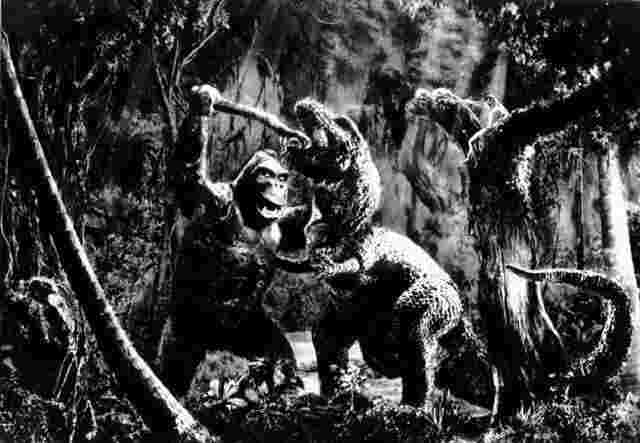
Premiered This Day: King Kong

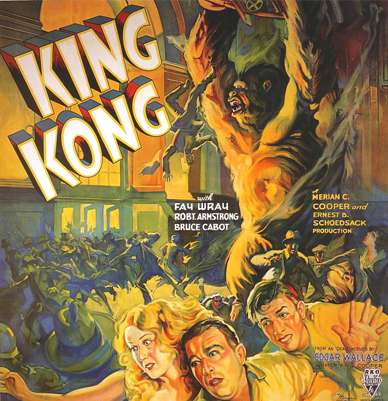
The movie King Kong was one of the most successful films released in 1933. It went on to inspire many young fans (both in its initial release, numerous re-releases, and on television) to take up the professions of either film-making or paleontology. The field of dinosaur paleobiology would be very different today if King Kong had never met Fay Wray on Skull Island "way west of Sumatra" and been taken to the concrete jungle of New York.
In a remarkable coincidence the artist, Willis O'Brien, who created and brought Kong to life, celebrated his 47th birthday on the day the movie debuted in New York City.
Born This Day: Willis O'Brien
A tip of the fedora to the late, great Willis O'Brien who breathed life into the fur and armature that become King Kong, the 8th Wonder of the World!
His biography from Leonard Maltin's Movie Encyclopedia:
Willis O'Brien (March 2, 1886 - November 8, 1962)

In 1950 O'Brien received (finally!) a special Oscar for his work on Mighty Joe Young which was the first such award ever given for special effects. This film also launched the career of the next great stop-motion animator, Ray Harryhausen.
His biography from Leonard Maltin's Movie Encyclopedia:
Willis O'Brien (March 2, 1886 - November 8, 1962)
Special effects wizard best known to the world as the man who
created King Kong. O'Brien was a sculptor and cartoonist for the San Francisco "Daily News" before he first dabbled in the medium of film during the 'teens. His work caught the attention of the Edison company, for whom he produced several short subjects with a prehistoric them. Titles include The Dinosaur and the Missing Link, RFD 10,000 B.C and Prehistoric Poultry. His method of animating small rubber figures, carefully molded over metal skeletons with movable joints, by moving them a fraction of an inch for each frame of film exposed, became the standard process of live-action animation.
In 1918 he made his most ambitious film yet, The Ghost of Slumber Mountain paving the way for The Lost World (1925), a major Hollywood feature which told of a search for prehistoric creatures. O'Brien's dinosaurs were his most realistic yet, and still impress today, even in the wake of Jurassic Park Still, Obie (as he was known) kept experimenting.
When producer Merian C. Cooper saw his work, he hired O'Brien to animate King Kong (which, up to that point, was to have been shot with an actor in a gorilla suit). The extraordinary success of King Kong (1933) spawned an immediate sequel, The Son of Kong (also 1933), and made O'Brien a hero to several generations of fantasy filmmakers to come. O'Brien won his only Oscar for his effects in Mighty Joe Young (1949), another giant-monkey movie, on which his protégé (and successor) Ray Harryhausen worked.
O'Brien worked on other giant-monster movies (including 1957's The Black Scorpion his last) before dying in 1962. Today, O'Brien would be kingpin of his own studio, but even in the wake of King Kong he had trouble launching other film projects, and many promising ideas languished on studio drawing boards for decades to follow. One of the RKO staff with whom he'd worked in the 1930s, Linwood Dunn, gave O'Brien his final employment, doing stop-motion figures for It's a Mad Mad Mad Mad World (1963).

In 1950 O'Brien received (finally!) a special Oscar for his work on Mighty Joe Young which was the first such award ever given for special effects. This film also launched the career of the next great stop-motion animator, Ray Harryhausen.
Wednesday, February 29, 2012
Born This Day: Karl Ernst von Baer
Von Baer (Feb 29, 1792 - Nov 28, 1876) was a Prussian-Estonian embryologist who discovered the mammalian egg (1827) and the notochord. He established the new science of comparative embryology alongside
comparative anatomy with the publication of two landmark volumes (in 1828 and 1837) covering the range of existing knowledge of the prebirth developments of vertebrates.
He showed that mammalian eggs were not the follicles of the ovary but microscopic particles inside the follicles. He described the development of the embryo from layers of tissue, which he called germ layers, and demonstrated similarities in the embryos of different species of vertebrates.
From Today In Science History
comparative anatomy with the publication of two landmark volumes (in 1828 and 1837) covering the range of existing knowledge of the prebirth developments of vertebrates. He showed that mammalian eggs were not the follicles of the ovary but microscopic particles inside the follicles. He described the development of the embryo from layers of tissue, which he called germ layers, and demonstrated similarities in the embryos of different species of vertebrates.
From Today In Science History
Tuesday, February 28, 2012
Died This Day: Cecil Kellaway
The twice Oscar-nominated Kellaway (Aug. 22, 1893 – Feb. 28, 1973) played Prof. Thurgood Elson in the classic Ray Harryhausen film, “The Beast from 20,000 Fathoms”.

Elson was the palaeontologist who went down in the diving bell looking for the beast, but who did not make it back up.

Elson was the palaeontologist who went down in the diving bell looking for the beast, but who did not make it back up.
Discovered This Day: The Structure of DNA
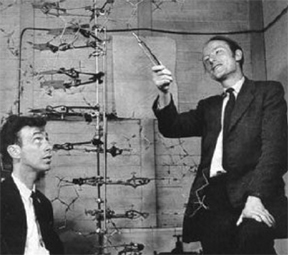
On this day in 1953 Francis Crick (right)and J. Watson (left) discovered the structure of the DNA molecule.
Molecular Visualizations of DNA:
Sifrhippus sandae, The Shrinking Earliest Horse
Evolution of the Earliest Horses Driven by Climate Change in the Paleocene-Eocene Thermal Maximum. 2012. R. Secord, et al. Science 335: 959-962.
The earliest known horse, Sifrhippus sandae, first appeared in the forests of North America more than 50 million years ago. It weighed in at around 12 pounds--and it was destined to get much smaller over the ensuing millennia.
Sifrhippus lived during the Paleocene-Eocene Thermal Maximum, a 175,000-year interval of time some 56 million years ago in which average global temperatures rose by about 10 degrees Fahrenheit. About a third of mammal species responded with a significant reduction in size during this time, some by as much as one-half.
Sifrhippus shrank by about 30 percent, to the size of a small house cat--about 8.5 pounds--in the first 130,000 years, then rebounded to about 15 pounds in the final 45,000 years. Secord says that the finding raises important questions about how plants and animals will respond to rapid change in the not-too-distant future.
Ornithologists, Secord says, have already started to notice that there may be a decrease in body size among birds. link
The earliest known horse, Sifrhippus sandae, first appeared in the forests of North America more than 50 million years ago. It weighed in at around 12 pounds--and it was destined to get much smaller over the ensuing millennia.
Sifrhippus lived during the Paleocene-Eocene Thermal Maximum, a 175,000-year interval of time some 56 million years ago in which average global temperatures rose by about 10 degrees Fahrenheit. About a third of mammal species responded with a significant reduction in size during this time, some by as much as one-half.
Sifrhippus shrank by about 30 percent, to the size of a small house cat--about 8.5 pounds--in the first 130,000 years, then rebounded to about 15 pounds in the final 45,000 years. Secord says that the finding raises important questions about how plants and animals will respond to rapid change in the not-too-distant future.
Ornithologists, Secord says, have already started to notice that there may be a decrease in body size among birds. link
Friday, February 24, 2012
Published This Day: Descent of Man
On this day in 1871, Charles Darwin's book "Descent of Man, and Selection in Relation to Sex" was published in London.
Wednesday, February 22, 2012
Died This Day: Sir Charles Lyell
From Minnesota State University at Mankato comes this excellent bio on Lyell:
Sir Charles Lyell attended Oxford University at age 19. Lyell's father was an active naturalist. Lyell had access to an elaborate library including subjects such as Geology.
When Lyell was at Oxford, his interests were mathematics, classics, law and geology. He attended a lecture by William Buckland that triggered his enthusiasm for geology. Lyell originally started his career as a lawyer, but later turned to geology. He became an author of The Geological Evidence of the Antiquity of Man in 1863 and Principles of Geology. Lyell argued in this book that, at the time, presently observable geological processes were adequate to explain geological history. He thought the action of the rain, sea, volcanoes and earthquakes explained the geological history of more ancient times.
Lyell rebelled against the prevailing theories of geology of the time. He thought the theories were biased, based on the interpretation of Genesis. He thought it would be more practical to exclude sudden geological catastrophes to vouch for fossil remains of extinct species and believed it was necessary to create a vast time scale for Earth's history. This concept was called Uniformitarianism. The second edition of Principles of Geology introduced new ideas regarding metamorphic rocks. It described rock changes due to high temperature in sedimentary rocks adjacent to igneous rocks. His third volume dealt with paleontology and stratigraphy. Lyell stressed that the antiquity of human species was far beyond the accepted theories of that time.
Charles Darwin became his dear friend and correspondent. Darwin is quoted saying, "The greatest merit of the Principles was that it altered the whole tone of one's mind, and therefore that, when seeing a thing never seen by Lyell, one yet saw it through his eyes."
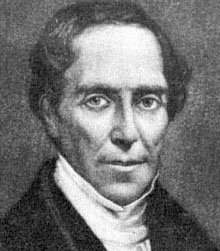
Image from King’s College London.
Sir Charles Lyell attended Oxford University at age 19. Lyell's father was an active naturalist. Lyell had access to an elaborate library including subjects such as Geology.
When Lyell was at Oxford, his interests were mathematics, classics, law and geology. He attended a lecture by William Buckland that triggered his enthusiasm for geology. Lyell originally started his career as a lawyer, but later turned to geology. He became an author of The Geological Evidence of the Antiquity of Man in 1863 and Principles of Geology. Lyell argued in this book that, at the time, presently observable geological processes were adequate to explain geological history. He thought the action of the rain, sea, volcanoes and earthquakes explained the geological history of more ancient times.
Lyell rebelled against the prevailing theories of geology of the time. He thought the theories were biased, based on the interpretation of Genesis. He thought it would be more practical to exclude sudden geological catastrophes to vouch for fossil remains of extinct species and believed it was necessary to create a vast time scale for Earth's history. This concept was called Uniformitarianism. The second edition of Principles of Geology introduced new ideas regarding metamorphic rocks. It described rock changes due to high temperature in sedimentary rocks adjacent to igneous rocks. His third volume dealt with paleontology and stratigraphy. Lyell stressed that the antiquity of human species was far beyond the accepted theories of that time.
Charles Darwin became his dear friend and correspondent. Darwin is quoted saying, "The greatest merit of the Principles was that it altered the whole tone of one's mind, and therefore that, when seeing a thing never seen by Lyell, one yet saw it through his eyes."
Image from King’s College London.
Tuesday, February 21, 2012
The Origin of Photosynthesis
Cyanophora paradoxa Genome Elucidates Origin of Photosynthesis in Algae and Plants. 2012. D.C. Price, et al. Science 335: 843-847.
Atmospheric oxygen really took off on our planet about 2.4 billion years ago during the Great Oxygenation Event. At this key juncture of our planet’s evolution, species had either to learn to cope with this poison (O2)that was produced by photosynthesizing cyanobacteria or they went extinct. It now seems strange to think that the gas that sustains much of modern life had such a distasteful beginning.
So how and when did the ability to produce oxygen by harnessing sunlight enter the eukaryotic domain, that includes humans, plants, and most recognizable, multicellular life forms? One of the fundamental steps in the evolution of our planet was the development of photosynthesis in eukaryotes through the process of endosymbiosis.
This crucial step forward occurred about 1.6 billion years ago when a single-celled protist captured and retained a formerly free-living cyanobacterium. This process, termed primary endosymbiosis, gave rise to the plastid, which is the specialized compartment where photosynthesis takes place in cells.
Basic understanding of much of the subsequent evolution of eukaryotes, including the rise of plants and animals, is emerging from the sequencing of the Cyanophora paradoxa genome, a function-rich species that retains much of the ancestral gene diversity shared by algae and plants. New research provides conclusive evidence that all plastids trace their origin to a single primary endosymbiosis. link
Atmospheric oxygen really took off on our planet about 2.4 billion years ago during the Great Oxygenation Event. At this key juncture of our planet’s evolution, species had either to learn to cope with this poison (O2)that was produced by photosynthesizing cyanobacteria or they went extinct. It now seems strange to think that the gas that sustains much of modern life had such a distasteful beginning.
So how and when did the ability to produce oxygen by harnessing sunlight enter the eukaryotic domain, that includes humans, plants, and most recognizable, multicellular life forms? One of the fundamental steps in the evolution of our planet was the development of photosynthesis in eukaryotes through the process of endosymbiosis.
This crucial step forward occurred about 1.6 billion years ago when a single-celled protist captured and retained a formerly free-living cyanobacterium. This process, termed primary endosymbiosis, gave rise to the plastid, which is the specialized compartment where photosynthesis takes place in cells.
Basic understanding of much of the subsequent evolution of eukaryotes, including the rise of plants and animals, is emerging from the sequencing of the Cyanophora paradoxa genome, a function-rich species that retains much of the ancestral gene diversity shared by algae and plants. New research provides conclusive evidence that all plastids trace their origin to a single primary endosymbiosis. link
Wednesday, February 08, 2012
Entire Genome of Extinct Human Decoded From Fossil
The Max Planck Institute for Evolutionary Anthropology, in Leipzig, Germany, has completed the genome sequence of a Denisovan, a representative of an Asian group of extinct humans related to Neandertals.In 2010, Svante Pääbo and his colleagues presented a draft version of the genome from a small fragment of a human finger bone discovered in Denisova Cave in southern Siberia. The DNA sequences showed that this individual came from a previously unknown group of extinct humans that have become known as Denisovans. Together with their sister group the Neandertals, Denisovans are the closest extinct relatives of currently living humans.
The Leipzig team has now developed sensitive novel techniques which have allowed them to sequence every position in the Denisovan genome about 30 times over, using DNA extracted from less than 10 milligrams of the finger bone. The now-completed version of the genome allows even the small differences between the copies of genes that this individual inherited from its mother and father to be distinguished. This Wednesday the Leipzig group makes the entire Denisovan genome sequence available for the scientific community over the internet.
The genome represents the first high-coverage, complete genome sequence of an archaic human group - a leap in the study of extinct forms of humans. “We hope that biologists will be able to use this genome to discover genetic changes that were important for the development of modern human culture and technology, and enabled modern humans to leave Africa and rapidly spread around the world, starting around 100,000 years ago” says Pääbo. The genome is also expected to reveal new aspects of the history of Denisovans and Neandertals.
The group plans to present a paper describing the genome later this year. “But we want to make it freely available to everybody already now” says Pääbo. “We believe that many scientists will find it useful in their research”.
The genome is available at www.eva.mpg.de/denisova and as a Public Data Set via Amazon Web Services (AWS): http://aws.amazon.com/datasets/2357.
Friday, February 03, 2012
Born This Day: Gideon Mantell
Mantell (Feb. 3, 1790 – Nov. 10, 1852), a physician of Lewes in Sussex in southern England, had for years been collecting fossils in the sandstone of Tilgate forest,
and he had discovered bones belonging to three extinct species: a giant crocodile, a plesiosaur, and Buckland's Megalosaurus. But in 1822 he found several teeth that "possessed characters so remarkable" that they had to have come from a fourth and distinct species of Saurian. After consulting numerous experts, Mantell finally recognized that the teeth bore an uncanny resemblance to the teeth of the living iguana, except that they were twenty times larger. 
In this paper, the second published description of a dinosaur, he concluded that he had found the teeth of a giant lizard, which he named Iguanodon, or "Iguana-tooth."
Mantell illustrated his announcement with a single lithographed plate. Mantell included at the bottom of the plate a drawing of a recent iguana jaw, which is shown four times natural size, and for further comparison, he added views of the inner and outer surface of a single iguana tooth, "greatly magnified."
The traditional story that Mantell's wife found the first teeth in 1822, while the doctor was visiting a patient, appears, alas, to be unfounded.
Info and plate from HERE.
and he had discovered bones belonging to three extinct species: a giant crocodile, a plesiosaur, and Buckland's Megalosaurus. But in 1822 he found several teeth that "possessed characters so remarkable" that they had to have come from a fourth and distinct species of Saurian. After consulting numerous experts, Mantell finally recognized that the teeth bore an uncanny resemblance to the teeth of the living iguana, except that they were twenty times larger. 
In this paper, the second published description of a dinosaur, he concluded that he had found the teeth of a giant lizard, which he named Iguanodon, or "Iguana-tooth."
Mantell illustrated his announcement with a single lithographed plate. Mantell included at the bottom of the plate a drawing of a recent iguana jaw, which is shown four times natural size, and for further comparison, he added views of the inner and outer surface of a single iguana tooth, "greatly magnified."
The traditional story that Mantell's wife found the first teeth in 1822, while the doctor was visiting a patient, appears, alas, to be unfounded.
Info and plate from HERE.
Died This Day: Ernst Mayr
Any student of biology, or anyone with an interest in the natural world, will be familiar with Ernst Mayr who passed away on February 3rd, 2005 in Bedford, Mass. Born in Kempton, Germany he joined the American Museum of Natural History as a curator in 1931. In 1953 he left the museum to work at Harvard University where he stayed until his retirement in 1975.
While working on the problem of speciation in the birds of New Guinea, Mayr realized that the multitude of species and and subspecies that he saw could best be explained as being a snapshot of evolution in action. He suggested that new species could arise when the range of one species was fractured long enough for members in different parts of the range to evolve characters that would not allow individuals to reproduce when they were brought back together again. This lead to him developing the “biological species concept” in which species are defined as populations of interbreeding organisms rather than just a collection of characters. This idea, along with his theory of “allopatric speciation” was published in his book “Systematics and the Origin of the Species” (1942) and later contributed to the “Punctuated Equilibrium” theory of Niles Eldredge and Stephen Jay Gould.
Ernst Mayr was himself inspired by the work of geneticist Theodosius Dobzhansky on the fruit fly Drosophila melanogaster and his book “Genetics and the Origin of the Species” (1937). These two men, together with the paleontologist George Gaylord Simpson, combined the sciences of genetics, zoology and paleontology into what is now known as “the new synthesis” that provides the modern experimental underpinning to the concepts that Charles Darwin presented in his book, “On the Origin of the Species” .
For anyone interested in learning more about modern evolutionary theory I’d recommend Mayr’s recent book “What Evolution Is” (2002). It’s written in an engaging and readable format from the perspective of someone who’s thought about evolution all his life.
While working on the problem of speciation in the birds of New Guinea, Mayr realized that the multitude of species and and subspecies that he saw could best be explained as being a snapshot of evolution in action. He suggested that new species could arise when the range of one species was fractured long enough for members in different parts of the range to evolve characters that would not allow individuals to reproduce when they were brought back together again. This lead to him developing the “biological species concept” in which species are defined as populations of interbreeding organisms rather than just a collection of characters. This idea, along with his theory of “allopatric speciation” was published in his book “Systematics and the Origin of the Species” (1942) and later contributed to the “Punctuated Equilibrium” theory of Niles Eldredge and Stephen Jay Gould.
Ernst Mayr was himself inspired by the work of geneticist Theodosius Dobzhansky on the fruit fly Drosophila melanogaster and his book “Genetics and the Origin of the Species” (1937). These two men, together with the paleontologist George Gaylord Simpson, combined the sciences of genetics, zoology and paleontology into what is now known as “the new synthesis” that provides the modern experimental underpinning to the concepts that Charles Darwin presented in his book, “On the Origin of the Species” .
For anyone interested in learning more about modern evolutionary theory I’d recommend Mayr’s recent book “What Evolution Is” (2002). It’s written in an engaging and readable format from the perspective of someone who’s thought about evolution all his life.
Subscribe to:
Posts (Atom)