Thursday, December 31, 2015
Died This Day: Paula Paymond
Paula (center) played the role of plucky Lee Hunter, assistant to paleontologist Dr. Thurgood Elson (Cecil Kellaway) (right) in Ray Harryhausen's, The Beast of 20,000 Fathoms (1953).
Tuesday, December 29, 2015
Died This Day: William King Gregory
William King Gregory (May, 19 1876 – Dec. 29, 1970) was an American zoologist and paleontologist who studied under Henry Fairfield Osborn and joined the American Museum of Natural History in 1911. As a professor at Columbia University one of his students was Alfred Sherwood Romer. His work charted the evolution from the early fishes through the various branches to birds and mammals, with numerous papers and two important books: Our Face from Fish to Man (1929) and Evolution Emerging (1951).
In the early 1920s he also became interested in recent human evolution and joined the Central Asiatic Expedtions lead by Roy Chapman Andrews whose original goal was to find evidence of human ancestors in the Gobi Desert. With C.C. Mook he wrote the paper, On Protoceratops, a primative ceratopsian dinosaur from the Lower Cretaceous of Mongolia and well as numerous papers on Cretaceous mammals.
Gregory wrote a number of popular articles on evolution and fossils that you find through the Google Books on-line archive of old magazines.
In the early 1920s he also became interested in recent human evolution and joined the Central Asiatic Expedtions lead by Roy Chapman Andrews whose original goal was to find evidence of human ancestors in the Gobi Desert. With C.C. Mook he wrote the paper, On Protoceratops, a primative ceratopsian dinosaur from the Lower Cretaceous of Mongolia and well as numerous papers on Cretaceous mammals.
Gregory wrote a number of popular articles on evolution and fossils that you find through the Google Books on-line archive of old magazines.
Monday, December 28, 2015
James Lawson's PALEO: THE COMPLETE COLLECTION
Head's up that you can now order the brand-new, definitive collection of James Lawson's PALEO: THE COMPLETE COLLECTION (2015, Dover Graphic Novels).
It features two collaborations between Jim & Steve Bissette, all packaged with the complete PALEO miniseries from 2000-2003 and Steve's lengthy introduction (essentially a crash-course on dinosaur comics history).
Born This Day (1894): Alfed Sherwood Romer
”Romer (Dec. 28, 1894 – Nov. 5, 1973) was director of the Museum of Comparative Zoology at Harvard University until his retirement in 1961 and was one the singularly most influential vertebrate paleontologists of the 20th Century. His work ranged over virtually every
conceivable subject within that field, although it was the osteology and taxonomy of the therapsids and other proto-mammals which was nearest his heart.
In addition to this work, Romer was acutely interested in the origin and initial adaptive radiation of tetrapods, and his work became the basis for a theory of tetrapod origins which was canon until the description of Acanthostega gunnari by Clack & Coates in the 1990s. Romer was ahead of his time in his defense of monophyly of Dinosauria though he did feel that Theropoda was not ancestral to birds.” link from EvoWiki.org
Romer’s book, Vertebrate Paleontology (1966), was for many years THE textbook on VP and is still well worth picking up. One of Romer’s students, Bob Carroll, wrote an updated version entitled, ‘Vertebrate Paleontology and Evolution’, in 1987. image
conceivable subject within that field, although it was the osteology and taxonomy of the therapsids and other proto-mammals which was nearest his heart.In addition to this work, Romer was acutely interested in the origin and initial adaptive radiation of tetrapods, and his work became the basis for a theory of tetrapod origins which was canon until the description of Acanthostega gunnari by Clack & Coates in the 1990s. Romer was ahead of his time in his defense of monophyly of Dinosauria though he did feel that Theropoda was not ancestral to birds.” link from EvoWiki.org
Romer’s book, Vertebrate Paleontology (1966), was for many years THE textbook on VP and is still well worth picking up. One of Romer’s students, Bob Carroll, wrote an updated version entitled, ‘Vertebrate Paleontology and Evolution’, in 1987. image
Sunday, December 27, 2015
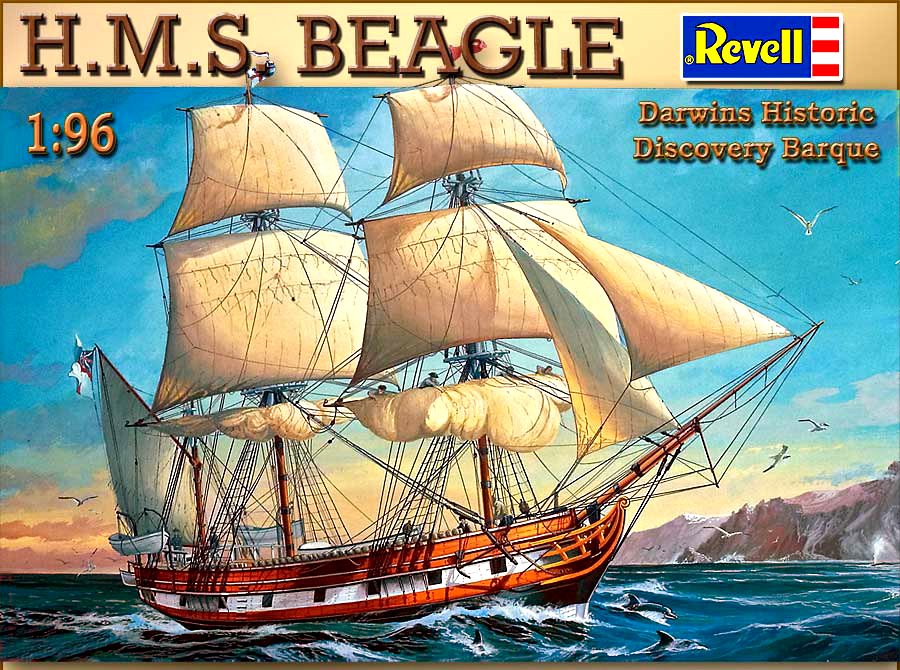
Today in 1831: The Voyage of The Beagle Begins
From Today In Science History:
In 1831, Charles Darwin set sail from Plymouth harbour on his voyage of scientific discovery aboard the HMS Beagle, a British Navy ship. The Captain Robert FitzRoy was sailing to the southern coast of South America in order to complete a government survey. Darwin had an unpaid position as the ship's naturalist, at age 22, just out of university.
Originally planned to be at sea for two years, the voyage lasted five years, making stops in Brazil, the Galapogos Islands, and New Zealand. From the observations he made and the specimens he collected on that voyage, Darwin developed his theory of biological evolution through natural selection, which he published 28 years after the Beagle left Plymouth.
In 1831, Charles Darwin set sail from Plymouth harbour on his voyage of scientific discovery aboard the HMS Beagle, a British Navy ship. The Captain Robert FitzRoy was sailing to the southern coast of South America in order to complete a government survey. Darwin had an unpaid position as the ship's naturalist, at age 22, just out of university.
Originally planned to be at sea for two years, the voyage lasted five years, making stops in Brazil, the Galapogos Islands, and New Zealand. From the observations he made and the specimens he collected on that voyage, Darwin developed his theory of biological evolution through natural selection, which he published 28 years after the Beagle left Plymouth.
Tuesday, December 22, 2015
Preniered This Day (1933): Son of Kong
With the fantastic success of “King Kong”, RKO tried to cash in by rushing this sequel into production and release within the same year (1933). It did not do nearly as well, but animator Willis O’Brien did manage to bring some of the same charm to the big white ape that he did to Kong.
Discovered This Day (1938): First Living Coelacanth
From Today In Science History:
In 1938, a coelacanth, a primitive fish thought extinct, was discovered. Marjorie Courtenay-Latimer was curator of the museum in the port town of East London, northeast of Cape Town, South Africa, and always interested in seeing unusual specimens. Hendrik Goosen, captain of the trawler Nerine, called her to see his catch of the day before, made at about 70-m depth, off the Chalumna River southwest of East London. She spotted an unusual 5-ft fish in his "trash" fish pile. It was pale mauvy-blue with iridescent silver markings. She sent a sketch to Dr J.L.B. Smith, a senior lecturer in chemistry from Rhodes University in Grahamstown for identification. It was hailed as the zoological discovery of the century and equated to finding a living dinosaur!
“December 22, 1938, Captain Goosen and the Nerine put into East London harbour with the usual catch of sharks, rays, starfish and rat-tail fish. But there was one unusual fish amongst the catch that had been caught in about 70 meters, near the mouth of the Chalumna River. Once ashore Captain Goosen left word at the Museum that there were several specimens at the ship for Miss Latimer. At first she said that she was too busy because she was hard at work cleaning and articulating the fossil reptile bones collected from Tarkastad. But as it was so near Christmas time she decided to go and wish the crew a “Happy Christmas” and took a taxi to the docks. There, attracted by a blue fin amid the pile of sharks, she found a magnificent fish. She and her assistant put it in a bag and persuaded a reluctant taxi driver to take it to the museum in the boot of the car. It measured 150 cm and weighed 57.5 kg. From its hard bony scales with sharp, prickly spines and paired fins looking rather like legs, she knew that it must be some kind of primitive fish.Learn more about Latimeria chalumnae at the Australian Museum fish web page.
But her greatest problem was to preserve it until it could be identified. It was extremely hot, the fish, was too big to go into a bath and she could not find any organization willing to store it in a freezer. Although she was told by experts that it was only a type of rock cod and that she was making a fuss about nothing, she persisted in her attempts to save the fish for science. At first it was wrapped in cloths soaked in formalin but eventually, on the 26th, Mr. Center, a taxidermist, skinned it. Unfortunately the internal organs were thrown away. Marjorie went home disappointed and worried that she had not saved all the soft parts. What she had done, however, was to write immediately to her friend, JLB Smith, and send him her famous sketch of the strange fish.”
Miss Courtenay-Latimer's sketch of the first coelacanth which she posted to JLB Smith.
Died This Day: Ferdinand Vandiveer Hayden
From Today In Science History
Hayden (Sept. 7, 1829 - Dec. 22, 1887) was an American geologist and explorer of the U.S. West.
After finishing a medical school training (1853), his early career began in paleontology for James Hall, collecting fossils in the Badlands and the Upper Missouri Valley. It is believed he made the first North American discovery of dinosaur remains (1854) during this expedition.
His work in the Great Plains and Rocky Mountains helped lay the foundation of the U.S. Geological Survey. Hayden is credited with having the Yellowstone geyser area declared the first national park (1872).
Image and more info on Hayden HERE.
Hayden (Sept. 7, 1829 - Dec. 22, 1887) was an American geologist and explorer of the U.S. West.
After finishing a medical school training (1853), his early career began in paleontology for James Hall, collecting fossils in the Badlands and the Upper Missouri Valley. It is believed he made the first North American discovery of dinosaur remains (1854) during this expedition. His work in the Great Plains and Rocky Mountains helped lay the foundation of the U.S. Geological Survey. Hayden is credited with having the Yellowstone geyser area declared the first national park (1872).
Image and more info on Hayden HERE.
Monday, December 21, 2015
Born This Day: Hermann Muller
The
father of radiation genetics, Muller (Dec. 21, 1890 – April 5, 1967) began his career with T.H. Morgan studying mutations in fruit flies. He was the first to increase the mutation rate using heat, later using 50 kilovolt X-rays to induce an even greater incidence of mutations. Muller was awarded the Nobel Prize for Physiology or Medicine in 1946.
Muller long warned about needless exposures to radiation and their associated risks of cancer and heritable genetic effects. By the late 1940s, the nuclear weapons testing program had begun and Muller was a vocal critic of the Atomic Energy Commission's views on the hazards of worldwide fallout.
father of radiation genetics, Muller (Dec. 21, 1890 – April 5, 1967) began his career with T.H. Morgan studying mutations in fruit flies. He was the first to increase the mutation rate using heat, later using 50 kilovolt X-rays to induce an even greater incidence of mutations. Muller was awarded the Nobel Prize for Physiology or Medicine in 1946.Muller long warned about needless exposures to radiation and their associated risks of cancer and heritable genetic effects. By the late 1940s, the nuclear weapons testing program had begun and Muller was a vocal critic of the Atomic Energy Commission's views on the hazards of worldwide fallout.
Born This Day: Sewell Wright
From the ever eloquent Today In Science History:
Wright (Dec. 21, 1889 – March 3, 1988) was an American geneticist who was one of the founders of modern theoretical population genetics. He researched the effects of inbreeding and crossbreeding with guinea pigs, and later on the effects of gene action on inherited characteristics. He adopted statistical techniques to develop evolutionary theory.
Wright is best known for his concept of genetic drift, called the Sewell Wright effect - that when small populations of a species are isolated, out of pure chance the few individuals who carry certain relatively rare genes may fail to transmit them. The genes may therefore disappear and their loss may lead to the emergence of new species, although natural selection has played no part in the process.
Check out genetic drift at The Biology Project at The University of Arizona.
Learn more about Wright HERE. Image from HERE
Wright (Dec. 21, 1889 – March 3, 1988) was an American geneticist who was one of the founders of modern theoretical population genetics. He researched the effects of inbreeding and crossbreeding with guinea pigs, and later on the effects of gene action on inherited characteristics. He adopted statistical techniques to develop evolutionary theory. Wright is best known for his concept of genetic drift, called the Sewell Wright effect - that when small populations of a species are isolated, out of pure chance the few individuals who carry certain relatively rare genes may fail to transmit them. The genes may therefore disappear and their loss may lead to the emergence of new species, although natural selection has played no part in the process.
Check out genetic drift at The Biology Project at The University of Arizona.
Learn more about Wright HERE. Image from HERE
Sunday, December 20, 2015
How Rays & Skates Got Their Wings
Molecular mechanisms underlying the exceptional adaptations of batoid fins. 2015. PNAS
The evolution of the striking, wing-like pectoral fins of skates and rays relied on repurposed genes. Studying embryonic skates, they discovered that the rear portion of the fin is built by typical limb-development genes; but the front portion develops through a different set of genes that are usually found in the shoulder areas of other species.
Read more at Phys. Org.
The evolution of the striking, wing-like pectoral fins of skates and rays relied on repurposed genes. Studying embryonic skates, they discovered that the rear portion of the fin is built by typical limb-development genes; but the front portion develops through a different set of genes that are usually found in the shoulder areas of other species.
Read more at Phys. Org.
Saturday, December 19, 2015
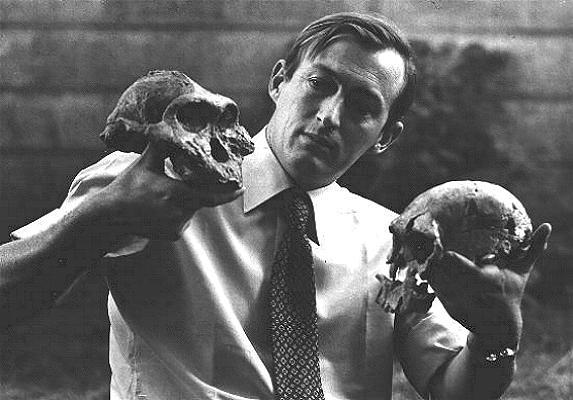
Born This Day: Richard Leakey

From Today In Science History:
Leakey is a Kenyan physical anthropologist, paleontologist and second of three sons of noted anthropologists Louis Leakey and Mary Leakey. At an early age, he decided he wanted nothing to do with paleoanthropology and started a expedition business. In 1964, he led an expedition to a fossil site which sparked his interest in paleontology. Since then he has been responsible for extensive fossil finds of human ancestral forms in East Africa, including a Homo habilis skull found in 1972, and a Homo erectus skull found in 1975.
His discoveries showed that man's ancestors used tools, which shows intelligence, and lived in eastern Africa at least 3 million years ago - almost doubling the previously accepted age of human origins.
Learn more about The Leakey Foundation HERE.
Friday, December 18, 2015
Died This Day: Sir Riichard Owen
Owen (July 20, 1804 – Dec. 18, 1892) was an English anatomist and paleontologist who is remembered for his contributions to the study of fossil animals and for his strong opposition to the views of Charles Darwin.He coined the word "Dinosaur" meaning "terrible reptile" (1842). Owen synthesized French anatomical work, especially from Cuvier and Geoffroy, with German transcendental anatomy. He gave us many of the terms still used today in anatomy and evolutionary biology, including "homology". In 1856, he was appointed Superintendent of the British Museum (Natural History). From Today In Science History
Died This Day: Jean-Baptiste Lamarck
Lamarck (Aug.1, 1744 – Dec. 18, 1829) was French biologist noted for his speculations about the evolution of living things,
particularly his theory that acquired traits are inheritable (such as giraffes who, he said, through stretching to reach tall trees, make their necks longer, and then pass on longer necks to their offspring.) This Lamarckism idea is controverted by Darwinian theory.
He published a flora of France (1778) and a system of classification for invertebrate animals, published in his Histoire naturelle des animaux sans vertebres (7 vols, 1815-22). In 1809 Lamarck published his theory of evolution (in Philosophie zoologique). Lamarck's speculations about the physical and natural world found little favour among his contemporaries and he died blind and in poverty. From Today in Science History
From info on Lamarck from The Victorian Web.
particularly his theory that acquired traits are inheritable (such as giraffes who, he said, through stretching to reach tall trees, make their necks longer, and then pass on longer necks to their offspring.) This Lamarckism idea is controverted by Darwinian theory.He published a flora of France (1778) and a system of classification for invertebrate animals, published in his Histoire naturelle des animaux sans vertebres (7 vols, 1815-22). In 1809 Lamarck published his theory of evolution (in Philosophie zoologique). Lamarck's speculations about the physical and natural world found little favour among his contemporaries and he died blind and in poverty. From Today in Science History
From info on Lamarck from The Victorian Web.
Died This Day: Theodosius Dobzhansky
Dobzhansky (Jan.25, 1900–Dec. 18, 1975) is noted for being one of the architects of the modern Synthetic Theory of evolution. During the first 20 years of the 20th century, Darwin's theory of natural selection had fallen out of favor among scientists. Many thought it
insufficient to explain the origin of adaptations, while new discoveries of gene mutations seemed to them to be incompatible with Darwinian models of change.
But in 1937 Dobzhansky published his book, Genetics and the Origin of Species, that was the first systematic overview view encompassing organic diversity, variation in natural populations, selection, isolating mechanisms (a term he coined) and species as natural units.
Later, working with Sewall Wright, he went on to demonstrate how evolution can produce stability and equilibrium in populations rather than constant directional change. link. image.
insufficient to explain the origin of adaptations, while new discoveries of gene mutations seemed to them to be incompatible with Darwinian models of change. But in 1937 Dobzhansky published his book, Genetics and the Origin of Species, that was the first systematic overview view encompassing organic diversity, variation in natural populations, selection, isolating mechanisms (a term he coined) and species as natural units.
Later, working with Sewall Wright, he went on to demonstrate how evolution can produce stability and equilibrium in populations rather than constant directional change. link. image.
Thursday, December 17, 2015
Born This Day: Williard Libby, Father of Carbon 14 Dating
Dec 17, 1908 – Sept. 8, 1980
Libby was an American chemist who won the Nobel Prize for Chemistry in 1960 for developing the technique of carbon-14 dating. Duing WWII he worked on the Manhattan Project. Libby was responsible for the gaseous diffusion separation and enrichment of the Uranium-235 which was used in the atomic bomb.
On 18 May 1952, he determined that the age of Stonehenge was 1848 BC, based on analysis of radioisotopes in charcoal. He also discovered that tritium could be used for dating water.
Libby was an American chemist who won the Nobel Prize for Chemistry in 1960 for developing the technique of carbon-14 dating. Duing WWII he worked on the Manhattan Project. Libby was responsible for the gaseous diffusion separation and enrichment of the Uranium-235 which was used in the atomic bomb.On 18 May 1952, he determined that the age of Stonehenge was 1848 BC, based on analysis of radioisotopes in charcoal. He also discovered that tritium could be used for dating water.
Wednesday, December 16, 2015
Premiered (1932): This Day: Betty Boop's Museum
In 1932 Betty Boop had her own “Night in the Museum”.
Died This Day: Eugène Dubois
Jan. 28, 1858-Dec. 16, 1940
Eugene Dubois joined the Dutch Army as a medical officer, and used spare time from his medical duties to search for fossils, first in Sumatra and then in Java.
He searched on the banks of the Solo River, with two assigned engineers and a crew of convict labourers to help him. In September 1890, his workers found a human, or human-like, fossil at Koedoeng Broeboes. This consisted of the right side of the chin of a lower jaw and three attached teeth. In August 1891 he found a primate molar tooth.
Two months later and one
meter away was found an intact skullcap, the fossil which would be known as Java Man. In August 1892, a third primate fossil, an almost complete left thigh bone, was found between 10 and 15 meters away from the skullcap.
In 1894 Dubois published a description of his fossils, naming them Pithecanthropus erectus (now Home erectus), describing it as neither ape nor human, but something intermediate. In 1895 he returned to Europe to promote the fossil and his interpretation. A few scientists enthusiastically endorsed Dubois' work, but most disagreed with his interpretation. Many scientists pointed out similarities between the Java Man skullcap and Neandertal fossils.
Around 1900 Dubois ceased to discuss Java Man, and hid the fossils in his home while he moved on to other research topics. geology and paleontology. It was not until 1923 that Dubois, under pressure from scientists, once again allowed access to the Java Man fossils. That and the discovery of similar fossils caused it to once again become a topic of debate.
Eugene Dubois joined the Dutch Army as a medical officer, and used spare time from his medical duties to search for fossils, first in Sumatra and then in Java.
He searched on the banks of the Solo River, with two assigned engineers and a crew of convict labourers to help him. In September 1890, his workers found a human, or human-like, fossil at Koedoeng Broeboes. This consisted of the right side of the chin of a lower jaw and three attached teeth. In August 1891 he found a primate molar tooth.Two months later and one
meter away was found an intact skullcap, the fossil which would be known as Java Man. In August 1892, a third primate fossil, an almost complete left thigh bone, was found between 10 and 15 meters away from the skullcap.In 1894 Dubois published a description of his fossils, naming them Pithecanthropus erectus (now Home erectus), describing it as neither ape nor human, but something intermediate. In 1895 he returned to Europe to promote the fossil and his interpretation. A few scientists enthusiastically endorsed Dubois' work, but most disagreed with his interpretation. Many scientists pointed out similarities between the Java Man skullcap and Neandertal fossils.
Around 1900 Dubois ceased to discuss Java Man, and hid the fossils in his home while he moved on to other research topics. geology and paleontology. It was not until 1923 that Dubois, under pressure from scientists, once again allowed access to the Java Man fossils. That and the discovery of similar fossils caused it to once again become a topic of debate.
Monday, December 14, 2015
Died This Day: Louis Agassiz
May 28, 1807 - Dec. 14, 1873
(Jean) Louis (Rodolphe) Agassiz was a Swiss-born U.S. naturalist, geologist, and teacher who made revolutionary contributions to the study of natural science with landmark work on glacier activity and extinct fishes. Agassiz began his work in Europe, having studied at the University of Munich and then as chair in natural history in Neuchatel in Switzerland. While there he published his landmark multi-volume description and classification of fossil fish.
In 1846 Agassiz came to the U.S. to lecture before Boston's Lowell Institute. Offered a professorship of Zoology and Geology at Harvard in 1848, he decided to stay, becoming a citizen in 1861. His innovative teaching methods altered the character of natural science education in the U.S. Link
More info HERE
Sunday, December 13, 2015
Armored kinorhynch-like scalidophoran animals from the early Cambrian
Armored kinorhynch-like scalidophoran animals from the early Cambrian. 2015. Scientific Reports
The new fossil can tell scientists more about how and why body segmentation evolved many times among not only arthropods, but several other groups of animals. Scientists believe kinos and arthropods should have evolved more than 540 million years ago. More so, the authors found that E. rarus has a number of similarities with living kinorhynchs, suggesting a close evolutionary relationship. Read more at: Phys Org.
A team of Virginia Tech researchers have discovered fossils of kinorhynch worms – commonly known as mud dragons – dating back more than 530 million years.The historic find – made in South China—fills a huge gap in the known fossil record of kinorhynchs, small invertebrate animals that are related to arthropods, featuring exoskeletons and segmented bodies, but not jointed legs. The specimen is 0.078 inches in length and l0.02 inches in width, roughly half the size of a grain of rice
The new fossil can tell scientists more about how and why body segmentation evolved many times among not only arthropods, but several other groups of animals. Scientists believe kinos and arthropods should have evolved more than 540 million years ago. More so, the authors found that E. rarus has a number of similarities with living kinorhynchs, suggesting a close evolutionary relationship. Read more at: Phys Org.
Subscribe to:
Posts (Atom)


