Thursday, April 05, 2012

Died This Day: Hermann Muller

The father of radiation genetics, Muller (Dec. 21, 1890 – April 5, 1967) began his career with T.H. Morgan studying mutations in fruit flies. He was the first to increase the mutation rate using heat, later using 50 kilovolt X-rays to induce an even greater incidence of mutations. Muller was awarded the Nobel Prize for Physiology or Medicine in 1946.

Muller long warned about needless exposures to radiation and their associated risks of cancer and heritable genetic effects. By the late 1940s, the nuclear weapons testing program had begun and Muller was a vocal critic of the Atomic Energy Commission's views on the hazards of worldwide fallout.


FF © Marvel Comics
Info from here and here.

Born This Day: Alpheus Hyatt

From Today in Science History:

Hyatt (April 5, 1838 - Jan. 15, 1902) was a U.S. zoologist and paleontologist who studied invertebrate fossil records, the evolution of the cephalopods (a class of mollusks including squids and octopuses) and the development of primitive organisms.

Along with E. Cope, Hyatt was the most prominent American neo-Lamarckian. Based on the analogy of ontogeny with phylogeny, Hyatt claimed that lineages, like individuals, had cycles of youth, old age, and death (extinction). This idea became the bulwark of orthogenetic theories in the U.S.

Hyatt was the founder and first editor of the American Naturalist, and first president of Woods Hole laboratory.

Friday, March 30, 2012

Monday, March 26, 2012

Born This Day: Richard Dawkins

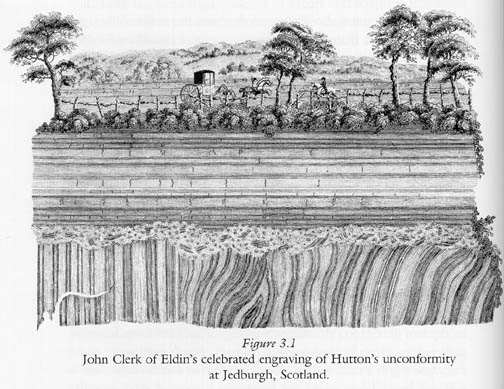
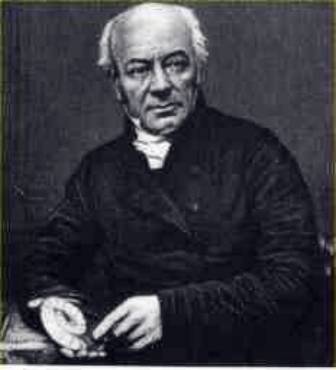
Died This Day: James Hutton

Hutton (June 3, 1726 – March 26, 1797) is the 'Father of Uniformitarianism' which explains the features of the Earth's crust by means of natural processes over geologic time. Link


More Info Here

Saturday, March 24, 2012

Thursday, March 22, 2012

Born This Day: Adam Sedgwick

Adam Sedgwich (March 22, 1785 - January 27, 1873) was an English geologist who first applied the name Cambrian to the geologic period of time, now dated at 570 to 505 million years ago. In 1818 he became Woodwardian Professor of Geology at Cambridge, holding a chair that had been endowed ninety years before by the natural historian John Woodward.

He lacked formal training in geology, but he quickly became an active researcher in geology and paleontology. Many years after Sedgwick's death, the geological museum at Cambridge was renamed the Sedgwick Museum of Geology in his honor. The museum is now part of the Department of Earth Sciences at Cambridge University. From Today In Science History.

Monday, March 19, 2012

Philip Currie Awarded The Explorer's Medal


Philip in Mongolia with his wife, Eva Koppelhus

Congratulations to Philip Currie who was awarded The Explorer's Medal this past weekend in New York City at The Explorers Club's annual dinner.

The Explorers Club Medal is the highest honor that can be bestowed by the Club. It is awarded for extraordinary contributions directly in the field of exploration, scientific research, or to the welfare of humanity. Previous recipients include Roy Chapman Andrews, Sir Edmund Hillary, and the crew of Apollo 11.

Details HERE

Sunday, March 18, 2012

Died This Day: Othniel Charles Marsh

In 1866, the Peabody Museum of Natural History was founded with a gift from George Peabody. The same year his nephew, O.C. Marsh (Oct. 29, 1831 - Mar. 18, 1899), was also named its Professor of Paleontology, the first such appointment in the United States. In 1869 Marsh used the inheritance from his uncle to start to amass large collections of vertebrate fossils. He went on to long and successful career as a vertebrate paleontologist, most of which was spent feuding with is rival, E.D.Cope.

Marsh and Cope started their careers on a cordial basis, but the relationship soon soured over an incident involving Cope's fossil of Elasmosaurus. Embarrassingly, Marsh pointed out that its backbones were mounted backwards. To settle the argument the men agreed to let Joseph Leidy decide who was right. Leidy promptly removed the head from one end and placed it on what Cope had thought was the tail. Cope than frantically tried to collect all of the copies of a recently printed publication that contained his erroneous reconstruction. From Today In Science History:

Saturday, March 17, 2012

Died This Day: Jack Arnold


Jack Arnold (Oct. 14, 1916 - March 17, 1992) directed a number of classic SF films including The Creature From the Black Lagoon, Revenge of the Creature, The Incredible Shrinking Man, and It Came From Outer Space, as well as few not-so-classics (but still much loved) such as Monster on Campus. Throughout the ‘60’s and into the early 80’s he had a successful career as a TV producer and director.

Wednesday, March 14, 2012

New Stone Age Fossils from SW China

Human Remains from the Pleistocene-Holocene Transition of Southwest China Suggest a Complex Evolutionary History for East Asians. 2012. D. Curnoe, et al. PLoS ONE 7(3): e31918

Fossils from two caves in south-west China have revealed a previously unknown Stone Age people and give a rare glimpse of a recent stage of human evolution with startling implications for the early peopling of Asia.
The fossils are of a people with a highly unusual mix of archaic and modern anatomical features and are the youngest of their kind ever found in mainland East Asia.

Dated to just 14,500 to 11,500 years old, these people would have shared the landscape with modern-looking people at a time when China's earliest farming cultures were beginning.

While Asia today contains more than half of the world's population, scientists still know little about how modern humans evolved there after our ancestors settled Eurasia some 70,000 years ago, notes Professor Curnoe.

Until now, no fossils younger than 100,000 years old have been found in mainland East Asia resembling any species other than our own (Homo sapiens). This indicated the region had been empty of our evolutionary cousins when the first modern humans appeared. The new discovery suggests this might not have been the case after all and throws the spotlight once more on Asia. link

Don't Bogart That Fossil!

A reply to Martill - The Bearable Heaviness of Liability. 2012. Langer, M. C., et al. Geoscientist Online, Special 12 March 2012


Planning on collecting fossils somewhere other than your home country? Then you should read this article (a response to this one). I particularly like their closing line;

"Finally, fossils are not for everyone. They are invaluable cultural/scientific treasures that should not sit in a mobster’s living room!"

Tuesday, March 13, 2012

Gryphoceratops & Unescoceratops, New Leptoceratopsids

New leptoceratopsids from the Upper Cretaceous of Alberta, Canada. 2012. Cret. Res.:35: 69-80.


Unescoceratops (top), Gryphoceratops (bottom); Art © Julius Csotonyi

Abstract: Two new leptoceratopsid neoceratopsians are described based on partial dentaries collected from the Dinosaur Park (Campanian) and Milk River (Santonian) formations of Alberta. The new Campanian taxon has a unique dentary tooth shape not shared by other leptoceratopsid taxa, which has implications for the evolution of the Leptoceratopsidae. The Santonian specimen represents the oldest known leptoceratopsid (w83 Ma), and probably represents the smallest adult-sized ceratopsian known from North America.

Press release is HERE


Rip Hunter © DC Comics

Died This Day: Charles Lapworth

From Today In Science History:

Lapworth (Sept. 30, 1842 - March 13, 1920) was an English geologist who proposed what came to be called the Ordovician period (505 to 438 million years old) of geologic strata. Lapworth is famous for his work with marine fossils called graptolites.

By fastidiously collecting the tiny, colonial sea creatures, he figured out the original order of layered rocks that had been faulted and folded in England's Southern Uplands. This method of correlating rocks with graptolites became a model for similar research throughout the world.

In 1879, Lapworth proposed a new classification of Lower Paleozoic rocks with the Ordovician, between the redefined Cambrian and Silurian periods. The name comes from an ancient Welsh tribe, the Ordovices.

Monday, March 12, 2012

Roarhide!!!


Art © Mark Harrison
If you're in the UK then check your local newsstand for the new 2000AD prog. 1774 that's worth picking up just for this 'Calvin'-inspired (I would guess) cover by Mark Harrison.

Mark discusses the making of the cover HERE.

Born This Day: WIlliam Buckland

From The Victorian Web:

Buckland (March 12, 1784 – August 15, 1856) was the first man to identify and name a dinosaur (Megalosaurus), although the name dinosaur had not yet been coined by Richard Owen.

Partly in response to the controversial works of Cuvier, Buckland wrote Reliquiae Diluvianae (1823) in which he argued that the evidence of geology alone demonstrated that a great flood had covered the entire globe. This move helped to make geology look more respectable in a religiously conservative England and perhaps to advance Buckland's own career at Oxford by making geology appear to be a respectable companion to the classics.

Buckland was a bit of an eccentric, given to outlandish dress and behavior. Although Buckland was immensely influential as a scientist, his rakish reputation gave many of his staid early Victorian contemporaries considerable difficulty in accepting his work.

More info from HERE. Image from HERE

Sunday, March 11, 2012

Bill Stout Teaches How to Draw Mythical Creatures for Kids at CMNH

After William Stout delivered an excellent lecture on Friday evening at the Cleveland Museum of Natural History, he lead a drawing class for kids on Saturday morning.

Joining him as instructors were Jeff Day and Lee Gambol from the CMNH, and visiting medical illustrator & cartoonist, Michael Marcynuk, in town from Toronto.


Bill explains how to draw a T. rex!


Lee draws a sea serpent.


Jeff and Bill discuss how to draw zombies

Mike and Lee draw gryphons.


Michael Marcynuk and friend.


After the class was over, Bill answered lots of questions and drew sketches for some of the kids.

Died This Day: Roy Chapman Andrews


Andrews (Jan.26, 1884-Mar.11, 1960) was an American naturalist, explorer, and author, who spent his entire career at the American Museum of Natural History. He led many important scientific expeditions with financial support through his public lectures and books, particularly in central Asia and eastern Asia. On his 1925 central Asian expedition, the first known dinosaur eggs were discovered,as well as skull and parts of Baluchitherium, the largest known land mammal. During his career Andrews was the museum's best promoter, creating immense excitement and successfully advancing research there. link

Andrews was also acknowledged as one of the more important inspirations for the creation of the character of Indiana Jones.

Saturday, March 10, 2012

Friday, March 09, 2012

Coronacollina, Harbinger of Skeletons!

The advent of hard-part structural support among the Ediacara biota: Ediacaran harbinger of a Cambrian mode of body construction. 2012. E. C. Clites, et al. Geology, published online February 14, 2012,

Paleontologists have discovered the oldest animal with a skeleton. Called Coronacollina acula, the organism is between 560 million and 550 million years old, which places it in the Ediacaran period, before the explosion of life and diversification of organisms took place on Earth in the Cambrian. The Cambrian Period, marked by a rapid diversification of life-forms on Earth as well as the rise of mineralized organisms, ranges 542-488 million years ago.


Image: Droser lab, UC Riverside.
Coronacollina acula is seen in the fossils as a depression measuring a few millimeters to 2 centimeters deep. But because rocks compact over time, the organism could have been bigger – 3 to 5 centimeters tall. Notably, it is constructed in the same way that Cambrian sponges were constructed.


Reconstruction of C. aculla; D.Garson\Droser lab
Coronacollina acula lived on the seafloor. Shaped like a thimble to which at least four 20-40-centimeter-long needle-like "spicules" were attached, Coronacollina acula most likely held itself up by the spicules. The researchers believe it ingested food in the same manner a sponge does, and that it was incapable of locomotion.

The appearance of Coronacollina acula signals that the initiation of skeletons was not as sudden in the Cambrian as was thought, and that Ediacaran animals like it are part of the evolutionary lineage of animals as we know them.