Saturday, November 28, 2009

Died This Day: Karl Ernst von Baer

Feb 29, 1792 - Nov 28, 1876

Von Baer was a Prussian-Estonian embryologist who discovered the mammalian egg (1827) and the notochord. He established the new science of comparative embryology alongside comparative anatomy with the publication of two landmark volumes (in 1828 and 1837) covering the range of existing knowledge of the prebirth developments of vertebrates.

He showed that mammalian eggs were not the follicles of the ovary but microscopic particles inside the follicles. He described the development of the embryo from layers of tissue, which he called germ layers, and demonstrated similarities in the embryos of different species of vertebrates.

From Today In Science History

Born This Day: Dunkinfield Henry Scott

Nov. 28, 1854 – Jan. 29, 1934


Painting by Mary Parrish
Scott was an English paleobotanist and leading authority of his time on the structure of fossil plants, one of those who laid the foundations of paleobotany. He conducted experiments in the Jodrell Laboratory in Kew Gardens, where he became its honorary keeper (1892-1906). In collaboration with W.C. Williamson, he wrote three papers on fossil-plant morphology (1894-95).

Scott continued writing papers after Williamson's death and in which he described many otherwise unknown fossil plants. He wrote the classic Studies in Fossil Botany, which greatly popularized the subject.

From Today In Science History

Wednesday, November 25, 2009

Killing Claws

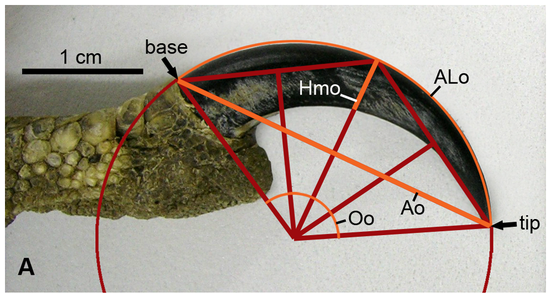
Predatory Functional Morphology in Raptors: Interdigital Variation in Talon Size Is Related to Prey Restraint and Immobilisation Technique. 2009. D. W. Fowler, et al. PLoS ONE 4(11): e7999.

Abstract [edit]: Talon size variation among digits can be used to distinguish families of raptors and is related to different techniques of prey restraint and immobilisation.

The hypertrophied talons on digits (D) I and II in Accipitridae have evolved primarily to restrain large struggling prey while they are immobilised by dismemberment.

Falconidae have only modest talons on each digit and only slightly enlarged D-I and II. For immobilisation, Falconini rely more strongly on strike impact and breaking the necks of their prey, having evolved a ‘tooth’ on the beak to aid in doing so.

Pandionidae have enlarged, highly recurved talons on each digit, an adaptation for piscivory, convergently seen to a lesser extent in fishing eagles.

Strigiformes bear enlarged talons with comparatively low curvature on each digit, part of a suite of adaptations to increase constriction efficiency by maximising grip strength, indicative of specialisation on small prey.

Restraint and immobilisation strategy change as prey increase in size. Small prey are restrained by containment within the foot and immobilised by constriction and beak attacks. Large prey are restrained by pinning under the bodyweight of the raptor, maintaining grip with the talons, and immobilised by dismemberment (Accipitridae), or severing the spinal cord (Falconini).

Within all raptors, physical attributes of the feet trade off against each other to attain great strength, but it is the variable means by which this is achieved that distinguishes them ecologically.

Scott Sampson's The Whirlpool of Life

Scott Sampsn has lauched his own blog, The Whirlpool of Life (http://scottsampson.blogspot.com).

Quoting from Scott’s letter to me:
“[The blog] will encompass a wide range of topics, spanning paleontology, evolution, ecology, education, sustainability, philosophy, and psychology. The thread that I will use to weave these topics together is science education in general, and nature literacy more specifically. My underlying contention (shared by growing numbers of people from all walks of life) is that the current sustainability crisis is not merely an external crisis of the environment. More fundamentally, it is an internal crisis of worldview rooted in a dysfunctional relationship between humans and nonhuman nature. Thus, any meaningful resolution to the eco-crisis will require not only more and “greener” technologies, but also a fundamental shift in awareness and understanding, particularly within industrialized nations.

“… I am convinced that the concept of evolution has a pivotal role to play in this gargantuan effort. Darwin triggered an intellectual revolution, with effects that have cascaded through science and society. Yet, one hundred and fifty years later, a portion of Darwin’s legacy, the foundational concept of common descent through deep time, remains virtually untapped outside academia. In particular, this concept has not been communicated in such a way as to shift our relationship with nature.

Schooling for sustainability, I will contend, should be rooted in three intertwined elements, each of which informs the other two: 1) new metaphors that augment the dominant “life-as-machine” and “web of life examples, enabling us to perceive reality in new and instructive ways; 2) the Great Story (encompassing the evolution of cosmos, life, and culture), which provides a universal origin myth and anchors us in the deep time evolution of life on Earth; and 3) a strong emphasis on place. Together, this trio of elements—metaphor, story, and place—have the power to transform education and help trigger a change in the dominant worldview, thereby serving as springboard to a sustainable future.”

Tuesday, November 24, 2009

Happy 150th Birthday to The Origin of The Species

From Today In Science History:

In 1859, The Origin of Species by Means of Natural Selection was published in England to great acclaim. In this groundbreaking book by British naturalist Charles Darwin, he argued that species are the result of a gradual biological evolution in which nature encourages, through natural selection, the propagation of those species best suited to their environments. This book is unquestionably one of the most influential in the history of science.

Monday, November 23, 2009

Homo floresiensis statistically a new species

Homo floresiensis and human evolution. 2009. W.Jungers and K. Baab. Significance; published online Nov. 19.

In 2003 Australian and Indonesian scientists discovered small-bodied, small-brained, hominin (human-like) fossils on the remote island of Flores in the Indonesian archipelago. This discovery of a new human species called Homo floresiensis has spawned much debate with some researchers claiming that the small creatures are really modern humans whose tiny head and brain are the result of a medical condition called microcephaly.

Researchers have confirmed that Homo floresiensis is a genuine ancient human species and not a descendant of healthy humans dwarfed by disease. Using statistical analysis on skeletal remains of a well-preserved female specimen, researchers determined the "hobbit" to be a distinct species and not a genetically flawed version of modern humans.

The cranial capacity of LB1 was just over 400 cm, making it more similar to the brains of a chimpanzee or bipedal "ape-men" of East and South Africa. The skull and jawbone features are much more primitive looking than any normal modern human. Statistical analysis of skull shapes show modern humans cluster together in one group, microcephalic humans in another and the hobbit along with ancient hominins in a third.

Come to the Origin of the Species Birthday Party in CLE


If you're in town tomorrow please come and join in the fun!

Ida Seminar Now On-line


On November 7th, 2009, a symposium was arranged in Oslo where the scientists behind 'Ida' met two of their most distinguished critics.

The presentations with full video are now on-line HERE at the Naturhistorisk Museum, Oslo website.

Friday, November 20, 2009

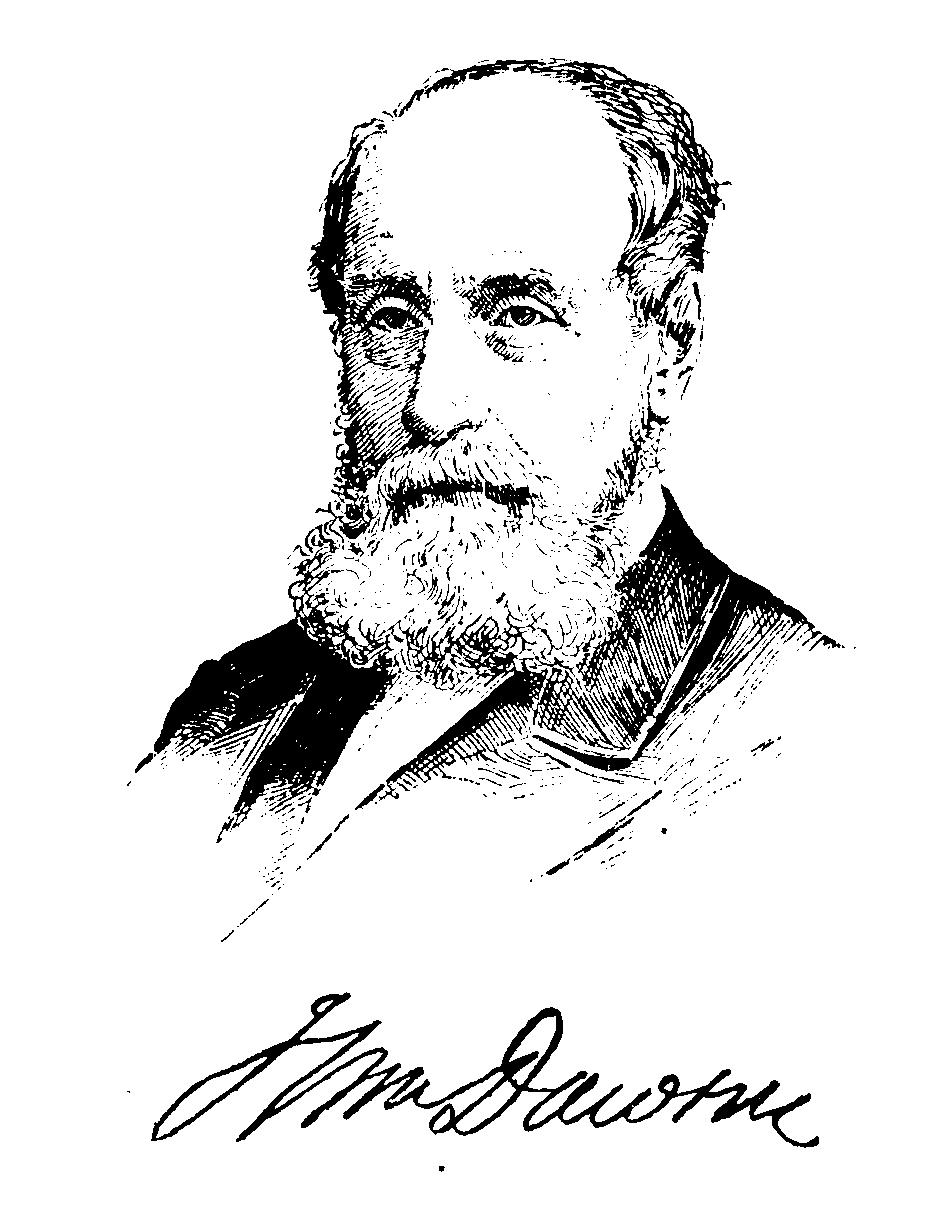
Died This Day: John William Dawson

October 30, 1820 - November 20, 1899

Dawson was a Canadian geologist who made numerous contributions to paleobotany and extended the knowledge of Canadian geology. Dawson was born and raised in Pictou, Nova Scotia, where the many sandstone and coal formations provided fertile ground for his first scientific explorations, which culminated in the publication of Acadian Geology. He made many important discoveries of fossil life, great and small. These included fossil plants, trackways of lowly invertebrates, footprints, skeletons of reptiles and amphibians, millipedes and the earliest land snails. When the famous geologist Charles Lyell visited coal deposits in Pictou, Dawson acted as his guide.

In 1851, Dawson and Lyell teamed up again to examine the interiors of fossil tree trunks at Joggins, Nova Scotia. They discovered the remains of some of the earliest known reptiles, Hylonomus lyelli, along with other rare fossils, propelling this part of the world into the international spotlight.

Dawson became principal of McGill College in Montreal in 1854, which he made into a reputable institution. He remained there, teaching geology and palaeontology and acting as librarian, until his retirement. One of his lifelong dreams was realized in 1882 when Peter Redpath gave money to McGill for the construction and establishment of a museum, naming Dawson as director. Today the Peter Redpath Museum of Natural History houses many specimens from Dawson's personal collection.

Info from HERE and HERE. Images from HERE and HERE.

Tuesday, November 17, 2009

Debuted This Day (1918): The Ghost of Slumber Mountain

The Ghost of Slumber Mountain was written and directed by special effects pioneer Willis O'Brien and produced by Herbert M. Dawley. When O’Brien went on to greater fame with The Lost World Dawley sued the film makers for patent infrigment, claiming that he, not O’Brien, had invented stop-motion animation. Although this was not the case, filming saw head up while the case was sorted out.

Both O’Brien and Hawley star as the ghost of Mad Dick and Uncle Jack Holmes, respectively.

Coelacanth Fry Filmed

A handout photo taken by Japanese researchers of Aquamarine Fukushima aquarium in October shows a juvenile coelacanth. Japanese marine researchers have said they found and successfully filmed a young coelacanth -- a rare type of fish known as "a living fossil" -- in deep water off Indonesia. link

Monday, November 16, 2009

Skeletons Dancing On The Head of a Pin

Morphological criteria for recognising homology in isolated skeletal elements: comparison of traditional and morphometric approaches in conodonts. 2009. D. Jones, et al. Palaeontology, published Online: Nov 13.


Four different types of conodont teeth from different species. Photo: U of Leicester
Earth's oceans teemed with conodonts for 300 million years; they were the most common vertebrates around, and they were the first to evolve teeth. In fact the conodont skeleton was all teeth: a basket of hacksaw-shaped blades which was extended out of the mouth to grab prey, behind which lay pairs of slicing blades and crushing teeth.

Ancient marine rocks are often packed with thousands of scattered microscopic conodont teeth, with many species jumbled up together. To make matters worse, within any one animal, teeth from different parts of the skeleton looked almost identical!

To help sort out the problem scientists studied material from a 425 million year old rock deposit in Ontario, Canada which, unlike almost all other deposits in the world, preserves both scattered teeth and complete skeletons of conodonts. This material allowed them to compare the success rate of experts in placing the teeth in the correct positions within the skeleton, with the success rate of computer-based methods.

So how do the experts stack up against the machines?

"Pretty well" says Jones. "This is reassuring for palaeontologists! but the computer-based approach did at least as well and was also consistent.

Glyptodont Tails Good For Smashing

The sweet spot of a biological hammer: the centre of percussion of glyptodont (Mammalia: Xenarthra) tail clubs. 2009. R. Ernesto Blanco, et al. Proc. R. Soc. B 167: 3971-3978.

Abstract: The importance of the centre of percussion (CP) of some hand-held sporting equipment (such as tennis rackets and baseball bats) for athletic performance is well known. In order to avoid injuries it is important that powerful blows are located close to the CP.

Several species of glyptodont (giant armoured mammals) had tail clubs that can be modelled as rigid beams (like baseball bats) and it is generally assumed that these were useful for agonistic behaviour. However, the variation in tail club morphology among known genera suggests that a biomechanical and functional analysis of these structures could be useful.

Here, we outline a novel method to determine the CP of the glyptodont tail clubs. We find that the largest species had the CP very close to the possible location of horny spikes. This is consistent with the inference that they were adapted to delivering powerful blows at that point. Our new analysis reinforces the case for agonistic use of tail clubs in several glyptodont species.

Sunday, November 15, 2009

Book Review: Dinosaur Odyssey


Title: Dinosaur Odyssey: Fossil Threads in the Web of Life
Author: Scott Sampson
Publishing Information: University of California Press; HC; 352 pages; 1st edition (October 30, 2009) $29.95
Ordering Numbers: ISBN-10: 0520241630; ISBN-13: 978-0520241633
Review copy: complimentary
Read the Publisher blurb

Review: The author has taken the traditional approach of most dinosaur books that discusses each group chapter by chapter and turned it on its ear. In Dinosaur Odyssey Sampson is more concerned with what dinosaurs can teach us about the evolution of the Earth and our place in the intricate web of life than about any specific specimen of T. rex or Triceratops. Scott weaves an engaging story of the history of Earth and takes entire chapters to explain topics like the energy cycle and the soil formation, all the time relating these seemingly mundane topics back to why they are intimately involved with dinosaurs as living animals. And that’s where this book excels – making the dinosaurs and their world come alive while at the same time making the reader understand that the same processes that shaped the dinosaurs and their ecology also shapes ours today. Although the dinosaur’s extinction (except birds!) was caused by outside forces, the one staring us squarely in the eye is self-imposed. In many ways this book will, I suspect, act as a jumping off point for Scott’s long term commitment surrounding education and sustainability.

Scott touches on the major advances in dinosaur palaeobiology and uses these to discuss at length his (developed with Jim Farlow) concept of ‘mesothermy’ to explain the success of the dinosaurs, especially the gigantic sauropods. In this ‘Goldilocks’ hypothesis dinosaur were not quite endotherms and not quite ectotherms, but something in between that that gave them the benefits of each type of physiology while minimizing their disadvantages. As a hypothesis this is fine but I still want to read the scientific paper that presents this concept in detail!

The real strength of this book is Scott’s ease at weaving sometimes dry or complicated topics into an engaging narrative that brings dinosaurs alive, and the book often works best when Scott is relating events that he was directly involved in. I’m hoping that he (or some member of the crew) will write a book about the work and adventures of collecting dinosaurs in Madagascar.

The book is sparsely illustrated with an eight page colour insert, and a colour cover & evocative pencil illustrations by Michael Skrepnick that introduce each chapter.

This book is written for someone with at least a high school understanding of biology and is, in a sense, an updated version of Bob Bakker’s Dinosaur Heresies for a new generation of palaeo-enthusiasts and palaeontologists to be. For the kids and their parents who know Scott as the host of the highly successful “Dinosaur Train”, here’s hoping that he writes a version of this book for the little ones.

Finally, I have to divulge that Scott is an old friend of mine and at one time our research interests strongly overlapped. Those of you who know Scott for his charismatic speaking skills will be pleased to know that his passion also comes through in his writing.

Recommendation: Highly recommended.
PS. Scott Sampson will be speaking and signing copies of Dinosaur Odyssey at the Cleveland Museum of Natural History this January as part of our Explorer Speaker series. More info here.

Book Review: The Great Dinosaur Discoveries

Title: The Great Dinosaur Discoveries
Author: Darren Naish
Publishing Information: University of California Press; HC, 192 pages; 1st edition (October 21, 2009) $29.95
Ordering Numbers: ISBN-10: 0520259750; ISBN-13: 978-0520259751
Review copy: complimentary
Read the Publisher's blurb

Review: The Great Dinosaur Discoveries is another in the very long line of highly illustrated, general dinosaur books that line the sale walls at your local box mall bookstore. I was prepared to write it off without even looking at it, but once I opened it I was interested enough to read it through to the end (it’s a quick read).

What sets this book ahead of the rest of the pack is its design and layout that groups most items under discussion into well-arranged, double-paged spreads with well written text and well chosen photos or illustrations.

The book divides the dinosaurs under discussion into their various historical eras of discovery, but manages to make the story of Mantell’s description of Iguanodon (1825) as colourful and interesting as that of Eotriceratops (2007). I liked the short appendix listing key figures in dinosaur palaeontology.

This book is designed for anyone interested in dinosaurs but will probably be most favoured by the pre-high school reader who has not already devoured the more dinosaur academic texts. It’s the perfect book to recommend to someone who is looking for a general book on dinosaurs for their kids. I can see myself grabbing this book off the shelf for a quick fact check or an image for a talk.

Recommendation: Recommended

Saturday, November 14, 2009

Born This Day: Sir Charles Lyell

Nov. 14, 1797 - Feb. 22, 1875


From Minnesota State University at Mankato comes this excellent bio on Lyell:
Sir Charles Lyell attended Oxford University at age 19. Lyell's father was an active naturalist. Lyell had access to an elaborate library including subjects such as Geology.

When Lyell was at Oxford, his interests were mathematics, classics, law and geology. He attended a lecture by William Buckland that triggered his enthusiasm for geology. Lyell originally started his career as a lawyer, but later turned to geology. He became an author of The Geological Evidence of the Antiquity of Man in 1863 and Principles of Geology. Lyell argued in this book that, at the time, presently observable geological processes were adequate to explain geological history. He thought the action of the rain, sea, volcanoes and earthquakes explained the geological history of more ancient times.

Lyell rebelled against the prevailing theories of geology of the time. He thought the theories were biased, based on the interpretation of Genesis. He thought it would be more practical to exclude sudden geological catastrophes to vouch for fossil remains of extinct species and believed it was necessary to create a vast time scale for Earth's history. This concept was called Uniformitarianism. The second edition of Principles of Geology introduced new ideas regarding metamorphic rocks. It described rock changes due to high temperature in sedimentary rocks adjacent to igneous rocks. His third volume dealt with paleontology and stratigraphy. Lyell stressed that the antiquity of human species was far beyond the accepted theories of that time.

Charles Darwin became his dear friend and correspondent. Darwin is quoted saying, "The greatest merit of the Principles was that it altered the whole tone of one's mind, and therefore that, when seeing a thing never seen by Lyell, one yet saw it through his eyes."

Image from King’s College London.

Friday, November 13, 2009

Born This Day: Helen Mack


Nov 13, 1913 – August 13, 1986
Helen starred as Helene Peterson in “Son of Kong”, the quickie follow up to “King Kong”. Once again Carl Denham leads a beautiful girl into danger on Skull Island.

Thursday, November 12, 2009

Book Review: Evolution by Douglas Palmer


Title: Evolution: The Story of Life
Author: Douglas Palmer; with illustrations by Peter Barrett
Publishing Information: University of California Press, HC, 374 pages, November 9, 2009, $39.95
Ordering Numbers: ISBN-10: 0520255119; ISBN-13: 978-0520255111
Review copy: complimentary

From the Publisher:
Evolution recreates the 3.5-billion-year story of life on Earth in stunning detail through vivid full-color illustrations and graphics, the latest scientific information, and hundreds of photographs. At the heart of the book is an astonishing, beautifully detailed panorama by renowned illustrator Peter Barrett that, in 100 double-page site reconstructions, offers a freeze-frame view of the communities. These groundbreaking artworks, based on the most recent findings at some of the most famous fossil sites around the world, are paired with an authoritative and highly informative text written for a wide audience of readers.

Review: One of the most frequent questions I get as a palaeontologist is “what did prehistoric locality ‘X’ look like when its fossils were alive?" This book answers that in the 100 double spread reconstructions of 100 famous (or important) fossil localities from around the world. Each panorama provides a synthesize of the environment including important flora and fauna, with concise inserts providing more details on time, place, taxa and other notable facts. The results are truly stunning and will give both the casual fossil enthusiast and jaded professionals new insights into each important evolutionary time slice.

The reconstructions are supplemented by a 45 page examination of the evolutionary ‘tree of life’, a 21 page “Site Gazetteer” with more info and references on the localities depicted in the book, 29 pages of info on the species covered in the book, and finally a fold out that stitches all of the panoramas together.

This prodigious work is recommended, but there is at least one caveat to add. Many of the panoramas average together large regions leading to some factual errors on closer examination, e.g. the Dinosaurs of “Cretaceous Park” (p. 174-5) implies that it covers the Judith River Formation of Montana and Alberta but it actually just covers the Dinosaur Park Formation of Alberta. There are no Chasmosaurus specimens known from Montana, and the Judith River Formation of Canada is not known as the Belly River Formation in Canada (there is no Belly River Formation). The only reference for this region (the excellent Dinosaur Provincial Park edited by Currie and Koppelhus) misspells the second author’s name. And, although many important fossils have been collected from Ukhaa Tolgod in Mongolia, the famous fighting dinosaurs (P. 172) are actually from Togrogiin Shiree. Hopefully these minor problems can be corrected for the 2nd edition.

Recommendation: Recommended

Early Life In Cool Oceans

Oxygen and hydrogen isotope evidence for a temperate climate 3.42 billion years ago. 2009. M. T. Hren, et al. Nature 462: 205-208.
Early life on Earth may have developed more quickly than previously thought.
The Earth's climate was far cooler – perhaps more than 50 degrees – billions of years ago. That means that conditions for life were much easier, and that life that did exist at the time was not under as much stress as previously believed.

The team examined rocks from the Buck Reef Chert in South Africa that are known to be about 3.4 billion years old, among the oldest ever discovered. They found features in them that are consistent with formation at water temperatures significantly lower than previous studies had suggested.

"Our research shows that the water temperature 3.4 billion years ago was at most 105 degrees, and while that's potentially very warm, it's far below the temperatures of 155 degrees or more that previous research has implied," Tice explains.


SubHuman © M. Ryan & M. Schultz
The situation could be compared to the geysers currently found in Yellowstone National Park. The hundreds of hot spring pools in the park vary considerably in temperature but the water in the pools that is farthest from the center is cooler.

When water temperatures fall to below 163 degrees or so, close to the high temperatures previously hypothesized for the early ocean, communities of green photosynthetic bacteria begin to grow on the pool floor. These communities become thicker as water temperature continues to drop off away from the pool centers.

"There is life even in the hottest water, and microbes there have evolved to grow in those harsh conditions. But there is even more life present in the cooler waters," he notes. "We think this is similar to what conditions might have been like billions of years ago." link

Aardonyx celestae: New Transitional Sauropodomorph

A new transitional sauropodomorph dinosaur from the Early Jurassic of South Africa and the evolution of sauropod feeding and quadrupedalism. 2009. A. Yates, et al. Proc. Royal Soc. B. Published online before print November 11.

Abstract [edit]: gen. et sp. nov. is described from the upper Elliot Formation (Early Jurassic) of South Africa. It is found to be the sister group of a clade of obligatory quadrupedal sauropodomorphs (Melanorosaurus + Sauropoda) and thus lies at the heart of the basal sauropodomorph–sauropod transition.

The narrow jaws of A. celestae retain a pointed symphysis but appear to have lacked fleshy cheeks. Broad, U-shaped jaws were previously thought to have evolved prior to the loss of gape-restricting cheeks. However, the narrow jaws of A. celestae retain a pointed symphysis but appear to have lacked fleshy cheeks, demonstrating unappreciated homoplasy in the evolution of the sauropod bulk-browsing apparatus.

The limbs of A. celestae indicate that it retained a habitual bipedal gait although incipient characters associated with the pronation of the manus and the adoption of a quadrupedal gait are evident through geometric morphometric analysis (using thin-plate splines) of the ulna and femur. Cursorial ability appears to have been reduced and the weight bearing axis of the pes shifted to a medial, entaxonic position, falsifying the hypothesis that entaxony evolved in sauropods only after an obligate quadrupedal gait had been adopted.

Read the story at Nat. Geo. News