Sunday, January 07, 2007

Grand Canyon & The Nostrils of Satan

From the press release:

Grand Canyon National Park is not permitted to give an official estimate of the geologic age of its principal feature, due to pressure from Bush administration appointees. Despite promising a prompt review of its approval for a book claiming the Grand Canyon was created by Noah's flood rather than by geologic forces, more than three years later no review has ever been done and the book remains on sale at the park.

“In order to avoid offending religious fundamentalists, our National Park Service is under orders to suspend its belief in geology,” stated PEER Executive Director Jeff Ruch. “It is disconcerting that the official position of a national park as to the geologic age of the Grand Canyon is ‘no comment.”


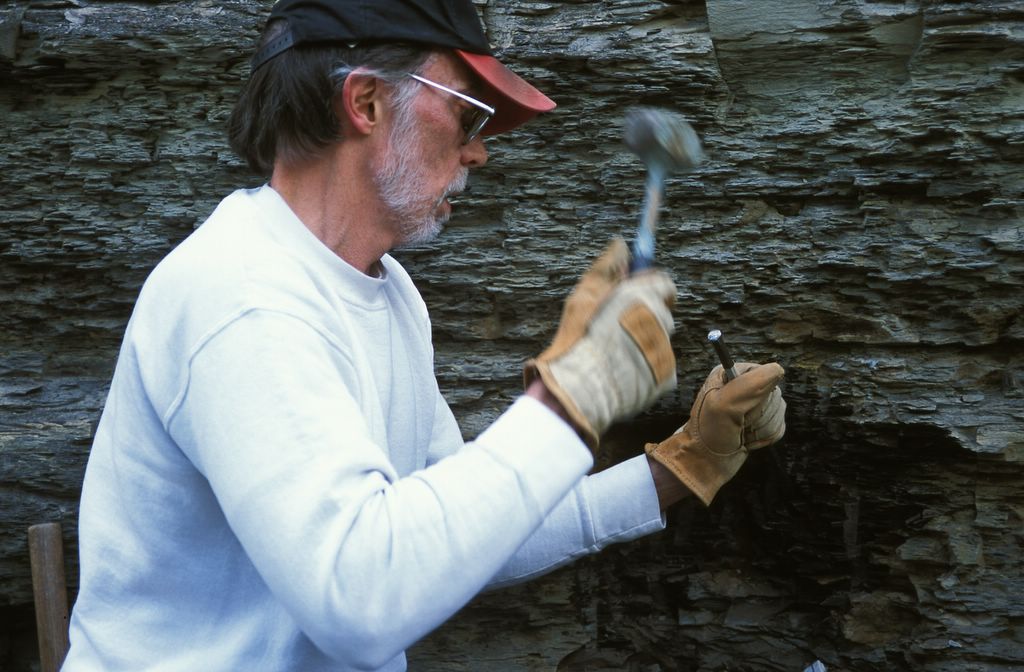
Photo from the Four-Eyed Bat Blog, © Kipling West. Note mug from Drumheller.

“As one park geologist said, this is equivalent of Yellowstone National Park selling a book entitled Geysers of Old Faithful: Nostrils of Satan,” Ruch added, pointing to the fact that previous NPS leadership ignored strong protests from both its own scientists and leading geological societies against the agency approval of the creationist book.

Saturday, January 06, 2007

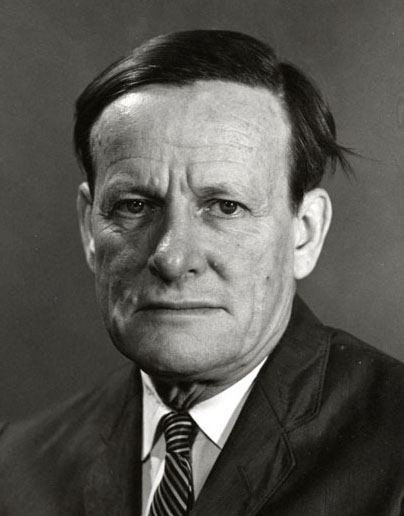
Born This Day: George Ledyard Stebbins

Jan. 6, 1906 - Jan. 19 2000.

From the U Calif., Berkeley:

Along with Dobzhansky (1900 - 1975), animal systematist Ernst Mayr, and paleontologist George Gaylord Simpson (1902 - 1984), Stebbins is considered one of the "architects" of the modern evolutionary synthesis of the 1930s and 1940s, an intellectual watershed and historic turning point that brought together research in cytology, genetics, systematics, paleontology into a common evolutionary framework. This synthesis, which had the effect of reconciling the often opposing views of laboratory-oriented geneticists and natural history oriented systematists, made Charles Darwin's theory of evolution by natural selection the centerpiece of the new discipline of evolutionary biology.

In this role, Stebbins is credited with bringing a modern framework to the study of plant evolution, and he is perhaps best known for his book Variation and Evolution in Plants, published by Columbia University Press (NY) in 1950. In the 1940s, Stebbins also played an important role in organizing the nascent Society for the Study of Evolution, of which he became the third president in 1948, and used his position to speak out for the botanical side of evolutionary studies, a field that had been dominated by zoologists. Photo link.

Friday, January 05, 2007

New "Journal of Paleontological Sciences"

Edited from the press release:

Some academic paleontologists are concerned that scientifically significant fossil specimens, held in private hands, may become inaccessible to researchers. Many mainstream paleontological journals do not publish on privately held specimens for these reasons.

This month, a new online journal called the “Journal of Paleontological Sciences” (JPS) is scheduled to be released that addresses the concerns of academia, helps bridge the gap between private and public paleontologists and allows for the publication of privately held fossil specimens.

The journal and its associated website are sponsored by the Association of Applied Paleontological Sciences (AAPS) (formerly, The American Association of Paleontological Suppliers), a group of several hundred members from around the world who deal in commercial and amateur paleontology.

The website is free of charge and open to anyone interested in fossils. It will have several sections including a specimen registry where significant fossils and their important contextual information can be recorded, tracked and viewed by researchers and enthusiasts. It will also have a photographic image registry where images of privately held fossil specimens may be downloaded. This type of registry has never been available before.

The journal section of the website will publish scientific articles in all aspects of paleontology. Each manuscript will be professionally peer-reviewed by two reviewers from a pool of over 20 academic paleontologists enlisted to help ensure quality. Manuscripts which base their conclusions on privately held specimens are carefully scrutinized and there are strict rules regarding future accessibility to the fossils.

At the end of each year, journal articles deemed to be of the highest significance will be published in an annual printed edition available for a small fee. The journals new website can be found at http://www.aaps-journal.org.

This should raise a ruckus….

O2 & The Rise of Life

Late-Neoproterozoic Deep-Ocean Oxygenation and the Rise of Animal Life. 2007. D. E. Canfield et al. Science 315: 92–95.
A record based on iron species in minerals implies that the deep ocean only became oxygenated after the last major Precambrian glaciation, just before the rise of metazoans.
Abstract: Because animals require oxygen, an increase in late-Neoproterozoic oxygen concentrations has been suggested as a stimulus for their evolution. The iron content of deep-sea sediments shows that the deep ocean was anoxic and ferruginous before and during the Gaskiers glaciation 580 million years ago and that it became oxic afterward. The first known members of the Ediacara biota arose shortly after the Gaskiers glaciation, suggesting a causal link between their evolution and this oxygenation event. A prolonged stable oxic environment may have permitted the emergence of bilateral motile animals some 25 million years later.

Wednesday, January 03, 2007

Origin of Homo mermanus


Well, I'm more or less back, but the palaeontological PR machines have obviously not cranked back up after the Christmas break. So, to help tide us over is this bit of fun from Atomic Surgery.

Sunday, December 31, 2006

Here Comes Alley Oop!


Below are the first three strips from V.T. Hamlin’s classic cartoon, “Alley Oop”, scanned from the reprint collection from Dragon Lady Press “Alley Oop” #1 (1987). The blog will return to regular postings later in the week.


Thursday, December 28, 2006

Born This Day: Alfred Sherwood Romer

Dec. 28, 1894 – Nov. 5, 1973

”Romer was director of the Museum of Comparative Zoology at Harvard University until his retirement in 1961 and was one the singularly most influential vertebrate paleontologists of the 20th Century. His work ranged over virtually every conceivable subject within that field, although it was the osteology and taxonomy of the therapsids and other proto-mammals which was nearest his heart.

In addition to this work, Romer was acutely interested in the origin and initial adaptive radiation of tetrapods, and his work became the basis for a theory of tetrapod origins which was canon until the description of Acanthostega gunnari by Clack & Coates in the 1990s. Romer was ahead of his time in his defense of monophyly of Dinosauria though he did feel that Theropoda was not ancestral to birds.” link from EvoWiki.org

Romer’s book, Vertebrate Paleontology (1966), was for many years THE textbook on VP and is still well worth picking up. One of Romer’s students, Bob Carroll, wrote an updated version entitled, ‘Vertebrate Paleontology and Evolution’, in 1987. image

No, I'm not back yet but I could not let this pass by.

Monday, December 25, 2006

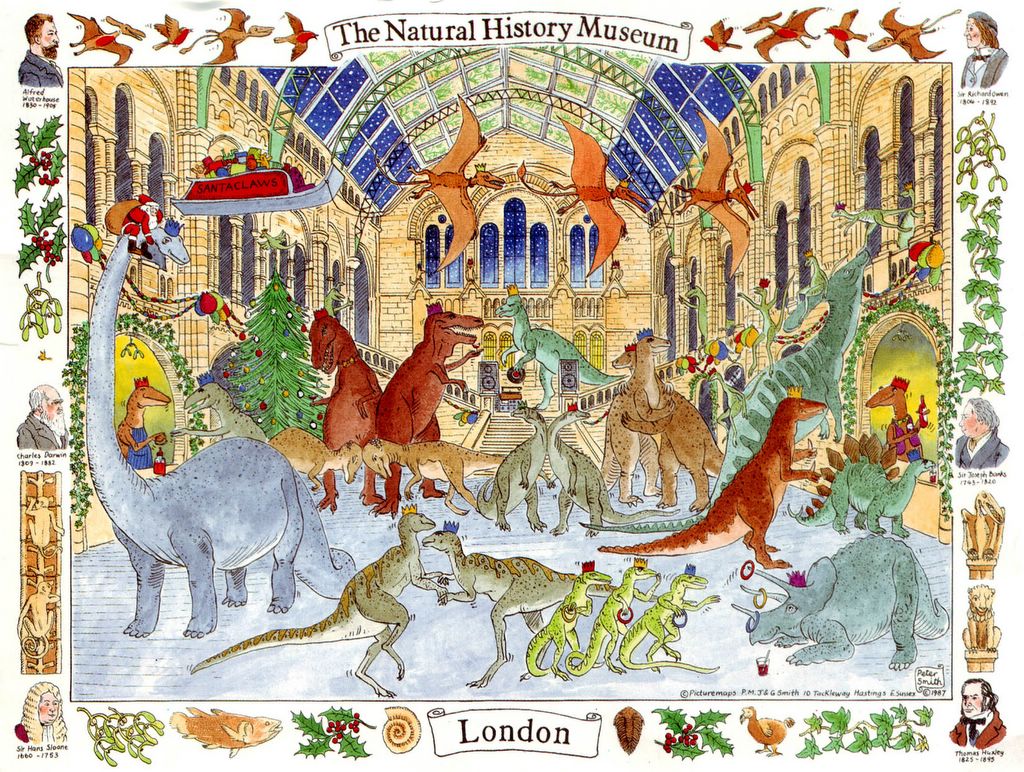
Happy Holidays!


My old friend Per Ahlberg send this card many years ago when he was still working in London at the Natural History Museum. So, I'm sharing it with you.

Have a safe and happy holiday. I'll be back to the blog in a week or so.

Some of the Great People I Work With

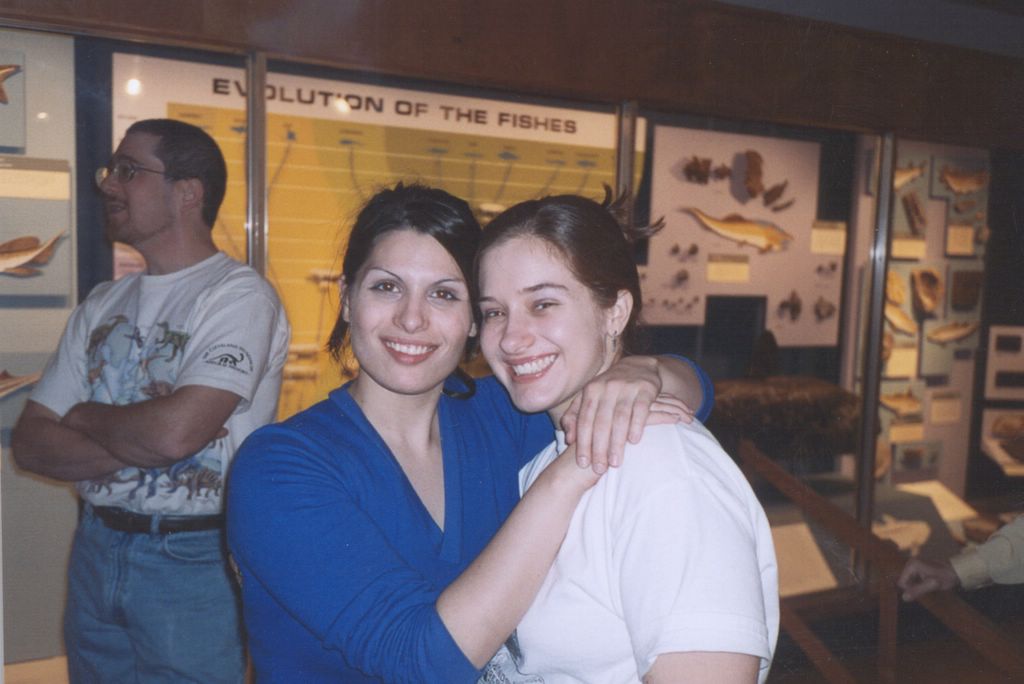
The Palaeoblog will be taking a short break to enjoy the holidays. But I'd like to wish all the cool folks I work with at the Cleveland Museum of Natural History all the best and thanks for a great year! Sorry I don't have photos of everyone...


VP volunteers Delina & Nicole. Casting Technician David Chapman supervises work in the gallaries.


Joe Klunder, Arky (from Exhibits) and Delina help move a new Dunkleosteous specimen onto display.


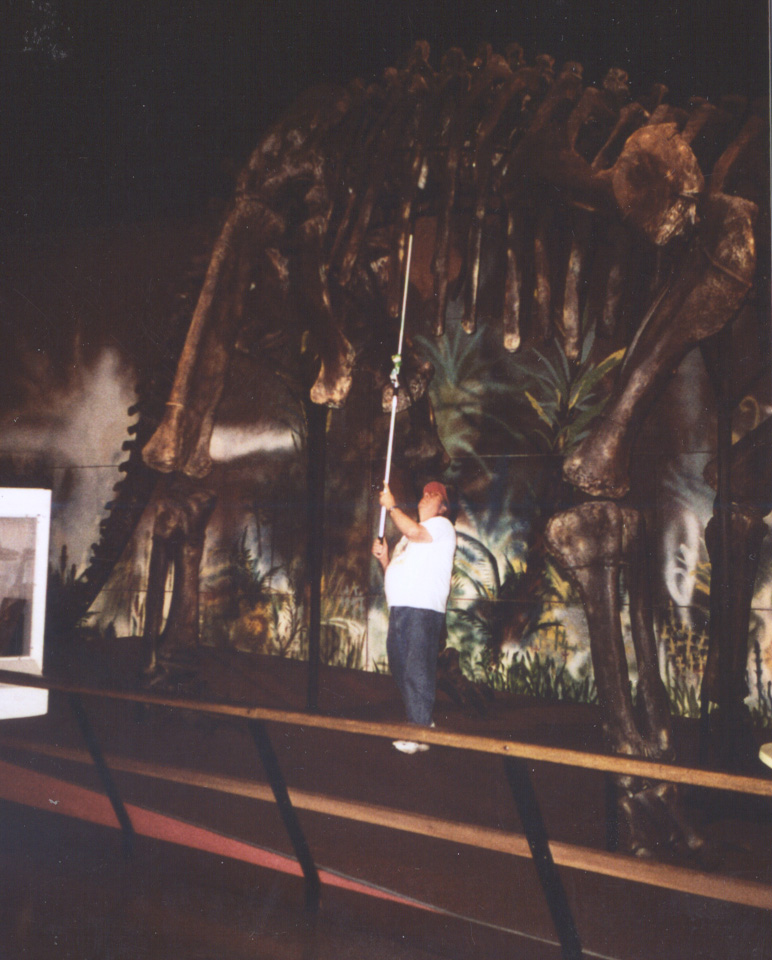
Joe cleans up our Haplocanthosaurus.


Ace preparator Gary Jackson collects some fossil fish material


Joe puts the finishing touches on 'Jane'.


Volunteer Steve Green preps some dino material


Volunteer Dale Z. digs into the Cleveland Shales

Sunday, December 24, 2006

The Return of Chinggis Khaan


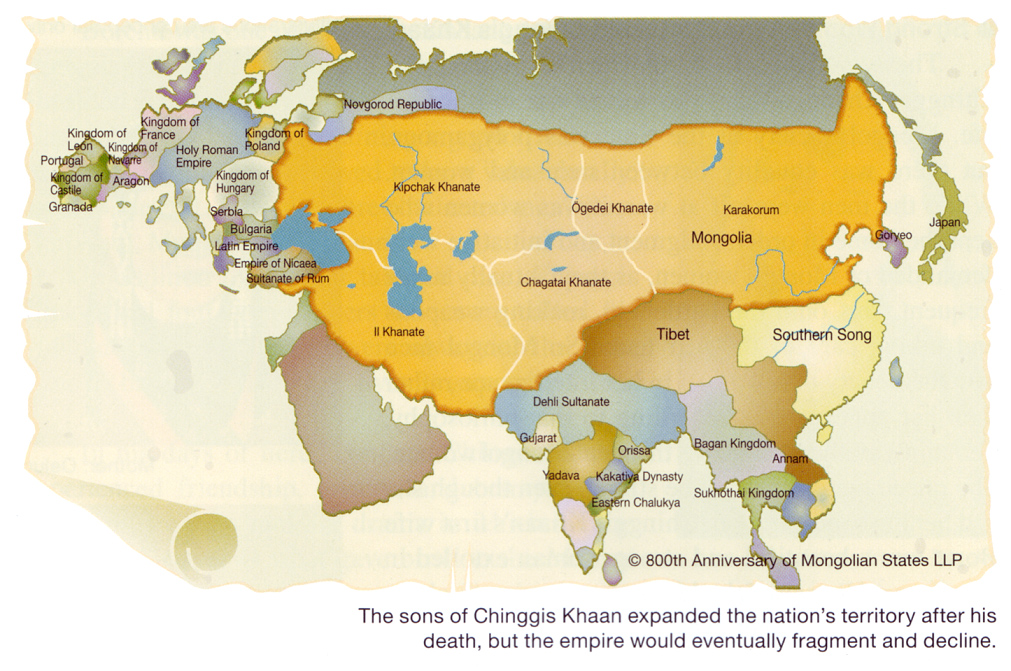
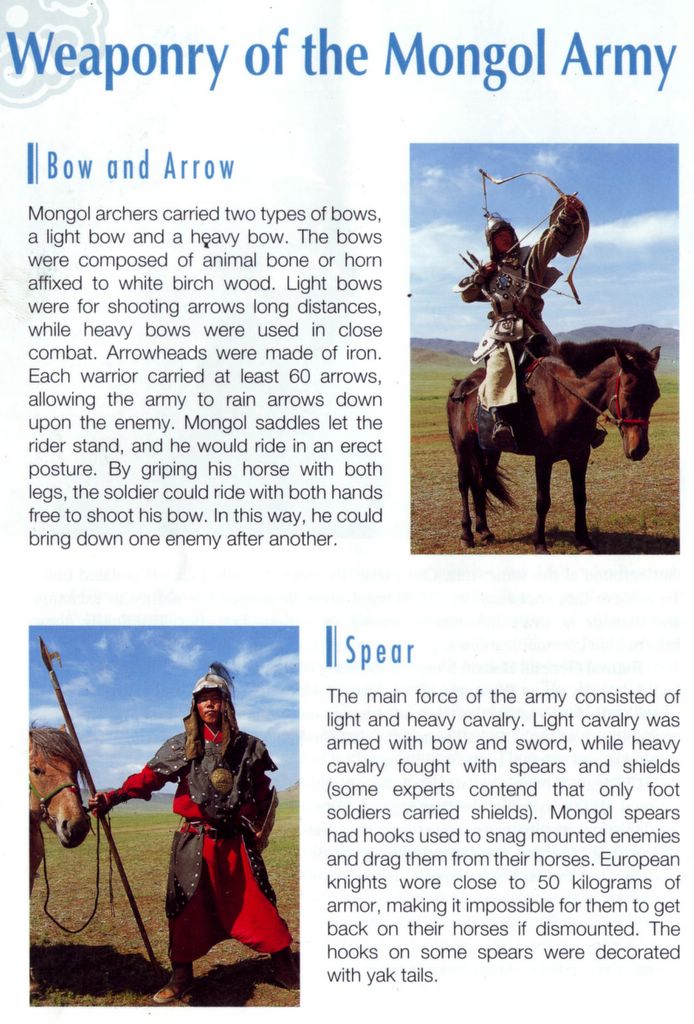
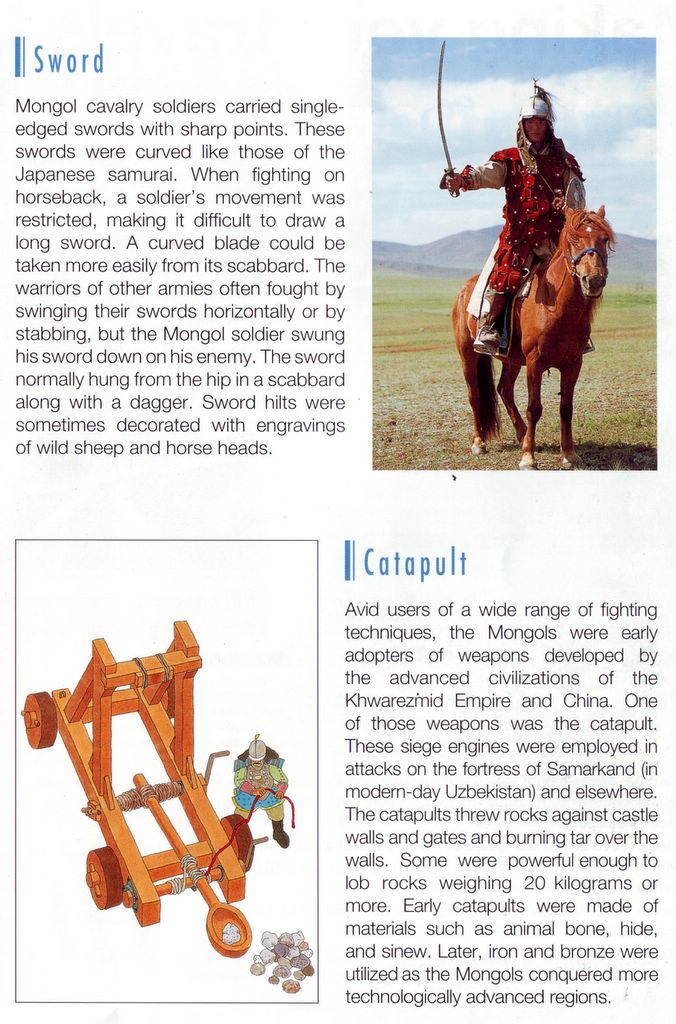
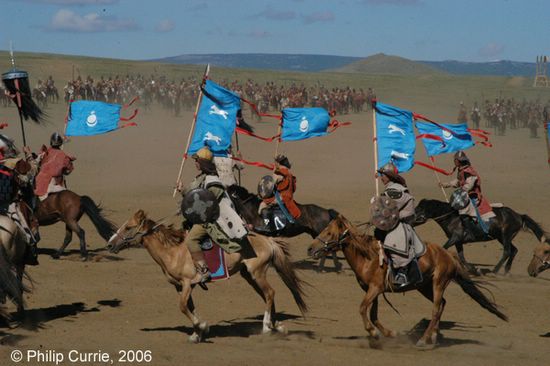
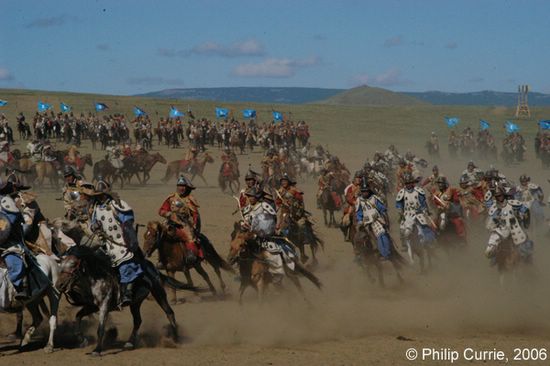
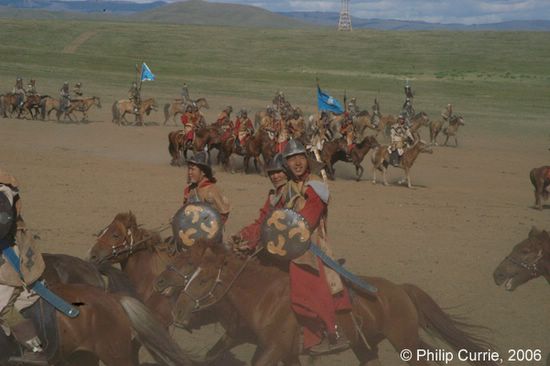
Last summer while I was in Mongolia we did not get much down time from the field. However, one afternoon between the two expeditions I took part in, the crew was taken to the village of Tugrug south of Ulannbaatar to witness “The Return of Chinggis Khaan After 800 Years”, part of Mongolia’s celebration the 800th anniversary of the founding of the Mongolian empire. In a grand display over 500 horsemen recreated the prossessions and battles of the Khaan armies.


I didn’t have my camera with me so all these great photos are by Philip Currie.


Happy Holidays from the Korean International Dinosaur Expedition (2006)!

Saturday, December 23, 2006

Giant Squid Captured


From National Geographic News:

Tsunemi Kubodera, a scientist with Japan's National Science Museum, caught the 7 m long animal earlier this month near the island of Chichijima, some 960 km southeast of Tokyo.

His team snared the animal using a line baited with small squid and shot video of the russet-colored giant as it was hauled to the surface. The squid, a young female, "put up quite a fight" as the team attempted to bring it aboard, Kudobera told the Associated Press, and the animal died from injuries sustained during the capture.

Giant squid, the world's largest invertebrates, are thought to reach sizes up to 18 m, but because they live at such great ocean depths they have never been studied in the wild.

Friday, December 22, 2006

Discovered This Day: Living Coelacanth


Internal anatomy of the coelacanth, Latimeria chalumnae.

From Today In Science History:

In 1938, a coelacanth, a primitive fish thought extinct, was discovered. Marjorie Courtenay-Latimer was curator of the museum in the port town of East London, northeast of Cape Town, South Africa, and always interested in seeing unusual specimens. Hendrik Goosen, captain of the trawler Nerine, called her to see his catch of the day before, made at about 70-m depth, off the Chalumna River southwest of East London. She spotted an unusual 5-ft fish in his "trash" fish pile. It was pale mauvy-blue with iridescent silver markings. She sent a sketch to Dr J.L.B. Smith, a senior lecturer in chemistry from Rhodes University in Grahamstown for identification. It was hailed as the zoological discovery of the century and equated to finding a living dinosaur!

Read this excerpt from ICHTHOS:
December 22, 1938, Captain Goosen and the Nerine put into East London harbour with the usual catch of sharks, rays, starfish and rat-tail fish. But there was one unusual fish amongst the catch that had been caught in about 70 meters, near the mouth of the Chalumna River. Once ashore Captain Goosen left word at the Museum that there were several specimens at the ship for Miss Latimer. At first she said that she was too busy because she was hard at work cleaning and articulating the fossil reptile bones collected from Tarkastad. But as it was so near Christmas time she decided to go and wish the crew a “Happy Christmas” and took a taxi to the docks. There, attracted by a blue fin amid the pile of sharks, she found a magnificent fish. She and her assistant put it in a bag and persuaded a reluctant taxi driver to take it to the museum in the boot of the car. It measured 150 cm and weighed 57.5 kg. From its hard bony scales with sharp, prickly spines and paired fins looking rather like legs, she knew that it must be some kind of primitive fish.


Live Coelacanth footage from Japanese TV

But her greatest problem was to preserve it until it could be identified. It was extremely hot, the fish, was too big to go into a bath and she could not find any organization willing to store it in a freezer. Although she was told by experts that it was only a type of rock cod and that she was making a fuss about nothing, she persisted in her attempts to save the fish for science. At first it was wrapped in cloths soaked in formalin but eventually, on the 26th, Mr. Center, a taxidermist, skinned it. Unfortunately the internal organs were thrown away. Marjorie went home disappointed and worried that she had not saved all the soft parts. What she had done, however, was to write immediately to her friend, JLB Smith, and send him her famous sketch of the strange fish.”


Miss Courtenay-Latimer's sketch of the first coelacanth which she posted to JLB Smith.

Learn more about Latimeria chalumnae at the Australian Museum fish web page.

Earth’s Climatic Heartbeat

The Heartbeat of the Oligocene Climate System. 2006. H. Pälike et al. Science 314: 1894 – 1898.
An international team of researchers drilled down five km below Pacific Ocean sea level to uncover secrets of the Earth’s ancient climate.
From the press release:

Analysis of the carbonate shells of these foraminifera microfossils that are between 23 million to 34 million years-old, has revealed that the Earth's climate and the formation and recession of glaciation events in the Earth's history have corresponded with variations in the earth's natural orbital patterns and carbon cycles.

The authors also show how simple models of the global carbon cycle, coupled to orbital controls of global temperature and biological activity, are able to reproduce the important changes observed after the world entered an "ice-house" state about 34 million years ago.

In the early half of the 20th century, Serbian physicist Milutin Milankovitch first proposed that cyclical variations in the Earth-Sun geometry can alter the Earth's climate and these changes can be discovered in the Earth's geological archives, which is exactly what this research team, consisting of members from the United Kingdom, the U.S. and Canada, has done.

Thursday, December 21, 2006

Turiasaurus & A New Sauropod Clade

A Giant European Dinosaur and a New Sauropod Clade. 2006. R. Royo-Torres et al. Science 314: 1925 – 1927.


Artist rendering of Turiasaurus. AAAS/Science & Carin L. Cain
Fossils of a giant sauropod found in Teruel, Spain may have been the most massive terrestrial animal in Europe.
From the press release:

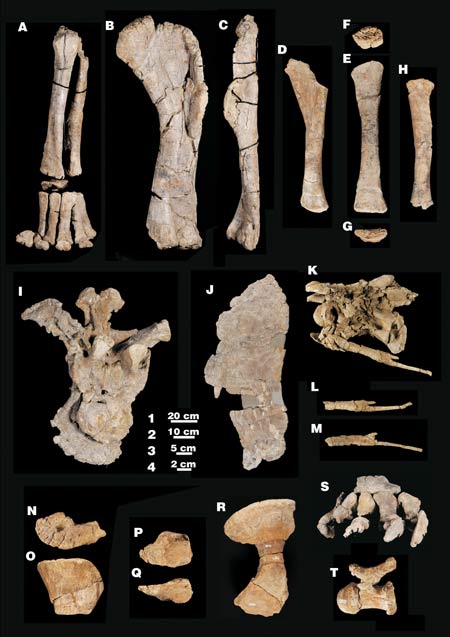
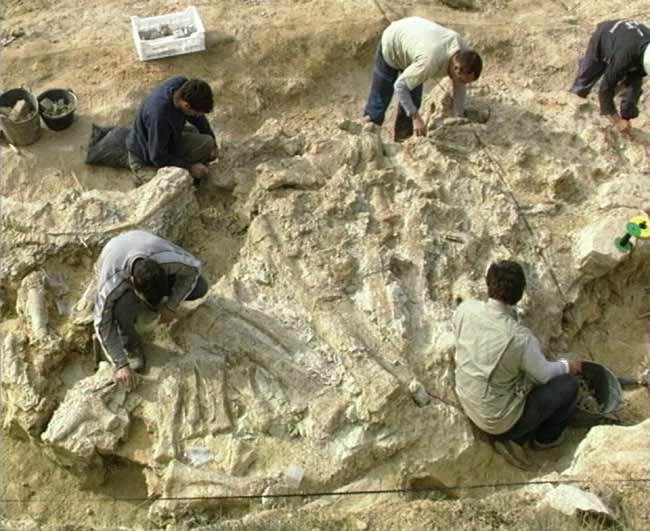
The new sauropod, Turiasaurus riodevensis, is named for the Teruel area (Turia) and the village where dozens of sauropod bone fossils at the Barrihonda-El Humero site.

The sauropod is estimated to have weighed between 40 and 48 tons and is comparable to the world's largest known dinosaurs, including Argentinosaurus and Brachiosaurus. At its estimated length of 30 to 37 meters the sauropod would be as long as an NBA basketball court.


Skeletal elements of Turiasaurus riodevensis Credit: © Science
The characteristics of the new dinosaur allows the authors to group several sauropod remains from Portugal, France, United Kingdom and other Spanish areas in a new clade of dinosaurs that has more primitive limb and bone structures than other giant sauropods that have been found on other continents in Upper Jurassic to Lower Cretaceous rocks. "This dinosaur is also more evolutionary primitive than other giant sauropods found," Hanson said.


Barrihonda-El Humero, Riodeva, Teruel, Spain Excavation. Credit: Fundación Dinópolis

Gabreile Pennacchioli's dinos


Aack! Some guys have so much talent it’s just not fair. Go check out Gabreile Pennacchioli’s blog.

Oldest Animal Fossils May Have Been Bacteria

Evidence of giant sulphur bacteria in Neoproterozoic phosphorites. 2006. J. V. Bailey et al. Nature advance online publication 20 Dec.
The oldest-known animal eggs and embryos, whose first pictures made the cover of Nature in 1998, were so small they looked like bugs – which, it now appears, they may have been.
From the press release:

This week, a study in the same prestigious journal presents evidence for reinterpreting the 600 million-year-old fossils from the Precambrian era as giant bacteria.

The discovery "complicates our understanding of microfossils thought to be the oldest animals," said lead author Jake Bailey.

Bailey made his discovery by combining two separate findings about Thiomargarita, the world's largest known living bacterium. In 2005, Thiomargarita discoverer Heide Schulz showed that the bacterium promotes deposition of phosphorite. As it turs out, the fossils identified as eggs and embryos in 1998 came from southern China's Doushantuo Formation, which is rich in phosphorite.

Also in 2005, University of Georgia marine biologists found that Thiomargarita can multiply by reductive cell division, a process rare among bacteria but typical of animal embryos. The fossils had been identified as embryos in part because they showed evidence of reductive cell division.

"When I put those two pieces together, I said … perhaps they're not animal embryos at all."

Wednesday, December 20, 2006

Sauropods: No Gastic Mills

No gastric mill in sauropod dinosaurs: new evidence from analysis of gastrolith mass and function in ostriches. 2006. O. Wings and P. M. Sander. Proceedings of the Royal Society B: Biological Sciences, early on-line publication.
Sauropods did not have a 'gastric mill.' How they processed their food without molars remains unclear.
From the press release:

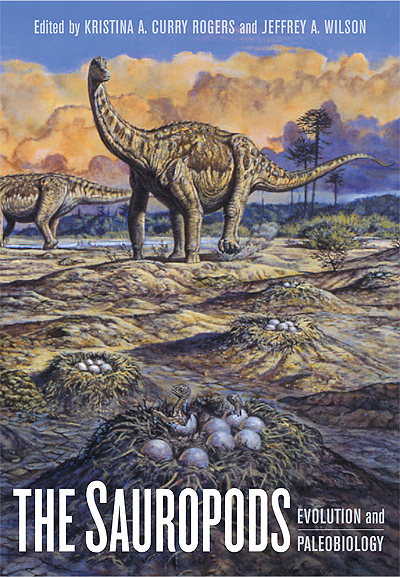
Giant dinosaurs had a problem. Many of them had narrow, pointed teeth, which were more suited to tearing off plants rather than chewing them. But how did they then grind their food? Until recently many researchers have assumed that they were helped by stones which they swallowed. In their muscular stomach these then acted as a kind of 'gastric mill'. But this assumption does not seem to be correct, as scientists have now shown that some dinosaurs did not have gastric mills such as some living birds have.
For their investigations, the scientists therefore offered stones such as limestone, rose quartz and granite as food to ostriches on a German ostrich farm. After the ostriches had been slaughtered, the scientists investigated the gastric stones. It became clear that they wore out quickly in the muscular stomach and were not polished. On the contrary, the surface of the stones, which had been partly smooth, became rough in the stomachs during the experiments.

'Whereas occasionally stones were found together with sauropod skeletons, we don't think they are remains of a gastric mill such as occurs in birds,' Dr. Sander comments. In that kind of gastric mill the stones would have been very worn and would not have a smoothly polished surface. Apart from that, gastric stones are not discovered regularly at sauropod sites. When present, their mass is, in relation to the body size, much less than with birds.

Yet what else were the dinosaurs' gastric stones used for? The researchers presume that they were accidentally eaten with their food or could have been swallowed on purpose to improve the intake of minerals.

There is another group of dinosaurs, however, whose remains of gastric stones can be linked up with a birdlike gastric mill. From these theropods today's birds developed. The gastric mill could therefore have developed in the ancestral line of birds.

Tuesday, December 19, 2006

Dr. Pat Druckenmiller: Extreme Paleontologist!

"We ate and ate and ate. I ate the fattiest sausage I could find. I ate nothing but fat."
From Billingsgate.com:

The hunt for ancient sea monsters sometimes calls for extreme paleontologists. One, Pat Druckenmiller, flew 800 miles away from the North Pole, rode a boat across an icy fjord and jumped into the sea to reach the shore where no one lives except polar bears and reindeer.


Student Linn Kristin Novis, left, and Pat Druckenmiller discuss sausages during an expedition to the Arctic. Photo courtesy of Natural History Museum, U. Oslo

Then the Montana State University scientist hiked, rifle in hand, across an Arctic island to map the remains of 28 sea reptiles that are 150 million years old. The biggest sea reptile found - a predator nicknamed "The Monster" - had a skull as long as seven feet and a body as long as 40.

After pitching his tent in the tundra, Druckenmiller helped set up a trip-wire system to scare away polar bears from camp. Then he ate fat - lots of fat- to keep warm.

"We ate and ate and ate. I ate the fattiest sausage I could find. I ate nothing but fat," said Druckenmiller, who traveled to the Arctic last summer with a team of Norwegian-led scientists.

"The site we have chosen for next year's excavation is on a hillside with several exposures of shale," Dr. Jorn Hurum, co-leader of the team, wrote in an e-mail from the University of Oslo in Norway. "There will be three digs going on at the same time within five to 10 minutes' walking distance."

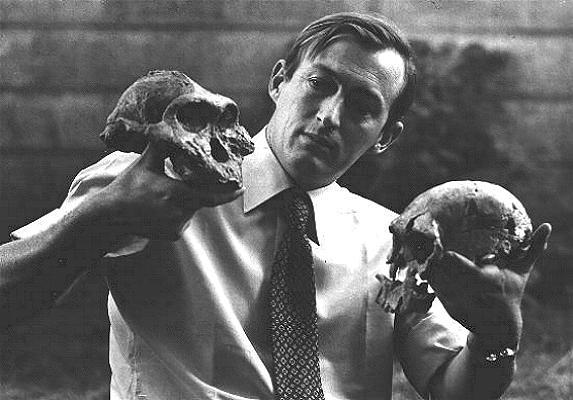
Born This Day (1944): Richard Leakey


image.

From Today In Science History:

Leakey is a Kenyan physical anthropologist, paleontologist and second of three sons of noted anthropologists Louis Leakey and Mary Leakey. At an early age, he decided he wanted nothing to do with paleoanthropology and started a expedition business. In 1964, he led an expedition to a fossil site which sparked his interest in paleontology. Since then he has been responsible for extensive fossil finds of human ancestral forms in East Africa, including a Homo habilis skull found in 1972, and a Homo erectus skull found in 1975.

His discoveries showed that man's ancestors used tools, which shows intelligence, and lived in eastern Africa at least 3 million years ago - almost doubling the previously accepted age of human origins.

Learn more about The Leakey Foundation HERE.

Monday, December 18, 2006

Evolution of Flight

A critical ligamentous mechanism in the evolution of avian flight. 2006. D.B. Baier, S.M. Gatesy and F. A. Jenkins. Nature, published online 17 Dec.
Brown and Harvard scientists have learned that a single ligament at the shoulder joint stabilizes the wings of birds during flight.
From the press release:

To better understand how the birds stabilized their wings during flight, they used CAT scans to make a 3D “virtual pigeon skeleton” and calculated the forces needed to maintain a gliding posture. They found that neither the shoulder socket nor the muscles could keep pigeon wings stable.

The critical player, they found, is the acrocoracohumeral ligament, a short band of tissue that connects the humerus to the shoulder joint. The ligament balances all of the forces exerted on the shoulder joint – from the pull of the massive pectoralis muscle in the bird’s breast to the push of wind under its wings – making it a linchpin for modern bird flight.

To find out if this ligament played the same shoulder-stabilizing role in primitive animals, the team looked to the alligator. In the laboratory the scientists put three alligators on motorized treadmills and took X-ray video. Baier and Stephen Gatesy found that alligators use muscles – not ligaments – to do the hard work of supporting the shoulder.

In examining the fossil record (i.e. Archaeopteryx, Confuciusornis, Sinornithoides, & Sinornithosaurus) they found that the new ligament-based force balance system appears to have evolved more gradually within Mesozoic fliers.

“What this means is that there were refinements over time in the flight apparatus of birds,” Baier said. “Our work also suggests that when early birds flew, they balanced their shoulders differently than birds do today. And so they could have flown differently."