.jpg)
.jpg)
.jpg)
.jpg)
.jpg)
.jpg)
.jpg)
.jpg)
.jpg)
From My Greatest Adventure #31, May, 1959 DC Comics.
Cover by Bob Brown. Art by George Roussos


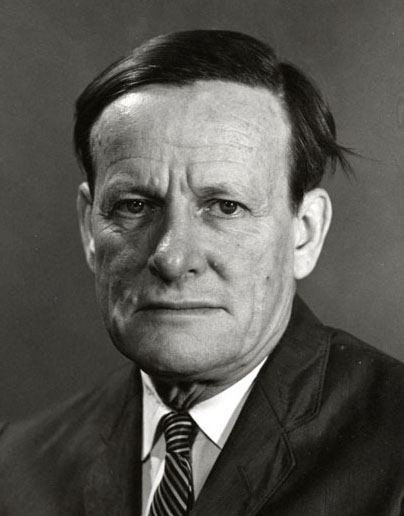 Stebbins (Jan. 6, 1906 - Jan. 19 2000) is considered one of the architects of the modern evolutionary synthesis of the 1930s and 1940s, an intellectual watershed and historic turning point that brought together research in cytology, genetics, systematics, paleontology into a common evolutionary framework. This synthesis, which had the effect of reconciling the often opposing views of laboratory-oriented geneticists and natural history oriented systematists, made Charles Darwin's theory of evolution by natural selection the centerpiece of the new discipline of evolutionary biology.
 was a German biologist and one of the founders of the science of genetics. He is best known for his opposition to the doctrine of the inheritance of acquired traits and for his "germ plasm" theory, the forerunner of DNA theory.


Researchers have determined the isotope composition of the rare trace elements Hafnium and Neodymium in 2,700 million year-old seawater by using high purity chemical sediments from Temagami Banded Iron Formation in Canada.

 d'Halloy (Feb. 16, 1783 - Jan. 15, 1875) was a Belgian geologist who was an early proponent of evolution and was acknowledged by Charles Darwin in his preface to ‘On The Origin of the Species’ for his opinions on the origin of new species through descent with modification.
 U.S. zoologist and paleontologist who studied invertebrate fossil records, the evolution of the cephalopods (a class of mollusks including squids and octopuses) and the development of primitive organisms.


 be older than suggested by the Bible.


