Wednesday, February 19, 2014

Form, Function, & Evolution of Living Organisms

Form, function, and evolution of living organisms. 2014. J. R. Banavar, et al. PNAS

New research suggests that the shapes of both plants and animals evolved in response to the same mathematical and physical principles.
Kleiber’s Law (metabolism = mass3/4), one of the few widely held tenets in biology, shows that as living things get larger, their metabolisms and their life spans increase at predictable rates. Named after the Swiss biologist Max Kleiber who formulated it in the 1930s, the law fits observations on everything from animals' energy intake to the number of young they bear. It's used to calculate the correct human dosage of a medicine tested on mice, among many other things.

The researchers propose that the shapes of both plants and animals evolved in response to the same mathematical and physical principles. By working through the logic underlying Kleiber's mathematical formula, and applying it separately to the geometry of plants and animals, the team was able to explain decades worth of real-world observations.

Tuesday, February 18, 2014

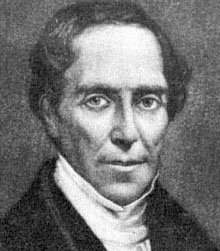
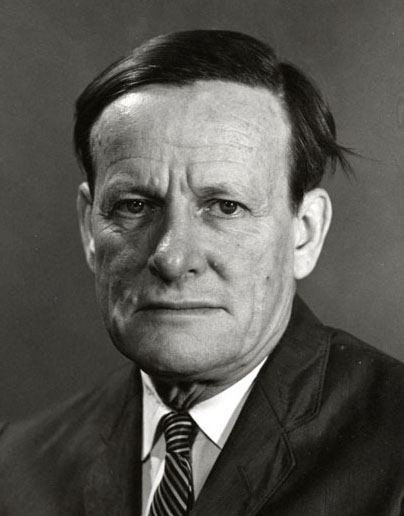
Born This Day: Aleksandr Oparin, Originator of Primordial Soup


Oparin (Feb 18, 1894 - April 21, 1980) was a Russian biochemist who suggested (1938) that life on Earth developed through gradual chemical evolution of carbon-based molecules in a “primordial soup”, at just about the same time as the British biologist J. B. S. Haldane was independently proposing a similar theory.

As early as 1922, at a meeting of the Russian Botanical Society, he had first introduced his concept of a primordial organism arising in a brew of already-formed organic compounds.

More info at Physics of the Universe
Download his book "The Origin of Life on The Earth" from Archive.org

Alley Oop Dino-Battle!

A 1937 Sunday page from the classic Alley Oop comic strip by V. T. Hamlin.

Monday, February 17, 2014

The Oxygen Requirements of the Earliest Animals

The oxygen requirements of the earliest animals. D. B. Mills, et al. 2014.PNAS, Feb. 17, 2014.

New studies of a small sea sponge fished out of a Danish fjord shows that complex life does not need high levels of oxygen in order to live and grow.
Complex life evolved is believed to have evolved after the atmospheric levels of oxygen began to rise app. 630 – 635 million years ago. Halichondria panicea closely resembles the first animals on Earth & shows that animals can live and grow even when the atmosphere contains only 0.5 per cent of the oxygen levels in today's atmosphere.

The big question now is: If low oxygen levels did not prevent animals from evolving – then what did? Why did life consist of only primitive single-celled bacteria and amoebae for billions of years before everything suddenly exploded and complex life arose?

Born This Day: Horace de Suassure

de Saussure (Feb. 17, 1740 - Jan. 22, 1799) was a Swiss physicist and geologist who introduced the term geology into the scientific literature in the first volume of Voyages dans les Alpes (1779-96). Link

Saturday, February 15, 2014

Died This Day (1967): Antonio Moreno, The Man Who Discovered The Creature from the Black Lagoon.

Antonio Moreno played Carl Maia, the scientist who discovered the fossil evidence for The Creature from the Black Lagoon. Moreno had a long career in Hollywood with a notable run playing Latin lover in the silent film era.

Sunday, February 09, 2014

Happy 100th Birthday to Gertie the Dinosaur!

One hundred years ago today, Winsor McCay's animated film, Gertie the Dinosaur, premiered. Gertie is considered by many as the first true animated character to be featured in a film.

For this cartoon, McCay (Sept. 26, 1987 – July 26, 1934) hand drew each frame of film. He took it on the vaudeville circuit and delighted audiences by being able to ‘interact’ with Gertie. In addition to Gertie, he is best known for his ground-breaking newspaper comic strip Little Nemo in Slumberland that ran from 1905 to 1914.


Tuesday, February 04, 2014

Born This Day: Gottfried Reinhold Treviranus, Early Evolutionary Theorist


Treviranus (Feb. 4, 1776 - Feb. 16, 1837) was a German naturalist who
made histological and anatomical studies on invertebrates. Preceding Darwin, he believed in the “descent by modification,” of species.

He produced six volumes of his Biologie; oder die Philosophie der lebenden Natur between 1802 and 1822. Therein, he held that simple forms (Protists), which he termed zoophytes, were “the primitive types from which all the organisms of the higher classes had arisen by gradual development.” He was among the first to regard the cell as the structural unit of life forms. link image

Born This Day: Raymond Dart


Dart (Feb. 4 1893 - Nov. 22, 1988) was an Australian-born, South African physical anthropologist. In 1924, working with students in the Taung limestone South Africa, they discovered the first Australopithecus africanus. Dubbed "missing link" at the time, skull is also known as the 'Taung child', and was only three years old at the time of death. More on Dart here

Monday, February 03, 2014

Born This Day: Gideon Mantell

Mantell (Feb. 3, 1790 – Nov. 10, 1852), a physician of Lewes in Sussex in southern England, had for years been collecting fossils in the sandstone of Tilgate forest, and he had discovered bones belonging to three extinct species: a giant crocodile, a plesiosaur, and Buckland's Megalosaurus. But in 1822 he found several teeth that "possessed characters so remarkable" that they had to have come from a fourth and distinct species of Saurian. After consulting numerous experts, Mantell finally recognized that the teeth bore an uncanny resemblance to the teeth of the living iguana, except that they were twenty times larger.
In this paper, the second published description of a dinosaur, he concluded that he had found the teeth of a giant lizard, which he named Iguanodon, or "Iguana-tooth."

Mantell illustrated his announcement with a single lithographed plate. Mantell included at the bottom of the plate a drawing of a recent iguana jaw, which is shown four times natural size, and for further comparison, he added views of the inner and outer surface of a single iguana tooth, "greatly magnified."

The traditional story that Mantell's wife found the first teeth in 1822, while the doctor was visiting a patient, appears, alas, to be unfounded.

Info and plate from HERE.

Died This Day: Ernst Mayr


Any student of biology, or anyone with an interest in the natural world, will be familiar with Ernst Mayr who passed away on February 3rd, 2005 in Bedford, Mass. Born in Kempton, Germany he joined the American Museum of Natural History as a curator in 1931. In 1953 he left the museum to work at Harvard University where he stayed until his retirement in 1975.

While working on the problem of speciation in the birds of New Guinea, Mayr realized that the multitude of species and and subspecies that he saw could best be explained as being a snapshot of evolution in action. He suggested that new species could arise when the range of one species was fractured long enough for members in different parts of the range to evolve characters that would not allow individuals to reproduce when they were brought back together again. This lead to him developing the “biological species concept” in which species are defined as populations of interbreeding organisms rather than just a collection of characters. This idea, along with his theory of “allopatric speciation” was published in his book “Systematics and the Origin of the Species” (1942) and later contributed to the “Punctuated Equilibrium” theory of Niles Eldredge and Stephen Jay Gould.

Ernst Mayr was himself inspired by the work of geneticist Theodosius Dobzhansky on the fruit fly Drosophila melanogaster and his book “Genetics and the Origin of the Species” (1937). These two men, together with the paleontologist George Gaylord Simpson, combined the sciences of genetics, zoology and paleontology into what is now known as “the new synthesis” that provides the modern experimental underpinning to the concepts that Charles Darwin presented in his book, “On the Origin of the Species” .

For anyone interested in learning more about modern evolutionary theory I’d recommend Mayr’s recent book “What Evolution Is” (2002). It’s written in an engaging and readable format from the perspective of someone who’s thought about evolution all his life.

Sunday, February 02, 2014

Tarzan vs. T. rex


The above image was painted by Morris "Mo" Gollub who also did the best of the Turok, Son of Stone covers.

Read more about Morris at Pete Von Sholly's website, VonShollyWood

Australornis lovei, new Paleocene bird from New Zealand

First diagnosable non-sphenisciform bird from the early Paleocene of New Zealand. Mayr, RP Scofield, J. Royal Society of New Zealand


Abstract: A new avian taxon from the early Paleocene Waipara Greensand in Canterbury, New Zealand, is described. The holotype of Australornis lovei, gen. et sp. nov. includes wing and pectoral girdle bones, which exhibit distinctive morphologies. Notable features are a very long crista deltopectoralis, a craniocaudally flattened shaft, and a large tuberculum dorsale of the humerus, as well as a ridge-like caudal surface of the proximal ulna.

Although a well-founded assignment of the new species to any of the extant higher-level taxa is not possible, key morphological features of stem group Sphenisciformes (penguins) are absent in A. lovei. Other than penguins, the holotype of A. lovei represents one of the most significant records of a marine Paleocene bird from the Southern Hemisphere, and contributes to the emerging view that Neoaves were already diversified in the earliest Paleogene. link

Saturday, February 01, 2014

Thursday, January 30, 2014

Yongjinglong, A New Titanosaurian Sauropod from China

A New Titanosaurian Sauropod from the Hekou Group (Lower Cretaceous) of the Lanzhou-Minhe Basin, Gansu Province, China

 Image: University of Pennsylvania
A team led by University of Pennsylvania paleontologists has characterized a new dinosaur based on fossil remains found in northwestern China. The species, a plant-eating sauropod named Yongjinglong datangi, roamed during the Early Cretaceous period, more than 100 million years ago. 

This sauropod belonged to a group known as Titanosauria, members of which were among the largest living creatures to ever walk the earth. At roughly 50-60 feet long, the Yongjinglong individual discovered was a medium-sized Titanosaur. Anatomical evidence, however, points to it being a juvenile; adults may have been larger. press release

Published This Day (1868): Variation of Animals and Plants under Domestication by Darwin

From Today In Science History:

In 1868, Charles Darwin's book - Variation of Animals and Plants under Domestication - was published. He was 58. It is probably the second in importance of all his works. This was a follow-up work, written in response to criticisms that his theory of evolution was unsubstantiated. Darwin here supports his views via analysis of various aspects of plant and animal life, including an inventory of varieties and their physical and behavioral characteristics, and an investigation of the impact of a species' surrounding environment and the effect of both natural and forced changes in this environment.

Sunday, January 26, 2014

We Found The Evolution Man!


From My Greatest Adventure #31, May, 1959 DC Comics.
Cover by Bob Brown. Art by George Roussos


Wednesday, January 22, 2014

Died This Day: Horace de Suassure

Horace Bénédict de Saussure
Born 17 Feb 1740; died 22 Jan 1799.

A Swiss physicist and geologist, he introduced the term geology into the scientific literature in the first volume of Voyages dans les Alpes (1779-96). Link

Sunday, January 19, 2014

Died This Day: George Ledyard Stebbins

From the U Calif., Berkeley:

Along with Dobzhansky (1900 - 1975), animal systematist Ernst Mayr, and paleontologist George Gaylord Simpson (1902 - 1984), Stebbins (Jan. 6, 1906 - Jan. 19 2000) is considered one of the architects of the modern evolutionary synthesis of the 1930s and 1940s, an intellectual watershed and historic turning point that brought together research in cytology, genetics, systematics, paleontology into a common evolutionary framework. This synthesis, which had the effect of reconciling the often opposing views of laboratory-oriented geneticists and natural history oriented systematists, made Charles Darwin's theory of evolution by natural selection the centerpiece of the new discipline of evolutionary biology.

In this role, Stebbins is credited with bringing a modern framework to the study of plant evolution, and he is perhaps best known for his book Variation and Evolution in Plants, published by Columbia University Press (NY) in 1950. In the 1940s, Stebbins also played an important role in organizing the nascent Society for the Study of Evolution, of which he became the third president in 1948, and used his position to speak out for the botanical side of evolutionary studies, a field that had been dominated by zoologists. Photo .

Friday, January 17, 2014

Born This Day: August Weismann

From Today In Science History:

August (Friedrich Leopold) Weismann (Jan. 17, 1834 – Nov. 5, 1914) was a German biologist and one of the founders of the science of genetics. He is best known for his opposition to the doctrine of the inheritance of acquired traits and for his "germ plasm" theory, the forerunner of DNA theory.

Weismann conceived the idea, arising out of his early observations on the Hydrozoa, that the germ cells of animals contain "something essential for the species, something which must be carefully preserved and passed on from one generation to another."

Weismann envisioned the hereditary substances from the two parents become mixed together in the fertilized egg and a form of nuclear division in which each daughter nucleus receives only half the original ancestral germ plasms.

More info from Science World. image

Thursday, January 16, 2014

Born This Day: Ruth Rose


Ruth Rose (Jan. 16, 1896 - June 8, 1978) was the daughter of Edward E. Rose. In 1926 she meet (and later married) cinematographer Ernest Schoedsack when they were both working on a New York Geological Society expedition to the Galapagos Islands. Together with partner and fellow producer director, Meriam C. Cooper, and animator Willis O’Brien, they made “King Kong”, released in 1933. Rose shared in many of Schoedsack’s and Cooper’s wildness film productions, and worked as a writer or script doctor on King Kong, Son of Kong, She, The Last Days of Pompeii and Mighty Joe Young.

The photo from King Kong (above) is of Bruce Cabot, Fay Wray and Robert Armstrong, but Rose clearly modeled the characters they played after Schoedsack, herself, and Cooper.

Large landmasses existed 2.7 billion years ago

Decoupled Hf-Nd isotopes in Neoarchean seawater reveal weathering of emerged continents Viehmann, et al., Geology, on-line early publication.

Kamandi by jack Kirby © DC Comics
Researchers have determined the isotope composition of the rare trace elements Hafnium and Neodymium in 2,700 million year-old seawater by using high purity chemical sediments from Temagami Banded Iron Formation in Canada.

The new findings show that 2,700 million years ago relatively large landmasses emerged from the oceans that were exposed to weathering and erosion by the sun, wind and rain.

Dr. Hoffmann: "The isotope Hafnium 176 in contrast to its counterpart Neodymium 143 was transported by means of weathering into the oceans and became part of iron-rich sediments on the sea floor 2,700 million years ago. link

Born This Day: Caroline Munro


Art © Mark Schultz
Munro is probably best known for her role in in the Bond film The Spy Who Loved Me (1977). She had a long career in a variety of genre films including a stint with Hammer Films, and notably with Ray Harryhausen as the slave girl, Margiana, in The Golden Voyage of Sinbad (1974).

The Palaeoblog salutes her both for being the Godmother of Ray Harryhausen’s daughter and for her role as Princess Dia in At the Earth’s Core (1976)

Wednesday, January 15, 2014

Died This Day: Jean-Baptiste-Julien d' Omalius d' Halloy

d'Halloy (Feb. 16, 1783 - Jan. 15, 1875) was a Belgian geologist who was an early proponent of evolution and was acknowledged by Charles Darwin in his preface to ‘On The Origin of the Species’ for his opinions on the origin of new species through descent with modification.

He determined the stratigraphy of the Carboniferous and other rocks in Belgium and the Rhine provinces, and also made detailed studies of the Tertiary deposits of the Paris Basin. link

Died This Day: Alpheus Hyatt

From Today in Science History:

U.S. zoologist and paleontologist who studied invertebrate fossil records, the evolution of the cephalopods (a class of mollusks including squids and octopuses) and the development of primitive organisms.

Along with E. Cope, Hyatt (April 5, 1838 - Jan. 15, 1902) was the most prominent American neo-Lamarckian. Based on the analogy of ontogeny with phylogeny, Hyatt claimed that lineages, like individuals, had cycles of youth, old age, and death (extinction). This idea became the bulwark of orthogenetic theories in the U.S. Hyatt was the founder and first editor of the American Naturalist, and first president of Woods Hole laboratory.

Wednesday, January 08, 2014

Iguanodon - Living Engine of Destruction!


Devil Dinosaur by Jack Kirby
© Marvel Comics

Monday, January 06, 2014

Palaeoblog To Return in 2014

Good news for everyone who followed the Palaeoblog. It will be coming back in a modified form in the near future. Much like the Rhedosaurus, all it has to do is shake off the frozen ice and awaken from its cold slumber.

You can also get the usual Palaeoblog news by following my Twitter feed: https://twitter.com/DrMichaelJRyan

Monday, August 12, 2013

Paleoblog Over & Out

After an extended break, the Palaeoblog is officially closing up shop.

When it started up almost 10 years ago it was a great way to get palaeo-related news out to people who would otherwise have a hard time finding it. Blogs like this have now been largely superseded by other forms of social media, so I have no doubt that you've all got better ways to stay informed. Thanks for all the support over the years!

Tuesday, May 07, 2013

Ray Harryhausen 1920-2013


Ray Harryhausen passed away today. No doubt his spirit is roaming a jungle somewhere "way west of Sumatra" with Willis, Merian, Ernest, Ruth, and Carl Denham looking for giant gorillas!

The Ray & Diana Harryhausen Foundation

Wednesday, April 17, 2013

Premiered This Day (1981): Caveman

Directed by Carl Gottlieb and starring Ringo Starr, this film is probably best known for introducing Starr to his future wife, Barbara Bach. Famed Animator Jim Danforth oversaw the creation of the dinosaurs.

A more interesting film with overtones of The Creature From The Black Lagoon (0:57) is Island of the Fish Men, also starring Bach.

Tuesday, April 16, 2013

Died This Day: Comte Georges-Louis Leclerc de Buffon

Buffon (Sept. 7, 1707 – April 16, 1788) was a French naturalist, who formulated a crude theory of evolution and was the first to suggest that the earth might be older than suggested by the Bible.

In 1739 he was appointed keeper of the Jardin du Roi, a post he occupied until his death. There he worked on a comprehensive work on natural history, for which he is remembered, Histoire naturelle, générale et particulière. He began this work in 1749, and it dominated the rest of his life. It would eventually run to 44 volumes, including quadrupeds, birds, reptiles and minerals.

He proposed (1778) that the Earth was hot at its creation and, from the rate of cooling, calculated its age to be 75,000 years, with life emerging some 40,000 years ago.

From Today In Science History. Stamp from HERE.

More info on Buffon from UC-Berkeley.

Died This Day: Rosalind Franklin

Rosalind Franklin (July 25, 1920 - Apr. 16, 1958) was an English scientist who contributed to the discovery of the molecular structure of deoxyribonucleic acid (DNA), a constituent of chromosomes that serves to encode genetic information. Beginning in 1951, she made careful X-ray diffraction photographs of DNA, leading her to suspect the helical form of the molecule, at least under the conditions she had used.

When Watson saw her photographs, he had confirmation of the double-helix form that he and Crick then published. She never received the recognition she deserved for her independent work, but had died of cancer four years before the Nobel Prize was awarded to Crick and Watson.

From Today In Science History

Monday, April 15, 2013

Premiered This Day: Women of The Prehistoric Planet


Written and directed by Arthur C. Pierce, and starring the perennial C-list actor John Agar (who had his own Prehistoric Theme Park!), this is just about as bad as it gets.

Tuesday, April 02, 2013

Published This Day: DNA Double Helix

From Today in Science History:

On this day in 1953, the journal Nature published a paper from Francis Crick and James Watson, titled Molecular Structure of Nucleic Acids: A Structure for Deoxyribose Nucleic Acid, in which they described a double helix structure for DNA.

Download the paper from Nature HERE.

Saturday, March 30, 2013

Geological Time Scale First Proposed (1759)

In 1759, Italian geologist Giovanni Arduino (1714-1795) dated a letter to Professor A.Vallisneri the younger, in which Arduino proposed a classification of Earth's surface rocks according to four brackets of successively younger orders: Primary, Secondary, Tertiary and Quaternary. These are the four geological eras used today. The volcanic rocks without fossils which he saw in the Atesine Alps that formed the cores of large mountains he called Primary. Overlying them, the fossil rich rocks of limestone and clay that were found on the prealpine flanks of the mountains he called Secondary. The less consolidated fossil-bearing rocks of the subalpine foothills, he named Tertiary, and the alluvial rock deposits in the plains were the Quaternary. link

Friday, March 29, 2013

Premiered This Day: Gorgo

Gorgo premiered on this day in 1961. Directed by Eugène Lourié from a script by John Loring and Daniel Hyat, it featured a man in a rubber suit ala Toho’s Godzilla. More ignored than maligned, it holds up very well & is a well worth watching. Plus, it's newly available on Blu-Ray.

Over at Atomic Surgery the good doctors present a double bill to commemorate the day: a story by Steve Ditko from Gorgo #15 and a Gorgo filmbook from Famous Monsters of Filmland #50.

Monday, March 25, 2013

The End Triassic Extinction

Zircon U-Pb geochronology links the end-Triassic extinction with the Central Atlantic Magmatic Province. Blackburn, T.J., et al., Science, published on-line 21 March 2013

More than 200 million years ago, a massive extinction decimated 76 percent of marine and terrestrial species, marking the end of the Triassic period and the onset of the Jurassic. This devastating event cleared the way for dinosaurs to dominate Earth for the next 135 million years, taking over ecological niches formerly occupied by other marine and terrestrial species.
It’s not entirely clear what caused the end-Triassic extinction, although most scientists agree on a likely scenario: Over a relatively short period of time, massive volcanic eruptions from a large region known as the Central Atlantic Magmatic Province (CAMP) spewed forth huge amounts of lava and gas, including carbon dioxide, sulfur and methane. This sudden release of gases into the atmosphere may have created intense global warming and acidification of the oceans that ultimately killed off thousands of plant and animal species.

Now researchers at MIT, Columbia University and elsewhere have determined that these eruptions occurred precisely when the extinction began, providing strong evidence that volcanic activity did indeed trigger the end-Triassic extinction. link.

Tuesday, February 26, 2013

Scrappy Little Jaw

The Ottawa, ON, based band <><>>>>> (aka The Band Whose Name is A Symbol, aka TBWNIS) will shortly be releasing their new vinyl-only LP, Scrappy Little Jaw. Yes, that scrappy little jaw on the cover is the holotype of Gryphoceratops.

If you want to pick up a copy of this limited edition beauty contact John at Birdman Sound.

Monday, February 25, 2013

The Brainless Origin of The Head

The bilaterian head patterning gene six3/6 controls aboral domain development in a cnidarian. 2013. Sinigaglia, C., et al. PLoS Biology 10.1371/journal.pbio.1001488.

In a simple, brainless sea anemone, the same genes that control head development in higher animals regulate the development of the front end of the swimming larvae. link
Author Summary [edit]: The evolutionary origin of head development is a fundamental question for understanding the evolution of animal body plans. Bilaterally symmetrical animals (Bilaterians) have an anterior-posterior (head-to-tail) axis, whose anterior end is usually characterized by a head and a brain.

Bilaterians evolved from an ancestor shared with cnidarians (corals, sea anemones, jellyfish), but brain-like structures are absent in cnidarians, although they have an obvious oral-aboral axis. Cnidarian larvae move with the aboral pole forward, but as adult polyps this pole is anchored to the ground, while the oral end is used for feeding. It is unclear whether one of the termini of cnidarians corresponds to the bilaterian head-forming region.

We show here that in the sea anemone Nematostella vectensis genes regulating bilaterian head development are expressed at the larval aboral pole and that a key anterior developmental gene, six3/6, controls the development of the aboral pole. These findings support the hypothesis that the anterior, head-forming, region of bilaterians and the aboral region of cnidarians derived from the same domain of their last common ancestor and are therefore homologues.

Tuesday, February 12, 2013

Born This Day: Barnum Brown


Feb. 12, 1873 – Feb. 5, 1963
Photo © AMNH
From the AMNH bio:

The greatest dinosaur hunter of the twentieth century was Barnum Brown, who began his career at the American Museum of Natural History in 1897 as an assistant to Henry Fairfield Osborn. Brown traveled all over the world collecting dinosaurs and fossil mammals. Some consider him to be the last of the great dinosaur hunters.

Brown was always impeccably dressed, often wearing a tie and topcoat even in the field. He was a shrewd "horse trader" when it came to wheeling and dealing for fossil specimens. Many of Brown's greatest discoveries, including the first specimens of Tyrannosaurus rex ever found, are displayed in the Museum's Dinosaur Halls.

Born This Day: Charles Darwin

Feb. 12, 1809 – April 19, 1882


stamp

More about Darwin HERE.