Friday, January 27, 2012

New Theory Explains Life, Universe, Everything! Really!

Theory of the Origin, Evolution, and Nature of Life. 2012.E. D. Andrulis. Life 2012: 1-105.

The Earth is alive, asserts a revolutionary scientific theory of life emerging from Case Western Reserve University School of Medicine. The trans-disciplinary theory demonstrates that purportedly inanimate, non-living objects—for example, planets, water, proteins, and DNA—are animate, that is, alive.
The theory explains not only the evolutionary emergence of life on earth and in the universe but also the structure and function of existing cells and biospheres.

In addition to resolving long-standing paradoxes and puzzles in chemistry and biology, Dr. Andrulis’ theory unifies quantum and celestial mechanics. His unorthodox solution to this quintessential problem in physics differs from mainstream approaches, like string theory, as it is simple, non-mathematical, and experimentally and experientially verifiable. As such, the new portrait of quantum gravity is radical.

The basic idea of Dr. Andrulis’ framework is that all physical reality can be modeled by a single geometric entity with life-like characteristics: the gyre. The so-called “gyromodel” depicts objects—particles, atoms, chemicals, molecules, and cells—as quantized packets of energy and matter that cycle between excited and ground states around a singularity, the gyromodel’s center. A singularity is itself modeled as a gyre, wholly compatible with the thermodynamic and fractal nature of life.

By fitting the gyromodel to facts accumulated over scientific history, Dr. Andrulis confirms the proposed existence of eight laws of nature. One of these, the natural law of unity, decrees that the living cell and any part of the visible universe are irreducible. This law formally establishes that there is one physical reality.
Another natural law dictates that the atomic and cosmic realms abide by identical organizational constraints. Simply put, atoms in the human body and solar systems in the universe move and behave in the exact same manner.

Dr. Andrulis has used his theory to successfully predict and identify a hidden signature of RNA biogenesis in his laboratory at Case Western Reserve University School of Medicine. He is now applying the gyromodel to unify and explain the evolution and development of human beings. Link

Thursday, January 26, 2012

American Mastodon Stop-Motion Trailer

Brad Ricca, a SAGES Fellow at Case Western Reserve University in Cleveland who teaches classes on comic books and biography, is earning accolades for a more traditional form of literature: poetry.

Among those accolades is the honor of having Garrison Keillor personally select his poem “The Beautiful Sandwich” to read Thursday, Jan. 26, on his national NPR show The Writer’s Almanac.

His first book of verse, American Mastodon, won the St. Lawrence Book Award. The prize is awarded yearly to an unpublished collection of poems or short stories, which is then published by Black Lawrence Press
.
Ricca is well acquainted with superheroes both past and present, but it was another larger-than-life figure that inspired his book’s title. American Mastodon refers to a grand, shaggy mastodon with 15-foot curving tusks at the Cleveland Museum of Natural History. The prehistoric creature loomed large for Ricca, who visited the museum both as a child and as an adult.

His reaction, he said, was: “Here’s this massive animal that once freely roamed Earth and now doesn’t move an inch in the museum.” Link to The Daily

Dig this great retro-60's stop-motion trailer for the book:

Trailer Credits: Animagination by Stu Howe (UK); Poem by Brad Ricca (USA)

Twittering Palaeontologists


Follow Dr. David Evans from the Royal Ontario Museum/Univ. of Toronto on Twitter Here.

Born This Day: Roy Chapman Andrews


Photo from Parade of Life Through The Ages, by Charles Knight, Nat. Geo., Feb. 1942.

From the American Museum of Natural History web site:

Adventurer, administrator, and Museum promoter — Andrews (Jan. 26, 1884 – March 11, 1960) spent his entire career at the American Museum of Natural History, where he rose through the ranks from departmental assistant, to expedition organizer, to Museum director.

He became world famous as leader of the Central Asiatic Expeditions, a series of expeditions to Mongolia that collected, among other things, dinosaur eggs. Although on these expeditions, Andrews himself found few fossils, and during his career he was not known as an influential scientist, he instead filled the role of promoter, creating immense excitement and successfully advancing the research and exhibition goals of the museum.

Learn about the Roy Chapman Andrews Society HERE.

Wednesday, January 25, 2012

Palaeo Noir: Archaeopteryx

New evidence on the colour and nature of the isolated Archaeopteryx feather. 2012. R.M. Carney, et al. Nature Communications 3.


Lead author's tattoo of his findings image
Abstract: Archaeopteryx has been regarded as an icon of evolution ever since its discovery from the Late Jurassic limestone deposits of Solnhofen, Germany in 1861. Here we report the first evidence of colour from Archaeopteryx based on fossilized colour-imparting melanosomes discovered in this isolated feather specimen.

Using a phylogenetically diverse database of extant bird feathers, statistical analysis of melanosome morphology predicts that the original colour of this Archaeopteryx feather was black, with 95% probability. Furthermore, reexamination of the feather's morphology leads us to interpret it as an upper major primary covert, contrary to previous interpretations.

Additional findings reveal that the specimen is preserved as an organosulphur residue, and that barbule microstructure identical to that of modern bird feathers had evolved as early as the Jurassic. As in extant birds, the extensive melanization would have provided structural advantages to the Archaeopteryx wing feather during this early evolutionary stage of dinosaur flight.

Massospondylus Nests

Oldest known dinosaurian nesting site and reproductive biology of the Early Jurassic sauropodomorph Massospondylus. 2012. R. Reisz et al. PNAS.

Thanks to the PR folks for providing the smallest possible version of a great illo by Julius Csotonyi
Abstract [edit]: The extensive Early Jurassic continental strata of southern Africa have yielded an exceptional record of dinosaurs that includes scores of partial to complete skeletons of the sauropodomorph Massospondylus, ranging from embryos to large adults.

In 1976 an incomplete egg clutch including in ovo embryos of this dinosaur, the oldest known example in the fossil record, was collected from a road-cut talus. Recent work started in 2006 has yielded multiple in situ egg clutches, documenting the oldest known dinosaurian nesting site, predating other similar sites by more than 100 million years.

The presence of numerous clutches of eggs, some of which contain embryonic remains, in at least four distinct horizons within a small area, provides the earliest known evidence of complex reproductive behavior including site fidelity and colonial nesting in a terrestrial vertebrate.

A temporally calibrated optimization of dinosaurian reproductive biology not only demonstrates the primary significance of the Massospondylus nesting site, but also provides additional insights into the initial stages of the evolutionary history of dinosaurs, including evidence that deposition of eggs in a tightly organized single layer in a nest evolved independently from brooding.

Sunday, January 22, 2012

End-Cretaceous Marine Mass Extinction Not Caused by Productivity Collapse

End-Cretaceous marine mass extinction not caused by productivity collapse. 2012. L. Alegret, et al. PNAS


Abstract: An asteroid impact at the end of the Cretaceous caused mass extinction, but extinction mechanisms are not well-understood. The collapse of sea surface to sea floor carbon isotope gradients has been interpreted as reflecting a global collapse of primary productivity (Strangelove Ocean) or export productivity (Living Ocean), which caused mass extinction higher in the marine food chain. Phytoplankton-dependent benthic foraminifera on the deep-sea floor, however, did not suffer significant extinction, suggesting that export productivity persisted at a level sufficient to support their populations.

We compare benthic foraminiferal records with benthic and bulk stable carbon isotope records from the Pacific, Southeast Atlantic, and Southern Oceans. We conclude that end-Cretaceous decrease in export productivity was moderate, regional, and insufficient to explain marine mass extinction.

A transient episode of surface ocean acidification may have been the main cause of extinction of calcifying plankton and ammonites, and recovery of productivity may have been as fast in the oceans as on land. image link

Thursday, January 19, 2012

The Caudal Basket of Pachycephalosauria

Homology and Architecture of the Caudal Basket of Pachycephalosauria (Dinosauria: Ornithischia): The First Occurrence of Myorhabdoi in Tetrapoda. 2012. C.M. Brown and A.P. Russell. PLoS ONE 7(1): e30212.

Abstract [edit]: Associated postcranial skeletons of pachycephalosaurids, most notably those of Stegoceras and Homalocephale, reveal enigmatic osseous structures not present in other tetrapod clades. The homology and functional significance of these structures have remained elusive as they were originally interpreted to be abdominal ribs or gastralia, and more recently have been interpreted as de novo structures in the tail.

Analysis of these structures in nearly all pachycephalosaurid skeletons has facilitated a complete description of their architecture, and the establishment of patterns consistent with those of myorhabdoid ossifications — ossifications of the myoseptal tendons associated with myomeres. The presence and structure of myorhabdoid ossifications are well established for teleost fish, but this marks their first recognition within Tetrapoda. These elements are both structurally and histologically distinct from the deep, paraxial ossified tendon bundles of other ornithischian clades, although they may have performed a similar function in the stiffening of the tail.

These myorhabdoi are not de novo structures, but are instead ossifications (and therefore more amenable to fossilization) of the normally unossified plesiomorphic caudal myosepta of vertebrates. The ubiquitous ossification of these structures in pachycephalosaurids (all specimens preserving the tail also exhibit myorhabdoid ossifications) suggests it is a likely synapomorphic condition for Pachycephalosauria.


Click to enlarge

Articulated caudal tendons of
Homalocephale in lateral view.

Paleobiology Database Intensive Workshop in Analytical Methods


The Paleobiology Database has sponsored a five-week intensive training workshop in analytical methods since 2005. The Australian Research Council and the National Science Foundation's Division of Earth Sciences will provide funding for the 2012 edition. As in 2010 and 2011, the 2012 workshop will held at Macquarie University in Sydney. Sessions will be held between 25 June and 29 July.

Topics will include community paleoecology, diversity curves, speciation and extinction, phylogenetics, phenotypic evolution, and morphometrics. Both simulation modelling and data analysis methods will be employed. Training will combine lectures and labs. Participants will be given hands-on instruction in programming using R and taught to use other analytical software. In addition to the workshop coordinator, each week a new instructor will be present. The instructors are expected to be John Alroy, Gene Hunt, Tom Olszewski, David Polly, and Pete Wagner.

There is no fee for registration and participants will be housed for free in accommodations near the campus. Daily expenses such as meal costs are not subsidized but are only on the order of $10 to $15. Participants are encouraged to solicit travel funds from their home institutions or other organizations. A majority of airfare costs will be reimbursed if such funds are not available. There are no other charges of any kind and no other major expenses are likely.

For all the details go here: Paleobiology Database Intensive Workshop in Analytical Methods.

NOTE: Applications received by the end of Monday, 15 February 2012 get priority. Only a few spaces are available so apply early and often.


© the guys that produce Atomic Robo

Died This Day: Frank Reicher

Frank Reicher (Dec. 2, 1875 - Jan. 19, 1965) was a German actor, director and producer born in Munich, Germany. During the early part of the twentieth century he was often on Broadway, occasionally in leading roles, but he is most familiar to modern audiences as a supporting character actor in films.

He is probably best known for playing Captain Englehorn in the movies King Kong and Son of Kong in 1933. link

Siphusauctum gregarium from The Burgess Shale

A New Stalked Filter-Feeder from the Middle Cambrian Burgess Shale, British Columbia, Canada. 2012. L. J. O'Brien and J.-B. Caron. PLoS ONE 7(1): e29233

A bizarre creature that lived in the ocean more than 500 million years ago has emerged from the famous Middle Cambrian Burgess Shale in the Canadian Rockies.
Siphusauctum gregarium (~20 cm long) has a long stem, with a calyx – a bulbous cup-like structure – near the top which encloses an unusual filter feeding system and a gut. The animal is thought to have fed by filtering particles from water actively pumped into its calyx through small holes. The stem ends with a small disc which anchored the animal to the seafloor. Siphusauctum lived in large clusters, as indicated by slabs containing over 65 individual specimens.


"Most interesting is that this feeding system appears to be unique among animals. Recent advances have linked many bizarre Burgess Shale animals as primitive members of many animal groups that are found today but Siphusauctum defies this trend. We do not know where it fits in relation to other organisms," said Lorna O'Brien. link

Monday, January 16, 2012

Born This Day: Caroline Munro


Art © Mark Schultz
Munro is probably best known for her role in in the Bond film The Spy Who Loved Me (1977). She had a long career in a variety of genre films including a stint with Hammer Films, and notably with Ray Harryhausen as the slave girl, Margiana, in The Golden Voyage of Sinbad (1974).

She takes a bow on the Palaeoblog both for being the Godmother of Harryhausen’s daughter and for her role as Princess Dia in At the Earth’s Core (1976)

Sunday, January 15, 2012

Opened To The Public (1759): The British Museum

On this day in 1759, the British Museum, in Bloomsbury, London, the world's oldest public national museum, opened to the public who were admitted in small groups, by ticket obtained in advance, for a conducted tour.

It was established on June 7, 1753 when King George II gave his royal assent to an Act of Parliament to acquire the collection of Sir Hans Sloane. In his will, he had offered the nation his lifetime collection of 71,000 objects, mostly plant and animal specimens. In return, he requested £20,000 for his heirs (which today would be over £2,000,000). The present museum buildings date from the mid-19th century. Its natural history collection moved to its own museum in 1881. link

Died This Day: Jean-Baptiste-Julien d' Omalius d' Halloy

d'Halloy (Feb. 16, 1783 - Jan. 15, 1875) was a Belgian geologist who was an early proponent of evolution and was acknowledged by Charles Darwin in his preface to ‘On The Origin of the Species’ for his opinions on the origin of new species through descent with modification.

He determined the stratigraphy of the Carboniferous and other rocks in Belgium and the Rhine provinces, and also made detailed studies of the Tertiary deposits of the Paris Basin. link

Tuesday, January 10, 2012

Died This Day: Carolus Linnaeus

Born May 23, 1707 – Jan. 10, 1778.

From the Linnean Society:

Linnaeus was born in 1707 in Sweden. He headed an expedition to Lapland in 1732, travelling 4,600 miles and crossing the Scandinavian Peninsula by foot to the Arctic Ocean. On the journey he discovered a hundred botanical species. He undertook his medical degree in 1735 in the Netherlands. In 1735, he published Systema Naturae, his classification of plants based on their sexual parts.

His method of binomial nomenclature using genus and species names was further expounded when he published Fundamenta Botanica (1736) and Classes Plantarum (1738). This system used the flower and the number and arrangements of its sexual organs of stamens and pistils to group plants into twenty-four classes which in turn are divided into orders, genera and species.

In his publications, Linnaeus provided a concise, usable survey of all the world's plants and animals as then known, about 7,700 species of plants and 4,400 species of animals. These works helped to establish and standardize the consistent binomial nomenclature for species which he introduced on a world scale for plants in 1753, and for animals in 1758, and which is used today.

His Systema Naturae 10th edition, volume 1(1758), has accordingly been accepted by international agreement as the official starting point for zoological nomenclature. Scientific names published before then have no validity unless adopted by Linnaeus or by later authors. This confers a high scientific importance on the specimens used by Linnaeus for their preparation, many of which are in his personal collections now treasured by the Linnean Society.

He was granted nobility in 1761, becoming Carl von Linné. He continued his work of classification and as a physician, and remained Rector of the University until 1772.

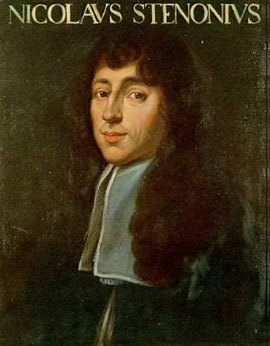
Born This Day: Nicolaus Steno

Steno (Jan. 10 – Nov. 26, 1686) was a Danish geologist and anatomist who first made unprecedented discoveries in anatomy, then established some of the most important principles of modern geology. He was Danish royal anatomist for 2 years.

Interested by the characteristics and origins of minerals, rocks, and fossils, he published in Prodromus (1669) the law of superposition (if a series of sedimentary rocks has not been overturned, upper layers are younger and lower layers are older) and the law of original horizontality (although strata may be found dipping steeply, they were initially deposited nearly horizontal.) link

Sunday, January 08, 2012

Born This Day: Alfred Russel Wallace

From Today In Science History:

Wallace (Jan. 8, 1823 – Nov. 7, 1913) was a British naturalist and biogeographer. He was the first westerner to describe some of the most interesting natural habitats in the tropics. He is best known for devising a theory of the origin of species through natural selection made independently of Darwin.

Between 1854 and 1862, Wallace assembled evidence of natural selection in the Malay Archipelago, sending his conclusions to Darwin in England. Their findings were jointly presented to the Linnaean Society in 1858. Wallace found that Australian species were more primitive, in evolutionary terms, than those of Asia, and that this reflected the stage at which the two continents had become separated. He proposed an imaginary line (now known as Wallace's line) dividing the fauna of the two regions.

The Alfred Russel Wallace page HERE. More HERE.

Friday, January 06, 2012

Died This Day: Jean-Étienne Guettard

Guettard (Sept. 22, 1715 - Jan. 6, 1786) was a French geologist and mineralogist who made the first survey to make a geologically map of France and to study the exposed rock strata of the Paris Basin.

He was first to identify several fossil species from the Paris area. Noting that certain plants occurred only in association with certain minerals and rocks, he travelled and mapped plant distributions and the occurrence of various minerals and rocks. The publication of his map in 1751 marks the beginning of the science of geology.

He also recognized erosion by running water, how subterranean water made caves and the battering of cliffs by the seas. He discovered the volcanoes of the Auvergne and the surrounding landscape shaped by past eruptions, cinder layers, old soils and solidified lava. From Today In Science History. image

Died This Day: Gregor Mendel

From Today In Science History:

Mendel (July 22, 1822 – Jan. 6, 1884) was an Austrian pioneer in the study of heredity. He spent his adult life with the Augustinian monastery in Brunn, where as a geneticist,
botanist and plant experimenter, he was the first to lay the mathematical foundation of the science of genetics, in what came to be called Mendelism.

Over the period 1856-63, Mendel grew and analyzed over 28,000 pea plants. He carefully studied for each their plant height, pod shape, pod color, flower position, seed color, seed shape and flower color. He made two very important generalizations from his pea experiments, known today as the Laws of Heredity. Mendel coined the present day terms in genetics: recessiveness and dominance.

Born This Day: George Ledyard Stebbins

From the U Calif., Berkeley:

Along with Dobzhansky (1900 - 1975), animal systematist Ernst Mayr, and paleontologist George Gaylord Simpson (1902 - 1984), Stebbins (Jan. 6, 1906 - Jan. 19 2000) is considered one of the "architects" of the modern evolutionary synthesis of the 1930s and 1940s, an intellectual watershed and historic turning point that brought together research in cytology, genetics, systematics, paleontology into a common evolutionary framework. This synthesis, which had the effect of reconciling the often opposing views of laboratory-oriented geneticists and natural history oriented systematists, made Charles Darwin's theory of evolution by natural selection the centerpiece of the new discipline of evolutionary biology.

In this role, Stebbins is credited with bringing a modern framework to the study of plant evolution, and he is perhaps best known for his book Variation and Evolution in Plants, published by Columbia University Press (NY) in 1950. In the 1940s, Stebbins also played an important role in organizing the nascent Society for the Study of Evolution, of which he became the third president in 1948, and used his position to speak out for the botanical side of evolutionary studies, a field that had been dominated by zoologists. Photo .

Friday, December 23, 2011

Died This Day: Ernest B. Schoedsack


Cooper and Schoedsack (right)
Ernest Beaumont Schoedsack (June 8, 1893 – Dec. 23, 1979) was an American film, director and producer. With his partner, Merian C. Cooper, their first significant collaboration was the spectacular documentary, Grass (1925), which enjoyed a popular theatrical release in the wake of the success of Nanook of the North (1922).

They are best known for King Kong (1933), which was co-written by Schoedsack's wife, Ruth Rose. He also directed Son of Kong (1933), Dr. Cyclops (1940) and Mighty Joe Young (1949). From TCM.

Thursday, December 22, 2011

Died This Day: Kenneth Tobey

Tobey (Mar. 23, 1917 - Dec. 22, 2002) made a career of playing “take charge, men of authority”, such as Capt. Hendry in Howard Hawkes, “The Thing From Another World” (1951), and just about every TV series throughout the 60’s and 70’s. More than a few of his appearances were in SF stories, and he played Col. Jack Evans in The Beast from 20,000 Fathoms (1953).

Premiered This Day: Son of Kong


With the fantastic success of “King Kong”, RKO tried to cash in by rushing this sequel into production and release within the same year (1933). It did not do nearly as well, but animator Willis O’Brien did manage to bring some of the same charm to the big white ape that he did to Kong.

Friday, December 16, 2011

Premiered This Day: Betty Boop's Museum


In 1932 Betty Boop had her own “Night in the Museum”.

Wednesday, December 14, 2011

Walking Lungfish & The Evolution of Terrestrial Locomotion

Behavioral evidence for the evolution of walking and bounding before terrestriality in sarcopterygian fishes 2011. H.M. King, et al. PNAS published ahead of print December 12.


Extensive video analysis reveals that the African lungfish can use its thin pelvic limbs to not only lift its body off the bottom surface but also propel itself forward. Both abilities were previously thought to originate in early tetrapods, the limbed original land-dwellers that appeared later than the lungfish's ancestors.

The observation reshuffles the order of evolutionary events leading up to terrestriality, the adaptation to living on land. It also suggests that fossil tracks long believed to be the work of early tetrapods could have been produced instead by lobe-finned ancestors of the lungfish.

"The lungfish is in a really great and unique position in terms of how it is related to fishes and to tetrapods," said King. "Lungfish are very closely related to the animals that were able to evolve and come out of the water and onto land, but that was so long ago that almost everything except the lungfish has gone extinct."


The lungfish's ability to use its thin limbs to support its body may be helped by the reduced demands of gravity underwater, the authors proposed. By filling its lungs with air, the lungfish may increase the buoyancy of its front end, enabling the scrawny hindlimbs to lift the entire body off the ground. link

Died This Day: Louis Agassiz


May 28, 1807 - Dec. 14, 1873

(Jean) Louis (Rodolphe) Agassiz was a Swiss-born U.S. naturalist, geologist, and teacher who made revolutionary contributions to the study of natural science with landmark work on glacier activity and extinct fishes. Agassiz began his work in Europe, having studied at the University of Munich and then as chair in natural history in Neuchatel in Switzerland. While there he published his landmark multi-volume description and classification of fossil fish.

In 1846 Agassiz came to the U.S. to lecture before Boston's Lowell Institute. Offered a professorship of Zoology and Geology at Harvard in 1848, he decided to stay, becoming a citizen in 1861. His innovative teaching methods altered the character of natural science education in the U.S. Link

More info HERE

Wednesday, November 30, 2011

Thescelosaurus assiniboiensis

A new basal ornithopod dinosaur (Frenchman Formation, Saskatchewan, Canada), and implications for late Maastrichtian ornithischian diversity in North America. 2011. Brown, C.M., et al. Zoological Journal of the Linnean Society. 163: 1157-1198


Abstract [edit]: A small, articulated basal ornithopod skeleton from the Frenchman Formation (late Maastrichtian) of Saskatchewan, previously referred to the taxon Thescelosaurus, differs from both recognized species of this taxon (Thescelosaurus neglectus and Thescelosaurus garbanii). We recognize this specimen as the holotype of a new species, Thescelosaurus assiniboiensis sp. nov.

Identification of a third species of Thescelosaurus from the late Maastrichtian of North America suggests that this taxon was more diverse than previously recognized, and shows an increase in diversity from the Campanian through the late Maastrichtian, contrasting the trends seen in most other ornithischian clades.

Sauropod Osteoderms

Sauropod dinosaur osteoderms from the Late Cretaceous of Madagascar. 2011. K. Curry Rogers, et al. Nature Communications 2, article number:564.


Abstract: Osteoderms are bones embedded within the dermis, and are common to select members of most major tetrapod lineages. The largest known animals that bear osteoderms are members of Titanosauria, a diverse clade of sauropod dinosaurs.

Here we report on two titanosaur osteoderms recovered from the Upper Cretaceous Maevarano Formation of Madagascar. Each osteoderm was discovered in association with a partial skeleton representing a distinct ontogenetic stage of the titanosaur Rapetosaurus krausei. Combined, these specimens provide novel insights into the arrangement and function of titanosaur osteoderms.

Taphonomic data confirm that Rapetosaurus developed only limited numbers of osteoderms in its integument. The adult-sized osteoderm is the most massive integumentary skeletal element yet discovered, with an estimated volume of 9.63 litres. Uniquely, this specimen possesses an internal cavity equivalent to more than half its total volume. Large, hollow osteoderms may have functioned as mineral stores in fecund, rapidly growing titanosaurs inhabiting stressed environments.

Monday, November 28, 2011

A Stopmotion History of The World


Created By Kalle Mattson, Kevin Parry, and Friends. Link from Neatorama.

Thursday, November 24, 2011

Published This Day: The Origin of The Species

From Today In Science History:

In 1859, The Origin of Species by Means of Natural Selection was published in England to great acclaim. In this groundbreaking book by British naturalist Charles Darwin, he argued that species are the result of a gradual biological evolution in which nature encourages, through natural selection, the propagation of those species best suited to their environments. This book is unquestionably one of the most influential in the history of science.

Tuesday, November 22, 2011

Cuspicephalus scarfi - The 'Torydactyl'

A monofenestratan pterosaur from the Kimmeridge Clay Formation (Upper Jurassic, Kimmeridgian) of Dorset, England. 2011. D.M. Martill and S. Etches. Acta Palaeontologica Polonica, in press.


The pterosaur Cuspicephalus scarfi is named after Gerald Scarfe, the political cartoonist whose pen demonised Mrs Thatcher as a pointy nosed ‘torydactyl’. The new discovery was so-called because of its extremely long pointy head, which is most unusual for a pterosaur. The skull is 326 mm long – similar in size to a stork or heron.

The species was found by fossil collector Steve Etches in Kimmeridge Bay, Dorset. The specimen is 155 million years old from the Late Jurassic period and is the most substantial pterosaur skull to be found in the UK for nearly 200 years. It is now on display in Dorset’s Museum of Jurassic Marine Life.

Mr Scarfe said: “I'm thrilled and flattered - I never thought Mrs Thatcher would do anything for me - even if it is to be immortalized as a 155 million year old fossil". link

Eric Idle on Intelligent Design. Or Michael Palin on Shakespeare. Maybe Both.


Go read it at The New Yorker

Sunday, November 20, 2011

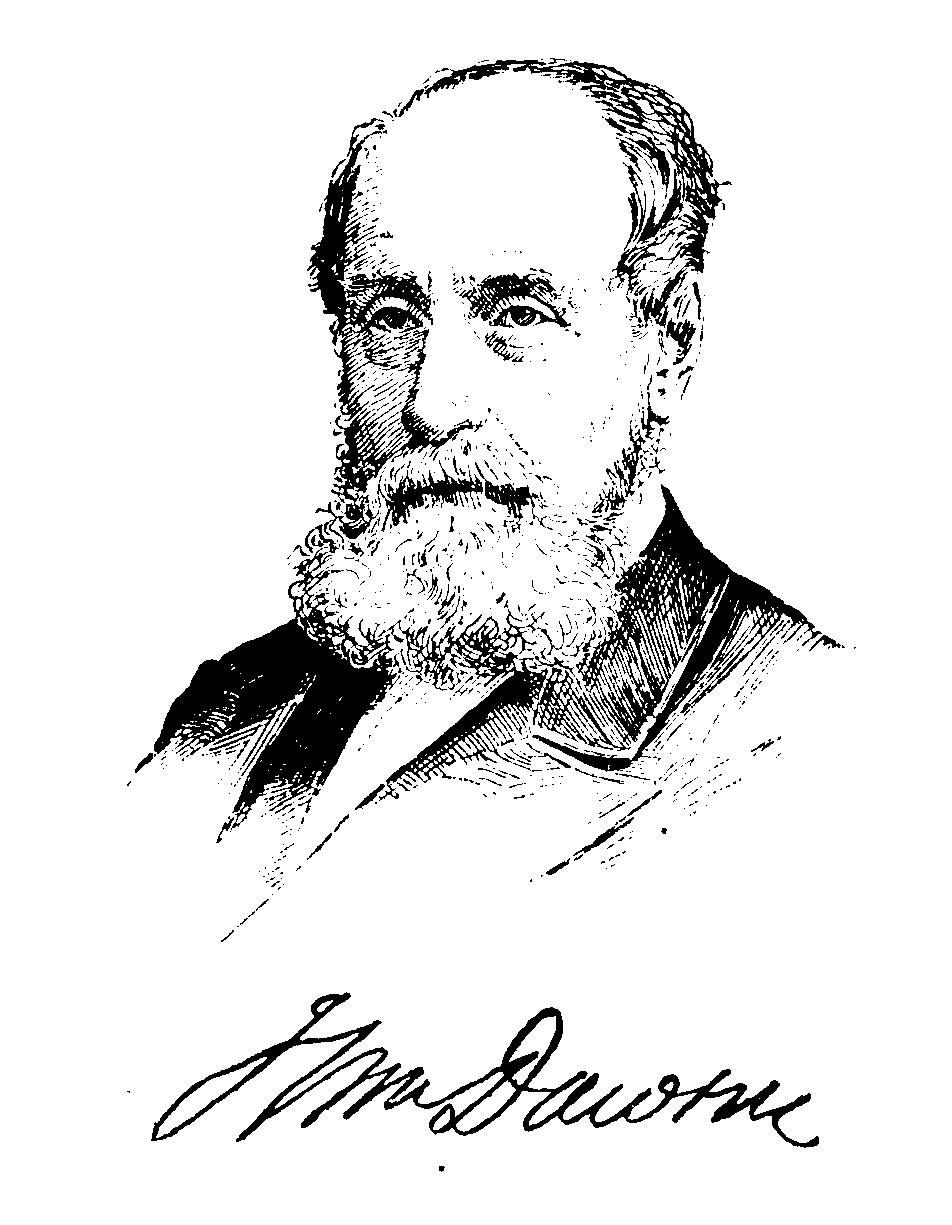
Died This Day: John William Dawson

Dawson (Oct. 30, 1820 - Nov. 20, 1899>) was a Canadian geologist who made numerous contributions to paleobotany and extended the knowledge of Canadian geology. Dawson was born and raised in Pictou, Nova Scotia, where the many sandstone and coal formations provided fertile ground for his first scientific explorations, which culminated in the publication of Acadian Geology. He made many important discoveries of fossil life, great and small. These included fossil plants, trackways of lowly invertebrates, footprints, skeletons of reptiles and amphibians, millipedes and the earliest land snails. When the famous geologist Charles Lyell visited coal deposits in Pictou, Dawson acted as his guide.

In 1851, Dawson and Lyell teamed up again to examine the interiors of fossil tree trunks at Joggins, Nova Scotia. They discovered the remains of some of the earliest known reptiles, Hylonomus lyelli, along with other rare fossils, propelling this part of the world into the international spotlight.

Dawson became principal of McGill College in Montreal in 1854, which he made into a reputable institution. He remained there, teaching geology and palaeontology and acting as librarian, until his retirement. One of his lifelong dreams was realized in 1882 when Peter Redpath gave money to McGill for the construction and establishment of a museum, naming Dawson as director. Today the Peter Redpath Museum of Natural History houses many specimens from Dawson's personal collection.

Info from HERE and HERE. Images from HERE and HERE.

Thursday, November 17, 2011

The Ghost of Slumber Mountain

The The Ghost of Slumber Mountain premiered this day in 1918. It was written and directed by special effects pioneer Willis O'Brien and produced by Herbert M. Dawley. When O’Brien went on to greater fame with The Lost World Dawley sued the film makers for patent infrigment, claiming that he, not O’Brien, had invented stop-motion animation. Although this was not the case, filming saw head up while the case was sorted out.

Both O’Brien and Hawley star as the ghost of Mad Dick and Uncle Jack Holmes, respectively.

Prehistoric Moth Colors

Fossilized Biophotonic Nanostructures Reveal the Original Colors of 47-Million-Year-Old Moths. 2011. M.E. McNamara, et al. PLoS Biol 9(11): e1001200.

Scientists have now reconstructed the colors in fossil moths that are 47 million years old.
This is the first evidence of structurally colored scales in fossil lepidopterans. The fossil moths came from the Messel oil shale in Germany, a site famous for exquisite fossil preservation.

Although the original colors of the fossil moths were not preserved, the researchers were able to reconstruct them because the tiny color-producing patterns in the moth scales were intact. The fossil moths owe their color to a stack of layers inside the scales. These layers form a fossil multilayer reflector, which usually produces iridescent colour that changes depending on viewing angle. But other details of the fossil scales suppressed this effect, producing instead muted colors.

The researchers reconstructed the original colors via mathematical analysis of the scale ultrastructure, revealing that the wings had actually been yellow-green when the moths were alive. Modern butterflies and moths use bright, contrasting colors to communicate with each other, and muted greens to camouflage themselves in leafy habitats. This makes it likely that the fossil moths used their yellow-green wings to blend in with leaves, suggesting that this strategy for hiding in plain sight had evolved as early as 47 million years ago amongst lepidopterans. link

Died This Day: Carl Akeley


Read his story over at Atomic Surgery

The Hall of African Mammals at the American Museum of Natural History exists thanks to the efforts of Carl Akeley (May 19, 1864 - Nov 17, 1926) who was the kind of adventurer that Indy Jones could only dream of being.


He died on an African expedition in 1926, ten years before this hall was completed and was buried in a place depicted in the Hall's famous Gorilla Diorama. Of course we approach collecting and conservation differently today, but Akeley is to be commended for his love of nature and his desire to present its hidden corners to the world.

From Today In Science History:

Carl Ethan Akeley was an American naturalist and explorer who developed the taxidermic method for mounting museum displays to show animals in their natural surroundings. His method of applying skin on a finely molded replica of the body of the animal gave results of unprecedented realism and elevated taxidermy from a craft to an art. He mounted the skeleton of the famous African elephant Jumbo. He invented the Akeley cement gun to use while mounting animals, and the Akeley camera which was used to capture the first movies of gorillas.

Monday, November 14, 2011

Born This Day: Sir Charles Lyell


From Minnesota State University at Mankato comes this excellent bio on Lyell:
Sir Charles Lyell (Nov. 14, 1797 - Feb. 22, 1875) attended Oxford University at age 19. Lyell's father was an active naturalist. Lyell had access to an elaborate library including subjects such as Geology.

When Lyell was at Oxford, his interests were mathematics, classics, law and geology. He attended a lecture by William Buckland that triggered his enthusiasm for geology. Lyell originally started his career as a lawyer, but later turned to geology. He became an author of The Geological Evidence of the Antiquity of Man in 1863 and Principles of Geology. Lyell argued in this book that, at the time, presently observable geological processes were adequate to explain geological history. He thought the action of the rain, sea, volcanoes and earthquakes explained the geological history of more ancient times.

Lyell rebelled against the prevailing theories of geology of the time. He thought the theories were biased, based on the interpretation of Genesis. He thought it would be more practical to exclude sudden geological catastrophes to vouch for fossil remains of extinct species and believed it was necessary to create a vast time scale for Earth's history. This concept was called Uniformitarianism. The second edition of Principles of Geology introduced new ideas regarding metamorphic rocks. It described rock changes due to high temperature in sedimentary rocks adjacent to igneous rocks. His third volume dealt with paleontology and stratigraphy. Lyell stressed that the antiquity of human species was far beyond the accepted theories of that time.

Charles Darwin became his dear friend and correspondent. Darwin is quoted saying, "The greatest merit of the Principles was that it altered the whole tone of one's mind, and therefore that, when seeing a thing never seen by Lyell, one yet saw it through his eyes."

Image from King’s College London.

Sunday, November 13, 2011

Fantasia Premieres (1940)


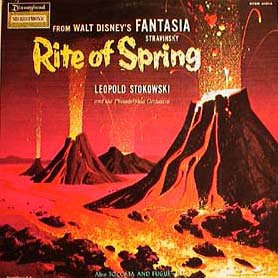
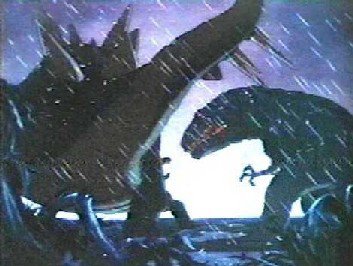
Walt Disney’s epic film, Fantasia, opened this day on Broadway in New York City in 1940. The film featured Leopold Stokowski and the Philadelphia Orchestra performing a number of pieces of classical music to the film’s animated visuals. Igor Stravinsky’s “Rite of Spring” provided the score for the evolution of the Earth including a wonderful sequence on the extinction of the dinosaurs at the end of the Cretaceous. Many school teachers actually showed this sequence in science class -- that’s where I first saw it!

Born This Day: Helen Mack


Nov 13, 1913 – August 13, 1986
Helen starred as Helene Peterson in “Son of Kong”, the quickie follow up to “King Kong”. Once again Carl Denham leads a beautiful girl into danger on Skull Island.

Wednesday, November 09, 2011

Burgess Shale Arthropod Locomotion

Skimming the surface with Burgess Shale arthropod locomotion. 2011. N. J. Minter, et al. Proc. R. Soc. B. Published online before print November 9.


Tegopelte gigas producing a trackway © 2011 M. Collins.
Researchers have followed fossilized footprints to a multi-legged predator that ruled the seas of the Cambrian period about half a billion years ago.
The research team worked with samples gathered from the Burgess Shale, famed for its exquisitely detailed fossils from the Cambrian Explosion, a time when life underwent a dramatic change with the appearance of all the modern groups of organisms and some bizarre creatures.

Fossil trackways and other fossilized evidence of animal activities such as burrows, bite marks and feces are known as trace fossils. These provide evidence of where animals were living and what they were doing, but the full identity of the producers is rarely known.

In this case, size of the tracks and the number of legs needed to make them left only one suspect: Tegopelte gigas. This caterpillar-like animal sported a smooth, soft shell on its back and 33 pairs of legs beneath. One of the largest arthropods of its time, it could reach up to 30 cm in length.

By analyzing both the fossilized remains of Tegopelte and the trackways, the researchers were able to reconstruct how this animal would have moved. The creature was capable of skimming rapidly across the seafloor, with legs touching the sediment only briefly, supporting the view that Tegopelte was a large and active top carnivore. Such lifestyles would have been important in shaping early marine communities and evolution during the Cambrian explosion. link