Thomas (born c. 1225 - March 7, 1274) Italian theologian who wrote commentaries on Aristotle. Following Aristotle's definition of science as sure and evident knowledge obtained from demonstrations, Thomas defined science as the knowledge of things from their causes. In his major work, Summa, he distinguished between demonstrated truth (science) and revealed truth (faith).
In some natural science he was insightful, such as: "In the same plant there is the two-fold virtue, active and passive, though sometimes the active is found in one and the passive in another, so that one plant is said to be masculine and the other feminine." In Summa , however, he made the erroneous observation that metals are formed by rays from the Sun, Moon, and planets, each governing a particular metal. From Today In Science History.
Monday, March 07, 2011

Born This Day (1930): Stanley Lloyd Miller
From Today in Science History:
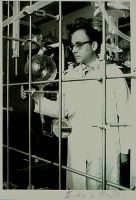
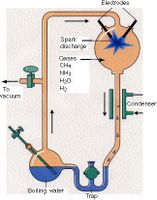
Miller is an American chemist who made a series of famous experiments beginning in 1953, to determine the possible origin of life from inorganic chemicals on the primeval earth.
He passed electrical discharges (simulating thunderstorms) through mixtures of reducing gases, such as hydrogen, ammonia, methane and water, that were believed to have formed the earliest atmosphere.
An analysis days later showed that the resulting chemicals included glycine and alanine, the simplest amino acids & the basic building blocks of proteins. Other compounds included urea, aldehydes and carboxylic acids. Thus, a "primeval soup" is the currently accepted most plausible explanation, though incomplete, of the origin of the complex organic molecules of life.

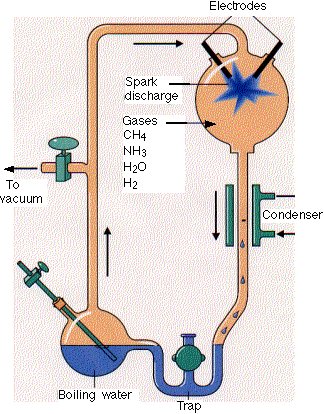
He passed electrical discharges (simulating thunderstorms) through mixtures of reducing gases, such as hydrogen, ammonia, methane and water, that were believed to have formed the earliest atmosphere.
An analysis days later showed that the resulting chemicals included glycine and alanine, the simplest amino acids & the basic building blocks of proteins. Other compounds included urea, aldehydes and carboxylic acids. Thus, a "primeval soup" is the currently accepted most plausible explanation, though incomplete, of the origin of the complex organic molecules of life.


Sunday, March 06, 2011

More Fossils In Meteorites
Fossils of Cyanobacteria in CI1 Carbonaceous Meteorites. 2011. Richard B. Hoover. Journal of Cosmology 13

A NASA scientist has discovered evidence of microfossils similar to Cyanobacteria, in freshly fractured slices of the interior surfaces of the Alais, Ivuna, and Orgueil CI1 carbonaceous meteorites.
Based on Field Emission Scanning Electron Microscopy (FESEM) and other measures, Dr. Hoover has concluded they are indigenous to these meteors and are similar to trichomic cyanobacteria and other trichomic prokaryotes such as filamentous sulfur bacteria.
He concludes these fossilized bacteria are not Earthly contaminants but are the fossilized remains of living organisms which lived in the parent bodies of these meteors, e.g. comets, moons, and other astral bodies. The implications are that life is everywhere, and that life on Earth may have come from other planets. link
It's hard to say if this on-line journal can be taken seriously given its cheesy web site covered with ads. Even the link in the title of this paper (not the link I've given you) takes you to Amazon.com!

Based on Field Emission Scanning Electron Microscopy (FESEM) and other measures, Dr. Hoover has concluded they are indigenous to these meteors and are similar to trichomic cyanobacteria and other trichomic prokaryotes such as filamentous sulfur bacteria.
He concludes these fossilized bacteria are not Earthly contaminants but are the fossilized remains of living organisms which lived in the parent bodies of these meteors, e.g. comets, moons, and other astral bodies. The implications are that life is everywhere, and that life on Earth may have come from other planets. link
It's hard to say if this on-line journal can be taken seriously given its cheesy web site covered with ads. Even the link in the title of this paper (not the link I've given you) takes you to Amazon.com!
Thursday, March 03, 2011
Died This Day: Sewell Wright
From the ever eloquent Today In Science History:
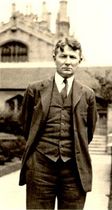 Wright (Dec. 21, 1889 – March 3, 1988) was an American geneticist who was one of the founders of modern theoretical population genetics. He researched the effects of inbreeding and crossbreeding with guinea pigs, and later on the effects of gene action on inherited characteristics. He adopted statistical techniques to develop evolutionary theory.
Wright is best known for his concept of genetic drift, called the Sewell Wright effect - that when small populations of a species are isolated, out of pure chance the few individuals who carry certain relatively rare genes may fail to transmit them. The genes may therefore disappear and their loss may lead to the emergence of new species, although natural selection has played no part in the process.
Check out genetic drift at The Biology Project at The University of Arizona.
Learn more about Wright HERE. Image from HERE
 Wright (Dec. 21, 1889 – March 3, 1988) was an American geneticist who was one of the founders of modern theoretical population genetics. He researched the effects of inbreeding and crossbreeding with guinea pigs, and later on the effects of gene action on inherited characteristics. He adopted statistical techniques to develop evolutionary theory.
 Wright is best known for his concept of genetic drift, called the Sewell Wright effect - that when small populations of a species are isolated, out of pure chance the few individuals who carry certain relatively rare genes may fail to transmit them. The genes may therefore disappear and their loss may lead to the emergence of new species, although natural selection has played no part in the process.
Check out genetic drift at The Biology Project at The University of Arizona.
Learn more about Wright HERE. Image from HERE
Wednesday, March 02, 2011
Premiered This Day: King Kong
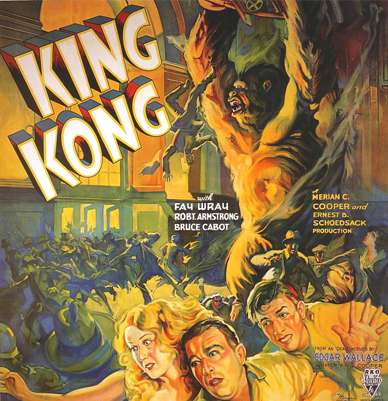
The movie King Kong was one of the most successful films released in 1933. It went on to inspire many young fans (both in its initial release, numerous re-releases, and on television) to take up the professions of either film-making or paleontology. The field of dinosaur paleobiology would be very different today if King Kong had never met Fay Wray on Skull Island "way west of Sumatra" and been taken to the concrete jungle of New York.
In a remarkable coincidence the artist, Willis O'Brien, who created and brought Kong to life, celebrated his 47th birthday on the day the movie debuted in New York City.
Born This Day: Willis O'Brien
A tip of the fedora to the late, great Willis O'Brien who breathed life into the fur and armature that become King Kong, the 8th Wonder of the World!

His biography from Leonard Maltin's Movie Encyclopedia:
Willis O'Brien (March 2, 1886 - November 8, 1962)
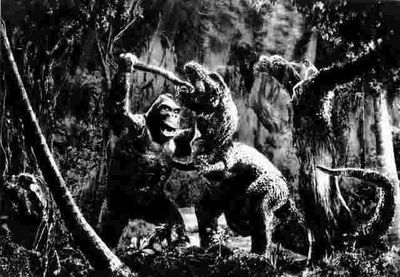
In 1950 O'Brien received (finally!) a special Oscar for his work on Mighty Joe Young which was the first such award ever given for special effects. This film also launched the career of the next great stop-motion animator, Ray Harryhausen.

Willis O'Brien (March 2, 1886 - November 8, 1962)
Special effects wizard best known to the world as the man who
created King Kong. O'Brien was a sculptor and cartoonist for the San Francisco "Daily News" before he first dabbled in the medium of film during the 'teens. His work caught the attention of the Edison company, for whom he produced several short subjects with a prehistoric them. Titles include The Dinosaur and the Missing Link, RFD 10,000 B.C and Prehistoric Poultry. His method of animating small rubber figures, carefully molded over metal skeletons with movable joints, by moving them a fraction of an inch for each frame of film exposed, became the standard process of live-action animation.
In 1918 he made his most ambitious film yet, The Ghost of Slumber Mountain paving the way for The Lost World (1925), a major Hollywood feature which told of a search for prehistoric creatures. O'Brien's dinosaurs were his most realistic yet, and still impress today, even in the wake of Jurassic Park Still, Obie (as he was known) kept experimenting.When producer Merian C. Cooper saw his work, he hired O'Brien to animate King Kong (which, up to that point, was to have been shot with an actor in a gorilla suit). The extraordinary success of King Kong (1933) spawned an immediate sequel, The Son of Kong (also 1933), and made O'Brien a hero to several generations of fantasy filmmakers to come. O'Brien won his only Oscar for his effects in Mighty Joe Young (1949), another giant-monkey movie, on which his protégé (and successor) Ray Harryhausen worked.
O'Brien worked on other giant-monster movies (including 1957's The Black Scorpion his last) before dying in 1962. Today, O'Brien would be kingpin of his own studio, but even in the wake of King Kong he had trouble launching other film projects, and many promising ideas languished on studio drawing boards for decades to follow. One of the RKO staff with whom he'd worked in the 1930s, Linwood Dunn, gave O'Brien his final employment, doing stop-motion figures for It's a Mad Mad Mad Mad World (1963).

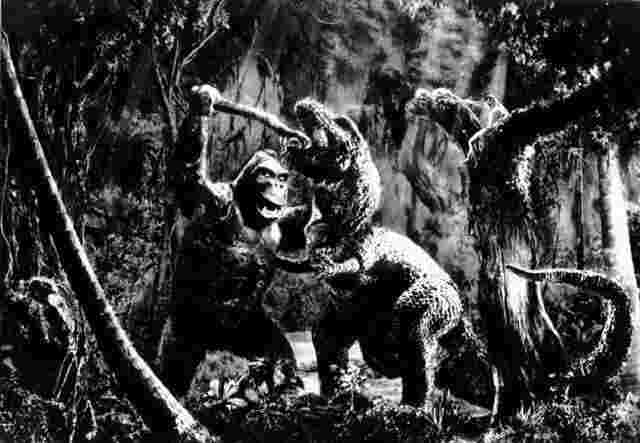
In 1950 O'Brien received (finally!) a special Oscar for his work on Mighty Joe Young which was the first such award ever given for special effects. This film also launched the career of the next great stop-motion animator, Ray Harryhausen.
Friday, February 25, 2011
Cryolophosaurus Holotype Excavation Finished After 20 Years

The University of Alberta now has a slide show up here
Thanks to Clive Coy for the link. Please check out Clive's new blog on Roy Chapman Andrews HERE
Brontomerus: Thunder-Thighs!
Brontomerus mcintoshi, a new sauropod dinosaur from the Lower Cretaceous Cedar Mountain Formation, Utah, USA. 2011. M.P. Taylor, et al. Acta Palaeontologica Polonica 56: 75-98.

Brontomerus mcintoshi is a newly discovered sauropod from the Early Cretaceous of North America. Brontomerus means "Thunder thighs" -- a name chosen because the peculiar shape of the hip bone shows that it would have had enormously powerful thigh muscles in life.
The quarry where the bones were found contains elements from at least two individuals, one of them three times as big as the other -- an adult and a juvenile. The life restoration shows a mother protecting her baby from a predator by using her powerful thigh muscles to deliver a devastating kick.


Notice how, in the reconstruction above, the hip bone projects a long way forward from the socket where it meets the leg: in life, muscles would have run down to the leg from the whole length of the hip bone, hence the name "Thunder thighs". link

The quarry where the bones were found contains elements from at least two individuals, one of them three times as big as the other -- an adult and a juvenile. The life restoration shows a mother protecting her baby from a predator by using her powerful thigh muscles to deliver a devastating kick.


I'm sure that using the term "thunder thighs" will generate a few hundred extras hits for the blog from the non-palaeo crowd. Parents: don't let your kids google that term without adult supervision!
Homoplasy
Homoplasy: From Detecting Pattern to Determining Process and Mechanism of Evolution. 2011. D. B. Wake, et al. Science 331: 1032-1035.

Graphic by Zina Deretsky
A review paper published this week suggests that studying examples of homoplasy can help scientists analyze the overwhelming deluge of genetic data and information that is currently being generated.
For example, studying situations where a derived trait surfaces in two lineages that lack a recent common ancestor, or situations where an ancestral trait was lost but then reappeared many generations later, may help scientists identify the processes and mechanisms of evolution.
The authors provide many fascinating examples of homoplasy, including different species of salamanders that independently, through evolution, increased their body-length by increasing the lengths of individual vertebrae. By contrast, most species grow longer by adding vertebrae through evolution.
The authors also explain how petals in flowers have evolved on six separate occasions in different plants. A particularly striking example of homoplasy cited by the authors is the evolution of eyes, which evolved many times in different groups of organisms--from invertebrates to mammals--all of which share an identical genetic code for their eyes.
These kinds of examples of genetic and developmental biology help scientists elucidate relationships between organisms, as well as develop a fuller picture of their evolutionary history. link

Graphic by Zina Deretsky
A review paper published this week suggests that studying examples of homoplasy can help scientists analyze the overwhelming deluge of genetic data and information that is currently being generated.
For example, studying situations where a derived trait surfaces in two lineages that lack a recent common ancestor, or situations where an ancestral trait was lost but then reappeared many generations later, may help scientists identify the processes and mechanisms of evolution.
The authors provide many fascinating examples of homoplasy, including different species of salamanders that independently, through evolution, increased their body-length by increasing the lengths of individual vertebrae. By contrast, most species grow longer by adding vertebrae through evolution.
The authors also explain how petals in flowers have evolved on six separate occasions in different plants. A particularly striking example of homoplasy cited by the authors is the evolution of eyes, which evolved many times in different groups of organisms--from invertebrates to mammals--all of which share an identical genetic code for their eyes.
These kinds of examples of genetic and developmental biology help scientists elucidate relationships between organisms, as well as develop a fuller picture of their evolutionary history. link
Saturday, February 19, 2011
Born This Day: William Diller Matthew
Matthew (Feb. 19, 1871 – Sept. 24, 1930) was a superb mammalian paleontologist and important biogeographic theorist, and also G. G. Simpson's primary mentor. He published voluminiously on the fossil record of 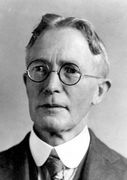 mammals and advocated a fully modern approach to taxonomy that emphasized tying scientific names to natural biological populations. His 1930 paper gives a clear statement of this position.
Matthew's key biogeographic theory was that waves of faunal migration repeatedly went from the northern continents southwards. This theory, which had obvious racial and political overtones, was justified by a "stabilist" view of paleogeography (i.e., that the continents had never moved from their modern positions), and by evidence from the relatively young fossil record of mammals, at the expense of other data that would have shown the more ancient interconnections among South America, Africa, India, and Australia. Remarkably, Matthew remained a Darwinian despite working for the autocratic orthogeneticist H. F. Osborn for three decades.
Info from HERE. Image from HERE.
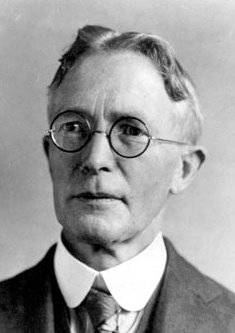 mammals and advocated a fully modern approach to taxonomy that emphasized tying scientific names to natural biological populations. His 1930 paper gives a clear statement of this position.
Matthew's key biogeographic theory was that waves of faunal migration repeatedly went from the northern continents southwards. This theory, which had obvious racial and political overtones, was justified by a "stabilist" view of paleogeography (i.e., that the continents had never moved from their modern positions), and by evidence from the relatively young fossil record of mammals, at the expense of other data that would have shown the more ancient interconnections among South America, Africa, India, and Australia. Remarkably, Matthew remained a Darwinian despite working for the autocratic orthogeneticist H. F. Osborn for three decades.
Info from HERE. Image from HERE.
Born This Day: Sven Anders Hedin
Hedin (Feb. 19,1865 - Nov. 26, 1952) was a Swedish explorer and geographer, born in Stockholm, who led four multi-year expeditions into Central Asia between 1897 and 1935. Although not as well known as Roy Chapman Andrews his work in the  regions revealed a wealth of cultural, archaeological and palaeontological wonders.
During his first major Asian expedition, he crossed the Pamirs, charted Lop Nor (Lake) in China, and finally arrived at Beijing. He then journeyed to Tibet by way of Mongolia, Siberia, and the Gobi Desert. Hedin explored Tibet and Xinjiang (Sinkiang), identified the sources of the Brahmaputra, Indus, and Sutlej rivers, and, in 1906, explored and named the Trans-Himalayas. In 1927 Hedin led an expedition of Chinese and Swedish scientists into Central Asia.
He wrote extensively about his adventures (e.g., Across the Gobi Desert, The Conquest of Tibet (1935), My Life as an Explorer (1926)) and they make for engaging and fascinating reading for anyone interested in the early days of exploring Central Asia. link
An excellent summary of Hedin’s life and expeditions into Central Asia can be found at the IDP News Archives image
 regions revealed a wealth of cultural, archaeological and palaeontological wonders.
During his first major Asian expedition, he crossed the Pamirs, charted Lop Nor (Lake) in China, and finally arrived at Beijing. He then journeyed to Tibet by way of Mongolia, Siberia, and the Gobi Desert. Hedin explored Tibet and Xinjiang (Sinkiang), identified the sources of the Brahmaputra, Indus, and Sutlej rivers, and, in 1906, explored and named the Trans-Himalayas. In 1927 Hedin led an expedition of Chinese and Swedish scientists into Central Asia.
He wrote extensively about his adventures (e.g., Across the Gobi Desert, The Conquest of Tibet (1935), My Life as an Explorer (1926)) and they make for engaging and fascinating reading for anyone interested in the early days of exploring Central Asia. link
An excellent summary of Hedin’s life and expeditions into Central Asia can be found at the IDP News Archives image
Born This Day: Sir Roderick Impey Murchison
Murchison (Feb. 19, 1792 - Oct. 22, 1871) was a Scottish geologist who first differentiated the Silurian strata in the geologic sequence of Early Paleozoic strata (408-540 million years old). He believed in fossils as primary criteria. In 1831, he began researching the previously geologically unknown graywacke rocks of the Lower Paleozoic, found underlying the Old Red Sandstone in parts of Wales, which culminated in his major work the Silurian System (1839).
Murchison named the Silurian after an ancient British tribe that inhabited South Wales. He established the Devonian working with Adam Sedgwick (1839). He named the Permian (1841) after the Perm province in Russia where he made a geological survey in 1840-45. link
Murchison named the Silurian after an ancient British tribe that inhabited South Wales. He established the Devonian working with Adam Sedgwick (1839). He named the Permian (1841) after the Perm province in Russia where he made a geological survey in 1840-45. link

Wednesday, February 16, 2011
Born This Day: Jean-Baptiste-Julien d' Omalius d'Halloy
Feb. 16, 1783 - Jan. 15, 1875
d'Halloy was a Belgian geologist who was an early proponent of evolution and was acknowledged by Charles Darwin in his preface to ‘On The Origin of the Species’ for his opinions on the origin of new species through descent with modification.
He determined the stratigraphy of the Carboniferous and other rocks in Belgium and the Rhine provinces, and also made detailed studies of the Tertiary deposits of the Paris Basin. link
d'Halloy was a Belgian geologist who was an early proponent of evolution and was acknowledged by Charles Darwin in his preface to ‘On The Origin of the Species’ for his opinions on the origin of new species through descent with modification.
He determined the stratigraphy of the Carboniferous and other rocks in Belgium and the Rhine provinces, and also made detailed studies of the Tertiary deposits of the Paris Basin. link
Born This Day: Ernst Heinrich August Haeckel
Haeckel (Feb, 16, 1834 - Aug. 9, 1919) was a German zoologist and evolutionist who was a strong proponent of Darwinism and proposed new notions of the evolutionary descent of man. He coined many words commonly used by biologists today, such as phylum, phylogeny, and ecology.
He is noted for the book, The evolution of man: a popular exposition of the principal points of human ontogeny and phylogeny link

He is noted for the book, The evolution of man: a popular exposition of the principal points of human ontogeny and phylogeny link
Died This Day: Sandra Shaw

Arbogast on Film blog has nice appreciation of Sandra Shaw’s few famous film moments.
Monday, February 14, 2011
Born This Day: Georg Christian Füchsel
Georg Christian Füchsel (Feb. 14, 1722 - June, 20, 1773) was the originator of the idea of stratigraphic formations & one of the first to make recorded measurements of sections of stratified rock. His major work, "Historia terrae et maris, ex historia Thuringiae, per montium descriptionem, eruta" (1861), contains the general principles of historical geology. From Today in Science History.

Tuesday, February 08, 2011
Mendel's 1st Paper Published & Ignored
In 1865, Gregor Mendel, who first discovered the laws of genetics, read his first scientific paper to the Brünn Society  for the study of Natural Sciences in Moravia (published 1866).
He described his investigations with pea plants. Although he sent 40 reprints of his article to prominent biologists throughout Europe, including Darwin, only one was interested enough to reply.
Most of the reprints, including Darwin’s, were discovered later with the pages uncut, meaning they were never read.
Fortunately, 18 years after Mendel's death, three botanists in three different countries researching the laws of inheritance, in spring 1900, came to realize that Mendel had found them first. Mendel was finally acknowledged as a pioneer in the field which became known as genetics. Info from Today In Science History
Read the paper HERE.
 for the study of Natural Sciences in Moravia (published 1866).
He described his investigations with pea plants. Although he sent 40 reprints of his article to prominent biologists throughout Europe, including Darwin, only one was interested enough to reply.
Most of the reprints, including Darwin’s, were discovered later with the pages uncut, meaning they were never read.
Fortunately, 18 years after Mendel's death, three botanists in three different countries researching the laws of inheritance, in spring 1900, came to realize that Mendel had found them first. Mendel was finally acknowledged as a pioneer in the field which became known as genetics. Info from Today In Science History
Read the paper HERE.
Monday, February 07, 2011
Born This Day: Godfrey Harold Hardy
Hardy (Feb. 7, 1877 – Dec. 1, 1947) was an English mathematician known for his work in number theory and mathematical analysis. Although Hardy considered himself a pure mathematician, he nevertheless worked in applied mathematics when he formulated a law that describes how proportions of dominant and recessive genetic traits will propagate in a large population (1908). Hardy considered it unimportant but it has proved of major importance in blood group distribution. As it was also independently discovered by Weinberg, it is known as the Hardy-Weinberg principle.
The Hardy-Weinberg equation

The Hardy-Weinberg equation
Sunday, February 06, 2011
Born This Day: Mary Leakey
From the Minnesota State University site:
Mary Douglas Nicol Leakey (Feb. 6, 1913 – Dec. 9, 1996) was in London, England. She meet her future husband, Louis Leakey, when he asked her to illustrate his book, 'Adam’s Ancestors'. Mary and Louis spent from 1935 to 1959 at Olduvai Gorge in the Serengeti Plains of northern Tanzania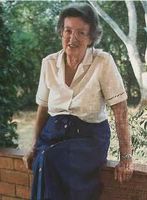 where they worked to reconstruct many Stone Age cultures dating as far back as 100,000 to two million years ago. They documented stone tools from primitive stone-chopping instruments to multi-purpose hand axes.
In October of 1947, while on Rusinga Island, Mary unearthed a Proconsul africanus skull, the first skull of a fossil ape ever to be found. It was dated to be twenty million years old. An Australopithecus boisei skull was uncovered in 1959. Not long afterwards, a less robust Homo habilis was found. In 1965 the duo uncovered a Homo erectus cranium.
After her husband died in 1972, Mary continued her work at Olduvai and Laetoli. She discovered Homo fossils at Laetoli which were more than 3.75 million years old, fifteen new species and one new genus. From 1978-81 Mary and her staff worked to uncover the Laetoli hominid footprint trail which was left in volcanic ashes 3.6 million years ago.
Image from HERE.
Mary Douglas Nicol Leakey (Feb. 6, 1913 – Dec. 9, 1996) was in London, England. She meet her future husband, Louis Leakey, when he asked her to illustrate his book, 'Adam’s Ancestors'. Mary and Louis spent from 1935 to 1959 at Olduvai Gorge in the Serengeti Plains of northern Tanzania
 where they worked to reconstruct many Stone Age cultures dating as far back as 100,000 to two million years ago. They documented stone tools from primitive stone-chopping instruments to multi-purpose hand axes.
In October of 1947, while on Rusinga Island, Mary unearthed a Proconsul africanus skull, the first skull of a fossil ape ever to be found. It was dated to be twenty million years old. An Australopithecus boisei skull was uncovered in 1959. Not long afterwards, a less robust Homo habilis was found. In 1965 the duo uncovered a Homo erectus cranium.
After her husband died in 1972, Mary continued her work at Olduvai and Laetoli. She discovered Homo fossils at Laetoli which were more than 3.75 million years old, fifteen new species and one new genus. From 1978-81 Mary and her staff worked to uncover the Laetoli hominid footprint trail which was left in volcanic ashes 3.6 million years ago.
Image from HERE.
Saturday, February 05, 2011
Born This Day: Sir Arthur Keith

Keith (Born 5 Feb 1866; died 7 Jan 1955) was a Scottish anatomist and physical anthropologist who specialized in the study of fossil humans and who reconstructed early hominid forms, notably fossils from Europe and North Africa. After graduating from university (1888), he travelled as a physician on a gold mining trip to Siam. There, he dissected monkeys and became interested in racial types.
In 1892, he returned to Britain and studied anatomy. In 1915, he published The Antiquity of Man, an anatomical survey of all important human fossil remains, at which time he believed that moderns humans are as old as extinct forms of humans. In 1931, New Discoveries was published in which he admitted that modern humans probably arose from types already separate in the early Pleistocene. From Today In Science History
Born This Day: Alexandre Brongniart
Brongniart (Feb. 5, 1770 - Oct. 7, 1847) was a French mineralogist, geologist, and naturalist, who first arranged the geologic formations of the Tertiary Period  (from 66.4 to 1.6 million years ago) in chronological order and described them.
He made the first systematic study of trilobites that became important in determining the chronology of Paleozoic strata (from 540 to 245 million years ago).
He helped introduce the principle of geologic dating by the identification of distinctive fossils found in each stratum and noted that the Paris formations had been created under alternate freshwater and saltwater conditions. image. From Today In Science History
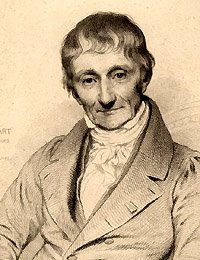 (from 66.4 to 1.6 million years ago) in chronological order and described them.
 He made the first systematic study of trilobites that became important in determining the chronology of Paleozoic strata (from 540 to 245 million years ago).
He helped introduce the principle of geologic dating by the identification of distinctive fossils found in each stratum and noted that the Paris formations had been created under alternate freshwater and saltwater conditions. image. From Today In Science History
Friday, February 04, 2011

Thursday, February 03, 2011
Born This Day: Gideon Mantell
Mantell (Feb. 3, 1790 – Nov. 10, 1852), a physician of Lewes in Sussex in southern England, had for years been collecting fossils in the sandstone of Tilgate forest, 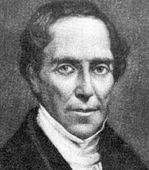 and he had discovered bones belonging to three extinct species: a giant crocodile, a plesiosaur, and Buckland's Megalosaurus. But in 1822 he found several teeth that "possessed characters so remarkable" that they had to have come from a fourth and distinct species of Saurian. After consulting numerous experts, Mantell finally recognized that the teeth bore an uncanny resemblance to the teeth of the living iguana, except that they were twenty times larger.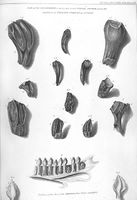
In this paper, the second published description of a dinosaur, he concluded that he had found the teeth of a giant lizard, which he named Iguanodon, or "Iguana-tooth."
Mantell illustrated his announcement with a single lithographed plate. Mantell included at the bottom of the plate a drawing of a recent iguana jaw, which is shown four times natural size, and for further comparison, he added views of the inner and outer surface of a single iguana tooth, "greatly magnified."
The traditional story that Mantell's wife found the first teeth in 1822, while the doctor was visiting a patient, appears, alas, to be unfounded.
Info and plate from HERE.
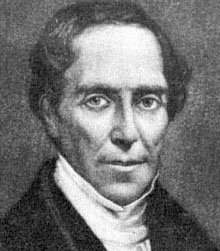 and he had discovered bones belonging to three extinct species: a giant crocodile, a plesiosaur, and Buckland's Megalosaurus. But in 1822 he found several teeth that "possessed characters so remarkable" that they had to have come from a fourth and distinct species of Saurian. After consulting numerous experts, Mantell finally recognized that the teeth bore an uncanny resemblance to the teeth of the living iguana, except that they were twenty times larger.
In this paper, the second published description of a dinosaur, he concluded that he had found the teeth of a giant lizard, which he named Iguanodon, or "Iguana-tooth."
Mantell illustrated his announcement with a single lithographed plate. Mantell included at the bottom of the plate a drawing of a recent iguana jaw, which is shown four times natural size, and for further comparison, he added views of the inner and outer surface of a single iguana tooth, "greatly magnified."
The traditional story that Mantell's wife found the first teeth in 1822, while the doctor was visiting a patient, appears, alas, to be unfounded.
Info and plate from HERE.
Died This Day: Ernst Mayr

July 5, 1904 - Feb. 3, 2005
While working on the problem of speciation in the birds of New Guinea, Mayr realized that the multitude of species and and subspecies that he saw could best be explained as being a snapshot of evolution in action. He suggested that new species could arise when the range of one species was fractured long enough for members in different parts of the range to evolve characters that would not allow individuals to reproduce when they were brought back together again. This lead to him developing the “biological species concept” in which species are defined as populations of interbreeding organisms rather than just a collection of characters. This idea, along with his theory of “allopatric speciation” was published in his book “Systematics and the Origin of the Species” (1942) and later contributed to the “Punctuated Equilibrium” theory of Niles Eldredge and Stephen Jay Gould.
Ernst Mayr was himself inspired by the work of geneticist Theodosius Dobzhansky on the fruit fly Drosophila melanogaster and his book “Genetics and the Origin of the Species” (1937). These two men, together with the paleontologist George Gaylord Simpson, combined the sciences of genetics, zoology and paleontology into what is now known as “the new synthesis” that provides the modern experimental underpinning to the concepts that Charles Darwin presented in his book, “On the Origin of the Species” .
For anyone interested in learning more about modern evolutionary theory I’d recommend Mayr’s recent book “What Evolution Is” (2002). It’s written in an engaging and readable format from the perspective of someone who’s thought about evolution all his life.
This Day In History: 1st Australopithecus africanus Announced

On this day in 1925 Raymond Dart announced the find of the “Taung child”, Australopithecus africanus, in The Star newspaper of Johannesburg, South Africa. Mr. Dart with his students made the find in the Taung limestone works in the Harts Valley of Bechuanaland. link
Friday, January 28, 2011
Born This Day: Eugene Dubois
Eugene Dubois (Jan. 28, 1858-Dec. 16, 1940) joined the Dutch Army as a medical officer, and used spare time from his medical duties to search for fossils, first in Sumatra and then in Java.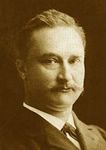 He searched on the banks of the Solo River, with two assigned engineers and a crew of convict labourers to help him. In September 1890, his workers found a human, or human-like, fossil at Koedoeng Broeboes. This consisted of the right side of the chin of a lower jaw and three attached teeth. In August 1891 he found a primate molar tooth.
Two months later and one meter away was found an intact skullcap, the fossil which would be known as Java Man. In August 1892, a third primate fossil, an almost complete left thigh bone, was found between 10 and 15 meters away from the skullcap.
In 1894 Dubois published a description of his fossils, naming them Pithecanthropus erectus (now Home erectus), describing it as neither ape nor human, but something intermediate. In 1895 he returned to Europe to promote the fossil and his interpretation. A few scientists enthusiastically endorsed Dubois' work, but most disagreed with his interpretation. Many scientists pointed out similarities between the Java Man skullcap and Neandertal fossils.
Around 1900 Dubois ceased to discuss Java Man, and hid the fossils in his home while he moved on to other research topics. geology and paleontology. It was not until 1923 that Dubois, under pressure from scientists, once again allowed access to the Java Man fossils. That and the discovery of similar fossils caused it to once again become a topic of debate.
 He searched on the banks of the Solo River, with two assigned engineers and a crew of convict labourers to help him. In September 1890, his workers found a human, or human-like, fossil at Koedoeng Broeboes. This consisted of the right side of the chin of a lower jaw and three attached teeth. In August 1891 he found a primate molar tooth.
Two months later and one
 meter away was found an intact skullcap, the fossil which would be known as Java Man. In August 1892, a third primate fossil, an almost complete left thigh bone, was found between 10 and 15 meters away from the skullcap.
In 1894 Dubois published a description of his fossils, naming them Pithecanthropus erectus (now Home erectus), describing it as neither ape nor human, but something intermediate. In 1895 he returned to Europe to promote the fossil and his interpretation. A few scientists enthusiastically endorsed Dubois' work, but most disagreed with his interpretation. Many scientists pointed out similarities between the Java Man skullcap and Neandertal fossils.
Around 1900 Dubois ceased to discuss Java Man, and hid the fossils in his home while he moved on to other research topics. geology and paleontology. It was not until 1923 that Dubois, under pressure from scientists, once again allowed access to the Java Man fossils. That and the discovery of similar fossils caused it to once again become a topic of debate.

Thursday, January 27, 2011
T. rex: Hunter!
Intra-guild competition and its implications for one of the biggest terrestrial predators, Tyrannosaurus rex. 2011. C. Carbone, et al. Proceedings of the Royal Society B, published online in Jan. 26.
Abstract: Identifying tradeoffs between hunting and scavenging in an ecological context is important for understanding predatory guilds. In the past century, the feeding strategy of one of the largest and best-known terrestrial carnivores, Tyrannosaurus rex, has been the subject of much debate: was it an active predator or an obligate scavenger?
Here we look at the feasibility of an adult T. rex being an obligate scavenger in the environmental conditions of Late Cretaceous North America, given the size distributions of sympatric herbivorous dinosaurs and likely competition with more abundant small-bodied theropods.
We predict that nearly 50% of herbivores would have been within a 55–85 kg range, and calculate based on expected encounter rates that carcasses from these individuals would have been quickly consumed by smaller theropods. Larger carcasses would have been very rare and heavily competed for, making them an unreliable food source.
The potential carcass search rates of smaller theropods are predicted to be 14–60 times that of an adult T. rex. Our results suggest that T. rex and other extremely large carnivorous dinosaurs would have been unable to compete as obligate scavengers and would have primarily hunted large vertebrate prey, similar to many large mammalian carnivores in modern-day ecosystems.

Abstract: Identifying tradeoffs between hunting and scavenging in an ecological context is important for understanding predatory guilds. In the past century, the feeding strategy of one of the largest and best-known terrestrial carnivores, Tyrannosaurus rex, has been the subject of much debate: was it an active predator or an obligate scavenger?

Here we look at the feasibility of an adult T. rex being an obligate scavenger in the environmental conditions of Late Cretaceous North America, given the size distributions of sympatric herbivorous dinosaurs and likely competition with more abundant small-bodied theropods.
We predict that nearly 50% of herbivores would have been within a 55–85 kg range, and calculate based on expected encounter rates that carcasses from these individuals would have been quickly consumed by smaller theropods. Larger carcasses would have been very rare and heavily competed for, making them an unreliable food source.
The potential carcass search rates of smaller theropods are predicted to be 14–60 times that of an adult T. rex. Our results suggest that T. rex and other extremely large carnivorous dinosaurs would have been unable to compete as obligate scavengers and would have primarily hunted large vertebrate prey, similar to many large mammalian carnivores in modern-day ecosystems.

Died This Day: Adan Sedgwick
From Today In Science History:
Sedgwick (March 22, 1785 - January 27, 1873) was an English geologist who first applied the name Cambrian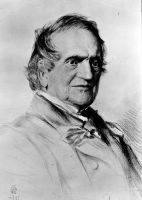 to the geologic period of time, now dated at 570 to 505 million years ago. In 1818 he became Woodwardian Professor of Geology at Cambridge, holding a chair that had been endowed ninety years before by the natural historian John Woodward.
He lacked formal training in geology, but he quickly became an active researcher in geology and paleontology. Many years after Sedgwick's death, the geological museum at Cambridge was renamed the Sedgwick Museum of Geology in his honor. The museum is now part of the Department of Earth Sciences at Cambridge University
Sedgwick (March 22, 1785 - January 27, 1873) was an English geologist who first applied the name Cambrian
 to the geologic period of time, now dated at 570 to 505 million years ago. In 1818 he became Woodwardian Professor of Geology at Cambridge, holding a chair that had been endowed ninety years before by the natural historian John Woodward.
 He lacked formal training in geology, but he quickly became an active researcher in geology and paleontology. Many years after Sedgwick's death, the geological museum at Cambridge was renamed the Sedgwick Museum of Geology in his honor. The museum is now part of the Department of Earth Sciences at Cambridge University
Wednesday, January 26, 2011
Direct Dating of Dinosaur Fossils
Direct U-Pb dating of Cretaceous and Paleocene dinosaur bones, San Juan Basin, New Mexico. 2011. J. E. Fassett et al., Geology 39 :159-162
Abstract: Vertebrate fossils have been important for relative dating of terrestrial rocks for decades, but direct dating of these fossils has heretofore been unsuccessful. In this study we employ recent advances in laser ablation in situ U-Pb dating techniques to directly date two dinosaur fossils from the San Juan Basin of northwestern New Mexico and southwestern Colorado, United States.

A Cretaceous dinosaur bone collected from just below the Cretaceous-Paleogene interface yielded a U-Pb date of 73.6 ± 0.9 Ma, in excellent agreement with a previously determined 40Ar/39Ar date of 73.04 ± 0.25 Ma for an ash bed near this site.
The second dinosaur bone sample from Paleocene strata just above the Cretaceous-Paleogene interface yielded a Paleocene U-Pb date of 64.8 ± 0.9 Ma, consistent with palynologic, paleomagnetic, and fossil-mammal biochronologic data.
This first successful direct dating of fossil vertebrate bone provides a new methodology with the potential to directly obtain accurate dates for any vertebrate fossil.

Mystery In Space © DC Comics
Abstract: Vertebrate fossils have been important for relative dating of terrestrial rocks for decades, but direct dating of these fossils has heretofore been unsuccessful. In this study we employ recent advances in laser ablation in situ U-Pb dating techniques to directly date two dinosaur fossils from the San Juan Basin of northwestern New Mexico and southwestern Colorado, United States.

The second dinosaur bone sample from Paleocene strata just above the Cretaceous-Paleogene interface yielded a Paleocene U-Pb date of 64.8 ± 0.9 Ma, consistent with palynologic, paleomagnetic, and fossil-mammal biochronologic data.
This first successful direct dating of fossil vertebrate bone provides a new methodology with the potential to directly obtain accurate dates for any vertebrate fossil.

Mystery In Space © DC Comics
Born This Day: Roy Chapman Andrews

Photo from Parade of Life Through The Ages, by Charles Knight, Nat. Geo., Feb. 1942.
From the American Museum of Natural History web site:
Adventurer, administrator, and Museum promoter — Andrews (Jan. 26, 1884 – March 11, 1960) spent his entire career at the American Museum of Natural History, where he rose through the ranks from departmental assistant, to expedition organizer, to Museum director.
He became world famous as leader of the Central Asiatic Expeditions, a series of expeditions to Mongolia that collected, among other things, dinosaur eggs. Although on these expeditions, Andrews himself found few fossils, and during his career he was not known as an influential scientist, he instead filled the role of promoter, creating immense excitement and successfully advancing the research and exhibition goals of the museum.
Tuesday, January 25, 2011
Linhenykus monodactylus: First Single-Fingered Dinosaur
A monodactyl nonavian dinosaur and the complex evolution of the alvarezsauroid hand. 2011. X. Xu, et al. PNAS, Published online before print January 24
The fossil comes from the Upper Cretaceous Wulansuhai Formation (84-75Ma), located near the border between Mongolia and China. The authors uncovered a partial skeleton from the site, which included bones of the vertebral column, the forelimb, a partial pelvis and nearly complete hind limbs.
The new theropod is unusual in having just one large claw, which may have been used to dig into insect nests, on each of its hands. The presence of only one finger in Linhenykus shows that these vestigial fingers were not present in all members of the group. The reasons for the loss of the two outer fingers in Linhenykus are unclear, and their disappearance may simply reflect the fact that they were no longer being actively maintained by natural selection. link

A new species of parrot-sized dinosaur, the first discovered with only one finger, has been unearthed in Inner Mongolia, China. Linhenykus monodactylus is named after the nearby city of Linhe.The new dinosaur belongs to the Alvarezsauroidea, a branch of the carnivorous dinosaur group Theropoda. Theropods gave rise to modern birds and include such famous dinosaurs as Tyrannosaurus and Velociraptor.
The fossil comes from the Upper Cretaceous Wulansuhai Formation (84-75Ma), located near the border between Mongolia and China. The authors uncovered a partial skeleton from the site, which included bones of the vertebral column, the forelimb, a partial pelvis and nearly complete hind limbs.
The new theropod is unusual in having just one large claw, which may have been used to dig into insect nests, on each of its hands. The presence of only one finger in Linhenykus shows that these vestigial fingers were not present in all members of the group. The reasons for the loss of the two outer fingers in Linhenykus are unclear, and their disappearance may simply reflect the fact that they were no longer being actively maintained by natural selection. link
Born This Day: Theodosius Dobzhansky
Dobzhansky (Jan.25, 1900–Dec. 18, 1975) is noted for being one of the architects of the modern Synthetic Theory of evolution. During the first 20 years of the 20th century, Darwin's theory of natural selection had fallen out of favor among scientists. Many thought it 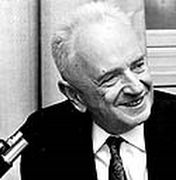 insufficient to explain the origin of adaptations, while new discoveries of gene mutations seemed to them to be incompatible with Darwinian models of change.
But in 1937 Dobzhansky published his book, Genetics and the Origin of Species, that was the first systematic overview view encompassing organic diversity, variation in natural populations, selection, isolating mechanisms (a term he coined) and species as natural units.
Later, working with Sewall Wright, he went on to demonstrate how evolution can produce stability and equilibrium in populations rather than constant directional change. link. image.
 insufficient to explain the origin of adaptations, while new discoveries of gene mutations seemed to them to be incompatible with Darwinian models of change.
 But in 1937 Dobzhansky published his book, Genetics and the Origin of Species, that was the first systematic overview view encompassing organic diversity, variation in natural populations, selection, isolating mechanisms (a term he coined) and species as natural units.
Later, working with Sewall Wright, he went on to demonstrate how evolution can produce stability and equilibrium in populations rather than constant directional change. link. image.
Eodramaeus: Dawn Runner
A Basal Dinosaur from the Dawn of the Dinosaur Era in Southwestern Pangaea. R. Martinez, et al. Science 331: 206-210.

Abstract: Upper Triassic rocks in northwestern Argentina preserve the most complete record of dinosaurs before their rise to dominance in the Early Jurassic. Here, we describe a previously unidentified basal theropod, reassess its contemporary Eoraptor as a basal sauropodomorph, divide the faunal record of the Ischigualasto Formation with biozones, and bracket the formation with 40Ar/39Ar ages. Some 230 million years ago in the Late Triassic (mid Carnian), the earliest dinosaurs were the dominant terrestrial carnivores and small herbivores in southwestern Pangaea. The extinction of nondinosaurian herbivores is sequential and is not linked to an increase in dinosaurian diversity, which weakens the predominant scenario for dinosaurian ascendancy as opportunistic replacement.
Plus: Researchers have discovered a new dinosaur, Eodramaeus, which lived during the dawn of the dinosaur era, about 230 million years ago. The Eodramaeus' fossils were discovered in the Ischigualasto formation in northeastern Argentina, where paleontologists have found other important dinosaur fossils.
Eoraptor, generally considered a theropod as well, is in fact an early ancestor of the sauropod lineage, which includes the giant, long-necked herbivores, the researchers say.
Eodramaeus had more theropod-like features in its skull, such as an opening near the end of the snout called the promaxillary fenestra, as well as other theropod-like features in its trunk pelvis and limbs, the authors report. Eoraptor not only lacked those features but also had more sauropod-like features, including enlarged nostrils and an inset first lower tooth.
Nonetheless, both species were less than 2 meters long and ran on two legs, and these general similarities suggest that the three principal groups of dinosaurs (the ornithischians, the sauropodomorphs and the theropods) did share an overall body plan in the late Triassic, before the dinosaurs rose to dominance in the early Jurassic, according to Dr. Martinez and his colleagues. link

Plus: Researchers have discovered a new dinosaur, Eodramaeus, which lived during the dawn of the dinosaur era, about 230 million years ago. The Eodramaeus' fossils were discovered in the Ischigualasto formation in northeastern Argentina, where paleontologists have found other important dinosaur fossils.
Eoraptor, generally considered a theropod as well, is in fact an early ancestor of the sauropod lineage, which includes the giant, long-necked herbivores, the researchers say.
Eodramaeus had more theropod-like features in its skull, such as an opening near the end of the snout called the promaxillary fenestra, as well as other theropod-like features in its trunk pelvis and limbs, the authors report. Eoraptor not only lacked those features but also had more sauropod-like features, including enlarged nostrils and an inset first lower tooth.
Nonetheless, both species were less than 2 meters long and ran on two legs, and these general similarities suggest that the three principal groups of dinosaurs (the ornithischians, the sauropodomorphs and the theropods) did share an overall body plan in the late Triassic, before the dinosaurs rose to dominance in the early Jurassic, according to Dr. Martinez and his colleagues. link
Monday, January 24, 2011
Darwinopterus With An Egg
An Egg-Adult Association, Gender, and Reproduction in Pterosaurs. 2011. Junchang Lü, et al. Science 331: 321-324.

Male (right) and female Darwinopterus. Art: Mark Witton

The fossil shows two features that distinguish it from male individuals of Darwinopterus. She has relatively large hips, to accommodate the passage of eggs, but no head crest. Males, on the other hand, can be assumed to have relatively small hips and a well developed head crest.
The egg is relatively small and had a soft shell. This is typical of reptiles, but completely different from birds which lay relatively large hard-shelled eggs. This discovery is not surprising though, because a small egg would require less investment in terms of materials and energy – a distinct evolutionary advantage for active energetic fliers such as pterosaurs and perhaps an important factor in the evolution of gigantic species such as the 10 meter wingspan Quetzalcoatlus."

Male (right) and female Darwinopterus. Art: Mark Witton
A specimen of the pterosaur genus Darwinopterus preserved with an egg links gender with sexually dimorphic characters.The new discovery, christened "Mrs T" (a contraction of "Mrs Pterodactyl") by the research team, was made in Jurassic rocks of Liaoning Province in northeast China and seems to represent a tragic accident. The well developed shell shows that Mrs T was just about ready to lay her egg (below) when she was killed in an accident that broke her left forearm, possibly the result of a storm, or perhaps even a volcanic eruption, which were common in this part of China around 160 million years old.

The egg is relatively small and had a soft shell. This is typical of reptiles, but completely different from birds which lay relatively large hard-shelled eggs. This discovery is not surprising though, because a small egg would require less investment in terms of materials and energy – a distinct evolutionary advantage for active energetic fliers such as pterosaurs and perhaps an important factor in the evolution of gigantic species such as the 10 meter wingspan Quetzalcoatlus."
The Smoking Gun For The Permian Extinction
Catastrophic dispersion of coal fly ash into oceans during the latest Permian extinction. 2011. S. E. Grasby. Nature Geoscience, published online Jan 23.
23 January 2011
About 250 million years about 95 per cent of life was wiped out in the sea and 70 per cent on land. Researchers have now discovered evidence to support massive volcanic eruptions burnt significant volumes of coal, producing ash clouds that had broad impact on global oceans.
Unlike end of dinosaurs, 65 million years ago, where there is widespread belief that the impact of a meteorite was at least the partial cause, it is unclear what caused the late Permian extinction. Previous researchers have suggested massive volcanic eruptions through coal beds in Siberia would generate significant greenhouse gases causing run away global warming.
Grasby and colleagues discovered layers of coal ash in rocks from the extinction boundary in Canada's High Arctic.
"This could literally be the smoking gun that explains the latest Permian extinction," says Dr. Steve Grasby.
The location of volcanoes, known as the Siberian Traps, are now found in northern Russia, centred around the Siberian city Tura and also encompass Yakutsk, Noril'sk and Irkutsk. They cover an area just under two-million-square kilometers, a size greater than that of Europe. The ash plumes from the volcanoes traveled to regions now in Canada's arctic where coal-ash layers where found. link
23 January 2011
About 250 million years about 95 per cent of life was wiped out in the sea and 70 per cent on land. Researchers have now discovered evidence to support massive volcanic eruptions burnt significant volumes of coal, producing ash clouds that had broad impact on global oceans.

Unlike end of dinosaurs, 65 million years ago, where there is widespread belief that the impact of a meteorite was at least the partial cause, it is unclear what caused the late Permian extinction. Previous researchers have suggested massive volcanic eruptions through coal beds in Siberia would generate significant greenhouse gases causing run away global warming.
Grasby and colleagues discovered layers of coal ash in rocks from the extinction boundary in Canada's High Arctic.
"This could literally be the smoking gun that explains the latest Permian extinction," says Dr. Steve Grasby.
The location of volcanoes, known as the Siberian Traps, are now found in northern Russia, centred around the Siberian city Tura and also encompass Yakutsk, Noril'sk and Irkutsk. They cover an area just under two-million-square kilometers, a size greater than that of Europe. The ash plumes from the volcanoes traveled to regions now in Canada's arctic where coal-ash layers where found. link
Premiered This Day (1956): The Animal World
“2 Billion Years in the Making!”

Produced and directed by Irwin Allen, whose long career included such TV hits as Lost In Space and Voyage To The Bottom Of The Sea, and movies like The Poseidon Adventure and The Towering Inferno.
The Animal World was one of the first films to present dinosaurs in the quasi-nature documentary so beloved by the Discovery Channel today. Rarely seen now, it featured about 10 minutes of great dinosaur stop-animation by Ray Harryhausen with Willis O’Brien. The entire sequence was released as an extra on the 2003 DVD release of The Black Scorpion.
Tuesday, January 11, 2011
Ammonites Dined On Plankton
The Role of Ammonites in the Mesozoic Marine Food Web Revealed by Jaw Preservation. I. Kruta, et al. Science 331: 70-72.
Ammonites are extinct relatives of the squid and octopus; the Nautilus is similar in appearance to many ammonites but is a more distant relative. Ammonites appeared about 400 million years ago (the Early Devonian) and experienced an explosive radiation in the early Jurassic.
Ammonite jaws lie just inside the body chamber. New scans of Baculites, a straight ammonite found worldwide, confirms older research that ammonites had multiple cusps on their radula, a kind of tongue covered by teeth that is typical of mollusks. The radula can now be seen in exquisite detail: the tallest cusp is 2 mm high, tooth shape varies from saber to comb-like, and teeth are very slender. The jaw is typical of the group of ammonites (the aptychophorans) to which Baculites, belongs.
"Our research suggests several things. First, the radiation of aptychophoran ammonites might be associated with the radiation of plankton during the Early Jurassic," says Landman. "In addition, plankton were severely hit at the Cretaceous-Tertiary boundary, and the loss of their food source probably contributed to the extinction of ammonites." link


Powerful new synchrotron scans of Baculites fossils suggests that the extinct group of marine invertebrates to which they belong, the ammonites, had jaws and teeth adapted for eating small prey floating in the water.One ammonite also provided direct evidence of a planktonic diet because it died with its last meal in its mouth—tiny larval snails and crustacean bits.
Ammonites are extinct relatives of the squid and octopus; the Nautilus is similar in appearance to many ammonites but is a more distant relative. Ammonites appeared about 400 million years ago (the Early Devonian) and experienced an explosive radiation in the early Jurassic.
Ammonite jaws lie just inside the body chamber. New scans of Baculites, a straight ammonite found worldwide, confirms older research that ammonites had multiple cusps on their radula, a kind of tongue covered by teeth that is typical of mollusks. The radula can now be seen in exquisite detail: the tallest cusp is 2 mm high, tooth shape varies from saber to comb-like, and teeth are very slender. The jaw is typical of the group of ammonites (the aptychophorans) to which Baculites, belongs.
"Our research suggests several things. First, the radiation of aptychophoran ammonites might be associated with the radiation of plankton during the Early Jurassic," says Landman. "In addition, plankton were severely hit at the Cretaceous-Tertiary boundary, and the loss of their food source probably contributed to the extinction of ammonites." link
Thursday, January 06, 2011
Born This Day: George Ledyard Stebbins
From the U Calif., Berkeley:
Along with Dobzhansky (1900 - 1975), animal systematist Ernst Mayr, and paleontologist George Gaylord Simpson (1902 - 1984),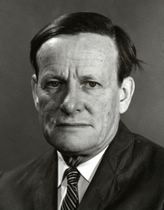 Stebbins (Jan. 6, 1906 - Jan. 19 2000) is considered one of the "architects" of the modern evolutionary synthesis of the 1930s and 1940s, an intellectual watershed and historic turning point that brought together research in cytology, genetics, systematics, paleontology into a common evolutionary framework. This synthesis, which had the effect of reconciling the often opposing views of laboratory-oriented geneticists and natural history oriented systematists, made Charles Darwin's theory of evolution by natural selection the centerpiece of the new discipline of evolutionary biology.
In this role, Stebbins is credited with bringing a modern framework to the study of plant evolution, and he is perhaps best known for his book Variation and Evolution in Plants, published by Columbia University Press (NY) in 1950. In the 1940s, Stebbins also played an important role in organizing the nascent Society for the Study of Evolution, of which he became the third president in 1948, and used his position to speak out for the botanical side of evolutionary studies, a field that had been dominated by zoologists. Photo .
Along with Dobzhansky (1900 - 1975), animal systematist Ernst Mayr, and paleontologist George Gaylord Simpson (1902 - 1984),
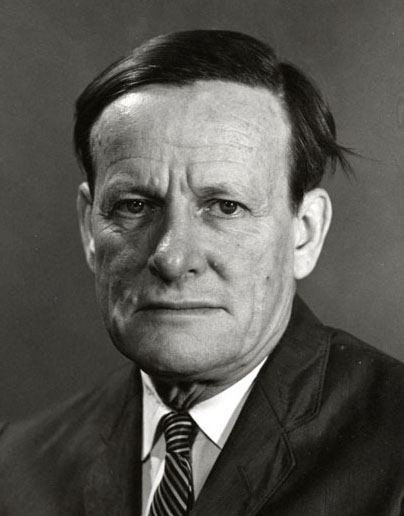 Stebbins (Jan. 6, 1906 - Jan. 19 2000) is considered one of the "architects" of the modern evolutionary synthesis of the 1930s and 1940s, an intellectual watershed and historic turning point that brought together research in cytology, genetics, systematics, paleontology into a common evolutionary framework. This synthesis, which had the effect of reconciling the often opposing views of laboratory-oriented geneticists and natural history oriented systematists, made Charles Darwin's theory of evolution by natural selection the centerpiece of the new discipline of evolutionary biology.
 In this role, Stebbins is credited with bringing a modern framework to the study of plant evolution, and he is perhaps best known for his book Variation and Evolution in Plants, published by Columbia University Press (NY) in 1950. In the 1940s, Stebbins also played an important role in organizing the nascent Society for the Study of Evolution, of which he became the third president in 1948, and used his position to speak out for the botanical side of evolutionary studies, a field that had been dominated by zoologists. Photo .

Died This Day: Gregor Mendel
From Today In Science History:
Mendel (July 22, 1822 – Jan. 6, 1884) was an Austrian pioneer in the study of heredity. He spent his adult life with the Augustinian monastery in Brunn, where as a geneticist,
botanist and plant experimenter, he was the first to lay the mathematical foundation of the science of genetics, in what came to be called Mendelism.
Over the period 1856-63, Mendel grew and analyzed over 28,000 pea plants. He carefully studied for each their plant height, pod shape, pod color, flower position, seed color, seed shape and flower color. He made two very important generalizations from his pea experiments, known today as the Laws of Heredity. Mendel coined the present day terms in genetics: recessiveness and dominance.
Mendel (July 22, 1822 – Jan. 6, 1884) was an Austrian pioneer in the study of heredity. He spent his adult life with the Augustinian monastery in Brunn, where as a geneticist,

botanist and plant experimenter, he was the first to lay the mathematical foundation of the science of genetics, in what came to be called Mendelism.
Over the period 1856-63, Mendel grew and analyzed over 28,000 pea plants. He carefully studied for each their plant height, pod shape, pod color, flower position, seed color, seed shape and flower color. He made two very important generalizations from his pea experiments, known today as the Laws of Heredity. Mendel coined the present day terms in genetics: recessiveness and dominance.
Subscribe to:
Posts (Atom)