Friday, April 20, 2007

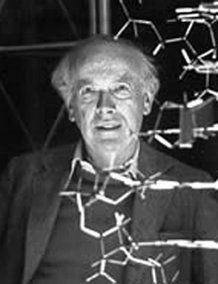
Born This Day: Willi Henning

April 20, 1913 – Nov. 5, 1976

From the Willi Hennig Society :

Hennig is best known for developing phylogenetic systematics, a coherent theory of the investigation and presentation of the relations that exist among species. Contrary to the position generally held during his time, Hennig viewed historical inference as a strictly logical and scientific endeavor. He first summarized his ideas in 1950 in German which became more widely known with the publication of the English revision, Phylogenetic Systematics (Hennig, 1966).


image.

Major Hennigian principles are:
1. Relationships among species are to be interpreted strictly genealogically, as sister-lineages, as clade relations. Empirically, a phylogenetic hypothesis may be determined.

2. Synapomorphies provide the only evidence for identifying relative recency of common ancestry. Synapomorphies are understood to be the shared-derived (evolved, modified) features of organisms.

3. Maximum conformity to evidence is sought (his auxiliary principle). Choice among competing cladistic propositions (cladograms) is decided on the basis of the greatest amount of evidence, the largest number of synapomorphies explainable as homologues.

4. Whenever possible, taxonomy must be logically consistent with the inferred pattern of historical relationships. The rule of monophyly is to be followed, thereby each clade can have its unique place in the hierarchy of taxonomic names.
More info about Henning HERE. photo.

Born This Day: Sir William Logan

April 20, 1798 – June 22, 1875

From Today in Science History:

Logan was a Canadian geologist dubbed the "Father of Canadian Geology." He began is career making geologic maps of coalfields in Wales, noting the relationship between the underlying clay layers and fossil tree roots with local coal beds. This substantiated the theory that coal beds are formed in place.

When he began as director (1842-69) of the new Geological Survey of Canada, its geology was virtually unknown. He produced the monumental Report on the Geology of Canada (1863) which recorded 20 years of research, fieldwork, plotting maps, preparing reports, and examining fossil and mineral specimens.

Image and more info from Natural Resources Canada. For a more colourful summary of the man and his life go HERE.

Thursday, April 19, 2007

Died This Day: Charles Darwin

Feb. 12, 1809 – April 19, 1882


stamp

More about Darwin HERE.

Surfing To Mongolia


I recently came across this photo that Philip Currie took of us at the Flaming Cliffs last summer. If you’d like to be part of our team this year you can sign up for the two week field program at the CMNH programs page HERE; scroll down to “Dinosaurs in the Gobi desert”.

Reconciling The Divergence of Placental Mammals

Robust Time Estimation Reconciles Views of the Antiquity of Placental Mammals. 2007. Kitazoe Y., et al., PLoS ONE 2(4): e384.

From the press release:

Despite great progress over the past decade, the evolutionary history of placental mammals remains controversial. While a consensus is emerging on the topology of the evolutionary tree, although with occasional disagreement, divergence times remain uncertain. Both paleontological and morphological studies suggest that the radiation of placental orders and super orders occurred close to the Cretaceous–Tertiary (K–T) boundary about 65 million years ago (mya). In contrast, molecular studies have suggested markedly older origins for many superordinal groups and that some extant orders diversified before the K–T boundary.


Example of placental mammals
However, this discrepancy may not be real, but rather appear because of the violation of implicit assumptions in the estimation procedures, such as abrupt acceleration of evolutionary rate entangled with gradual variation and large-scale convergent evolution in molecular level.

Researchers have identified a strong and short-term acceleration of mitochondrial genome along the lineage leading to Laurasiatheria. The revised time at the root of placental mammals was much younger than the preceding reports, 84 million years ago instead of around 122 million years ago. As a result, the estimated distribution of molecular divergence times is broadly consistent with quantitative analysis of the North American fossil record and traditional morphological views. They emphasize the necessity to scrutinize the implicit assumptions adopted by the models of molecular evolution and to develop procedures which rely little on those assumptions.

CLICK TO ENLARGE

Figure: Molecular divergence times and evolutionary rates of placental mammals.A and B show the MVS-FIR and ML-FLOG trees, respectively. The numbers 1–61 denote the ancestral nodes. The red numbers 1–8 indicate the internal nodes with fossil constraints which are as follows: 1, 49–61; 2, 52–58; 3, 45–63; 4, 43–60; 5, <63;>12; 7, 36–55; 8, 54–65 (all in mya) [see 4], [15]. The colors of the branches denote inferred evolutionary rates (in units of ×10−9/site per year) as follows: black, <0.2;>0.7.

CT Scanning


When I was in Alberta last month Eric Snively and I had some CT scanning done at Canada Diagnostics in Calgary. Hopefully we'll have the research completed to present at SVP this year.

Yes, Eric was on crutches at that time.

Wednesday, April 18, 2007

Earth's Earliest Forest

Giant cladoxylopsid trees resolve the enigma of the Earth's earliest forest stumps at Gilboa. 2007. W. E. Stein, et al. Nature 446: 904-907.

Abstract [edit]: Late Middle Devonian fossil tree stumps, rooted and still in life position, discovered in the 1870s from Gilboa, New York, and later named Eospermatopteris, are widely cited as evidence of the Earth's 'oldest forest.

Here we report spectacular specimens from Schoharie County, New York, showing an intact crown belonging to the cladoxylopsid Wattieza (Pseudosporochnales) and its attachment to Eospermatopteris trunk and base.

This e<vidence allows the reconstruction of a tall (at least 8 m; right), tree-fern-like plant with a trunk bearing large branches in longitudinal ranks. The branches were probably abscised as frond-like modules. Lower portions of the trunk show longitudinal carbonaceous strands typical of Eospermatopteris, and a flat bottom with many small anchoring roots.

The tree-fern-like morphology described here is the oldest example so far of an evolutionarily recurrent arborescent body plan within vascular plants. Given their modular construction, these plants probably produced abundant litter, indicating the potential for significant terrestrial carbon accumulation and a detritus-based arthropod fauna by the Middle Devonian period.

Alice In Sunderland

Bryan Talbot's new book ALICE IN SUNDERLAND (Talbot’s Alice webpage), deals “with the themes of storytelling, history and myth in a form I’ve been describing as a "dream documentary". It is not one story but literally dozens, short and long, the central spines being the history of Sunderland and the story of Lewis Carroll and Alice Liddell (the “real” Alice), both of whom had connections with the city and surrounding area. For example Jabberwocky, the most famous nonsense poem in the English language, was written here.”

This page is an aside talking about the pre-history of the region in England's north-east.

Thanks to the Kirby Weblog for the heads up.

Australopithecus With Gorilla-Like Jaw

Gorilla-like anatomy on Australopithecus afarensis mandibles suggests Au. afarensis link to robust australopiths. 2007. Y. Rak, A. Ginzburg, and E. Geffen. PNAS 104: 6568-6572.


Juvenile Australopithecus afarensis specimen, A. L. 333-43b (left), and Au. robustus specimen SK 34. Note the similarity in the size and shape of the coronoid process and the mandibular notch.
Abstract: Mandibular ramus morphology on a recently discovered specimen of Australopithecus afarensis closely matches that of gorillas. This finding was unexpected given that chimpanzees are the closest living relatives of humans.

Because modern humans, chimpanzees, orangutans, and many other primates share a ramal morphology that differs from that of gorillas, the gorilla anatomy must represent a unique condition, and its appearance in fossil hominins must represent an independently derived morphology. This particular morphology appears also in Australopithecus robustus.

The presence of the morphology in both the latter and Au. afarensis and its absence in modern humans cast doubt on the role of Au. afarensis as a modern human ancestor. The ramal anatomy of the earlier Ardipithecus ramidus is virtually that of a chimpanzee, corroborating the proposed phylogenetic scenario.

Tuesday, April 17, 2007

Hamadasuchus rebouli from the Cretaceous of Morocco

Some papers from the latest Zoological Journal of the Linnean Society:
Cranial osteology and phylogenetic relationships of Hamadasuchus rebouli (Crocodyliformes: Mesoeucrocodylia) from the Cretaceous of Morocco. 2007. HANS C. E. LARSSON and HANS-DIETER. Zoological Journal of the Linnean Society 149: 533

Abstract: This paper presents a detailed description of the skull and part of the mandible of the crocodyliform reptile Hamadasuchus rebouli from the Kem Kem beds (Upper Cretaceous: Albian–Cenomanian) of south-eastern Morocco. This taxon of deep-snouted ziphodont crocodyliform can be diagnosed by a number of autapomorphies. Phylogenetic analysis of a diverse array of crocodylomorph taxa found strong support for a clade comprising H. rebouli, Peirosauridae, and Sebecus.

The name Sebecia nom. nov. is proposed for this grouping, which is diagnosed by numerous characters, including the participation of the quadratojugal in the mandibular condyle. The distribution of this diverse and long-lived clade lends further support to the biogeographical hypothesis that faunal connections existed between Africa and South America well into mid-Cretaceous times.

Manual Morphology of Compsognathus longipes

On the manual morphology of Compsognathus longipes and its bearing on the diagnosis of Compsognathidae. 2007. ALAN D. GISHLICK and JACQUES A. GAUTHIER. Zoological Journal of the Linnean Society 149: 569–581.

Abstract: Compsognathus longipes sits at an important point in theropod evolution at the base of Coelurosauria. Despite its relative completeness and oft-cited morphology, however, the manual morphology has been unclear. This work provides the first detailed study of the morphology of the manus of Compsognathus longipes.

It shows that Compsognathus longipes had two fully formed functional digits as well as a reduced, perhaps even non-functional, third digit. That conclusion runs counter to the usual interpretation that Compsognathus longipes had only two phalanges, rather than the expected complement of three, in digit II.

This work also identifies a unique suite of metacarpal I morphologies that are used to diagnose a subclade among species often referred to as ‘Compsognathidae’. These features are used to construct an apomorphy-based definition of a new clade name: Compsognathidae.
And a nice article on mosasaur teeth:
Ontogeny, anatomy and attachment of the dentition in mosasaurs (Mosasauridae: Squamata). 2007. M. W. CALDWELL. Zoological Journal of the Linnean Society 149: 687–700.

Early Amphibians Had A Big Bite

Terrestrial-style feeding in a very early aquatic tetrapod is supported by evidence from experimental analysis of suture morphology. M.J. Markey and C.R. Marshall. PNAS, Published online before print April 16, 2007.


Acanthostega. Photo by Jonathan Blair/NGS
Abstract [edit]: There is no consensus on when in the fish-tetrapod transition suction feeding, the primary method of prey capture in the aquatic realm, evolved into the direct biting on prey typical of terrestrial animals.

Here, we show that differences in the morphology of selected cranial sutures between species that span the fish-tetrapod transition (the Devonian osteolepiform fish Eusthenopteron, the aquatic Devonian tetrapod Acanthostega, and the Permian terrestrial tetrapod Phonerpeton) can be used to infer when terrestrial feeding first appeared.

Using this procedure, we find that the suture morphologies of Acanthostega are inconsistent with the hypothesis that it captured prey primarily by means of suction, which suggests that it may have bitten directly on prey at or near the water's edge.

Thus, our data strongly support the hypothesis that the terrestrial mode of feeding first emerged in aquatic taxa.

Read the press release at Nat. Geo. News.

Monday, April 16, 2007

New 42 Million Year Old Omomyid Primate Discovered

From the press release:
Jim Westgate (Lamar U.) and colleagues. announced their discovery at the annual meeting of the American Association of Physical Anthropologists in Philadelphia, Pa., March 29, 2007.
Molar, pre-molar and incisor teeth from a new omomyid primate genus and three other new primate species were recovered from 42 million-year-old tropical, mangrove palm swamp deposits of the Eocene age Laredo Formation exposed in Lake Casa Blanca International State Park in Laredo.

The association of primate fossils with the skeletal remains of oysters, sharks, rays, giant aquatic snakes and crocodiles, along with mangrove palm fruits and pollen, indicates that the middle Eocene shoreline of the Gulf of Mexico lay 150 miles inland of its present position, Westgate said.

Omomyids lived 34 to 50 million years ago during the Eocene Epoch and were one of two groups of known Eocene primates. The other, adapids, were more lemur-like. Fossils of these Eocene primates have been found in North America, Europe, Asia, and Africa. The Eocene primates are the earliest known primates.

Sunday, April 15, 2007

Monstersaurus


From the twisted mind of Pete Von Sholly comes these 'Horrora All-Plastic Assembly Kit' boxes. Yup, just like the old Aurora box kits, you really can buy these and other cool boxes from Morbid Monster.com. No actual plastic kit is included, alas!

Saturday, April 14, 2007

Croatian Sauropod Track Controversay

Dinosaur prints lead to crediting row. 2007. R. Dalton. Nature 446:708.

Mike Caldwell of the U of Alberta is at the center of controversy over a series of sauropod tracks that he and colleagues from the Croatian Natural History Museum in Zagreb discovered in 2004 on the island of Hvar.
“But before the researchers could publish their study in the scientific literature, a competing group from the University of Zagreb went to the site and then published an article reporting the tracks. The article did not credit the discovery team, and an angry Caldwell has demanded its retraction. The disputed article was published last December in the journal Cretaceous Research (The first record of dinosaurs in the Dalmatian part (Croatia) of the Adriatic-Dinaric carbonate platform (ADCP). 2006. A. Mezga et al. Cretac. Res. 27: 735-742.)

Friday, April 13, 2007

Lio


Lio is a new strip I'm slowly warming up to. A bit of 'Calvin and Hobbes' but filterd through Edward Gorey.

Chimps Using Caves

Savannah chimpanzees, which can make weapons to hunt other primates for meat, can also seek refuge in caves, much like our earliest human ancestors.
From Charles Q. Choi at LiveScience:
Researchers investigated the Fongoli community of 35 savannah chimpanzees in southeastern Senegal, one of the hottest and driest habitats chimps live in today. Pruetz and her colleagues recently found that Fongoli chimps apparently could manufacture spears to hunt other primates, such as bushbabies.

The research into chimpanzees' possible use of caves began when Pruetz's field assistant Mboule Camara saw the apes coming from Sakoto cave, the largest cavern within the chimp's home range. The cave is more than 15 feet deep and located at the head of a shallow ravine that was formed through water runoff from a plateau.

To determine why they might use the cave, Pruetz recorded temperature data within the cave as well as at the different habitats the chimpanzees used, such as the woodlands and grasslands. She discovered that chimps most often use the stone cave as shelter during the hottest and driest times of the year, from October to May, findings detailed in an upcoming issue of the journal Primates. It is the first study to document regular cave use by chimps.

310 Million Year Old Kendall County Cave Fossils

Remnants from a cave embedded in a limestone quarry southwest of Chicago have yielded a fossil trove that may influence the known history of north central Illinois some 310 million years ago.
Plotnick and a group of students discovered the cave while on a class field trip about four years ago. It is revealed by darker color surrounded by the lighter limestone, and by the sand and mud containing fossilized material that choke the cave from bottom to top.

"What's really valuable about the cave is the level of preservation of the material," said co-presenter Kenig. "We see charcoal that preserves biological features at the cellular level. Charcoal is an indication of fire burning ancient trees. The cave also beautifully preserved molecular indicators of these fires."
Findings include nearly-pristine plant spores, leaves and scorpion parts. Needles from a conifer were dated and discovered to be the oldest ever from North America. "The oldest conifers previously described are at least 2 million years younger," said Plotnick. The specimen is now in the collection of Chicago's Field Museum.

The scientists think that a shallow sea covering today's north central Illinois during the geological Ordovician period about 450 million years ago formed the limestone. The caves were eroded in the limestone at the beginning of the Pennsylvanian period, about 315 million years ago. Within a few million years, sand, mud and organic debris from plants and animals -- some burned and turned to charcoal -- washed into the cave through surface openings, where it remained preserved but not compacted since that time. link
Initial research findings were presented April 12 by University of Illinois at Chicago earth and environmental sciences professor Roy Plotnick at a regional meeting of the Geological Society of America in Lawrence, Kan.

Thursday, April 12, 2007

T. rex Protein Sequenced

Analyses of Soft Tissue from Tyrannosaurus rex Suggest the Presence of Protein. 2007. Science 316: 277 - 280

Abstract: We present evidence from multiple analyses of Tyrannosaurus rex (MOR 1125) fibrous cortical and medullary tissues remaining after demineralization that support the preservation of collagen I, the main organic component of bone, in low concentrations in these tissues. We propose a possible chemical pathway that may contribute to this preservation. The presence of endogenous protein in dinosaur bone may validate hypotheses about evolutionary relationships, rates and patterns of molecular change and degradation, and chemical stability of molecules over time.

Read one of the press releases, and:

Protein Sequences from Mastodon and Tyrannosaurus Rex Revealed by Mass Spectrometry. 207. J. M. Asara, et al. Science 316: 280-285.

Abstract: Fossilized bones from extinct taxa harbor the potential for obtaining protein or DNA sequences that could reveal evolutionary links to extant species. We used mass spectrometry to obtain protein sequences from bones of a 160,000- to 600,000-year-old extinct mastodon (Mammut americanum) and a 68-million-year-old dinosaur (Tyrannosaurus rex). The presence of T. rex sequences indicates that their peptide bonds were remarkably stable. Mass spectrometry can thus be used to determine unique sequences from ancient organisms from peptide fragmentation patterns, a valuable tool to study the evolution and adaptation of ancient taxa from which genomic sequences are unlikely to be obtained.

First Dinosaur Comic?


In a recent (and much too rare) phone conversation with my old amigo, Steve Bissette, he mentioned that he thought he’d turned up the first dinosaur comic. A few days later this post turns up on his MyRant blog. Scroll down to the bottom through the discussion of who did what when in zombie comics.

Wednesday, April 11, 2007

Bruce Naylor, 1950 - 2007

As I noted last week, Dr. Bruce Naylor, Director of the Royal Tyrrell Museum of Palaeontology, passed away recently. The RTMP site has his obituary up on their front page. The Palaeoblog sends its condolences out to Bruce's family and friends.

Tuesday, April 10, 2007

More RTMP Photos


'Lillian' the Albertosaurus has been retired from her place in the dino hall at the Royal Tyrrell Museum. In her place will be a new ceratopsian exhibit seen under construction here. I think that's the new Dry Island ceratopsid on the banner.


Donna M. works in the prep lab as seen through the vistor viewing window.

Monday, April 09, 2007

Cretaceous Roadrunner-Like Tracks

Earliest zygodactyl bird feet: evidence from Early Cretaceous roadrunner-like tracks. 2007. M.G. Lockley, et al. Naturwissenschaften, published online: 27 March 2007

Co-author Jerry Harris kindly sent me a PDF of his latest paper:
Abstract: Fossil footprints are important in understanding Cretaceous avian diversity because they constitute evidence of paleodiversity and paleoecology that is not always apparent from skeletal remains. Early Cretaceous bird tracks have demonstrated the existence of wading birds in East Asia, but some pedal morphotypes, such as zygodactyly, common in modern and earlier Cenozoic birds (Neornithes) were unknown in the Cretaceous.

We, herein, discuss the implications of a recently reported, Early Cretaceous (120–110 million years old) trackway of a large, zygodactyl bird from China that predates skeletal evidence of this foot morphology by at least 50 million years and includes the only known fossil zygodactyl footprints. The tracks demonstrate the existence of a Cretaceous bird not currently represented in the body fossil record that occupied a roadrunner (Geococcyx)-like niche, indicating a previously unknown degree of Cretaceous avian morphological and behavioral diversity that presaged later Cenozoic patterns.

Fig. 2 Tracks of Shandongornipes muxiai. a Map of holotype trackway (LRH-DH01). b–e Photographs and schematics of individual tracks in trackway (digit numbers labeled), including b photograph of first (left foot, LRH-dz70), c outline drawing of third (left foot, LRH-dz68), d outline drawing of fifth (right foot, LRH-dz66), and e photograph of fourth (left foot, LRH-dz67). f Segment of a trackway made by extant roadrunner G. californianus near St. George, Utah; segment includes same left–right sequence preserved in LRH-DH01 (a) and shown at same scale. g Schematic of fourth Shandongornipes print (LRH-dz67). h Individual G. californianus right footprint [from Elbroch and Marks (2001); used with permission] rotated with hallux in approximately same orientation as Shandongornipes print in (g)

New RTMP Galleries

The Royal Tyrrell Museum of Palaeontology in Drumheller is revamping its galleries. The old globe that greeted visitors as they entered the museum has been replaced by a hall of full-size dinosaur sculptures by Brian Cooley recreating a Late Cretaceous scene from Alberta. It should be finished soon but the public can wander through it even as it's being worked on.

I'm not sure who did the bronze sculpture above.

Sunday, April 08, 2007

“Big Dog! Big Dog! Bow Wow Wow!”

A Single IGF1 Allele Is a Major Determinant of Small Size in Dogs. 2007. N.B. Sutter, et al. Science 316: 112-115.

Scientists have identified a piece of doggy DNA that reduces the activity of a growth gene, ensuring that small breeds stay small.
From the press release:

The small piece of DNA is not a gene, but is known as a regulatory sequence. It is located on dog chromosome 15 next to a previously known gene named IGF1, for insulin-like growth factor 1. The gene and regulatory sequence together are known as a haplotype or variant, and that haplotype was found in all breeds of small dogs, showing it is a major contributor to body size in all small dogs.


The IGF1 gene’s hormone helps humans and other mammals grow from birth to adolescence. But in small dogs, one or more mutations in the DNA next to the IGF1 gene suppress the gene’s activity, keeping small dogs from growing larger.

Medium and large dogs also have the IGF1 gene, but they do not have the same piece of DNA next to it, so their size is not restricted by that DNA.


Dogs evolved from wolves sometime before 12,000 to 15,000 years ago, when they were domesticated by humans. Because the small-dog genetic material is found in small breeds that are distantly related and found in distant regions, the researchers concluded the genetic instructions to make dogs small must be at least 12,000 years old.


Krypto & the S.P.C.A. © DC Comics
Most small dogs also are yappy, but Chase says: "Yappy we didn’t study."
Thanks to Dial B For Blog for the images!

Saturday, April 07, 2007

Knut Schmidt-Nielsen 1915 – 2007

I missed the fact that Knut Schmidt-Nielsen passed away a few months ago. Every zoologist working today owes him a great debt, and as undergraduates we all read his books, "Scaling: Why Is Animal Size So Important?" and "How Animals Work".

The Journal of Experiemental Biology has a nice obituary in its recent March issue;
“Knut Schmidt-Nielsen was one of the most prominent and most successful animal physiologists. Throughout his long scientific career, he addressed puzzling questions about how animals work by looking at how nature has solved these problems when enabling diverse animals to cope with varied functional stresses imposed by environment, specific niches or variations in body size.”

Born This Day: Kenneth (Page) Oakley

April 7, 1911 - November 2, 1981

From Today in Science History:

Oakley was an English physical anthropologist, geologist, and paleontologist best known for his work in the relative dating of fossils by fluorine content. While working for the British Natural History Museum, Oakley become famous in 1953 for exposing the 'Piltdown Man' forgery.

"A skull had been "unearthed" in 1912, in Piltdown, England, and had for decades been said to represent the "missing link" in human evolution. Oakley developed a method, based on a French minerologist's theory that bones would gradually absorb fluorine from surrounding soil, to measure the fluorine levels in bones. With this and other tests he proved the bones to be a modern human braincase and an orangutan jawbone chemically stained to appear ancient. image

Friday, April 06, 2007

Born This Day: James Watson

From Today In Science History:

Watson was born on this day in 1928. An American geneticist and biophysicist, he shared the 1962 Nobel Prize for Physiology or Medicine (with Francis Crick and Maurice Wilkins) for the discovery of "the molecular structure of nucleic acids and its significance for information transfer in living material." Deoxyribonucleic acid (DNA) is the substance contained in cells that controls heredity.

Crick and Watson began their collaboration in 1951, and published their paper on the double helix structure on 2 Apr 1953 in Nature. This accomplishment became a cornerstone of genetics and was widely regarded as one of the most important discoveries of 20th-century biology.
image.

On This Day: AMNH Created

In 1869, the American Museum of Natural History in New York City was officially created with the signing of a bill by the Governor of New York, John Thompson Hoffman.

The museum began from the efforts of Albert Smith Bickmore, one-time student of Harvard zoologist Louis Agassiz, who was successful in his proposal to create a natural history museum in New York City, with the support of William E. Dodge, Jr., Theodore Roosevelt, Sr., Joseph Choate, and J. Pierpont Morgan. It opened to the public 27 Apr 1871.

With a series of exhibits, the Museum’s collection went on view for the first time in the Central Park Arsenal, the Museum’s original home, on the eastern side of Central Park.

From Today in Science History.

Congratulations to Dr. David Evans!

David successfully defended his Ph.D. dissertation yesterday at the University of Toronto.


Things will slow down at the blog for the Easter weekend. But, we do have this sad news to report. Dr. Bruce Naylor, Director of the Royal Tyrrell Museum of Palaeontology, passed away last night. I’ll post along more details when I have them.

Wednesday, April 04, 2007

Hagfishes & Evolution

Hagfish embryology with reference to the evolution of the neural crest. 2007. K.G. Ota, et al. Nature 446: 672-675.

Abstract: Hagfish, which lack both jaws and vertebrae, have long been the subject of intense interest owing to their position at a crucial point in the evolutionary transition to a truly vertebrate body plan. However, unlike the comparatively well characterized vertebrate agnathan lamprey, little is known about hagfish development.

The hagfish may be either the sister group of all the other vertebrates (1), or that of lampreys (2). b, c, Hypotheses on neural crest evolution. b, The former hypothesis (1) would agree with the scenario that neural crest evolution had an intermediate epithelial state. c, Alternatively, the crest might have already been established as a population of delaminating cells in the common ancestor to all vertebrates, and this would be coherent with both hypotheses (1 or 2).
The inability to analyse hagfish at early embryonic stages has frustrated attempts to resolve questions with important phylogenetic implications, including fundamental ones relating to the emergence of the neural crest.

Here we report the obtainment of multiple pharyngula-stage embryos of the hagfish species Eptatretus burgeri and our preliminary analyses of their early development. We present histological evidence of putative neural crest cells, which appear as delaminated cells that migrate along pathways corresponding to neural crest cells in fish and amphibians. Molecular cloning studies further revealed the expression of several regulatory genes, including cognates of Pax6, Pax3/7, SoxEa and Sox9, suggesting that the hagfish neural crest is specified by molecular mechanisms that are general to vertebrates.

We propose that the neural crest emerged as a population of de-epithelialized migratory cells in a common vertebrate ancestor, and suggest that the possibility of classical and molecular embryology in hagfish opens up new approaches to clarifying the evolutionary history of vertebrates.

3.2 Billion-Year-Old Earth Had Strong Magnetic Field

Geomagnetic field strength 3.2 billion years ago recorded by single silicate crystals. 2007. JA Tarduno, et al. Nature 446: 657-660.

From the press release:

The Earth's magnetic field was nearly as strong 3.2 billion years ago as it is today. The findings, which are contrary to previous studies, suggest that even in its earliest stages the Earth was already well protected from the solar wind, which can strip away a planet's atmosphere and bathe its surface in lethal radiation.

Theories of Earth's field say it's generated by the convection of our liquid iron core, but scientists have always been curious to know when Earth's solid inner core formed because this process provides an important energy source to power the magnetic field. Scientists are also interested in when Earth's protective magnetic cocoon formed.

Using a SQUID—a Superconducting Quantum Interface Device—researchers measured the magnetic fields of nano-meter sized magnetic inclusions in rocks that lock in a record of the Earth's magnetic field as they cool from molten magma to hard rock.

"The data suggest that the ancient magnetic field strength was at least 50 percent of the present-day field, which typically measures 40 to 60 microteslas," says Tarduno. "This means that a magnetosphere was definitely present, sheltering the Earth 3.2 billion years ago."

Doushantuo Embryos, Again

Doushantuo embryos preserved inside diapause egg cysts. 2007. L. Yin, et al. Nature 446: 661-663.

Abstract: Phosphatized microfossils in the Ediacaran (635–542 Myr ago) Doushantuo Formation, south China, have been interpreted as the embryos of early animals. Despite experimental demonstration that embryos can be preserved, microstructural evidence that the Doushantuo remains are embryonic and an unambiguous record of fossil embryos in Lower Cambrian rocks, questions about the phylogenetic relationships of these fossils remain.

a, Ericiasphaera magna, sample number XFHB-35. b, Appendisphaera tenuis, sample number XFHB-33. c–l, Tianzhushania spinosa; c–h, k, l sample number XFHB-2; i, j sample number XFHB-29. Panels c–h illustrate one (c), two (d, e), eight (f) and 16 (g, with greater detail in h) cell stages of preserved embryos within encompassing structures interpreted as diapause egg cysts; k, l, show details of wall structure in the specimens illustrated in c and g. Panel j, magnified in l, shows a Tianzhushania fossil from 632-Myr-old beds of the lower Doushantuo Formation.
Most recently, some researchers have proposed that Doushantuo microfossils may be giant sulphur-oxidizing bacteria comparable to extant Thiomargarita sp.

Here we report new observations that provide a test of the bacterial hypothesis. The discovery of embryo-like Doushantuo fossils inside large, highly ornamented organic vesicles (acritarchs) indicates that these organisms were eukaryotic, and most probably early cleavage stage embryos preserved within diapause egg cysts. Large acanthomorphic microfossils of the type observed to contain fossil embryos first appear in rocks just above a 632.5 0.5-Myr-old ash bed suggesting that at least stem-group animals inhabited shallow seas in the immediate aftermath of global Neoproterozoic glaciation.

Tuesday, April 03, 2007

Born This Day: Ralph A. Bagnold

April 3, 1896 - May 28, 1990

From the always excellent Today in Science History:

English geologist who was a leading authority on the mechanics of sediment transport, especially eolian (wind) transport. While serving as a soldier in Egypt prior to WW II, Bagnold first studied sand dune formation and movement. After retiring from the army (1935), he continued his research and wrote the book "Physics of Blown Sand and Desert Dunes", investigating the physics of particles moving through the atmosphere and deposited by wind.


Art © Darwyn Cooke. The Spirit © Estate of Will Eisner
He recognized two basic dune types, the crescentic dune, which he called "barchan," and the linear dune, which he called longitudinal or "sief" (Arabic for "sword"). During WW II, his avocational interest in vehicle performance on blowing sand aided the Allies in North Africa.

Vertebrate Evolution: Humans Closer To Sharks Than Teleost Fish

Survey sequencing and comparative analysis of the elephant shark (Callorhinchus milii) genome. 2007. B. Venkatesh, et al. PLoS Biol 5(4): e101.

From the press release:

Cartilaginous fishes (sharks, rays, skates, and chimaeras) are the phylogenetically oldest group of living jawed vertebrates. They are also an important outgroup for understanding the evolution of bony vertebrates such as human and teleost fishes.

The elephant shark genome, estimated to be about 910 Mb long, comprises about 28% repetitive elements. Comparative analysis of approximately 15,000 elephant shark gene fragments revealed examples of several ancient genes that have been lost differentially during the evolution of human and teleost fish lineages.

Interestingly, the human and elephant shark genomes exhibit a higher degree of synteny and sequence conservation than human and teleost fish (zebrafish and fugu) genomes, even though humans are more closely related to teleost fishes than to the elephant shark.

Unlike teleost fish genomes, the elephant shark genome does not seem to have experienced an additional round of whole-genome duplication. These findings underscore the importance of the elephant shark as a useful "model" cartilaginous fish genome for understanding vertebrate genome evolution.

Monday, April 02, 2007

See Jane. Read Jane.


The Discovery And Mystery of a Dinosaur Named Jane by Judith Williams.

A plug for my friend Judy’s new book on ‘Jane’ the tyrannosaur. Written for ages 9-12 it’s a good read of the young dino-fan in your life.

Another Kong Cartoon


Art © Steve Hickman
One more Kong cartoon via our friends at Atomic Surgery.