Tuesday, January 27, 2015

Died This Day: Adam Sedgwick

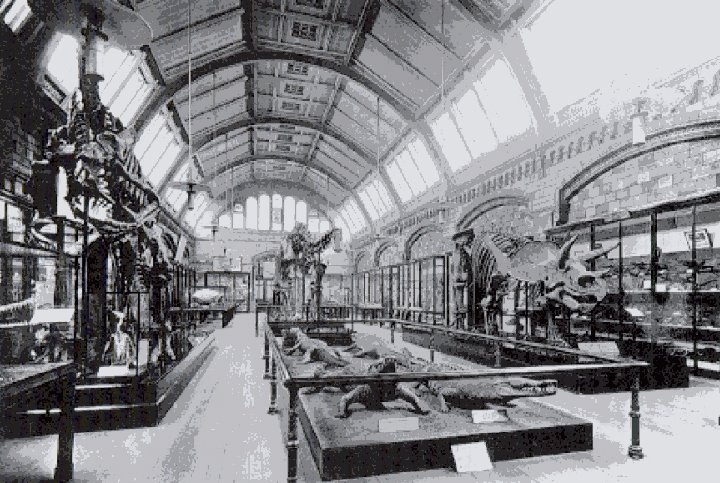
Adam Sedgwich (March 22, 1785 - January 27, 1873) was an English geologist who first applied the name Cambrian to the geologic period of time, now dated at 570 to 505 million years ago. In 1818 he became Woodwardian Professor of Geology at Cambridge, holding a chair that had been endowed ninety years before by the natural historian John Woodward.

He lacked formal training in geology, but he quickly became an active researcher in geology and paleontology. Many years after Sedgwick's death, the geological museum at Cambridge was renamed the Sedgwick Museum of Geology in his honor. The museum is now part of the Department of Earth Sciences at Cambridge University. From Today In Science History.

Monday, January 26, 2015

Born This Day: Roya Chapman Andrews


Photo from Parade of Life Through The Ages, by Charles Knight, Nat. Geo., Feb. 1942.

From the American Museum of Natural History web site:

Adventurer, administrator, and Museum promoterAndrews (Jan. 26, 1884 – March 11, 1960) spent his entire career at the American Museum of Natural History, where he rose through the ranks from departmental assistant, to expedition organizer, to Museum director.

He became world famous as leader of the Central Asiatic Expeditions, a series of expeditions to Mongolia that collected, among other things, dinosaur eggs. Although on these expeditions, Andrews himself found few fossils, and during his career he was not known as an influential scientist, he instead filled the role of promoter, creating immense excitement and successfully advancing the research and exhibition goals of the museum.

Learn about the Roy Chapman Andrews Society HERE.

Saturday, January 24, 2015

Premiered This Day (1956): The Animal World

“2 Billion Years in the Making!”

Produced and directed by Irwin Allen, whose long career included such TV hits as Lost In Space and Voyage To The Bottom Of The Sea, and movies like The Poseidon Adventure and The Towering Inferno.

The Animal World was one of the first films to present dinosaurs in the quasi-nature documentary so beloved by the Discovery Channel today. Rarely seen now, it featured about 10 minutes of great dinosaur stop-animation by Ray Harryhausen with Willis O’Brien. The entire sequence was released as an extra on the 2003 DVD release of The Black Scorpion.

Thursday, January 22, 2015

Died This Day: Horace de Suassure

Horace Bénédict de Saussure
Born 17 Feb 1740; died 22 Jan 1799.

A Swiss physicist and geologist, he introduced the term geology into the scientific literature in the first volume of Voyages dans les Alpes (1779-96). Link

Wednesday, January 21, 2015

A Walk Through Dinosaurland Kickstarter

An interesting looking Kickstarter project from the always excellent Jim Lawson.

Tuesday, January 20, 2015

Purgatorius, Paleocene Tree Dweller

Oldest known euarchontan tarsals and affinities of Paleocene Purgatorius to Primates. 2015. Chester, S.G.B, et al. PNAS


A new study has found that Purgatorius, a small mammal that lived on a diet of fruit and insects, was a tree dweller. Paleontologists made the discovery by analyzing 65-million-year-old ankle bones collected from sites in northeastern Montana.

Purgatorius, part of an extinct group of primates called plesiadapiforms, first appears in the fossil record shortly after the extinction of non-avian dinosaurs. Until now, paleontologists had only the animal's teeth and jaws to examine. The discovery of Purgatorius ankle bones have given researchers a better sense of how it lived.

The ankle bones would have allowed Purgatorius to rotate feet accordingly to grab branches while moving through trees. In contrast, ground-dwelling mammals lack these features and are better suited for propelling themselves forward in a more restricted, fore-and-aft motion."

The research provides the oldest fossil evidence that arboreality played a key role in primate evolution. PR

Friday, January 16, 2015

Born This Day: Caroline Munro


Art © Mark Schultz
Munro is probably best known for her role in in the Bond film The Spy Who Loved Me (1977). She had a long career in a variety of genre films including a stint with Hammer Films, and notably with Ray Harryhausen as the slave girl, Margiana, in The Golden Voyage of Sinbad (1974).

The Palaeoblog salutes her both for being the Godmother of Ray Harryhausen’s daughter and for her role as Princess Dia in At the Earth’s Core (1976)

DNA from Ancient Kangaroos

Late Pleistocene Australian Marsupial DNA Clarifies the Affinities of Extinct Megafaunal Kangaroos and Wallabies. 2015. Llamas, B., et al. Molecular Biology and Evolution advance access

The extinct short-faced kangaroo, Simosthenurus occidentalis.

Scientists have finally managed to extract DNA from two species of Australia's extinct giant kangaroos - a giant short-faced kangaroo (Simosthenurus occidentalis) and a giant wallaby (Protemnodon anak) - that roamed Australia over 40,000 years ago.

"The ancient DNA reveals that extinct giant wallabies are very close relatives of large living kangaroos, such as the red and western grey kangaroos," says lead author Dr Bastien Llamas.

"Their skeletons had suggested they were quite primitive macropods a group that includes kangaroos, wallabies, pademelons and quokkas - but now we can place giant wallaby much higher up the kangaroo family tree." PR

Thursday, January 15, 2015

Opened To The Public (1759): The British Museum

On this day in 1759, the British Museum, in Bloomsbury, London, the world's oldest public national museum, opened to the public who were admitted in small groups, by ticket obtained in advance, for a conducted tour.

It was established on June 7, 1753 when King George II gave his royal assent to an Act of Parliament to acquire the collection of Sir Hans Sloane. In his will, he had offered the nation his lifetime collection of 71,000 objects, mostly plant and animal specimens. In return, he requested £20,000 for his heirs (which today would be over £2,000,000). The present museum buildings date from the mid-19th century. Its natural history collection moved to its own museum in 1881. link

Died This Day: Jean-Baptiste-Julien d' Omalius d' Halloy

d'Halloy (Feb. 16, 1783 - Jan. 15, 1875) was a Belgian geologist who was an early proponent of evolution and was acknowledged by Charles Darwin in his preface to ‘On The Origin of the Species’ for his opinions on the origin of new species through descent with modification.

He determined the stratigraphy of the Carboniferous and other rocks in Belgium and the Rhine provinces, and also made detailed studies of the Tertiary deposits of the Paris Basin. link

Wednesday, January 14, 2015

Dinosaurs wiped out rapidly in Europe 66 million years ago

Island life in the Cretaceous - faunal composition, biogeography, evolution, and extinction of land-living vertebrates on the Late Cretaceous European archipelago. 2015. Csiki-Sava Z, et al. ZooKeys 469: 1-161.


Dinosaurs flourished in Europe right up until the asteroid impact that wiped them out 66 million years ago, a new study shows.

The new study synthesizes a flurry of research on European dinosaurs over the past two decades. Fossils of latest Cretaceous dinosaurs are now commonly discovered in Spain, France, Romania, and other countries.

Dr Csiki-Sava said "For a long time, Europe was overshadowed by other continents when the understanding of the nature, composition and evolution of latest Cretaceous continental ecosystems was concerned. The last 25 years witnessed a huge effort across all Europe to improve our knowledge, and now we are on the brink of fathoming the significance of these new discoveries, and of the strange and new story they tell about life at the end of the Dinosaur Era." PR

Sunday, December 28, 2014

Born This Day: Alfred Sherwood Romer

”Romer (Dec. 28, 1894 – Nov. 5, 1973) was director of the Museum of Comparative Zoology at Harvard University until his retirement in 1961 and was one the singularly most influential vertebrate paleontologists of the 20th Century. His work ranged over virtually every conceivable subject within that field, although it was the osteology and taxonomy of the therapsids and other proto-mammals which was nearest his heart.

In addition to this work, Romer was acutely interested in the origin and initial adaptive radiation of tetrapods, and his work became the basis for a theory of tetrapod origins which was canon until the description of Acanthostega gunnari by Clack & Coates in the 1990s. Romer was ahead of his time in his defense of monophyly of Dinosauria though he did feel that Theropoda was not ancestral to birds.” link from EvoWiki.org

Romer’s book, Vertebrate Paleontology (1966), was for many years THE textbook on VP and is still well worth picking up. One of Romer’s students, Bob Carroll, wrote an updated version entitled, ‘Vertebrate Paleontology and Evolution’, in 1987. image

Friday, December 12, 2014

Aquilops americanus, the oldest horned-dinosaur from North America

A Ceratopsian Dinosaur from the Lower Cretaceous of Western North America, and the Biogeography of Neoceratopsia. Farke, A., et al. PLoS One


Abstract [edit]: An associated cranium and lower jaw from the Cloverly Formation (?middle–late Albian, between 104 and 109 million years old) of southern Montana is designated as the holotype for Aquilops americanus gen. et sp. nov. Aquilops americanus. A. americanus probably originated via a dispersal from Asia into North America. LiveScience article.

Born This Day: Erasmus Darwin

Erasmus (Dec. 12, 1731 – April 18, 1802) was a prominent English physician, poet, philosopher, botanist, naturalist and the grandfather of naturalist Charles Darwin and the biologist Francis Galton. Erasmus Darwin was one of the leading intellectuals of 18th century England.

As a naturalist, he formulated one of the first formal theories on evolution in Zoonomia, or, The Laws of Organic Life (1794-1796). Although he did not come up with natural selection, he did discuss ideas that his grandson elaborated on sixty years later, such as how life evolved from a single common ancestor, forming "one living filament".
Although some of his ideas on how evolution might occur are quite close to those of Lamarck, Erasmus Darwin also talked about how competition and sexual selection could cause changes in species. link

Download Zoonomia HERE

Tuesday, December 09, 2014

Died This Day: Mary Leakey

Mary Douglas Nicol Leakey (Feb. 6, 1913 – Dec. 9, 1996) was in London, England. She meet her future husband, Louis Leakey, when he asked her to illustrate his book, 'Adam’s Ancestors'. Mary and Louis spent from 1935 to 1959 at Olduvai Gorge in the Serengeti Plains of northern Tanzania where they worked to reconstruct many Stone Age cultures dating as far back as 100,000 to two million years ago. They documented stone tools from primitive stone-chopping instruments to multi-purpose hand axes.
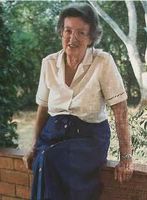
In October of 1947, while on Rusinga Island, Mary unearthed a Proconsul africanus skull, the first skull of a fossil ape ever to be found. It was dated to be twenty million years old. An Australopithecus boisei skull was uncovered in 1959. Not long afterwards, a less robust Homo habilis was found. In 1965 the duo uncovered a Homo erectus cranium.

After her husband died in 1972, Mary continued her work at Olduvai and Laetoli. She discovered Homo fossils at Laetoli which were more than 3.75 million years old, fifteen new species and one new genus. From 1978-81 Mary and her staff worked to uncover the Laetoli hominid footprint trail which was left in volcanic ashes 3.6 million years ago. From the Minnesota State University site

Image from HERE where you will also find a slightly more colourful account of her life with Louis.

Monday, December 08, 2014

Died This Day: Herbert Spencer, who coined "Survival of the Fittest"


Spencer (April 27, 1820 - Dec. 8, 1903) was an English sociologist and philosopher who was an early adherent of evolutionary theory. He regarded society as an organism which was evolving from a simple primitive state to a complex heterogeneous form according to the designs of an unknown and unknowable absolute force. Similarly, knowledge developed from an undifferentiated mass into the various separate sciences.

Formulating his ideas independently of Darwin, Spencer coined the phrase “survival of the fittest” as early as 1852. He applied Darwin's theory of natural selection (proposed four years later) to social development and in A System of Synthetic Philosophy (1862-96) presented a philosophical system to the natural and social sciences, synthesizing metaphysics, biology, psychology, sociology, and ethics. From HERE

Sunday, December 07, 2014

Women In Science In Canada

Today is the 25th anniversary of the Montreal Massacre at École Polytechnique in Montreal, Quebec that saw 14 women murdered, and another 10 women and 4 men injured by killer who deliberately targeted women.

Mika McKinnon at io9 honours the deceased by reminding us of a small fraction of women who have contributed to science in Canada, including Frances Wagner, a micropalaeontologist from Hamilton. She was one of the first two women permitted to do fieldwork with the Geologic Survey of Canada.

And a big tip of the hat to another micropalaeontologist, Dr. Claudia Schröder-Adams , my colleague at Carleton University, who continues to be an excellent educator & to do outstanding work in the Arctic.

Claudia with the 'Students On Ice' Program in Antarctica in 2011

Born This Day: Louis Dollo

Louis Antoine Marie Joseph Dollo (Dec. 7, 1857 – April 19, 1931) was a French vertebrate paleontologist who stated Dollo's Law of Irreversibility whereby in evolution an organism never returns exactly to its former state such that complex structures, once lost, are not regained in their original form. (While generally true, some exceptions are known.)

He began as an assistant (1882), became keeper of mammals (1891) at the Royal Museum of Natural History in Brussels where he stayed most of his life. He was a specialist in fossil fishes, reptiles, birds, and their palaeoecology. He supervised the excavation of the famous, multiple Iguanodons found in 1878 by miners deep underground, at Bernissart, Belgium. image From Today In Science History

Sunday, November 30, 2014

Galacto Guys


Here's an example of a fun, short-lived strip that I'd never heard of.
From Here

Friday, November 28, 2014

Born This Day: Dunkinfield Henry Scott


Painting by Mary Parrish
Scott (Nov. 28, 1854 – Jan. 29, 1934) was an English paleobotanist and leading authority of his time on the structure of fossil plants, one of those who laid the foundations of paleobotany. He conducted experiments in the Jodrell Laboratory in Kew Gardens, where he became its honorary keeper (1892-1906). In collaboration with W.C. Williamson, he wrote three papers on fossil-plant morphology (1894-95).

Scott continued writing papers after Williamson's death and in which he described many otherwise unknown fossil plants. He wrote the classic Studies in Fossil Botany, which greatly popularized the subject.
From Today In Science History