Sunday, April 08, 2007

“Big Dog! Big Dog! Bow Wow Wow!”

A Single IGF1 Allele Is a Major Determinant of Small Size in Dogs. 2007. N.B. Sutter, et al. Science 316: 112-115.

Scientists have identified a piece of doggy DNA that reduces the activity of a growth gene, ensuring that small breeds stay small.
From the press release:

The small piece of DNA is not a gene, but is known as a regulatory sequence. It is located on dog chromosome 15 next to a previously known gene named IGF1, for insulin-like growth factor 1. The gene and regulatory sequence together are known as a haplotype or variant, and that haplotype was found in all breeds of small dogs, showing it is a major contributor to body size in all small dogs.


The IGF1 gene’s hormone helps humans and other mammals grow from birth to adolescence. But in small dogs, one or more mutations in the DNA next to the IGF1 gene suppress the gene’s activity, keeping small dogs from growing larger.

Medium and large dogs also have the IGF1 gene, but they do not have the same piece of DNA next to it, so their size is not restricted by that DNA.


Dogs evolved from wolves sometime before 12,000 to 15,000 years ago, when they were domesticated by humans. Because the small-dog genetic material is found in small breeds that are distantly related and found in distant regions, the researchers concluded the genetic instructions to make dogs small must be at least 12,000 years old.


Krypto & the S.P.C.A. © DC Comics
Most small dogs also are yappy, but Chase says: "Yappy we didn’t study."
Thanks to Dial B For Blog for the images!

Saturday, April 07, 2007

Knut Schmidt-Nielsen 1915 – 2007

I missed the fact that Knut Schmidt-Nielsen passed away a few months ago. Every zoologist working today owes him a great debt, and as undergraduates we all read his books, "Scaling: Why Is Animal Size So Important?" and "How Animals Work".

The Journal of Experiemental Biology has a nice obituary in its recent March issue;
“Knut Schmidt-Nielsen was one of the most prominent and most successful animal physiologists. Throughout his long scientific career, he addressed puzzling questions about how animals work by looking at how nature has solved these problems when enabling diverse animals to cope with varied functional stresses imposed by environment, specific niches or variations in body size.”

Born This Day: Kenneth (Page) Oakley

April 7, 1911 - November 2, 1981

From Today in Science History:

Oakley was an English physical anthropologist, geologist, and paleontologist best known for his work in the relative dating of fossils by fluorine content. While working for the British Natural History Museum, Oakley become famous in 1953 for exposing the 'Piltdown Man' forgery.

"A skull had been "unearthed" in 1912, in Piltdown, England, and had for decades been said to represent the "missing link" in human evolution. Oakley developed a method, based on a French minerologist's theory that bones would gradually absorb fluorine from surrounding soil, to measure the fluorine levels in bones. With this and other tests he proved the bones to be a modern human braincase and an orangutan jawbone chemically stained to appear ancient. image

Friday, April 06, 2007

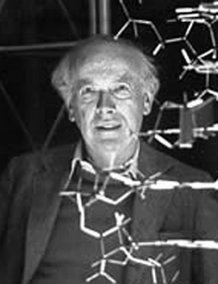
Born This Day: James Watson

From Today In Science History:

Watson was born on this day in 1928. An American geneticist and biophysicist, he shared the 1962 Nobel Prize for Physiology or Medicine (with Francis Crick and Maurice Wilkins) for the discovery of "the molecular structure of nucleic acids and its significance for information transfer in living material." Deoxyribonucleic acid (DNA) is the substance contained in cells that controls heredity.

Crick and Watson began their collaboration in 1951, and published their paper on the double helix structure on 2 Apr 1953 in Nature. This accomplishment became a cornerstone of genetics and was widely regarded as one of the most important discoveries of 20th-century biology.
image.

On This Day: AMNH Created

In 1869, the American Museum of Natural History in New York City was officially created with the signing of a bill by the Governor of New York, John Thompson Hoffman.

The museum began from the efforts of Albert Smith Bickmore, one-time student of Harvard zoologist Louis Agassiz, who was successful in his proposal to create a natural history museum in New York City, with the support of William E. Dodge, Jr., Theodore Roosevelt, Sr., Joseph Choate, and J. Pierpont Morgan. It opened to the public 27 Apr 1871.

With a series of exhibits, the Museum’s collection went on view for the first time in the Central Park Arsenal, the Museum’s original home, on the eastern side of Central Park.

From Today in Science History.

Congratulations to Dr. David Evans!

David successfully defended his Ph.D. dissertation yesterday at the University of Toronto.


Things will slow down at the blog for the Easter weekend. But, we do have this sad news to report. Dr. Bruce Naylor, Director of the Royal Tyrrell Museum of Palaeontology, passed away last night. I’ll post along more details when I have them.

Wednesday, April 04, 2007

Hagfishes & Evolution

Hagfish embryology with reference to the evolution of the neural crest. 2007. K.G. Ota, et al. Nature 446: 672-675.

Abstract: Hagfish, which lack both jaws and vertebrae, have long been the subject of intense interest owing to their position at a crucial point in the evolutionary transition to a truly vertebrate body plan. However, unlike the comparatively well characterized vertebrate agnathan lamprey, little is known about hagfish development.

The hagfish may be either the sister group of all the other vertebrates (1), or that of lampreys (2). b, c, Hypotheses on neural crest evolution. b, The former hypothesis (1) would agree with the scenario that neural crest evolution had an intermediate epithelial state. c, Alternatively, the crest might have already been established as a population of delaminating cells in the common ancestor to all vertebrates, and this would be coherent with both hypotheses (1 or 2).
The inability to analyse hagfish at early embryonic stages has frustrated attempts to resolve questions with important phylogenetic implications, including fundamental ones relating to the emergence of the neural crest.

Here we report the obtainment of multiple pharyngula-stage embryos of the hagfish species Eptatretus burgeri and our preliminary analyses of their early development. We present histological evidence of putative neural crest cells, which appear as delaminated cells that migrate along pathways corresponding to neural crest cells in fish and amphibians. Molecular cloning studies further revealed the expression of several regulatory genes, including cognates of Pax6, Pax3/7, SoxEa and Sox9, suggesting that the hagfish neural crest is specified by molecular mechanisms that are general to vertebrates.

We propose that the neural crest emerged as a population of de-epithelialized migratory cells in a common vertebrate ancestor, and suggest that the possibility of classical and molecular embryology in hagfish opens up new approaches to clarifying the evolutionary history of vertebrates.

3.2 Billion-Year-Old Earth Had Strong Magnetic Field

Geomagnetic field strength 3.2 billion years ago recorded by single silicate crystals. 2007. JA Tarduno, et al. Nature 446: 657-660.

From the press release:

The Earth's magnetic field was nearly as strong 3.2 billion years ago as it is today. The findings, which are contrary to previous studies, suggest that even in its earliest stages the Earth was already well protected from the solar wind, which can strip away a planet's atmosphere and bathe its surface in lethal radiation.

Theories of Earth's field say it's generated by the convection of our liquid iron core, but scientists have always been curious to know when Earth's solid inner core formed because this process provides an important energy source to power the magnetic field. Scientists are also interested in when Earth's protective magnetic cocoon formed.

Using a SQUID—a Superconducting Quantum Interface Device—researchers measured the magnetic fields of nano-meter sized magnetic inclusions in rocks that lock in a record of the Earth's magnetic field as they cool from molten magma to hard rock.

"The data suggest that the ancient magnetic field strength was at least 50 percent of the present-day field, which typically measures 40 to 60 microteslas," says Tarduno. "This means that a magnetosphere was definitely present, sheltering the Earth 3.2 billion years ago."

Doushantuo Embryos, Again

Doushantuo embryos preserved inside diapause egg cysts. 2007. L. Yin, et al. Nature 446: 661-663.

Abstract: Phosphatized microfossils in the Ediacaran (635–542 Myr ago) Doushantuo Formation, south China, have been interpreted as the embryos of early animals. Despite experimental demonstration that embryos can be preserved, microstructural evidence that the Doushantuo remains are embryonic and an unambiguous record of fossil embryos in Lower Cambrian rocks, questions about the phylogenetic relationships of these fossils remain.

a, Ericiasphaera magna, sample number XFHB-35. b, Appendisphaera tenuis, sample number XFHB-33. c–l, Tianzhushania spinosa; c–h, k, l sample number XFHB-2; i, j sample number XFHB-29. Panels c–h illustrate one (c), two (d, e), eight (f) and 16 (g, with greater detail in h) cell stages of preserved embryos within encompassing structures interpreted as diapause egg cysts; k, l, show details of wall structure in the specimens illustrated in c and g. Panel j, magnified in l, shows a Tianzhushania fossil from 632-Myr-old beds of the lower Doushantuo Formation.
Most recently, some researchers have proposed that Doushantuo microfossils may be giant sulphur-oxidizing bacteria comparable to extant Thiomargarita sp.

Here we report new observations that provide a test of the bacterial hypothesis. The discovery of embryo-like Doushantuo fossils inside large, highly ornamented organic vesicles (acritarchs) indicates that these organisms were eukaryotic, and most probably early cleavage stage embryos preserved within diapause egg cysts. Large acanthomorphic microfossils of the type observed to contain fossil embryos first appear in rocks just above a 632.5 0.5-Myr-old ash bed suggesting that at least stem-group animals inhabited shallow seas in the immediate aftermath of global Neoproterozoic glaciation.

Tuesday, April 03, 2007

Born This Day: Ralph A. Bagnold

April 3, 1896 - May 28, 1990

From the always excellent Today in Science History:

English geologist who was a leading authority on the mechanics of sediment transport, especially eolian (wind) transport. While serving as a soldier in Egypt prior to WW II, Bagnold first studied sand dune formation and movement. After retiring from the army (1935), he continued his research and wrote the book "Physics of Blown Sand and Desert Dunes", investigating the physics of particles moving through the atmosphere and deposited by wind.


Art © Darwyn Cooke. The Spirit © Estate of Will Eisner
He recognized two basic dune types, the crescentic dune, which he called "barchan," and the linear dune, which he called longitudinal or "sief" (Arabic for "sword"). During WW II, his avocational interest in vehicle performance on blowing sand aided the Allies in North Africa.

Vertebrate Evolution: Humans Closer To Sharks Than Teleost Fish

Survey sequencing and comparative analysis of the elephant shark (Callorhinchus milii) genome. 2007. B. Venkatesh, et al. PLoS Biol 5(4): e101.

From the press release:

Cartilaginous fishes (sharks, rays, skates, and chimaeras) are the phylogenetically oldest group of living jawed vertebrates. They are also an important outgroup for understanding the evolution of bony vertebrates such as human and teleost fishes.

The elephant shark genome, estimated to be about 910 Mb long, comprises about 28% repetitive elements. Comparative analysis of approximately 15,000 elephant shark gene fragments revealed examples of several ancient genes that have been lost differentially during the evolution of human and teleost fish lineages.

Interestingly, the human and elephant shark genomes exhibit a higher degree of synteny and sequence conservation than human and teleost fish (zebrafish and fugu) genomes, even though humans are more closely related to teleost fishes than to the elephant shark.

Unlike teleost fish genomes, the elephant shark genome does not seem to have experienced an additional round of whole-genome duplication. These findings underscore the importance of the elephant shark as a useful "model" cartilaginous fish genome for understanding vertebrate genome evolution.

Monday, April 02, 2007

See Jane. Read Jane.


The Discovery And Mystery of a Dinosaur Named Jane by Judith Williams.

A plug for my friend Judy’s new book on ‘Jane’ the tyrannosaur. Written for ages 9-12 it’s a good read of the young dino-fan in your life.

Another Kong Cartoon


Art © Steve Hickman
One more Kong cartoon via our friends at Atomic Surgery.

Saturday, March 31, 2007

Chinook Center T. rex Albertosaurus


Photos © M. Ryan

While I was in Calgary recently I stopped into the Chinook Mall on the south side to photograph this T. rex made out of junk. I meant to write down the info on the sculptor, but didn't.

Update: Jordan Mallon informs me that it’s an Albertosaurus that was sculpted by Russell Zeid entirely of scraps from junkyards around Alberta.

Friday, March 30, 2007

Fish Feet


© Larry Gonick
Reader Sarda Sahney has a fun blog called FISH FEET that is worth visiting. Apparently Sarda is presently on a mysterious trip into the heart of India in search of ancient secrets--what wonders will she return with? All will be revealed on her blog....

Floral Gigantism Strikes Back

Floral Gigantism in Rafflesiaceae. 2007. C. C. Davis, et al. Science 315: 1812
Abstract: Species of Rafflesiaceae possess the world's largest flowers (up to 1 meter in diameter), yet their precise evolutionary relationships have been elusive, hindering our understanding of the evolution of their extraordinary reproductive morphology.

We present results of phylogenetic analyses of mitochondrial, nuclear, and plastid data showing that Rafflesiaceae are derived from within Euphorbiaceae, the spurge family. Most euphorbs produce minute flowers, suggesting that the enormous flowers of Rafflesiaceae evolved from ancestors with tiny flowers.

Given the inferred phylogeny, we estimate that there was a circa 79-fold increase in flower diameter on the stem lineage of Rafflesiaceae, making this one of the most dramatic cases of size evolution reported for eukaryotes.

Return of the Giant Hogweed:

Mammoths With Hollow Feet


All photos © Kipling West
While I was in Calgary last week I had the pleasure of meeting up with two of the 7 Deadly Sinners, Tom Bagley and Kipling West. Kipling revealed that the Mammoth at the Calgary Zoo has hollow feet (probably related to its fibreglass nature) and kindly sent along these pix.

Hungry? Try some of Kipling's FRESH SPAM!

Classification of Geological Eras

In 1759, Italian geologist Giovanni Arduino (1714-1795) dated a letter to Professor A.Vallisneri the younger, in which Arduino proposed a classification of Earth's surface rocks according to four brackets of successively younger orders: Primary, Secondary, Tertiary and Quaternary. These are the four geological eras used today.


© Meyerowitz & Beard

The volcanic rocks without fossils which he saw in the Atesine Alps that formed the cores of large mountains he called Primary. Overlying them, the fossil rich rocks of limestone and clay that were found on the prealpine flanks of the mountains he called Secondary. The less consolidated fossil-bearing rocks of the subalpine foothills, he named Tertiary, and the alluvial rock deposits in the plains were the Quaternary. link.

Thursday, March 29, 2007

The Golden Age of Dino Discoveries

From BBC News:

Peter Dodson & Steve Wang created a computer model that came up with an astonishing prediction--it estimated that the museums and research institutes in the world only hold around 30% of the dinosaur fossils that may exist - the other 70% are still in the ground.

"When we submitted our study, we knew of 527 kinds of dinosaur," he said.

"Based on what has gone before, we projected into the future and found that at some point - we can't say when, but sometime in the next century or two, when we've found all the dinosaurs out there to find - the total number will be about 1,850 genres, or kinds, of dinosaur."

Estimating the diversity of dinosaurs. 2006. S. C. Wang and P. Dodson. PNAS 103 (37): 13601-13605.

Abstract: Despite current interest in estimating the diversity of fossil and extant groups, little effort has been devoted to estimating the diversity of dinosaurs. Here we estimate the diversity of nonavian dinosaurs at 1,850 genera, including those that remain to be discovered. With 527 genera currently described, at least 71% of dinosaur genera thus remain unknown. Although known diversity declined in the last stage of the Cretaceous, estimated diversity was steady, suggesting that dinosaurs as a whole were not in decline in the 10 million years before their ultimate extinction. We also show that known diversity is biased by the availability of fossiliferous rock outcrop. Finally, by using a logistic model, we predict that 75% of discoverable genera will be known within 60–100 years and 90% within 100–140 years. Because of nonrandom factors affecting the process of fossil discovery (which preclude the possibility of computing realistic confidence bounds), our estimate of diversity is likely to be a lower bound.

Dead Dinos ≠ More Mammals

The delayed rise of present-day mammals. 2007. O. R. P. Bininda-Emonds, et al. Nature 446: 507-512.

Abstract: Did the end-Cretaceous mass extinction event, by eliminating non-avian dinosaurs and most of the existing fauna, trigger the evolutionary radiation of present-day mammals? Here we construct, date and analyse a species-level phylogeny of nearly all extant Mammalia to bring a new perspective to this question. Our analyses of how extant lineages accumulated through time show that net per-lineage diversification rates barely changed across the Cretaceous/Tertiary boundary. Instead, these rates spiked significantly with the origins of the currently recognized placental superorders and orders approximately 93 million years ago, before falling and remaining low until accelerating again throughout the Eocene and Oligocene epochs. Our results show that the phylogenetic 'fuses' leading to the explosion of extant placental orders are not only very much longer than suspected previously, but also challenge the hypothesis that the end-Cretaceous mass extinction event had a major, direct influence on the diversification of today's mammals.

Hey everyone, let’s put out a press release, and another one, and one more:

A new, complete 'tree of life' tracing the history of mammals on Earth shows that they did not diversify as a result of the death of the dinosaurs. It contradicts the previously accepted theory that the Mass Extinction Event that wiped out the dinosaurs 65 million years ago prompted the rapid rise of the mammals we see on the earth today.

Research shows that after the mass exteinxtion certain mammals did experience a rapid period of diversification and evolution. However, most of these groups have since either died out completely or declined in diversity.

The researchers believe that our 'ancestors', and those of all other mammals on earth now, began to radiate around the time of a sudden increase in the temperature of the planet – ten million years after the death of the dinosaurs.

Read the comment at Nature News.

FYI, the lead author is another fellow graduate (M.Sc., I think) from a few years back of the U of Calgary studying under Dr. A. P. Russell.
The tendonitis has improved so I'll be slowing bring the blog back up to speed, although I'll probably not hit 100% of what I was doing before.