Wednesday, December 16, 2009
Died This Day: Father of Java Man
Eugene Dubois (Jan. 28, 1858 - Dec. 16, 1940) joined the Dutch Army as a medical officer, 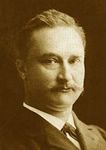 and used spare time from his medical duties to search for fossils, first in Sumatra and then in Java. He searched on the banks of the Solo River, with two assigned engineers and a crew of convict labourers to help him. In September 1890, his workers found a human, or human-like, fossil at Koedoeng Broeboes. This consisted of the right side of the chin of a lower jaw and three attached teeth. In August 1891 he found a primate molar tooth.
Two months later and one meter away was found an intact skullcap, the fossil which would be known as Java Man. In August 1892, a third primate fossil, an almost complete left thigh bone, was found between 10 and 15 meters away from the skullcap.
In 1894 Dubois published a description of his fossils, naming them Pithecanthropus erectus (now Home erectus), describing it as neither ape nor human, but something intermediate. In 1895 he returned to Europe to promote the fossil and his interpretation. A few scientists enthusiastically endorsed Dubois' work, but most disagreed with his interpretation. Many scientists pointed out similarities between the Java Man skullcap and Neandertal fossils.
Around 1900 Dubois ceased to discuss Java Man, and hid the fossils in his home while he moved on to other research topics. geology and paleontology. It was not until 1923 that Dubois, under pressure from scientists, once again allowed access to the Java Man fossils. That and the discovery of similar fossils caused it to once again become a topic of debate.
 and used spare time from his medical duties to search for fossils, first in Sumatra and then in Java. He searched on the banks of the Solo River, with two assigned engineers and a crew of convict labourers to help him. In September 1890, his workers found a human, or human-like, fossil at Koedoeng Broeboes. This consisted of the right side of the chin of a lower jaw and three attached teeth. In August 1891 he found a primate molar tooth.
 Two months later and one meter away was found an intact skullcap, the fossil which would be known as Java Man. In August 1892, a third primate fossil, an almost complete left thigh bone, was found between 10 and 15 meters away from the skullcap.
In 1894 Dubois published a description of his fossils, naming them Pithecanthropus erectus (now Home erectus),
 describing it as neither ape nor human, but something intermediate. In 1895 he returned to Europe to promote the fossil and his interpretation. A few scientists enthusiastically endorsed Dubois' work, but most disagreed with his interpretation. Many scientists pointed out similarities between the Java Man skullcap and Neandertal fossils.
 Around 1900 Dubois ceased to discuss Java Man, and hid the fossils in his home while he moved on to other research topics. geology and paleontology. It was not until 1923 that Dubois, under pressure from scientists, once again allowed access to the Java Man fossils. That and the discovery of similar fossils caused it to once again become a topic of debate.


Monday, December 14, 2009
Ediacarans & Life On Other Worlds
Richard Corfield on Ediacarans

Image: National Museum of Natural History, courtesy of the Smithsonian Institution.

Image: National Museum of Natural History, courtesy of the Smithsonian Institution.
“So what can the story of the Ediacarans tell us about the evolution of life on other planets? First and perhaps most importantly, it tells us that evolution can happen very quickly. The idea – first credited to Darwin - that vast amounts of deep time are required for evolution to occur may not be correct. The speed with which the Ediacarans arose in the aftermath of the final Cryogenian glaciation suggests strongly that the evolution of complex, multicellular organisms was on the blocks and just waiting for the starting pistol”.
Read more here
Died This Day: Louis Agassiz

May 28, 1807 - Dec. 14, 1873
(Jean) Louis (Rodolphe) Agassiz was a Swiss-born U.S. naturalist, geologist, and teacher who made revolutionary contributions to the study of natural science with landmark work on glacier activity and extinct fishes. Agassiz began his work in Europe, having studied at the University of Munich and then as chair in natural history in Neuchatel in Switzerland. While there he published his landmark multi-volume description and classification of fossil fish.
In 1846 Agassiz came to the U.S. to lecture before Boston's Lowell Institute. Offered a professorship of Zoology and Geology at Harvard in 1848, he decided to stay, becoming a citizen in 1861. His innovative teaching methods altered the character of natural science education in the U.S. Link
More info HERE
Sunday, December 13, 2009

Saturday, December 12, 2009
Happy Birthday to Sarah Douglas
Sarah gets a tip of the hat for playing Lady Charlotte Cunningham is the mostly forgotten Hammer Films adaptation of the Edgar Rice Burroughs novel of the same name.
Douglas is probably best known for playing the Phantom Zone Villianess Ursa in the 1978 Superman movie.


Douglas is probably best known for playing the Phantom Zone Villianess Ursa in the 1978 Superman movie.

Friday, December 11, 2009
Debuted This Day: Journey to the Beginning of Time
On this day in 1995 the Czech film, Cesta do praveku, by Karl Zeman debuted in East Germany.
It was laters redubbed and shown with additional footage as Journey to the Beginning of Time in the USA.
Thursday, December 10, 2009
Tawa hallae: New Meat-Eating Dinosaur Alters Evolutionary Tree
A Complete Skeleton of a Late Triassic Saurischian and the Early Evolution of Dinosaurs. 2009. S. J. Nesbitt, et al. Science 326: 1530-1533.

Image: Jorge GonzalezA new theropod genus Tawa hallae, from New Mexico (~ 214 million years ago) stood about 70 cm tall at the hips as a juvenile, and was about 2 m long from snout to tail. It is named after the Hopi word for the Puebloan sun god.
One of Tawa’s most important contributions to science has to do with what it says about Herrerasaurus, an unusual theropod placed either just outside or just inside the evolutionary tree of theropods.
Tawa has a mix of Herrerasaurus-like characteristics (for example, in the pelvis) and features found in firmly established theropod dinosaurs (for example, pockets for airsacs in the backbone). Therefore, the characteristics that Herrerasaurus shares uniquely with theropods such as Tawa confirm the characteristics didn’t arise independently and that Herrerasaurus is indeed a theropod.
The firm placement of Herrerasaurus within the theropod lineage suggests that once dinosaurs appeared, they very rapidly diversified into the three main dinosaur lineages that persisted for more than 170 million years.
Tawa skeletons were found beside two other theropod dinosaurs from around the same period. Lead author Sterling Nesbitt noted that each of the three is more closely related to a known dinosaur from South America than they are to each other. This suggests these three species each descended from a separate lineage in South America, and then later dispersed to North America and other parts of the supercontinent Pangaea. It also suggests there were multiple dispersals out of South America.
Get more info & video at: www.nsf.gov/tawa.

Image: Jorge Gonzalez
One of Tawa’s most important contributions to science has to do with what it says about Herrerasaurus, an unusual theropod placed either just outside or just inside the evolutionary tree of theropods.
Tawa has a mix of Herrerasaurus-like characteristics (for example, in the pelvis) and features found in firmly established theropod dinosaurs (for example, pockets for airsacs in the backbone). Therefore, the characteristics that Herrerasaurus shares uniquely with theropods such as Tawa confirm the characteristics didn’t arise independently and that Herrerasaurus is indeed a theropod.
The firm placement of Herrerasaurus within the theropod lineage suggests that once dinosaurs appeared, they very rapidly diversified into the three main dinosaur lineages that persisted for more than 170 million years.
Tawa skeletons were found beside two other theropod dinosaurs from around the same period. Lead author Sterling Nesbitt noted that each of the three is more closely related to a known dinosaur from South America than they are to each other. This suggests these three species each descended from a separate lineage in South America, and then later dispersed to North America and other parts of the supercontinent Pangaea. It also suggests there were multiple dispersals out of South America.
Get more info & video at: www.nsf.gov/tawa.
A Horse is a Horse, of Course, of Course, Unless of Course Its a Talking Horse Talking About Climate Change
Revising the recent evolutionary history of equids using ancient DNA. 2009. L. Orlando, et al. PNAS, published online before print December 9, 2009.
Straight from the horse’s mouth – all palaeontological research must be linked to climate change to get grants.A new study using DNA from equid bones from caves in Eurasia and South America reveal that the Cape zebra and an extinct giant species from South Africa were simply large variants of the modern Plains zebra. The Cape zebra weighed up to 400 kilograms and stood up to 150 centimetres at the shoulder blades.
"The Plains zebra group once included the famous extinct quagga, so our results confirm that this group was highly variable in both coat colour and size."
"Previous fossil records suggested this group was part of an ancient lineage from North America but the DNA showed these unusual forms were part of the modern radiation of equid species," Dr Orlando says.
A new species of ass was also detected on the Russian Plains and appears to be related to European fossils dating back more than 1.5 million years. Carbon dates on the bones reveal that this species was alive as recently as 50,000 years ago.
"Overall, the new genetic results suggest that we have under-estimated how much a single species can vary over time and space, and mistakenly assumed more diversity among extinct species of megafauna," Professor Cooper says.
"It also implies that the loss of species diversity that occurred during the megafaunal extinctions at the end of the last Ice Age may not have been as extensive as previously thought.
In contrast, ancient DNA studies have revealed that the loss of genetic diversity in many surviving species appears to have been extremely severe," Professor Cooper says. "This has serious implications for biodiversity and the future impacts of climate change." link
Straight from the horse’s mouth – all palaeontological research must be linked to climate change to get grants.
"The Plains zebra group once included the famous extinct quagga, so our results confirm that this group was highly variable in both coat colour and size."
"Previous fossil records suggested this group was part of an ancient lineage from North America but the DNA showed these unusual forms were part of the modern radiation of equid species," Dr Orlando says.
A new species of ass was also detected on the Russian Plains and appears to be related to European fossils dating back more than 1.5 million years. Carbon dates on the bones reveal that this species was alive as recently as 50,000 years ago.
"Overall, the new genetic results suggest that we have under-estimated how much a single species can vary over time and space, and mistakenly assumed more diversity among extinct species of megafauna," Professor Cooper says.
"It also implies that the loss of species diversity that occurred during the megafaunal extinctions at the end of the last Ice Age may not have been as extensive as previously thought.
In contrast, ancient DNA studies have revealed that the loss of genetic diversity in many surviving species appears to have been extremely severe," Professor Cooper says. "This has serious implications for biodiversity and the future impacts of climate change." link
Wednesday, December 09, 2009
Died This Day: Mary Leakey
Feb. 6, 1913 – Dec. 9, 1996
From the Minnesota State University site:
Mary Douglas Nicol Leakey was in London, England. She meet her future husband, Louis Leakey, when he asked her to illustrate his book, 'Adam’s Ancestors'. Mary and Louis spent from 1935 to 1959 at Olduvai Gorge in the Serengeti Plains of northern Tanzania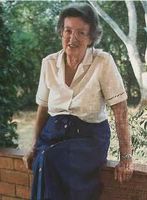 where they worked to reconstruct many Stone Age cultures dating as far back as 100,000 to two million years ago. They documented stone tools from primitive stone-chopping instruments to multi-purpose hand axes.
In October of 1947, while on Rusinga Island, Mary unearthed a Proconsul africanus skull, the first skull of a fossil ape ever to be found. It was dated to be twenty million years old. An Australopithecus boisei skull was uncovered in 1959. Not long afterwards, a less robust Homo habilis was found. In 1965 the duo uncovered a Homo erectus cranium.
After her husband died in 1972, Mary continued her work at Olduvai and Laetoli. She discovered Homo fossils at Laetoli which were more than 3.75 million years old, fifteen new species and one new genus. From 1978-81 Mary and her staff worked to uncover the Laetoli hominid footprint trail which was left in volcanic ashes 3.6 million years ago.
Image from HERE where you will also find a slightly more colourful account of her life with Louis.
From the Minnesota State University site:
Mary Douglas Nicol Leakey was in London, England. She meet her future husband, Louis Leakey, when he asked her to illustrate his book, 'Adam’s Ancestors'. Mary and Louis spent from 1935 to 1959 at Olduvai Gorge in the Serengeti Plains of northern Tanzania
 where they worked to reconstruct many Stone Age cultures dating as far back as 100,000 to two million years ago. They documented stone tools from primitive stone-chopping instruments to multi-purpose hand axes.
In October of 1947, while on Rusinga Island, Mary unearthed a Proconsul africanus skull, the first skull of a fossil ape ever to be found. It was dated to be twenty million years old. An Australopithecus boisei skull was uncovered in 1959. Not long afterwards, a less robust Homo habilis was found. In 1965 the duo uncovered a Homo erectus cranium.
After her husband died in 1972, Mary continued her work at Olduvai and Laetoli. She discovered Homo fossils at Laetoli which were more than 3.75 million years old, fifteen new species and one new genus. From 1978-81 Mary and her staff worked to uncover the Laetoli hominid footprint trail which was left in volcanic ashes 3.6 million years ago.
Image from HERE where you will also find a slightly more colourful account of her life with Louis.
Monday, December 07, 2009
Carl Gans (1939 – 2009)

You can read his obituary in the New York Times
Born This Day: Louis Dollo
Dec. 7, 1857 – April 19, 1931
From Today In Science History
Louis Antoine Marie Joseph Dollo was a French vertebrate paleontologist who stated Dollo's Law of Irreversibility whereby in evolution an organism never returns exactly to its former state such that complex structures, once lost, are not regained in their original form. (While generally true, some exceptions are known.)
He began as an assistant (1882), became keeper of mammals (1891) at the Royal Museum of Natural History in Brussels where he stayed most of his life. He was a specialist in fossil fishes, reptiles, birds, and their palaeoecology. He supervised the excavation of the famous, multiple Iguanodons found in 1878 by miners deep underground, at Bernissart, Belgium. image
From Today In Science History
Louis Antoine Marie Joseph Dollo was a French vertebrate paleontologist who stated Dollo's Law of Irreversibility whereby in evolution an organism never returns exactly to its former state such that
 complex structures, once lost, are not regained in their original form. (While generally true, some exceptions are known.)
He began as an assistant (1882), became keeper of mammals (1891) at the Royal Museum of Natural History in Brussels where he stayed most of his life. He was a specialist in fossil fishes, reptiles, birds, and their palaeoecology. He supervised the excavation of the famous, multiple Iguanodons found in 1878 by miners deep underground, at Bernissart, Belgium. image
Sunday, December 06, 2009
Relationships & Monophyly of Therocephalian Therapsids
An investigation into the cladistic relationships and monophyly of therocephalian therapsids (Amniota: Synapsida). 2009. A. HUTTENLOCKER. Zool. J Linn. Soc. 157: 865-891.
ABSTRACT: A comprehensive phylogenetic investigation was performed to elucidate the cladistic relationships and possible monophyly of therocephalian therapsids (Amniota: Synapsida). The phylogenetic positions of 30 therapsid taxa were examined under maximum parsimony, including 23 therocephalian genera. The analysis incorporated 110 cranial and postcranial characters in order to assess the interrelationships of basal therocephalians and eutherocephalians and their relationships to Cynodontia, representing the most complete review of therocephalian phylogeny to date.
The analysis supports the hypothesis that Therocephalia represents the monophyletic sister taxon to Cynodontia, with as many as 15 morphological synapomorphies, in contrast with other recent analyses of lesser taxon sampling.
The results also support the hypothesis that Scylacosauridae is more closely related to Eutherocephalia than to the basal therocephalian family Lycosuchidae, supporting a 'Scylacosauria' clade.
The taxa suggested here to be neotenic forms (e.g. Ictidosuchoides and Ictidosuchops) are positioned near the base of a monophyletic Baurioidea. Neotenic development of the therocephalian feeding apparatus and evolutionary parallelism with cynodonts are suggested to have been important trends in the early evolution of baurioid therocephalians into the Late Permian and Early Triassic.

ABSTRACT: A comprehensive phylogenetic investigation was performed to elucidate the cladistic relationships and possible monophyly of therocephalian therapsids (Amniota: Synapsida). The phylogenetic positions of 30 therapsid taxa were examined under maximum parsimony, including 23 therocephalian genera. The analysis incorporated 110 cranial and postcranial characters in order to assess the interrelationships of basal therocephalians and eutherocephalians and their relationships to Cynodontia, representing the most complete review of therocephalian phylogeny to date.
The analysis supports the hypothesis that Therocephalia represents the monophyletic sister taxon to Cynodontia, with as many as 15 morphological synapomorphies, in contrast with other recent analyses of lesser taxon sampling.
The results also support the hypothesis that Scylacosauridae is more closely related to Eutherocephalia than to the basal therocephalian family Lycosuchidae, supporting a 'Scylacosauria' clade.
The taxa suggested here to be neotenic forms (e.g. Ictidosuchoides and Ictidosuchops) are positioned near the base of a monophyletic Baurioidea. Neotenic development of the therocephalian feeding apparatus and evolutionary parallelism with cynodonts are suggested to have been important trends in the early evolution of baurioid therocephalians into the Late Permian and Early Triassic.
Saturday, December 05, 2009
Ray Troll Exhibit in Seattle
If I were in Seattle I’d go to this:

The Burke Museum of Natural History and Culture is excited to announce the opening of our new fossil exhibit. Cruisin’ the Fossil Freeway is an exhibit that brings together the best of the Burke Museum's fossil collection and the fossil-inspired artwork of celebrated artist Ray Troll to explore questions about evolution, extinction, and early life on Earth.
The Burke Museum collaborated with artist Ray Troll and Seattle-born paleontologist Kirk Johnson to present this new exhibit exploring the abundance of fossils in our midst and how fossils shed light on Earth's past.
Cruisin’ the Fossil Freeway will travel nationally after closing in Seattle in late May 2010.
Died This Day: Clair Cameron Patterson
June 2, 1922 - December 5, 1995
From Today In Science History:
Patterson was a U.S. geochemist who in 1953 made the first precise measurement of the Earth's age, 4.55 billion years. He is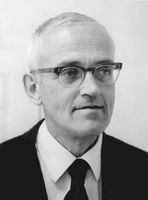 noted for providing the first reliable ages of the earth and meteorites (1962), using analysis of the isotopic compositions and concentrations of lead in terrestrial materials and meteorites.
He also established the patterns of isotopic evolution of lead on earth, by analysis of critical rocks, sediments and waters of the planet. Thus he created a powerful tool for identifying, tracing and evaluating the nature of the major geochemical reservoirs in the crust, mantle, and oceans.
Photo from HERE.
From Today In Science History:
Patterson was a U.S. geochemist who in 1953 made the first precise measurement of the Earth's age, 4.55 billion years. He is
 noted for providing the first reliable ages of the earth and meteorites (1962), using analysis of the isotopic compositions and concentrations of lead in terrestrial materials and meteorites.
He also established the patterns of isotopic evolution of lead on earth, by analysis of critical rocks, sediments and waters of the planet. Thus he created a powerful tool for identifying, tracing and evaluating the nature of the major geochemical reservoirs in the crust, mantle, and oceans.
Photo from HERE.
Friday, December 04, 2009
Vancleavea campi
The osteology and relationships of Vancleavea campi (Reptilia: Archosauriformes). S. Nesbitt, et al. Zool. J Linn. Soc. 157: 814 – 864.

ABSTRACT: Vancleavea campi Long & Murry, 1995, from the Late Triassic of western North America, represents the latest surviving non-archosaurian archosauriform known to date. We present here a detailed comparative description based on a nearly complete, articulated skeleton from the Coelophysis Quarry in north-central New Mexico and other fragmentary specimens.
The unique combination of morphological features of Vancleavea is unparalleled within Reptilia; it has four unique morphologies of imbricated osteoderms covering the entire body, a short, highly ossified skull, relatively small limbs and morphological features consistent with a semi-aquatic lifestyle.
Vancleavea is placed in a rigorous phylogenetic analysis examining the relationships of non-archosaurian archosauriforms, and is found to be more closely related to Archosauria than both Erythrosuchus and Proterosuchus, but outside of the crown group.
The analysis confirms previously hypothesized relationships, which found Euparkeria to be the closest sister taxon of Archosauria. It is not clear whether specimens referred to Vancleavea campi represent a single species-level taxon or a clade of closely related taxa that lived through much of the Late Triassic of North America, given the poor fossil record of the taxon.

The unique combination of morphological features of Vancleavea is unparalleled within Reptilia; it has four unique morphologies of imbricated osteoderms covering the entire body, a short, highly ossified skull, relatively small limbs and morphological features consistent with a semi-aquatic lifestyle.
Vancleavea is placed in a rigorous phylogenetic analysis examining the relationships of non-archosaurian archosauriforms, and is found to be more closely related to Archosauria than both Erythrosuchus and Proterosuchus, but outside of the crown group.
The analysis confirms previously hypothesized relationships, which found Euparkeria to be the closest sister taxon of Archosauria. It is not clear whether specimens referred to Vancleavea campi represent a single species-level taxon or a clade of closely related taxa that lived through much of the Late Triassic of North America, given the poor fossil record of the taxon.
Wednesday, December 02, 2009
Mark Schultz's Blue Book


You’ve seen a few teaser images from Storms at Sea on the blog before. If you’re a fan of Schulze’s work you’ll want a copy of The Blue Book as well.

All art © Mark Schultz
Born This Day: Capt. Englehorn

Frank Reicher (Dec. 2, 1875 – Jan. 19, 1965) was born in Munich,Germany and had a long career in Hollywood. He appeared in over 200 films, often playing small roles in minor films, and he directed over three dozen silent movies.
He is best know for playing Capt. Englehorn in King King (1933), and it’s quickie sequel Son of Kong from later that same year.
Tuesday, December 01, 2009
All Hail Our New Plant Overlords!
Leaf hydraulic evolution led a surge in leaf photosynthetic capacity during early angiosperm diversification. 2009. T. J. Brodribb, et al. Ecology Letters, published online Nov 30.
The evolution of dense leaf venation in flowering plants, around 140-100 million years ago, was an event with profound significance for the continued evolution of flowering plants. This step provided a 'cretaceous productivity stimulus package' which reverberated across the biosphere and led to these plants playing the fundamental role in the biological and atmospheric functions of the earth.
"Without this hydraulic system we predict leaf photosynthesis would be two-fold lower then present," concludes Brodribb. "So it is significant to note that without this evolutionary step land plants would not have the physical capacity to drive the high productivity that underpins modern terrestrial biology and human civilisation." link


A new study of plant physiology reveals how flowering plants, including crops, were able to dominate land by evolving more efficient hydraulics, or 'leaf plumbing', to increase rates of photosynthesis.The reason for the success of this evolutionary step is that under relatively low atmospheric C02 conditions, like those existing at present, water transport efficiency and photosynthetic performance are tightly linked. Therefore adaptations that increase water transport will enhance maximum photosynthesis, exerting substantial evolutionary leverage over competing species.
The evolution of dense leaf venation in flowering plants, around 140-100 million years ago, was an event with profound significance for the continued evolution of flowering plants. This step provided a 'cretaceous productivity stimulus package' which reverberated across the biosphere and led to these plants playing the fundamental role in the biological and atmospheric functions of the earth.
"Without this hydraulic system we predict leaf photosynthesis would be two-fold lower then present," concludes Brodribb. "So it is significant to note that without this evolutionary step land plants would not have the physical capacity to drive the high productivity that underpins modern terrestrial biology and human civilisation." link
Died This Day: J.B.S. Haldane
Haldane (Nov. 5, 1892 - Dec. 1, 1964) is best remembered along with E. B. Ford and R. A. Fisher one of the three major figures to develop the mathematical theory of population genetics. His greatest contribution was in a series of ten papers on "A Mathematical Theory of Natural and Artificial Selection" which was the major series of papers on the  mathematical theory of natural selection. It treated many major cases for the first time, showing the direction and rates of changes of gene frequencies. It also pioneered in investigating the interaction of natural selection with mutation and with migration.
Haldane's book, The Causes of Evolution (1932), summarized these results, especially in its extensive appendix. This body of work was a component of what came to be known as the "modern evolutionary synthesis", re-establishing natural selection as the premier mechanism of evolution by explaining it in terms of the mathematical consequences of Mendelian genetics. From Wikipedia. More info here.
 mathematical theory of natural selection. It treated many major cases for the first time, showing the direction and rates of changes of gene frequencies. It also pioneered in investigating the interaction of natural selection with mutation and with migration.
Haldane's book, The Causes of Evolution (1932), summarized these results, especially in its extensive appendix. This body of work was a component of what came to be known as the "modern evolutionary synthesis", re-establishing natural selection as the premier mechanism of evolution by explaining it in terms of the mathematical consequences of Mendelian genetics. From Wikipedia. More info here.
Subscribe to:
Posts (Atom)