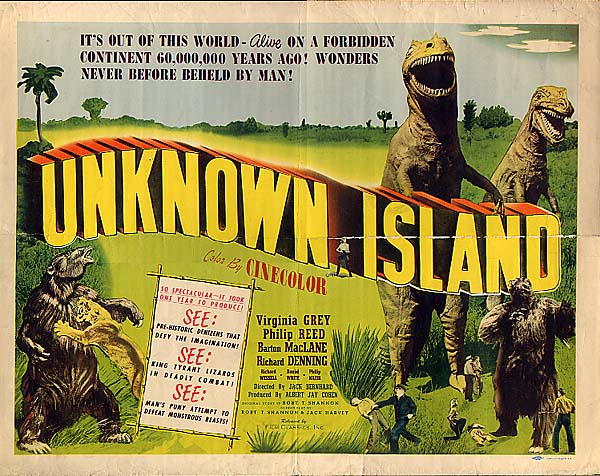
This 1948 film written by Robert T. Shannon and directed by Jack Bernhard features some of the worst ‘man dressed up as a T. rex’ effects ever. Not a bad little story though.
Monday, October 15, 2012

Sunday, October 14, 2012
Born This Day: Jack Arnold

Jack Arnold (Oct. 14, 1916 - March 17, 1992) directed a number of classic SF films including The Creature From the Black Lagoon, Revenge of the Creature, The Incredible Shrinking Man, and It Came From Outer Space, as well as few not-so-classics (but still much loved) such as Monster on Campus. Throughout the ‘60’s and into the early 80’s he had a successful career as a TV producer and director.


Monday, October 01, 2012
Died This Day: Louis Leakey

Louis and Mary Leakey
From Today In Science History:
Leakey (Aug 7, 1903 – October 1, 1972), an archaeologist and anthropologist, was born in Kabete, Kenya, of English missionaries parents. Leakey was largely responsible for convincing scientists that Africa, rather than Java or China, was the most significant area to search for evidence of human origins. Leakey led fossil-hunting expeditions to eastern Africa from the 1920's.
He married Mary D. Nicol in 1936 and the couple discovered many important fossils together. In 1964, on an expedition to the Olduvai Gorge in Tanzania, he found fossil remains of, he believed, the earliest member of the genus of human beings. He named the species Homo habilis.
Sunday, September 30, 2012
Born This Day: Charles Lapworth
From Today In Science History:
Lapworth (Sept. 30, 1842 - March 13, 1920) was an English geologist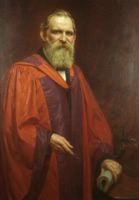 who proposed what came to be called the Ordovician period (505 to 438 million years old) of geologic strata. Lapworth is famous for his work with marine fossils called graptolites.
By fastidiously collecting the tiny, colonial sea creatures, he figured out the original order of layered rocks that had been faulted and folded in England's Southern Uplands. This method of correlating rocks with graptolites became a model for similar research throughout the world.
In 1879, Lapworth proposed a new classification of Lower Paleozoic rocks with the Ordovician, between the redefined Cambrian and Silurian periods. The name comes from an ancient Welsh tribe, the Ordovices.
Lapworth (Sept. 30, 1842 - March 13, 1920) was an English geologist
 who proposed what came to be called the Ordovician period (505 to 438 million years old) of geologic strata. Lapworth is famous for his work with marine fossils called graptolites.
By fastidiously collecting the tiny, colonial sea creatures, he figured out the original order of layered rocks that had been faulted and folded in England's Southern Uplands. This method of correlating rocks with graptolites became a model for similar research throughout the world.
In 1879, Lapworth proposed a new classification of Lower Paleozoic rocks with the Ordovician, between the redefined Cambrian and Silurian periods. The name comes from an ancient Welsh tribe, the Ordovices.
Friday, September 28, 2012
ROM Dino Comic
Did you know that the Royal Ontario Museum did a comic book to go with their excellent new dinosaur show, "Ultimate Dinosaurs"? And that it was illustrated by Gabriel Morrissette with colours by Bernie Mireault? Me either! Bernie kindly sent me this image:
 And speaking of Bernie, he has a great new book out, "To Get Her" that you can buy HERE (I did!).
 You may know Bernie from his terrific comic, The Jam, and well as being the creator of Dr. Robot (why is this not a TV series!).
 Bernie also recently posted a thoughtful article about his experience at the En Masse table during the most recent Montreal Comic Con.



Sunday, August 12, 2012

Saturday, August 11, 2012
Died This Day: Lorenz Oken

In Die Zeugung, he discussed “the infusoria”—elementary units of living organisms—into which all flesh can be broken down. Higher animals, he proposed, consisted of constituent animalcules. Entities, whether plants or animals, became organisms by the fusion of these primal animals. Those elements lose all individuality and create a higher unity. From Today In Science History
More here
Monday, July 30, 2012
Tuesday, May 29, 2012
Ichthyostega Walks The Walk
Three-dimensional limb joint mobility in the early tetrapod Ichthyostega. 2012. S. Pierce, et al. Nature, published online May, 23.
 Abstract: The origin of tetrapods and the transition from swimming to walking was a pivotal step in the evolution and diversification of terrestrial vertebrates. During this time, modifications of the limbs—particularly the specialization of joints and the structures that guide their motions—fundamentally changed the ways in which early tetrapods could move. Nonetheless, little is known about the functional consequences of limb anatomy in early tetrapods and how that anatomy influenced locomotion capabilities at this very critical stage in vertebrate evolution.
Here we present a three-dimensional reconstruction of the iconic Devonian tetrapod Ichthyostega and a quantitative and comparative analysis of limb mobility in this early tetrapod. We show that Ichthyostega could not have employed typical tetrapod locomotory behaviours, such as lateral sequence walking. In particular, it lacked the necessary rotary motions in its limbs to push the body off the ground and move the limbs in an alternating sequence.
Given that long-axis rotation was present in the fins of tetrapodomorph fishes, it seems that either early tetrapods evolved through an initial stage of restricted shoulder and hip joint mobility or that Ichthyostega was unique in this respect. We conclude that early tetrapods with the skeletal morphology and limb mobility of Ichthyostega were unlikely to have made some of the recently described Middle Devonian trackways.

Here we present a three-dimensional reconstruction of the iconic Devonian tetrapod Ichthyostega and a quantitative and comparative analysis of limb mobility in this early tetrapod. We show that Ichthyostega could not have employed typical tetrapod locomotory behaviours, such as lateral sequence walking. In particular, it lacked the necessary rotary motions in its limbs to push the body off the ground and move the limbs in an alternating sequence.
Given that long-axis rotation was present in the fins of tetrapodomorph fishes, it seems that either early tetrapods evolved through an initial stage of restricted shoulder and hip joint mobility or that Ichthyostega was unique in this respect. We conclude that early tetrapods with the skeletal morphology and limb mobility of Ichthyostega were unlikely to have made some of the recently described Middle Devonian trackways.
Monday, May 28, 2012
Extinct

Bob Rich won the 2012 Rueben Award for Newspaper Illustration at the National Cartoonist Society's 66th Annual Reuben Awards ceremony this past weekend.
Born This Day: Louis Agassiz
(Jean) Louis (Rodolphe) Agassiz (May 28, 1807 - Dec. 14, 1873) was a Swiss-born U.S. naturalist, geologist, and teacher who made revolutionary contributions to the study of natural science with landmark work on glacier activity and extinct fishes. Agassiz began his work in Europe, having studied at the University of Munich and then as chair in natural history in Neuchatel in Switzerland. While there he published his landmark multi-volume description and classification of fossil fish.
In 1846 Agassiz came to the U.S. to lecture before Boston's Lowell Institute. Offered a professorship of Zoology and Geology at Harvard in 1848, he decided to stay, becoming a citizen in 1861. His innovative teaching methods altered the character of natural science education in the U.S. Link
More info HERE

In 1846 Agassiz came to the U.S. to lecture before Boston's Lowell Institute. Offered a professorship of Zoology and Geology at Harvard in 1848, he decided to stay, becoming a citizen in 1861. His innovative teaching methods altered the character of natural science education in the U.S. Link
More info HERE
Sunday, May 27, 2012
Book Review: Across Atlantic Ice: The Origin of America’s Clovis Culture by Dennis J. Stanford and Bruce A. Bradley

The Palaeoblog occasionally gets sent books to review which we get around to doing eventually. This one, dealing with the origins of the first Americans, falls more under archaeology than palaeontology, so I've asked the Cleveland Museum of Natural History's John Otis Hower Chair of Archaeology, Dr. Brian Redmond, to review this for us. Thanks Brian!Who were the first Americans? When did they come to the New World and by what routes? These questions have maintained a featured place in archaeological inquiry since the era of Thomas Jefferson, the recognized father of American Archaeology. This much-awaited book by two leading Paleoindian scholars argues for an origin, not from northeastern Asia as conventionally proposed, but across the north Atlantic from Iberia during the late glacial maximum, some 20,000 years ago. Using detailed, but not overly technical, presentations of late Pleistocene stone tool assemblages from Siberia to Chesapeake Bay, the authors state their case for the origin of the classic Clovis tool kit in eastern North America from Upper Paleolithic, Solutrean, migrants from Europe. Bradley uses his substantial experience as a stone tool analyst and flint-knapper to point out the intriguing similarities between bifacially-flaked spear and knife points found on both sides of the Atlantic. But most previous scholars have judged such a connection untenable due to the three to twelve thousand years that separated Solutrean from Clovis hunters. To fill the gap, Stanford and Bradley cite a growing body of archaeological evidence for a “pre-Clovis” occupation of eastern North America as early as 25,000 years ago. This overview of the evidence is highly informative, well-illustrated, and brings to print the newest data for Clovis progenitors in the mid-Atlantic region. The authors even make a good case that Solutrean seal hunters from Europe could have migrated north and west along the north Atlantic ice front and ended up in North America. Much less convincing is their claim for real historical affinity between Solutrean, pre-Clovis, and Clovis. In the end, the still sketchy pre-Clovis data base severely weakens the argument. But the book remains a fascinating and informative read for all students of the earliest American history.
Eoabelisaurus mefi, New Theropod from Patagonia
A Middle Jurassic abelisaurid from Patagonia and the early diversification of theropod dinosaurs. 2012. D. Pol and O. Rauhut. Royal Society B: Biological Sciences. Published online before print May 23.

Abstract: Abelisaurids are a clade of large, bizarre predatory dinosaurs, most notable for their high, short skulls and extremely reduced forelimbs. They were common in Gondwana during the Cretaceous, but exceedingly rare in the Northern Hemisphere. The oldest definitive abelisaurids so far come from the late Early Cretaceous of South America and Africa, and the early evolutionary history of the clade is still poorly known.
Here, we report a new abelisaurid from the Middle Jurassic of Patagonia, Eoabelisaurus mefi gen. et sp. nov., which predates the so far oldest known secure member of this lineage by more than 40 Myr. The almost complete skeleton reveals the earliest evolutionary stages of the distinctive features of abelisaurids, such as the modification of the forelimb, which started with a reduction of the distal elements.
The find underlines the explosive radiation of theropod dinosaurs in the Middle Jurassic and indicates an unexpected diversity of ceratosaurs at that time. The apparent endemism of abelisauroids to southern Gondwana during Pangean times might be due to the presence of a large, central Gondwanan desert. This indicates that, apart from continent-scale geography, aspects such as regional geography and climate are important to reconstruct the biogeographical history of Mesozoic vertebrates.

Abstract: Abelisaurids are a clade of large, bizarre predatory dinosaurs, most notable for their high, short skulls and extremely reduced forelimbs. They were common in Gondwana during the Cretaceous, but exceedingly rare in the Northern Hemisphere. The oldest definitive abelisaurids so far come from the late Early Cretaceous of South America and Africa, and the early evolutionary history of the clade is still poorly known.
Here, we report a new abelisaurid from the Middle Jurassic of Patagonia, Eoabelisaurus mefi gen. et sp. nov., which predates the so far oldest known secure member of this lineage by more than 40 Myr. The almost complete skeleton reveals the earliest evolutionary stages of the distinctive features of abelisaurids, such as the modification of the forelimb, which started with a reduction of the distal elements.
The find underlines the explosive radiation of theropod dinosaurs in the Middle Jurassic and indicates an unexpected diversity of ceratosaurs at that time. The apparent endemism of abelisauroids to southern Gondwana during Pangean times might be due to the presence of a large, central Gondwanan desert. This indicates that, apart from continent-scale geography, aspects such as regional geography and climate are important to reconstruct the biogeographical history of Mesozoic vertebrates.
Saturday, May 26, 2012
Doug Henderson Prints and Originals for Sale

After a seemingly long public absence, Doug Henderson is now on Facebook and selling signed prints and original art through Ebay (earthistory2ktz). You can probably also find him on either site by searching his name.
Friday, April 27, 2012
Opened This Day: American Museum of Natural History
From Today In Scince History:
On this day in 1871, the American Museum of Natural History opened to the public in New York City. The Museum’s collection went on view for the first time in the Central Park Arsenal, the Museum’s original home, on the eastern side of Central Park.
The museum began from the efforts of Albert Smith Bickmore, one-time student of Harvard zoologist Louis Agassiz, who was successful in his proposal to create a natural history museum in New York City, with the support of Theodore Roosevelt and J. Pierpont Morgan. The Governor of New York signed a bill officially creating the American Museum of Natural History on April 6, 1869.

On this day in 1871, the American Museum of Natural History opened to the public in New York City. The Museum’s collection went on view for the first time in the Central Park Arsenal, the Museum’s original home, on the eastern side of Central Park.
The museum began from the efforts of Albert Smith Bickmore, one-time student of Harvard zoologist Louis Agassiz, who was successful in his proposal to create a natural history museum in New York City, with the support of Theodore Roosevelt and J. Pierpont Morgan. The Governor of New York signed a bill officially creating the American Museum of Natural History on April 6, 1869.
Thursday, April 26, 2012
Philoventator curriei, A New Troodontid from China
The taxonomy of the troodontid IVPP V 10597 reconsidered. 2012. Xu Xing, et al. Vertebrata PalAsiatica 50: 140-150.
 Abstract: The partial troodontid hindlimb IVPP V 10597 was originally described as a juvenile Saurornithoides mongoliensis. The present study reconsiders the taxonomic placement of this interesting specimen, given the significant advances in understanding of the Troodontidae that have taken place since it was first described. Morphological comparisons and numerical phylogenetic analyses indicate that V 10597 is more closely related to the sympatric linhevenator tani than to Saurornithoides mongoliensis raising the possibility that V 10597 might be a juvenile L. tani. However, V 10597 differs significantly from other troodontids, including L. tani in numerous hindlimb features and particularly in the proportions of various hindlimb elements. These differences are likely to be taxonomic, and suggest that V 10597 represents a new troodontid. Furthermore. histological analysis indicates that V 10597 is unlikely to be a juvenile of L. tani or any other large troodontid. Based on the available morphological and histological information. We propose the new taxon, Philovenator curriei gen. et sp. nov., based on V 10597.

Saturday, April 21, 2012



Friday, April 20, 2012
Born This Day: Willi Henning
From the Willi Hennig Society :
Hennig (April 20, 1913 – Nov. 5, 1976) is best known for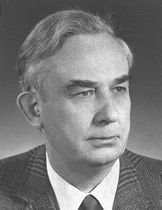 developing phylogenetic systematics, a coherent theory of the investigation and presentation of the relations that exist among species. Contrary to the position generally held during his time, Hennig viewed historical inference as a strictly logical and scientific endeavor. He first summarized his ideas in 1950 in German which became more widely known with the publication of the English revision, Phylogenetic Systematics (Hennig, 1966).

image.
Major Hennigian principles are:
Hennig (April 20, 1913 – Nov. 5, 1976) is best known for
 developing phylogenetic systematics, a coherent theory of the investigation and presentation of the relations that exist among species. Contrary to the position generally held during his time, Hennig viewed historical inference as a strictly logical and scientific endeavor. He first summarized his ideas in 1950 in German which became more widely known with the publication of the English revision, Phylogenetic Systematics (Hennig, 1966).
image.

Major Hennigian principles are:
1. Relationships among species are to be interpreted strictly genealogically, as sister-lineages, as clade relations. Empirically, a phylogenetic hypothesis may be determined.More info about Henning HERE. photo.
2. Synapomorphies provide the only evidence for identifying relative recency of common ancestry. Synapomorphies are understood to be the shared-derived (evolved, modified) features of organisms.
3. Maximum conformity to evidence is sought (his auxiliary principle). Choice among competing cladistic propositions (cladograms) is decided on the basis of the greatest amount of evidence, the largest number of synapomorphies explainable as homologues.
4. Whenever possible, taxonomy must be logically consistent with the inferred pattern of historical relationships. The rule of monophyly is to be followed, thereby each clade can have its unique place in the hierarchy of taxonomic names.

Born This Day: Sir William Logan
From Today in Science History:
Logan (April 20, 1798 – June 22, 1875) was a Canadian geologist dubbed the "Father of Canadian Geology." He began is career making geologic maps of coalfields in Wales, noting the relationship between the underlying clay layers and fossil tree roots with local coal beds. This substantiated the theory that coal beds are formed in place.
When he began as director (1842-69) of the new Geological Survey of Canada, its geology was virtually unknown. He produced the monumental Report on the Geology of Canada (1863) which recorded 20 years of research, fieldwork, plotting maps, preparing reports, and examining fossil and mineral specimens.
Image and more info from Natural Resources Canada. For a more colourful summary of the man and his life go HERE.
Logan (April 20, 1798 – June 22, 1875) was a Canadian geologist dubbed the "Father of Canadian Geology."
 He began is career making geologic maps of coalfields in Wales, noting the relationship between the underlying clay layers and fossil tree roots with local coal beds. This substantiated the theory that coal beds are formed in place.
When he began as director (1842-69) of the new Geological Survey of Canada, its geology was virtually unknown. He produced the monumental Report on the Geology of Canada (1863) which recorded 20 years of research, fieldwork, plotting maps, preparing reports, and examining fossil and mineral specimens.
Image and more info from Natural Resources Canada. For a more colourful summary of the man and his life go HERE.
Subscribe to:
Posts (Atom)