Wednesday, February 29, 2012

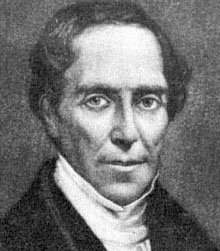
Born This Day: Karl Ernst von Baer

Von Baer (Feb 29, 1792 - Nov 28, 1876) was a Prussian-Estonian embryologist who discovered the mammalian egg (1827) and the notochord. He established the new science of comparative embryology alongside comparative anatomy with the publication of two landmark volumes (in 1828 and 1837) covering the range of existing knowledge of the prebirth developments of vertebrates.

He showed that mammalian eggs were not the follicles of the ovary but microscopic particles inside the follicles. He described the development of the embryo from layers of tissue, which he called germ layers, and demonstrated similarities in the embryos of different species of vertebrates.

From Today In Science History

Tuesday, February 28, 2012

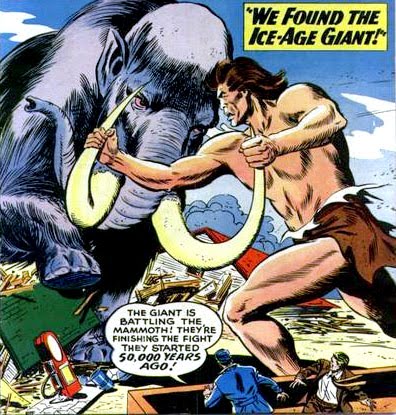
Died This Day: Cecil Kellaway

The twice Oscar-nominated Kellaway (Aug. 22, 1893 – Feb. 28, 1973) played Prof. Thurgood Elson in the classic Ray Harryhausen film, “The Beast from 20,000 Fathoms”.


Elson was the palaeontologist who went down in the diving bell looking for the beast, but who did not make it back up.


CLICK TO ENLARGE

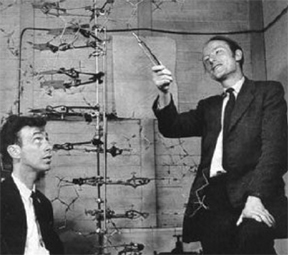
Discovered This Day: The Structure of DNA

On this day in 1953 Francis Crick (right)and J. Watson (left) discovered the structure of the DNA molecule.

Molecular Visualizations of DNA:

Sifrhippus sandae, The Shrinking Earliest Horse

Evolution of the Earliest Horses Driven by Climate Change in the Paleocene-Eocene Thermal Maximum. 2012. R. Secord, et al. Science 335: 959-962.

The earliest known horse, Sifrhippus sandae, first appeared in the forests of North America more than 50 million years ago. It weighed in at around 12 pounds--and it was destined to get much smaller over the ensuing millennia.

Sifrhippus lived during the Paleocene-Eocene Thermal Maximum, a 175,000-year interval of time some 56 million years ago in which average global temperatures rose by about 10 degrees Fahrenheit. About a third of mammal species responded with a significant reduction in size during this time, some by as much as one-half.

Sifrhippus shrank by about 30 percent, to the size of a small house cat--about 8.5 pounds--in the first 130,000 years, then rebounded to about 15 pounds in the final 45,000 years. Secord says that the finding raises important questions about how plants and animals will respond to rapid change in the not-too-distant future.

Ornithologists, Secord says, have already started to notice that there may be a decrease in body size among birds. link

Friday, February 24, 2012

Published This Day: Descent of Man

On this day in 1871, Charles Darwin's book "Descent of Man, and Selection in Relation to Sex" was published in London.

Wednesday, February 22, 2012

Died This Day: Sir Charles Lyell


Nov. 14, 1797 - Feb. 22, 1875
From Minnesota State University at Mankato comes this excellent bio on Lyell:

Sir Charles Lyell attended Oxford University at age 19. Lyell's father was an active naturalist. Lyell had access to an elaborate library including subjects such as Geology.

When Lyell was at Oxford, his interests were mathematics, classics, law and geology. He attended a lecture by William Buckland that triggered his enthusiasm for geology. Lyell originally started his career as a lawyer, but later turned to geology. He became an author of The Geological Evidence of the Antiquity of Man in 1863 and Principles of Geology. Lyell argued in this book that, at the time, presently observable geological processes were adequate to explain geological history. He thought the action of the rain, sea, volcanoes and earthquakes explained the geological history of more ancient times.

Lyell rebelled against the prevailing theories of geology of the time. He thought the theories were biased, based on the interpretation of Genesis. He thought it would be more practical to exclude sudden geological catastrophes to vouch for fossil remains of extinct species and believed it was necessary to create a vast time scale for Earth's history. This concept was called Uniformitarianism. The second edition of Principles of Geology introduced new ideas regarding metamorphic rocks. It described rock changes due to high temperature in sedimentary rocks adjacent to igneous rocks. His third volume dealt with paleontology and stratigraphy. Lyell stressed that the antiquity of human species was far beyond the accepted theories of that time.

Charles Darwin became his dear friend and correspondent. Darwin is quoted saying, "The greatest merit of the Principles was that it altered the whole tone of one's mind, and therefore that, when seeing a thing never seen by Lyell, one yet saw it through his eyes."

Image from King’s College London.

Tuesday, February 21, 2012

The Origin of Photosynthesis

Cyanophora paradoxa Genome Elucidates Origin of Photosynthesis in Algae and Plants. 2012. D.C. Price, et al. Science 335: 843-847.

Atmospheric oxygen really took off on our planet about 2.4 billion years ago during the Great Oxygenation Event. At this key juncture of our planet’s evolution, species had either to learn to cope with this poison (O2)that was produced by photosynthesizing cyanobacteria or they went extinct. It now seems strange to think that the gas that sustains much of modern life had such a distasteful beginning.


So how and when did the ability to produce oxygen by harnessing sunlight enter the eukaryotic domain, that includes humans, plants, and most recognizable, multicellular life forms? One of the fundamental steps in the evolution of our planet was the development of photosynthesis in eukaryotes through the process of endosymbiosis.

This crucial step forward occurred about 1.6 billion years ago when a single-celled protist captured and retained a formerly free-living cyanobacterium. This process, termed primary endosymbiosis, gave rise to the plastid, which is the specialized compartment where photosynthesis takes place in cells.

Basic understanding of much of the subsequent evolution of eukaryotes, including the rise of plants and animals, is emerging from the sequencing of the Cyanophora paradoxa genome, a function-rich species that retains much of the ancestral gene diversity shared by algae and plants. New research provides conclusive evidence that all plastids trace their origin to a single primary endosymbiosis. link

Wednesday, February 08, 2012

Entire Genome of Extinct Human Decoded From Fossil

The Max Planck Institute for Evolutionary Anthropology, in Leipzig, Germany, has completed the genome sequence of a Denisovan, a representative of an Asian group of extinct humans related to Neandertals.
In 2010, Svante Pääbo and his colleagues presented a draft version of the genome from a small fragment of a human finger bone discovered in Denisova Cave in southern Siberia. The DNA sequences showed that this individual came from a previously unknown group of extinct humans that have become known as Denisovans. Together with their sister group the Neandertals, Denisovans are the closest extinct relatives of currently living humans.

The Leipzig team has now developed sensitive novel techniques which have allowed them to sequence every position in the Denisovan genome about 30 times over, using DNA extracted from less than 10 milligrams of the finger bone. The now-completed version of the genome allows even the small differences between the copies of genes that this individual inherited from its mother and father to be distinguished. This Wednesday the Leipzig group makes the entire Denisovan genome sequence available for the scientific community over the internet.

The genome represents the first high-coverage, complete genome sequence of an archaic human group - a leap in the study of extinct forms of humans. “We hope that biologists will be able to use this genome to discover genetic changes that were important for the development of modern human culture and technology, and enabled modern humans to leave Africa and rapidly spread around the world, starting around 100,000 years ago” says Pääbo. The genome is also expected to reveal new aspects of the history of Denisovans and Neandertals.

The group plans to present a paper describing the genome later this year. “But we want to make it freely available to everybody already now” says Pääbo. “We believe that many scientists will find it useful in their research”.

The genome is available at www.eva.mpg.de/denisova and as a Public Data Set via Amazon Web Services (AWS): http://aws.amazon.com/datasets/2357.

Friday, February 03, 2012

Born This Day: Gideon Mantell

Mantell (Feb. 3, 1790 – Nov. 10, 1852), a physician of Lewes in Sussex in southern England, had for years been collecting fossils in the sandstone of Tilgate forest, and he had discovered bones belonging to three extinct species: a giant crocodile, a plesiosaur, and Buckland's Megalosaurus. But in 1822 he found several teeth that "possessed characters so remarkable" that they had to have come from a fourth and distinct species of Saurian. After consulting numerous experts, Mantell finally recognized that the teeth bore an uncanny resemblance to the teeth of the living iguana, except that they were twenty times larger.
In this paper, the second published description of a dinosaur, he concluded that he had found the teeth of a giant lizard, which he named Iguanodon, or "Iguana-tooth."

Mantell illustrated his announcement with a single lithographed plate. Mantell included at the bottom of the plate a drawing of a recent iguana jaw, which is shown four times natural size, and for further comparison, he added views of the inner and outer surface of a single iguana tooth, "greatly magnified."

The traditional story that Mantell's wife found the first teeth in 1822, while the doctor was visiting a patient, appears, alas, to be unfounded.

Info and plate from HERE.

Died This Day: Ernst Mayr


Any student of biology, or anyone with an interest in the natural world, will be familiar with Ernst Mayr who passed away on February 3rd, 2005 in Bedford, Mass. Born in Kempton, Germany he joined the American Museum of Natural History as a curator in 1931. In 1953 he left the museum to work at Harvard University where he stayed until his retirement in 1975.

While working on the problem of speciation in the birds of New Guinea, Mayr realized that the multitude of species and and subspecies that he saw could best be explained as being a snapshot of evolution in action. He suggested that new species could arise when the range of one species was fractured long enough for members in different parts of the range to evolve characters that would not allow individuals to reproduce when they were brought back together again. This lead to him developing the “biological species concept” in which species are defined as populations of interbreeding organisms rather than just a collection of characters. This idea, along with his theory of “allopatric speciation” was published in his book “Systematics and the Origin of the Species” (1942) and later contributed to the “Punctuated Equilibrium” theory of Niles Eldredge and Stephen Jay Gould.

Ernst Mayr was himself inspired by the work of geneticist Theodosius Dobzhansky on the fruit fly Drosophila melanogaster and his book “Genetics and the Origin of the Species” (1937). These two men, together with the paleontologist George Gaylord Simpson, combined the sciences of genetics, zoology and paleontology into what is now known as “the new synthesis” that provides the modern experimental underpinning to the concepts that Charles Darwin presented in his book, “On the Origin of the Species” .

For anyone interested in learning more about modern evolutionary theory I’d recommend Mayr’s recent book “What Evolution Is” (2002). It’s written in an engaging and readable format from the perspective of someone who’s thought about evolution all his life.

Monday, January 30, 2012

Reed Richards - Palaeontologist!


FF#10 © Marvel Comics

Published This Day: Darwin's Other Book

From Today In Science History:

In 1868, Charles Darwin's book - Variation of Animals and Plants under Domestication - was published. He was 58. It is probably the second in importance of all his works. This was a follow-up work, written in response to criticisms that his theory of evolution was unsubstantiated. Darwin here supports his views via analysis of various aspects of plant and animal life, including an inventory of varieties and their physical and behavioral characteristics, and an investigation of the impact of a species' surrounding environment and the effect of both natural and forced changes in this environment.

Saturday, January 28, 2012

Born This Day: Eugene Dubois

Eugene Dubois (Jan. 28, 1858-Dec. 16, 1940) joined the Dutch Army as a medical officer, and used spare time from his medical duties to search for fossils, first in Sumatra and then in Java. He searched on the banks of the Solo River, with two assigned engineers and a crew of convict labourers to help him. In September 1890, his workers found a human, or human-like, fossil at Koedoeng Broeboes. This consisted of the right side of the chin of a lower jaw and three attached teeth. In August 1891 he found a primate molar tooth.

Two months later and one meter away was found an intact skullcap, the fossil which would be known as Java Man. In August 1892, a third primate fossil, an almost complete left thigh bone, was found between 10 and 15 meters away from the skullcap.

In 1894 Dubois published a description of his fossils, naming them Pithecanthropus erectus (now Home erectus), describing it as neither ape nor human, but something intermediate. In 1895 he returned to Europe to promote the fossil and his interpretation. A few scientists enthusiastically endorsed Dubois' work, but most disagreed with his interpretation. Many scientists pointed out similarities between the Java Man skullcap and Neandertal fossils.

Around 1900 Dubois ceased to discuss Java Man, and hid the fossils in his home while he moved on to other research topics. geology and paleontology. It was not until 1923 that Dubois, under pressure from scientists, once again allowed access to the Java Man fossils. That and the discovery of similar fossils caused it to once again become a topic of debate.


Skull cap (Trinil 2, holotype of Home erectus) from HERE.

Friday, January 27, 2012

Died This Day: Adam Sedgwick

From Today In Science History:

Sedgwick (March 22, 1785 - January 27, 1873) was an English geologist who first applied the name Cambrian to the geologic period of time, now dated at 570 to 505 million years ago. In 1818 he became Woodwardian Professor of Geology at Cambridge, holding a chair that had been endowed ninety years before by the natural historian John Woodward.

He lacked formal training in geology, but he quickly became an active researcher in geology and paleontology. Many years after Sedgwick's death, the geological museum at Cambridge was renamed the Sedgwick Museum of Geology in his honor. The museum is now part of the Department of Earth Sciences at Cambridge University

New Theory Explains Life, Universe, Everything! Really!

Theory of the Origin, Evolution, and Nature of Life. 2012.E. D. Andrulis. Life 2012: 1-105.

The Earth is alive, asserts a revolutionary scientific theory of life emerging from Case Western Reserve University School of Medicine. The trans-disciplinary theory demonstrates that purportedly inanimate, non-living objects—for example, planets, water, proteins, and DNA—are animate, that is, alive.
The theory explains not only the evolutionary emergence of life on earth and in the universe but also the structure and function of existing cells and biospheres.

In addition to resolving long-standing paradoxes and puzzles in chemistry and biology, Dr. Andrulis’ theory unifies quantum and celestial mechanics. His unorthodox solution to this quintessential problem in physics differs from mainstream approaches, like string theory, as it is simple, non-mathematical, and experimentally and experientially verifiable. As such, the new portrait of quantum gravity is radical.

The basic idea of Dr. Andrulis’ framework is that all physical reality can be modeled by a single geometric entity with life-like characteristics: the gyre. The so-called “gyromodel” depicts objects—particles, atoms, chemicals, molecules, and cells—as quantized packets of energy and matter that cycle between excited and ground states around a singularity, the gyromodel’s center. A singularity is itself modeled as a gyre, wholly compatible with the thermodynamic and fractal nature of life.

By fitting the gyromodel to facts accumulated over scientific history, Dr. Andrulis confirms the proposed existence of eight laws of nature. One of these, the natural law of unity, decrees that the living cell and any part of the visible universe are irreducible. This law formally establishes that there is one physical reality.
Another natural law dictates that the atomic and cosmic realms abide by identical organizational constraints. Simply put, atoms in the human body and solar systems in the universe move and behave in the exact same manner.

Dr. Andrulis has used his theory to successfully predict and identify a hidden signature of RNA biogenesis in his laboratory at Case Western Reserve University School of Medicine. He is now applying the gyromodel to unify and explain the evolution and development of human beings. Link

Thursday, January 26, 2012

American Mastodon Stop-Motion Trailer

Brad Ricca, a SAGES Fellow at Case Western Reserve University in Cleveland who teaches classes on comic books and biography, is earning accolades for a more traditional form of literature: poetry.

Among those accolades is the honor of having Garrison Keillor personally select his poem “The Beautiful Sandwich” to read Thursday, Jan. 26, on his national NPR show The Writer’s Almanac.

His first book of verse, American Mastodon, won the St. Lawrence Book Award. The prize is awarded yearly to an unpublished collection of poems or short stories, which is then published by Black Lawrence Press
.
Ricca is well acquainted with superheroes both past and present, but it was another larger-than-life figure that inspired his book’s title. American Mastodon refers to a grand, shaggy mastodon with 15-foot curving tusks at the Cleveland Museum of Natural History. The prehistoric creature loomed large for Ricca, who visited the museum both as a child and as an adult.

His reaction, he said, was: “Here’s this massive animal that once freely roamed Earth and now doesn’t move an inch in the museum.” Link to The Daily

Dig this great retro-60's stop-motion trailer for the book:

Trailer Credits: Animagination by Stu Howe (UK); Poem by Brad Ricca (USA)

Twittering Palaeontologists


Follow Dr. David Evans from the Royal Ontario Museum/Univ. of Toronto on Twitter Here.

Born This Day: Roy Chapman Andrews


Photo from Parade of Life Through The Ages, by Charles Knight, Nat. Geo., Feb. 1942.

From the American Museum of Natural History web site:

Adventurer, administrator, and Museum promoterAndrews (Jan. 26, 1884 – March 11, 1960) spent his entire career at the American Museum of Natural History, where he rose through the ranks from departmental assistant, to expedition organizer, to Museum director.

He became world famous as leader of the Central Asiatic Expeditions, a series of expeditions to Mongolia that collected, among other things, dinosaur eggs. Although on these expeditions, Andrews himself found few fossils, and during his career he was not known as an influential scientist, he instead filled the role of promoter, creating immense excitement and successfully advancing the research and exhibition goals of the museum.

Learn about the Roy Chapman Andrews Society HERE.

Wednesday, January 25, 2012

Palaeo Noir: Archaeopteryx

New evidence on the colour and nature of the isolated Archaeopteryx feather. 2012. R.M. Carney, et al. Nature Communications 3.


Lead author's tattoo of his findings image
Abstract: Archaeopteryx has been regarded as an icon of evolution ever since its discovery from the Late Jurassic limestone deposits of Solnhofen, Germany in 1861. Here we report the first evidence of colour from Archaeopteryx based on fossilized colour-imparting melanosomes discovered in this isolated feather specimen.

Using a phylogenetically diverse database of extant bird feathers, statistical analysis of melanosome morphology predicts that the original colour of this Archaeopteryx feather was black, with 95% probability. Furthermore, reexamination of the feather's morphology leads us to interpret it as an upper major primary covert, contrary to previous interpretations.

Additional findings reveal that the specimen is preserved as an organosulphur residue, and that barbule microstructure identical to that of modern bird feathers had evolved as early as the Jurassic. As in extant birds, the extensive melanization would have provided structural advantages to the Archaeopteryx wing feather during this early evolutionary stage of dinosaur flight.

Massospondylus Nests

Oldest known dinosaurian nesting site and reproductive biology of the Early Jurassic sauropodomorph Massospondylus. 2012. R. Reisz et al. PNAS.

Thanks to the PR folks for providing the smallest possible version of a great illo by Julius Csotonyi
Abstract [edit]: The extensive Early Jurassic continental strata of southern Africa have yielded an exceptional record of dinosaurs that includes scores of partial to complete skeletons of the sauropodomorph Massospondylus, ranging from embryos to large adults.

In 1976 an incomplete egg clutch including in ovo embryos of this dinosaur, the oldest known example in the fossil record, was collected from a road-cut talus. Recent work started in 2006 has yielded multiple in situ egg clutches, documenting the oldest known dinosaurian nesting site, predating other similar sites by more than 100 million years.

The presence of numerous clutches of eggs, some of which contain embryonic remains, in at least four distinct horizons within a small area, provides the earliest known evidence of complex reproductive behavior including site fidelity and colonial nesting in a terrestrial vertebrate.

A temporally calibrated optimization of dinosaurian reproductive biology not only demonstrates the primary significance of the Massospondylus nesting site, but also provides additional insights into the initial stages of the evolutionary history of dinosaurs, including evidence that deposition of eggs in a tightly organized single layer in a nest evolved independently from brooding.