Thursday, October 23, 2014

Deinocheirus Decoded

Resolving the long-standing enigmas of a giant ornithomimosaur Deinocheirus mirificus. 2014. Lee, Y.-N., et al. Science.

a, MPC-D 100/127. b, MPC-D 100/128. c, Composite reconstruction of MPC-D 100/127 with a simple proportional enlargement of MPC-D 100/128.
Abstract: The holotype of Deinocheirus mirificus was collected by the 1965 Polish–Mongolian Palaeontological Expedition at Altan Uul III in the southern Gobi of Mongolia. Because the holotype consists mostly of giant forelimbs (2.4 m in length) with scapulocoracoids, for almost 50 years Deinocheirus has remained one of the most mysterious dinosaurs. The mosaic of ornithomimosaur and non-ornithomimosaur characters in the holotype has made it difficult to resolve the phylogenetic status of Deinocheirus.

Here we describe two new specimens of Deinocheirus that were discovered in the Nemegt Formation of Altan Uul IV in 2006 and Bugiin Tsav in 2009. The Bugiin Tsav specimen (MPC-D 100/127) includes a left forelimb clearly identifiable as Deinocheirus and is 6% longer than the holotype. The Altan Uul IV specimen (MPC-D 100/128) is approximately 74% the size of MPC-D 100/127.

Cladistic analysis indicates that Deinocheirus is the largest member of the Ornithomimosauria; however, it has many unique skeletal features unknown in other ornithomimosaurs, indicating that Deinocheirus was a heavily built, non-cursorial animal with an elongate snout, a deep jaw, tall neural spines, a pygostyle, a U-shaped furcula, an expanded pelvis for strong muscle attachments, a relatively short hind limb and broad-tipped pedal unguals.

Ecomorphological features in the skull, more than a thousand gastroliths, and stomach contents (fish remains) suggest that Deinocheirus was a megaomnivore that lived in mesic environments.

Wednesday, October 22, 2014

Died This Day: Sir Roderick Impey Murchison

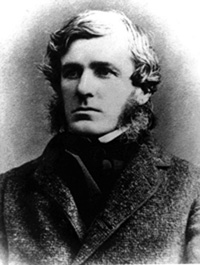
Murchison (Feb. 19, 1792 - Oct. 22, 1871) was a Scottish geologist who first differentiated the Silurian strata in the geologic sequence of Early Paleozoic strata (408-540 million years old). He believed in fossils as primary criteria. In 1831, he began researching the previously geologically unknown graywacke rocks of the Lower Paleozoic, found underlying the Old Red Sandstone in parts of Wales, which culminated in his major work the Silurian System (1839).


An eurypterid, a prehistoric sea scorpion from PBS.org.
Murchison named the Silurian after an ancient British tribe that inhabited South Wales. He established the Devonian working with Adam Sedgwick (1839). He named the Permian (1841) after the Perm province in Russia where he made a geological survey in 1840-45. link

Tuesday, October 21, 2014

Bob Bakker: Kung Fu Stegosaurs

Stegosaurian Martial Arts: A Jurassic Carnivore Stabbed by a Tail Spike, Evidence for Dynamic Interactions between a Live Herbivore and a Live Predator. Robert Bakker, et al. GSA, 2014


Stegosaurs might be portrayed as lumbering plant eaters, but they were lethal fighters when necessary, according to paleontologists who have uncovered new evidence of a casualty of stegosaurian combat. The evidence is a fatal stab wound in the pubis bone of a predatory allosaur. The wound – in the conical shape of a stegosaur tail spike – would have required great dexterity to inflict and shows clear signs of having cut short the allosaur's life.

“A massive infection ate away a baseball-sized sector of the bone,” reports Houston Museum of Natural Science paleontologist Robert Bakker and his colleagues, who present a poster on the discovery on Tuesday at the meeting of the Geological Society of America in Vancouver, B.C.

The fighting style and skill of stegosaurs should come as no surprise to anyone familiar with the dinosaur battle scene in <a href=http://palaeoblog.blogspot.ca/2012/11/fantasia-premieres-1940.html>the 1940 Disney animated film Fantasia</a>, said Bakker. That segment of the movie shows a beefed up allosaur attacking a stegosaur. The stegosaur delivers a number of well aimed tail blows at the predator, but loses the fight. The Fantasia stegosaur tail dexterity appears to be accurate, he said.

Died This Day: John Scopes


Scopes (Oct. 21, 1970 - Aug. 4, 1900) was an American teacher and geologist who was the defendent in the infamous Scopes Monkey Trial. The trial was to challenge the constitutionality of the Butler Act, a Tennesee law signed on March 21, 1925 to prohibit the teaching of evolution in the state's schools.

He took a job at Tennessee high-school in Spring 1924, teaching algebra, chemistry and physics for one year. Then, although he wasn't sure he had actually done any teaching of evolution, at the urging of businessmen wanting publicity for Dayton, Tennessee, he agreed to stand trial in a test case funded by the American Civil Liberties Union.

Although the trial jury voted guilty, on appeal, the verdict was thrown out on a technicality. After the trial Scopes earned a master's degree in geology, and went to work for the Gulf Oil Co., and later United Gas Corp. From here

Friday, October 17, 2014

Born This Day: Julie Adams

.
Julie starred as Kay Lawrence in The Creature From The Black Lagoon (1954). Adams has had a long career in films and TV, recently appearing on 'Lost'.

Got Great Paleo Art?

The Queen of Dinosaur Planet

Prints by Kevin Dart available HERE

Wednesday, October 15, 2014

Tachiraptor admirabilis, early dinosaur from Venezuela

New dinosaur (Theropoda, stem-Averostra) from the earliest Jurassic of the La Quinta formation, Venezuelan Andes. 2014. Langer, M.C., et al. Royal Society Open Science

Tachiraptor, a 1.5-meter-long theropod dinosaur (center) that lived in what is now Venezuela just over 200 million years ago, is a close cousin of dinosaurs that later evolved into multiton meat eaters such as Allosaurus. link

On This Day (1827): Darwin Accepted into Cambridge

In 1827, Charles Darwin was accepted into Christ's College at Cambridge, but did not start until winter term because he needed to catch up on some of his studies. He had entered the University of Edinburgh in 1825 to study medicine, however, Darwin found himself unenthusiastic about his studies.

Disappointing his family, he left Edinburgh without graduating in April 1827. His scholastic achievements at Cambridge were unremarkable, but after graduation, Darwin was recommended by his botany professor to be a naturalist to sail on HM Sloop Beagle. Later he wrote a book of some renown. From Today in Science History

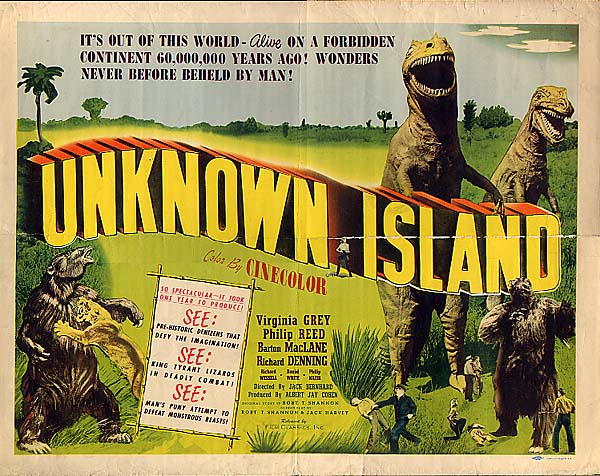
Premiered This Day: Unknown Island

This 1948 film written by Robert T. Shannon and directed by Jack Bernhard features some of the worst ‘man dressed up as a T. rex’ effects ever. Not a bad little story though.

Tuesday, October 14, 2014

Born This Day: Jack Arnold


Jack Arnold (Oct. 14, 1916 - March 17, 1992) directed a number of classic SF films including The Creature From the Black Lagoon, Revenge of the Creature, The Incredible Shrinking Man, and It Came From Outer Space, as well as few not-so-classics (but still much loved) such as Monster on Campus. Throughout the ‘60’s and into the early 80’s he had a successful career as a TV producer and director.

Died This Day: Thomas Davidson

May 17, 1817 – Oct. 14, 1885

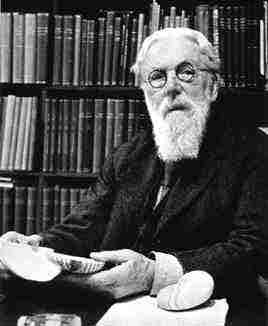
Davison was a Scottish naturalist and paleontologist who became known as an authority on brachiopods. His major work, Monograph of British Fossil Brachiopoda, was published by the Palaeontographical Society. Together with supplements, this comprised six quarto volumes with more than 200 plates drawn on stone by the author. Upon his death, he bequeathed his fine collection of recent and fossil brachiopoda to the British Museum.

Monday, October 13, 2014

Born This Day: Sir John William Dawson

Dawson (Oct. 13, 1820 - Nov. 20, 1899>) was a Canadian geologist who made numerous contributions to paleobotany and extended the knowledge of Canadian geology. Dawson was born and raised in Pictou, Nova Scotia, where the many sandstone and coal formations provided fertile ground for his first scientific explorations, which culminated in the publication of Acadian Geology. He made many important discoveries of fossil life, great and small. These included fossil plants, trackways of lowly invertebrates, footprints, skeletons of reptiles and amphibians, millipedes and the earliest land snails. When the famous geologist Charles Lyell visited coal deposits in Pictou, Dawson acted as his guide.

In 1851, Dawson and Lyell teamed up again to examine the interiors of fossil tree trunks at Joggins, Nova Scotia. They discovered the remains of some of the earliest known reptiles, Hylonomus lyelli, along with other rare fossils, propelling this part of the world into the international spotlight.

Monday, October 06, 2014

Died This Day: George Gaylord Simpson

Simpson (June 16, 1902 - October 6, 1984) is known for his contributions to evolutionary theory and to the understanding of intercontinental migrations of animal species in past geological times. Simpson specialized in early fossil mammals, leading expeditions on four continents and discovering in 1953 the 50-million-year old fossil skulls of dawn horses in Colorado.

Simpson helped develop the modern biological theory of evolution, drawing on paleontology, genetics, ecology, and natural selection to show that evolution occurs as a result of natural selection operating in response to shifting environmental conditions. He spent most of his career as a paleontologist at the American Museum of Natural History. image. From Today In Science History.

Wednesday, October 01, 2014

Died This Day: Louis Leakey


Louis and Mary Leakey

From Today In Science History:

Leakey (Aug 7, 1903 – October 1, 1972), an archaeologist and anthropologist, was born in Kabete, Kenya, of English missionaries parents. Leakey was largely responsible for convincing scientists that Africa, rather than Java or China, was the most significant area to search for evidence of human origins. Leakey led fossil-hunting expeditions to eastern Africa from the 1920's.

He married Mary D. Nicol in 1936 and the couple discovered many important fossils together. In 1964, on an expedition to the Olduvai Gorge in Tanzania, he found fossil remains of, he believed, the earliest member of the genus of human beings. He named the species Homo habilis.

Tuesday, September 30, 2014

Debuted This Day (1960): The Flintstones

Born This Day: Charles Lapworth

From Today In Science History:

Lapworth (Sept. 30, 1842 - March 13, 1920) was an English geologist who proposed what came to be called the Ordovician period (505 to 438 million years old) of geologic strata. Lapworth is famous for his work with marine fossils called graptolites.

By fastidiously collecting the tiny, colonial sea creatures, he figured out the original order of layered rocks that had been faulted and folded in England's Southern Uplands. This method of correlating rocks with graptolites became a model for similar research throughout the world.

In 1879, Lapworth proposed a new classification of Lower Paleozoic rocks with the Ordovician, between the redefined Cambrian and Silurian periods. The name comes from an ancient Welsh tribe, the Ordovices.

Wednesday, June 18, 2014

Tuesday, June 10, 2014

Born This Day: E.O. Wilson


Wilson is an American biologist noted for founding the science of sociobiology. In his book Sociobiology: The New Synthesis (1975) he argued that all human behavior, including altruism, is genetically based, and therefore “selfish.”

Wilson's On Human Nature (1978) won the Pulitzer Prize; Biophilia (1984) suggests that human attraction to other living things is innate; and Consilience (1998) urges wider integration of the sciences. Other books by Wilson are Insect Societies (1971), The Diversity of Life (1992), The Ants, with Bert Hölldobler (1990; Pulitzer Prize), and The Future of Life (2002).

Sunday, June 08, 2014

Born This Day: Francis Crick

From Today In Science History:

Crick (June 8, 1916 – July 28, 2004) was a British biophysicist, who, with James Watson and Maurice Wilkins, received the 1962 Nobel Prize for Physiology or Medicine for their determination of the molecular structure of deoxyribonucleic acid (DNA), the chemical substance ultimately responsible for hereditary control of life functions.

Crick and Watson began their collaboration in 1951, and published their paper on the double helix structure on April 2, 1953 in Nature. This accomplishment became a cornerstone of genetics and was widely regarded as one of the most important discoveries of 20th-century biology.

Wednesday, June 04, 2014

A Lower Cretaceous Ichthyosaur Bone Bed from Chile

A Lower Cretaceous ichthyosaur graveyard in deep marine slope channel deposits at Torres del Paine National Park, Southern Chile. 2014. W. Stinnesbeck et al., GSA Bulletin. Published online 22 May 2014

image by Amadare90

Forty-six ophthalmosaurid ichthyosaurs (marine reptiles) have been discovered in the vicinity of the Tyndall Glacier in the Torres del Paine National Park of southern Chile. Among them are numerous articulated and virtually complete skeletons of adults, pregnant females, and juveniles.Preservation is excellent and occasionally includes soft tissue and embryos.

The skeletons are associated with ammonites, belemnites, inoceramid bivalves, and fishes as well as numerous plant remains. The enormous concentration of ichthyosaurs is unique for Chile and South America and places the Tyndall locality among the prime fossil Lagerstätten for Early Cretaceous marine reptiles worldwide. link

Wednesday, May 28, 2014

Born This Day: Louis Agassiz

(Jean) Louis (Rodolphe) Agassiz (May 28, 1807 - Dec. 14, 1873) was a Swiss-born U.S. naturalist, geologist, and teacher who made revolutionary contributions to the study of natural science with landmark work on glacier activity and extinct fishes. Agassiz began his work in Europe, having studied at the University of Munich and then as chair in natural history in Neuchatel in Switzerland. While there he published his landmark multi-volume description and classification of fossil fish.

In 1846 Agassiz came to the U.S. to lecture before Boston's Lowell Institute. Offered a professorship of Zoology and Geology at Harvard in 1848, he decided to stay, becoming a citizen in 1861. His innovative teaching methods altered the character of natural science education in the U.S. Link

More info HERE

Wednesday, May 21, 2014

Born This Day: Mary Anning

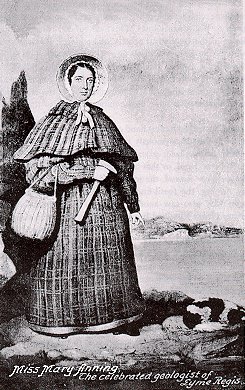
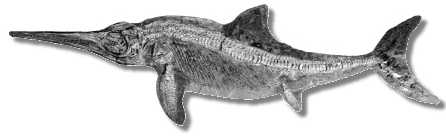
Mary Anning (May 21, 1799 - March 9, 1847)was an English fossil collector who made her first significant discovery at the age of 11 or 12 (sources differ on the details), when she found a complete skeleton of an Ichthyosaurus, from the Jurassic period. The ten-meter (30 feet) long skeleton created a sensation and made her famous.

Anning's determination and keen scientific interest in fossils derived from her father's interest in fossil hunting, and a need for the income derived from them to support her family after his death. in 1810. She sold large fossils to noted paleontologists of the day, and smaller ones to the tourist trade. In 1823, Anning made another great discovery, found the first complete Plesiosaurus.

Later in her life, the Geological Society of London granted Anning an honorary membership.

Wednesday, May 07, 2014

The Evolution of Living Dinosaurs

Rates of Dinosaur Body Mass Evolution Indicate 170 Million Years of Sustained Ecological Innovation on the Avian Stem Lineage . 2014. Benson, et al. PLoS Biol 12(5): e1001853.


An international team estimated the body mass of 426 dinosaur species based on the thickness of their leg bones. The team found that dinosaurs showed rapid rates of body size evolution shortly after their origins, around 220 million years ago. However, these soon slowed: only the evolutionary line leading to birds continued to change size at this rate, and continued to do so for 170 million years, producing new ecological diversity not seen in other dinosaurs. Press release

Monday, May 05, 2014

Born This Day: Elkanah Billings

From Today In Science History:

Billings (May 5, 1820 - June 14, 1896) was a Canadian geologist and paleontologist, who was the first Canadian paleontologist.He published his first scientific paper on Trenton fossils in 1854. He launched a new monthly periodical, The Canadian Naturalist and Geologist in 1856, which he also edited and was the major contributor.

In Aug 1856 he was appointed staff paleontologist with the Canadian Geological Survey by William Edmond Logan, the founder of the Survey. Billings immediately began the task of identifying a 20-year backlog of fossils collected by the Survey. By 1863 he had published descriptions of no fewer than 526 new species of fossils.

The Billings medal, named in his honour, is awarded annually by the Paleontology Division of the Geological Association of Canada as a means of recognizing the most outstanding of its paleontologists.
On April 27, 1869, the Director of the GSC, Sir William Logan wrote this curt note to the paleontologist Elkanah Billings: "Your constant absence from the office is a worrying annoyance, particularly as I have reason to suspect that it does not arrive from rheumatism".
For more info on Billings click HERE.

Click HERE for more information on the Geological Association of Canada.

Portrait of Elkanah Billings GSC photo 69323 (c)

Sunday, May 04, 2014

From the UC Berkeley Page:

Huxley (May, 4, 1825 - June 29, 1895) was born in Ealing, near London, the seventh of eight children in a family that was none too affluent. At 21, Huxley signed on as assistant surgeon on the H.M.S. Rattlesnake, a Royal Navy frigate assigned to chart the seas around Australia and New Guinea. Huxley collected and studied marine invertebrates, in particular cnidarians, tunicates, and cephalopod mollusks. After leaving the Navy in 1854, Huxley managed to secure a lectureship at the School of Mines in London.
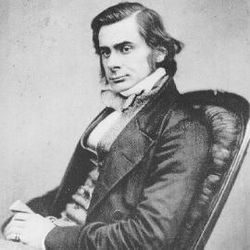
Huxley was a passionate defender of Darwin's theory -- so passionate that he has been called "Darwin's Bulldog" – and also a great biologist in his own right, who did original research in zoology and paleontology.

He is best known for his famous debate in June 1860, at the British Association meeting at Oxford. His opponent, Archbishop Samuel Wilberforce, was not-so-affectionately known as "Soapy Sam" for his renowned slipperiness in debate. During the debate, Archbishop Wilberforce ridiculed evolution and asked Huxley whether he was descended from an ape on his grandmother's side or his grandfather's. Accounts vary as to exactly what happened next, but according to one telling of the story, Huxley muttered "The Lord hath delivered him into my hands," and then rose to give a brilliant defense of Darwin's theory, concluding with the rejoinder, "I would rather be the offspring of two apes than be a man and afraid to face the truth."

All accounts agree that Huxley trounced Wilberforce in the debate, defending evolution as the best explanation yet advanced for species diversity.

However, Huxley did not blindly follow Darwin's theory, and critiqued it even as he was defending it. In particular, where Darwin had seen evolution and a slow, gradual, continuous process, Huxley thought that an evolving lineage might make rapid jumps, or saltations. As he wrote to Darwin just before publication of the Origin of Species, "You have loaded yourself with an unnecessary difficulty in adopting Natura non facit saltum [Nature does not make leaps] so unreservedly."
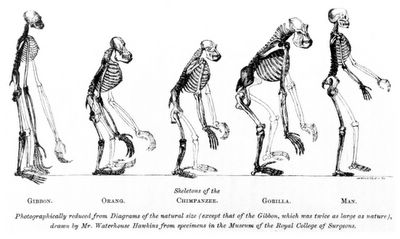


Huxley's most famous writing, published in 1863, is Evidence on Man's Place in Nature. This book, published only five years after Darwin's Origin of Species, was a comprehensive review of what was known at the time about primate and human paleontology and ethology. More than that, it was the first attempt to apply evolution explicitly to the human race. Huxley explicitly presented evidence for human evolution.

Huxley founded a remarkable dynasty of English scientists and thinkers. His son Leonard was a noted biographer and "man of letters." Leonard's oldest son Julian was one of the authors of the evolutionary synthesis of the early 20th century; Julian's son Francis became a noted anthropologist. Julian's brother Aldous Huxley was a novelist, screenwriter and essayist; his best-known book is the anti-utopia Brave New World.

Friday, May 02, 2014

Born This Day: Sir D'Arcy Thompson

From cscs.umich.edu:

D'Arcy Thompson (May 2, 1860 – June 21, 1948) was a British biologist whose masterwork, On Growth and Form, is a profound consideration of the shapes of living things, starting from the simple premise that "everything is the way it is because it got that way." Hence one must study not only finished forms, but also the forces that moulded them: "the form of an object is a 'diagram of forces', in this sense, at least, that from it we can judge of or deduce the forces that are acting or have acted upon it."

Now by "forces" Thompson meant forces, and one of his great themes is the tremendous light cast on living things by using mathematics to describe their shapes and fairly simple physics and chemistry to explain them. In other words, Thompson wrote a thousand page treatise on self-organization long before the word existed.
From Blackwell Publishing:
D'Arcy Thompson found that related species superficially looking very different could in some cases be represented as simple Cartesian transformations of one another. The most thoroughly worked out modern example of this is Raup's analysis of snail shell shapes with a morphospace.

With some simplification, the axes on the fish grids in here or the snails of the morphospace can be thought of as growth gradients. The evolutionary change between the species would then have been produced by a genetic change in the regulatory mechanisms controlling those gradients.

If we looked at these fish without the grids we might think that an evolutionary change from one into the other would be at least moderately complicated. The interest of D'Arcy Thompson's diagrams is then to show that shape changes could have been produced by heterochrony - a change in the rate or timing of development of some cell lines in the body relative to others.

Figure: a D'Arcy Thompson transformational diagram. The shapes of two species of fish have been plotted on Cartesian grids. Image from HERE.

Tuesday, April 29, 2014

Born This Day: Richard Carlson


Carlson (April 29, 1912 – Nov. 24, 1977) starred as Dr. David Reid (center)in the classic Creature From The Black Lagoon (1957). You know that he was the “good” scientist cuz he got the girl, even though he let a cover story for Nature skulk back into the Lagoon.

Died This Day: Julie Ege


Nov. 12, 1943 – April 29, 2008
The late Julie Ege had the lead role as Nala in the 1971 Hammer film, “Creatures The World Forgot”.

Saturday, April 26, 2014

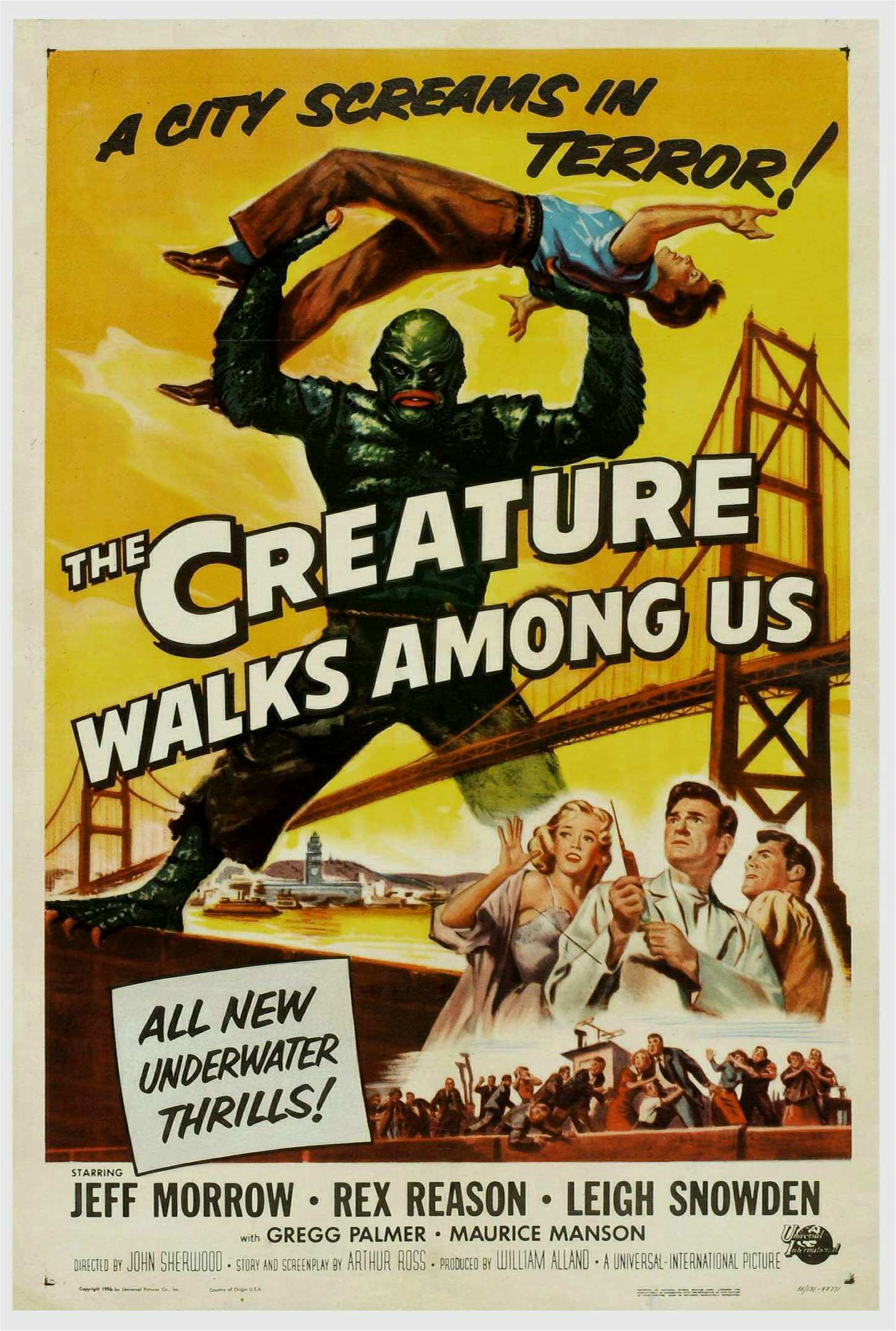
Premiered This Day: The Creature Walks Among Us

Back on this day in 1956 the second sequel to The Creature From the Black Lagoon debuted. It's long been considered the weakest film in the trilogy, and it's hard to argue this given that they drag The Creature out of the Amazon, burn him in a fire, and convert him into an air-breathing humanoid with no hope of ever returning to the lagoon. But, when viewed today, the film reveals some deeper tones than I'm sure were originally intended.

The plot and language of the film can now be taken to speak directly to the hot-button topics of genetic manipulation of animals and foods, and man's destructive meddling with nature leading to accelerated rates of extinction. The movie moves beyond being a simple “monster on the rampage” story and actually has some pointed comments to make about science and politics. It's well worth watching on one of those upcoming hot, humid summer nights.

Watch the film in 8 minutes thanks to the Castle Films Super 8mm edited home version:

Thursday, April 24, 2014

CMNH DinoFest at The Cleveland Museum of Natural History April 25 &26


This Friday and Saturday DinoFest runs at the Cleveland Museum of Natural History. There will be lots of kid and family-friendly dino-related events plus talks by:
David Evans
Steve Bissette
Mark Goodwin
Jack Horner
Ray Rogers
Michael Ryan

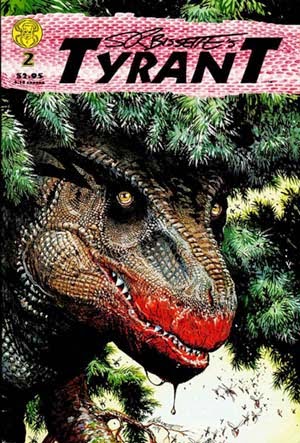
TyrantTM Stephen R. Bissette

Steve Bissette will also be running a dino-drawing workshop Sat. morning so please register your kids early to ensure a spot.

Sunday, April 20, 2014

Born This Day: Willi Hennig

From the Willi Hennig Society :

Hennig (April 20, 1913 – Nov. 5, 1976) is best known for developing phylogenetic systematics,  a coherent theory of the investigation and presentation of the  relations that exist among species. Contrary to the position generally  held during his time, Hennig viewed historical inference as a strictly  logical and scientific endeavor. He first summarized his ideas in 1950  in German which became more widely known with the publication of the  English revision, Phylogenetic Systematics (Hennig, 1966).


image.

Major Hennigian principles are:
1. Relationships among species are to be interpreted strictly genealogically, as sister-lineages, as clade relations. Empirically, a phylogenetic hypothesis may be determined.
2. Synapomorphies provide the only evidence for identifying relative recency of common ancestry. Synapomorphies are understood to be the shared-derived (evolved, modified) features of organisms.

3. Maximum conformity to evidence is sought  (his auxiliary principle). Choice among competing cladistic  propositions (cladograms) is decided on the basis of the greatest amount  of evidence, the largest number of synapomorphies explainable as  homologues.

4. Whenever possible, taxonomy must be logically consistent with the inferred pattern of historical relationships. The rule of monophyly is to be followed, thereby each clade can have its unique place in the hierarchy of taxonomic names.
More info about Henning HERE. photo.

Born This Day: Sir William Logan

From Today in Science History:

Logan (April 20, 1798 – June 22, 1875) was a Canadian geologist dubbed the "Father of Canadian Geology." He began is career making geologic maps of coalfields in Wales, noting the relationship between the underlying clay layers and fossil tree roots with local coal beds. This substantiated the theory that coal beds are formed in place.

When he began as director (1842-69) of the new Geological Survey of Canada, its geology was virtually unknown. He produced the monumental Report on the Geology of Canada (1863) which recorded 20 years of research, fieldwork, plotting maps, preparing reports, and examining fossil and mineral specimens.

Image and more info from Natural Resources Canada. For a more colourful summary of the man and his life go HERE.

Died This Day: Robert Armstrong

Armstrong (Nov. 20, 1890 – April 20, 1973) took Fay Wray to Skull Island in 1933. He returned later the same year to find The Son of Kong, only to lose him as the island sank, as these things are prone to doing.

Friday, April 18, 2014

Born This Day: Noble Johnson

“Meanwhile, the light-skinned Noble Johnson (April 18, 1881 – Jan. 9, 1978) was heavily made up for his role as the village chief [in 1933's, KING KONG]—he was a leading black actor of the era (known as “America’s premiere Afro-American screen star” in the black press) and therefore worth the extra consideration. Johnson, an ex-cowboy, horse trainer, and boxer, had quite a resume before portraying the Chief of Skull Island.

He was a student of all aspects of movie making from directing to distribution, and instrumental in the 1916 formation of the Lincoln Motion Picture Company, created to produce what were called “race movies.” Johnson left the company after it had released three films, rumored to have been “encouraged” by Universal to do so or lose any opportunity for parts at the bigger studio.

Johnson - a childhood friend of Lon Chaney - portrayed a variety of ethnicities in his long career; one of the few black actors of Hollywood’s early era to be allowed any diversity in roles.” From Kong Is King.net

Tuesday, April 15, 2014

Premiered This Day: Women of The Prehistoric Planet


Written and directed by Arthur C. Pierce, and starring the perennial C-list actor John Agar (who had his own Prehistoric Theme Park!), this is just about as bad as it gets.

Saturday, April 12, 2014

Happy Birthday to Lori Nelson


Nelson played Helen Dodson in the 1955 film, “Revenge of the Creature”. imdb info

Died This Day: Edward Drinker Cope


Art © Mark Schultz
From NiagaraMuseum.com:
"What truly assured Cope's (July 28, 1840 – April 12, 1897; above right) place in the history of paleontology and even eclipsed his science was his bitter feud with Yale University paleontologist O.C. Marsh (above left).

What began as a friendly rivalry in the late 1860s, broke out into all out war in 1872 and then raged on until Cope's death in 1897.

Both Cope and Marsh were recipients of family fortunes and they used their wealth to discover new fossils and to reconstruct ancient life. This scramble literally propelled American science into the forefront of paleontology."
Read about Cope HERE.

Wednesday, April 02, 2014

Tyrannosaur Feeding Behaviour

The role of the neck in the feeding behaviour of the Tyrannosauridae: inference based on kinematics and muscle function of extant avians. 2014. Snively et al. J. Zool: 290–303


Abstract [edit]: Tyrannosaurid necks were strong and powerful instruments for wielding the jaws during feeding. Hypotheses of tyrannosaurid neck function are here grounded by observations of neck morphology and function in extant archosaurs.

Respectively derived morphologies in birds, crocodilians and tyrannosaurids compromise inferences for some muscles. However, alternate reconstructions indicate that tyrannosaurid neck muscles combined the robustness of crocodilian musculature with the functional regionalization seen in birds.

Electromyography of the M. complexus in chickens strengthens inferences about its function in both dorsiflexion and lateroflexion in extinct dinosaurs, and further suggests that it imparted roll about the longitudinal axis in concert with the actions of contralateral ventroflexors.

Videography of extant raptors reveals the involvement of the neck when striking at prey and tearing flesh, and reconstructed tyrannosaurid musculature indicates capacity for similar neck function during the feeding cycle.

As for birds, muscles originating in the anterior region of the neck likely stabilized the head by isometric or eccentric contraction as tyrannosaurids (and other large theropods) tore flesh by rearing back the body through extension of their hind limbs.

It's always nice when a paper you've forgotten about gets published!

Published This Day: The DNA Double Helix

From Today in Science History:

On this day in 1953, the journal Nature published a paper from Francis Crick and James Watson, titled Molecular Structure of Nucleic Acids: A Structure for Deoxyribose Nucleic Acid, in which they described a double helix structure for DNA.

Download the paper from Nature HERE.