Monday, March 31, 2014

Born This Day: Wallace Beery

Wallace Fitzgerald Beery (April 1, 1885 – April 15, 1949) was an American actor who appeared in more than 250 films in over 36 years. At 16 he ran away from home and joined the Ringling Brothers Circus as an assistant elephant trainer, but left two years later, after being clawed by a leopard.

His career spanned the transition from silent movies to the talkies. He won an Academy award in 1931 for his starring role in The Champ, becomeing one of Hollywood's top stars in the 1930's. The hard-drinking Beery was implicated in the beating death of Ted Healy, the original leader of the Three Stooges. Beery is presented here for his starring role as Prof. Challenger in the 1925 movie, The Lost World.

Sunday, March 30, 2014

Journey to The Center of The Earth Print

The print goes on sale today for 3 days only from: Nautilus Art Prints.

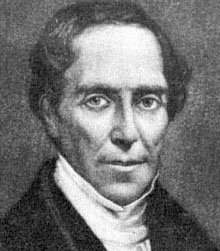
Geological Eras First Proposed (1759)

In 1759, Italian geologist Giovanni Arduino (1714-1795) dated a letter to Professor A.Vallisneri the younger, in which Arduino proposed a classification of Earth's surface rocks according to four brackets of successively younger orders: Primary, Secondary, Tertiary and Quaternary. These are the four geological eras used today. The volcanic rocks without fossils which he saw in the Atesine Alps that formed the cores of large mountains he called Primary. Overlying them, the fossil rich rocks of limestone and clay that were found on the prealpine flanks of the mountains he called Secondary. The less consolidated fossil-bearing rocks of the subalpine foothills, he named Tertiary, and the alluvial rock deposits in the plains were the Quaternary. link

Saturday, March 29, 2014

Premiered This Day (1961): Gorgo

Gorgo premiered on this day in 1961. Directed by Eugène Lourié from a script by John Loring and Daniel Hyat, it featured a man in a rubber suit ala Toho’s Godzilla. More ignored than maligned, it holds up very well & is a well worth watching.

Over at Atomic Surgery the good doctors present a double bill to commemorate the day: a story by Steve Ditko from Gorgo #15 and a Gorgo filmbook from Famous Monsters of Filmland #50.

Thursday, March 27, 2014

Living Dinosaurs Smarter Than Your Average Bear (or Child)

Using the Aesop's Fable Paradigm to Investigate Causal Understanding of Water Displacement by New Caledonian Crows. 2014. Jelbert, S.A., et al. PLoS ONE 9(3): e92895.
New Caledonian crows may understand how to displace water to receive a reward, with the causal understanding level of a 5-7 year-old child.

Scientists used the Aesop's fable riddle— in which subjects drop stones into water to raise the water level and obtain an out-of reach-reward—to assess New Caledonian crows' causal understanding of water displacement. These crows are known for their intelligence and innovation, as they are the only non-primate species able to make tools, such as prodding sticks and hooks.

Six wild crows were tested after a brief training period for six experiments, during which the authors noted rapid learning (although not all the crows completed every experiment). The authors note that these tasks did not test insightful problem solving, but were directed at the birds' understanding of volume displacement.

Wednesday, March 26, 2014

Died This Day: James Hutton

Hutton (June 3, 1726 - March 26, 1797) is considered to be the father of modern geology. He is accredited with proposing that observed geologic processes have been occurring at a uniform rate since the creation of earth, also know as the theory of unconformities. This led to his controversial suggestion that the earth is incredibly old.

Hutton began to notice geologic processes on his land in the 1750’s by following his soil during rainstorms when it would erode into the sea. He also noticed how long the process took and began to apply this idea to other parts of geology. If it took this long for some soil to move a few miles than how long did it take to form the cliffs by the sea? He also took note of other features in the landscape such as angular unconformities. A breakthrough point occurred for Hutton when he found Siccar’s Point. This site shows the build up of sediment over a long period of time as well as other geologic processes. It was this idea of continuous processes that fascinated Hutton for the rest of his life.

Hutton subsequently moved back to Edinburgh, and became very involved with the Royal Society of Edinburgh. In 1785 he had his friend Joseph Black read his lecture on his theories of earth. This was the first time that his full theory had been made public. He was met with much anger and rejection. Even though we take his ideas for granted today, at the time he was presenting this the oldest proposed age of earth was around six thousand years, as laid forth by the church. While he was able to convince a few by showing them prime field examples such as Glen Tilt and Siccar’s Point, for many it remained too radical an idea to consider.

Text modified from HERE. Image from HERE.

Born This Day: Richard Dawkins

Monday, March 24, 2014

Saturday, March 22, 2014

Born This Day: Adam Sedgwick

Adam Sedgwich (March 22, 1785 - January 27, 1873) was an English geologist who first applied the name Cambrian to the geologic period of time, now dated at 570 to 505 million years ago. In 1818 he became Woodwardian Professor of Geology at Cambridge, holding a chair that had been endowed ninety years before by the natural historian John Woodward.

He lacked formal training in geology, but he quickly became an active researcher in geology and paleontology. Many years after Sedgwick's death, the geological museum at Cambridge was renamed the Sedgwick Museum of Geology in his honor. The museum is now part of the Department of Earth Sciences at Cambridge University. From Today In Science History.

Died This Day: Kenneth Tobey

Tobey (Mar. 23, 1917 - Dec. 22, 2002) made a career of playing “take charge, men of authority”, such as Capt. Hendry in Howard Hawkes, “The Thing From Another World” (1951), and just about every TV series throughout the 60’s and 70’s. More than a few of his appearances were in SF stories, and he played Col. Jack Evans in The Beast from 20,000 Fathoms (1953).

Wednesday, March 19, 2014

Anzu wyliei, a new caenagnathid from the Hell Creek Fm

A New Large-Bodied Oviraptorosaurian Theropod Dinosaur from the Latest Cretaceous of Western North America. 2014. Lamanna, M.C., et al. PLoS ONE 9(3): e92022.


Abstract: The oviraptorosaurian theropod dinosaur clade Caenagnathidae has long been enigmatic due to the incomplete nature of nearly all described fossils. Here we describe Anzu wyliei gen. et sp. nov., a new taxon of large-bodied caenagnathid based primarily on three well-preserved partial skeletons.

The specimens were recovered from the uppermost Cretaceous (upper Maastrichtian) Hell Creek Formation of North and South Dakota, and are therefore among the stratigraphically youngest known oviraptorosaurian remains. Collectively, the fossils include elements from most regions of the skeleton, providing a wealth of information on the osteology and evolutionary relationships of Caenagnathidae.


Phylogenetic analysis reaffirms caenagnathid monophyly, and indicates that Anzu is most closely related to Caenagnathus collinsi, a taxon that is definitively known only from a mandible from the Campanian Dinosaur Park Formation of Alberta. The problematic oviraptorosaurs Microvenator and Gigantoraptor are recovered as basal caenagnathids, as has previously been suggested.

Anzu and other caenagnathids may have favored well-watered floodplain settings over channel margins, and were probably ecological generalists that fed upon vegetation, small animals, and perhaps eggs.

Tuesday, March 18, 2014

Died This Day: Othniel Charles Marsh

In 1866, the Peabody Museum of Natural History was founded with a gift from George Peabody. The same year his nephew, O.C. Marsh (Oct. 29, 1831 - Mar. 18, 1899), was also named its Professor of Paleontology, the first such appointment in the United States. In 1869 Marsh used the inheritance from his uncle to start to amass large collections of vertebrate fossils. He went on to long and successful career as a vertebrate paleontologist, most of which was spent feuding with is rival, E.D.Cope.

Marsh and Cope started their careers on a cordial basis, but the relationship soon soured over an incident involving Cope's fossil of Elasmosaurus. Embarrassingly, Marsh pointed out that its backbones were mounted backwards. To settle the argument the men agreed to let Joseph Leidy decide who was right. Leidy promptly removed the head from one end and placed it on what Cope had thought was the tail. Cope than frantically tried to collect all of the copies of a recently printed publication that contained his erroneous reconstruction. From Today In Science History:

Monday, March 17, 2014

Died This Day: Jack Arnold


Jack Arnold (Oct. 14, 1916 - March 17, 1992) directed a number of classic SF films including The Creature From the Black Lagoon, Revenge of the Creature, The Incredible Shrinking Man, and It Came From Outer Space, as well as few not-so-classics (but still much loved) such as Monster on Campus. Throughout the ‘60’s and into the early 80’s he had a successful career as a TV producer and director.

Friday, March 14, 2014

Nanuqsaurus hoglundi, A New Tyrannosaur from Alaska

A Diminutive New Tyrannosaur from the Top of the World. 2014. Fiorillo, A.R., and R.S. Tykoski. PLoS ONE 9(3): e91287

Nanuqsaurus hoglundi, a new tyrannosaurine species from Prince Creek Formation in Northern Alaska is described based on a partial skull roof, maxilla, and jaw.
According to the results of the authors' analysis, the cranial bones are from a tyrannosaur closely related to Tarbosaurus and Tyrannosaurus. This new dinosaur is estimated to be relatively small, with an adult skull length estimated at 25 inches, compared to 60 inches for T. rex.


Nanuqsaurus likely inhabited a seasonally extreme, high-latitude continental environment on the northernmost edge of Cretaceous North America. The authors suggest that the smaller body size of N. hoglundi compared to most tyrannosaurids from lower latitudes may reflect an adaptation to variability in resources in the arctic seasons. PR

Wednesday, March 12, 2014

Preservation of Soft Tissue in Dino Bones

A role for iron and oxygen chemistry in preserving soft tissues, cells and molecules from deep time. 2014. Schweitzer, et al. Proc. R. Soc. B: 81

Metal Men © DC Comics
Abstract: The persistence of original soft tissues in Mesozoic fossil bone is not explained by current chemical degradation models. We identified iron particles (goethite-αFeO(OH)) associated with soft tissues recovered from two Mesozoic dinosaurs, using transmission electron microscopy, electron energy loss spectroscopy, micro-X-ray diffraction and Fe micro-X-ray absorption near-edge structure.

Iron chelators increased fossil tissue immunoreactivity to multiple antibodies dramatically, suggesting a role for iron in both preserving and masking proteins in fossil tissues. Haemoglobin (HB) increased tissue stability more than 200-fold, from approximately 3 days to more than two years at room temperature (25°C) in an ostrich blood vessel model developed to test post-mortem ‘tissue fixation’ by cross-linking or peroxidation.

HB-induced solution hypoxia coupled with iron chelation enhances preservation as follows: HB + O2 > HB − O2 > −O2 ≫ +O2. The well-known O2/haeme interactions in the chemistry of life, such as respiration and bioenergetics, are complemented by O2/haeme interactions in the preservation of fossil soft tissues.

Died This Day: William Buckland

From The Victorian Web:

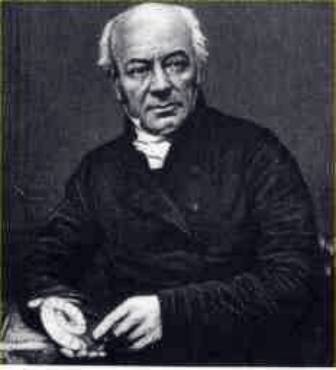
Buckland (March 12, 1784 – August 15, 1856) was the first man to identify and name a dinosaur (Megalosaurus), although the name dinosaur had not yet been coined by Richard Owen.

Partly in response to the controversial works of Cuvier, Buckland wrote Reliquiae Diluvianae (1823) in which he argued that the evidence of geology alone demonstrated that a great flood had covered the entire globe. This move helped to make geology look more respectable in a religiously conservative England and perhaps to advance Buckland's own career at Oxford by making geology appear to be a respectable companion to the classics.

Buckland was a bit of an eccentric, given to outlandish dress and behavior. Although Buckland was immensely influential as a scientist, his rakish reputation gave many of his staid early Victorian contemporaries considerable difficulty in accepting his work.

More info from HERE. Image from HERE

Tuesday, March 11, 2014

Died This Day: Roy Chapman Andrews


Andrews (Jan.26, 1884-Mar.11, 1960) was an American naturalist, explorer, and author, who spent his entire career at the American Museum of Natural History. He led many important scientific expeditions with financial support through his public lectures and books, particularly in central Asia and eastern Asia. On his 1925 central Asian expedition, the first known dinosaur eggs were discovered,as well as skull and parts of Baluchitherium, the largest known land mammal. During his career Andrews was the museum's best promoter, creating immense excitement and successfully advancing research there. link

Andrews was also acknowledged as one of the more important inspirations for the creation of the character of Indiana Jones.

Friday, March 07, 2014

Born This Day (1930): Stanley Lloyd Miller

From Today in Science History:


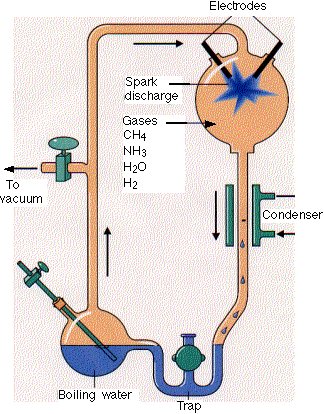
Miller is an American chemist who made a series of famous experiments beginning in 1953, to determine the possible origin of life from inorganic chemicals on the primeval earth.

He passed electrical discharges (simulating thunderstorms) through mixtures of reducing gases, such as hydrogen, ammonia, methane and water, that were believed to have formed the earliest atmosphere.

An analysis days later showed that the resulting chemicals included glycine and alanine, the simplest amino acids & the basic building blocks of proteins. Other compounds included urea, aldehydes and carboxylic acids. Thus, a "primeval soup" is the currently accepted most plausible explanation, though incomplete, of the origin of the complex organic molecules of life.

Wednesday, March 05, 2014

The Colour of the Fossil Bird Gansus

Melanosomes or Microbes: Testing an Alternative Hypothesis for the Origin of Microbodies in Fossil Feathers. 2014. Moyer, A., et al. Scientific Reports

Gansus yumenensis
Abstract [edit]: Microbodies associated with fossil feathers, originally attributed to microbial biofilm, have been reinterpreted as melanosomes; pigment-containing, eukaryotic organelles. This interpretation generated hypotheses regarding coloration in non-avian and avian dinosaurs. Because melanosomes and microbes overlap in size, distribution and morphology, we re-evaluate both hypotheses.

We compare melanosomes within feathers of extant chickens with patterns induced by microbial overgrowth on the same feathers, using scanning (SEM), field emission (FESEM) and transmission (TEM) electron microscopy. Melanosomes are always internal, embedded in a morphologically distinct keratinous matrix. Conversely, microbes grow across the surface of feathers in continuous layers, more consistent with published images from fossil feathers.

We compare our results to both published literature and new data from a fossil feather ascribed to Gansus yumenensis (ANSP 23403).

“Mouldic impressions” were observed in association with both the feather and sediment grains, supporting a microbial origin. PR

Premiered This Day: The Creature From The Black Lagoon

On this day in 1954, director Jack Arnold let loose The Creature from his Devonian-aged Amazonian lagoon. The Creature was actually played by two different men in two different suits; Ricou Browning did the underwater work and Ben Chapman was the Gill Man on land. Browning went on to produce the successful Flipper TV show in the mid-60’s.

Tuesday, March 04, 2014

Species Status for the Extinct Moa Euryapteryx

Complex Species Status for Extinct Moa (Aves: Dinornithiformes) from the Genus Euryapteryx. Huynen, L. and D.M. Lambert. PLoS ONE 9(3): e90212.

DNA barcoding shows that two species were likely to have existed in the genus Euryapteryx, with the possibility of some subspecies.
"Our results do provide a clearer picture of the species status of Euryapteryx, however, and support the suggestion that two species of Euryapteryx may have existed during the Holocene as well as a subspecies (possibly attributable to E. curtus curtus) that is found solely on New Zealand's North Island." (Dr. David Lambert)

Monday, March 03, 2014

Released This Day (1959): The Giant Behemoth

Behemoth, the Sea Monster (1959) is an American-British science-fiction film co-production, which is an unacknowledged remake of Ray Harryhausen's The Beast from 20,000 Fathoms (1953), also co-scripted and directed by Eugène Lourié. Released in the United States as The Giant Behemoth, the film starred Gene Evans and André Morell. From wiki


Sunday, March 02, 2014

Born This Day: Willis O'Brien

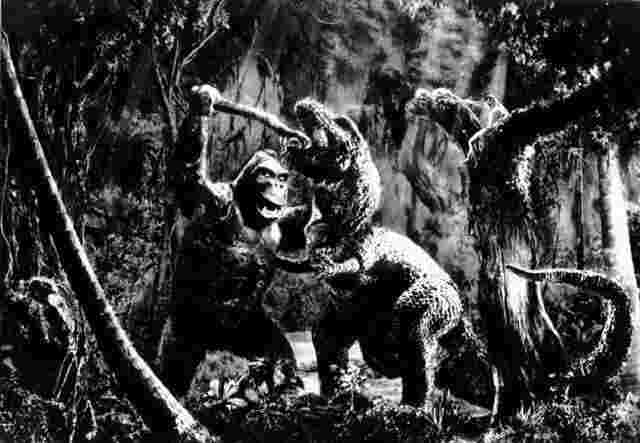
A tip of the fedora to the late, great Willis O'Brien who breathed life into the fur and armature that become King Kong, the 8th Wonder of the World!

His biography from Leonard Maltin's Movie Encyclopedia:

Willis O'Brien (March 2, 1886 - November 8, 1962)
Special effects wizard best known to the world as the man who
created King Kong.
O'Brien was a sculptor and cartoonist for the San Francisco "Daily News" before he first dabbled in the medium of film during the 'teens. His work caught the attention of the Edison company, for whom he produced several short subjects with a prehistoric them. Titles include The Dinosaur and the Missing Link, RFD 10,000 B.C and Prehistoric Poultry. His method of animating small rubber figures, carefully molded over metal skeletons with movable joints, by moving them a fraction of an inch for each frame of film exposed, became the standard process of live-action animation.

In 1918 he made his most ambitious film yet, The Ghost of Slumber Mountain paving the way for The Lost World (1925), a major Hollywood feature which told of a search for prehistoric creatures. O'Brien's dinosaurs were his most realistic yet, and still impress today, even in the wake of Jurassic Park Still, Obie (as he was known) kept experimenting.

When producer Merian C. Cooper saw his work, he hired O'Brien to animate King Kong (which, up to that point, was to have been shot with an actor in a gorilla suit). The extraordinary success of King Kong (1933) spawned an immediate sequel, The Son of Kong (also 1933), and made O'Brien a hero to several generations of fantasy filmmakers to come. O'Brien won his only Oscar for his effects in Mighty Joe Young (1949), another giant-monkey movie, on which his protégé (and successor) Ray Harryhausen worked.

O'Brien worked on other giant-monster movies (including 1957's The Black Scorpion his last) before dying in 1962. Today, O'Brien would be kingpin of his own studio, but even in the wake of King Kong he had trouble launching other film projects, and many promising ideas languished on studio drawing boards for decades to follow. One of the RKO staff with whom he'd worked in the 1930s, Linwood Dunn, gave O'Brien his final employment, doing stop-motion figures for It's a Mad Mad Mad Mad World (1963).


In 1950 O'Brien received (finally!) a special Oscar for his work on Mighty Joe Young which was the first such award ever given for special effects. This film also launched the career of the next great stop-motion animator, Ray Harryhausen.

Saturday, February 22, 2014

Died This Day: Sir Charles Lyell


Nov. 14, 1797 - Feb. 22, 1875
From Minnesota State University at Mankato comes this excellent bio on Lyell:

Sir Charles Lyell attended Oxford University at age 19. Lyell's father was an active naturalist. Lyell had access to an elaborate library including subjects such as Geology.

When Lyell was at Oxford, his interests were mathematics, classics, law and geology. He attended a lecture by William Buckland that triggered his enthusiasm for geology. Lyell originally started his career as a lawyer, but later turned to geology. He became an author of The Geological Evidence of the Antiquity of Man in 1863 and Principles of Geology. Lyell argued in this book that, at the time, presently observable geological processes were adequate to explain geological history. He thought the action of the rain, sea, volcanoes and earthquakes explained the geological history of more ancient times.

Lyell rebelled against the prevailing theories of geology of the time. He thought the theories were biased, based on the interpretation of Genesis. He thought it would be more practical to exclude sudden geological catastrophes to vouch for fossil remains of extinct species and believed it was necessary to create a vast time scale for Earth's history. This concept was called Uniformitarianism. The second edition of Principles of Geology introduced new ideas regarding metamorphic rocks. It described rock changes due to high temperature in sedimentary rocks adjacent to igneous rocks. His third volume dealt with paleontology and stratigraphy. Lyell stressed that the antiquity of human species was far beyond the accepted theories of that time.

Charles Darwin became his dear friend and correspondent. Darwin is quoted saying, "The greatest merit of the Principles was that it altered the whole tone of one's mind, and therefore that, when seeing a thing never seen by Lyell, one yet saw it through his eyes."

Image from King’s College London.

Thursday, February 20, 2014

This Day in History: Darwin Observes Rapid Geological Change

In 1835, Charles Darwin, on his H.M.S. Beagle voyage reached Chile, and experienced a very strong earthquake and shortly afterward saw evidence of several feet of uplift in the region. He repeated measurement a few days later, and found the land had risen several feet. He had proved that geological changes occur even in our own time.

Concepción, Chile, after the 1835 quake

Lyell's principles were based on the concept of a steady-state, nondirectional earth whereby uplift, subsidence, erosion, and deposition were all balanced. Thereby, Darwin coupled in his mind this dramatic evidence of elevation with accompanying subsidence and deposition. Thus he hypothesized that coral reefs of the Pacific developed on the margins of subsiding land masses, in the three stages of fringing reef, barrier reef, and atoll. From Today In Science History

Read John van Wyhe on Darwin and the Earthquake

Born This Day: Raymond Cecil Moore


Moore (Feb. 20, 1892 - April 16, 1974) was an American paleontologist known for his work on Paleozoic crinoids, bryozoans, and corals. Moore was the founder and editor of the landmark multi-volume Treatise of Invertebrate Paleontology.

Wednesday, February 19, 2014

Born This Day: William Diller Matthew

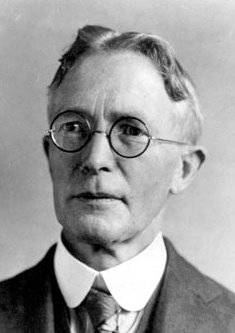
Matthew (Feb. 19, 1871 – Sept. 24, 1930) was a superb mammalian paleontologist and important biogeographic theorist, and also G. G. Simpson's primary mentor. He published voluminiously on the fossil record of mammals and advocated a fully modern approach to taxonomy that emphasized tying scientific names to natural biological populations. His 1930 paper gives a clear statement of this position.

Matthew's key biogeographic theory was that waves of faunal migration repeatedly went from the northern continents southwards. This theory, which had obvious racial and political overtones, was justified by a "stabilist" view of paleogeography (i.e., that the continents had never moved from their modern positions), and by evidence from the relatively young fossil record of mammals, at the expense of other data that would have shown the more ancient interconnections among South America, Africa, India, and Australia. Remarkably, Matthew remained a Darwinian despite working for the autocratic orthogeneticist H. F. Osborn for three decades.

Info from HERE. Image from HERE.

Born This Day: Sven Anders Hedin

Hedin (Feb. 19,1865 - Nov. 26, 1952) was a Swedish explorer and geographer, born in Stockholm, who led four multi-year expeditions into Central Asia between 1897 and 1935. Although not as well known as Roy Chapman Andrews his work in the regions revealed a wealth of cultural, archaeological and palaeontological wonders.

During his first major Asian expedition, he crossed the Pamirs, charted Lop Nor (Lake) in China, and finally arrived at Beijing. He then journeyed to Tibet by way of Mongolia, Siberia, and the Gobi Desert. Hedin explored Tibet and Xinjiang (Sinkiang), identified the sources of the Brahmaputra, Indus, and Sutlej rivers, and, in 1906, explored and named the Trans-Himalayas. In 1927 Hedin led an expedition of Chinese and Swedish scientists into Central Asia.

He wrote extensively about his adventures (e.g., Across the Gobi Desert, The Conquest of Tibet (1935), My Life as an Explorer (1926)) and they make for engaging and fascinating reading for anyone interested in the early days of exploring Central Asia. link

An excellent summary of Hedin’s life and expeditions into Central Asia can be found at the IDP News Archives image

Born This Day: Sir Roderick Impey Murchison

Murchison (Feb. 19, 1792 - Oct. 22, 1871) was a Scottish geologist who first differentiated the Silurian strata in the geologic sequence of Early Paleozoic strata (408-540 million years old). He believed in fossils as primary criteria. In 1831, he began researching the previously geologically unknown graywacke rocks of the Lower Paleozoic, found underlying the Old Red Sandstone in parts of Wales, which culminated in his major work the Silurian System (1839).


An eurypterid, a prehistoric sea scorpion from PBS.org.
Murchison named the Silurian after an ancient British tribe that inhabited South Wales. He established the Devonian working with Adam Sedgwick (1839). He named the Permian (1841) after the Perm province in Russia where he made a geological survey in 1840-45. link

Form, Function, & Evolution of Living Organisms

Form, function, and evolution of living organisms. 2014. J. R. Banavar, et al. PNAS

New research suggests that the shapes of both plants and animals evolved in response to the same mathematical and physical principles.
Kleiber’s Law (metabolism = mass3/4), one of the few widely held tenets in biology, shows that as living things get larger, their metabolisms and their life spans increase at predictable rates. Named after the Swiss biologist Max Kleiber who formulated it in the 1930s, the law fits observations on everything from animals' energy intake to the number of young they bear. It's used to calculate the correct human dosage of a medicine tested on mice, among many other things.

The researchers propose that the shapes of both plants and animals evolved in response to the same mathematical and physical principles. By working through the logic underlying Kleiber's mathematical formula, and applying it separately to the geometry of plants and animals, the team was able to explain decades worth of real-world observations.

Tuesday, February 18, 2014

Born This Day: Aleksandr Oparin, Originator of Primordial Soup


Oparin (Feb 18, 1894 - April 21, 1980) was a Russian biochemist who suggested (1938) that life on Earth developed through gradual chemical evolution of carbon-based molecules in a “primordial soup”, at just about the same time as the British biologist J. B. S. Haldane was independently proposing a similar theory.

As early as 1922, at a meeting of the Russian Botanical Society, he had first introduced his concept of a primordial organism arising in a brew of already-formed organic compounds.

More info at Physics of the Universe
Download his book "The Origin of Life on The Earth" from Archive.org

Alley Oop Dino-Battle!

A 1937 Sunday page from the classic Alley Oop comic strip by V. T. Hamlin.

Monday, February 17, 2014

The Oxygen Requirements of the Earliest Animals

The oxygen requirements of the earliest animals. D. B. Mills, et al. 2014.PNAS, Feb. 17, 2014.

New studies of a small sea sponge fished out of a Danish fjord shows that complex life does not need high levels of oxygen in order to live and grow.
Complex life evolved is believed to have evolved after the atmospheric levels of oxygen began to rise app. 630 – 635 million years ago. Halichondria panicea closely resembles the first animals on Earth & shows that animals can live and grow even when the atmosphere contains only 0.5 per cent of the oxygen levels in today's atmosphere.

The big question now is: If low oxygen levels did not prevent animals from evolving – then what did? Why did life consist of only primitive single-celled bacteria and amoebae for billions of years before everything suddenly exploded and complex life arose?

Born This Day: Horace de Suassure

de Saussure (Feb. 17, 1740 - Jan. 22, 1799) was a Swiss physicist and geologist who introduced the term geology into the scientific literature in the first volume of Voyages dans les Alpes (1779-96). Link

Saturday, February 15, 2014

Died This Day (1967): Antonio Moreno, The Man Who Discovered The Creature from the Black Lagoon.

Antonio Moreno played Carl Maia, the scientist who discovered the fossil evidence for The Creature from the Black Lagoon. Moreno had a long career in Hollywood with a notable run playing Latin lover in the silent film era.

Sunday, February 09, 2014

Happy 100th Birthday to Gertie the Dinosaur!

One hundred years ago today, Winsor McCay's animated film, Gertie the Dinosaur, premiered. Gertie is considered by many as the first true animated character to be featured in a film.

For this cartoon, McCay (Sept. 26, 1987 – July 26, 1934) hand drew each frame of film. He took it on the vaudeville circuit and delighted audiences by being able to ‘interact’ with Gertie. In addition to Gertie, he is best known for his ground-breaking newspaper comic strip Little Nemo in Slumberland that ran from 1905 to 1914.


Tuesday, February 04, 2014

Born This Day: Gottfried Reinhold Treviranus, Early Evolutionary Theorist


Treviranus (Feb. 4, 1776 - Feb. 16, 1837) was a German naturalist who
made histological and anatomical studies on invertebrates. Preceding Darwin, he believed in the “descent by modification,” of species.

He produced six volumes of his Biologie; oder die Philosophie der lebenden Natur between 1802 and 1822. Therein, he held that simple forms (Protists), which he termed zoophytes, were “the primitive types from which all the organisms of the higher classes had arisen by gradual development.” He was among the first to regard the cell as the structural unit of life forms. link image

Born This Day: Raymond Dart


Dart (Feb. 4 1893 - Nov. 22, 1988) was an Australian-born, South African physical anthropologist. In 1924, working with students in the Taung limestone South Africa, they discovered the first Australopithecus africanus. Dubbed "missing link" at the time, skull is also known as the 'Taung child', and was only three years old at the time of death. More on Dart here

Monday, February 03, 2014

Born This Day: Gideon Mantell

Mantell (Feb. 3, 1790 – Nov. 10, 1852), a physician of Lewes in Sussex in southern England, had for years been collecting fossils in the sandstone of Tilgate forest, and he had discovered bones belonging to three extinct species: a giant crocodile, a plesiosaur, and Buckland's Megalosaurus. But in 1822 he found several teeth that "possessed characters so remarkable" that they had to have come from a fourth and distinct species of Saurian. After consulting numerous experts, Mantell finally recognized that the teeth bore an uncanny resemblance to the teeth of the living iguana, except that they were twenty times larger.
In this paper, the second published description of a dinosaur, he concluded that he had found the teeth of a giant lizard, which he named Iguanodon, or "Iguana-tooth."

Mantell illustrated his announcement with a single lithographed plate. Mantell included at the bottom of the plate a drawing of a recent iguana jaw, which is shown four times natural size, and for further comparison, he added views of the inner and outer surface of a single iguana tooth, "greatly magnified."

The traditional story that Mantell's wife found the first teeth in 1822, while the doctor was visiting a patient, appears, alas, to be unfounded.

Info and plate from HERE.

Died This Day: Ernst Mayr


Any student of biology, or anyone with an interest in the natural world, will be familiar with Ernst Mayr who passed away on February 3rd, 2005 in Bedford, Mass. Born in Kempton, Germany he joined the American Museum of Natural History as a curator in 1931. In 1953 he left the museum to work at Harvard University where he stayed until his retirement in 1975.

While working on the problem of speciation in the birds of New Guinea, Mayr realized that the multitude of species and and subspecies that he saw could best be explained as being a snapshot of evolution in action. He suggested that new species could arise when the range of one species was fractured long enough for members in different parts of the range to evolve characters that would not allow individuals to reproduce when they were brought back together again. This lead to him developing the “biological species concept” in which species are defined as populations of interbreeding organisms rather than just a collection of characters. This idea, along with his theory of “allopatric speciation” was published in his book “Systematics and the Origin of the Species” (1942) and later contributed to the “Punctuated Equilibrium” theory of Niles Eldredge and Stephen Jay Gould.

Ernst Mayr was himself inspired by the work of geneticist Theodosius Dobzhansky on the fruit fly Drosophila melanogaster and his book “Genetics and the Origin of the Species” (1937). These two men, together with the paleontologist George Gaylord Simpson, combined the sciences of genetics, zoology and paleontology into what is now known as “the new synthesis” that provides the modern experimental underpinning to the concepts that Charles Darwin presented in his book, “On the Origin of the Species” .

For anyone interested in learning more about modern evolutionary theory I’d recommend Mayr’s recent book “What Evolution Is” (2002). It’s written in an engaging and readable format from the perspective of someone who’s thought about evolution all his life.

Sunday, February 02, 2014

Tarzan vs. T. rex


The above image was painted by Morris "Mo" Gollub who also did the best of the Turok, Son of Stone covers.

Read more about Morris at Pete Von Sholly's website, VonShollyWood