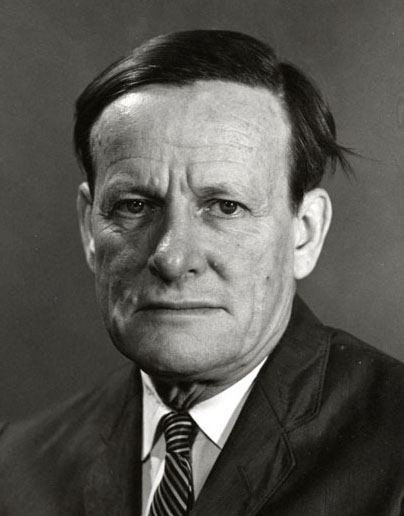
From the AMNH bio:
The greatest dinosaur hunter of the twentieth century was Barnum Brown, who began his career at the American Museum of Natural History in 1897 as an assistant to Henry Fairfield Osborn. Brown traveled all over the world collecting dinosaurs and fossil mammals. Some consider him to be the last of the great dinosaur hunters.
Brown was always impeccably dressed, often wearing a tie and topcoat even in the field. He was a shrewd "horse trader" when it came to wheeling and dealing for fossil specimens. Many of Brown's greatest discoveries, including the first specimens of Tyrannosaurus rex ever found, are displayed in the Museum's Dinosaur Halls.
Tuesday, February 12, 2013
Sunday, February 10, 2013
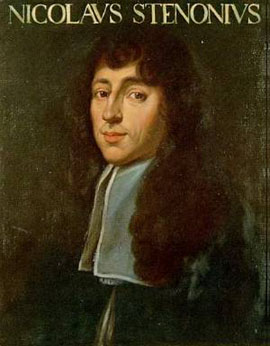
Published This Day: Steno Recognizes the Organic Origin of Fossils
From Today In Science History:
In 1667, a classic paleontological paper by Nicolaus Steno was published by the Royal Society, London. His topic, Head of a shark dissected, represented the first such scientific paper to recognise that fossils were the remains of creatures who had died and subsequently had become petrified. Controversy resulted as the same claim had been made in the time of the ancient Greeks, two millennia earlier.
Saturday, February 09, 2013
Asteroid Did Kill The Dinosaurs
Time Scales of Critical Events Around the Cretaceous-Paleogene Boundary. 2013. P.R. Renne, et al. Science 339: 684-687.
Abstract: Mass extinctions manifest in Earth's geologic record were turning points in biotic evolution. We present 40Ar/39Ar data that establish synchrony between the Cretaceous-Paleogene boundary and associated mass extinctions with the Chicxulub bolide impact to within 32,000 years. Perturbation of the atmospheric carbon cycle at the boundary likely lasted less than 5000 years, exhibiting a recovery time scale two to three orders of magnitude shorter than that of the major ocean basins. Low-diversity mammalian fauna in the western Williston Basin persisted for as little as 20,000 years after the impact. The Chicxulub impact likely triggered a state shift of ecosystems already under near-critical stress.
Wednesday, January 30, 2013
Published This Day: Variation of Animals and Plants under Domestication by Darwin
From Today In Science History:
In 1868, Charles Darwin's book
- Variation of Animals and Plants under Domestication - was published. He was 58. It is probably the second in importance of all his works. This was a follow-up work, written in response to criticisms that his theory of evolution was unsubstantiated. Darwin here supports his views via analysis of various aspects of plant and animal life, including an inventory of varieties and their physical and behavioral characteristics, and an investigation of the impact of a species' surrounding environment and the effect of both natural and forced changes in this environment.
In 1868, Charles Darwin's book
- Variation of Animals and Plants under Domestication - was published. He was 58. It is probably the second in importance of all his works. This was a follow-up work, written in response to criticisms that his theory of evolution was unsubstantiated. Darwin here supports his views via analysis of various aspects of plant and animal life, including an inventory of varieties and their physical and behavioral characteristics, and an investigation of the impact of a species' surrounding environment and the effect of both natural and forced changes in this environment.
Monday, January 28, 2013
Born This Day: Eugene Dubois
Eugene Dubois (Jan. 28, 1858-Dec. 16, 1940) joined the Dutch Army as a medical officer, and used spare time from his medical duties to search for fossils, first in Sumatra and then in Java.
He searched on the banks of the Solo River, with two assigned engineers and a crew of convict labourers to help him. In September 1890, his workers found a human, or human-like, fossil at Koedoeng Broeboes. This consisted of the right side of the chin of a lower jaw and three attached teeth. In August 1891 he found a primate molar tooth.
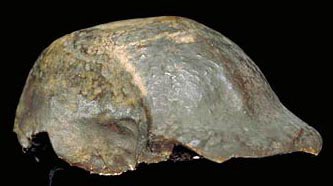
Two months later and one

meter away was found an intact skullcap, the fossil which would be known as Java Man. In August 1892, a third primate fossil, an almost complete left thigh bone, was found between 10 and 15 meters away from the skullcap.
In 1894 Dubois published a description of his fossils, naming them Pithecanthropus erectus (now Home erectus), describing it as neither ape nor human, but something intermediate. In 1895 he returned to Europe to promote the fossil and his interpretation. A few scientists enthusiastically endorsed Dubois' work, but most disagreed with his interpretation. Many scientists pointed out similarities between the Java Man skullcap and Neandertal fossils.
Around 1900 Dubois ceased to discuss Java Man, and hid the fossils in his home while he moved on to other research topics. geology and paleontology. It was not until 1923 that Dubois, under pressure from scientists, once again allowed access to the Java Man fossils. That and the discovery of similar fossils caused it to once again become a topic of debate.
He searched on the banks of the Solo River, with two assigned engineers and a crew of convict labourers to help him. In September 1890, his workers found a human, or human-like, fossil at Koedoeng Broeboes. This consisted of the right side of the chin of a lower jaw and three attached teeth. In August 1891 he found a primate molar tooth.Two months later and one
meter away was found an intact skullcap, the fossil which would be known as Java Man. In August 1892, a third primate fossil, an almost complete left thigh bone, was found between 10 and 15 meters away from the skullcap.In 1894 Dubois published a description of his fossils, naming them Pithecanthropus erectus (now Home erectus), describing it as neither ape nor human, but something intermediate. In 1895 he returned to Europe to promote the fossil and his interpretation. A few scientists enthusiastically endorsed Dubois' work, but most disagreed with his interpretation. Many scientists pointed out similarities between the Java Man skullcap and Neandertal fossils.
Around 1900 Dubois ceased to discuss Java Man, and hid the fossils in his home while he moved on to other research topics. geology and paleontology. It was not until 1923 that Dubois, under pressure from scientists, once again allowed access to the Java Man fossils. That and the discovery of similar fossils caused it to once again become a topic of debate.
Sunday, January 27, 2013
The Good Old Days of Dinosaur Provincal Park
As I was sorting through some old photos (circa 2000) I set aside some taken not all that long ago when the field station in DPP was the center for some cool palaeo-research. Above is outcrop right beside the field station that shows the contact between the Dinosaur Park and Oldman formations. Can you spot it?
Remember the great pair of styracosaurs sculpted by Brian Cooley that stood guard at the field station entrance?
The arrow points to BB138 that produced the holotype of Coronosaurus brinkmani. That multi-year project was initiated by Dave Eberth and run primarily by Mike Getty as part of the RTMP's Field Experience Program.
During the years the Field Experience Program ran, Mike and others (including myself) hosted a Prep Program in the field station that prepared 1000's of fossils collected in BB138 and other sites in DPP. I think that's ace voluteer, Don Cretin, with his back to the camera.
The holotype of Albertaceratops nesmoi under preparation in the field station.
Remember the great pair of styracosaurs sculpted by Brian Cooley that stood guard at the field station entrance?
The arrow points to BB138 that produced the holotype of Coronosaurus brinkmani. That multi-year project was initiated by Dave Eberth and run primarily by Mike Getty as part of the RTMP's Field Experience Program.
During the years the Field Experience Program ran, Mike and others (including myself) hosted a Prep Program in the field station that prepared 1000's of fossils collected in BB138 and other sites in DPP. I think that's ace voluteer, Don Cretin, with his back to the camera.
The holotype of Albertaceratops nesmoi under preparation in the field station.
Died This Day: Adam Sedgwick
From Today In Science History:
Sedgwick (March 22, 1785 - January 27, 1873) was an English geologist who first applied the name Cambrian
to the geologic period of time, now dated at 570 to 505 million years ago. In 1818 he became Woodwardian Professor of Geology at Cambridge, holding a chair that had been endowed ninety years before by the natural historian John Woodward.
He lacked formal training in geology, but he quickly became an active researcher in geology and paleontology. Many years after Sedgwick's death, the geological museum at Cambridge was renamed the Sedgwick Museum of Geology in his honor. The museum is now part of the Department of Earth Sciences at Cambridge University
Sedgwick (March 22, 1785 - January 27, 1873) was an English geologist who first applied the name Cambrian
to the geologic period of time, now dated at 570 to 505 million years ago. In 1818 he became Woodwardian Professor of Geology at Cambridge, holding a chair that had been endowed ninety years before by the natural historian John Woodward.He lacked formal training in geology, but he quickly became an active researcher in geology and paleontology. Many years after Sedgwick's death, the geological museum at Cambridge was renamed the Sedgwick Museum of Geology in his honor. The museum is now part of the Department of Earth Sciences at Cambridge University
Saturday, January 26, 2013
Born This Day: Roy Chapman Andrews
From the American Museum of Natural History web site:
Adventurer, administrator, and Museum promoter — Andrews (Jan. 26, 1884 – March 11, 1960) spent his entire career at the American Museum of Natural History, where he rose through the ranks from departmental assistant, to expedition organizer, to Museum director.
He became world famous as leader of the Central Asiatic Expeditions, a series of expeditions to Mongolia that collected, among other things, dinosaur eggs. Although on these expeditions, Andrews himself found few fossils, and during his career he was not known as an influential scientist, he instead filled the role of promoter, creating immense excitement and successfully advancing the research and exhibition goals of the museum.
Learn about the Roy Chapman Andrews Society HERE.
Friday, January 25, 2013
Born This Day: Theodosius Dobzhansky
Dobzhansky (Jan.25, 1900–Dec. 18, 1975) is noted for being one of the architects of the modern Synthetic Theory of evolution. During the first 20 years of the 20th century, Darwin's theory of natural selection had fallen out of favor among scientists. Many thought it
insufficient to explain the origin of adaptations, while new discoveries of gene mutations seemed to them to be incompatible with Darwinian models of change.
But in 1937 Dobzhansky published his book, Genetics and the Origin of Species, that was the first systematic overview view encompassing organic diversity, variation in natural populations, selection, isolating mechanisms (a term he coined) and species as natural units.
Later, working with Sewall Wright, he went on to demonstrate how evolution can produce stability and equilibrium in populations rather than constant directional change. link. image.
insufficient to explain the origin of adaptations, while new discoveries of gene mutations seemed to them to be incompatible with Darwinian models of change. But in 1937 Dobzhansky published his book, Genetics and the Origin of Species, that was the first systematic overview view encompassing organic diversity, variation in natural populations, selection, isolating mechanisms (a term he coined) and species as natural units.
Later, working with Sewall Wright, he went on to demonstrate how evolution can produce stability and equilibrium in populations rather than constant directional change. link. image.
Tuesday, January 15, 2013
Sheep Taphonomy
Photo and caption by Johannes Bojesen
The sheep had drowned while trying to cross a small canal in the meadow-swamp 'Tøndermasken' in southern Jylland in Denmark. Birds had eaten every part above the surface and everything under was left totally untouched. Photo location: Tøndermarsken, Tønder, Denmark.From the 2012 National Geographic Photo Contest
Abstracts due for Vertebrate Paleontology session at North-Central GSA, 2013
You're invited to present at the GSA North-Central Section 47th Annual Meeting in Kalamazoo, Michigan, 2–3 May 2013. Evan Scott (ees20 at case dot edu.) and I (mryan at cmnh dot org) will be co-convening session T22, Topics in Vertebrate Paleontology. Talks on any aspect of post-Paleozoic vertebrate paleontology are appropriate.
We especially encourage presentations by students.
Abstract deadline is Feb. 5, 2013.
More information is available HERE
We especially encourage presentations by students.
Abstract deadline is Feb. 5, 2013.
More information is available HERE
Sunday, January 13, 2013
Thursday, January 10, 2013
Died This Day: Carolus Linnaeus
Born May 23, 1707 – Jan. 10, 1778.
From the Linnean Society:
Linnaeus was born in 1707 in Sweden. He headed an expedition to Lapland in 1732, travelling 4,600 miles and crossing the Scandinavian Peninsula by foot to the Arctic Ocean. On the journey he discovered a hundred botanical
species. He undertook his medical degree in 1735 in the Netherlands. In 1735, he published Systema Naturae, his classification of plants based on their sexual parts.
His method of binomial nomenclature using genus and species names was further expounded when he published Fundamenta Botanica (1736) and Classes Plantarum (1738). This system used the flower and the number and arrangements of its sexual organs of stamens and pistils to group plants into twenty-four classes which in turn are divided into orders, genera and species.
In his publications, Linnaeus provided a concise, usable survey of all the world's plants and animals as then known, about 7,700 species of plants and 4,400 species of animals. These works helped to establish and standardize the consistent binomial nomenclature for species which he introduced on a world scale for plants in 1753, and for animals in 1758, and which is used today.
His Systema Naturae 10th edition, volume 1(1758), has accordingly been accepted by international agreement as the official starting point for zoological nomenclature. Scientific names published before then have no validity unless adopted by Linnaeus or by later authors. This confers a high scientific importance on the specimens used by Linnaeus for their preparation, many of which are in his personal collections now treasured by the Linnean Society.
He was granted nobility in 1761, becoming Carl von Linné. He continued his work of classification and as a physician, and remained Rector of the University until 1772.
From the Linnean Society:
Linnaeus was born in 1707 in Sweden. He headed an expedition to Lapland in 1732, travelling 4,600 miles and crossing the Scandinavian Peninsula by foot to the Arctic Ocean. On the journey he discovered a hundred botanical
species. He undertook his medical degree in 1735 in the Netherlands. In 1735, he published Systema Naturae, his classification of plants based on their sexual parts.His method of binomial nomenclature using genus and species names was further expounded when he published Fundamenta Botanica (1736) and Classes Plantarum (1738). This system used the flower and the number and arrangements of its sexual organs of stamens and pistils to group plants into twenty-four classes which in turn are divided into orders, genera and species.
In his publications, Linnaeus provided a concise, usable survey of all the world's plants and animals as then known, about 7,700 species of plants and 4,400 species of animals. These works helped to establish and standardize the consistent binomial nomenclature for species which he introduced on a world scale for plants in 1753, and for animals in 1758, and which is used today.
His Systema Naturae 10th edition, volume 1(1758), has accordingly been accepted by international agreement as the official starting point for zoological nomenclature. Scientific names published before then have no validity unless adopted by Linnaeus or by later authors. This confers a high scientific importance on the specimens used by Linnaeus for their preparation, many of which are in his personal collections now treasured by the Linnean Society.
He was granted nobility in 1761, becoming Carl von Linné. He continued his work of classification and as a physician, and remained Rector of the University until 1772.
Born This Day: Nicolaus Steno
Steno (Jan. 10 – Nov. 26, 1686) was a Danish geologist and anatomist who first made unprecedented discoveries in anatomy, then established
some of the most important principles of modern geology. He was Danish royal anatomist for 2 years.
Interested by the characteristics and origins of minerals, rocks, and fossils, he published in Prodromus (1669) the law of superposition (if a series of sedimentary rocks has not been overturned, upper layers are younger and lower layers are older) and the law of original horizontality (although strata may be found dipping steeply, they were initially deposited nearly horizontal.) link
some of the most important principles of modern geology. He was Danish royal anatomist for 2 years.Interested by the characteristics and origins of minerals, rocks, and fossils, he published in Prodromus (1669) the law of superposition (if a series of sedimentary rocks has not been overturned, upper layers are younger and lower layers are older) and the law of original horizontality (although strata may be found dipping steeply, they were initially deposited nearly horizontal.) link
Tuesday, January 08, 2013
Installing the Blue Whale in The AMNH
Installing the Blue Whale exhibit in the Milstein Hall of Ocean Life at the American Museum of National History.
See more images here.
More info here.
See more images here.
More info here.
Monday, January 07, 2013
Sunday, January 06, 2013
Died This Day: Gregor Mendel
From Today In Science History:
Mendel (July 22, 1822 – Jan. 6, 1884) was an Austrian pioneer in the study of heredity. He spent his adult life with the Augustinian monastery in Brunn, where as a geneticist,
botanist and plant experimenter, he was the first to lay the mathematical foundation of the science of genetics, in what came to be called Mendelism.
Over the period 1856-63, Mendel grew and analyzed over 28,000 pea plants. He carefully studied for each their plant height, pod shape, pod color, flower position, seed color, seed shape and flower color. He made two very important generalizations from his pea experiments, known today as the Laws of Heredity. Mendel coined the present day terms in genetics: recessiveness and dominance.
Mendel (July 22, 1822 – Jan. 6, 1884) was an Austrian pioneer in the study of heredity. He spent his adult life with the Augustinian monastery in Brunn, where as a geneticist,

botanist and plant experimenter, he was the first to lay the mathematical foundation of the science of genetics, in what came to be called Mendelism.
Over the period 1856-63, Mendel grew and analyzed over 28,000 pea plants. He carefully studied for each their plant height, pod shape, pod color, flower position, seed color, seed shape and flower color. He made two very important generalizations from his pea experiments, known today as the Laws of Heredity. Mendel coined the present day terms in genetics: recessiveness and dominance.
Born This Day: George Ledyard Stebbins
From the U Calif., Berkeley:
Along with Dobzhansky (1900 - 1975), animal systematist Ernst Mayr, and paleontologist George Gaylord Simpson (1902 - 1984),
Stebbins (Jan. 6, 1906 - Jan. 19 2000) is considered one of the "architects" of the modern evolutionary synthesis of the 1930s and 1940s, an intellectual watershed and historic turning point that brought together research in cytology, genetics, systematics, paleontology into a common evolutionary framework. This synthesis, which had the effect of reconciling the often opposing views of laboratory-oriented geneticists and natural history oriented systematists, made Charles Darwin's theory of evolution by natural selection the centerpiece of the new discipline of evolutionary biology.
In this role, Stebbins is credited with bringing a modern framework to the study of plant evolution, and he is perhaps best known for his book Variation and Evolution in Plants, published by Columbia University Press (NY) in 1950. In the 1940s, Stebbins also played an important role in organizing the nascent Society for the Study of Evolution, of which he became the third president in 1948, and used his position to speak out for the botanical side of evolutionary studies, a field that had been dominated by zoologists. Photo .
Along with Dobzhansky (1900 - 1975), animal systematist Ernst Mayr, and paleontologist George Gaylord Simpson (1902 - 1984),
Stebbins (Jan. 6, 1906 - Jan. 19 2000) is considered one of the "architects" of the modern evolutionary synthesis of the 1930s and 1940s, an intellectual watershed and historic turning point that brought together research in cytology, genetics, systematics, paleontology into a common evolutionary framework. This synthesis, which had the effect of reconciling the often opposing views of laboratory-oriented geneticists and natural history oriented systematists, made Charles Darwin's theory of evolution by natural selection the centerpiece of the new discipline of evolutionary biology. In this role, Stebbins is credited with bringing a modern framework to the study of plant evolution, and he is perhaps best known for his book Variation and Evolution in Plants, published by Columbia University Press (NY) in 1950. In the 1940s, Stebbins also played an important role in organizing the nascent Society for the Study of Evolution, of which he became the third president in 1948, and used his position to speak out for the botanical side of evolutionary studies, a field that had been dominated by zoologists. Photo .
Monday, December 31, 2012
Man Tried for the Moon (Henry Boltinoff, Showcase, 1962)
Thursday, December 27, 2012
Tarbosaurus Smuggler Pleads Guilty
Read about it at CNN Money
Sunday, December 16, 2012
Died This Day: Eugene Dubois
Eugene Dubois (Jan. 28, 1858-Dec. 16, 1940) joined the Dutch Army as a medical officer, and used spare time from his medical duties to search for fossils, first in Sumatra and then in Java.
He searched on the banks of the Solo River, with two assigned engineers and a crew of convict labourers to help him. In September 1890, his workers found a human, or human-like, fossil at Koedoeng Broeboes. This consisted of the right side of the chin of a lower jaw and three attached teeth. In August 1891 he found a primate molar tooth.
Two months later and one
meter away was found an intact skullcap, the fossil which would be known as Java Man. In August 1892, a third primate fossil, an almost complete left thigh bone, was found between 10 and 15 meters away from the skullcap.
In 1894 Dubois published a description of his fossils, naming them Pithecanthropus erectus (now Home erectus), describing it as neither ape nor human, but something intermediate. In 1895 he returned to Europe to promote the fossil and his interpretation. A few scientists enthusiastically endorsed Dubois' work, but most disagreed with his interpretation. Many scientists pointed out similarities between the Java Man skullcap and Neandertal fossils.
Around 1900 Dubois ceased to discuss Java Man, and hid the fossils in his home while he moved on to other research topics. geology and paleontology. It was not until 1923 that Dubois, under pressure from scientists, once again allowed access to the Java Man fossils. That and the discovery of similar fossils caused it to once again become a topic of debate.
He searched on the banks of the Solo River, with two assigned engineers and a crew of convict labourers to help him. In September 1890, his workers found a human, or human-like, fossil at Koedoeng Broeboes. This consisted of the right side of the chin of a lower jaw and three attached teeth. In August 1891 he found a primate molar tooth.Two months later and one
meter away was found an intact skullcap, the fossil which would be known as Java Man. In August 1892, a third primate fossil, an almost complete left thigh bone, was found between 10 and 15 meters away from the skullcap.In 1894 Dubois published a description of his fossils, naming them Pithecanthropus erectus (now Home erectus), describing it as neither ape nor human, but something intermediate. In 1895 he returned to Europe to promote the fossil and his interpretation. A few scientists enthusiastically endorsed Dubois' work, but most disagreed with his interpretation. Many scientists pointed out similarities between the Java Man skullcap and Neandertal fossils.
Around 1900 Dubois ceased to discuss Java Man, and hid the fossils in his home while he moved on to other research topics. geology and paleontology. It was not until 1923 that Dubois, under pressure from scientists, once again allowed access to the Java Man fossils. That and the discovery of similar fossils caused it to once again become a topic of debate.
Thursday, December 13, 2012
Paleozoic Soft Tissue Preservation in Ostracods
A Silurian myodocope with preserved soft-parts: cautioning the interpretation of the shell-based ostracod record. Siviter, D.J., et al. Proc. R Soc. B 280 (1752), Feb., 2013.

Ventral view of the fossil Pauline avibella. Credit: D.J. Siveter, D. E. G. Briggs, D. J. Siveter, M. D. Sutton & S. C. Joomun.
Abstract: Ostracod crustaceans are the most abundant fossil arthropods. The Silurian Pauline avibella gen. et sp. nov., from the Herefordshire Lagerstätte, UK, is an extremely rare Palaeozoic example with soft-part preservation. Based on its soft-part morphology, especially the exceptionally preserved limbs and presence of lateral eyes, it is assigned to the myodocopid myodocopes. The ostracod is very large, with an epipod on the fifth limb pair, as well as gills implying the presence of a heart and an integrated respiratory–circulatory system as in living cylindroleberidid myodocopids. Features of its shell morphology, however, recall halocyprid myodocopes and palaeocopes, encouraging caution in classifying ostracods based on the carapace alone and querying the interpretation of their shell-based fossil record, especially for the Palaeozoic, where some 500 genera are presently assigned to the Palaeocopida.

Ventral view of the fossil Pauline avibella. Credit: D.J. Siveter, D. E. G. Briggs, D. J. Siveter, M. D. Sutton & S. C. Joomun.
Abstract: Ostracod crustaceans are the most abundant fossil arthropods. The Silurian Pauline avibella gen. et sp. nov., from the Herefordshire Lagerstätte, UK, is an extremely rare Palaeozoic example with soft-part preservation. Based on its soft-part morphology, especially the exceptionally preserved limbs and presence of lateral eyes, it is assigned to the myodocopid myodocopes. The ostracod is very large, with an epipod on the fifth limb pair, as well as gills implying the presence of a heart and an integrated respiratory–circulatory system as in living cylindroleberidid myodocopids. Features of its shell morphology, however, recall halocyprid myodocopes and palaeocopes, encouraging caution in classifying ostracods based on the carapace alone and querying the interpretation of their shell-based fossil record, especially for the Palaeozoic, where some 500 genera are presently assigned to the Palaeocopida.
Wednesday, December 12, 2012
"Mad Men" Palaeontologists!
Go read the full story HERE
Gigantism in Sauropods
High C/N ratio (not low-energy content) of vegetation may have driven gigantism in sauropod dinosaurs and perhaps omnivory and/or endothermy in their juveniles. Wilkinson, D.M., and G. D. Ruxton. Functional Ecology, published online Dec 11, 2012.

Summary:
1. Sauropod dinosaurs were the largest terrestrial animals ever, and the combination of selective pressures that might have lead to such extraordinary sizes has long been discussed.
2. Here, we argue that a previous suggestion that large size may be a response to unusually high C/N ratios in available plant foods has been prematurely discarded. C/N ratios were likely to be high during much of the Mesozoic, and C/N ratio is entirely different from gross energy density as a measure of the value of a plant as food. In addition, we use recently published allometric equations for herbivore nitrogen and carbon use to make tentative calculations which suggest that if Mesozoic C/N ratios were greater than extant ones, this would have selected for one of two strategies: gigantism in ectothermic herbivores or endothermy (and selective foraging on high N material) in very small herbivores.
3. We speculate that smaller-bodied juvenile sauropods might have had a broader omnivorous diet and/or had higher mass-specific metabolic rates than adults. The former is potentially testable by changes in dentition; the latter matches evidence of high growth rates of juvenile sauropods. press release

Summary:
1. Sauropod dinosaurs were the largest terrestrial animals ever, and the combination of selective pressures that might have lead to such extraordinary sizes has long been discussed.
2. Here, we argue that a previous suggestion that large size may be a response to unusually high C/N ratios in available plant foods has been prematurely discarded. C/N ratios were likely to be high during much of the Mesozoic, and C/N ratio is entirely different from gross energy density as a measure of the value of a plant as food. In addition, we use recently published allometric equations for herbivore nitrogen and carbon use to make tentative calculations which suggest that if Mesozoic C/N ratios were greater than extant ones, this would have selected for one of two strategies: gigantism in ectothermic herbivores or endothermy (and selective foraging on high N material) in very small herbivores.
3. We speculate that smaller-bodied juvenile sauropods might have had a broader omnivorous diet and/or had higher mass-specific metabolic rates than adults. The former is potentially testable by changes in dentition; the latter matches evidence of high growth rates of juvenile sauropods. press release
Born This Day: Erasmus Darwin
Erasmus (Dec. 12, 1731 – April 18, 1802) was a prominent English physician, poet, philosopher, botanist, naturalist and the grandfather of naturalist Charles Darwin and the biologist Francis Galton. Erasmus Darwin was one of the leading intellectuals of 18th century England.
As a naturalist, he formulated one of the first formal theories on evolution in Zoonomia, or, The Laws of Organic Life (1794-1796). Although he did not come up with natural selection, he did discuss ideas that his grandson elaborated on sixty years later, such as how life evolved from a single common ancestor, forming "one living filament". Although some of his ideas on how evolution might occur are quite close to those of Lamarck, Erasmus Darwin also talked about how competition and sexual selection could cause changes in species. link
Download Zoonomia HERE
As a naturalist, he formulated one of the first formal theories on evolution in Zoonomia, or, The Laws of Organic Life (1794-1796). Although he did not come up with natural selection, he did discuss ideas that his grandson elaborated on sixty years later, such as how life evolved from a single common ancestor, forming "one living filament". Although some of his ideas on how evolution might occur are quite close to those of Lamarck, Erasmus Darwin also talked about how competition and sexual selection could cause changes in species. link
Download Zoonomia HERE
Sunday, December 09, 2012
Friday, December 07, 2012
Born This Day: Louis Dollo
Louis Antoine Marie Joseph Dollo (Dec. 7, 1857 – April 19, 1931) was a French vertebrate paleontologist who stated Dollo's Law of Irreversibility whereby in evolution an organism never returns exactly to its former state such that
complex structures, once lost, are not regained in their original form. (While generally true, some exceptions are known.)
He began as an assistant (1882), became keeper of mammals (1891) at the Royal Museum of Natural History in Brussels where he stayed most of his life. He was a specialist in fossil fishes, reptiles, birds, and their palaeoecology. He supervised the excavation of the famous, multiple Iguanodons found in 1878 by miners deep underground, at Bernissart, Belgium. image From Today In Science History
complex structures, once lost, are not regained in their original form. (While generally true, some exceptions are known.)He began as an assistant (1882), became keeper of mammals (1891) at the Royal Museum of Natural History in Brussels where he stayed most of his life. He was a specialist in fossil fishes, reptiles, birds, and their palaeoecology. He supervised the excavation of the famous, multiple Iguanodons found in 1878 by miners deep underground, at Bernissart, Belgium. image From Today In Science History
Thursday, December 06, 2012
Nyasasaurus parringtoni, The Oldest Dinosaur?
The oldest dinosaur? A Middle Triassic dinosauriform from Tanzania. 2012. Nesbitt, S., et al. Biol. Lett.. 2013 9 1 20120949
Abstract: The rise of dinosaurs was a major event in vertebrate history, but the timing of the origin and early diversification of the group remain poorly constrained. Here, we describe Nyasasaurus parringtoni gen. et sp. nov., which is identified as either the earliest known member of, or the sister–taxon to, Dinosauria. Nyasasaurus possesses a unique combination of dinosaur character states and an elevated growth rate similar to that of definitive early dinosaurs. It demonstrates that the initial dinosaur radiation occurred over a longer timescale than previously thought (possibly 15 Myr earlier), and that dinosaurs and their immediate relatives are better understood as part of a larger Middle Triassic archosauriform radiation. The African provenance of Nyasasaurus supports a southern Pangaean origin for Dinosauria. Press release
Wednesday, December 05, 2012
Monday, December 03, 2012
RIP, Jack Lerbekmo
Jack Lerbekmo,
Professor Emeritus in the Department of Earth Sciences, University of Alberta, passed away on Thursday, November 29.
To paraphrase David Eberth, our understanding of the Cretaceous - Paleocene chronostrat record in the Western Canadian Sedimentary Basin owes much to him. All of us who work in that area owe him a huge debt.
His U of Alberta web page is here.
Professor Emeritus in the Department of Earth Sciences, University of Alberta, passed away on Thursday, November 29. To paraphrase David Eberth, our understanding of the Cretaceous - Paleocene chronostrat record in the Western Canadian Sedimentary Basin owes much to him. All of us who work in that area owe him a huge debt.
His U of Alberta web page is here.
Sunday, December 02, 2012
Born This Day: Frank Reicher
Frank Reicher (Dec. 2, 1875 – Jan. 19, 1965) was born in Munich,Germany and had a long career in Hollywood. He appeared in over 200 films, often playing small roles in minor films, and he directed over three dozen silent movies.
He is best know for playing Capt. Englehorn in King King (1933), and it’s quickie sequel Son of Kong from later that same year.
Saturday, December 01, 2012
Died This Day: Godfrey Harold Hardy
Hardy (Feb. 7, 1877 – Dec. 1, 1947) was an English mathematician known for his work in number theory and mathematical analysis. Although Hardy considered himself a pure mathematician, he nevertheless worked in applied mathematics when he formulated a law that describes how proportions of dominant and recessive genetic traits will propagate in a large population (1908). Hardy considered it unimportant but it has proved of major importance in blood group distribution. As it was also independently discovered by Weinberg, it is known as the Hardy-Weinberg principle.
The Hardy-Weinberg equation
Died This Day: J. B. S. Haldane
Haldane (Nov. 5, 1892 - Dec. 1, 1964) is best remembered along with E. B. Ford and R. A. Fisher one of the three major figures to develop the mathematical theory of population genetics. His greatest contribution was in a series of ten papers on "A Mathematical Theory of Natural and Artificial Selection" which was the major series of papers on the
mathematical theory of natural selection. It treated many major cases for the first time, showing the direction and rates of changes of gene frequencies. It also pioneered in investigating the interaction of natural selection with mutation and with migration.
Haldane's book, The Causes of Evolution (1932), summarized these results, especially in its extensive appendix. This body of work was a component of what came to be known as the "modern evolutionary synthesis", re-establishing natural selection as the premier mechanism of evolution by explaining it in terms of the mathematical consequences of Mendelian genetics. From Wikipedia. More info here.
mathematical theory of natural selection. It treated many major cases for the first time, showing the direction and rates of changes of gene frequencies. It also pioneered in investigating the interaction of natural selection with mutation and with migration.Haldane's book, The Causes of Evolution (1932), summarized these results, especially in its extensive appendix. This body of work was a component of what came to be known as the "modern evolutionary synthesis", re-establishing natural selection as the premier mechanism of evolution by explaining it in terms of the mathematical consequences of Mendelian genetics. From Wikipedia. More info here.
Subscribe to:
Posts (Atom)