Sunday, May 15, 2011

Sunday Comics: Liberty Meadows


Today's web comic from Frank Cho


Published This Day: The Recipe For Primordial Soup

In 1953, Stanley L. Miller's paper on the synthesis of amino acids under conditions that simulated primitive Earth's atmosphere was published in Science.


Miller is an American chemist who made a series of famous experiments beginning in 1953, to determine the possible origin of life from inorganic chemicals on the primeval earth.

He passed electrical discharges (simulating thunderstorms) through mixtures of reducing gases, such as hydrogen, ammonia, methane and water, that were believed to have formed the earliest atmosphere.

An analysis days later showed that the resulting chemicals included glycine and alanine, the simplest amino acids & the basic building blocks of proteins. Other compounds included urea, aldehydes and carboxylic acids. Thus, a "primeval soup" is the currently accepted most plausible explanation, though incomplete, of the origin of the complex organic molecules of life. From Today in Science History.

Saturday, May 14, 2011

Born This Day: James Flavin

Flavin (May 14, 1906 – April 23, 1976) starred in his first film (The Airmail Mystery) in 1932. After that he played mostly supporting characters in nearly four hundred films between 1932 and 1971, and in almost a hundred television episodes. He takes a bow here for playing Second Mate Briggs in King Kong (1933)

Pangaean Reptiles Were All Wet

Climatically driven biogeographic provinces of Late Triassic tropical Pangea. 2011. J. Whiteside, et al. PNAS, Published online before print May 13.


Gorgo by Steve Ditko
More than 200 million years ago, mammals and reptiles lived in their own separate worlds on the supercontinent Pangaea, despite little geographical incentive to do so. Mammals lived in areas of twice-yearly seasonal rainfall; reptiles stayed in areas where rains came just once a year. Mammals lose more water when they excrete, and thus need water-rich environments to survive. link

Friday, May 13, 2011

Died This Day: Georges Cuvier


August 23, 1769 – May 13, 1832
Cuvier's scientific achievements are difficult to overestimate. It was widely recounted that he could reconstruct a skeleton based on a single bone. His work is considered the foundation of vertebrate palaeontology.” link

Read about him at the University of California Museum of Paleontology.

Premiered This Day: Revenge of The Creature


The second of the three ‘Creature’ films, Revenge of the Creature (1955), was again directed by Jack Arnold, with Lori Nelson taking over the role of the damsel in distress.

Thursday, May 12, 2011

Evolutionary Adaptations Can Be Reversed, But Rarely

Hidden Randomness between Fitness Landscapes Limits Reverse Evolution. 2011. L. Tan, et al. Phys. Rev. Lett. 106, 198102


FF © Marvel Comics
Ever since Charles Darwin proposed his theory of evolution in 1859, scientists have wondered whether evolutionary adaptations can be reversed.
Answering that question has proved difficult, partly due to conflicting evidence. In 2003, scientists showed that some species of insects have gained, lost and regained wings over millions of years. But a few years later, a different team found that a protein that helps control cells' stress responses could not evolve back to its original form.


The critical question to ask is not whether evolution is reversible, but under what circumstances it could be. "It's known that evolution can be irreversible. And we know that it's possible to reverse evolution in some cases. So what you really want to know is: What fraction of the time is evolution reversible?"

By combining a computational model with experiments on the evolution of drug resistance in bacteria, Gore and his students have, for the first time, calculated the likelihood of a particular evolutionary adaptation reversing itself.

They found that a very small percentage of evolutionary adaptations in a drug-resistance gene can be reversed, but only if the adaptations involve fewer than four discrete genetic mutations.


In the late 19th century, paleontologist Louis Dollo argued that evolution could not retrace its steps to reverse complex adaptations — a hypothesis known as Dollo's law of irreversibility. Gore says his team's results offer support for Dollo's law, but with some qualifications.

Discovered This Day: The Frozen Body of Alfred Wegner


© Marvel Comics
In 1931, the frozen body of Alfred Wegener was found by a search party in Greenland, where he had been on his fourth expedition since 1906 to study the ice cap and its climate. He was last seen alive by his colleagues on his 50th birthday, Nov. 1, 1930, as he left the Eismitte research post. He set off to return to the base camp at the coast with Greenlander Rasmus Villumsen after they brought relief supplies to the outpost.

Wegener was the German meteorologist and geophysicist who first gave a well-developed hypothesis of continental drift. Others saw the fit of coastlines of South America and Africa, but Wegener added more geologic and paleontologic evidence that these two continents were once joined. From Today In Science History

Wednesday, May 11, 2011

Manidens condorensis, A New Heterodontosaurid From Patagonia

A Middle Jurassic heterodontosaurid dinosaur from Patagonia and the evolution of heterodontosaurids. 2011. D. Pol, et al. Naturwissenschaften, 98:369–379.


Abstract [edit]: Heterodontosauridae is a morphologically divergent group of dinosaurs that has recently been interpreted as one of the most basal clades of Ornithischia. Heterodontosaurid remains were previously known from the Early Jurassic of southern Africa, but recent discoveries and studies have significantly increased the geographical and temporal range for this clade.

Here, we report a new ornithischian dinosaur from the Middle Jurassic Cañadón Asfalto Formation in central Patagonia, Argentina. This new taxon, Manidens condorensis gen. et sp. nov., includes well-preserved craniomandibular and postcranial remains and represents the only diagnostic ornithischian specimen yet discovered in the Jurassic of South America so far.

Derived features of its anatomy indicate that Manidens belongs to Heterodontosauridae, as the sister taxon of Heterodontosaurus and other South African heterodontosaurids. The presence of posterior dentary teeth with high crowns but lacking extensive wear facets in Manidens suggests that this form represents an intermediate stage in the development of the remarkable adaptations to herbivory described for Heterodontosaurus. At an estimated total length of 60–75 cm, Manidens furthermore confirms the small size of basal heterodontosaurids.

Monday, May 09, 2011

Cranial Osteology of a Juvenile Tarbosaurus

Cranial osteology of a juvenile specimen of Tarbosaurus bataar from the Nemegt Formation (Upper Cretaceous) of Bugin Tsav, Mongolia. Journal of Vertebrate Paleontology. 31(3). 2011. Tsuihiji, T., M. Watabe, K. Tsogtbaatar, T. Tsubamoto, R. Barsbold, S. Suzuki, A. H. Lee, R. C. Ridgely, Y. Kawahara, and L. M. Witmer.

Get the PDF from the Project Website

Courtesy of the Hayashibara Museum of Natural Sciences.
While adult tyrannosaurs wielded power and size to kill large prey, youngsters used agility to hunt smaller game.
An international team of scientists have analyzed the youngest and most-complete known skull for any species of tyrannosaur, offering a new view of the growth and feeding strategies of these fearsome predators.

"It's one of the secrets of success for tyrannosaurs—the different age groups weren't competing with each other for food because their diets shifted as they grew," said Ohio University paleontologist Lawrence Witmer.

The Tarbosaurus skull was found as part of an almost complete skeleton, missing only the neck and a portion of the tail. Estimated to have been only 2 to 3 years old when it died, was about 9 feet in total length, about 3 feet high at the hip and weighed about 70 pounds.

"The juvenile skull shows that there must have a change in dietary niches as the animals got older," Tsuihiji said. "The younger animals would have taken smaller prey that they could subdue without risking damage to their skulls, whereas the older animals and adults had progressively stronger skulls that would have allowed taking larger, more dangerous prey." link


Watch the video

Read the fact sheet

Saturday, May 07, 2011

Died This Day: Skull Island Witch Doctor

Steve Clemente (born Esteban Clemento Morro Nov. 22, 1885—May 7, 1950) was a Mexican actor known for his many villainous roles. He began acting in his teens, signing up for his first movie, The Secret Man, in 1917. His later, numerous roles were usually bit parts and he was an expert knife thrower.

He was a known scene stealer and was famous for his villainous snarl. He later starred in such movies as The Most Dangerous Game (1932), playing Tartar, the second henchman of Count Zarrof and played the Witch King in King Kong (1933). From Wiki

Wednesday, May 04, 2011

The Predatory Behaviour of the Thylacine

The predatory behaviour of the thylacine: Tasmanian tiger or marsupial wolf?. 2011. B. Figueirido and C. Janis. Biology Letters


Jimmy Olsen © DC Comics
Its head and body looked like a dog, yet its striped coat was cat-like. It carried its young in a pouch, like a kangaroo. No wonder the thylacine — the enigmatic, iconic creature of Australia and Tasmania — was the object of so much confusion, alternately called the "marsupial wolf" and the "Tasmanian tiger."

So what was it? By studying bones of thylacines and 31 other mammals, researchers at Brown University have the answer: The thylacine was a Tasmanian tiger — more cat than dog, although clearly a marsupial. The researchers have also shown that the extinct thylacine was a solitary, ambush-style predator. That hunting approach separates thylacines from wolves and other large canid, or dog-like, species that hunt in packs and generally pursue their quarry over some distance.


Image: Carl Buell
For millions of years, Thylacinus cynocephalus roamed mainland Australia. Its numbers declined as humans settled throughout the continent, beginning some 40,000 years ago, and the dingo, a small, dog-like creature, was introduced, about 4,000 years ago. Thylacines' last remaining outpost was in dingo-free Tasmania, but a concerted eradication effort wiped out the species. The last known thylacine, said to be named "Benjamin," died at a zoo in Hobart in 1936.

Examining the bones, they found that the thylacine's humerus was oval and elongated at the end closest to the elbow, implying that the animal's forearm bones, the radius and ulna, were separate. That means the Tasmanian tiger would have been able to rotate its arm so that the palm faced upwards, like a cat. The distal humerus on dog-like animals, such as dingoes and wolves, is "more squared-up and shorter," Janis said. This indicates the radius and ulna were closer together in these species, reflecting that these animals' hands are more fixed in the palm-down position.

In terms of hunting, the increased arm and hand movement would have given the thylacine a greater capability of subduing its quarry after a surprise attack. Since dingoes and other dog-like creatures have less latitude in arm-hand movement, that helps explain why these animals hunt by pursuit and in packs, rather than in an ambush setting, the researchers note. link

Born This Day: Thomas Huxley

From the UC Berkeley Page:

Huxley (May, 4, 1825 - June 29, 1895) was born in Ealing, near London, the seventh of eight children in a family that was none too affluent. At 21, Huxley signed on as assistant surgeon on the H.M.S. Rattlesnake, a Royal Navy frigate assigned to chart the seas around Australia and New Guinea. Huxley collected and studied marine invertebrates, in particular cnidarians, tunicates, and cephalopod mollusks. After leaving the Navy in 1854, Huxley managed to secure a lectureship at the School of Mines in London.

Huxley was a passionate defender of Darwin's theory -- so passionate that he has been called "Darwin's Bulldog" – and also a great biologist in his own right, who did original research in zoology and paleontology.

He is best known for his famous debate in June 1860, at the British Association meeting at Oxford. His opponent, Archbishop Samuel Wilberforce, was not-so-affectionately known as "Soapy Sam" for his renowned slipperiness in debate. During the debate, Archbishop Wilberforce ridiculed evolution and asked Huxley whether he was descended from an ape on his grandmother's side or his grandfather's. Accounts vary as to exactly what happened next, but according to one telling of the story, Huxley muttered "The Lord hath delivered him into my hands," and then rose to give a brilliant defense of Darwin's theory, concluding with the rejoinder, "I would rather be the offspring of two apes than be a man and afraid to face the truth."

All accounts agree that Huxley trounced Wilberforce in the debate, defending evolution as the best explanation yet advanced for species diversity.

However, Huxley did not blindly follow Darwin's theory, and critiqued it even as he was defending it. In particular, where Darwin had seen evolution and a slow, gradual, continuous process, Huxley thought that an evolving lineage might make rapid jumps, or saltations. As he wrote to Darwin just before publication of the Origin of Species, "You have loaded yourself with an unnecessary difficulty in adopting Natura non facit saltum [Nature does not make leaps] so unreservedly."


Huxley's most famous writing, published in 1863, is Evidence on Man's Place in Nature. This book, published only five years after Darwin's Origin of Species, was a comprehensive review of what was known at the time about primate and human paleontology and ethology. More than that, it was the first attempt to apply evolution explicitly to the human race. Huxley explicitly presented evidence for human evolution.

Huxley founded a remarkable dynasty of English scientists and thinkers. His son Leonard was a noted biographer and "man of letters." Leonard's oldest son Julian was one of the authors of the evolutionary synthesis of the early 20th century; Julian's son Francis became a noted anthropologist. Julian's brother Aldous Huxley was a novelist, screenwriter and essayist; his best-known book is the anti-utopia Brave New World.

Monday, May 02, 2011

Born This Day: Sir D'Arcy Thompson

From cscs.umich.edu:

D'Arcy Thompson (May 2, 1860 – June 21, 1948) was a British biologist whose masterwork, On Growth and Form, is a profound consideration of the shapes of living things, starting from the simple premise that "everything is the way it is because it got that way." Hence one must study not only finished forms, but also the forces that moulded them: "the form of an object is a 'diagram of forces', in this sense, at least, that from it we can judge of or deduce the forces that are acting or have acted upon it."

Now by "forces" Thompson meant forces, and one of his great themes is the tremendous light cast on living things by using mathematics to describe their shapes and fairly simple physics and chemistry to explain them. In other words, Thompson wrote a thousand page treatise on self-organization long before the word existed.
From Blackwell Publishing:
D'Arcy Thompson found that related species superficially looking very different could in some cases be represented as simple Cartesian transformations of one another. The most thoroughly worked out modern example of this is Raup's analysis of snail shell shapes with a morphospace.

With some simplification, the axes on the fish grids in here or the snails of the morphospace can be thought of as growth gradients. The evolutionary change between the species would then have been produced by a genetic change in the regulatory mechanisms controlling those gradients.

If we looked at these fish without the grids we might think that an evolutionary change from one into the other would be at least moderately complicated. The interest of D'Arcy Thompson's diagrams is then to show that shape changes could have been produced by heterochrony - a change in the rate or timing of development of some cell lines in the body relative to others.


Figure: a D'Arcy Thompson transformational diagram. The shapes of two species of fish have been plotted on Cartesian grids. Image from HERE.

Surrounded By Sea Honkers!

Microspectroscopic Evidence of Cretaceous Bone Proteins. 2011. J. Lindgren et al. PLoS ONE 6(4): e19445.


Turok © current copyright holders.
Scientists have visualized type I collagen in a mosasaur fossil. Collagen previously been reported in dinosaur fossils based primarily on mass spectrometric analyses. link

Sunday, May 01, 2011

Published This Day: Species Plantarum by Linnaeus

In 1753, Carolus Linnaeus published the first edition of his Species Plantarum in which he gave systematic names to plants that are still in use today. He was the first to frame principles for defining genera and species of organisms and to create a uniform system for naming them. He is often called the father of classification, and he extended the familiar scheme of dual Latin names to identify animals in 1758. The Species Plantarum was taken by international consent in 1905 as the starting point for modern botanical nomenclature. From Today In Science History.

Born This Day: Pierre Teilhard de Chardin

From the San Jose University webpage:

Teilhard de Chardin (May 1, 1881 – April 10, 1955) was a paleontologist, Jesuit priest and philosopher, who was born in Auvergne, France. He lectured in science at the Jesuit College in Cairo, became professor of geology at the Intitut Catholique in Paris, and studied at the Institute of Human Paleontology at the Museum of Natural History in Paris. In 1922 he obtained his doctorate and a year later left France on a paleontological expedition to China, where he stayed until 1946.

His many writings include Building the Earth, Le Milieu Divin, Trialogues at the Edge of the West, various essays. His major work, The Phenomenon of Man (written 1938-40) was posthumously published. Based on Teilhardís scientific thinking, it argues the humanity is in a continuous process of evolution towards a perfect spiritual state.

Saturday, April 30, 2011

Died This Day: Joseph Leidy


Sept. 9, 1823 - April 30, 1891

From The Academy of Natural Sciences:

Leidy is known as the "Father of American Vertebrate Paleontology". He described the first relatively complete dinosaur skeleton, Hadrosaurus, and introduced many American and European scientists to the fossil riches of the American West. Leidy's consummate skill in comparative anatomy would allow him to identify and characterize even the most fragmentary fossil material.

Leidy was also the "Founder of American Parasitology," a Professor of Anatomy at the University of Pennsylvania, a pioneering protozoologists, an influential teacher of Natural History, an accomplished microscopist and scientific illustrator, and an expert on a variety of subjects encompasing the earth and natural sciences. He published scientific papers on more than a thousand extinct and living protozoa, fungi and invertebrates and vertebrates as well as an assortment of publications on human biology and medicine. He was also one of the earliest supporters of Charles Darwin.

Friday, April 29, 2011

Died This Day: Julie Ege


Nov. 12, 1943 – April 29, 2008
Julie had the lead role as Nala in the 1971 Hammer film, “Creatures The World Forgot”.

Born This Day: Richard Carlson


Carlson (April 29, 1912 – Nov. 24, 1977) starred as Dr. David Reid (center)in the classic Creature From The Black Lagoon (1957). You know that he was the “good” scientist cuz he got the girl, even though he let a cover story for Nature skulk back into the Lagoon.

Wednesday, April 27, 2011

Opened This Day: AMNH

From Today In Scince History:

On this day in 1871, the American Museum of Natural History opened to the public in New York City. The Museum’s collection went on view for the first time in the Central Park Arsenal, the Museum’s original home, on the eastern side of Central Park.

The museum began from the efforts of Albert Smith Bickmore, one-time student of Harvard zoologist Louis Agassiz, who was successful in his proposal to create a natural history museum in New York City, with the support of Theodore Roosevelt and J. Pierpont Morgan. The Governor of New York signed a bill officially creating the American Museum of Natural History on April 6, 1869.

Wednesday, April 20, 2011

Smells Like Chicken

Evolution of olfaction in non-avian theropod dinosaurs and birds. 2011. D. Zelenitsky, et al. Proc. Roy. Soc. B, on-line April 13.


CLICK TO ENLARGE
New research suggests that millions of years ago, birds' sense of smell improved during the dinosaur-bird transition, keeping pace with changes in their vision and balance.
The team was able to compare some ancient and modern-day animals under study. They discovered that ancient birds, like Archaeopteryx, had a sense of smell similar to pigeons.

“Our discovery that small Velociraptor-like dinosaurs, such as Bambiraptor, had a sense of smell as developed as these birds suggests that smell may have played an important role while these dinosaurs hunted for food.”

The combination of a keener sense of smell, good vision and coordination in early modern-day birds have may proved advantageous to orient themselves when flying and to look for food, mates, or suitable habitats. link

Born This Day: Sir William Logan

From Today in Science History:

Logan (April 20, 1798 – June 22, 1875) was a Canadian geologist dubbed the "Father of Canadian Geology." He began is career making geologic maps of coalfields in Wales, noting the relationship between the underlying clay layers and fossil tree roots with local coal beds. This substantiated the theory that coal beds are formed in place.

When he began as director (1842-69) of the new Geological Survey of Canada, its geology was virtually unknown. He produced the monumental Report on the Geology of Canada (1863) which recorded 20 years of research, fieldwork, plotting maps, preparing reports, and examining fossil and mineral specimens.

Image and more info from Natural Resources Canada. For a more colourful summary of the man and his life go HERE.

Born This Day: Willi Henning

From the Willi Hennig Society :

Hennig (April 20, 1913 – Nov. 5, 1976) is best known for developing phylogenetic systematics, a coherent theory of the investigation and presentation of the relations that exist among species. Contrary to the position generally held during his time, Hennig viewed historical inference as a strictly logical and scientific endeavor. He first summarized his ideas in 1950 in German which became more widely known with the publication of the English revision, Phylogenetic Systematics (Hennig, 1966).


image.

Major Hennigian principles are:
1. Relationships among species are to be interpreted strictly genealogically, as sister-lineages, as clade relations. Empirically, a phylogenetic hypothesis may be determined.

2. Synapomorphies provide the only evidence for identifying relative recency of common ancestry. Synapomorphies are understood to be the shared-derived (evolved, modified) features of organisms.

3. Maximum conformity to evidence is sought (his auxiliary principle). Choice among competing cladistic propositions (cladograms) is decided on the basis of the greatest amount of evidence, the largest number of synapomorphies explainable as homologues.

4. Whenever possible, taxonomy must be logically consistent with the inferred pattern of historical relationships. The rule of monophyly is to be followed, thereby each clade can have its unique place in the hierarchy of taxonomic names.
More info about Henning HERE. photo.

Born This Day: Bruce Cabot


Cabot (April 20, 1904 – May 3, 1972) saved Fay Wray from King Kong back in 1933, one of eight films he made that year.

Tuesday, April 19, 2011

World's Oldest Toothache

Osteomyelitis in a Paleozoic reptile: ancient evidence for bacterial infection and its evolutionary significance. 2011. R. Reisz, et al. Naturwissenschaften, published on-line, April 16, 2011

A reptile that lived in what is now Oklahoma is giving paleontologists a glimpse of the oldest known toothache.
Scientists have found evidence of bone damage due to oral infection in a 275 million years ago Paleozoic reptile, Labidosaurus hamatus. Their findings predate the previous record for oral and dental disease in a terrestrial vertebrate by nearly 200 million years.

As the ancestors of advanced reptiles adapted to life on land, many evolved dental and cranial specializations to feed more efficiently on other animals and to incorporate high-fiber plant leaves and stems into their diet. The primitive dental pattern in which teeth were loosely attached to the jaws and continuously replaced, changed in some animals. Teeth became strongly attached to the jaw, with little or no tooth replacement. This was clearly advantageous to some early reptiles, allowing them to chew their food and thus improve nutrient absorption. The abundance and global distribution of Labidosauris and its kin suggest that it was an evolutionary success.

However, as this reptile lost the ability to replace teeth, the likelihood of infections of the jaw, resulting from damage to the teeth, increased substantially. This is because prolonged exposure of the dental pulp cavity of heavily worn or damaged teeth to oral bacteria was much greater than in other animals that quickly replaced their teeth. link

Died This Day: Charles Darwin

Feb. 12, 1809 – April 19, 1882


stamp

More about Darwin HERE.

Died This Day: Louis Dollo

From Today In Science History:

Louis Antoine Marie Joseph Dollo (Dec. 7, 1857 – April 19, 1931) was a French vertebrate paleontologist who stated Dollo's Law of Irreversibility whereby in evolution an organism never returns exactly to its former state such that complex structures, once lost, are not regained in their original form. (While generally true, some exceptions are known.)

He began as an assistant (1882), became keeper of mammals (1891) at the Royal Museum of Natural History in Brussels where he stayed most of his life. He was a specialist in fossil fishes, reptiles, birds, and their palaeoecology.

He supervised the excavation of the famous, multiple Iguanodons found in 1878 by miners deep underground, at Bernissart, Belgium. image

Friday, April 15, 2011

Born This Day: Étienne Geoffroy St. Hilaire

From UCMP Berkeley:

Étienne Geoffroy St. Hilaire (April 15, 1772 - June 1, 1884) was a French naturalist. After the Reign of Terror he was appointed a professor of vertebrate zoology at the Musée National d'Histoire Naturelle. In 1794, he invited the young naturalist, Georges Cuvier, to come to Paris. Cuvier and Geoffroy collaborated on several research projects. Geoffroy accompanied Napoleon's invasion of Egypt in 1798, and brought back many animal specimens to Paris, notably mummified cats and birds, which Cuvier would later study and cite as proof that evolution had not occurred. In 1807 Geoffroy was named to the Academie des sciences. In 1809 he became a professor of zoology at the University of Paris.

While Cuvier founded the "functionalist" school of organismal biology, with his insistence on animals as functionally integrated wholes, Geoffroy continued the more "formalist" tradition of biology that had started with Buffon and was being continued by Goethe, Lamarck, and others. In his 1818 book Philosophie anatomique, Geoffroy saw all vertebrates as modifications of a single archetype, a single form.

Geoffroy spent much time drawing up rules for deciding when structures in two different organisms were variants of the same type -- in modern terminology, when they were homologous. His criterion was connections between parts: structures in different organisms were the same if their parts were connected to each other in the same pattern.

Thursday, April 14, 2011

Liaoconodon hui, with Transitional Middle Ear

Transitional mammalian middle ear from a new Cretaceous Jehol eutriconodont. 2011. J. Meng, et al. Nature 472: 181-185.


Paleontologists have announced the discovery of Liaoconodon hui, a complete fossil mammal from the Mesozoic found in China that includes the long-sought transitional middle ear.

The specimen shows the bones associated with hearing in mammals— the malleus, incus, and ectotympanic— decoupled from the lower jaw, as had been predicted, but were held in place by an ossified cartilage that rested in a groove on the lower jaw.

The new research also suggests that the middle ear evolved at least twice in mammals, for monotremes and for the marsupial-placental group. link

Thursday, April 07, 2011

Born This Day: Kenneth Oakley

From Today in Science History:

Oakley (April 7, 1911 - November 2, 1981) was an English physical anthropologist, geologist, and paleontologist best known for his work in the relative dating of fossils by fluorine content. While working for the British Natural History Museum, Oakley become famous in 1953 for exposing the 'Piltdown Man' forgery.
"A skull had been "unearthed" in 1912, in Piltdown, England, and had for decades been said to represent the "missing link" in human evolution. Oakley developed a method, based on a French minerologist's theory that bones would gradually absorb fluorine from surrounding soil, to measure the fluorine levels in bones. With this and other tests he proved the bones to be a modern human braincase and an orangutan jawbone chemically stained to appear ancient. image

Wednesday, April 06, 2011

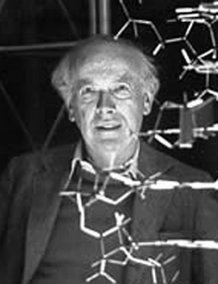
Born This Day: James Watson

From Today In Science History:

Watson was born on this day in 1928. An American geneticist and biophysicist, he shared the 1962 Nobel Prize for Physiology or Medicine (with Francis Crick and Maurice Wilkins) for the discovery of "the molecular structure of nucleic acids and its significance for information transfer in living material." Deoxyribonucleic acid (DNA) is the substance contained in cells that controls heredity.

Crick and Watson began their collaboration in 1951, and published their paper on the double helix structure on 2 Apr 1953 in Nature. This accomplishment became a cornerstone of genetics and was widely regarded as one of the most important discoveries of 20th-century biology.
image.

Created This Day: The American Museum of Natural History

In 1869, the American Museum of Natural History in New York City was officially created with the signing of a bill by the Governor of New York, John Thompson Hoffman.

The museum began from the efforts of Albert Smith Bickmore, one-time student of Harvard zoologist Louis Agassiz, who was successful in his proposal to create a natural history museum in New York City, with the support of William E. Dodge, Jr., Theodore Roosevelt, Sr., Joseph Choate, and J. Pierpont Morgan. It opened to the public 27 Apr 1871.

With a series of exhibits, the Museum’s collection went on view for the first time in the Central Park Arsenal, the Museum’s original home, on the eastern side of Central Park.

Also, on this day in 1930, Hostess Twinkies were invented by bakery executive James Dewar.

From Today in Science History.

The Philip J Currie Dinosaur Museum

It's not the 'River of Death And Discovery Dinosaur Museum" anymore.

"The museum to be constructed near Wembley will be known as the Phillip J Currie Dinosaur Museum, in honour of Dr. Phil Currie.

County Councillor Ross Sutherland is the chair of the Dinosaur Museum Society.

He feels having Dr. Currie's name associated with the project will help it move forward.

He has also been instrumental in the development of the Pipestone Creek dinosaur bonebed for the past 25 years, including co-authoring a book on the bonebed's unique species - the Pachyrhinosaurus Lakustai."

Taken from HQGrandePrairie.com.

Apparently this is real.

Sunday, April 03, 2011

Burn Everything!


Art © Mark Schultz
Anyone's who's been following this blog knows that it has a soft spot for popular culture and old Sci-Fi flicks. For my money, and I'm not alone in this opinion, one of the best is Them! It may not have dinosaurs but it's got giant ants, so come on! The TCM Movie Morlock site has a recent piece up on 'flamethrowers in movies', and one of the best scenes ever is in Them!

"...The great thing about this scene is that they are doing all of this damage on the say-so of lady scientist Joan Weldon, who heretofore had been all cute in her little suit and cap, dutifully deferring to her egghead dad Edmund Gwenn — but when the ants’ nest is discovered, Weldon goes all zero tolerance. “Burn it!” she commands. And Whitmore and Arness actually question her call (“What?!”), as if to say “But they’re just babies!” “I said burn it,” she barks through her gas mask. “Burn everything!” And they do."
Read the rest at The Movie Morlocks.
This also gives me the chance to showcase this Them!-inspired image by Mark Schultz from his upcoming Various Drawings Vol. 5, out this summer from Flesk Publications.

A Tiny Maniraptoran From England

A tiny maniraptoran dinosaur in the Lower Cretaceous Hastings Group: Evidence from a new vertebrate-bearing locality in southeast England. 2011. D. Nash and S.C. Sweetman. Cretaceous Research, in press


Abstract [edit]: Here we report the cervical vertebra of a small dinosaur from the Pevensey Pit at Ashdown Brickworks, a site located north-west of Bexhill, East Sussex. The pit yields a rich assemblage of vertebrate fossils from the Valanginian Wadhurst Clay Formation of the Hastings Group.

The new specimen, a near-complete but water-worn posterior cervical vertebra, is tiny (total centrum length = 7.1 mm) but evidently from an adult theropod. Its large hypapophysis, X-shaped neural arch and amphicoelous centrum suggest referral to Maniraptora, and the subparallel anterior and posterior articular surfaces imply that it does not belong to a deinonychosaur. The X-shaped neural arch recalls a similar condition seen in oviraptorosaurs while the high neural canal/articular surface ratio (0.70) is bird-like.

The specimen is significant in representing the first maniraptoran to be reported from the Hastings Group but is otherwise indeterminate. By comparing the specimen to better known maniraptorans and estimating the proportions of the animal to which it belongs, we suggest that the total skeletal length of this maniraptoran was somewhere between 16 and 40 cm. It may therefore have been among the smallest of known Mesozoic dinosaurs.

Saturday, April 02, 2011

A Eudicot from the Early Cretaceous of China

A eudicot from the Early Cretaceous of China. 2011. D. Sun, et al. Nature 471: 625–628.

Scientists have discovered the first intact fossil of a mature eudicot, a type of flowering plant whose membership includes buttercups, apple trees, maple trees, dandelions and proteas.
The 125 million-year-old fossil was named Leefructus mirus in honor of Li Shiming, a non-scientist who donated the fossil to Ge Sun's new museum of paleontology in Liaoning Province, China.

The fossil shows the above-ground portion of a mature plant. A single stem leads to five leaves, and one leads to a fully developed flower. The entire fossil is about 16 cm (6.3 in) tall. Leaves are innervated by branching veins, and the small, cup-shaped flower has five petals.

"We are also beginning to understand that the explosive radiation of all flowering plants about 111 million years ago has had a long history that began with the slower diversification of many families of eudicots over 10, perhaps 15 million years earlier."

"I think Leefructus had attractive flowers to advertise for pollinators to visit," said Dilcher, when asked to speculate. "There were no bees at this time, so I think that flies, beetles or extinct types of moths or scorpion flies may have been involved in its pollination. Leefructus was found in the volcanic ash beds of an ancient lake. I think it was living near a lake, perhaps in a wet or marshy area much as buttercups do today."

The profusion of flowering plant species in the second half of the Mesozoic Era, the age of dinosaurs, eventually led to flowers' domination of other types of plants in all but Earth's harshest climates. Evolutionary biologists believe the diversification of flowering plants also supported the radiation of a wide range of animal species, particularly pollinators and seed eaters, from beetles and bees to hummingbirds and bats.

Until now, most fossil information about the earliest eudicots has come from fossilized pollen, the plant equivalent of sperm. Despite pollen's small size, pollen grains have provided crucial information to paleontologists. But pollen can only tell scientists so much. link

Published This Day: Double Helix Description

From Today in Science History:

On this day in 1953, the journal Nature published a paper from Francis Crick and James Watson, titled Molecular Structure of Nucleic Acids: A Structure for Deoxyribose Nucleic Acid, in which they described a double helix structure for DNA.

Download the paper from Nature HERE.

Friday, April 01, 2011

Zhuchengtyrannus magnus, A New Tyrannosaur from China

A new, large tyrannosaurine theropod from the Upper Cretaceous of China. 2011. D. Hone, et al. Cretaceous Research, in press.


Image by Robert Nicholls
The newly named dinosaur species Zhuchengtyrannus magnus probably measured about 11 metres long, stood about 4 metres tall, and weighed close to 6 tonnes. Comparable in size and scale to the legendary T. rex, this new dinosaur is one of the largest theropod (carnivorous) dinosaurs ever identified by scientists.

"With only some skull and jaw bones to work with, it is difficult to precisely gauge the overall size of this animal. But the bones we have are just a few centimetres smaller than the equivalent ones in the largest T. rex specimen. So there is no doubt that Zhuchengtyrannus was a huge tyrannosaurine."

"We named the new genus Zhuchengtyrannus magnus - which means the 'Tyrant from Zhucheng' - because the bones were found in the city of Zhucheng, in eastern China's Shandong Province," says Dr Hone.

Together with nearby sites, the quarry in Shandong Province, eastern China where the remains of this huge carnivore were found contains one of the largest concentrations of dinosaur bones in the world. Most of the specimens recovered from the quarry belong to a gigantic species of hadrosaur, or duck-billed dinosaur. Research suggests that the area contains so many dinosaur fossils because it was a large flood plain where many dinosaur bodies were washed together during floods and fossilised. link

Born This Day: Wallace Beery


Wallace Fitzgerald Beery (April 1, 1885 – April 15, 1949) was an American actor who appeared in more than 250 films in over 36 years. At 16 he ran away from home and joined the Ringling Brothers Circus as an assistant elephant trainer, but left two years later, after being clawed by a leopard.

His career spanned the transition from silent movies to the talkies. He won an Academy award in 1931 for his starring role in The Champ, becomeing one of Hollywood's top stars in the 1930's. The hard-drinking Beery was implicated in the beating death of Ted Healy, the original leader of the Three Stooges. Beery is presented here for his starring role as Prof. Challenger in the 1925 movie, The Lost World.

Died This Day: Saint George Jackson Mivart

Mivart (Nov. 30, 1827 - April 1, 1900) was a English biologist who was a leading critic of Charles Darwin's theory of natural selection. Although called to the Bar in 1851, he instead pursued his interests in natural history and comparative anatomy, studying the insectivores and carnivores.

He held that variation was predetermined by a higher intelligence, and that evolution proceeded in a step-wise fashion, and not an accumulation of small variations.

In Jan 1871 he published Genesis of Species, opposing Darwin's interpretation of evolution. Mivart's liberal position even seemed to conflict with his Roman Catholic religion, for which he was excommunicated by Cardinal Vaughan in Jan 1900, a few months before he died. link

In a letter (1871) to Darwin after the publication of Mivart's Genesis of the Species, he states,
"Unhappily the acceptance of your views means with many the abandonment of belief in God and in the immortality of the soul together with future rewards & punishments. No words of mine could represent an appreciable fraction of what I think as to the importance of such an abandonment—yet I am far from blaming you personally for (knowing you as I do) I am persuaded you only seek the promotion of truth though I regret you do not more protect against these unnecessary irreligious deductions."