
Clive and Nick prospecting.


Plant fossils (Santonian) in Vertigris Coulee.

Clive explains palaeobotany.


Anyone with an interest in the evolutionary history of amphibians will want to get a copy of Bob Carroll’s latest monograph.
 material surrounding the amber, the mushroom joins the exclusive company of just a handful of fossilized fleshy fungal bodies ever found.
"Life is the most important thing about the world, the most important thing about life is evolution. Thus, by consciously seeking what is most meaningful, I moved from poetry to mineralogy to paleontology to evolution." G.G. SimpsonFrom the web site supporting the excellent PBS show “Evolution”:
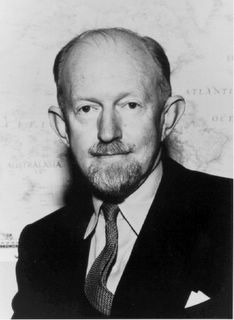 As one of the founders of the "modern synthesis" of evolution, paleontologist George Gaylord Simpson argued that the fossil record supports Darwin's theory that natural selection acting on random variation in a population is the driving force behind evolution. Simpson was among the first to use mathematical methods in paleontology, and he also took into account newly discovered genetic evidence for evolution in his study of paleontology. In his 1944 book, Tempo and Mode in Evolution, Simpson divided evolutionary change into "tempo," the rate of change, and "mode," the manner or pattern of change, with tempo being a basic factor of mode. Simpson saw paleontology, revealing the long history of life on earth, as a unique field through which to study the history of evolution.
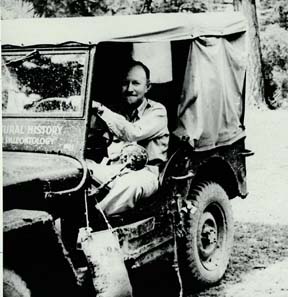 At a time when other paleontologists were convinced that the fossil record could best be explained by directed variation, Simpson disagreed. He said that fossil patterns needed no mystical or goal-oriented processes to explain them. For example, where others saw the modern horse as having arisen in a single advance toward the specialized form, Simpson saw the path as that of an irregular tree that had many side-branches leading off to extinction.


Scientists have used detailed computer models to work out the weight of a typical "king of the dinosaurs", and determined how it ran and turned.From the BBC:

It’s raining here in Dinosaur Park so we’re back in the Field Station for an afternoon of talks from some of the assembled palaeo-brain trust. So, here’s a quick update. I’ll try to post some photos from the workshop later in the week.


