Thursday, October 13, 2005

Prehistoric Global Warming = Good Fossils

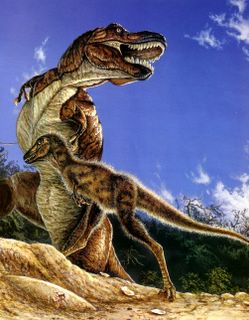
Prehistoric global warming episodes from massive atmospheric pollution involving carbon dioxide and methane could have created and preserved "mass kills" of wildlife, according to a University of Oregon study presented at the Geological Society of America's annual meeting.
The work, done by Gregory Retallack, professor of Geologic Sciences at Oregon, involved a worldwide compilation of thousands of exceptionally well preserved fossil assemblages of fish, crustaceans, insects, starfish and other life forms. There are only about 41 episodes of exceptional preservation from the last 500 million years, and each episode is widely distributed around the world.

Well known examples of such preservation of complete soft-bodied fish and other creatures include the Burgess Shale (dating to the Middle Cambrian Period of about 508 million years ago and found near Field, British Columbia) and the Solnhofen Plattenkalk (dating to the Late Jurassic Period of about 150 million years ago and found in Bavaria, Germany). Such exceptional assemblages were thought to have been preserved in environments that were unusually low in oxygen, highly saline, very cold, or extremely dry. What was not suspected until the new compilation was the global distribution of other exceptional fossil deposits of the same ages.

Independent estimates of atmospheric pollution crises come from studies of carbon anomalies, microscopic pores of fossil leaves and climatic indicators from fossil soils. Methane outbursts from volcanically intruded coals and submarine gas hydrates are prime suspects for these lethal atmospheric pollution events.

"Lowered levels of oxygen can kill fish and other creatures in marginally aerated environments, and also preserve their carcasses from dismemberment and decay," said Retallack." Data from carbon anomalies and microscopic leaf pores indicate that some of these killer greenhouses ramped up, within only a few thousand years, to intolerable levels of more than 10 times the modern level of atmospheric carbon dioxide. What stopped them from continuing on to a sterile greenhouse atmosphere like that of Venus? It was the widespread death and burial of animals and their carbon which created fossil bonanzas, the likes of which may have saved us from the heat sterilization experienced by our sister planet."

All the above from EurekAlerts. Images from HERE and HERE.

Amazing Science Tales

Check out this fun 'faux' pulp novel cover...

Amazing Science Tales illustration by Simon Dunsdon

Artist Simon Dunsdon, a member of the publishing group 'E-Ville Press' (which is comprised of many Pixar artisans) created the hero in the picture. 'The Champion' appears to be an homage to all the great heroes of old. The fantastic image shown above is a pin-up for one of his books.

Read more about 'The Champion' and see lots of other great work on Simon's blog.

Wednesday, October 12, 2005

Do Feathered Dinosaurs Exist? Yes!

Do feathered dinosaurs exist? Testing the hypothesis on neontological and paleontological evidence.2005 Alan Feduccia, Theagarten Lingham-Soliar, J. Richard Hinchliffe. Journal of Morphology (published on-line Oct 10, 2005).
Abstract:
The origin of birds and avian flight from within the archosaurian radiation has been among the most contentious issues in paleobiology. Although there is general agreement that birds are related to theropod dinosaurs at some level, debate centers on whether birds are derived directly from highly derived theropods, the current dogma, or from an earlier common ancestor lacking suites of derived anatomical characters. Recent discoveries from the Early Cretaceous of China have highlighted the debate, with claims of the discovery of all stages of feather evolution and ancestral birds (theropod dinosaurs), although the deposits are at least 25 million years younger than those containing the earliest known bird Archaeopteryx. In the first part of the study we examine the fossil evidence relating to alleged feather progenitors, commonly referred to as protofeathers, in these putative ancestors of birds. Our findings show no evidence for the existence of protofeathers and consequently no evidence in support of the follicular theory of the morphogenesis of the feather. Rather, based on histological studies of the integument of modern reptiles, which show complex patterns of the collagen fibers of the dermis, we conclude that protofeathers are probably the remains of collagenous fiber meshworks that reinforced the dinosaur integument. These meshworks of the skin frequently formed aberrant patterns resembling feathers as a consequence of decomposition. Our findings also draw support from new paleontological evidence. We describe integumental structures, very similar to protofeathers, preserved within the rib area of a Psittacosaurus specimen from Nanjing, China, an ornithopod dinosaur unconnected with the ancestry of birds. These integumental structures show a strong resemblance to the collagenous fiber systems in the dermis of many animals. We also report the presence of scales in the forearm of the theropod ornithomimid (bird mimic) dinosaur, Pelecanimimus, from Spain. In the second part of the study we examine evidence relating to the most critical character thought to link birds to derived theropods, a tridactyl hand composed of digits 1-2-3. We maintain the evidence supports interpretation of bird wing digit identity as 2,3,4, which appears different from that in theropod dinosaurs. The phylogenetic significance of Chinese microraptors is also discussed, with respect to bird origins and flight origins. We suggest that a possible solution to the disparate data is that Aves plus bird-like maniraptoran theropods (e.g., microraptors and others) may be a separate clade, distinctive from the main lineage of Theropoda, a remnant of the early avian radiation, exhibiting all stages of flight and flightlessness.


From good ol’ EurekAlerts comes THE PRESS RELEASE for the above article that has been causing a buzz around the internet dino-forums:
No good evidence exists that fossilized structures found in China and which some paleontologists claim are the earliest known rudimentary feathers were really feathers at all, a renowned ornithologist says. Instead, the fossilized patterns appear to be bits of decomposed skin and supporting tissues that just happen to resemble feathers to a modest degree.

Led by Dr. Alan Feduccia of the University of North Carolina at Chapel Hill, a team of scientists says that as a result of their new research and other studies, continuing, exaggerated controversies over "feathered dinosaurs" make no sense.
"We all agree that birds and dinosaurs had some reptilian ancestors in common," said Feduccia, professor of biology in UNC’s College of Arts and Sciences. "But to say dinosaurs were the ancestors of the modern birds we see flying around outside today because we would like them to be is a big mistake.

"The theory that birds are the equivalent of living dinosaurs and that dinosaurs were feathered is so full of holes that the creationists have jumped all over it, using the evolutionary nonsense of ‘dinosaurian science’ as evidence against the theory of evolution," he said. "To paraphrase one such individual, ‘This isn’t science . . . This is comic relief.’"
Read the rest of the article HERE

Wow! What can one say? For myself and most paleontologists the evidence is overwhelming that living birds are dinosaurs (although not all dinosaurs are birds)! The recent material from China clearly shows small carnivorous dinosaurs bearing a variety of true feathers, and feather-like structures. For Dr. Feduccia to appeal to the creationists for support of his ideas is perplexing at best.

Image from HERE.

Tuesday, October 11, 2005

Styrassic Park


The palaeblog's favourite former camp cook and on-going badlands enthusiast, Martha Dunsmore, just came back from a spin around Europe and brought back the above brochure from Austria. For more details click HERE.

Ask A Scientist


Art © Darwyn Cooke. Characters © DC Comics.

Darwyn Cooke has the answer. He also has The Question, too.

Monday, October 10, 2005

Beijing Photos


A view on the fly of the IVPP (Institute of Palaeontology and Palaeoanthropology).


Faces on the walls at the IVPP. Spot the Protoceratops.


Darren Tanke at work in the IVPP.


Juvenile ankylosaur.


In the window of the IVPP.


These photos are all from the reptile house at the Beijing zoo.


Elephants at the zoo.


A very weird sculpture at the zoo.


Back at the IVPP.

Photos © Michael Ryan. Click to enlarge most photos.

Catholic Church No Longer Swears By Truth Of The Bible

The hierarchy of the Roman Catholic Church has published a teaching document instructing the faithful that some parts of the Bible are not actually true.


From Ruth Gledhill, Religon Correspondent for The Times comes this article (excerpted below):

The Catholic bishops of England, Wales and Scotland are warning their five million worshippers, as well as any others drawn to the study of scripture, that they should not expect total accuracy from the Bible.

"We should not expect to find in Scripture full scientific accuracy or complete historical precision," they say in The Gift of Scripture. The document is timely, coming as it does amid the rise of the religious Right, in particular in the US.

Some Christians want a literal interpretation of the story of creation, as told in Genesis, taught alongside Darwin's theory of evolution in schools, believing 'intelligent design' to be an equally plausible theory of how the world began.

But the first 11 chapters of Genesis, in which two different and at times conflicting stories of creation are told, are among those that this country's Catholic bishops insist cannot be 'historical'. At most, they say, they may contain 'historical traces'.

The document shows how far the Catholic Church has come since the 17th century, when Galileo was condemned as a heretic for flouting a near-universal belief in the divine inspiration of the Bible by advocating the Copernican view of the solar system. Only a century ago, Pope Pius X condemned Modernist Catholic scholars who adapted historical analyzing of ancient literature critical to the Bible.

As examples of passages not to be taken literally, the bishops cite the early chapters of Genesis, comparing them with early creation legends from other cultures, especially from the ancient East. The bishops say it is clear that the primary purpose of these chapters was to provide religious teaching and that they could not be described as historical writing.

The bishops say: "Such symbolic language must be respected for what it is, and is not to be interpreted literally."

Read the full article HERE.

Art by Gustave Doré

Sunday, October 09, 2005

Keif Llama & The Evolution Of The Universe

From the press release from the University of Washington:
Physicists who work with a concept called string theory envision our universe as an eerie place with at least nine spatial dimensions, six of them hidden from us, perhaps curled up in some way so they are undetectable. The big question is why we experience the universe in only three spatial dimensions instead of four, or six, or nine.


Two theoretical researchers from the University of Washington and Harvard University think they might have found the answer. They believe the way our universe started and then diluted as it expanded -- what they call the relaxation principle -- favored formation of three- and seven-dimensional realities. The one we happen to experience has three dimensions.

"That's what comes out when you do the math," said Andreas Karch, a University of Washington assistant professor of physics and lead author of a new paper that details the theory.


Karch and his collaborator, Lisa Randall, a physics professor at Harvard, set out to model how the universe was arranged right after it began in the big bang, and then watch how the cosmos evolved as it expanded and diluted. The only assumptions were that it started with a generally smooth configuration, with numerous structures -- called membranes, or "branes" -- that existed in various spatial dimensions from one to nine, all of them large and none curled up.

The researchers allowed the cosmos to evolve naturally, without making any additional assumptions. They found that as the branes diluted, the ones that survived displayed three dimensions or seven dimensions. In our universe, everything we see and experience is stuck to one of those branes, and for it to result in a three-dimensional universe the brane must be three-dimensional.

Other realities, either three- or seven-dimensional, could be hidden from our perception in the universe, Karch said.

"There are regions that feel 3D. There are regions that feel 5D. There are regions that feel 9D. These extra dimensions are infinitely large. We just happen to be in a place that feels 3D to us," he said.

In our world, forces such as electromagnetism only recognize three dimensions and behave according to our laws of physics, their strength diminishing with distance. Gravity, however, cuts across all dimensions, even those not recognized in our world, Karch and Randall say. But they theorize that the force of gravity is localized and, with seven branes, gravity would diminish far more quickly with distance than it does in our three-dimensional world.


"We know there are people in our three-brane existence. In this case we will assume there are people somewhere nearby in a seven-brane existence. The people in the three-brane would have a far more interesting world, with more complex structures," Karch said.


With gravity diminishing rapidly with distance, a seven-dimensional existence would not have planets with stable orbits around their sun, Karch said.

"I am not precisely sure what a universe with such a short-range gravity would look like, mostly because it is always difficult to imagine how life would develop under completely different circumstances," he said. "But in any case, planetary systems as we know them wouldn't form. The possibility of stable orbits is what makes the three-dimensional world more interesting."


Karch and Randall detail their work in the October edition of Physical Review Letters, published by the American Physical Society. The research was supported by grants from the U.S. Department of Energy and the National Science Foundation.

Karch said they hope the work will spark extensive scientific exploration of many other questions involving string theory, extra dimensions and the evolution of the cosmos.


All art © Matt Howarth.

Posting this article gives me the chance to plug the work of another good friend, MATT HOWARTH. Matt is an artist and writer probably best known for his own creations including Those Annoying Post Bros., Savage Henry, and Keif Llama:Xenotech, that latter being the redhead featured throughout this column. Matt’s Keif Llama (seen above trying to deal with the headache of yet another alien bureaucracy) stories are a heady mix of intelligent SF based on hard science (ala Hal Clement) with more than enough rip-roaring action to keep the most critical reader on the edge of their seat. Why Matt is not world famous for his Keif stories alone is beyond me!

Matt and I share a interest in an eclectic mix of musicians, many of whom -- including The Residents, Hawkwind, Foetus, Nash the Slash, Ron Geesin, Conrad Schnitzler, & Manuel Göttsching -- have been featured in Matt’s books. You can order them up HERE.

You can read an interview I did with Matt in 1998(!) about Keif Llama by clicking HERE.

You can order up copies or easy-to-read PDF’s of the entire Keif Llama collection by clicking HERE to go to the Bugtown Mall.

Saturday, October 08, 2005

Up from the Magma and Back Again

From Past lives: Chronicles of Canadian Paleontology at the Geological Survey of Canada's web page comes this article on

"Sarah Binks, The Sweet Songstress of Saskatchewan".

Even though the poetry of Miss Binks touches the very geological soul of the province, her work has been sadly neglected by the government geologists at the Geological Survey of Saskatchewan -- possibly because of envy.

T. rex coprolite from Saskatchewan. The fossil equivalent of a Sarah Binks Poem?
As the founder of the geo-literary school of poetry, Sarah Binks, the Sweet Songstress of Saskatchewan, naturally drew heavily on geological imagery in her writings. Paul Hiebert, her chronicler, pointed out that no lesser a person than the Literary Editor of The Horsebreeder's Gazette enthused about Sarah, "She expresses, not only the soul of Saskatchewan, but its very bones; the Jurassic, Triassic, or the plain Assic, are all there".

In her poetry we find geological themes mingled with rejected love in a characteristic Binksian manner:
Man, who is a creature of the moment jist,
Is yet a fossil in micaceous schist,
To-morrow's day, his bones are bleached and bent,
A something for the archeologist.

Man who has spurned and made my heart to hurt,
Is but a creature and thing of dirt,
A thing of mud, of clay, volcanic ash,
Old brick, cinders, broken cement, chert
.
Hiebert has difficulty maintaining a biographer's dispassion when he effuses over Sarah's epic poem "Up from the Magma and Back Again,"

"Those haunting lines ... express more than an oil well. They speak of us of the Upper Silurian. They speak to us of the Lower Galician. They speak to us of the Plasticine, the overburden, the underburden, the chert concretions, the Great Ice age. Nay, the whole super epic breathes in and breathes out the geological soul of Saskatchewan".

Further reading:

Hiebert, Paul.
1974: Sarah Binks. Oxford University Press.

New Dinosaur Park To Open in Gansu Province of China

A national geological park with dinosaur footprints will open to the public in northwest China's Gansu Province in mid-October, a local government official said.

The park contains 1,724 dinosaur footprints in 150 groups of 10 categories. They have been found on 2,000 square meters of land on the northern bank of Taiji Lake in Yongjing County.

They include the footprints of at sauropods, theropods, ornithomimids, ornithopods, pterosaura. Among these, the footprints of coelurosaurs and ornitopods were first discovered on the Chinese territory.

The Liujiaxia National Geological Park of Dinosaurs was built three years ago at the site where dinosaur footprints were discovered in July 1999. Its construction cost an investment of more than 7 million yuan (863,132 US dollars).

These footprint fossils were described by archaeologists as "huge, well preserved and highly distinct." One type of sauropod footprint is 1.5 meters long and 1.2 meters wide, the largest of its kind in the park.

China has established 44 national geological parks so far.

Non Sequitur


Read the strip Non Sequitur HERE at UComics.com.

Friday, October 07, 2005

New Flying Reptiles

Pterosaur diversity and faunal turnover in Cretaceous terrestrial ecosystems in China. Xiaolin Wang, Alexander W. A. Kellner, Zhonghe Zhou and Diogenes de Almeida Campos. 2005. Nature 437, 875-879. doi: 10.1038/nature03982.

New specimens and an analysis of the Jehol pterosaur faunae of northeastern China show an unexpected diversity of flying reptile groups in terrestrial Cretaceous ecosystems. Here we report two new pterosaurs that are referred to European groups previously unknown in deposits of northeastern China. Feilongus youngi, from the Yixian Formation, is closely related to the Gallodactylidae, and is distinguished by the presence of two independent sagittal crests and a protruding upper jaw. Nurhachius ignaciobritoi, from the Jiufotang Formation, has teeth formed by labiolingually compressed triangular crowns, only previously reported in Istiodactylus latidens from England. With these new discoveries, the Jehol pterosaurs show a wide range of groups including both primitive and derived forms that are not matched by any other deposit in the world. The discoveries also document the turnover of pterosaur faunae, with the primitive Anurognathidae and early archaeopterodactyloids being replaced by derived pterodactyloids. Furthermore, these deposits offer an opportunity to examine the interaction and competition between birds and pterosaurs—it indicates that the avian fauna during the Lower Cretaceous (and possibly most of the Mesozoic) dominated terrestrial, inland regions, whereas pterosaurs were more abundant in coastal areas.


Artists' renderings depict two newly discovered species of flying reptiles, or pterosaurs. Fossils found in China provide the first known evidence of the species, Nurhachius ignaciobritoi (top) and Feilongus youngi (bottom), which lived more than 120 million years ago.
Illustrations by Maurilio Oliveira and Orlando Grillo
From National Geographic News comes this article by Stefan Lovgren:

Fossils found in northeastern China have revealed two new species of flying reptiles that lived more than 120 million years ago, during the dinosaur era. The extinct species, known as pterosaurs, belong to groups previously found only in Europe. Scientists made the find in a region known for the diversity of its fossil specimens dating from the Cretaceous period, which lasted from 144 million to 65 million years ago.

The discovery may offer clues about the distribution of species during that time. Researchers now suggest, for example, that pterosaurs may have dominated coastal areas while birds were more dominant inland.

The pterosaurs were neither dinosaurs nor birds but rather flying reptiles that ruled the skies millions of years ago. They ranged in size from that of a sparrow to that of a small aircraft. The fossil deposits could provide researchers with an insight into the competition between pterosaurs and early bird species in this area of China.

Read the full article HERE.

The Paleo-Path Archives


Re-read all the installments of the “Paleo-Path” by clicking on the links below:

Part 1: Unearthing Origins
Part 2: From Alley Oop to The Ancient Great Plains
Part 3: Jesse Marsh and TARZAN
Part 4: Turok, Son of Stone 1
Part 5: Turok, Son of Stone 2
Part 6: "Classics" Illustrated
Part 7: Gorgo's Mash O' Monsters
Part 8: Up From The Underground
Part 9: Jim Lawson's PALEO!
Part 10: Steve Bissette & Tyrant
Part 11: Pete Von Sholly
Part 12: Roy G. Krenkel

Parts 1-10 are by artist, writer, scholar, & gentleman, Steve Bissette!

Thursday, October 06, 2005

More Digital Mongolia


One of the lab lights in the Ulaanbaatar Prep Lab.


Wanna buy a dinosaur bone? Unfortunately people like this would approach us all too often!


A poached Gallimimus quarry in the Nemegt Formation. Many of the dinosaurs were found in concretions that were split open to expose the bones. The teeth and claws appear to have been the main focus. This specimen, like most of the others we came across, would have been a perfectly preserved, 3D skeleton. I did manage to find the smashed portions of the articulated lower jaws, the top of the braincase, and, maybe, part of one of the orbits.


Another view of the poached quarry above.


We salvaged this partial arm. The claws were neatly carved off by the vandals.


But on to better things! This happy face was on the package of the paper toweling we used to make our field jackets. And the plaster we used (Chinese I think) was far better than any I've used in North America.


Dr. Eva Koppelhus and part of the crew works an ankylosaur quarry.

Photos © Michael Ryan. Click to enlarge most photos.

Died This Day: George Gaylord Simpson

June 16, 1902 - October 6, 1984

From Today In Science History:

Simpson is known for his contributions to evolutionary theory and to the understanding of intercontinental migrations of animal species in past geological times. Simpson specialized in early fossil mammals, leading expeditions on four continents and discovering in 1953 the 50-million-year old fossil skulls of dawn horses in Colorado.

Simpson helped develop the modern biological theory of evolution, drawing on paleontology, genetics, ecology, and natural selection to show that evolution occurs as a result of natural selection operating in response to shifting environmental conditions. He spent most of his career as a paleontologist at the American Museum of Natural History.

Image from HERE.

Parry and Carney


Both Palaeo-artist Mike Skrepnick & Ace CMNH volunteer Steve Green passed along THIS LINK to the above strip by Mike Keesey.

You can read more about Mike HERE.

Wednesday, October 05, 2005

Happy Birthday T. rex!


Painting © Michael Skrepnick.

100 years ago today, the initial description of Tyrannosaurus rex, its junior synonym Dynamosaurus imperiosus, and Albertosaurus sarcophagus was published.

Thanks to Dr. Thomas Holtz, Jr. for pointing this out.

Tuesday, October 04, 2005

How The Zebra Lost Its Stripes

From EurekAlerts:
DNA from museum samples of extinct animals is providing unexpected information on the extent and effect of the Ice Age as well as the path of species evolution, according to a report by scientists from Yale University, the Smithsonian Institute and the Max Planck Institute for Evolutionary Anthropology.


The quagga, Equus quagga, a South African relative of horses and zebras, having a front half with zebra-like stripes and a back section like a horse with no marking, became extinct about 100 years ago. The pelt from a quagga museum specimen was the subject of tissue sampling that launched the field of ancient DNA analysis.

In the past, the quagga has alternatively been described as a species and a subspecies of the Plains zebra. These researchers asked how and when the quagga diverged from all the remaining related horses, zebras, and asses. They compared the genetics, coat color and habitats of existing zebras with related extinct species.

The mitochondrial DNA markers from 13 museum specimens, including the only skeleton in museum collections, which is at Yale's Peabody Museum of Natural History, showed that quagga likely diverged from Plains zebra about 120,000 to 290,000 years ago during the Ice Age. These results suggest that the quagga descended from a population of plains zebras that became isolated and the distinct quagga body type and coloring evolved rapidly.

This study reveals that the Ice Age was important not just in Europe and North America, but also in Africa.

"The rapid evolution of coat color in the quagga could be explained by disrupted gene flow because of geographical isolation, an adaptive response to a drier habitat, or a combination of both of the two forces," said Gisella Caccone of the Department of Ecology and Evolutionary Biology at Yale.

Mark Schultz: Out Of The Past


Above is the cover of the new catalogue for Mark Schultz’s Spanish career retrospective exhibit. The show opened at the Casal Solleric in Palma de Mallorca on Sept. 22, and continues through December. Admission is free.

The exhibition includes works from all phases of his professional comic and illustration career, including Xenozoic covers, sequential pages and merchandising, a variety of cover art done for SubHuman and other properties, and Conan paintings and illustrations.

As of this time, the soft cover catalogue is available only through the Solleric and cooperating museums in Spain and France, for the amazingly low price of 20 Euros (although Mark cannot absolutely confirm this). As a quality production of over 200 pages with color sections, it's a steal.

The Casal Solleric does not have a web site or e-mail address as far as I can determine. I did manage to pull this address from the web but I can’t speak to its validity:

CASAL SOLLERIC
Passeig del Born, 27; 07012 - Palma
Tel.: (+34) 971.72.20.92-3

If you can’t track it down I’d suggest contacting BudPlant.com and see if they have any plans to import this book into North America.

Monday, October 03, 2005

Mad About Dinos


Although I've not looked at an issue for over 30 years I've always had a soft spot for MAD magazine
, especially the first issues edited and written by Harvey Kurtzman. THIS SITE will let you browse every cover to every issue.