Saturday, March 30, 2013
Geological Time Scale First Proposed (1759)
In 1759, Italian geologist Giovanni Arduino (1714-1795) dated a letter to Professor A.Vallisneri the younger, in which Arduino proposed a classification of Earth's surface rocks according to four brackets of successively younger orders: Primary, Secondary, Tertiary and Quaternary. These are the four geological eras used today. The volcanic rocks without fossils which he saw in the Atesine Alps that formed the cores of large mountains he called Primary. Overlying them, the fossil rich rocks of limestone and clay that were found on the prealpine flanks of the mountains he called Secondary. The less consolidated fossil-bearing rocks of the subalpine foothills, he named Tertiary, and the alluvial rock deposits in the plains were the Quaternary. link


Friday, March 29, 2013
Premiered This Day: Gorgo

Over at Atomic Surgery the good doctors present a double bill to commemorate the day: a story by Steve Ditko from Gorgo #15 and a Gorgo filmbook from Famous Monsters of Filmland #50.
Monday, March 25, 2013
The End Triassic Extinction
Zircon U-Pb geochronology links the end-Triassic extinction with the Central Atlantic Magmatic Province. Blackburn, T.J., et al., Science, published on-line 21 March 2013

Now researchers at MIT, Columbia University and elsewhere have determined that these eruptions occurred precisely when the extinction began, providing strong evidence that volcanic activity did indeed trigger the end-Triassic extinction. link.

More than 200 million years ago, a massive extinction decimated 76 percent of marine and terrestrial species, marking the end of the Triassic period and the onset of the Jurassic. This devastating event cleared the way for dinosaurs to dominate Earth for the next 135 million years, taking over ecological niches formerly occupied by other marine and terrestrial species.It’s not entirely clear what caused the end-Triassic extinction, although most scientists agree on a likely scenario: Over a relatively short period of time, massive volcanic eruptions from a large region known as the Central Atlantic Magmatic Province (CAMP) spewed forth huge amounts of lava and gas, including carbon dioxide, sulfur and methane. This sudden release of gases into the atmosphere may have created intense global warming and acidification of the oceans that ultimately killed off thousands of plant and animal species.
Now researchers at MIT, Columbia University and elsewhere have determined that these eruptions occurred precisely when the extinction began, providing strong evidence that volcanic activity did indeed trigger the end-Triassic extinction. link.
Tuesday, February 26, 2013
Scrappy Little Jaw

If you want to pick up a copy of this limited edition beauty contact John at Birdman Sound.
Monday, February 25, 2013
The Brainless Origin of The Head
The bilaterian head patterning gene six3/6 controls aboral domain development in a cnidarian. 2013. Sinigaglia, C., et al. PLoS Biology 10.1371/journal.pbio.1001488.
In a simple, brainless sea anemone, the same genes that control head development in higher animals regulate the development of the front end of the swimming larvae. link
 Author Summary [edit]: The evolutionary origin of head development is a fundamental question for understanding the evolution of animal body plans. Bilaterally symmetrical animals (Bilaterians) have an anterior-posterior (head-to-tail) axis, whose anterior end is usually characterized by a head and a brain.
Bilaterians evolved from an ancestor shared with cnidarians (corals, sea anemones, jellyfish), but brain-like structures are absent in cnidarians, although they have an obvious oral-aboral axis. Cnidarian larvae move with the aboral pole forward, but as adult polyps this pole is anchored to the ground, while the oral end is used for feeding. It is unclear whether one of the termini of cnidarians corresponds to the bilaterian head-forming region.
We show here that in the sea anemone Nematostella vectensis genes regulating bilaterian head development are expressed at the larval aboral pole and that a key anterior developmental gene, six3/6, controls the development of the aboral pole. These findings support the hypothesis that the anterior, head-forming, region of bilaterians and the aboral region of cnidarians derived from the same domain of their last common ancestor and are therefore homologues.
In a simple, brainless sea anemone, the same genes that control head development in higher animals regulate the development of the front end of the swimming larvae. link

Bilaterians evolved from an ancestor shared with cnidarians (corals, sea anemones, jellyfish), but brain-like structures are absent in cnidarians, although they have an obvious oral-aboral axis. Cnidarian larvae move with the aboral pole forward, but as adult polyps this pole is anchored to the ground, while the oral end is used for feeding. It is unclear whether one of the termini of cnidarians corresponds to the bilaterian head-forming region.
We show here that in the sea anemone Nematostella vectensis genes regulating bilaterian head development are expressed at the larval aboral pole and that a key anterior developmental gene, six3/6, controls the development of the aboral pole. These findings support the hypothesis that the anterior, head-forming, region of bilaterians and the aboral region of cnidarians derived from the same domain of their last common ancestor and are therefore homologues.
Thursday, February 21, 2013
Bads News on Jobs for Recent Ph.D.s

Read the article at The Atlantic: The Ph.D Bust: America's Awful Market for Young Scientists—in 7 Charts
Tuesday, February 12, 2013
Born This Day: Barnum Brown

Feb. 12, 1873 – Feb. 5, 1963
Photo © AMNH
The greatest dinosaur hunter of the twentieth century was Barnum Brown, who began his career at the American Museum of Natural History in 1897 as an assistant to Henry Fairfield Osborn. Brown traveled all over the world collecting dinosaurs and fossil mammals. Some consider him to be the last of the great dinosaur hunters.
Brown was always impeccably dressed, often wearing a tie and topcoat even in the field. He was a shrewd "horse trader" when it came to wheeling and dealing for fossil specimens. Many of Brown's greatest discoveries, including the first specimens of Tyrannosaurus rex ever found, are displayed in the Museum's Dinosaur Halls.

Sunday, February 10, 2013
Published This Day: Steno Recognizes the Organic Origin of Fossils

In 1667, a classic paleontological paper by Nicolaus Steno was published by the Royal Society, London. His topic, Head of a shark dissected, represented the first such scientific paper to recognise that fossils were the remains of creatures who had died and subsequently had become petrified. Controversy resulted as the same claim had been made in the time of the ancient Greeks, two millennia earlier.
Saturday, February 09, 2013
Asteroid Did Kill The Dinosaurs
Time Scales of Critical Events Around the Cretaceous-Paleogene Boundary. 2013. P.R. Renne, et al. Science 339: 684-687.
 Abstract: Mass extinctions manifest in Earth's geologic record were turning points in biotic evolution. We present 40Ar/39Ar data that establish synchrony between the Cretaceous-Paleogene boundary and associated mass extinctions with the Chicxulub bolide impact to within 32,000 years. Perturbation of the atmospheric carbon cycle at the boundary likely lasted less than 5000 years, exhibiting a recovery time scale two to three orders of magnitude shorter than that of the major ocean basins. Low-diversity mammalian fauna in the western Williston Basin persisted for as little as 20,000 years after the impact. The Chicxulub impact likely triggered a state shift of ecosystems already under near-critical stress.

Wednesday, January 30, 2013
Published This Day: Variation of Animals and Plants under Domestication by Darwin
From Today In Science History:
In 1868, Charles Darwin's book - Variation of Animals and Plants under Domestication - was published. He was 58. It is probably the second in importance of all his works. This was a follow-up work, written in response to criticisms that his theory of evolution was unsubstantiated. Darwin here supports his views via analysis of various aspects of plant and animal life, including an inventory of varieties and their physical and behavioral characteristics, and an investigation of the impact of a species' surrounding environment and the effect of both natural and forced changes in this environment.
In 1868, Charles Darwin's book
 - Variation of Animals and Plants under Domestication - was published. He was 58. It is probably the second in importance of all his works. This was a follow-up work, written in response to criticisms that his theory of evolution was unsubstantiated. Darwin here supports his views via analysis of various aspects of plant and animal life, including an inventory of varieties and their physical and behavioral characteristics, and an investigation of the impact of a species' surrounding environment and the effect of both natural and forced changes in this environment.
Monday, January 28, 2013
Born This Day: Eugene Dubois
Eugene Dubois (Jan. 28, 1858-Dec. 16, 1940) joined the Dutch Army as a medical officer, and used spare time from his medical duties to search for fossils, first in Sumatra and then in Java.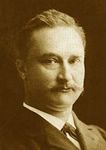 He searched on the banks of the Solo River, with two assigned engineers and a crew of convict labourers to help him. In September 1890, his workers found a human, or human-like, fossil at Koedoeng Broeboes. This consisted of the right side of the chin of a lower jaw and three attached teeth. In August 1891 he found a primate molar tooth.
Two months later and one meter away was found an intact skullcap, the fossil which would be known as Java Man. In August 1892, a third primate fossil, an almost complete left thigh bone, was found between 10 and 15 meters away from the skullcap.
In 1894 Dubois published a description of his fossils, naming them Pithecanthropus erectus (now Home erectus), describing it as neither ape nor human, but something intermediate. In 1895 he returned to Europe to promote the fossil and his interpretation. A few scientists enthusiastically endorsed Dubois' work, but most disagreed with his interpretation. Many scientists pointed out similarities between the Java Man skullcap and Neandertal fossils.
Around 1900 Dubois ceased to discuss Java Man, and hid the fossils in his home while he moved on to other research topics. geology and paleontology. It was not until 1923 that Dubois, under pressure from scientists, once again allowed access to the Java Man fossils. That and the discovery of similar fossils caused it to once again become a topic of debate.
 He searched on the banks of the Solo River, with two assigned engineers and a crew of convict labourers to help him. In September 1890, his workers found a human, or human-like, fossil at Koedoeng Broeboes. This consisted of the right side of the chin of a lower jaw and three attached teeth. In August 1891 he found a primate molar tooth.
Two months later and one
 meter away was found an intact skullcap, the fossil which would be known as Java Man. In August 1892, a third primate fossil, an almost complete left thigh bone, was found between 10 and 15 meters away from the skullcap.
In 1894 Dubois published a description of his fossils, naming them Pithecanthropus erectus (now Home erectus), describing it as neither ape nor human, but something intermediate. In 1895 he returned to Europe to promote the fossil and his interpretation. A few scientists enthusiastically endorsed Dubois' work, but most disagreed with his interpretation. Many scientists pointed out similarities between the Java Man skullcap and Neandertal fossils.
Around 1900 Dubois ceased to discuss Java Man, and hid the fossils in his home while he moved on to other research topics. geology and paleontology. It was not until 1923 that Dubois, under pressure from scientists, once again allowed access to the Java Man fossils. That and the discovery of similar fossils caused it to once again become a topic of debate.

Sunday, January 27, 2013
The Good Old Days of Dinosaur Provincal Park


Died This Day: Adam Sedgwick
From Today In Science History:
Sedgwick (March 22, 1785 - January 27, 1873) was an English geologist who first applied the name Cambrian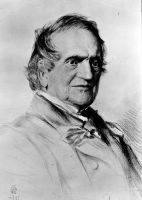 to the geologic period of time, now dated at 570 to 505 million years ago. In 1818 he became Woodwardian Professor of Geology at Cambridge, holding a chair that had been endowed ninety years before by the natural historian John Woodward.
He lacked formal training in geology, but he quickly became an active researcher in geology and paleontology. Many years after Sedgwick's death, the geological museum at Cambridge was renamed the Sedgwick Museum of Geology in his honor. The museum is now part of the Department of Earth Sciences at Cambridge University
Sedgwick (March 22, 1785 - January 27, 1873) was an English geologist who first applied the name Cambrian
 to the geologic period of time, now dated at 570 to 505 million years ago. In 1818 he became Woodwardian Professor of Geology at Cambridge, holding a chair that had been endowed ninety years before by the natural historian John Woodward.
He lacked formal training in geology, but he quickly became an active researcher in geology and paleontology. Many years after Sedgwick's death, the geological museum at Cambridge was renamed the Sedgwick Museum of Geology in his honor. The museum is now part of the Department of Earth Sciences at Cambridge University
Saturday, January 26, 2013
Born This Day: Roy Chapman Andrews

Photo from Parade of Life Through The Ages, by Charles Knight, Nat. Geo., Feb. 1942.
From the American Museum of Natural History web site:
Adventurer, administrator, and Museum promoter — Andrews (Jan. 26, 1884 – March 11, 1960) spent his entire career at the American Museum of Natural History, where he rose through the ranks from departmental assistant, to expedition organizer, to Museum director.
He became world famous as leader of the Central Asiatic Expeditions, a series of expeditions to Mongolia that collected, among other things, dinosaur eggs. Although on these expeditions, Andrews himself found few fossils, and during his career he was not known as an influential scientist, he instead filled the role of promoter, creating immense excitement and successfully advancing the research and exhibition goals of the museum.
Learn about the Roy Chapman Andrews Society HERE.
Friday, January 25, 2013
Born This Day: Theodosius Dobzhansky
Dobzhansky (Jan.25, 1900–Dec. 18, 1975) is noted for being one of the architects of the modern Synthetic Theory of evolution. During the first 20 years of the 20th century, Darwin's theory of natural selection had fallen out of favor among scientists. Many thought it 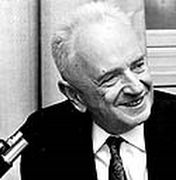 insufficient to explain the origin of adaptations, while new discoveries of gene mutations seemed to them to be incompatible with Darwinian models of change.
But in 1937 Dobzhansky published his book, Genetics and the Origin of Species, that was the first systematic overview view encompassing organic diversity, variation in natural populations, selection, isolating mechanisms (a term he coined) and species as natural units.
Later, working with Sewall Wright, he went on to demonstrate how evolution can produce stability and equilibrium in populations rather than constant directional change. link. image.
 insufficient to explain the origin of adaptations, while new discoveries of gene mutations seemed to them to be incompatible with Darwinian models of change.
 But in 1937 Dobzhansky published his book, Genetics and the Origin of Species, that was the first systematic overview view encompassing organic diversity, variation in natural populations, selection, isolating mechanisms (a term he coined) and species as natural units.
Later, working with Sewall Wright, he went on to demonstrate how evolution can produce stability and equilibrium in populations rather than constant directional change. link. image.
Tuesday, January 15, 2013
Sheep Taphonomy

Photo and caption by Johannes Bojesen
The sheep had drowned while trying to cross a small canal in the meadow-swamp 'Tøndermasken' in southern Jylland in Denmark. Birds had eaten every part above the surface and everything under was left totally untouched. Photo location: Tøndermarsken, Tønder, Denmark.From the 2012 National Geographic Photo Contest
Abstracts due for Vertebrate Paleontology session at North-Central GSA, 2013

We especially encourage presentations by students.
Abstract deadline is Feb. 5, 2013.
More information is available HERE
Sunday, January 13, 2013


Subscribe to:
Posts (Atom)