Work and other issues are forcing me to take a hopefully not-to-long break from the blog. When I return I should be giving updates from the field.
In the meantime, I'll remind you of this classy signed print by Mark Schultz. It is being used to raise money to offset the costs of students doing research with the SADRG in southern Alberta.
For more details drop me a line at palaeoblog at yahoo dot ca
Monday, May 25, 2009
Thursday, May 21, 2009
The Evolutionary Utility of Junk DNA
A Functional Role for Transposases in a Large Eukaryotic Genome. 2009. Nawacki, M., et al. Science 324: 935-938.
Genes called transposons in the single-celled pond-dwelling organism Oxytricha produce cell proteins known as transposases. During development, the transposons appear to first influence hundreds of thousands of DNA pieces to regroup. Then, when no longer needed, the organism cleverly erases the transposases from its genetic material, paring its genome to a slim 5 percent of its original load.
The term "junk DNA" was originally coined to refer to a region of DNA that contained no genetic information. Scientists are beginning to find, however, that much of this so-called junk plays important roles in the regulation of gene activity. No one yet knows how extensive that role may be. link
Scientists have long been perplexed by the extensive strands of genetic material that dominate the genome - junk DNA - but seem to lack specific functions. Why would nature force the genome to carry so much excess baggage?Researchers studying the genome of a pond organism have found that DNA sequences from regions of what had been viewed as the "dispensable genome" are actually performing functions that are central for the organism. They have concluded that the 'junk' genes spur an almost acrobatic rearrangement of the entire genome that is necessary for the organism to grow.
Genes called transposons in the single-celled pond-dwelling organism Oxytricha produce cell proteins known as transposases. During development, the transposons appear to first influence hundreds of thousands of DNA pieces to regroup. Then, when no longer needed, the organism cleverly erases the transposases from its genetic material, paring its genome to a slim 5 percent of its original load.
The term "junk DNA" was originally coined to refer to a region of DNA that contained no genetic information. Scientists are beginning to find, however, that much of this so-called junk plays important roles in the regulation of gene activity. No one yet knows how extensive that role may be. link
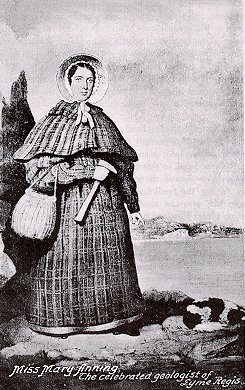
Born This Day: Mary Anning
May 21, 1799 - March 9, 1847
From Today in Science History:
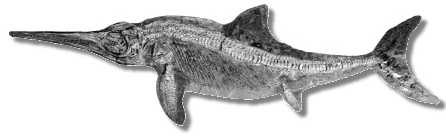
Mary was an English fossil collector who made her first significant discovery at the age of 11 or 12 (sources differ on the details),
when she found a complete skeleton of an Ichthyosaurus, from the Jurassic period. The ten-meter (30 feet) long skeleton created a sensation and made her famous.
Anning's determination and keen scientific interest in fossils derived from her father's interest in fossil hunting, and a need for the income derived from them to support her family after his death. in 1810. She sold large fossils to noted paleontologists of the day, and smaller ones to the tourist trade. In 1823, Anning made another great discovery, found the first complete Plesiosaurus.
Later in her life, the Geological Society of London granted Anning an honorary membership.
From Today in Science History:
Mary was an English fossil collector who made her first significant discovery at the age of 11 or 12 (sources differ on the details),
when she found a complete skeleton of an Ichthyosaurus, from the Jurassic period. The ten-meter (30 feet) long skeleton created a sensation and made her famous.Anning's determination and keen scientific interest in fossils derived from her father's interest in fossil hunting, and a need for the income derived from them to support her family after his death. in 1810. She sold large fossils to noted paleontologists of the day, and smaller ones to the tourist trade. In 1823, Anning made another great discovery, found the first complete Plesiosaurus.
Later in her life, the Geological Society of London granted Anning an honorary membership.
Wednesday, May 20, 2009
Died This Day: Stephen Jay Gould
Here’s a nice piece on Gould by Henry Lowood from the Stanford Presidential Lectures in the Humanities and Arts.
CMNH On The Move

A great photo from the CMNH archives of the move in 1957 to the museum’s present location. The woman driving the convertible is Gloria Motch, the late wife of honorary trustee, Ed Motch.
Darwinius masillae: New Messel Primate
Complete Primate Skeleton from the Middle Eocene of Messel in Germany: Morphology and Paleobiology. 2009. J. Franzen, et al. PloS One 4(5): e5723.
Abstract [edit]: The best European locality for complete Eocene mammal skeletons is Grube Messel, near Darmstadt, Germany. Although the site was surrounded by a para-tropical rain forest in the Eocene, primates are remarkably rare there, and only eight fragmentary specimens were known until now. Messel has now yielded a full primate skeleton. The specimen has an unusual history: it was privately collected and sold in two parts, with only the lesser part previously known. The second part, which has just come to light, shows the skeleton to be the most complete primate known in the fossil record.
The specimen is described as Darwinius masillae n.gen. n.sp. belonging to the Cercamoniinae. Skull radiography shows a host of teeth developing within the juvenile face. Investigation of growth and proportion suggest that the individual was a weaned and independent-feeding female that died in her first year of life, and might have attained a body weight of 650–900 g had she lived to adulthood. She was an agile, nail-bearing, generalized arboreal quadruped living above the floor of the Messel rain forest.
Darwinius masillae represents the most complete fossil primate ever found, including both skeleton, soft body outline and contents of the digestive tract. Study of all these features allows a fairly complete reconstruction of life history, locomotion, and diet.
Any future study of Eocene-Oligocene primates should benefit from information preserved in the Darwinius holotype. Of particular importance to phylogenetic studies, the absence of a toilet claw and a toothcomb demonstrates that Darwinius masillae is not simply a fossil lemur, but part of a larger group of primates, Adapoidea, representative of the early haplorhine diversification.
Vist the promo page for info on the upcoming book and documentary.
Thanks to Lisa for the head's up on this.
While the blog was dormant for the past few weeks I was leading a field trip through Germany. We spent a day at the Messel site and I'll post some photos of it soon.
Tuesday, May 19, 2009
Debuted This Day: The Dinosaur & The Missing Link
On this day back in 1915, The Dinosaur and The Missing took its bow in US cinemas. It features the earliest work of a young Willis O'brien who would go on to bring King Kong to life.
Born This Day: Carl Akeley
May 19, 1864 - Nov 17, 1926
The Hall of African Mammals at the American Museum of Natural History exists thanks to the efforts of Carl Akeley who was the kind of advendurer that Indy Jones could only dream of being.

He died on an African expedition in 1926, ten years before this hall was completed and was buried in a place depicted in the Hall's famous Gorilla Diorama. Of course we approach collecting and conservation differently today, but Akeley is to be commended for his love of nature and his desire to present its hidden corners to the world.
From Today In Science History:
Carl Ethan Akeley was an American naturalist and explorer who developed the taxidermic method for mounting museum displays to show animals in their natural surroundings. His method of applying skin on a finely molded replica of the body of the animal gave results of unprecedented realism and elevated taxidermy from a craft to an art. He mounted the skeleton of the famous African elephant Jumbo. He invented the Akeley cement gun to use while mounting animals, and the Akeley camera which was used to capture the first movies of gorillas.
Monday, April 27, 2009
Opened This Day: AMNH
From Today In Scince History:
On this day in 1871, the American Museum of Natural History opened to the public in New York City. The Museum’s collection went on view for the first time in the Central Park Arsenal, the Museum’s original home, on the eastern side of Central Park.
The museum began from the efforts of Albert Smith Bickmore, one-time student of Harvard zoologist Louis Agassiz, who was successful in his proposal to create a natural history museum in New York City, with the support of Theodore Roosevelt and J. Pierpont Morgan. The Governor of New York signed a bill officially creating the American Museum of Natural History on April 6, 1869.
Sunday, April 26, 2009
Premiered This Day: The Creature Walks Among Us
Back on this day in 1956 the second sequel to The Creature From the Black Lagoon debuted. It's long been considered the weakest film in the trilogy, and it's hard to argue this given that they drag The Creature out of the Amazon, burn him in a fire, and convert him into an air-breathing humanoid with no hope of ever returning to the waters. But, when viewed today, the film takes on deeper meanings than I'm sure were originally intended.
The plot and language of the film can now be taken to speak directly to the hot-button topics of genetic manipulation of animals and foods, and man's destructive meddling with nature leading to accelerated rates of extinction. The movie moves beyond being a simple “monster on the rampage” story and actually has some pointed comments to make about science and politics. It's well worth watching on one of those upcoming hot, humid summer nights.
Kirby & Ditko's Goliath
Jack Kirby and Steve Ditko team up on an early '60's monster story, complete with a dinosaur cameo so's that I can plug it here.
Goseong Dino Expo, Part 2
More photos from the giant dino expo in Korea. In addition to dozens of life-sized and over-sized dino models there were a series of themed pravillions featuring both original and cast fossils. The Velociraptor, Tarbosaurus, and Prorceratops from the Cretaceous pravillion are real; most of the saurpod mounts in the Juarssic pravillion are casts.
Thursday, April 23, 2009
Puijila darwini: Fossil Seal With Legs
A semi-aquatic Arctic mammalian carnivore from the Miocene epoch and origin of Pinnipedia. 2009. N. Rybczynski, et al., Nature 458: 1021-1024.
The 24 to 20 million-year-old fossil skeleton of Puijila darwini was found in the summer of 2007 during a fieldwork expedition on Devon Island, Nunavut, in a meteor impact crater. It resembled an otter, but a skull that is more closely related to seals. A "walking seal", Puijila had legs like a terrestrial mammal, but the feet were webbed and adapted for swimming. This surprisingly complete skeleton (about 65%) is the most primitive pinniped skeleton found so far.
"Puijila is the first fossil evidence that early pinnipeds lived in the Arctic," explains Rybczynski. "This discovery supports the hypothesis that the Arctic may have been a geographic centre in pinniped evolution."
Puijila darwin will be on display at the Canadian Museum of Nature in Ottawa from April 28 to May 10, 2009. A model of the skeleton will be included in Extreme Mammals, an exhibition opening May 16, 2009 at the American Natural History Museum in New York, co-sponsered by the Cleveland Museum of Natural History. link
Puijila even has its own web site.
Tuesday, April 21, 2009
Goseong Dinosaur Expo, Korea
Goseong province on the south coast hosts a giant dinosaur expo every three years. During this time an immense park is turned into a dinosaur event that covers several square kilometers and features multiple themed pavilions (Cretaceous, Jurassic, etc.), tons of dino sculptures and a dino museum that would put most museums in NA to shame. Here are some more photos:
Monday, April 20, 2009
Getting a Leg Up On the Tetrapod Land-Water Transition
Contrasting Developmental Trajectories in the Earliest Known Tetrapod Forelimbs. 2009. V. Callier et al. Science 324: 364 – 367.

Click HERE for an animation of the humerus from MGUH 29017a. The bone rotates 360° around its long axis, which is oriented vertically.
Ichthyostega and Acanthostega, lived an estimated 360-370 million years ago in what is now Greenland. Acanthostega was thought to have been the most primitive tetrapod, that is, the first vertebrate animal to possess limbs with digits rather than fish fins.
New evidence indicates that Ichthyostega may have been closer to the first tetrapod. In fact, Acanthostega may have had a terrestrial ancestor and then returned full time to the water.
The researchers studied the fossilized bones inside the rock with computed tomography (CT) scanning rather than trying to prepare them out of the matrix. The CT slices revealed that Clack had found the first juvenile forms of Ichthyostega.
The humeri (upper arm bones) suggest that Ichthyostega juveniles were aquatically adapted, and that the terrestrial habit was acquired relatively late in development. The fossils bore evidence that the muscle arrangement in adults was better suited to weight-bearing, terrestrial locomotion than the juvenile morphology. It is possible that Ichthyostega came out of the water only as a fully mature adult.
In contrast, in Acanthostega "there is less change from the juvenile to the adult. Although Acanthostega appears to be aquatically adapted throughout the recorded developmental span, its humerus exhibits subtle traits that make it more similar to the later, fully terrestrial tetrapods.
Because the shapes of its adult limbs seemed the most fin-like, scientists had previously concluded that Acanthostega was "more primitive," Callier said. "But now, if we look at the details of the humeri, Ichthyostega's are actually more similar to earlier fishes."
Ironically, the shape of Acanthostega's limbs, in both adult and the newly-discovered juvenile forms, is more "paddle-like" than Ichthyostega's, Callier said. "They would have been really good swimmers. So, although Acanthostega had limbs with digits, we don't think it was really terrestrial. We think even the adults were aquatic."
"If Ichthyostega is actually more primitive than Acanthostega, then maybe animals evolved towards a terrestrial existence a lot earlier than originally believed," she said. "Maybe Acanthostega was actually derived from a terrestrial ancestor, and then, went back to an aquatic lifestyle." link
Born This Day: Willi Henning
April 20, 1913 – Nov. 5, 1976
From the Willi Hennig Society :
Hennig is best known for
developing phylogenetic systematics, a coherent theory of the investigation and presentation of the relations that exist among species. Contrary to the position generally held during his time, Hennig viewed historical inference as a strictly logical and scientific endeavor. He first summarized his ideas in 1950 in German which became more widely known with the publication of the English revision, Phylogenetic Systematics (Hennig, 1966).

image.
Major Hennigian principles are:
From the Willi Hennig Society :
Hennig is best known for
developing phylogenetic systematics, a coherent theory of the investigation and presentation of the relations that exist among species. Contrary to the position generally held during his time, Hennig viewed historical inference as a strictly logical and scientific endeavor. He first summarized his ideas in 1950 in German which became more widely known with the publication of the English revision, Phylogenetic Systematics (Hennig, 1966).
image.
Major Hennigian principles are:
1. Relationships among species are to be interpreted strictly genealogically, as sister-lineages, as clade relations. Empirically, a phylogenetic hypothesis may be determined.More info about Henning HERE. photo.
2. Synapomorphies provide the only evidence for identifying relative recency of common ancestry. Synapomorphies are understood to be the shared-derived (evolved, modified) features of organisms.
3. Maximum conformity to evidence is sought (his auxiliary principle). Choice among competing cladistic propositions (cladograms) is decided on the basis of the greatest amount of evidence, the largest number of synapomorphies explainable as homologues.
4. Whenever possible, taxonomy must be logically consistent with the inferred pattern of historical relationships. The rule of monophyly is to be followed, thereby each clade can have its unique place in the hierarchy of taxonomic names.
Born This Day: Sir William Logan
April 20, 1798 – June 22, 1875
From Today in Science History:
Logan was a Canadian geologist dubbed the "Father of Canadian Geology."
He began is career making geologic maps of coalfields in Wales, noting the relationship between the underlying clay layers and fossil tree roots with local coal beds. This substantiated the theory that coal beds are formed in place.
When he began as director (1842-69) of the new Geological Survey of Canada, its geology was virtually unknown. He produced the monumental Report on the Geology of Canada (1863) which recorded 20 years of research, fieldwork, plotting maps, preparing reports, and examining fossil and mineral specimens.
Image and more info from Natural Resources Canada. For a more colourful summary of the man and his life go HERE.
From Today in Science History:
Logan was a Canadian geologist dubbed the "Father of Canadian Geology."
He began is career making geologic maps of coalfields in Wales, noting the relationship between the underlying clay layers and fossil tree roots with local coal beds. This substantiated the theory that coal beds are formed in place.When he began as director (1842-69) of the new Geological Survey of Canada, its geology was virtually unknown. He produced the monumental Report on the Geology of Canada (1863) which recorded 20 years of research, fieldwork, plotting maps, preparing reports, and examining fossil and mineral specimens.
Image and more info from Natural Resources Canada. For a more colourful summary of the man and his life go HERE.
Sunday, April 19, 2009
Died This Day: Louis Dollo
Dec. 7, 1857 – April 19, 1931
From Today In Science History:
Louis Antoine Marie Joseph Dollo was a French vertebrate paleontologist who stated Dollo's Law of Irreversibility whereby in evolution an organism never returns exactly to its former state such that
complex structures, once lost, are not regained in their original form. (While generally true, some exceptions are known.)
He began as an assistant (1882), became keeper of mammals (1891) at the Royal Museum of Natural History in Brussels where he stayed most of his life. He was a specialist in fossil fishes, reptiles, birds, and their palaeoecology.
He supervised the excavation of the famous, multiple Iguanodons found in 1878 by miners deep underground, at Bernissart, Belgium. image
From Today In Science History:
Louis Antoine Marie Joseph Dollo was a French vertebrate paleontologist who stated Dollo's Law of Irreversibility whereby in evolution an organism never returns exactly to its former state such that
complex structures, once lost, are not regained in their original form. (While generally true, some exceptions are known.)He began as an assistant (1882), became keeper of mammals (1891) at the Royal Museum of Natural History in Brussels where he stayed most of his life. He was a specialist in fossil fishes, reptiles, birds, and their palaeoecology.
He supervised the excavation of the famous, multiple Iguanodons found in 1878 by miners deep underground, at Bernissart, Belgium. image
Subscribe to:
Posts (Atom)