Tuesday, November 18, 2008

Mongolia In Montana


If you’re in or near Bozeman, Montana, this week you should take in ”Discover Mongolia at Montana State University” that’s going on all this week.

Bolortsetseg Minjin (below), a paleontologist from Mongolia who is currently a visiting scholar at the Museum of the Rockies, will kick off the Discover Mongolia week with a presentation about dinosaurs in Mongolia. Her talk is set for noon, Monday, Nov. 17, in SUB room 275.


In 2007 Bolortsetseg founded the non-profit "Institute for the Study of Mongolian Dinosaurs" (ISMD) in Ulaanbaatar, Mongolia. The goal of the organization is to build a museum in Mongolia to preserve dinosaurs and other national treasures, and to further science education in the country. Since 2005 she has worked with MSU's Jack Horner, who has supported her efforts to improve Mongolian paleontology. She is working on the paleobiology of the Cretaceous dinosaur Psittacosaurus while at the Museum of the Rockies on a post-doctoral research position. [although you’ve missed her talk I’m sure she’s still around campus]

The Oscar-nominated film "Mongol," the story of Genghis Khan, will be shown at 7 p.m. Wednesday, Nov. 19 at the SUB's Procrastinator Theater. Directed by Sergei Bodrov, the sweeping film tells the story of Khan, who was a slave before conquering half the world in the early 1200s.

Traditional Mongolian music, song and dance will be performed by Mongolian students at 7 p.m. Thursday, Nov. 20, in SUB Ballroom A. There are currently five students from Mongolia studying at MSU as well as three scholars and professors.

Mongolian students will read to area children at 10 a.m. Friday, Nov. 21, at the Bozeman Public Library. The students will read from the book "The Khan's Daughter," as well as give a demonstration of Mongolian writing.

Mongolian cultural artifacts will be on display throughout the week at the MSU Library. In addition, an exhibition of the top 15 photographs taken by MSU students while on MSU's Study Abroad programs will be on display throughout International Education Week in the SUB's Exit Gallery. Paintings done by Mongolian children, ages 5-16, will be displayed at the Bozeman Public Library.

Friday, November 14, 2008

New Triceratops at Boston's Museum of Science

Remember the Triceratops up for auction in Paris last January? Apparently it was purchased for $942,797 and donated to the Museum of Science in Boston. It'll go on display there tomorrow. Andrew Waber from MOS Media Relations sent me this link to the YouTube video of it's timelapsed installation (~ 2min.).

Mineral Kingdom Has Co-Evolved With Life

Mineral evolution. R. M. Hazen et al. American Mineralogist 93: 1693


Scientists have found that the mineral kingdom co-evolved with life, and that up to two thirds of the more than 4,000 known types of minerals on Earth can be directly or indirectly linked to biological activity.
From the press release:

"It's a different way of looking at minerals from more traditional approaches," says Hazen. "Mineral evolution is obviously different from Darwinian evolution—minerals don't mutate, reproduce or compete like living organisms. But we found both the variety and relative abundances of minerals have changed dramatically over more than 4.5 billion years of Earth's history."


All the chemical elements were present from the start in the Solar Systems' primordial dust, but they formed comparatively few minerals. Only after large bodies such as the Sun and planets congealed did there exist the extremes of temperature and pressure required to forge a large diversity of mineral species. Many elements were also too dispersed in the original dust clouds to be able to solidify into mineral crystals.

As the Solar System took shape through "gravitational clumping" of small, undifferentiated bodies—fragments of which are found today in the form of meteorites—about 60 different minerals made their appearance. Larger, planet-sized bodies, especially those with volcanic activity and bearing significant amounts of water, could have given rise to several hundred new mineral species. Mars and Venus, which Hazen and coworkers estimate to have at least 500 different mineral species in their surface rocks, appear to have reached this stage in their mineral evolution.


However, only on Earth—at least in our Solar System—did mineral evolution progress to the next stages. A key factor was the churning of the planet's interior by plate tectonics, the process that drives the slow shifting continents and ocean basins over geological time. Unique to Earth, plate tectonics created new kinds of physical and chemical environments where minerals could form, and thereby boosted mineral diversity to more than a thousand types.

What ultimately had the biggest impact on mineral evolution, however, was the origin of life, approximately 4 billion years ago. "Of the approximately 4,300 known mineral species on Earth, perhaps two thirds of them are biologically mediated," says Hazen. "This is principally a consequence of our oxygen-rich atmosphere, which is a product of photosynthesis by microscopic algae." Many important minerals are oxidized weathering products, including ores of iron, copper and many other metals.

Microorganisms and plants also accelerated the production of diverse clay minerals. In the oceans, the evolution of organisms with shells and mineralized skeletons generated thick layered deposits of minerals such as calcite, which would be rare on a lifeless planet.


"For at least 2.5 billion years, and possibly since the emergence of life, Earth's mineralogy has evolved in parallel with biology," says Hazen. "One implication of this finding is that remote observations of the mineralogy of other moons and planets may provide crucial evidence for biological influences beyond Earth."

New Homo erectus Pelvis & Human Development

A Female Homo erectus Pelvis from Gona, Ethiopia. 2008. S. W. Simpson et al. Science 322: 1089 – 1092.


Credit: Scott W. Simpson, Case Western Reserve University.
Discovery of the most intact female pelvis of Homo erectus may cause scientists to reevaluate how early humans evolved to successfully birth larger-brained babies.
From the press release:

A reconstruction of the 1.2 million-year-old pelvis discovered in 2001 in the Gona Study Area at Afar, Ethiopia, that has led researchers to speculate early man was better equipped than first thought to produce larger-brained babies. The actual fossils remain in Ethiopia.

Reconstructing pelvis bone fragments from the 1.2 million-year-old adult female, Semaw and his co-workers determined the early ancestor's birth canal was more than 30 percent larger than earlier estimates based on a 1.5-million-year-old juvenile male pelvis found in Kenya. The new female fragments were discovered in the Gona Study Area in Afar, Ethiopia, in 2001 and excavation was completed in 2003.

Scientists also were intrigued by other unique attributes of the specimen, such as its shorter stature and broader body shape more likely seen in hominids adapted to temperate climates, rather than the tall and narrow body believed to have been efficient for endurance running.

Scientists had thought early adult Homo erectus females, because of the assumed small birth canal, would produce offspring with only a limited neonatal brain size. These young would have then experienced rapid brain growth while still developmentally immature, leading researchers to envision a scenario of maternal involvement and child-rearing on par with that of modern humans. But those theories had been based upon extrapolations from the existing male skeleton from Kenya.

Thursday, November 13, 2008

Gobi 2008: Deinocheirus


Here's a tidbit that I almost forgot about. One of the goals of our work in Mongolia is to relocate as many of the old dinosaur quarries as possible to help better understand the distributions of the dinosaurs across various formations.

Back in the late 60's the Polish-Mongolian expedition discovered and collected the giant arms (see cast above) of the enigmatic theropod, Deinocheirus, known only from these arms. Near the end of the 2008 KID expedition Philip Currie discovered the location of the near-fabled Deinocheirus quarry (below) and we spent part of a day reopening it. And we did collect more of the skeleton...


Photo © M. Ryan

Tuesday, November 11, 2008

Reptiles & Birds Share Hair Genes

Identification of reptilian genes encoding hair keratin-like proteins suggests a new scenario for the evolutionary origin of hair. 2008. L. Eckhart. PNAS, Published online before print November 10, 2008


Illo by Carl Buell from HERE
From the press release:

The origins of hair date back to an unknown reptile ancestor that lived more than 300 million years ago, in the Paleozoic era. The discovery was made by comparing human, chicken, and green anole lizard genomes. The genome of the lizard was found to contain six different genes for hair keratin, the protein from which mammal hair is made.

The genes were expressed most strongly in the lizard's toes, indicating that the first hair genes played a role in claw formation.

"At least two of these hair protein keratins are formed in the growth zones of the claws," Eckhart said. While the role of the anole lizard's four other hair genes remains unclear, they were likely related to the growth of scales, the study team said. The chicken genome revealed a single hair gene. It's unclear what that gene is for, if anything.

The finding suggests that modern birds, reptiles, and mammals—as well as dinosaurs—shared an early common ancestor that had claws built from hair keratin, Eckhart said.

Monday, November 10, 2008

Mekanik Destruktiw Kommandoh


Not having a TV I'm out of the loop on what's new in commericals, so this might be old hat to you all.

Earth's Largest Rodent

The largest among the smallest: the body mass of the giant rodent Josephoartigasia monesi. 2008. V. Millien. Proc. Royal Soc. B.275: 1953-1955


Kamandi © DC Comics
One I missed last summer…:

The newly-identified Josephoartigasia monesi is believed to be the largest rodent ever to have walked the Earth, was about three meters long and 1.5 meters tall, and weighed from 468 kilos to 2.5 tonnes, according to researchers.

The remains of the skull was found in a broken boulder on Kiyu Beach on the coast of Uruguay's River Plate region. Measuring a whopping 53 cm, the skull has massive incisors several centimeters long.

Despite this fearsome look, the creature was not carnivorous and looked more hippo-like than rat-like. It was so big that it probably spent much of its life semi-submerged in water, to reduce the stresses caused by its size.

The largest living rodent is the carpincho or capybara that also lives in regions of South America and can weigh up to 60 kg. link

Died This Day: Gideon Mantell

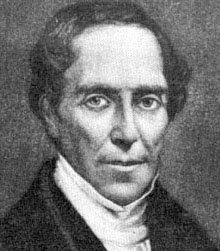
Feb. 3, 1790 – Nov. 10, 1852

Mantell, a physician of Lewes in Sussex in southern England, had for years been collecting fossils in the sandstone of Tilgate forest, and he had discovered bones belonging to three extinct species: a giant crocodile, a plesiosaur, and Buckland's Megalosaurus. But in 1822 he found several teeth that "possessed characters so remarkable" that they had to have come from a fourth and distinct species of Saurian. After consulting numerous experts, Mantell finally recognized that the teeth bore an uncanny resemblance to the teeth of the living iguana, except that they were twenty times larger.
In this paper, the second published description of a dinosaur, he concluded that he had found the teeth of a giant lizard, which he named Iguanodon, or "Iguana-tooth."

Mantell illustrated his announcement with a single lithographed plate. Mantell included at the bottom of the plate a drawing of a recent iguana jaw, which is shown four times natural size, and for further comparison, he added views of the inner and outer surface of a single iguana tooth, "greatly magnified."

The traditional story that Mantell's wife found the first teeth in 1822, while the doctor was visiting a patient, appears, alas, to be unfounded.

Info and plate from HERE.

Saturday, November 08, 2008

New Xenozoic Tales Print


Mark Schultz returns to Xenozoic Tales with this fine print from Flesk Publications. This new illustration depicts Jack and Hannah in a terrific battle against a swarm of dinosaurs. Schultz's exquisite brushwork brings this scene to life. Colors are by Jim & Ruth Keegan.

This artwork is reproduced using the highest standards in printmaking. Schultz has hand selected the paper used and overseen every stage of production. He has personally approved the final prints.

Get it Here

Remember that Mark has a new colour dinosaur print available exclusively from the Palaeoblog. For more info go to this previous posting.

No Dino Dance Floor?


A group of paleontologists visited the northern Arizona wilderness site nicknamed a "dinosaur dance floor" and concluded there were no dinosaur tracks there, only a dense collection of unusual potholes eroded in the sandstone.

So the scientist who leads the University of Utah's geology department says she will team up with the skeptics for a follow-up study.

On Oct. 30 – more than a week after the Utah study was publicized worldwide – four scientists hiked to the remote wilderness-area site: paleontologist Brent Breithaupt, director and curator of the University of Wyoming's Geological Museum; U.S. Bureau of Land Management paleontologist Alan Titus and geologist Rody Cox; and paleontologist Andrew Milner of the St. George (Utah) Dinosaur Discovery Site at Johnson Farm. They saw dinosaur tracks en route, but none in the pockmarked "dance floor."

Read the press release Here.

Friday, November 07, 2008

New Turok, Son of Stone


Veteran illustrator and dinosaur expert Pete Von Sholly has created an absolutely stunning series of trading cards depicting new, weird & mysterious covers for Turok: Son of Stone, with scientifically accurate dinosaurs, effectively updating this classic genre with fifty new pieces. Text on the back of the card tells details of the dinosaurs. This set will amaze and inform casual observers and serious Turok or dinosaur buffs alike.

Oh yeah, I'm on the road this week - postings will return to normal next week.

Died This Day: Alfred Russel Wallace

Jan. 8, 1823 – Nov. 7, 1913

From Today In Science History:

Wallace was a British naturalist and biogeographer. He was the first westerner to describe some of the most interesting natural habitats in the tropics. He is best known for devising a theory of the origin of species through natural selection made independently of Darwin.

Between 1854 and 1862, Wallace assembled evidence of natural selection in the Malay Archipelago, sending his conclusions to Darwin in England. Their findings were jointly presented to the Linnaean Society in 1858. Wallace found that Australian species were more primitive, in evolutionary terms, than those of Asia, and that this reflected the stage at which the two continents had become separated. He proposed an imaginary line (now known as Wallace's line) dividing the fauna of the two regions.

The Alfred Russel Wallace page HERE. More HERE.

Thursday, November 06, 2008

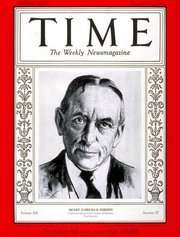
Died This Day: Henry Fairfield Osborn

August 8, 1857 - November 6, 1935

Osborn graduated at Princeton in 1877 and pursued his interest in the biological sciences and paleontology through additional study at several New York City medical schools and with Thomas Henry Huxley in Britain. Returning to the United States, Osborn accepted a position at Princeton, teaching natural sciences from 1881 until 1891, when he moved to Columbia University to organize the Biology Department there, and in 1891, he also helped to organize the Department of Vertebrate Paleontology at the American Museum of Natural History acting as it’s first curator. Osborn's close association with American Museum continued for over 45 years, and included a long tenure as its President, 1908-1933. During these years the museum's collections expanded enormously and it became one of the preeminent research institutions for natural history in the world.

Osborn is noted for describing and naming both Tyrannosaurus rex and Albertosaurus in 1905, Pentaceratops in 1923, and Velociraptor in 1924. One of Osborn's favorite groups for study was the brontotheres, and he was the first to carry out comprehensive research on them. He also wrote an influential textbook, The Age of Mammals (1910).

Apart from his own research, Osborn is perhaps best remembered for the sponsorship of the five immensely successful Central Asiatic Expeditions during the 1920's and 30's led by Roy Chapman Andrews.

Entry from HERE and HERE.

Monday, November 03, 2008

Body Size Evolution In Mesozoic Birds

Body size evolution in Mesozoic birds: little evidence for Cope's rule. 2008. R. BUTLER & A. GOSWAMI. Journal of Evolutionary Biology 21: 1673–1682.


Image:Todd Marshall
ABSTRACT: Cope's rule, the tendency towards evolutionary increases in body size, is a long-standing macroevolutionary generalization that has the potential to provide insights into directionality in evolution; however, both the definition and identification of Cope's rule are controversial and problematic. A recent study [J. Evol. Biol. 21 (2008) 618] examined body size evolution in Mesozoic birds, and claimed to have identified evidence of Cope's rule occurring as a result of among-lineage species sorting.

We here reassess the results of this study, and additionally carry out novel analyses testing for within-lineage patterns in body size evolution in Mesozoic birds. We demonstrate that the nonphylogenetic methods used by this previous study cannot distinguish between among- and within-lineage processes, and that statistical support for their results and conclusions is extremely weak.

Our ancestor–descendant within-lineage analyses explicitly incorporate recent phylogenetic hypotheses and find little compelling evidence for Cope's rule. Cope's rule is not supported in Mesozoic birds by the available data, and body size evolution currently provides no insights into avian survivorship through the Cretaceous–Paleogene mass extinction.

Evolution of Conodonts

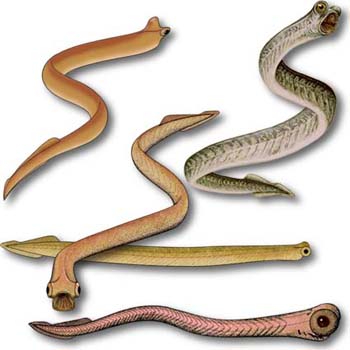
Evolution of morphogenesis in 360-million-year-old conodont chordates calibrated in days. 2008. Jerzy Dzik. Evolution & Development 10: 769 - 777


ABSTRACT: Highly rhythmic increments of crown tissue are identifiable in conodont oral apparatus elements from the Late Devonian of the Holy Cross Mountains, Poland; individual laminae being of thickness comparable with daily increments of vertebrate tooth enamel and fish otoliths. Abundant occurrence of such specimens enables bed-by-bed (stratophenetic) studies of the process of evolution at the population level and quantitative presentation of the evolution of ontogeny in the sampled geological section covering several million years.

The morphologic transformation is expressed as expansion of a juvenile asymmetry to later stages of the ontogeny and in decrease of the mature element width, which was due to a change of the mineral tissue secretion rate. It was not just a simple extension of a juvenile character into the later stage of the ontogeny (heterochrony) but rather a true developmental novelty. The evolution was gradual and very slow. The proposed quantitative approach to growth increments in the mineral skeleton of ancient chordates introduces real-time units to evolutionary developmental studies connected with direct paleontological evidence on the course of evolution.

Sunday, November 02, 2008

Died This Day: Oliver Perry Hay

May 22, 1846 – Novemeber 2, 1930

Hay was an American paleontologist whose catalogs of fossil vertebrates greatly organized existing knowledge and became standard references. Hay's primary scientific interest was the study of the Pleistocene vertebrata of North America and he is renowned for his work on skull and brain anatomy. His first major work was his Bibliography and Catalogue of the Fossil Vertebrata of North America (1902), supplemented by two more volumes (1929-30). Hay also wrote on the evidence of early humans in North America. link

Saturday, November 01, 2008

Born This Day: John Joly

Nov. 1, 1857 - Dec. 8, 1933


From Today in Science History:

Joly was an Irish geologist, physicist and inventor whose interests spanned several fields. Using Edmond Halley's method of measuring the degree of salinity of the oceans, and then by examining radioactive decay in rocks, he estimated Earth's age at 80-90 million years (1898). Later, he revised this figure to 100 million years. He published Radioactivity and Geology (1909) in which he demonstrated that the rate of radioactive decay has been more or less constant through time. He also developed a method for extracting radium (1914) and pioneered its use for cancer treatment.

Born This Day: Alfred Wegener

Nov. 1, 1880 – Nov, 1930

From Today In Science History:


Alfred Lothar Wegener was a German meteorologist and geophysicist who first gave a well-developed hypothesis of continental drift. He suggested (1912) that about 250 million yrs ago all the present-day continents came from a single primitive land mass, the supercontinent Pangaea, which eventually broke up and gradually drifted apart. (A similar idea was proposed earlier by F.B. Taylor in 1910.) Others saw the fit of coastlines of South America and Africa, but Wegener added more geologic and paleontologic evidence that these two continents were once joined.

Born This Day: Gavin de Beer


Illo © Nick Longrich
Nov. 1, 1899 – June 21, 1972

From Today In Science History:

de Beer was an English zoologist and morphologist who contributed to experimental embryology, anatomy, and evolution. He refuted the germ-layer theory and developed the concept of paedomorphism - the retention of juvenile characteristics of ancestors in mature adults).

From examination of the fossil Archaeopteryx, De Beer proposed mosaic evolution with piecemeal evolutionary changes to explain the combination of bird and reptile features.