Friday, February 15, 2008

New Bill Stout Murals at SDNHM


Click to Enlarge


The San Diego Natural History Museum has unveiled a series of new murals by William Stout. Go HERE to see more images. Bill tells me that a book about the production of these murals is in the works from Flesk Publications.
FYI, I'm off to the Carneige Museum in Pittsburgh tomorrow for a free (with admission) public lecture on horned-dinos. Drop by if you're in the area.

Thursday, February 14, 2008

New African Theropods

Basal abelisaurid and carcharodontosaurid theropods from the Lower Cretaceous Elrhaz Formation of Niger. 2008. P.C. Sereno and S.L. Brusatte Acta Palaeontologica Polonica 53:15-46.


Kryptops
From the press release:

Two new 110 million-year-old dinosaurs unearthed in the Sahara Desert highlight the unusual meat-eaters that prowled southern continents during the Cretaceous Period. Named Kryptops and Eocarcharia the fossils were discovered in 2000.

Short-snouted Kryptops palaios, or “old hidden face,” was so named for the horny covering that appears to have covered nearly all of its face. “A fast, two-legged hyena gnawing and pulling apart a carcass,” remarked even Brusatte, “is how we might best imagine Kryptops’ dining habits.” Like later members of its group (called abelisaurids) in South America and India, Kryptops had short, armored jaws with small teeth that would have been better at gobbling guts and gnawing on carcasses than snapping at live prey. About 25 feet in length, Kryptops was a voracious meat-eater.


Eocarcharia, reconstructions ©Todd Marshall, courtesy of Project Exploration
A similar-sized contemporary, Eocarcharia dinops, or “fierce-eyed dawn shark,” was so named for its blade-shaped teeth and prominent bony eyebrow. Unlike Kryptops, its teeth were designed for disabling live prey and severing body parts. Eocarcharia and kin (called carcharodontosaurids) gave rise to the largest predators on southern continents, matching or exceeding Tyrannosaurus in size. Eocarcharia’s brow was swollen into a massive band of bone, giving it a menacing glare.

They preyed upon the ground-grubbing, long-necked plant-eater Nigersaurus and lived alongside the enormous extinct crocodilian nicknamed “SuperCroc” (Sarcosuchus). Then, the African continent was part of Gondwana and just beginning to free itself of its land connection to South America.


CLICK TO ENLARGE

Wednesday, February 13, 2008

Velafrons coahuilensis, New Duck-Billed Dino from Mexico


Velafrons coahuilensi reconstruction courtesy of Gaston Design, Inc.
From the press release:

The 72 million year old duck-billed dinosaur, Velafrons coahuilensis, was collected the state of Coahuila in north-central Mexico by a joint team from the Utah Museum of Natural History, the Utah Geological Survey, the Coordinacion de Paleontologia, Secretaria de Educacion y Cultura de Coahuila the Museo del Desierto,; and the Royal Tyrrell Museum. The species was announced in the December edition of the Journal of Vertebrate Paleontology.

Based on the development of several bony features on the skull and skeleton, the scientists believe that this animal was still a youngster at the time of death. Nevertheless, although not yet fully grown, Velafrons would have been on the order of 25 feet long, suggesting an impressive adult size of 30 feet to 35 feet.


The creature comes from a rock unit known as the Cerro del Pueblo Formation, which dates to around 71.5 million to 72.5 million years ago. The skeleton was discovered in the early 1990s on the outskirts of a small town called Rincon Colorado, about 27 miles west of the city of Saltillo.

In addition to Velafrons, the most recent expeditions recovered remains of a second kind of duck-bill dinosaur, as well as a plant-eating horned dinosaur. The Cerro del Pueblo Formation has also yielded remains of large and small carnivores, including large tyrannosaurs, and more diminutive Velociraptor-like predators. As well as an abundance of fossilized bones, researchers discovered the largest assemblage of dinosaur track ways known from Mexico.

Nemicolopterus crypticus, A New Arboreal Pterosaur

Discovery of a rare arboreal forest-dwelling flying reptile (Pterosauria, Pterodactyloidea) from China 2008. X. Wang et al. PNAS 105: 1983-1987; published online before print


Abstract: A previously undescribed toothless flying reptile from northeastern China, Nemicolopterus crypticus gen. et sp. nov., was discovered in the lacustrine sediments of the Early Cretaceous Jiufotang Formation, western Liaoning, China. The specimen consists of an almost complete articulated skeleton (IVPP V14377) and, despite representing an immature individual, based on the ossification of the skeleton, it is not a hatchling or newborn, making it one of the smallest pterosaurs known so far (wing span 250 mm).

It can be distinguished from all other pterosaurs by the presence of a short medial nasal process, an inverted "knife-shaped" deltopectoral crest of the humerus, and the presence of a well developed posterior process on the femur above the articulation with the tibia. It further shows the penultimate phalanges of the foot curved in a degree not reported in any pterosaur before, strongly indicating that it had an arboreal lifestyle, more than any other pterodactyloid pterosaur known so far.

It is the sister-group of the Ornithocheiroidea and indicates that derived pterosaurs, including some gigantic forms of the Late Cretaceous with wingspans of >6 m, are closely related to small arboreal toothless creatures that likely were living in the canopies of the ancient forests feeding on insects.

Tuesday, February 12, 2008

One Step Beyond...Invertebrates!

MicroRNAs and the advent of vertebrate morphological complexity. 2008. A.M. Heimberg, et al.PNAS., published on-line Feb 2008.


Some vertebrates are more evolved than others...
From the press release:

Researchers have traced the beginnings of complex vertebrates life to microRNA. These tiny molecules only recently discovered reside within what has usually been considered junk DNA. . They are hugely diverse in even the most lowly of vertebrates, but relatively few are found in the genomes of our invertebrate relatives.

The team studied the genomics of primitive living fishes, such as sharks and lampreys, and their spineless relatives, like the sea squirt. By reconstructing the acquisition history of microRNAs shared between human and mice, the researchers determined that the highest rate of microRNA innovation in the vertebrate lineage occurred before the divergence between the living jawless fishes like the lamprey and the jawed fishes like the shark, but after the divergence of vertebrates from their invertebrate chordate relatives, such as the sea squirt.

“Most of these new genes are required for the growth of organs that are unique to vertebrates, such as the liver, pancreas and brain. Therefore, the origin of vertebrates and the origin of these genes is no coincidence.”

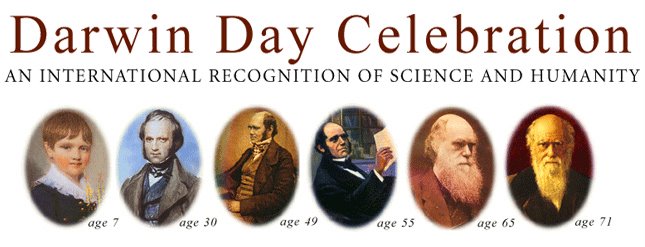
Born This Day: Charles Darwin

Feb. 12, 1809 – April 19, 1882


From the AMNH introduction to their exhibit on Darwin:
Keenly observing nature in all its forms—from fossil sloths to mockingbirds, primroses to children—Darwin saw that we all are related. Every living thing shares an ancestry, he concluded, and the vast diversity of life on Earth results from processes at work over millions of years and still at work today. Darwin's explanation for this great unfolding of life through time—the theory of evolution by natural selection—transformed our understanding of the living world, much as the ideas of Galileo, Newton and Einstein revolutionized our understanding of the physical universe.

Darwin's theory of evolution by natural selection underlies all modern biology. It enables us to decipher our genes and fight viruses, and to understand Earth's fossil record and rich biodiversity. Simple yet at times controversial, misunderstood and misused for social goals, the theory remains unchallenged as the central concept of biology. Charles Darwin, reluctant revolutionary, profoundly altered our view of the natural world and our place in it.
The American Museum of Natural History's video on Darwin.
Darwin's biography from the British Library.
Learn more about Darwin Days.
The Darwin Awards.

Born This Day: Barnum Brown

Feb. 12, 1873 – Feb. 5, 1963


Photo © AMNH
From the AMNH bio:

The greatest dinosaur hunter of the twentieth century was Barnum Brown, who began his career at the American Museum of Natural History in 1897 as an assistant to Henry Fairfield Osborn. Brown traveled all over the world collecting dinosaurs and fossil mammals. Some consider him to be the last of the great dinosaur hunters.

Brown was always impeccably dressed, often wearing a tie and topcoat even in the field. He was a shrewd "horse trader" when it came to wheeling and dealing for fossil specimens. Many of Brown's greatest discoveries, including the first specimens of Tyrannosaurus rex ever found, are displayed in the Museum's Dinosaur Halls.

Monday, February 11, 2008

Komodo Hatchlings vs. Juveniles

Ontogenetic differences in the spatial ecology of immature Komodo dragons. 2008. M. J. Imansyah et al. Journal of Zoology 274: 107–115.


Abstract: The early life-history stages of reptiles are extremely important to an individual's fitness, but in an ecological sense, among the most difficult to observe. Here, we used radio-tracking techniques to describe the differences in movement patterns, habitat use and home range between hatchling and juvenile Komodo dragons Varanus komodoensis on Komodo Island, Indonesia.

The movement of hatchlings from their nests was largely linear and suggested a natal dispersal event. The movement patterns of juvenile Komodo dragons exhibited a greater spatial overlap than hatchlings, indicating greater site fidelity and thus use of a more defined activity area. The rates of daily movement were significantly less for hatchlings compared with juvenile dragons. The activity areas of hatchlings were significantly smaller than juvenile dragons. Both age classes preferred utilizing dry monsoon forest compared with other habitat types.

Hatchlings were predominantly arboreal compared with juveniles and the degree of arboreal activity was strongly correlated with an individual's size. These distinct differences in spatial ecology between immature life-history stages suggest that different selection pressures may affect different size classes of Komodo dragons.

Nice to see some empirical data for how young big reptiles differ in habitat use.

Body Size Evolution in Mesozoic Birds

Body size evolution in Mesozoic birds. 2008. D.W.E.Hone et al. Journal of Evolutionary Biology 21: 618-624.


Abstract: The tendency for the mean body size of taxa within a clade to increase through evolution (Cope’s Rule) has been demonstrated in a number of terrestrial vertebrate groups. However, because avian body size is strongly constrained by flight, any increase in size during the evolution of this lineage should be limited – there is a maximum size that can be attained by a bird for it to be able to get off the ground.

Contrary to previous interpretations of early avian evolution, we demonstrate an overall increase in body size across Jurassic and Cretaceous flying birds: taxon body size increases from the earliest Jurassic through to the end of the Cretaceous, across a time span of 70 Myr. Although evidence is limited that this change is directional, it is certainly nonrandom. Relative size increase occurred presumably as the result of an increase in variance as the avian clade diversified after the origin of flight: a progression towards larger body size is seen clearly within the clades Pygostylia and Ornithothoraces.

In contrast, a decrease in body size characterizes the most crownward lineage Ornithuromorpha, the clade that includes all extant taxa, and potentially may explain the survival of these birds across the Cretaceous-Palaeogene boundary. As in all other dinosaurs, counter selection for small size is seen in some clades, whereas body size is increasing overall.

Saturday, February 09, 2008

10,000 B.C.


watch the trailer
I wonder what inspired the poster?


© Frank Frazetta
But Frank was looking at this:

Art by Charles Knight
Hopefully the prehistoric creatures will at least be worth watching.

Pygmy Dino Inhabited UK Tropical Islands

The age, fauna and palaeoenvironment of the Late Triassic fissure deposits of Tytherington, South Gloucestershire, UK. 2008. D. I. Whiteside and J. E. A. Marshall. Geoogical Magazine, vol 145: 105-147.

From the press release:

The celebrated Bristol, UK, dinosaur, Thecodontosaurus, has now been shown to live on subtropical islands around Bristol, instead of in a desert on the mainland as previously thought. This new research could explain the dinosaur's small size (2 m) in relation to its giant (10 m) mainland equivalent, Plateosaurus. Like many species trapped on small islands, such as the 'hobbit' Homo floresiensis of Flores and pygmy elephants on Malta, the Bristol Dinosaur may have been subjected to island dwarfing.

Geological mapping indicates that the islands were quite small in size and, judging by abundant remains of fossil charcoal, were often swept by fires. Thus the pygmy Bristol Dinosaur may have met its death in a wildfire.

Thecodontosaurus
is one of the earliest named dinosaurs. Its bones were originally found near what is now Bristol Zoo in 1834 - some time before dinosaurs were recognised as a group. In 1975, the remains of at least 11 other individual dinosaurs were uncovered in a quarry at Tytherington, north of Bristol.

Microscopic study of marine algae and fossil pollen shows that, rather than inhabiting the arid uplands of the late Triassic Period, the dinosaurs lived just before the Jurassic Period in a series of lushly vegetated islands around Bristol, the outlines of which can still be seen today in the shape of the land.

Friday, February 08, 2008

Died This Day: Mendel's First Paper

In 1865, Gregor Mendel, who first discovered the laws of genetics, read his first scientific paper to the Brünn Society for the study of Natural Sciences in Moravia (published 1866).

He described his investigations with pea plants. Although he sent 40 reprints of his article to prominent biologists throughout Europe, including Darwin, only one was interested enough to reply.

Most of the reprints, including Darwin’s, were discovered later with the pages uncut, meaning they were never read.

Fortunately, 18 years after Mendel's death, three botanists in three different countries researching the laws of inheritance, in spring 1900, came to realize that Mendel had found them first. Mendel was finally acknowledged as a pioneer in the field which became known as genetics. Info from Today In Science History

Read the paper HERE.

Thursday, February 07, 2008

Resurrected Proteins Point To Hot Start For Life

Palaeotemperature trend for Precambrian life inferred from resurrected proteins. 2008. Eric A. Gaucher et al. Nature 451: 704-707.


From the press release:

Using the genetic equivalent of an ancient thermometer, a team of scientists has determined that the Earth endured a massive cooling period between 500 million and 3.5 billion years ago by using reconstructed proteins from ancient bacteria to measure the Earth’s temperature over the ages.

The team wanted to measure Earth’s temperature billions of years ago to learn more about life on Earth during the Precambrian period. But instead of taking the traditional route — analyzing rock formations or measuring isotopes in fossils — they opted to do what they knew best: protein reconstruction.

“We’ve analyzed the temperature stability of proteins inside organisms that were around during those times,” said Omjoy Ganesh, Ph.D., a structural biologist in the UF College of Medicine’s department of biochemistry and molecular biology. “The ancient oceans were warmer. For ocean organisms living during that time to survive, the proteins within them had to be stable at high temperatures.”

After scanning multiple databases, the scientists struck gold with a protein called elongation factor, which helps bacteria string together amino acids to form other proteins. Each bacterial species has a slightly different form of the protein: Bacteria that live in warmer environments have resilient elongation factors, which can withstand high temperatures without melting. The opposite is true for bacteria that live in cold environments.

Armed with information about when bacterial species evolved, the scientists rebuilt 31 elongation factors from 16 ancient species. By comparing the heat sensitivity of the reconstructed proteins, they were able to discern how Earth’s temperature changed over the ages.

“Remarkably, our results are nearly identical to geologic studies that estimate the temperature trend for the ancient ocean over the same time period. The convergence of results from biology and geology show that Earth’s environment has continuously been changing since life began, and life has adapted appropriately to survive,” Gaucher said.

Darwin's Enduring Legacy

For those of you with the proper access, you can read Kevin Padian’s article, “Darwin's enduring legacy”, in the latest issue of Nature.

Wednesday, February 06, 2008

What Did A Dinosaur Eat?

From the press release:

Take 200 milligrammes of dried and ground Equisetum, ten millilitres of digestive juice from sheep's rumen, a few minerals, carbonate and water. Fill a big glass syringe with the mix, clamp this into a revolving drum and put the whole thing into an incubator, where the brew can rotate slowly. In this way you obtain the artificial 'dinosaur rumen'. With this apparatus (also used as a 'Menke gas production technique' in assessing food for cows) Dr. Jürgen Hummel from the Bonn Institute of Animal Sciences is investigating which plants giant dinosaurs could have lived off more than 100 million years ago. The largest sauropods dinosaurs' with their 70 to 100 tonnes had a mass of ten full grown elephants or more than 1000 average Germans [insert your own joke here].

Martin Sander, the coordinator of the research group 'Biology of the Sauropod Dinosaurs: The Evolution of Gigantism' and Hummel assume that the herbivorous dinosaurs must have had a kind of fermenter, similar to the rumen in cows today.' Almost all existing herbivores digest their food by using bacteria in this way.

Norfolk Island pine or ginkgo leaves stand their ground surprisingly well compared to today's flora. 'The difference is not as great as might be expected,' Jürgen Hummel emphasises. The bacteria digest ginkgo even better than foliage, but they seem to prefer Equisetum most. With it gas production is even higher than with some grasses. Nevertheless, equisetum figures in the diet of comparatively few animals. The reason is that in addition to the toxins present in many modern species it wears down animals teeth too much. 'Equisetum contains a lot of silicates,' Jürgen Hummel says. 'It acts like sand paper.'

However, many dinosaurs did not have any molars at all. They just pulled up their food and gulped it down. The mechanical break-up may have been carried out by a 'gastric mill'. Similar to today's birds, dinosaurs may have swallowed stones with which they ground the food to a paste with their muscular stomach. image

This is published in Proceedings of the Royal Society B and should be on-line soon. It would be great if the people writing the press releases would a) tell you the title of the paper, and b) provide a link. Honestly, how do some of these people keep their jobs?!

When Did Modern Birds Arise?

Strong mitochondrial DNA support for a Cretaceous origin of modern avian lineages. 2008. J. W. Brown et al. BMC Biology 6:6 (open access)


From the press release:

A new analysis offers the strongest molecular evidence yet for an ancient origin of modern birds, suggesting that modern birds arose more than 100 million years ago, not 60 million years ago, as fossils suggest.

"Scientists typically use two sources of information to date biological events: the fossil record, which contains physical remains of ancient organisms, and molecular genetic data," said graduate student Joseph Brown, who is first author on the paper. In the case of modern birds, however, the two approaches have yielded conflicting results, at times leading to heated debates between paleontologists and molecular biologists. Molecular biologists have asserted that the fossil record must be incomplete, while paleontologists have countered that the genetic data must be suspect.

"What my colleagues and I did was apply all of these new methods to the problem of the origin of modern birds, with each method making different assumptions about how mutation rate changes across the tree," Brown said. He hoped the analysis would narrow the gap between fossil and molecular data, but in fact it only reinforced the rock-clock split by underscoring the finding that modern birds arose more than 100 million years ago.

Born This Day: Mary Leakey

Feb. 6, 1913 – Dec. 9, 1996

From the Minnesota State University site:

Mary Douglas Nicol Leakey was in London, England. She meet her future husband, Louis Leakey, when he asked her to illustrate his book, 'Adam’s Ancestors'. Mary and Louis spent from 1935 to 1959 at Olduvai Gorge in the Serengeti Plains of northern Tanzania where they worked to reconstruct many Stone Age cultures dating as far back as 100,000 to two million years ago. They documented stone tools from primitive stone-chopping instruments to multi-purpose hand axes.

In October of 1947, while on Rusinga Island, Mary unearthed a Proconsul africanus skull, the first skull of a fossil ape ever to be found. It was dated to be twenty million years old. An Australopithecus boisei skull was uncovered in 1959. Not long afterwards, a less robust Homo habilis was found. In 1965 the duo uncovered a Homo erectus cranium.

After her husband died in 1972, Mary continued her work at Olduvai and Laetoli. She discovered Homo fossils at Laetoli which were more than 3.75 million years old, fifteen new species and one new genus. From 1978-81 Mary and her staff worked to uncover the Laetoli hominid footprint trail which was left in volcanic ashes 3.6 million years ago.

Image from HERE where you will also find a slightly more colourful account of her life with Louis.

Sunday, February 03, 2008

Born This Day: Gideon Mantell

Feb. 3, 1790 – Nov. 10, 1852

Mantell, a physician of Lewes in Sussex in southern England, had for years been collecting fossils in the sandstone of Tilgate forest, and he had discovered bones belonging to three extinct species: a giant crocodile, a plesiosaur, and Buckland's Megalosaurus. But in 1822 he found several teeth that "possessed characters so remarkable" that they had to have come from a fourth and distinct species of Saurian. After consulting numerous experts, Mantell finally recognized that the teeth bore an uncanny resemblance to the teeth of the living iguana, except that they were twenty times larger.
In this paper, the second published description of a dinosaur, he concluded that he had found the teeth of a giant lizard, which he named Iguanodon, or "Iguana-tooth."

Mantell illustrated his announcement with a single lithographed plate. Mantell included at the bottom of the plate a drawing of a recent iguana jaw, which is shown four times natural size, and for further comparison, he added views of the inner and outer surface of a single iguana tooth, "greatly magnified."

The traditional story that Mantell's wife found the first teeth in 1822, while the doctor was visiting a patient, appears, alas, to be unfounded.

Info and plate from HERE.

Saturday, February 02, 2008

Early Dino Movie Tie-Ins


Even as far back as "The Lost World", marketers have found a way to make toys to tie in with dinosaur movies. "Twistum" can still be found for the motivated collector.

Friday, February 01, 2008

Montealtosuchus, 80 Million Year Old Croc


The fossil of a prehistoric reptile dubbed Montealtosuchus arrudacamposi was presented to the public for the first time at a news conference in Brazil on January 31, 2008. Photograph by Ricardo Moraes/AP Photo

The 80-million-year-old terrestrial predator could be a "missing link" between prehistoric and modern-day crocodiles, researchers say.

Read the story at National Geographic News.

Hmmm… Did I really say that?