Monday, February 12, 2007

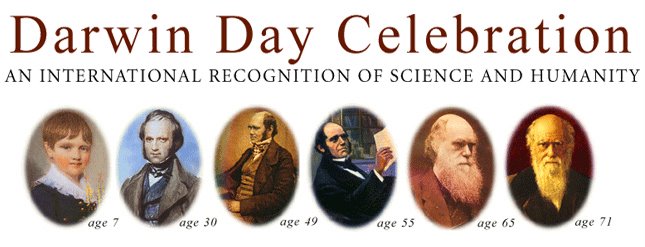
Born This Day: Charles Darwin

Feb. 12, 1809 – April 19, 1882


From the AMNH introduction to their exhibit on Darwin:
Keenly observing nature in all its forms—from fossil sloths to mockingbirds, primroses to children—Darwin saw that we all are related. Every living thing shares an ancestry, he concluded, and the vast diversity of life on Earth results from processes at work over millions of years and still at work today. Darwin's explanation for this great unfolding of life through time—the theory of evolution by natural selection—transformed our understanding of the living world, much as the ideas of Galileo, Newton and Einstein revolutionized our understanding of the physical universe.

Darwin's theory of evolution by natural selection underlies all modern biology. It enables us to decipher our genes and fight viruses, and to understand Earth's fossil record and rich biodiversity. Simple yet at times controversial, misunderstood and misused for social goals, the theory remains unchallenged as the central concept of biology. Charles Darwin, reluctant revolutionary, profoundly altered our view of the natural world and our place in it.

The American Museum of Natural History's video on Darwin.
Darwin's biography from the British Library.
Learn more about Darwin Days.
The Darwin Awards.

Born This Day: Barnum Brown

Feb. 12, 1873 – Feb. 5, 1963


Photo © AMNH
From the AMNH bio:

The greatest dinosaur hunter of the twentieth century was Barnum Brown, who began his career at the American Museum of Natural History in 1897 as an assistant to Henry Fairfield Osborn. Brown traveled all over the world collecting dinosaurs and fossil mammals. Some consider him to be the last of the great dinosaur hunters.

Brown was always impeccably dressed, often wearing a tie and topcoat even in the field. He was a shrewd "horse trader" when it came to wheeling and dealing for fossil specimens. Many of Brown's greatest discoveries, including the first specimens of Tyrannosaurus rex ever found, are displayed in the Museum's Dinosaur Halls.

Don Martin's "The Paleontologist"


© Don Martin
CLICK TO ENLARGE AND READ
UPDATE: Thanks to Pete Von Sholly, Steven Wallace, and Barbara Beasley who provided scans, and Daniel Snyder who offered to do the same! This is the best of the bunch.

Sunday, February 11, 2007

Tertiary Crocodylians From Puerto Rico

Tertiary crocodylians from Puerto Rico: Evidence for Late Tertiary endemic crocodylians in the West Indies?. 2007. C. A. Brochu et al. Geobios 40: 51-59.


Crocodyliform remains. (A–C, L–P) San Sebastián Formation (Late Oligocene) and (D–K) Lares Formation, Puerto Rico.

Abstract: Fragmentary fossils from northwestern Puerto Rico document the existence of crocodyliforms during the Late Oligocene and Early Miocene. The remains are insufficient to establish new named species, but they are inconsistent with any other crocodylian known from the western hemisphere during the Cenozoic, including extant Alligator and Crocodylus.

They are thus consistent with the hypothesis that Crocodylus is a comparatively recent immigrant into the West Indies and suggest that, as with Australasia and Africa, the Antilles hosted an endemic clade of crocodylians during the Tertiary, later replaced by Crocodylus.

Saturday, February 10, 2007

1st Fossil Leaf Insect Found

The first fossil leaf insect: 47 million years of specialized cryptic morphology and behavior. 2007. S. Wedmann et al. PNAS 104: 565-569.

Abstract [edit]: Fossils of phasmid insects are extremely rare worldwide. Here we report the first fossil leaf insect, Eophyllium messelensis gen. et sp. nov., from 47-million-year-old deposits at Messel in Germany.

The new specimen, a male, is exquisitely preserved and displays the same foliaceous appearance as extant male leaf insects. Clearly, an advanced form of extant angiosperm leaf mimicry had already evolved early in the Eocene.

We infer that this trait was combined with a special behavior, catalepsy or "adaptive stillness," enabling Eophyllium to deceive visually oriented predators. Potential predators reported from the Eocene are birds, early primates, and bats.

This fossil leaf insect bears considerable resemblance to extant individuals in size and cryptic morphology, indicating minimal change in 47 million years. This absence of evolutionary change is an outstanding example of morphological and, probably, behavioral stasis.

More info HERE

Today In History: Nicolaus Steno

From Today In Science History:

In 1667, a classic paleontological paper by Nicolaus Steno was published by the Royal Society, London. His topic, Head of a shark dissected, represented the first such scientific paper to recognise that fossils were the remains of creatures who had died and subsequently had become petrified. Controversy resulted as the same claim had been made in the time of the ancient Greeks, two millennia earlier.

Friday, February 09, 2007

Barnum Brown


Photo © AMNH
The latest issue of Discovery has a nice article on Barnum Brown by Lowell Dingus and Mark Norell.

Thursday, February 08, 2007

Eocene–Oligocene Temperature Drop

Large temperature drop across the Eocene–Oligocene transition in central North America. 2007. A. Zanazzi et al. Nature 445: 639-642.
The largest climate change in central North America since the age of the dinosaurs 65 million years ago, a temperature drop of nearly 15o F, is documented within the fossilized teeth of horses.
From the press release:

The Eocene-to-Oligocene transition (~33.5 MA) marks a massive extinction of life in both marine and land environments. Scientists believe the drop in temperature was likely due to changes in oceanic currents.

Researchers analyzed oxygen and carbon isotopes in the preserved teeth and bones of primitive fossil horses and a primitive cloven-hoofed mammal called an oreodont. Oxygen isotopes act as thermometers, telling scientists at what temperature they were formed; carbon isotopes act as barometers, revealing relative humidity.

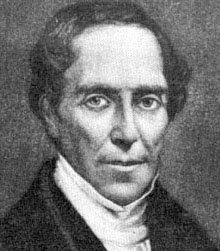
Died This Day: Mendel's 1st Paper

In 1865, Gregor Mendel, who first discovered the laws of genetics, read his first scientific paper to the Brünn Society for the study of Natural Sciences in Moravia (published 1866).

He described his investigations with pea plants. Although he sent 40 reprints of his article to prominent biologists throughout Europe, including Darwin, only one was interested enough to reply.

Most of the reprints, including Darwin’s, were discovered later with the pages uncut, meaning they were never read.

Fortunately, 18 years after Mendel's death, three botanists in three different countries researching the laws of inheritance, in spring 1900, came to realize that Mendel had found them first. Mendel was finally acknowledged as a pioneer in the field which became known as genetics. Info from Today In Science History

Read the paper HERE.

Tuesday, February 06, 2007

Born This Day: Mary Leakey

Feb. 6, 1913 – Dec. 9, 1996

From the Minnesota State University site:

Mary Douglas Nicol Leakey was in London, England. She meet her future husband, Louis Leakey, when he asked her to illustrate his book, 'Adam’s Ancestors'. Mary and Louis spent from 1935 to 1959 at Olduvai Gorge in the Serengeti Plains of northern Tanzania where they worked to reconstruct many Stone Age cultures dating as far back as 100,000 to two million years ago. They documented stone tools from primitive stone-chopping instruments to multi-purpose hand axes.

In October of 1947, while on Rusinga Island, Mary unearthed a Proconsul africanus skull, the first skull of a fossil ape ever to be found. It was dated to be twenty million years old. An Australopithecus boisei skull was uncovered in 1959. Not long afterwards, a less robust Homo habilis was found. In 1965 the duo uncovered a Homo erectus cranium.

After her husband died in 1972, Mary continued her work at Olduvai and Laetoli. She discovered Homo fossils at Laetoli which were more than 3.75 million years old, fifteen new species and one new genus. From 1978-81 Mary and her staff worked to uncover the Laetoli hominid footprint trail which was left in volcanic ashes 3.6 million years ago.

Image from HERE where you will also find a slightly more colourful account of her life with Louis.

Greenhouse Gas Saved Earth From Frosty Fate

CO2 may have saved Earth from freezing over early in the planet's history.
From the press release:

A new analysis of ancient rocks from the eastern shore of Hudson Bay in northern Quebec, Canada now provides shows that CO2 Earth's atmosphere could have sustained surface temperatures above freezing before 3.75 billion years ago.

Previous studies had shown liquid water existed at Earth's surface even though the weak sun should have been unable to warm the planet above freezing conditions. But high concentrations of CO2 or methane could have warmed the planet, according to the research team.


Nicole Cates and Stephen Mojzsis survey a landscape of ancient rocks in Hudson Bay. Image CU-Boulder

Over 100 Dinosaur Eggs Found in India


From National Geographic News:

Three fossil enthusiasts recently set out on an 18-hour hunt near the central city of Indore and ended up with more than a hundred dinosaur eggs (some of which are pictured above, apparently arranged for photographers), the Hindustan Times reported today.

These particular sauropod eggs were found in clusters of six to eight, one of the discoverers told the Hindustan Times. The eggs were laid during the Cretaceous period, roughly 146 to 66 million years ago, by dinosaurs between 40 and 90 feet (12 and 27 meters) long, he added.

Along with the eggs, the fossil hunters uncovered fossilized footprints of the dinosaurs, which used to come from miles around to make their nests in the sandy shores of a long-gone waterway.

Monday, February 05, 2007

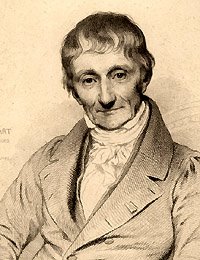
Born This Day: Alexandre Brongniart

Feb. 5, 1770 - Oct. 7, 1847.

Brongniart was a French mineralogist, geologist, and naturalist, who first arranged the geologic formations of the Tertiary Period (from 66.4 to 1.6 million years ago) in chronological order and described them.

He made the first systematic study of trilobites that became important in determining the chronology of Paleozoic strata (from 540 to 245 million years ago).

He helped introduce the principle of geologic dating by the identification of distinctive fossils found in each stratum and noted that the Paris formations had been created under alternate freshwater and saltwater conditions. image.

Scavenger vs Predator

Not much news yet so let’s take a look at a neat cartoon that Pete Von Sholly sent us over the weekend. I like the look in the eye of the Triceratops.

Sunday, February 04, 2007

The Creature From The Black Lagoon


Art © the estate of Dave Cockrum
The artist Dave Cockrum passed away late last year. This illo of his from an old 1975 issue of "Monsters Unleashed" of one of the more famous fictional Devonian critters is a belated tip of the hat to him.

I was prompted to post this thanks to our friends over at the *new* Atomic Surgery blog who have posted an old Mechanix Illustrated article on how The Creature's costume was created.

Saturday, February 03, 2007

The 10th Skeleton of Archaeopteryx

The tenth skeletal specimen of Archaeopteryx. 2007. G.Mayr et al. Zoological Journal of the Linnean Society 149: 97–116.

Abstract: We describe the tenth skeletal specimen of the Upper Jurassic Archaeopterygidae. The almost complete and well-preserved skeleton is assigned to Archaeopteryx siemensii Dames, 1897 and provides significant new information on the osteology of the Archaeopterygidae.


Archaeopteryx painting © Luis Rey
As is evident from the new specimen, the palatine of Archaeopteryx was tetraradiate as in non-avian theropods, and not triradiate as in other avians. Also with respect to the position of the ectopterygoid, the data obtained from the new specimen lead to a revision of a previous reconstruction of the palate of Archaeopteryx.

The morphology of the coracoid and that of the proximal tarsals is, for the first time, clearly visible in the new specimen. The new specimen demonstrates the presence of a hyperextendible second toe in Archaeopteryx. This feature is otherwise known only from the basal avian Rahonavis and deinonychosaurs (Dromaeosauridae and Troodontidae), and its presence in Archaeopteryx provides additional evidence for a close relationship between deinonychosaurs and avians.

The new specimen also shows that the first toe of Archaeopteryx was not fully reversed but spread medially, supporting previous assumptions that Archaeopteryx was only facultatively arboreal.

Finally, we comment on the taxonomic composition of the Archaeopterygidae and conclude that Archaeopteryx bavarica Wellnhofer, 1993 is likely to be a junior synonym of A. siemensii, and Wellnhoferia grandis Elżanowski, 2001 a junior synonym of A. lithographica von Meyer, 1861.

Born This Day: Gideon Mantell

Feb. 3, 1790 – Nov. 10, 1852

Mantell, a physician of Lewes in Sussex in southern England, had for years been collecting fossils in the sandstone of Tilgate forest, and he had discovered bones belonging to three extinct species: a giant crocodile, a plesiosaur, and Buckland's Megalosaurus. But in 1822 he found several teeth that "possessed characters so remarkable" that they had to have come from a fourth and distinct species of Saurian. After consulting numerous experts, Mantell finally recognized that the teeth bore an uncanny resemblance to the teeth of the living iguana, except that they were twenty times larger.
In this paper, the second published description of a dinosaur, he concluded that he had found the teeth of a giant lizard, which he named Iguanodon, or "Iguana-tooth."

Mantell illustrated his announcement with a single lithographed plate. Mantell included at the bottom of the plate a drawing of a recent iguana jaw, which is shown four times natural size, and for further comparison, he added views of the inner and outer surface of a single iguana tooth, "greatly magnified."

The traditional story that Mantell's wife found the first teeth in 1822, while the doctor was visiting a patient, appears, alas, to be unfounded.

Info and plate from HERE.

Friday, February 02, 2007

Stegosaurus Discovered In Portugal

New evidence of shared dinosaur across Upper Jurassic Proto-North Atlantic: Stegosaurus from Portugal. 2007. F. Ortega et al. Naturwissenschaften Published online: 23 December 2006.
Stegosaurus fossil has been discovered in Europe, marking the first time the famous plated dinosaur has been found outside of North America.
From Live Science.com:

“Both coasts were very close and the basins between them could emerge occasionally,” said study leader Fernando Escaso of the Autonomous University of Madrid, Spain.

The scientists unearthed the new Stegosaurus fossils, which included a tooth and parts of the animal’s spinal column and leg bones, near the city of Batalha, in central Portugal. Preliminary analyses show the fossils to be indistinguishable from a species previously found only in North America, called Stegosaurus ungulatus.

The only other dinosaur for which bones have been found in both North America and Europe is a species of Allosaurus.

Abstract: More than one century after its original description by Marsh in 1877, we report in this paper the first uncontroversial evidence of a member of the genus Stegosaurus out of North America. The specimen consists of a partial skeleton from the Upper Jurassic of Portugal, herein considered as Stegosaurus cf. ungulatus. The presence of this plated dinosaur in the upper Kimmeridgian–lower Tithonian Portuguese record and synchronic levels of the Morrison Formation of North America reinforces previous hypothesis of a close relationship between these two areas during the Late Jurassic. This relationship is also supported by geotectonic evidences indicating high probability of an episodic corridor between the Newfoundland and Iberian landmasses. Together, Portuguese Stegosaurus discovery and geotectonic inferences could provide a scenario with episodical faunal contact among North Atlantic landmasses during the uppermost Kimmeridgian–lowermost Tithonian (ca. 148–153 Ma ago).

Thursday, February 01, 2007

Pectoral Girdle Reconstruction In Sauropods

Novel reconstruction of the orientation of the pectoral girdle in sauropods. 2007. D. Schwarz et al. The Anatomical Record 290: 32-47.


Reconstruction of the pectoral girdle of Diplodocus.

Abstract [edit]: The orientation of the scapulocoracoid in sauropod dinosaurs is reconstructed based on comparative anatomical investigations of pectoral girdles of extant amniotes. In the reconstruction proposed here, the scapula of sauropods stands at an angle of at least 55° to the horizontal plane in mechanical coherence with the sternal apparatus including the coracoids. The coracoids are oriented cranioventrally to the rib cage and the glenoid is directed mediolaterally, which allows the humerus to swing in a sagittal plane.


Reconstruction of the pectoral girdle of Camarasaurus.

The inclination of the scapula to the horizontal plane is reconstructed for Diplodocus (60-65°), Camarasaurus (60-65°), and Opisthocoelicaudia (55-65°). The inclination of the scapulocoracoid has consequences for the overall body posture in Camarasaurus and Opisthocoelicaudia, where the dorsal contour would have ventrally declined toward the sacrum.

Does Evolution Select For Faster Evolvers?

It's a mystery why the speed and complexity of evolution appear to increase with time. For example, the fossil record indicates that single-celled life first appeared about 3.5 billion years ago, and it then took about 2.5 billion more years for multi-cellular life to evolve. That leaves just a billion years or so for the evolution of the diverse menagerie of plants, mammals, insects, birds and other species that populate the earth.

Adam Strange © DC Comics. Image from Dial B For Blog.
Scientists now suggest a possible answer; the speed of evolution has increased over time because bacteria and viruses constantly exchange transposable chunks of DNA between species, thus making it possible for life forms to evolve faster than they would if they relied only on sexual selection or random genetic mutations.

Horizontal gene transfer (HGT) is a cross-species form of genetic transfer. It occurs when the DNA from one species is introduced into another. The idea was ridiculed when first proposed more than 50 years ago, but the advent of drug-resistant bacteria and subsequent discoveries, including the identification of a specialized protein that bacteria use to swap genes, has led to wide acceptance in recent years.

In comparison to existing models that account for only point mutations or sexual recombination, the new model shows how HGT increases the rate of evolution by propagating favorable mutations across populations.

Phase Diagrams of Quasispecies Theory with Recombination and Horizontal Gene Transfer. 2007. J.-M. Park and M. W. Deem. Phys. Rev. Lett.: 98