Thursday, June 15, 2006

Isisfordia, New Fossil Croc From Australia

The origin of modern crocodyliforms: new evidence from the Cretaceous of Australia. 2006. S.W. Salisbury et al. Proceedings of the Royal Society B: Biological Sciences. Early on-line publication.
A new fossil from the Age of the Dinosaurs suggests modern crocodiles first evolved in Gondwana.
From ABC News:

The fossilised remains of the most primitive ancestor of modern crocodiles were discovered near an outback Australian town in Queensland. Until now the kinds of creatures that seemed to be the ancestors of all modern crocodiles have come from places like Belgium, from England, from the USA," says team member Dr Paul Willis.

But he says the new specimen, Isisfordia duncani, shares more features in common with modern crocodiles than any specimens found in the northern hemisphere. The 98 to 95 million years old, Isisfordia predates modern crocodiles by about 20 million years.

Willis and colleagues analysed two fossilised skeletons first discovered in the mid-1990s in a creek bed in Isisford, in central-western Queensland, by former deputy mayor of the town, Ian Duncan. One specimen is almost a complete skeleton with just the snout and face of the crocodile missing. The other is a complete skull.

"Between the two we have a complete skeleton," says Willis. "We know what the whole animal looked like and it's very rare to get that."

Read the rest of the article HERE.

Image: The palaeoblogger's old buddy, Matt Herne

Summer Field Work

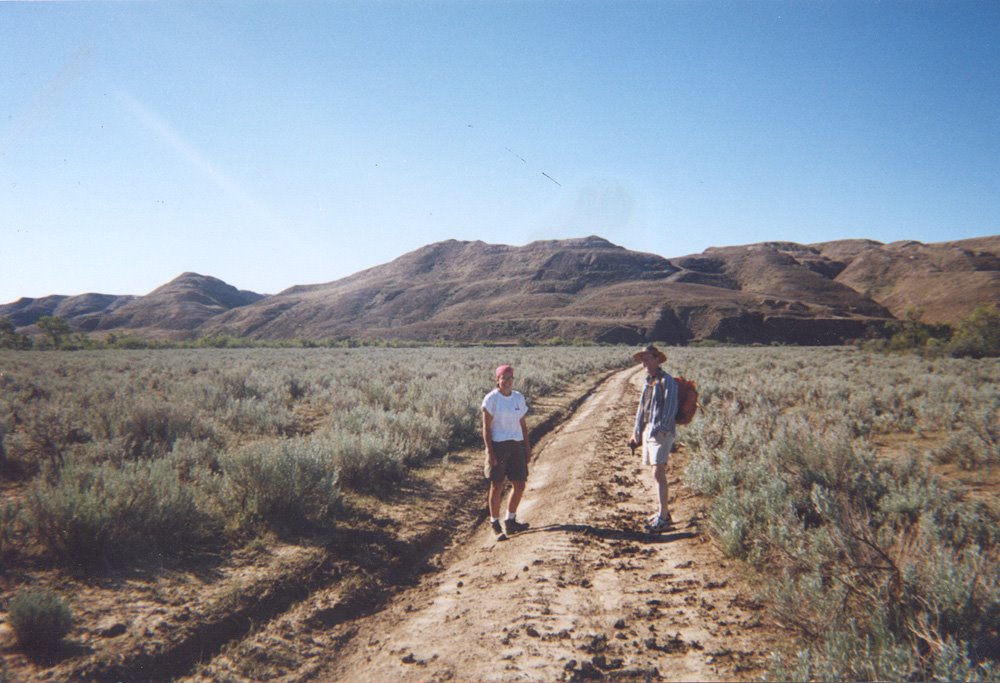
Since people have been asking me what I'll be up to when I'm in southern Alberta later this summer I thought I'd post a couple photos from work I did in that region a few years ago.


Photo © M. Ryan
That's Heather Jamniczky (now Ph.D) & Nova Scotia's-own Brian Matthews en route to a locality in the badlands in the background.


Photo © M. Ryan
Don Brinkman, Heather, and Brian digging a big hole to collect a dino skull.

Tuesday, June 13, 2006

'Extinct' Laotian Rock Rat Captured

The first images of a live specimen of a small, furry animal once believed to have gone extinct more than 11 million years ago have been captured during a Southeast Asian expedition led by a retired Florida State University researcher.


Laotian Rock Rat courtesy of David Redfield.

From the FSU press release:

The remarkable video and photos shot by David Redfield, a professor emeritus of FSU's science education faculty, and Thai wildlife biologist Uthai Treesucon are being hailed as historic images documenting a true "living fossil," the Laotian rock rat.

Redfield's video shows a docile, squirrel-sized animal covered with dark, dense fur and bearing a long tail that's not as bushy as that of a typical squirrel. Perhaps the most striking observation is how the animal walks -- like a duck. Clearly not adapted to climbing trees, the rock rat exhibits a duck-like waddle with its hind feet splayed out at an angle to its body.


Laotian Rock Rat courtesy of David Redfield.

Known as kha-nyou (pronounced "ga-noo") in Lao villages near its habitat, the animal was first described scientifically in the April 2005. Identified as a member of an entirely new family of mammals, the rock rat made news around the world. It gained international attention again on March 10 of this year when scientists published a paper in Science magazine re-identifying the animal as a "living fossil" whose last remaining relatives went extinct 11 million years ago.

The Laotian rock rat so called for its only known habitat -- limestone outcroppings in Central Laos -- and the appearance of the animal's head and face, which sport long whiskers and beady eyes like those of a rat.

To view photographs and video of the Laotian rock rat, visit RockRat.

New Shark Species Discovered

From National Geographic news:

A new species of hammerhead shark has been discovered off the coast of South Carolina. The newfound shark species, which has not yet been named, is nearly identical to the scalloped hammerhead, a common Atlantic shark that can grow up to 3 meters long.


Photo from National Geographic News

But the new species appears to be extremely rare—so much so that it may only breed in certain South Carolina bays. Biologists at Nova Southeastern University in Fort Lauderdale, Florida, discovered the new species while studying the DNA of scalloped hammerheads. The researchers found that some hammerheads they examined had a significantly different genetic signature from the rest, despite their similar appearance.

A separate team led by Joe Quattro at the University of South Carolina in Columbia came to the same conclusion while studying the state's coastal shark stocks.

Protein Parallel Evolution

From U Michigan:

Jianzhi Zhang presents evidence an example of parallel evolution in a gene for an enzyme that helps leaf-eating monkeys digest their food.

"We know that parallel, or convergent, evolution is very common at the level of morphology—birds can fly, insects can fly, bats can fly, and they've all evolved this capability independently. But at the DNA and protein sequence level, it's very rare to find parallel evolution.”

The new work builds on previous research in which Zhang showed that the duplication of a gene encoding a pancreatic enzyme helped Asian colobine monkeys cope with an unusual diet and is reported in the current issue of Nature Genetics.

Monday, June 12, 2006

Outback Dinosaurs


Muttaburrasaurus © Luis Rey from his site

The Courier Mail has a nice article on some of the dinosaur and other fossil localities found in the Outback of Australia. Here’s an excerpt:
"It was 200km south of Hughenden, at Muttaburra, that Doug Langdon found a strange pile of fossilised bones in 1963 and put his town on the international palaeontology map.

Langdon's skeleton, Muttaburrasaurus langdoni, ended up in the Queensland Museum and the town got a gaudy replica of the dinosaur to put up in its main street – an exchange that some in Muttaburra have resented ever since.

There is said to be another complete dinosaur skeleton lying in a paddock close to town, but its supposed location has not been revealed.

Not that fossilised dinosaurs are in short supply in this country. In 1989, Richmond district brothers Ian and Rob Ievers dug an almost complete skeleton of a 100-million-year-old plesiosaur out of the ground on their family property, and found another preserved dinosaur skeleton of an armoured ankylosaur three months later."

Sunday, June 11, 2006

TyranoStar: King of the Dinosaurs!


Tyranostar™ & © Pete Von Sholly

For this week’s ‘Sunday Fun’ we present “TyranoStar” by the ever-creative Pete Von Sholly. The above cover is from the 3D comic published by Ray Zone with pencils by Pete & inks by dino-artist supreme, Bill Stout.

Sort of a ‘Land of the Lost’ crossed with ‘The Mighty Mightor’ it harkens back to best of 70’s Saturday morning cartoon shows. Below are some new unpublished pages by Pete.


But that’s not all! Pete has produced a trailer for the book that explains who and what ‘TyranoStar’ is (with a cool soundtrack). Enjoy!

Find more of Pete's videos at YouTube.com by searching the key word 'VONREX'.

Saturday, June 10, 2006

Happy Birthday To: E.O. Wilson

Wilson is an American biologist noted for founding the science of sociobiology. In his book Sociobiology: The New Synthesis (1975) he argued that all human behavior, including altruism, is genetically based, and therefore “selfish.”

Wilson's On Human Nature (1978) won the Pulitzer Prize; Biophilia (1984) suggests that human attraction to other living things is innate; and Consilience (1998) urges wider integration of the sciences. Other books by Wilson are Insect Societies (1971), The Diversity of Life (1992), The Ants, with Bert Hölldobler (1990; Pulitzer Prize), and The Future of Life (2002).

Wilson’s latest book is The Creation: A Meeting of Science and Religion. Info from Infoplease.com

Friday, June 09, 2006

Melting The Last Ice Age

Dates on moraines from mid-latitudes around the world imply that after the last Ice Age glaciers retreated simultaneously in response to warming by increased CO2 levels.
Near-Synchronous Interhemispheric Termination of the Last Glacial Maximum in Mid-Latitudes. 2006. Joerg M. Schaefer. Science 312: 1510 – 1513.

From the press release of the Earth Institute at Columbia University:

A new study indicates that, except for regions of the North Atlantic, most of the Earth began warming at the same time roughly 17,500 years ago. In addition, scientists suggest that ice core records from Greenland, which show that average temperatures there did not warm appreciably until about 15,000 years ago, may have remained in a hyper-cold state largely as a result of events triggered by warming elsewhere.

The researchers relied on a method known as cosmogenic or surface-exposure dating, which enabled the scientists to determine how long rock surfaces have been exposed since the glaciers retreated. As cosmic rays penetrating the Earth's atmosphere strike the scoured rock, they form an isotope of the element beryllium, 10Be, at a known rate. By measuring the minute amounts of 10Be in rock samples from glacial moraines in California and New Zealand and comparing these data to previously published results from elsewhere they could determine when the glaciers retreated. They found that almost everywhere they looked the glaciers began to pull back approximately 17,500 years ago.
Info on life after ‘Snowball Earth’ HERE

Thursday, June 08, 2006

Articles of Note: Comptes Rendus Palevol.

The evolution of locomotion in archosaurs. 2006. John R. Hutchinson. Comptes Rendus Palevol 5: 519-530.

Abstract: Archosaurian reptiles evolved a more erect posture and parasagittal gait early on. Early dinosaurs were the first habitual striding bipeds, a trait retained by living birds. Yet there is much more to archosaur locomotor evolution than these two transitions. I review our understanding of the pattern of locomotor evolution from the first archosaurs to Crocodylia and Neornithes, outlining where transitions of locomotor function evolved. I evaluate current research approaches, advocating more experimental work on extant animals to establish rigorous form–function relationships, and more biomechanical research that is bolstered by validation and sensitivity analysis of its assumptions, methods, and results.

Time recording in bone microstructures of endothermic animals; functional relationships. 2006. Jacques Castanet. Comptes Rendus Palevol 5: 629-636.

Abstract: Because they are mineralized, skeletal tissues can record and preserve indefinitely in their microstructures the expression of various constraints and especially the passage of time. Such traces of time can be either continuous or periodic (growth marks), but when deciphered they offer a powerful tool to reconstruct life history traits and even ecological conditions of time in extant as well as extinct species. Nevertheless, the temporal message ‘printed’ in skeletal tissues can be disturbed or even destroyed by various causes that need to be understood before this ‘biological chronometer’ can be accurately used.

Wednesday, June 07, 2006

Stromatolites Evidence of Earth's Oldest Life

Stromatolite reef from the Early Archaean era of Australia. 2006. A. C. Allwood et al., Nature 441: 714-718.
The new analysis presents several lines of evidence that support the idea that stromatolites were formed by mats of microscopic organisms.
Abstract: The 3,430-million-year-old Strelley Pool Chert (SPC) (Pilbara Craton, Australia) is a sedimentary rock formation containing laminated structures of probable biological origin (stromatolites).

Determining the biogenicity of such ancient fossils is the subject of ongoing debate. However, many obstacles to interpretation of the fossils are overcome in the SPC because of the broad extent, excellent preservation and morphological variety of its stromatolitic outcrops—which provide comprehensive palaeontological information on a scale exceeding other rocks of such age.

Here we present a multi-kilometre-scale palaeontological and palaeoenvironmental study of the SPC, in which we identify seven stromatolite morphotypes—many previously undiscovered—in different parts of a peritidal carbonate platform. We undertake the first morphotype-specific analysis of the structures within their palaeoenvironment and refute contemporary abiogenic [non-living] hypotheses for their formation. Finally, we argue that the diversity, complexity and environmental associations of the stromatolites describe patterns that—in similar settings throughout Earth's history—reflect the presence of organisms.

Europasaurus holgeri: Germany's Pygmy Dinosaur

Bone histology indicates insular dwarfism in a new Late Jurassic sauropod dinosaur. 2006. P. Martin Sander et al. Nature 441: 739-741.


Europasaurus holgeri models and photo: Dinopark Münchehagen
From the press release:

Scientists have determined that the unusually small dinosaur fossils of the new brachiosaurid Europasaurus holgeri which were found in a quarry on the northern edge of the Harz Mountains in 1998, likely were adults. At a maximum estimated weight of one tonne they were only a fiftieth the weight of their closest relatives, the brachiosaurs, and thus by far the smallest of the giant dinosaurs which have ever been found.

The tightly compressed ‘growth rings’ indicate that the dinosaurs must have been fully grown when they died. 'They stopped growing when they reached 6 metres in length and a tonne in body mass,' Martin Sander (below) estimates. Their cousins, by contrast, were up to 45 metres long and weighed in at 80 tonnes – the biggest land animals which have ever existed.


Photo: Frank Luerweg / University of Bonn
The material comes from 150 million year old islands in the area that is now Germany. This island situation may well be the reason why the 'pygmy dinosaurs' evolved -- smaller animals which needed less food had better chances of survival,' explains Nils Knötschke of the Dinopark in Münchehagen, who has exposed more than 80 per cent of the bones found and also headed the excavations in the quarry. 'Shrinkage like this due to a reduction in the food available can take place extremely rapidly, sometimes within 10 or 20 generations,' Dr. Sander confirms.

An international team of scientists have excavated and preserved more than 1000 dinosaur fossils in the quarry since 1998. The life-size models of the mini-dinosaur pictured above can be seen in the Münchehagen dinosaur park. The quarry has also produced pterosaurs, crocodiles, tortoises, and theropod footprints.


Diagram © Octávio Mateus, Museu da Lourinhã
Abstract: Sauropod dinosaurs were the largest animals ever to inhabit the land, with truly gigantic forms in at least three lineages. Small species with an adult body mass less than five tonnes are very rare, and small sauropod bones generally represent juveniles. Here we describe a new diminutive species of basal macronarian sauropod, Europasaurus holgeri gen. et sp. nov., and on the basis of bone histology we show it to have been a dwarf species. The fossils, including excellent skull material, come from Kimmeridgian marine beds of northern Germany, and record more than 11 individuals of sauropods 1.7 to 6.2 m in total body length. Morphological overlap between partial skeletons and isolated bones links all material to the same new taxon. Cortical histology of femora and tibiae indicates that size differences within the specimens are due to different ontogenetic stages, from juveniles to fully grown individuals. The little dinosaurs must have lived on one of the large islands around the Lower Saxony basin. Comparison with the long-bone histology of large-bodied sauropods suggests that the island dwarf species evolved through a decrease in growth rate from its larger ancestor.

Sunday, June 04, 2006

Devil Dinosaur: A Fossil Fragment


Art © Roger Petersen. Devil Dinosaur © Marvel Comics
For your Sunday viewing pleasure Atomic Surgery presents the Devil Dinosaur proposal that Mark Schultz, and Roger Petersen pitched (unsuccessfully, alas) to Marvel Comics a few years back. Mark also gives a brief overview of this wonderful, unrealized project.

Saturday, June 03, 2006

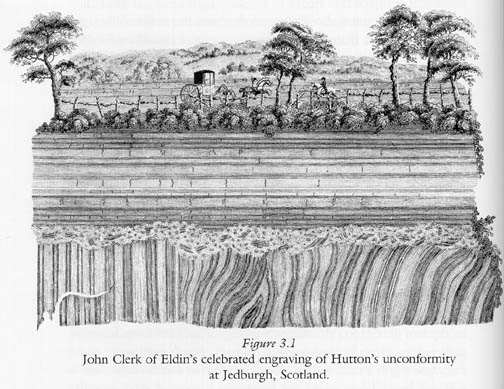
Born This Day: James Hutton

June 3, 1726 – March 26, 1797

Hutton is the 'Father of Uniformitarianism' which explains the features of the Earth's crust by means of natural processes over geologic time.


Link

More Info Here

Friday, June 02, 2006

Electric Fish Spark New Species?

Time-domain signal divergence and discrimination without receptor modification in sympatric morphs of electric fishes. 2006. M. E. Arnegard et al. Journal of Experimental Biology 209: 2182-2198.


Credit: John Sullivan via Cornell University

From Sara Ball at CU Chronicle Online:

Electric fish in the Ivindo River in have different DNA, different communication patterns and won't mate with each other. However, two types of electric signals are now known from fish that have the same DNA.

The researchers' conclude that the fish appear to be on the verge of forming two separate species.

"We think we are seeing evolution in action," said Matt Arnegard, a postdoctoral researcher at Cornell U. Some of these fish violate an otherwise regular pattern of mating behavior, and so could be living examples of a species of fish diverging into separate species.

The electric fish -- known as mormyrids -- emit weak electric fields from a batterylike organ in their tails to sense their surroundings and communicate with other fish. Each species of mormyrid gives off a single characteristic electric impulse resulting in the flash of signals, indicating, for example, aggression, courtship and fear.

Because all of the 20 or so species of mormyrid have distinct electric signals, Arnegard believes the different impulses of the fish he studies might be their first step in diverging into different species.

One the other hand, the fish could be a single species. "This could be just a polymorphism, like eye color in humans, that violates the fishes' general evolutionary pattern but doesn't give rise to separate species," said Arnegard, who will return to Gabon in June to conduct further tests.

300 Mile-Wide Impact Crater In Antarctica

Planetary scientists have found evidence of a meteor impact much larger and earlier than the one that killed the dinosaurs -- an impact that they believe caused the biggest mass extinction in Earth's history.


GRACE-measured gravity fluctuations beneath East Antarctica. Denser regions appear more red; the location of the Wilkes Land crater is circled (above center). Image courtesy of Ohio State University.

From the Ohio State Research News:

The 300 mile wide crater lies hidden more than a mile beneath the East Antarctic Ice Sheet. And the gravity measurements that reveal its existence suggest that it could date back about 250 million years -- the time of the Permian-Triassic extinction, when almost all animal life on Earth died out.

Its size and location -- in the Wilkes Land region of East Antarctica, south of Australia -- also suggest that it could have begun the breakup of the Gondwana supercontinent by creating the tectonic rift that pushed Australia northward.

Scientists believe that the Permian-Triassic extinction paved the way for the dinosaurs to rise to prominence. The Wilkes Land crater is more than twice the size of the Chicxulub crater in the Yucatan peninsula, which marks the impact that may have ultimately killed the dinosaurs 65 million years ago. The Chicxulub meteor is thought to have been 6 miles wide, while the Wilkes Land meteor could have been up to 30 miles wide -- four or five times wider.

"This Wilkes Land impact is much bigger than the impact that killed the dinosaurs, and probably would have caused catastrophic damage at the time," said Ralph von Frese, a professor of geological sciences at Ohio State University.

"Based on what we know about the geologic history of the region, this Wilkes Land [site] formed recently by geologic standards -- probably about 250 million years ago," he said.

Von Frese and Laramie Potts, a postdoctoral researcher in geological sciences reported their preliminary results in a recent poster session at the American Geophysical Union Joint Assembly meeting in Baltimore.

Modeling the Late Cretaceous Greenhouse Climate

Insolation-control on the Late Cretaceous hydrological cycle and tropical African climate—global climate modelling linked to marine climate records. 2006. S. Floegel and T. Wagner. 3Ps 235 (1-3): 288-304.


© Doug Henderson
From the pres release from University of Newcastle upon Tyne:

New scientific results for the Late Cretaceous greenhouse indicate radically different climatic mechanisms operating about 75-90 million years ago compared to the ones that control today's climate.

These new results challenge current notions on role of the tropics as main driver of Cretaceous climate. They rather support the conclusion that tropical climate in a greenhouse world is ultimately triggered by climate change at mid-southern latitudes, with precipitation and river discharge being the transport mechanisms.

Thursday, June 01, 2006

Fossil Frogs Predict Rain

New method to estimate paleoprecipitation using fossil amphibians and reptiles and the middle and late Miocene precipitation gradients in Europe. 2006. M. Böhme, and L. Maximilians. Geology 34: 425-428.


link

Precipitation is an important geodynamic control factor coupled to tectonics, erosion, continental run-off, weathering, and oceanic circulation. But in practice this climate parameter is difficult to estimate.

Existing methods for determining paleo-precipitation are either subject to large errors (± 350–400 mm or more using mammalian proxies) or restricted to wet climate systems due to their strong facies dependence (paleobotanical proxies). Böhme et al. describe a new tool to estimate paleo-precipitation based on an indexing of the frequency of eco-physiologic groups within fossil amphibian and reptile communities.

In recent communities, these indices show a highly significant correlation to annual precipitation (r2 = 0.88) and will yield paleo-precipitation estimates with average errors of ± 250–280 mm. Knowledge about fossil amphibians and reptiles has increased dramatically over the last decade, and large distribution databases also exist. Therefore, the new method will widely extend the applicability of precipitation estimates in the geological past.

More Hobbit News: Island Tools Predate Modern Humans

Early stone technology on Flores and its implications for Homo floresiensi. 2006. Adam Brumm et al. Nature 441: 624-628.
An analysis of tools from a site called Mata Menge are strikingly similar to those found at the nearby H. floresiensis locality dated at 800,000 years ago.
From National Geographic News:

The similarity between the two sites suggests that H. floresiensis humans—who had tiny, grapefruit-size brains—were capable craftspeople who inherited their toolmaking tradition from ancestors who evolved on Flores, researchers said. Both sets of tools from the Liang Bua cave and the older Mata Menge archaeological site share hallmarks of simple but sophisticated flaking and shaping.

Previously some scientists had cited the complexity of the Flores stone tools as evidence that the hobbit-like people were diseased modern humans rather than a unique species.

Read the rest HERE. Get more info HERE.

Toyonian Mass Extinction

The Kalkarindji continental flood basalt province: A new Cambrian large igneous province in Australia with possible links to faunal extinctions. 2006. L. Glass and D. Phillips. Geology 34: 461-464.

Glass and Phillips present new geochemical and geochronological data that link scattered Cambrian basalt suites across northern and central Australia into a single large igneous province (LIP). This newly identified province, named the Kalkarindji Continental Flood Basalt Province (CFBP), is Australia's largest and oldest Phanerozoic igneous province. The province covers an area of at least 1 million square kilometers with an estimated original volume exceeding 0.5 million cubic kilometers, which ranks the province with other CFBP's such as the Deccan, Parana, and Karoo LIP's, in terms of size.

New high-precision 40Ar/39Ar ages suggest that the newly identified Kalkarindji CFBP may be linked to the early Toyonian mass extinction event at the Early/Middle Cambrian boundary, thus providing the oldest-known possible link between a LIP and a mass extinction event.

Image link