Ernest Beaumont Schoedsack (June 8, 1893 – Dec. 23, 1979) was an American film, director and producer. With his partner, Merian C. Cooper, their first significant collaboration was the spectacular documentary, Grass (1925), which enjoyed a popular theatrical release in the wake of the success of Nanook of the North (1922).
They are best known for King Kong (1933), which was co-written by Schoedsack's wife, Ruth Rose. He also directed Son of Kong (1933), Dr. Cyclops (1940) and Mighty Joe Young (1949). From TCM.
Monday, June 08, 2015
Died This Day: Ruth Rose
Ruth Rose (Jan. 16, 1896 - June 8, 1978) was the daughter of Edward E. Rose. In 1926 she meet (and later married) cinematographer Ernest Schoedsack when they were both working on a New York Geological Society expedition to the Galapagos Islands. Together with partner and fellow producer director, Meriam C. Cooper, and animator Willis O’Brien, they made “King Kong”, released in 1933. Rose shared in many of Schoedsack’s and Cooper’s wildness film productions, and worked as a writer or script doctor on King Kong, Son of Kong, She, The Last Days of Pompeii and Mighty Joe Young.
The photo from King Kong (above) is of Bruce Cabot, Fay Wray and Robert Armstrong, but Rose clearly modeled the characters they played after Schoedsack, herself, and Cooper.
Sunday, June 07, 2015
Saturday, June 06, 2015
The Complex Structure & Function of Triceratops Teeth
Wear biomechanics in the slicing dentition of the giant horned dinosaur Triceratops. 2015. Science Advances.
Modern reptilian teeth are constructed in such a way that they are used mostly for seizing, but not chewing, food. In contrast, the teeth of most herbivorous mammals self-wear with use to create complex file surfaces for mincing plants.
New work shows that Triceratops teeth were made of five layers of tissue. In contrast, herbivorous horse and bison teeth, once considered the most complex ever to evolve, have four layers of tissue. Crocodiles and other reptiles have just two.
A sophisticated three-dimensional model was developed to show how each tissue wore with use in a strategic manner to create a complex surface with a fuller (a recessed area in the middle, much like those seen in fighting knives and swords) on each tooth. This served to reduce friction during biting and promote efficient feeding. PR
Modern reptilian teeth are constructed in such a way that they are used mostly for seizing, but not chewing, food. In contrast, the teeth of most herbivorous mammals self-wear with use to create complex file surfaces for mincing plants.
New work shows that Triceratops teeth were made of five layers of tissue. In contrast, herbivorous horse and bison teeth, once considered the most complex ever to evolve, have four layers of tissue. Crocodiles and other reptiles have just two.
A sophisticated three-dimensional model was developed to show how each tissue wore with use in a strategic manner to create a complex surface with a fuller (a recessed area in the middle, much like those seen in fighting knives and swords) on each tooth. This served to reduce friction during biting and promote efficient feeding. PR
New Evidence For The Oldest Land Vertebrate
The study Oldest Pathology in a Tetrapod Bone Illuminates the Origin of Terrestrial Vertebrates. 2015. Plos One
A 333-million year old broken bone is causing fossil scientists to reconsider the evolution of land-dwelling vertebrate animals.
Analysis of a fractured and partially healed radius (front-leg bone) from Ossinodus pueri, a large, primitive, four-legged (tetrapod), salamander-like animal, found in Queensland, pushes back the date for the origin of demonstrably terrestrial vertebrates by two million years.
"The break was most plausibly caused by a fall on land because such force would be difficult to achieve with the cushioning effect of water.
"Its age raises the possibility that the first animals to emerge from the water to live on land were large tetrapods in Gondwana in the southern hemisphere, rather than smaller species in Europe.
A 333-million year old broken bone is causing fossil scientists to reconsider the evolution of land-dwelling vertebrate animals.
Analysis of a fractured and partially healed radius (front-leg bone) from Ossinodus pueri, a large, primitive, four-legged (tetrapod), salamander-like animal, found in Queensland, pushes back the date for the origin of demonstrably terrestrial vertebrates by two million years.
"The break was most plausibly caused by a fall on land because such force would be difficult to achieve with the cushioning effect of water.
"Its age raises the possibility that the first animals to emerge from the water to live on land were large tetrapods in Gondwana in the southern hemisphere, rather than smaller species in Europe.
Friday, June 05, 2015
Clevosaurus sectumsemper, A New Triassic Lizard
A distinctive Late Triassic microvertebrate fissure fauna and a new species of Clevosaurus (Lepidosauria: Rhynchocephalia) from Woodleaze Quarry, Gloucestershire, UK. 2015. Proceedings of the Geologists' Association
Research by Catherine Klein, an undergraduate in Bristol's School of Earth Sciences, shows that fossils from the previously unstudied Woodleaze Quarry belong to a new species of the 'Gloucester lizard' Clevosaurus (named in 1939 after Clevum, the Latin name for Gloucester).
In the Late Triassic, the hills of the South West of the UK formed an archipelago that was inhabited by small dinosaurs and relatives of the Tuatara, a living fossil from New Zealand.
"The new species, Clevosaurus sectumsemper, probably lived near the edge of one of the ancient archipelago's islands, in a relatively hostile environment. This would explain why nearly all the bones come from one species, and why there is a relatively high occurrence of healed fractures such as one we found in a rib. Possibly the animals were fighting each other due to a limited food source or perhaps they preyed on each other and bones were broken, but some individuals survived and their broken bones healed." PR
Research by Catherine Klein, an undergraduate in Bristol's School of Earth Sciences, shows that fossils from the previously unstudied Woodleaze Quarry belong to a new species of the 'Gloucester lizard' Clevosaurus (named in 1939 after Clevum, the Latin name for Gloucester).
In the Late Triassic, the hills of the South West of the UK formed an archipelago that was inhabited by small dinosaurs and relatives of the Tuatara, a living fossil from New Zealand.
"The new species, Clevosaurus sectumsemper, probably lived near the edge of one of the ancient archipelago's islands, in a relatively hostile environment. This would explain why nearly all the bones come from one species, and why there is a relatively high occurrence of healed fractures such as one we found in a rib. Possibly the animals were fighting each other due to a limited food source or perhaps they preyed on each other and bones were broken, but some individuals survived and their broken bones healed." PR
Thursday, June 04, 2015
An unusual theropod frontal from the Upper Cretaceous of north Patagonia
An unusual theropod frontal from the Upper Cretaceous of north Patagonia. 2015. Alcheringa. Carabajal & Coria
Abstract: We report an isolated left frontal (MCF-PVPH 320) corresponding to a medium-sized theropod dinosaur from the Portezuelo Formation (Coniacian) of northern Patagonia. It shows a unique combination of traits that are not present in any other known Cretaceous theropod from South America.
MCF-PVPH 320 is robust and anteroposteriorly short, with a flat and smooth dorsal surface largely excavated by the supratemporal fossa. Endocranially, the olfactory bulb impression is elongate, and the olfactory tract impression is markedly shortened anteroposteriorly.
MCF-PVPH 320 differs greatly from the frontals of Late Cretaceous theropods, such as abelisaurids, megaraptorines and carcharodontosaurids. In contrast, character states including the thickness of the bone, V-shaped frontoparietal suture, reduced participation on the orbital margin and markedly short olfactory tract impression suggest the presence of an unknown mid-sized to large allosauroid for the Portezuelo Formation
Abstract: We report an isolated left frontal (MCF-PVPH 320) corresponding to a medium-sized theropod dinosaur from the Portezuelo Formation (Coniacian) of northern Patagonia. It shows a unique combination of traits that are not present in any other known Cretaceous theropod from South America.
MCF-PVPH 320 is robust and anteroposteriorly short, with a flat and smooth dorsal surface largely excavated by the supratemporal fossa. Endocranially, the olfactory bulb impression is elongate, and the olfactory tract impression is markedly shortened anteroposteriorly.
MCF-PVPH 320 differs greatly from the frontals of Late Cretaceous theropods, such as abelisaurids, megaraptorines and carcharodontosaurids. In contrast, character states including the thickness of the bone, V-shaped frontoparietal suture, reduced participation on the orbital margin and markedly short olfactory tract impression suggest the presence of an unknown mid-sized to large allosauroid for the Portezuelo Formation
Late Cretaceous Hellboy
Image by Julius Csotonyi
Welcome Regaliceratops to the pantheon of horned-dinosaurs.
Read about it in the Globe and Mail
Recalibrating the First Eukaryotes
Reappraisal of hydrocarbon biomarkers in Archean rocks. 2015. PNAS
Contaminated samples have evidently created some confusion in the timetable of life.
On the basis of ultra-clean analyses, an international team, including scientists from the Max Planck Institute for Biogeochemistry, has disproved supposed evidence that eukaryotes originated 2.5 to 2.8 billion years ago.
In contrast to prokaryotes such as bacteria, eukaryotes have a nucleus. Some researchers thought they had discovered molecular remnants of living organisms in rock samples up to 2.8 billion years old. However, as the current study shows, these molecular traces were introduced by contamination. The oldest evidence for the existence of eukaryotes is now provided by microfossils that are ca. 1.5 billion years old.
Contaminated samples have evidently created some confusion in the timetable of life.
On the basis of ultra-clean analyses, an international team, including scientists from the Max Planck Institute for Biogeochemistry, has disproved supposed evidence that eukaryotes originated 2.5 to 2.8 billion years ago.
In contrast to prokaryotes such as bacteria, eukaryotes have a nucleus. Some researchers thought they had discovered molecular remnants of living organisms in rock samples up to 2.8 billion years old. However, as the current study shows, these molecular traces were introduced by contamination. The oldest evidence for the existence of eukaryotes is now provided by microfossils that are ca. 1.5 billion years old.
Wednesday, June 03, 2015
Which Dinosaurs Had Feathers?
Evolution of dinosaur epidermal structures. 2015. Biology Letters.
A new study suggests that feathers were less prevalent among dinosaurs than previously believed. Scientists examined the fossil record of dinosaur skin and combined this with an evolutionary tree to assess the probability of feathers appearing in different dinosaur groups. This analysis demonstrated that the majority of non-avian dinosaurs were more likely to have scales than to exhibit signs of 'feather-like' structures.
Congrats to Paul, David and Nic on a nice paper!
Read more at: Phys.org
A new study suggests that feathers were less prevalent among dinosaurs than previously believed. Scientists examined the fossil record of dinosaur skin and combined this with an evolutionary tree to assess the probability of feathers appearing in different dinosaur groups. This analysis demonstrated that the majority of non-avian dinosaurs were more likely to have scales than to exhibit signs of 'feather-like' structures.
Congrats to Paul, David and Nic on a nice paper!
Read more at: Phys.org
Visit The Valley of Gwangi Tonight in Cleveland, OH
I'll be hosting a showing (with discussion to follow) of Ray Harryhausen's "The Valley of Gwangi" at the Capitol Theatre here in Cleveland, OH at 7pm tomorrow (Weds.) evening. It's all part of the CMNH's 'Reel Science' series being run in cooperation with the Capitol.
If prompted, I'll tell the story of taking Ray on his first (and only) dinosaur dig.
Come out and bring a friend!
Born This Day: James Hutton
Hutton (June 3, 1726 - March 26, 1797) is considered to be the father of modern geology. He is accredited with proposing that observed geologic processes have been occurring at a uniform rate since the creation of earth, also know as the theory of unconformities. This led to his controversial suggestion that the earth is incredibly old.
Hutton began to notice geologic processes on his land in the 1750’s by following his soil during rainstorms when it would erode into the sea. He also noticed how long the process took and began to apply this idea to other parts of geology. If it took this long for some soil to move a few miles than how long did it take to form the cliffs by the sea? He also took note of other features in the landscape such as angular unconformities. A breakthrough point occurred for Hutton when he found Siccar’s Point. This site shows the build up of sediment over a long period of time as well as other geologic processes. It was this idea of continuous processes that fascinated Hutton for the rest of his life.
Hutton subsequently moved back to Edinburgh, and became very involved with the Royal Society of Edinburgh. In 1785 he had his friend Joseph Black read his lecture on his theories of earth. This was the first time that his full theory had been made public. He was met with much anger and rejection. Even though we take his ideas for granted today, at the time he was presenting this the oldest proposed age of earth was around six thousand years, as laid forth by the church. While he was able to convince a few by showing them prime field examples such as Glen Tilt and Siccar’s Point, for many it remained too radical an idea to consider.
Text modified from HERE. Image from HERE.
Hutton began to notice geologic processes on his land in the 1750’s by following his soil during rainstorms when it would erode into the sea. He also noticed how long the process took and began to apply this idea to other parts of geology. If it took this long for some soil to move a few miles than how long did it take to form the cliffs by the sea? He also took note of other features in the landscape such as angular unconformities. A breakthrough point occurred for Hutton when he found Siccar’s Point. This site shows the build up of sediment over a long period of time as well as other geologic processes. It was this idea of continuous processes that fascinated Hutton for the rest of his life.Hutton subsequently moved back to Edinburgh, and became very involved with the Royal Society of Edinburgh. In 1785 he had his friend Joseph Black read his lecture on his theories of earth. This was the first time that his full theory had been made public. He was met with much anger and rejection. Even though we take his ideas for granted today, at the time he was presenting this the oldest proposed age of earth was around six thousand years, as laid forth by the church. While he was able to convince a few by showing them prime field examples such as Glen Tilt and Siccar’s Point, for many it remained too radical an idea to consider.
Text modified from HERE. Image from HERE.
Tuesday, June 02, 2015
A Mesozoic bird from Gondwana preserving feathers
A Mesozoic bird from Gondwana preserving feathers. 2015. Nature Communications.
Abstract: The fossil record of birds in the Mesozoic of Gondwana is mostly based on isolated and often poorly preserved specimens, none of which has preserved details on feather anatomy.
We provide the description of a fossil bird represented by a skeleton with feathers from the Early Cretaceous of Gondwana (NE Brazil). The specimen sheds light on the homology and 3D structure of the rachis-dominated feathers, previously known from two-dimensional slabs. The rectrices exhibit a row of rounded spots, probably corresponding to some original colour pattern.
The specimen supports the identification of the feather scapus as the rachis, which is notably robust and elliptical in cross-section. In spite of its juvenile nature, the tail plumage resembles the feathering of adult individuals of modern birds.
Documentation of rachis-dominated tail in South American enantiornithines broadens the paleobiogeographic distribution of basal birds with this tail feather morphotype, up to now only reported from China.
Abstract: The fossil record of birds in the Mesozoic of Gondwana is mostly based on isolated and often poorly preserved specimens, none of which has preserved details on feather anatomy.
We provide the description of a fossil bird represented by a skeleton with feathers from the Early Cretaceous of Gondwana (NE Brazil). The specimen sheds light on the homology and 3D structure of the rachis-dominated feathers, previously known from two-dimensional slabs. The rectrices exhibit a row of rounded spots, probably corresponding to some original colour pattern.
The specimen supports the identification of the feather scapus as the rachis, which is notably robust and elliptical in cross-section. In spite of its juvenile nature, the tail plumage resembles the feathering of adult individuals of modern birds.
Documentation of rachis-dominated tail in South American enantiornithines broadens the paleobiogeographic distribution of basal birds with this tail feather morphotype, up to now only reported from China.
Thursday, May 28, 2015
Born This Day: Louis Agassiz
(Jean) Louis (Rodolphe) Agassiz (May 28, 1807 - Dec. 14, 1873) was a Swiss-born U.S. naturalist, geologist, and teacher who made revolutionary contributions to the study of natural science with landmark work on glacier activity and extinct fishes. Agassiz began his work in Europe, having studied at the University of Munich and then as chair in natural history in Neuchatel in Switzerland. While there he published his landmark multi-volume description and classification of fossil fish.
In 1846 Agassiz came to the U.S. to lecture before Boston's Lowell Institute. Offered a professorship of Zoology and Geology at Harvard in 1848, he decided to stay, becoming a citizen in 1861. His innovative teaching methods altered the character of natural science education in the U.S. Link
More info HERE
In 1846 Agassiz came to the U.S. to lecture before Boston's Lowell Institute. Offered a professorship of Zoology and Geology at Harvard in 1848, he decided to stay, becoming a citizen in 1861. His innovative teaching methods altered the character of natural science education in the U.S. Link
More info HERE
Wednesday, May 27, 2015
CMNH Curator Describes New Human Ancestor, Australopithecus deyiremeda
New species from Ethiopia further expands Middle Pliocene hominin diversity. 2015. Nature.
Australopithecus deyiremeda is a new 3.3 to 3.5 million-year-old human ancestor. Its upper and lower jaw fossils were recovered from the Woranso-Mille area of the Afar region of Ethiopia. This hominin lived alongside the famous “Lucy’s” species, Australopithecus afarensis. PR
Died This Day: Sandra Shaw
Although Sandra Shaw (May 27, 1913 – Feb. 16, 2000) had a short film career comprising a few, mostly uncredited film roles in 1933, her most famous appearance is that of the person plucked from her sleep from an unnamed hotel by King Kong, and than casually dropped to her death when he realizes that she is not Ann Darrow (Fay Wray). The year that Kong was released she married Gary Cooper.
Arbogast on Film blog has nice appreciation of Sandra Shaw’s few famous film moments.
Tuesday, May 26, 2015
Giant Brains Are Better
Brain size affects female but not male survival under predation threat. 2015. Biological Letters.
New research has shown that in the course of evolution larger brains offer a higher survival potential than smaller brains. PR
Monday, May 25, 2015
Friday, May 22, 2015
Born This Day: Oliver Perry Hay
Hay (May 22, 1846 – Nov. 2, 1930) was an American paleontologist whose catalogs of fossil vertebrates greatly organized existing knowledge and became standard references. Hay's primary scientific interest was the study of the Pleistocene vertebrata of North America and he is renowned for his work on skull and brain anatomy. His first major work was his Bibliography and Catalogue of the Fossil Vertebrata of North America (1902), supplemented by two more volumes (1929-30). Hay also wrote on the evidence of early humans in North America. link
Thursday, May 21, 2015
The First Dinosaur from Washington State
The First Dinosaur from Washington State. 2015. PLoS One
The fossil is 16.7 inches long and 8.7 inches wide. Because the fossil is incomplete, paleontologists aren't able to identify the exact theropod family or species it belonged to. However, Sidor and Peecook compared the fossil to other museums' specimens and were able to calculate that the complete femur would have been over 3 feet long -- slightly smaller than T. rex. The fossil is from the Late Cretaceous period and is approximately 80 million years old. PR
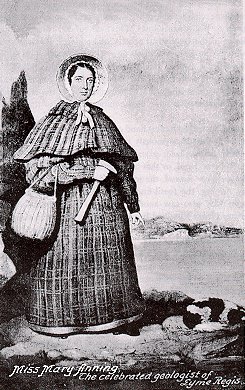
Born This Day: Mary Anning
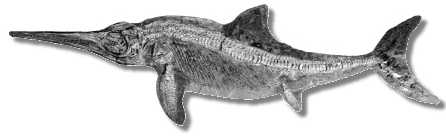
Mary Anning (May 21, 1799 - March 9, 1847) was an English fossil collector who made her first significant discovery at the age of 11 or 12 (sources differ on the details),
when she found a complete skeleton of an Ichthyosaurus, from the Jurassic period. The ten-meter (30 feet) long skeleton created a sensation and made her famous.
Anning's determination and keen scientific interest in fossils derived from her father's interest in fossil hunting, and a need for the income derived from them to support her family after his death. in 1810. She sold large fossils to noted paleontologists of the day, and smaller ones to the tourist trade. In 1823, Anning made another great discovery, found the first complete Plesiosaurus.
Later in her life, the Geological Society of London granted Anning an honorary membership.
when she found a complete skeleton of an Ichthyosaurus, from the Jurassic period. The ten-meter (30 feet) long skeleton created a sensation and made her famous.Anning's determination and keen scientific interest in fossils derived from her father's interest in fossil hunting, and a need for the income derived from them to support her family after his death. in 1810. She sold large fossils to noted paleontologists of the day, and smaller ones to the tourist trade. In 1823, Anning made another great discovery, found the first complete Plesiosaurus.
Later in her life, the Geological Society of London granted Anning an honorary membership.
Wednesday, May 20, 2015
Died This Day: Stephen Jay Gould
Here’s a nice piece on Gould by Henry Lowood from the Stanford Presidential Lectures in the Humanities and Arts.
Tuesday, May 19, 2015
Born This Day: William King Gregory
William King Gregory (May, 19 1876 – Dec. 29, 1970) was an American zoologist and paleontologist who studied under Henry Fairfield Osborn and joined the American Museum of Natural History in 1911. As a professor at Columbia University one of his students was Alfred Sherwood Romer. His work charted the evolution from the early fishes through the various branches to birds and mammals, with numerous papers and two important books: Our Face from Fish to Man (1929) and Evolution Emerging (1951).
In the early 1920s he also became interested in recent human evolution and joined the Central Asiatic Expedtions lead by Roy Chapman Andrews whose original goal was to find evidence of human ancestors in the Gobi Desert. With C.C. Mook he wrote the paper, On Protoceratops, a primative ceratopsian dinosaur from the Lower Cretaceous of Mongolia and well as numerous papers on Cretaceous mammals.
Gregory wrote a number of popular articles on evolution and fossils that you find through the Google Books on-line archive of old magazines.
In the early 1920s he also became interested in recent human evolution and joined the Central Asiatic Expedtions lead by Roy Chapman Andrews whose original goal was to find evidence of human ancestors in the Gobi Desert. With C.C. Mook he wrote the paper, On Protoceratops, a primative ceratopsian dinosaur from the Lower Cretaceous of Mongolia and well as numerous papers on Cretaceous mammals.
Gregory wrote a number of popular articles on evolution and fossils that you find through the Google Books on-line archive of old magazines.
Premiered This Day (1915): The Dinosaur & The Missing Link
On this day back in 1915, The Dinosaur and The Missing took its bow in US cinemas. It features the earliest work of a young Willis O'Brien who would go on to bring King Kong to life. Watch the film thanks to The Library of Congress.
Born This Day: Carl Akeley
The Hall of African Mammals at the American Museum of Natural History exists thanks to the efforts of Carl Akeley (May 19, 1864 - Nov 17, 1926) who was the kind of adventurer that Indy Jones could only dream of being.

He died on an African expedition in 1926, ten years before this hall was completed and was buried in a place depicted in the Hall's famous Gorilla Diorama. Of course we approach collecting and conservation differently today, but Akeley is to be commended for his love of nature and his desire to present its hidden corners to the world.
From Today In Science History:
Carl Ethan Akeley was an American naturalist and explorer who developed the taxidermic method for mounting museum displays to show animals in their natural surroundings. His method of applying skin on a finely molded replica of the body of the animal gave results of unprecedented realism and elevated taxidermy from a craft to an art. He mounted the skeleton of the famous African elephant Jumbo. He invented the Akeley cement gun to use while mounting animals, and the Akeley camera which was used to capture the first movies of gorillas.
Monday, May 18, 2015
Sunday, May 17, 2015
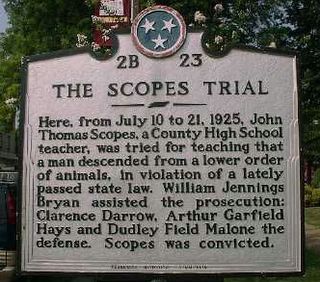
Scopes Monkey Trail Law Repealed
On this day in 1967, the governor of Tennessee signed into law the repeal of the 1925 state law prohibiting the teaching of evolution.From Today In Science History
The original law had made it "unlawful for any teacher in any of the Universities, Normals and all other public schools of the State which are supported in whole or in part by the public school funds of the State, to teach any theory that denies the story of the Divine Creation of man as taught in the Bible, and to teach instead that man has descended from a lower order of animals."
It was this law that was tested in what became known as the "Scopes monkey trial." Scopes was found guilty, but acquitted on a technicality upon appeal. The law itself remained a Tennessee state statute for 42 years.
Born This Day: Thomas Davison
May 17, 1817 – Oct. 14, 1885
Davison was a Scottish naturalist and paleontologist who became known as an authority on brachiopods. His major work, Monograph of British Fossil Brachiopoda, was published by the Palaeontographical Society. Together with supplements, this comprised six quarto volumes with more than 200 plates drawn on stone by the author. Upon his death, he bequeathed his fine collection of recent and fossil brachiopoda to the British Museum.
Saturday, May 16, 2015
Friday, May 15, 2015
Thursday, May 14, 2015
New Dino-Birds: How the Beak Evolved
A molecular mechanism for the origin of a key evolutionary innovation, the bird beak and palate, revealed by an integrative approach to major transitions in vertebrate history. 2015. Bhullar, B-A. S., et al. Evolution
Scientists have successfully replicated the molecular processes that led from dinosaur snouts to the first bird beaks. PR
Abstract: The avian beak is a key evolutionary innovation whose flexibility has permitted birds to diversify into a range of disparate ecological niches. We approached the problem of the mechanism behind this innovation using an approach bridging paleontology, comparative anatomy, and experimental developmental biology.
First we used fossil and extant data to show the beak is distinctive in consisting of fused premaxillae that are geometrically distinct from those of ancestral archosaurs. To elucidate underlying developmental mechanisms, we examined candidate gene expression domains in the embryonic face: the earlier frontonasal ectodermal zone (FEZ) and the later midfacial Wnt-responsive region, in birds and several reptiles. This permitted the identification of an autapomorphic median gene expression region in Aves.
In order to test the mechanism, we used inhibitors of both pathways to replicate in chicken the ancestral amniote expression. Altering the FEZ altered later Wnt responsiveness to the ancestral pattern. Skeletal phenotypes from both types of experiments had premaxillae that clustered geometrically with ancestral fossil forms instead of beaked birds.
The palatal region was also altered to a more ancestral phenotype. This is consistent with the fossil record and with the tight functional association of avian premaxillae and palate in forming a kinetic beak.
Scientists have successfully replicated the molecular processes that led from dinosaur snouts to the first bird beaks. PR
Abstract: The avian beak is a key evolutionary innovation whose flexibility has permitted birds to diversify into a range of disparate ecological niches. We approached the problem of the mechanism behind this innovation using an approach bridging paleontology, comparative anatomy, and experimental developmental biology.
First we used fossil and extant data to show the beak is distinctive in consisting of fused premaxillae that are geometrically distinct from those of ancestral archosaurs. To elucidate underlying developmental mechanisms, we examined candidate gene expression domains in the embryonic face: the earlier frontonasal ectodermal zone (FEZ) and the later midfacial Wnt-responsive region, in birds and several reptiles. This permitted the identification of an autapomorphic median gene expression region in Aves.
In order to test the mechanism, we used inhibitors of both pathways to replicate in chicken the ancestral amniote expression. Altering the FEZ altered later Wnt responsiveness to the ancestral pattern. Skeletal phenotypes from both types of experiments had premaxillae that clustered geometrically with ancestral fossil forms instead of beaked birds.
The palatal region was also altered to a more ancestral phenotype. This is consistent with the fossil record and with the tight functional association of avian premaxillae and palate in forming a kinetic beak.
Wednesday, May 13, 2015
Died This Day: Georges Cuvier
“Cuvier's scientific achievements are difficult to overestimate. It was widely recounted that he could reconstruct a skeleton based on a single bone. His work is considered the foundation of vertebrate palaeontology.” link
Read about him at the University of California Museum of Paleontology.
Monday, May 11, 2015
Born This Day: Doug McLure
Actor Doug Mclure (May 11, 1935 – February 5, 1995) takes a bow here for playing Bowen Tyler in the film adaptations of Edgar Rice Burroughs books, At the Earth’s Core, The Land That Time Forgot, and The People That Time Forgot.
Saturday, May 09, 2015
Friday, May 08, 2015
Thursday, May 07, 2015
Archaeornithura, A New Early Cretaceous Ornithuromorph Bird
The oldest record of ornithuromorpha from the early cretaceous of China. 2015. Wang, M., et. al. Nature Communications
Abstract: Ornithuromorpha is the most inclusive clade containing extant birds but not the Mesozoic Enantiornithes. The early evolutionary history of this avian clade has been advanced with recent discoveries from Cretaceous deposits, indicating that Ornithuromorpha and Enantiornithes are the two major avian groups in Mesozoic.
Here we report on a new ornithuromorph bird, Archaeornithura meemannae gen. et sp. nov., from the second oldest avian-bearing deposits (130.7 Ma) in the world. The new taxon is referable to the Hongshanornithidae and constitutes the oldest record of the Ornithuromorpha.
However, A. meemannae shows few primitive features relative to younger hongshanornithids and is deeply nested within the Hongshanornithidae, suggesting that this clade is already well established. The new discovery extends the record of Ornithuromorpha by five to six million years, which in turn pushes back the divergence times of early avian lingeages into the Early Cretaceous.
Abstract: Ornithuromorpha is the most inclusive clade containing extant birds but not the Mesozoic Enantiornithes. The early evolutionary history of this avian clade has been advanced with recent discoveries from Cretaceous deposits, indicating that Ornithuromorpha and Enantiornithes are the two major avian groups in Mesozoic.
Here we report on a new ornithuromorph bird, Archaeornithura meemannae gen. et sp. nov., from the second oldest avian-bearing deposits (130.7 Ma) in the world. The new taxon is referable to the Hongshanornithidae and constitutes the oldest record of the Ornithuromorpha.
However, A. meemannae shows few primitive features relative to younger hongshanornithids and is deeply nested within the Hongshanornithidae, suggesting that this clade is already well established. The new discovery extends the record of Ornithuromorpha by five to six million years, which in turn pushes back the divergence times of early avian lingeages into the Early Cretaceous.
Tuesday, May 05, 2015
Born This Day: Elkanah Billings
From Today In Science History:
Billings (May 5, 1820 - June 14, 1896) was a Canadian geologist and paleontologist, who was the first Canadian paleontologist.
He published his first scientific paper on Trenton fossils in 1854. He launched a new monthly periodical, The Canadian Naturalist and Geologist in 1856, which he also edited and was the major contributor.
In Aug 1856 he was appointed staff paleontologist with the Canadian Geological Survey by William Edmond Logan, the founder of the Survey. Billings immediately began the task of identifying a 20-year backlog of fossils collected by the Survey. By 1863 he had published descriptions of no fewer than 526 new species of fossils.
The Billings medal, named in his honour, is awarded annually by the Paleontology Division of the Geological Association of Canada as a means of recognizing the most outstanding of its paleontologists.
Click HERE for more information on the Geological Association of Canada.
Portrait of Elkanah Billings GSC photo 69323 (c)
Billings (May 5, 1820 - June 14, 1896) was a Canadian geologist and paleontologist, who was the first Canadian paleontologist.
He published his first scientific paper on Trenton fossils in 1854. He launched a new monthly periodical, The Canadian Naturalist and Geologist in 1856, which he also edited and was the major contributor.In Aug 1856 he was appointed staff paleontologist with the Canadian Geological Survey by William Edmond Logan, the founder of the Survey. Billings immediately began the task of identifying a 20-year backlog of fossils collected by the Survey. By 1863 he had published descriptions of no fewer than 526 new species of fossils.
The Billings medal, named in his honour, is awarded annually by the Paleontology Division of the Geological Association of Canada as a means of recognizing the most outstanding of its paleontologists.
On April 27, 1869, the Director of the GSC, Sir William Logan wrote this curt note to the paleontologist Elkanah Billings: "Your constant absence from the office is a worrying annoyance, particularly as I have reason to suspect that it does not arrive from rheumatism".For more info on Billings click HERE.
Click HERE for more information on the Geological Association of Canada.
Portrait of Elkanah Billings GSC photo 69323 (c)
Monday, May 04, 2015
Born This Day: Thomas Huxley
From the UC Berkeley Page:
Huxley (May, 4, 1825 - June 29, 1895) was born in Ealing, near London, the seventh of eight children in a family that was none too affluent. At 21, Huxley signed on as assistant surgeon on the H.M.S. Rattlesnake, a Royal Navy frigate assigned to chart the seas around Australia and New Guinea. Huxley collected and studied marine invertebrates, in particular cnidarians,
tunicates, and cephalopod mollusks. After leaving the Navy in 1854, Huxley managed to secure a lectureship at the School of Mines in London.
Huxley was a passionate defender of Darwin's theory -- so passionate that he has been called "Darwin's Bulldog" – and also a great biologist in his own right, who did original research in zoology and paleontology.
He is best known for his famous debate in June 1860, at the British Association meeting at Oxford. His opponent, Archbishop Samuel Wilberforce, was not-so-affectionately known as "Soapy Sam" for his renowned slipperiness in debate. During the debate, Archbishop Wilberforce ridiculed evolution and asked Huxley whether he was descended from an ape on his grandmother's side or his grandfather's. Accounts vary as to exactly what happened next, but according to one telling of the story, Huxley muttered "The Lord hath delivered him into my hands," and then rose to give a brilliant defense of Darwin's theory, concluding with the rejoinder, "I would rather be the offspring of two apes than be a man and afraid to face the truth."
All accounts agree that Huxley trounced Wilberforce in the debate, defending evolution as the best explanation yet advanced for species diversity.
However, Huxley did not blindly follow Darwin's theory, and critiqued it even as he was defending it. In particular, where Darwin had seen evolution and a slow, gradual, continuous process, Huxley thought that an evolving lineage might make rapid jumps, or saltations. As he wrote to Darwin just before publication of the Origin of Species, "You have loaded yourself with an unnecessary difficulty in adopting Natura non facit saltum [Nature does not make leaps] so unreservedly."

Huxley's most famous writing, published in 1863, is Evidence on Man's Place in Nature. This book, published only five years after Darwin's Origin of Species, was a comprehensive review of what was known at the time about primate and human paleontology and ethology. More than that, it was the first attempt to apply evolution explicitly to the human race. Huxley explicitly presented evidence for human evolution.
Huxley founded a remarkable dynasty of English scientists and thinkers. His son Leonard was a noted biographer and "man of letters." Leonard's oldest son Julian was one of the authors of the evolutionary synthesis of the early 20th century; Julian's son Francis became a noted anthropologist. Julian's brother Aldous Huxley was a novelist, screenwriter and essayist; his best-known book is the anti-utopia Brave New World.
Huxley (May, 4, 1825 - June 29, 1895) was born in Ealing, near London, the seventh of eight children in a family that was none too affluent. At 21, Huxley signed on as assistant surgeon on the H.M.S. Rattlesnake, a Royal Navy frigate assigned to chart the seas around Australia and New Guinea. Huxley collected and studied marine invertebrates, in particular cnidarians,
tunicates, and cephalopod mollusks. After leaving the Navy in 1854, Huxley managed to secure a lectureship at the School of Mines in London. Huxley was a passionate defender of Darwin's theory -- so passionate that he has been called "Darwin's Bulldog" – and also a great biologist in his own right, who did original research in zoology and paleontology.
He is best known for his famous debate in June 1860, at the British Association meeting at Oxford. His opponent, Archbishop Samuel Wilberforce, was not-so-affectionately known as "Soapy Sam" for his renowned slipperiness in debate. During the debate, Archbishop Wilberforce ridiculed evolution and asked Huxley whether he was descended from an ape on his grandmother's side or his grandfather's. Accounts vary as to exactly what happened next, but according to one telling of the story, Huxley muttered "The Lord hath delivered him into my hands," and then rose to give a brilliant defense of Darwin's theory, concluding with the rejoinder, "I would rather be the offspring of two apes than be a man and afraid to face the truth."
All accounts agree that Huxley trounced Wilberforce in the debate, defending evolution as the best explanation yet advanced for species diversity.
However, Huxley did not blindly follow Darwin's theory, and critiqued it even as he was defending it. In particular, where Darwin had seen evolution and a slow, gradual, continuous process, Huxley thought that an evolving lineage might make rapid jumps, or saltations. As he wrote to Darwin just before publication of the Origin of Species, "You have loaded yourself with an unnecessary difficulty in adopting Natura non facit saltum [Nature does not make leaps] so unreservedly."

Huxley's most famous writing, published in 1863, is Evidence on Man's Place in Nature. This book, published only five years after Darwin's Origin of Species, was a comprehensive review of what was known at the time about primate and human paleontology and ethology. More than that, it was the first attempt to apply evolution explicitly to the human race. Huxley explicitly presented evidence for human evolution.
Huxley founded a remarkable dynasty of English scientists and thinkers. His son Leonard was a noted biographer and "man of letters." Leonard's oldest son Julian was one of the authors of the evolutionary synthesis of the early 20th century; Julian's son Francis became a noted anthropologist. Julian's brother Aldous Huxley was a novelist, screenwriter and essayist; his best-known book is the anti-utopia Brave New World.
Saturday, May 02, 2015
Born This Day: D'Arcy Thompson
From cscs.umich.edu:
D'Arcy Thompson (May 2, 1860 – June 21, 1948) was a British biologist whose masterwork, On Growth and Form, is a profound consideration of the shapes of living things, starting from the simple premise that "everything is the way it is because it got that way." Hence one must study not only
finished forms, but also the forces that moulded them: "the form of an object is a 'diagram of forces', in this sense, at least, that from it we can judge of or deduce the forces that are acting or have acted upon it."
Now by "forces" Thompson meant forces, and one of his great themes is the tremendous light cast on living things by using mathematics to describe their shapes and fairly simple physics and chemistry to explain them. In other words, Thompson wrote a thousand page treatise on self-organization long before the word existed.
one another. The most thoroughly worked out modern example of this is Raup's analysis of snail shell shapes with a morphospace.
With some simplification, the axes on the fish grids in here or the snails of the morphospace can be thought of as growth gradients. The evolutionary change between the species would then have been produced by a genetic change in the regulatory mechanisms controlling those gradients.
If we looked at these fish without the grids we might think that an evolutionary change from one into the other would be at least moderately complicated. The interest of D'Arcy Thompson's diagrams is then to show that shape changes could have been produced by heterochrony - a change in the rate or timing of development of some cell lines in the body relative to others.
Figure: a D'Arcy Thompson transformational diagram. The shapes of two species of fish have been plotted on Cartesian grids. Image from HERE.
D'Arcy Thompson (May 2, 1860 – June 21, 1948) was a British biologist whose masterwork, On Growth and Form, is a profound consideration of the shapes of living things, starting from the simple premise that "everything is the way it is because it got that way." Hence one must study not only
finished forms, but also the forces that moulded them: "the form of an object is a 'diagram of forces', in this sense, at least, that from it we can judge of or deduce the forces that are acting or have acted upon it."Now by "forces" Thompson meant forces, and one of his great themes is the tremendous light cast on living things by using mathematics to describe their shapes and fairly simple physics and chemistry to explain them. In other words, Thompson wrote a thousand page treatise on self-organization long before the word existed.
From Blackwell Publishing:D'Arcy Thompson found that related species superficially looking very different could in some cases be represented as simple Cartesian transformations of
one another. The most thoroughly worked out modern example of this is Raup's analysis of snail shell shapes with a morphospace.With some simplification, the axes on the fish grids in here or the snails of the morphospace can be thought of as growth gradients. The evolutionary change between the species would then have been produced by a genetic change in the regulatory mechanisms controlling those gradients.
If we looked at these fish without the grids we might think that an evolutionary change from one into the other would be at least moderately complicated. The interest of D'Arcy Thompson's diagrams is then to show that shape changes could have been produced by heterochrony - a change in the rate or timing of development of some cell lines in the body relative to others.
Figure: a D'Arcy Thompson transformational diagram. The shapes of two species of fish have been plotted on Cartesian grids. Image from HERE.
Friday, May 01, 2015
Published This Day (1753): Species Plantarum by Linnaeus
In 1753, Carolus Linnaeus published the first edition of his Species Plantarum in which he gave systematic names to plants that are still in use today. He was the first to frame principles for defining genera and species of organisms and to create a uniform system for naming them. He is often called the father of classification, and he extended the familiar scheme of dual Latin names to identify animals in 1758. The Species Plantarum was taken by international consent in 1905 as the starting point for modern botanical nomenclature. From Today In Science History.
Born This Day: Pierre Teilhard de Chardin
From the San Jose University webpage:
Teilhard de Chardin (May 1, 1881 – April 10, 1955) was a paleontologist, Jesuit priest and philosopher, who was born in Auvergne, France. He lectured in science at the Jesuit College in Cairo, became professor of geology at the Intitut Catholique in Paris, and studied at the Institute of Human Paleontology
at the Museum of Natural History in Paris. In 1922 he obtained his doctorate and a year later left France on a paleontological expedition to China, where he stayed until 1946.
His many writings include Building the Earth, Le Milieu Divin, Trialogues at the Edge of the West, various essays. His major work, The Phenomenon of Man (written 1938-40) was posthumously published. Based on TeilhardÃs scientific thinking, it argues the humanity is in a continuous process of evolution towards a perfect spiritual state.
Teilhard de Chardin (May 1, 1881 – April 10, 1955) was a paleontologist, Jesuit priest and philosopher, who was born in Auvergne, France. He lectured in science at the Jesuit College in Cairo, became professor of geology at the Intitut Catholique in Paris, and studied at the Institute of Human Paleontology
His many writings include Building the Earth, Le Milieu Divin, Trialogues at the Edge of the West, various essays. His major work, The Phenomenon of Man (written 1938-40) was posthumously published. Based on TeilhardÃs scientific thinking, it argues the humanity is in a continuous process of evolution towards a perfect spiritual state.
Subscribe to:
Posts (Atom)