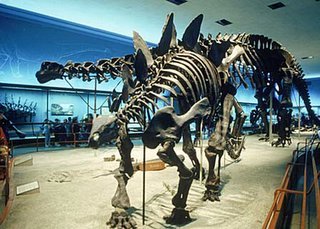
Today's web comic from Frank Cho



Ever since Charles Darwin proposed his theory of evolution in 1859, scientists have wondered whether evolutionary adaptations can be reversed.Answering that question has proved difficult, partly due to conflicting evidence. In 2003, scientists showed that some species of insects have gained, lost and regained wings over millions of years. But a few years later, a different team found that a protein that helps control cells' stress responses could not evolve back to its original form.


While adult tyrannosaurs wielded power and size to kill large prey, youngsters used agility to hunt smaller game.An international team of scientists have analyzed the youngest and most-complete known skull for any species of tyrannosaur, offering a new view of the growth and feeding strategies of these fearsome predators.

 tunicates, and cephalopod mollusks. After leaving the Navy in 1854, Huxley managed to secure a lectureship at the School of Mines in London.
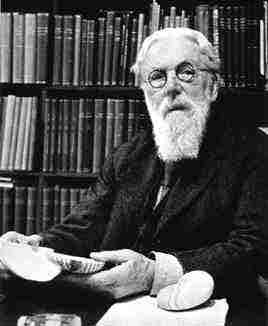 finished forms, but also the forces that moulded them: "the form of an object is a 'diagram of forces', in this sense, at least, that from it we can judge of or deduce the forces that are acting or have acted upon it."
From Blackwell Publishing:D'Arcy Thompson found that related species superficially looking very different could in some cases be represented as simple Cartesian transformations of
 one another. The most thoroughly worked out modern example of this is Raup's analysis of snail shell shapes with a morphospace.
 at the Museum of Natural History in Paris. In 1922 he obtained his doctorate and a year later left France on a paleontological expedition to China, where he stayed until 1946.


New research suggests that millions of years ago, birds' sense of smell improved during the dinosaur-bird transition, keeping pace with changes in their vision and balance.The team was able to compare some ancient and modern-day animals under study. They discovered that ancient birds, like Archaeopteryx, had a sense of smell similar to pigeons.
 He began is career making geologic maps of coalfields in Wales, noting the relationship between the underlying clay layers and fossil tree roots with local coal beds. This substantiated the theory that coal beds are formed in place.
 developing phylogenetic systematics, a coherent theory of the investigation and presentation of the relations that exist among species. Contrary to the position generally held during his time, Hennig viewed historical inference as a strictly logical and scientific endeavor. He first summarized his ideas in 1950 in German which became more widely known with the publication of the English revision, Phylogenetic Systematics (Hennig, 1966).
1. Relationships among species are to be interpreted strictly genealogically, as sister-lineages, as clade relations. Empirically, a phylogenetic hypothesis may be determined.More info about Henning HERE. photo.
2. Synapomorphies provide the only evidence for identifying relative recency of common ancestry. Synapomorphies are understood to be the shared-derived (evolved, modified) features of organisms.
3. Maximum conformity to evidence is sought (his auxiliary principle). Choice among competing cladistic propositions (cladograms) is decided on the basis of the greatest amount of evidence, the largest number of synapomorphies explainable as homologues.
4. Whenever possible, taxonomy must be logically consistent with the inferred pattern of historical relationships. The rule of monophyly is to be followed, thereby each clade can have its unique place in the hierarchy of taxonomic names.


A reptile that lived in what is now Oklahoma is giving paleontologists a glimpse of the oldest known toothache.Scientists have found evidence of bone damage due to oral infection in a 275 million years ago Paleozoic reptile, Labidosaurus hamatus. Their findings predate the previous record for oral and dental disease in a terrestrial vertebrate by nearly 200 million years.
 complex structures, once lost, are not regained in their original form. (While generally true, some exceptions are known.)

 the British Natural History Museum, Oakley become famous in 1953 for exposing the 'Piltdown Man' forgery.
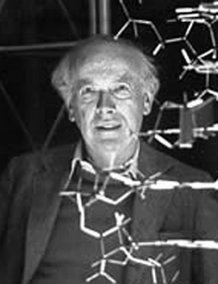 its significance for information transfer in living material." Deoxyribonucleic acid (DNA) is the substance contained in cells that controls heredity.


"...The great thing about this scene is that they are doing all of this damage on the say-so of lady scientist Joan Weldon, who heretofore had been all cute in her little suit and cap, dutifully deferring to her egghead dad Edmund Gwenn — but when the ants’ nest is discovered, Weldon goes all zero tolerance. “Burn it!” she commands. And Whitmore and Arness actually question her call (“What?!”), as if to say “But they’re just babies!” “I said burn it,” she barks through her gas mask. “Burn everything!” And they do."


Scientists have discovered the first intact fossil of a mature eudicot, a type of flowering plant whose membership includes buttercups, apple trees, maple trees, dandelions and proteas.The 125 million-year-old fossil was named Leefructus mirus in honor of Li Shiming, a non-scientist who donated the fossil to Ge Sun's new museum of paleontology in Liaoning Province, China.


"Unhappily the acceptance of your views means with many the abandonment of belief in God and in the immortality of the soul together with future rewards & punishments. No words of mine could represent an appreciable fraction of what I think as to the importance of such an abandonment—yet I am far from blaming you personally for (knowing you as I do) I am persuaded you only seek the promotion of truth though I regret you do not more protect against these unnecessary irreligious deductions."