Thursday, November 08, 2007

Collecting an Oviraptorid Nest in the Gobi

As part of the Nomadic Expeditions trip to the Gobi last summer we were fortunate enough to find and collect an oviraptorid skeleton on top of a nest of eggs.


The nest was found by Ph.D. student, Frederico Fanti (right, with Phil Currie), who was examining sedimetary structures in the Nemegt basin. The nest and skeleton were exposed in cross-section coming out of a cliff about 2 meters above the ground. Erosion had destroyed the tail and one margin of the nest but the rest was complete, including the skull. Frederico has his hand on the exposed portion of the nest.


Work commences on the specimen. You can see the stacked dunes sequences on the cliff face.


Much of the excavation was done in the rain. Many thanks to Nick Longrich who had the foresight to bring a large tarp (for protection from the sun he thought!)


Clive Coy, Frederico, and Phil work on the specimen.


Frederico expresses his opinion on hardness of the rock that had to be carved away.


Tom Owen, Eva Koppelhus and Miriam Reichel pedestal the nest and skeleton.


The block was rolled in a van and the field jacket finished as we pulled out of camp at the end of the trip - everything always happens at the last minute!


Victoria Arbour, Federico, and Miriam celebrate the successful collection of the specimen.

When Animals Evolve On Islands, Size Doesn't Matter

The island rule: made to be broken?. 2007. S. Meiri, et al. Proceedings of the Royal Society B, early on-line publication


From the press release:

A new study refutes the ‘island rule’ which says that in island environments small mammals such as rodents tend to evolve to be larger, and large mammals such as elephants tend to evolve to be smaller, with the original size of the species being the key determining factor in these changes.

The new research findings suggest that the tendency to either evolve larger or smaller on islands varies from one group of species to another, irrespective of original size. The research team suspect instead that a number of external factors, including the physical environment of the particular island, the availability of prey, the presence of predators and the presence of competing species all play a role in determining the size evolution of island mammals.

“Our analyses showed that the relationship between mammal size and evolutionary size change on islands is not that straightforward. Crucially, when we examined size change in light of the evolutionary relationship between different species, there was no connection between an evolution towards large size and greater degree of dwarfism on islands, or between evolution towards small size and island gigantism.”

The research team concluded that although there does appear to be a weak correlation between the size of a mammal and how its size then evolves in an island habitat, this reflects some groups’ specific tendencies towards gigantism or dwarfism, and not the general course of evolution.

Wednesday, November 07, 2007

Velociraptor Breathed Like A Bird

Avian-like breathing mechanics in maniraptoran dinosaurs.2007. J.R. Codd, et al. Proceedings of the Royal Society B: Biological Sciences, published on-line Nov. 6.

Abstract: In 1868 Thomas Huxley first proposed that dinosaurs were the direct ancestors of birds and subsequent analyses have identified a suite of ‘avian’ characteristics in theropod dinosaurs. Ossified uncinate processes are found in most species of extant birds and also occur in extinct non-avian maniraptoran dinosaurs. Their presence in these dinosaurs represents another morphological character linking them to Aves, and further supports the presence of an avian-like air-sac respiratory system in theropod dinosaurs, prior to the evolution of flight.

Here we report a phylogenetic analysis of the presence of uncinate processes in Aves and non-avian maniraptoran dinosaurs indicating that these were homologous structures. Furthermore, recent work on Canada geese has demonstrated that uncinate processes are integral to the mechanics of avian ventilation, facilitating both inspiration and expiration.

In extant birds, uncinate processes function to increase the mechanical advantage for movements of the ribs and sternum during respiration. Our study presents a mechanism whereby uncinate processes, in conjunction with lateral and ventral movements of the sternum and gastral basket, affected avian-like breathing mechanics in extinct non-avian maniraptoran dinosaurs.

Born This Day: Aleksandr Kovalevsky

Nov. 7,1840 – Nov. 9,1901


From Today In Science History:

Kovalevsky was the Russian founder of comparative embryology and experimental histology. He established that there was a common pattern in the embryological development of all multicellular animals. He studied the tiny lancelet, a fish-shaped sea animal, then wrote Development of Amphioxus lanceolatus (1865).

In 1866, he demonstrated the similarity between Amphioxus and the larval stages of tunicates and established the chordate status of the tunicates. In 1867, Kovalevsky extended the germ layer concept of Christian Heinrich Pander and Karl Ernst von Baer to include the invertebrates, establishing an important embryologic unity in the animal kingdom.

Sing along!

The Amphioxus Song:

A fish-like thing appeared among the annelids one day.
It hadn't any parapods nor setae to display.
It hadn't any eyes nor jaws, nor ventral nervous cord,
But it had a lot of gill slits and it had a notochord.


Chorus:
It's a long way from Amphioxus. It's a long way to us.
It's a long way from Amphioxus to the meanest human cuss.
Well, it's goodbye to fins and gill slits, and it's welcome lungs and hair!
It's a long, long way from Amphioxus, but we all came from there.


The rest of the lyrics and the story behind the song
Here

Died This Day: Alfred Russel Wallace

Jan. 8, 1823 – Nov. 7, 1913

From Today In Science History:

Wallace was a British naturalist and biogeographer. He was the first westerner to describe some of the most interesting natural habitats in the tropics. He is best known for devising a theory of the origin of species through natural selection made independently of Darwin.

Between 1854 and 1862, Wallace assembled evidence of natural selection in the Malay Archipelago, sending his conclusions to Darwin in England. Their findings were jointly presented to the Linnaean Society in 1858. Wallace found that Australian species were more primitive, in evolutionary terms, than those of Asia, and that this reflected the stage at which the two continents had become separated. He proposed an imaginary line (now known as Wallace's line) dividing the fauna of the two regions.

The Alfred Russel Wallace page HERE. More HERE.

Tuesday, November 06, 2007

Hans Larsson: Building a Better T. rex


Hans Larsson and his evo/devo work trying to turn chickens in tyrannosaurs had a nice write up in The Globe & Mail last Saturday.

Check out the photo gallery HERE.

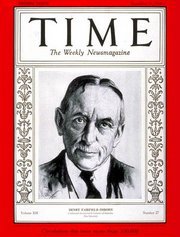
Died This Day: Henry Fairfield Osborn

August 8, 1857 - November 6, 1935

Osborn graduated at Princeton in 1877 and pursued his interest in the biological sciences and paleontology through additional study at several New York City medical schools and with Thomas Henry Huxley in Britain. Returning to the United States, Osborn accepted a position at Princeton, teaching natural sciences from 1881 until 1891, when he moved to Columbia University to organize the Biology Department there, and in 1891, he also helped to organize the Department of Vertebrate Paleontology at the American Museum of Natural History acting as it’s first curator. Osborn's close association with American Museum continued for over 45 years, and included a long tenure as its President, 1908-1933. During these years the museum's collections expanded enormously and it became one of the preeminent research institutions for natural history in the world.

Osborn is noted for describing and naming both Tyrannosaurus rex and Albertosaurus in 1905, Pentaceratops in 1923, and Velociraptor in 1924. One of Osborn's favorite groups for study was the brontotheres, and he was the first to carry out comprehensive research on them. He also wrote an influential textbook, The Age of Mammals (1910).

Apart from his own research, Osborn is perhaps best remembered for the sponsorship of the five immensely successful Central Asiatic Expeditions during the 1920's and 30's led by Roy Chapman Andrews.

Entry from HERE and HERE.

Mesozoic Birds Looked to the Skies But Lived On The Ground

Foraging modes of Mesozoic birds and non-avian theropods. 2007. C.L. Glen, and M. B. Bennett. Current Biology Vol 17, R911-R912, 06 November 2007.

Earliest birds acted more like turkeys than common cuckoos
From the press release:

By comparing the claw curvatures of ancient and modern birds, the researchers provide new evidence that the evolutionary ancestors of birds primarily made their livings on the ground rather than in trees.

“The claws of Mesozoic birds and their immediate ancestors, the non-avian theropods, are relatively ‘straight’—most like [those] of birds that are now either specialized for walking on the ground or have a preference for it, rather than the highly curved claws of birds that spend a lot of time in trees,” said Christopher Glen.

“In summary,” they concluded, “since claw angle is independent of body size and the evolutionary relationships among species, it is a reliable indicator of the predominant behavior reliant upon hind-limb locomotion, and can make an important contribution to reconstructing the ‘ecomorphology’ of fossil species—how they lived and used their environments. Our findings suggest early birds foraged predominantly on the ground, rather than supporting previous suggestions of arboreal claw adaptations, which appear to have evolved later in the lineage.”

Friday, November 02, 2007

Weird Scenes Inside the Gold Mine


Tony Fiorillo & the circus
Alison Abbott in Nature reports on the the recenting 'doings' up in Alaska when Tom Rich from Australia and a film crew decided to set up a mining operation next to Tony Fiorillo's on-going research excavation. Really, what were they thinking? We've all had weird experiences with film crews but this one has to go down in the books.

I could download a PDF of the article HERE. Maybe you can to.

Flying Lemurs Perch With Primates

Molecular and Genomic Data Identify the Closest Living Relative of Primates. 2007. J. Janeka et al. Science 318: 792-794.


The study indicates that colugos (flying lemurs), rather than tree shrews, are genetically more closely related to primates. Further sequencing of the colugo genome is warranted, in order to develop a better understanding of the evolutionary changes leading to primates, as well as to more accurately reconstruct the ancestral primate genome.

According to Murphy, the origins of primates and primates found in the fossil record have been a topic of intense debate as there has been an increased focus on identifying adaptive evolutionary changes with primates. By decoding the past through changes in genomics, a clearer picture of the evolution of primates emerges that will provide a broader context for future research, he said.

“In addition to identifying colugos as the closest living relative to primates, we were able to make some very important discoveries about the tree shrews,” said Murphy. “The phylogenetic uniqueness we documented in Ptilocercus, coupled with its restriction to a lowland forest habitat and limited global range, have certainly identified it as an important conservation effort in a global sense.

Thursday, November 01, 2007

Born This Day: Sir Gavin de Beer


Illo © Nick Longrich
Nov. 1 1899 – June 21, 1972

From Today In Science History:

de Beer was an English zoologist and morphologist who contributed to experimental embryology, anatomy, and evolution. He refuted the germ-layer theory and developed the concept of paedomorphism - the retention of juvenile characteristics of ancestors in mature adults).

From examination of the fossil Archaeopteryx, De Beer proposed mosaic evolution with piecemeal evolutionary changes to explain the combination of bird and reptile features.

Born This Day: Father of Continental Drift

Nov. 1, 1880 – Nov, 1930

From Today In Science History:


Alfred Lothar Wegener was a German meteorologist and geophysicist who first gave a well-developed hypothesis of continental drift. He suggested (1912) that about 250 million yrs ago all the present-day continents came from a single primitive land mass, the supercontinent Pangaea, which eventually broke up and gradually drifted apart. (A similar idea was proposed earlier by F.B. Taylor in 1910.) Others saw the fit of coastlines of South America and Africa, but Wegener added more geologic and paleontologic evidence that these two continents were once joined.

Deccan Traps Killed T. rex


Devil Dinosaur © Marvel Comics
From the press release:

A series of monumental volcanic eruptions in India may have killed the dinosaurs 65 million years ago, not a meteor impact in the Gulf of Mexico. The eruptions, which created the gigantic Deccan Traps lava beds of India, are now the prime suspect in the most famous and persistent paleontological murder mystery, say scientists who have conducted a slew of new investigations honing down eruption timing.

"It's the first time we can directly link the main phase of the Deccan Traps to the mass extinction," said Princeton University paleontologist Gerta Keller. The main phase of the Deccan eruptions spewed 80 percent of the lava which spread out for hundreds of miles. It is calculated to have released ten times more climate altering gases into the atmosphere than the nearly concurrent Chicxulub meteor impact, according to volcanologist Vincent Courtillot from the Physique du Globe de Paris.

Keller's crucial link between the eruption and the mass extinction comes in the form of microscopic marine fossils that are known to have evolved immediately after the mysterious mass extinction event. The same telltale fossilized planktonic foraminifera were found at Rajahmundry near the Bay of Bengal, about 1000 kilometers from the center of the Deccan Traps near Mumbai.

The microfossils demonstrate directly that the biggest phase of the eruption ended right when the aftermath of the mass extinction event began. That sort of clear-cut timing has been a lot tougher to pin down with Chicxulub-related sediments, which predate the mass extinction.

"Our K-T age control combined with these results strongly points to Deccan volcanism as the likely leading contender in the K-T mass extinction."

From a presentation at the recent GSA Annual Meeting in Denver.

500 Million Year Old Jellyfish

Exceptionally Preserved Jellyfishes from the Middle Cambrian. 2007. Cartwright. P. et al. PLoS ONE 2(10): e1121.


Cambrian fossil jellyfish shows similarity to the modern jellyfish, Cunina (right). Fossil photo by B. Lieberman. Cunina photo by K. Raskoff, copyright

From the press release:

Researchers describe four types of 500 million years old cnidarian fossils from Utah that preserve traits that allow them to be related to modern orders and families of jellyfish. The specimens are about 200 million years older than the oldest previously discovered jellyfish fossils.

The jellyfish left behind a film in fine sediment that resembles a picture of the animal, including a distinct bell-shape, tentacles, muscle scars and possibly even the gonads.

With the discovery of the four different types of jellyfish in the Cambrian there is now enough detail to assert that the types can be related to the modern orders and families of jellyfish. The specimens show the same complexity. That means that either the complexity of modern jellyfish developed rapidly roughly 500 million years ago, or that the group is even older and existed long before then.

Casting A Deep Shadow

From National Geographic news:

David Fillmore, a Kutztown State University undergraduate student, digging through a collection of fossils in a Pennsylvania museum recently found beautifully preserved full-body impressions of 30 cm salamander-like creatures that lived 330 million years ago.

The imprints reveal that the animal had webbed feet and that its skin was smooth, not scaly or armor-plated, as seen in an artist's depiction. Also, the fact that two of the salamanders are aligned head-to-toe might indicate courtship behavior similar to that engaged in by modern salamanders.

The work was presented by Spencer Lucas at the recent Geological Society of America meeting in Denver, Colorado.

Tuesday, October 30, 2007

Bayn Zag - The Flaming Cliffs

More photos from this summer's Gobi trip run through Nomadic Expeditions. If you'd like to join me for two weeks next August digging up dinos in the Gobi check out the Nomadic web page.


The Flaming Cliffs at mid-afternoon.


Camel rides make for a full, but odd, experience at the Cliffs.


Victoria Arbour (U Alberta) shows off her skills.


Tom Owen was the official photographer for the camel rides


The kids at the camel ride ger sold handicrafts.


Miriam (U Alberta) & her camel.


Ito shows off the Velociraptor he found at the Cliffs.

Clive Coy and Eva Koppelhus wait for the sun to go down.


At the 'golden hour' of sunset Bayn Zag does indeed burst into flames!


Phil and Eva examine a partial Protoceratops.


An obo (shrine) on top of the cliffs.

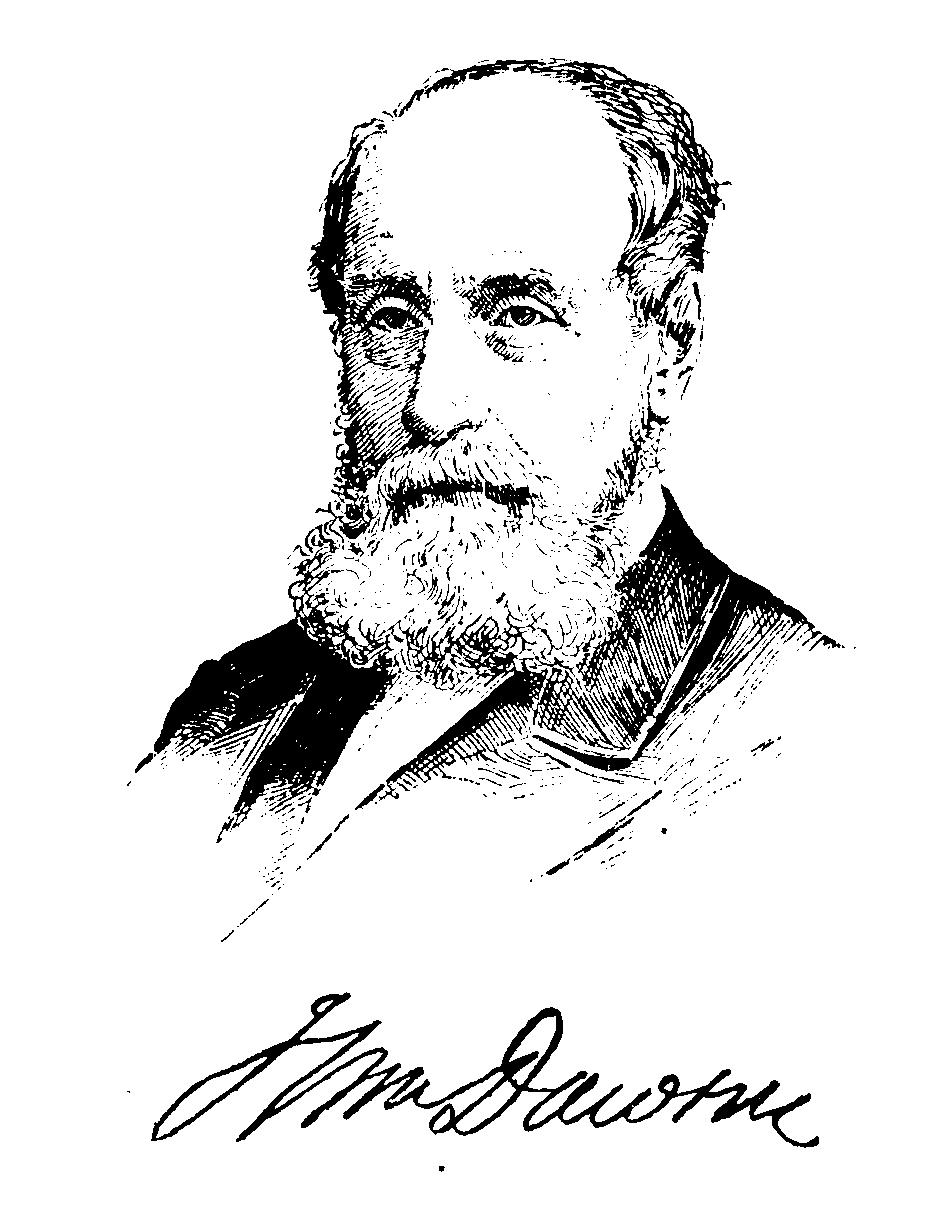
Born This Day: Sir John William Dawson

October 30, 1820 - November 20, 1899

Dawson was a Canadian geologist who made numerous contributions to paleobotany and extended the knowledge of Canadian geology. Dawson was born and raised in Pictou, Nova Scotia, where the many sandstone and coal formations provided fertile ground for his first scientific explorations, which culminated in the publication of Acadian Geology. He made many important discoveries of fossil life, great and small. These included fossil plants, trackways of lowly invertebrates, footprints, skeletons of reptiles and amphibians, millipedes and the earliest land snails. When the famous geologist Charles Lyell visited coal deposits in Pictou, Dawson acted as his guide.

In 1851, Dawson and Lyell teamed up again to examine the interiors of fossil tree trunks at Joggins, Nova Scotia. They discovered the remains of some of the earliest known reptiles, Hylonomus lyelli, along with other rare fossils, propelling this part of the world into the international spotlight.

Dawson became principal of McGill College in Montreal in 1854, which he made into a reputable institution. He remained there, teaching geology and palaeontology and acting as librarian, until his retirement. One of his lifelong dreams was realized in 1882 when Peter Redpath gave money to McGill for the construction and establishment of a museum, naming Dawson as director. Today the Peter Redpath Museum of Natural History houses many specimens from Dawson's personal collection.

Info from HERE and HERE. Images from HERE and HERE.

Monday, October 29, 2007

Burrowing Dinos

From Sid Perkins at Science News:

Paleontologists in Montana have unearthed an ancient, sediment-filled burrow that holds remains of the creatures that dug it. The find is the first indisputable evidence that some dinosaurs maintained an underground lifestyle for at least part of their lives.

Excavation revealed that the sandstone mass was S-shaped and about 2.1 meters long. For most of its length, the sinuous feature had an oval cross section about 30 cm wide and about 40 cm tall. However, at its lower end it broadened to a width of 45 cm. Varricchio and his colleagues propose that the anomalous mass of sandstone represents a sudden influx of material that filled in a burrow, trapping its occupants.

Varricchio and his colleagues dubbed the new species Oryctodromeus cubicularis, which, in Greek, means "digging runner of the lair." They reported their find at the recent meeting of the Society of Vertebrate Paleontology in Austin, Texas.
Varricchio, D., A. Martin, and Y. Katsura. 2007. Burrowing behavior in a new ornithopod dinosaur from the mid Cretaceous of Montana. Society of Vertebrate Paleontology meeting. Oct. 17-20. Austin, Texas. Also in Journal of Vertebrate Paleontology, 27 [Supplment to No. 3): 162A.
Thanks to Sukie C!

Born This Day: Othniel Marsh


Marsh (center)
Oct. 29, 1831 - March 18, 1899

From Today In Science History:

Marsh was an American paleontologist who discovered and described 100’s of new fossil species. He made extensive scientific explorations of the western U.S. and contributed greatly to knowledge of extinct North American vertebrates. Marsh spent only four seasons in the field, between 1870 and 1873.

"The Great Bone Wars," were the result of his rivalry with Edward Drinker Cope, America's other great vertebrate paleontologist of the period. Each scientist hired field crews to unearth and ship back fossils as fast as possible. The rival crews were known to spy on each other, dynamite their own and each other's secret localities (to keep their opponents from digging there), and occasionally steal each other's fossils.

Friday, October 26, 2007

Red-headed Neanderthals

A Melanocortin 1 Receptor Allele Suggests Varying Pigmentation Among Neanderthals. 2007. Carles Lalueza-Fox, et al. Science Express, Oct 25, 2007.


Anthro © DC Comics
From the press release:

Ancient DNA retrieved from the bones of two Neanderthals suggests that at least some of them had red hair and pale skin. The international team says that Neanderthals' pigmentation may even have been as varied as that of modern humans, and that at least 1 percent of Neanderthals were likely redheads.

The scientists extracted, amplified, and sequenced a pigmentation gene called MC1R from the bones of a 43,000-year-old Neanderthal from El Sidrón, Spain, and a 50,000-year-old individual from Monti Lessini, Italy.

"Together with other genes, this MC1R gene dictates hair and skin color in humans and other mammals," says Römpler. "The two Neanderthal individuals we studied showed a point mutation not seen in modern humans. When we induced such a mutation in human cells, we found that it impaired MC1R activity, a condition that leads to red hair and pale skin in modern humans."

With Neanderthals' surviving bones providing few clues, scientists have long sought to flesh out the appearance of this hominid species found across Eurasia some 28,000 to 400,000 years ago. While anthropologists had predicted that Neanderthals might have had pale skin or red hair, the new work by Römpler and colleagues offers the first strong evidence to support this hunch.

Thursday, October 25, 2007

UT Austin CT Facility

I'm pretty busy this week but here's an update from Eric Snively who stayed in Austin after the SVP to do some CT work at UT:

The CT facility at the University of Texas at Austin (CT at UT) has benefitted palaeo- and neontology since it came into operation 10 years ago. At this year's SVP meeting, Drs. Matt Colbert and Jessie Maisano held a workshop with enlightening guidance for CT scanning, at Austin and elsewhere. They also scanned Gobekko cretacicus skulls for Aaron Bauer (Villanova University), Magdalena Borsuk-Bialynicka (Polish Academy of Sciences), and myself.

Here are photographs of the operation behind so much great science and imagery. Not depicted are the facility's official Palaeoblog awards for Best Music and Coolest Work Lighting of any CT lab anywhere.


CT wrangler Dr. Matt Colbert prepares specimens for scanning
in the giant brown box to the right, built by Bio-Imaging Research.


The scanner itself consists in part of a detector (left), turntable on which smaller specimens are placed (middle), and x-ray source (right).


Much fancier monitors than previously. (I'm sure Eric is referring to the computer moniters!)

Tuesday, October 23, 2007

Ancient Bats Could Not Echolocate


Kamandi © DC Comics
From Nature News comes this report from this year’s SVP conference in Austin, TX.

The most primitive bat ever discovered is finally being scientifically reported from two fossils, years after the first fossil was found and snapped up by a private collector. The 52.5-million-year-old bat unusually had a claw on all five digits of each limb, earning it the nickname '20-clawed bat'. Its anatomy shows that it captured its prey without the use of echolocation — the strongest evidence yet that some bats flew before this skill evolved.

Read the whole story of the discovery and purchase of the new material from commercial collectors HERE

Chinese Dam Saves Dino Fossils

From News.Cn:

Workers have spent three years building a huge earth dam to protect valuable dinosaur bones from being washed away by one of China's most famous rivers. A horde of dinosaur bones lies buried in a mountain that sits right on the river that forms the boundary between China and Russia - the Heilongjiang River. So far, thousands of dinosaur fossil bones have been unearthed from the mountain and assembled into 13 dinosaur skeletons, which are now exhibited in several museums nationwide.

Archaeologists believe there are enough fossil bones buried in the mountain to put together at least 100 more dinosaur skeletons. Every summer, rising waters and strong currents erode parts of the mountain, leaving dinosaur fossils exposed. Many fossils have been washed away in the past. So the Land and Resources Department of Heilongjiang Province ordered the building of a 1,450-meter-long embankment on the Chinese bank of the river to stop the fossils being washed away.

Building the embankment has been hard, with workers battling cold and long winters at a high altitude in China's cold northernmost province. Rising water levels in the summer also limit construction times, and it has taken workers three years to complete the 1,450-meter-long, 5.5-meter-high and 10-meter wide embankment around the dinosaur fossil site.

Dinosaur Mountain, which used to be called Mountain of Dinosaur Bones, is inside Jiayin Dinosaur National Geologic Park at Jiayin County, northeast China's Heilongjiang Province.

Created This Day: The Earth

From Today In Science History:

In 4004 BC, according to biblical interpretation by church leaders in 1650, the Earth was supposed to have been created.

Monday, October 22, 2007

The Oldest Known Reptile Tracks Found In NB


From National Geographic News:

The footprints are preserved in sediments in New Brunswick, Canada, that lay nearly a kilometer deeper than the oldest known (315 Ma) reptile bones—which suggests they were made by an animal that lived one to three million years earlier.

Howard Falcon-Lang from the U.K.'s University of Bristol said it was lucky that his team even found the fossil. The slab of rock had fallen from a remote stretch of sea cliffs, and a low sun shining across the surface cast revealing shadows.

Distinctive digits told the tale. Because the tracks showed five fingers and some evidence of scales, they had to have been made by a reptile, the team reports in a recent issue of the Journal of the Geological Society of London.

Futalognkosaurus dukei


Image by Academia Brasileira de Ciencias/Handout/Reuters
From National Geographic News:

The third largest dinosaur fossil ever found has been unearthed in the Patagonia region of Argentina by a team of Brazilian and Argentine paleontologists. The fossil likely represents a new dinosaur species dating back 90 million years, and it is among the most complete ever found of a large dino, the scientists said.

The giant herbivore measured 32 to 34 meters long, stood as tall as a four-story building, and weighed 60 to 70 tons.

Researchers named the dinosaur Futalognkosaurus dukei, meaning "giant chief of the dinosaurs" in the Mapuche language, and the second being a nod to the Duke Energy Corporation, a sponsor of the excavation.

Monday, October 15, 2007

Today In History: Darwin Goes To School (Almost)

From Today In Science History:

In 1827, Charles Darwin was accepted into Christ's College at Cambridge, but did not start until winter term because he needed to catch up on some of his studies. He had entered the University of Edinburgh in 1825 to study medicine, intending to follow his father Robert's career as a doctor. However, Darwin found himself unenthusiastic about his studies, including that of geology. Disappointing his family that he gave up on a medical career, he left Edinburgh without graduating in April 1827. His scholastic achievements at Cambridge were unremarkable, but after graduation, Darwin was recommended by his botany professor to be a naturalist to sail on HM Sloop Beagle

Saturday, October 13, 2007

Nano-Manga-Tyrannus


Tetsuto Miyashita recently gave me copies of this new manga series that he had picked up in Japan.

Yuta of the Lands of Dragons - Story of Another World of Dinosaurs” by author and artist Juzo Tokoro is set in the Late Cretaceous of western North America.

The young hero, Yuta, is eager to become a dragon (dinosaur) master. After a series of adventures with both people and dinosaurs he discoveres he has a special sense – to read dinosaurs' minds!


According to Tetsuto, “the author is a keen Japanese amateur palaeontologist, and his insightful ideas about dinosaurs are everywhere in the books. Note that Dromaeosaurus is hopping, ceratopsids have holes in their frills, juvenile tyrannosaurids are feathered... etc. He had to compromise the setting a little bit so that he can put dinosaurs from Campanian and some Asian dinosaurs. He keeps it updated as he already made Albertaceratops and Dracorex pay their debuts in vol. 3. Gregarious Albertosaurus and Gorgosaurus are based on the bonebed of Albertosaurus in Dry Island, Alberta. Volume 5 is out now in Japan.”

What I like about the series are the dino fact sheets interspersed amongst the stories. Here are a couple of examples:


Click image to enlarge

The Trouble With The Neanderthal Genome

Inconsistencies in Neanderthal genomic DNA sequences. 2007. Wall JD, Kim SK., PLoS Genet 3(10): e175.


2001 © Marvel Comics. Art by Jack Kirby.
Were Neanderthals direct ancestors of contemporary humans or an evolutionary side branch that eventually died out? This is one of the enduring questions in human evolution as scientists explore the relationship of fossil groups, such as Neanderthals, with people alive today. Two recent papers describing the sequencing of Neanderthal nuclear DNA from fossil bone held promise for finally answering this question (see below). However, the two studies came to very different conclusions regarding the ancestral role of Neanderthals. Jeffrey D. Wall and Sung K. Kim from University of California San Francisco now reveal in PLoS Genetics what they found when they reanalyzed the data from the two original studies.

Wall and Kim’s reanalysis reveals inconsistencies between them and they believe that possible contamination with modern human DNA and/or a high rate of sequencing errors compromised the findings of one of the original Neanderthal DNA studies. The authors therefore recommend that we carefully evaluate published and future data before arriving at any firm conclusions about human evolution.
Noonan JP, Coop G, Kudaravalli S, Smith D, Krause J, et al. Sequencing and analysis of Neanderthal genomic DNA. Noonan JP, Coop G, Kudaravalli S, Smith D, Krause J, et al. Science 314: 1113-1118.

Analysis of one million base pairs of Neanderthal DNA. 2006. Green RE, Krause J, Ptak SE, Briggs AW, Ronan MT, et al. Nature 444: 330-336.