Wednesday, October 05, 2005

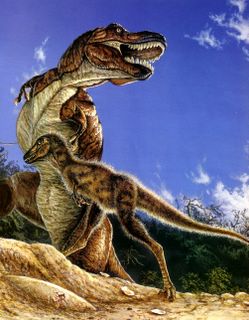
Happy Birthday T. rex!


Painting © Michael Skrepnick.

100 years ago today, the initial description of Tyrannosaurus rex, its junior synonym Dynamosaurus imperiosus, and Albertosaurus sarcophagus was published.

Thanks to Dr. Thomas Holtz, Jr. for pointing this out.

Tuesday, October 04, 2005

How The Zebra Lost Its Stripes

From EurekAlerts:
DNA from museum samples of extinct animals is providing unexpected information on the extent and effect of the Ice Age as well as the path of species evolution, according to a report by scientists from Yale University, the Smithsonian Institute and the Max Planck Institute for Evolutionary Anthropology.


The quagga, Equus quagga, a South African relative of horses and zebras, having a front half with zebra-like stripes and a back section like a horse with no marking, became extinct about 100 years ago. The pelt from a quagga museum specimen was the subject of tissue sampling that launched the field of ancient DNA analysis.

In the past, the quagga has alternatively been described as a species and a subspecies of the Plains zebra. These researchers asked how and when the quagga diverged from all the remaining related horses, zebras, and asses. They compared the genetics, coat color and habitats of existing zebras with related extinct species.

The mitochondrial DNA markers from 13 museum specimens, including the only skeleton in museum collections, which is at Yale's Peabody Museum of Natural History, showed that quagga likely diverged from Plains zebra about 120,000 to 290,000 years ago during the Ice Age. These results suggest that the quagga descended from a population of plains zebras that became isolated and the distinct quagga body type and coloring evolved rapidly.

This study reveals that the Ice Age was important not just in Europe and North America, but also in Africa.

"The rapid evolution of coat color in the quagga could be explained by disrupted gene flow because of geographical isolation, an adaptive response to a drier habitat, or a combination of both of the two forces," said Gisella Caccone of the Department of Ecology and Evolutionary Biology at Yale.

Mark Schultz: Out Of The Past


Above is the cover of the new catalogue for Mark Schultz’s Spanish career retrospective exhibit. The show opened at the Casal Solleric in Palma de Mallorca on Sept. 22, and continues through December. Admission is free.

The exhibition includes works from all phases of his professional comic and illustration career, including Xenozoic covers, sequential pages and merchandising, a variety of cover art done for SubHuman and other properties, and Conan paintings and illustrations.

As of this time, the soft cover catalogue is available only through the Solleric and cooperating museums in Spain and France, for the amazingly low price of 20 Euros (although Mark cannot absolutely confirm this). As a quality production of over 200 pages with color sections, it's a steal.

The Casal Solleric does not have a web site or e-mail address as far as I can determine. I did manage to pull this address from the web but I can’t speak to its validity:

CASAL SOLLERIC
Passeig del Born, 27; 07012 - Palma
Tel.: (+34) 971.72.20.92-3

If you can’t track it down I’d suggest contacting BudPlant.com and see if they have any plans to import this book into North America.

Monday, October 03, 2005

Mad About Dinos


Although I've not looked at an issue for over 30 years I've always had a soft spot for MAD magazine
, especially the first issues edited and written by Harvey Kurtzman. THIS SITE will let you browse every cover to every issue.

Reign of Mammals Linked to High Oxygen Levels

From EurekAlerts!:

The first, high resolution continuous record of oxygen concentration in the earth's atmosphere shows that a sharp rise in oxygen about 50 million years ago gave mammals the evolutionary boost they needed to dominate the planet, according to Paul Falkowski, Rutgers professor of marine science and lead author of a paper published Sept. 30 in the journal Science.


Falkowski and his colleagues have measured the abundance of carbon 13, a byproduct of photosynthesis, in deep-sea core samples that go back 205 million years. Because photosynthesis produces oxygen and leaves carbon 13 behind, the presence of carbon 13 in the fossil samples allows scientists to estimate precisely how much oxygen was in the atmosphere at any given time, Falkowski says.

From a steady 10 percent -- the level at which dinosaurs flourished -- the oxygen percentage rose to 17 percent 50 million years ago and then to 23 percent by 40 million years ago.

"In the fossil record, we see that see that this rise in oxygen content corresponds exactly to a really rapid rise of large, placental mammals," Falkowski says. "The more oxygen, the bigger the mammals. We argue that the rise in oxygen content allowed mammals to become very, very large -- mammals like 12-foot-tall sloths and huge saber-toothed cats. They paved the way for all subsequent large mammals, including ourselves."

In the last 10 million years, the percentage of oxygen in the earth's atmosphere has decreased to 21 percent. Falkowski says many scientists believed that great fires burned over the earth about 10 million years ago, reducing the number of trees and, therefore, the amount of photosynthesis and oxygen.

Image from HERE.

Sunday, October 02, 2005

Into The Gobi


Our first night in the desert staying in a gher.


Nomads in the Gobi now mostly use motorcycles rather than camels.


Gobi 'cyclist wearing a traditional del.


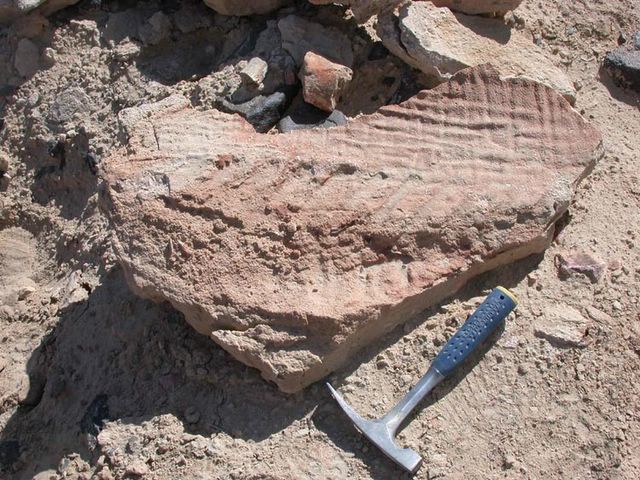
Hadrosaur skin impression with skin folds.


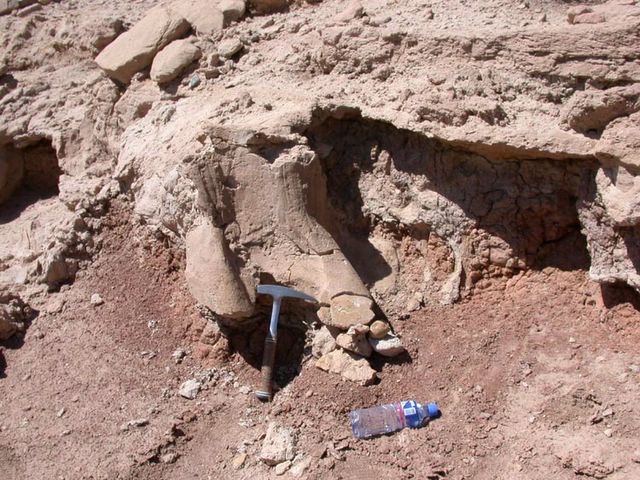
Hadrosaur footprint in the Nemegt Formation.


Hadrosaur footprint in side view formed as the dinosaur's foot pressed into the sediment.

Photos © Michael Ryan. Click to enlarge most photos.

Saturday, October 01, 2005

Tarbosaurus et al.

Yet more photos from this summer's trip to Mongolia:


Tarbosaurus in the prep lab in Ulaanbaatar.


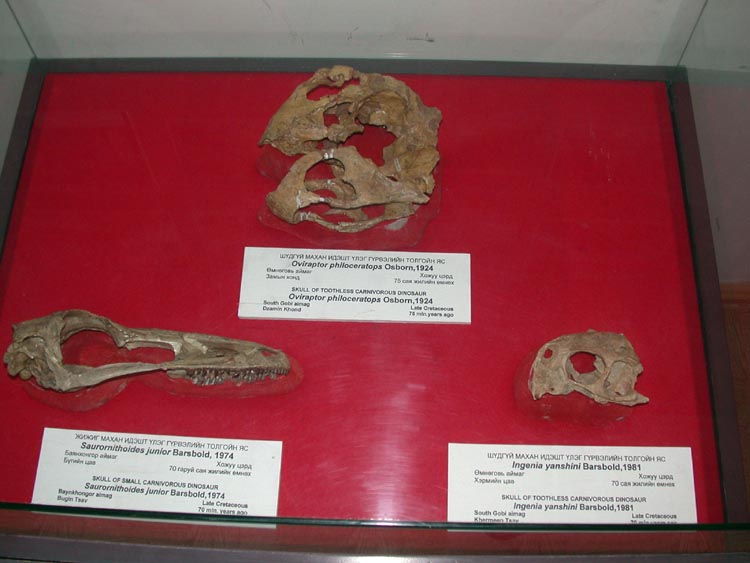
Small theropod skulls on display in UB.


.
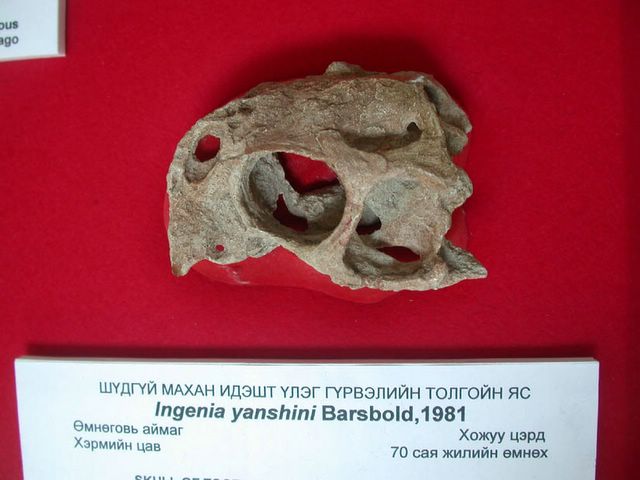
Close-up Ingenia.


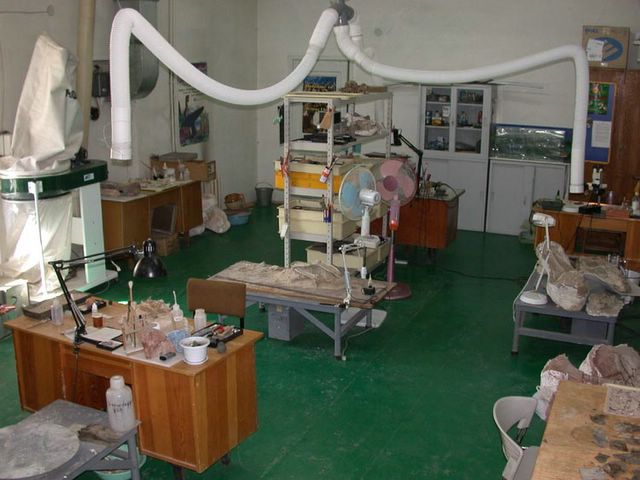
The prep lab in UB.

Photos © Michael Ryan. Click to enlarge most photos.

FYI, postings have been light because I've been on the road since getting back from the Gobi, including the back-to-back Burpee tyrannosaur conference and the Dinosaur Park Symposium.

New Horizons


Friday, Sept. 30th, was Phil Currie's last day at the Royal Tyrrell Museum. Phil and Eva are now up in Edmonton, Alberta, and ready to take on the new challenges of working at the University of Alberta. The U of A has always had a reputation for excellence in palaeontology (vertebrate and otherwise) thanks to the fine work by people like Mark Wilson, Richard Fox, Mike Caldwell, and many others. Phil will rapidly establish the U of A as a "center of excellence" for dinosaur and related research, and he has already accepted several graduate students who will help to shape the future of dinosaur palaeobiology.

The palaeoblogger tips his hat to the joint team of Phil & Eva and wishes them all the best for the days ahead!

Above: A snap of Phil in a 'Doc Savage" pose from this summer's trip to Mongolia.

Darwin's Barnacles

From Today In Science History:

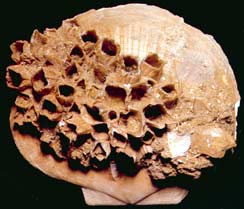
On this day in 1846, ten years after his voyage on the Beagle, Darwin began his study of barnacles, which was to appear in four volumes on living and fossil Cirripedes (barnacles). For his observations, he had a single lens microscope made to his own design. Intended to be more practical, it did not fine focusing and had a larger stage than the Beagle microscope to take shallow dishes for aqueous dissections. Image from Here

Snowball Earth Melts

Remains of photosynthesizing microbes in prehistoric rocks suggest Earth was not ice-bound

A study that appears in the Sept. 29 Science Express has turned up strong evidence on the "Slushball Earth" side of a decades-long scientific argument. The lead author is Alison Olcott, a Ph.D. student of earth sciences in the USC College of Letters, Arts and Sciences.


Image from University of Bristol

Geologists agree that prehistoric Earth was locked in a deep freeze during Precambrian times, about 750 to 600 million years ago. They disagree over the severity of the glaciation.

"Snowball Earth" proponents, who say that Earth's oceans were covered by thick ice, explain the survival of life by hypothesizing the existence of small warm spots, or refugia.

On the other side are supporters of a "Slushball Earth" that would have included large areas of thin ice or open ocean, particularly around the equator.
The debate has tended to revolve around the same rock samples and analytical techniques, Olcott said. So she and her team focused on a drill core of little-known black shale deposits from southeastern Brazil and applied lipid biomarker techniques to identify prehistoric organisms based on the fatty remains of their cell membranes.

The team, which included scientists from USC, Caltech, the University of Maryland and a Brazilian mining company, identified "a complex and productive microbial ecosystem," including photosynthesizing organisms that could not have existed under a thick layer of ice.

"If there was ice, it had to have been thin enough that organisms could photosynthesize below it or within it," Olcott said. Frank Corsetti of the USC College, one of Olcott's advisers and a co-author on the paper, said: "What she has provided is the first real evidence that substantial photosynthesis occurred in the Earth's oceans during the extreme ice age 700 million years ago, which is a challenge for the snowball theory."

The evidence from the drill core does not prove that large parts of the ocean remained free of sheet ice during the pre-Cambrian glaciation. It is statistically unlikely but possible, Olcott said, that the drill core found one of the tiny "refugia" for marine life whose existence is allowed under the "Snowball Earth" hypothesis.

Thursday, September 29, 2005

Spider Blood Found In 20 Million Year Old Fossil

A fun story from Eureka Alert!:

A scientist from the University of Manchester has discovered the first identified droplets of spider blood in a piece of amber up to 20 million years old. Two droplets of blood, technically known as haemolymph, have been preserved in the amber which also contains the spider – Filistatidae – a family commonly found in South America and the Caribbean.

The droplets are the first identified examples of spider blood ever found in an amber fossil. It is possible the blood could be used to extract DNA. The fossil, which is 4cm long and 2cm wide, was discovered in the Dominican Republic and dates back to the Miocene period.

In the latest issue of the journal Palaeontology (2005, vol. 48, part 5) David Penny describes how the spider died. He believes the spider was climbing up a tree when it was struck head-on by a sudden strong flow of resin. The spider then became engulfed in the resin and died. He argues that the shape and position of the blood droplets reveals which direction the spider was travelling in. It also reveals which of the spider's legs broke first.

David discovered the fossil in 2003 during a visit to the Museo del Ambar Dominicano in Puerto Plata, Dominican Republic. His research initially focused on the spider which he identified as an entirely new species of spider. On his return to the UK, further research revealed the droplets of blood and the information the fossil contained.

Tuesday, September 27, 2005

Dinosaur Provincal Park Symposium Field Trip


Dinosaur Provinvial Park.


Dave Eberth explains the Park.


Phil Currie gives an introduction to bone beds at BB 50.


Don Brinkman works his mojo over some microverts collected at BB 50


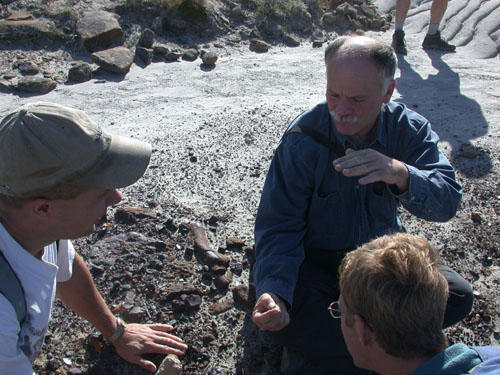
Peter Dodson searches for microverts at BB 50.


Dave Eberth and Karen Chin take a break.


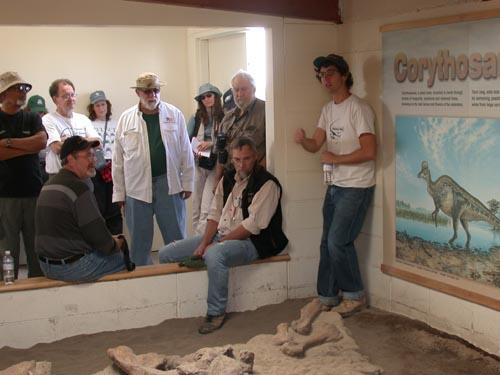
David Evans entertains the crowd with stories about hadrosaurs, some of which he claims are true.


RTMP Curators Dennis Braman, Dave Eberth, Don Brinkman, & Philip Currie discuss their varying ideas about Dinosaur Provincial Park

Wednesday, September 21, 2005

DINOSAUR PARK SYMPOSIUM


DINOSAUR PARK SYMPOSIUM
at the ROYAL TYRRELL MUSEUM
Drumheller, Alberta
September 24-25, 2005

Dinosaur Provincial Park is a unique palaeontological and geological resource in Canada. Simply put, the Park is one of the richest Cretaceous-age vertebrate 'graveyards' in the world with a treasure of well-preserved dinosaurs that has made it uniquely famous in the eyes of both palaeontologists and the public.

The primary goal of the Dinosaur Park Symposium is to bring together 250 palaeontologists, geologists, and palaeontological enthusiasts who recognize the vital role that Dinosaur Provincial Park continues to play in our understanding of the dinosaurian world. Approximately 75 contributors will offer a variety of oral and poster presentations relating to the Park, as well as related rocks and fossils from around the world. There will be a published abstract volume.

Occurring during Alberta's Centennial Year, the Dinosaur Park Symposium coincides with the Tyrrell Museum 's 20th anniversary, and the 50th anniversary of Provincial Park designation. We anticipate that the Symposium will be one of Canada 's palaeontological highlights for 2005.

Symposium events include:

- Friday evening (Sept. 23) ice-breaker at the Royal Tyrrell Museum.

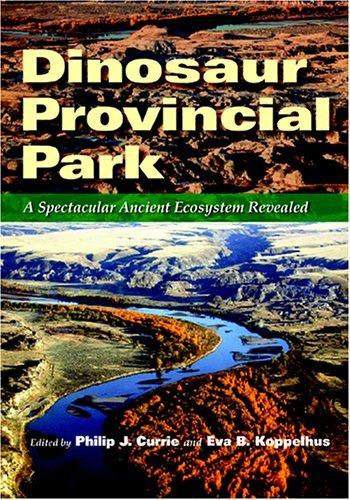
- Publication of the Indiana University Press book: Dinosaur Provincial Park: A Spectacular Ancient Ecosystem Revealed, with contributions from more than 20 palaeontologists and geologists,and edited by P.J.Currie & E.B.Koppelhus.

- Keynote talks by David Spalding and Scott Sampson that will provide historical context and global perspective for the Park's resources.

- Viewing of new specimens from the Park, including the Park's newest dinosaur (compliments of Michael Ryan).

- Saturday evening (Sept. 24) BBQ at the Royal Tyrrell Museum.

- Post-symposium field trip to Dinosaur Provincial Park on Monday, September 26, 2005 (there is an additional fee for this field trip).

AAS Issues Statement Supporting Teaching of Evolution


The American Astronomical Society Council has endorsed a statement (below) supporting the teaching of evolution in K-12 schools and pointing out that so-called "Intelligent Design" is not a valid scientific theory.

A PDF version of the statement with supporting references and
links to useful supporting information is now available on the AAS
web page, www.aas.org.
American Astronomical Society Statement on the Teaching of Evolution

20 September 2005

The American Astronomical Society supports teaching evolution in our nation's K-12 science classes. Evolution is a valid scientific theory for the origin of species that has been repeatedly tested and verified through observation, formulation of testable statements to explain those observations, and controlled experiments or additional observations to find out whether these ideas are right or wrong. A scientific theory is not speculation or a guess -- scientific theories are unifying concepts that explain the physical universe.

Astronomical observations show that the Universe is many billions of years old (see the AAS publication, An Ancient Universe, cited below), that nuclear reactions in stars have produced the chemical elements over time, and recent observations show that gravity has led to the formation of many planets in our Galaxy. The early history of the solar system is being explored by astronomical observation and by direct visits to solar system objects. Fossils, radiological measurements, and changes in DNA trace the growth of the tree of life on Earth. The theory of evolution, like the theories of gravity, plate tectonics, and Big Bang cosmology, explains, unifies, and predicts natural phenomena. Scientific theories provide a proven framework for improving our understanding of the world.

In recent years, advocates of "Intelligent Design," have proposed teaching "Intelligent Design" as a valid alternative theory for the history of life. Although scientists have vigorous discussions on interpretations for some aspects of evolution, there is widespread agreement on the power of natural selection to shape the emergence of new species. Even if there were no such agreement, "Intelligent Design" fails to meet the basic definition of a scientific idea: its proponents do not present testable hypotheses and do not provide evidence for their views that can be verified or duplicated by subsequent researchers.

Since "Intelligent Design" is not science, it does not belong in the science curriculum of the nation's primary and secondary schools. The AAS supports the positions taken by the National Academy of Sciences, the American Association for the Advancement of Science, the National Science Teachers' Association, the American Geophysical Union, the American Chemical Society, and the American Association of Physics Teachers on the teaching of evolution. The AAS also supports the NationalScience Education Standards: they emphasize the importance of scientific methods as well as articulating well-established scientific theories.
Reference Cited:
The Ancient Universe: How Astronomers Know the Vast Scale of Cosmic Time. Published by the American Astronomical Society. It is also available as a PDF on the Society's webpages by clicking HERE.
Image from HERE.

Frank Cho Sketchbook


I neglected to mention that Frank Cho has a wonderful sketchbook out entitled Sketches and Scribbles Book 2. This energetic collection showcases Cho's considerable talents with rough sketches & finished drawings (as well as few 'nakid girls').

Cho has been nominated for (and occasionally won) the Eisner Award, Harvey Award, The National Cartoonist Society Award, and several others.

The book comes in a signed and numbered editon by the artist from his own Monkey Boy Press (2005). Mature Readers. SC, 9x11, 80pg, b&w.

You can purchase your copy at BudPlant.com.

At The Flaming Cliffs

A variety of photos taken during our too brief visit to the famous Flaming Cliffs of Mongolia.

Phil Currie holds up a fragment of dinosaur eggshell against a backdrop of the cliffs. For scale Ito (in the photo below) is standing behind the tiny projection on the top of the cliff that is directly below Phil's thumbnail.


Ito Yoshio explores the Cliffs.


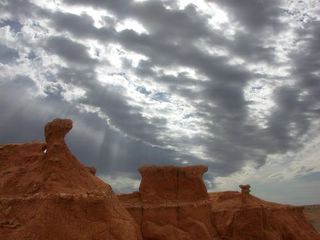
Some dramatic lighting.


Darren Tanke strikes a Roy Chapman Andrews-like pose against the Cliffs.


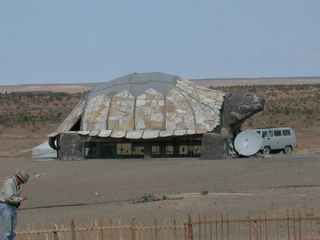
The Turtle Cafe located about 2 km from the Cliffs. The area has become commericalized and, in addition to the camel rides (below) being offered, one can also buy fossils collected from the region at one of several dealer tables at the top of the Cliffs.

Unfortunately there is no protection for this and other important fossil areas in Mongolia and the fossils are rapidly being stripped away by poachers. At the rate it's occurring there will be very little left to collect within a few years.


Part of our crew ride the camels.


Dr. Greg Erickson bonds with his camel.

All photos © Michael Ryan

Modern Insect Mass Extinction


From National Geographic News comes THIS ARTICLE by John Pickrell:

A new study says that the vast majority of species on the verge of extinction is in fact humble insects. The study estimates that up to 44,000 bugs of all varieties could have been wiped off the face of the Earth during the last 600 years. And hundreds of thousands more insect species could be lost over the next 50 years.Only about 70 insect extinctions have been documented since the 15th century, possibly because many insects have been poorly studied.

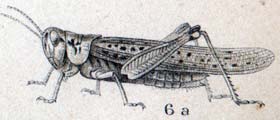
An 1877 U.S. federal entomologist's report included this drawing of a Rocky Mountain locust. The now extinct locust, which migrated across the U.S. plains in vast swarms, was considered by some to be the single largest barrier to westward expansion in the U.S in the 1800s.

Image courtesy Missouri State University
"Most extinctions estimated to have occurred in the historical past, or predicted to occur in the future, are of insects," argues entomologist Robert R. Dunn of North Carolina State University in Raleigh.

The finding is significant, because insects play vital roles in plant pollination, decomposition, and soil processing. They also form essential links in ecological chains as plant-eaters, predators, and parasites.

The loss of keystone insect species—those on which a large number of other species depend—could be especially detrimental for ecosystems and people. "Most entomologists I know have some species they haven't seen in years, but [they don't] have the time or money to look for them," said Dunn, who reports his findings in the current issue of the journal Conservation Biology.

Read the rest of the article HERE. Color images from HERE.

The World Of Charles Knight


Site recommendation: The World of Charles Knight.

Tuesday, September 20, 2005

The Return Of Devil Dinosaur


From www.ign.com comes a preview of the new DEVIL DINOSAUR series coming out this Fall from Marvel Comics:
Devil Dinosaur rules Prehistoric Earth. His ferocity is unmatched by the Small Folk and the Killer Folk. But two Celestials try to even up the odds by bringing a ferocious brute from the future back to take on Devil Dinosaur. It just so happens that this brute is the Incredible Hulk.


Brought to you by Eisner Award Winning Eric (The Goon) Powell, Marvel Monsters: Devil Dinosaur features the most savage of slugfests, the Hulk versus Devil Dinosaur. Plus, Marvel Monsters: Devil Dinosaur contains the first appearance of the Hulk from way back in November 1960 with "I Was a Slave of the Living Hulk" from Journey into Mystery #62 by Jack Kirby and Dick Ayers.

Sauropod Skulls & Dino Diversity

From the University of Michigan News Service comes this article about new research published by Dr. Jeff Wilson in the most recent issue of the Journal of Systematic Palaeontology:

ANN ARBOR, Mich. With their long necks and tails, sauropod dinosaurs famous as the Sinclair gasoline logo and Fred Flintstone's gravel pit tractor are easy to recognize, in part because they all seem to look alike.

The largest animals known to have walked the earth, sauropods were common in North America during the middle of the dinosaur era but were thought to have been pushed to extinction by more specialized plant-eaters at the end of that era. New discoveries, however, are showing that one lineage of sauropods diversified at the end of the dinosaur era, University of Michigan paleontologist Jeffrey Wilson says.


Reconstruction of the skull and lower jaw of Nemegtosaurus mongoliensis in left lateral (A), dorsal (B), posterior (C) and ventral (D) views. Illustration by Bonnie Miljour

Wilson's recent restudy and reconstruction of the skull of a Mongolian sauropod adds to a growing body of evidence for sauropod diversity at the end of the dinosaur era. Wilson described the reconstruction and the conclusions he drew from it in a paper published Aug. 24 in the Journal of Systematic Palaeontology.

He based the reconstruction on two nearly complete skulls that were found in the Gobi Desert in the 1950s and 1960s but whose evolutionary relationships have remained enigmatic. In the 1990s and early 2000s, Wilson restudied the skulls and found characteristics identifying them as skulls of titanosaurs, a late surviving sauropod lineage.

"Titanosaurs, which were surprisingly common at the end of the dinosaur era, were really the only sauropod lineage that flourished. All the others went extinct," said Wilson, an assistant professor of geological sciences and an assistant curator at the University of Michigan Museum of Paleontology. But as prevalent as titanosaurs were, they left behind surprisingly few skulls. Paleontologists have found plenty of other titanosaur bones, providing a picture of a group of sauropods with specialized limb bones.

Wilson began to appreciate the finer points of titanosaurs as a graduate student, when he and another student studied fossilized sauropod tracks and titanosaur limb anatomy. From those studies, Wilson concluded that unlike other sauropods, titanosaurs walked with their feet planted far from the middles of their bodies, an unusual style of "wide gauge" locomotion.

"Most animals walk with a narrow gauge, with their feet close to the midline, because it's energetically more efficient to walk that way. But some sauropod trackways tell us that a group of sauropods were walking with a new wide-gauge stance. We can identify characteristics of titanosaurs that would have allowed that stance, and we can tie the appearance of those features with the proliferation of wide gauge tracks everywhere in the fossil record at the end of the dinosaur era." Wilson wonders if the change in locomotion from typical sauropod narrow-gauge walking to titanosaur wide-gauge walking —corresponded to lifestyle changes, such as different feeding habits. But without skulls to study, it has been hard to draw conclusions about how and what titanosaurs ate.

With his work and that of researchers at the State University of New York, Stony Brook who announced the discovery of a complete titanosaur skeleton in 2001, sauropod specialists finally can start piecing together a clearer picture of the dinosaurs' lives.

One feature of the skulls is particularly intriguing. "They have elongate, sort of horse-like skulls with many openings and grooves on the outer surface of their snouts," said Wilson, who worked closely with U-M Museum of Paleontology artist Bonnie Miljour over the course of a year preparing the paper's many illustrations of the skull reconstruction. "Blood vessels and nerves passed through these holes and may suggest an especially sensitive snout. This probably had some role in feeding, but we haven't investigated it at all."

Oddly, a group of distantly related sauropods evolved a similarly grooved snout. "Apparently, these two different branches of sauropods gravitated toward similar anatomical structures, perhaps because they were specialized for eating certain types of vegetation."

Learn more about Jeff HERE and HERE.

Monday, September 19, 2005

Born Today: Florentino Ameghino

Sept 19, 1853 - August 6, 1911
From Today In Science History:

Argentine paleontologist and anthropologist who made significant contributions to the field of vertebrate paleontology and established the Pampas region of Argentina as a rich source of fossils. He discovered over 6,000 fossil species and classified 35 suborders of mammals. Ameghino's controversial discoveries of stone implements, carved bones, and other signs of a human presence in Argentina during the Pliocene, Miocene, and earlier periods served to increase his worldwide fame.
More info from HERE. Image from HERE.

In the Gobi


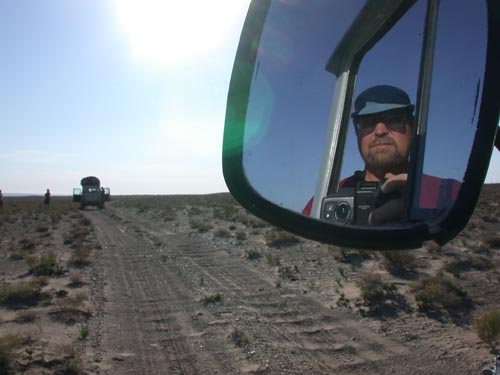
A self portrait of the palaeoblogger about midway through our time in the Gobi. We had stopped to photograph a herd of camels. In the distance is one of our Landrovers, one of four vehicles we usually travelled with. The track is a Gobi 'highway'.

Photo © Michael Ryan