
Friday, May 13, 2011
Premiered This Day: Revenge of The Creature


Thursday, May 12, 2011
Evolutionary Adaptations Can Be Reversed, But Rarely
Hidden Randomness between Fitness Landscapes Limits Reverse Evolution. 2011. L. Tan, et al. Phys. Rev. Lett. 106, 198102

FF © Marvel Comics

The critical question to ask is not whether evolution is reversible, but under what circumstances it could be. "It's known that evolution can be irreversible. And we know that it's possible to reverse evolution in some cases. So what you really want to know is: What fraction of the time is evolution reversible?"
By combining a computational model with experiments on the evolution of drug resistance in bacteria, Gore and his students have, for the first time, calculated the likelihood of a particular evolutionary adaptation reversing itself.
They found that a very small percentage of evolutionary adaptations in a drug-resistance gene can be reversed, but only if the adaptations involve fewer than four discrete genetic mutations.

In the late 19th century, paleontologist Louis Dollo argued that evolution could not retrace its steps to reverse complex adaptations — a hypothesis known as Dollo's law of irreversibility. Gore says his team's results offer support for Dollo's law, but with some qualifications.

FF © Marvel Comics
Ever since Charles Darwin proposed his theory of evolution in 1859, scientists have wondered whether evolutionary adaptations can be reversed.Answering that question has proved difficult, partly due to conflicting evidence. In 2003, scientists showed that some species of insects have gained, lost and regained wings over millions of years. But a few years later, a different team found that a protein that helps control cells' stress responses could not evolve back to its original form.

The critical question to ask is not whether evolution is reversible, but under what circumstances it could be. "It's known that evolution can be irreversible. And we know that it's possible to reverse evolution in some cases. So what you really want to know is: What fraction of the time is evolution reversible?"
By combining a computational model with experiments on the evolution of drug resistance in bacteria, Gore and his students have, for the first time, calculated the likelihood of a particular evolutionary adaptation reversing itself.
They found that a very small percentage of evolutionary adaptations in a drug-resistance gene can be reversed, but only if the adaptations involve fewer than four discrete genetic mutations.

In the late 19th century, paleontologist Louis Dollo argued that evolution could not retrace its steps to reverse complex adaptations — a hypothesis known as Dollo's law of irreversibility. Gore says his team's results offer support for Dollo's law, but with some qualifications.
Discovered This Day: The Frozen Body of Alfred Wegner

© Marvel Comics
Wegener was the German meteorologist and geophysicist who first gave a well-developed hypothesis of continental drift. Others saw the fit of coastlines of South America and Africa, but Wegener added more geologic and paleontologic evidence that these two continents were once joined. From Today In Science History
Wednesday, May 11, 2011
Manidens condorensis, A New Heterodontosaurid From Patagonia
A Middle Jurassic heterodontosaurid dinosaur from Patagonia and the evolution of heterodontosaurids. 2011. D. Pol, et al. Naturwissenschaften, 98:369–379.

Abstract [edit]: Heterodontosauridae is a morphologically divergent group of dinosaurs that has recently been interpreted as one of the most basal clades of Ornithischia. Heterodontosaurid remains were previously known from the Early Jurassic of southern Africa, but recent discoveries and studies have significantly increased the geographical and temporal range for this clade.
Here, we report a new ornithischian dinosaur from the Middle Jurassic Cañadón Asfalto Formation in central Patagonia, Argentina. This new taxon, Manidens condorensis gen. et sp. nov., includes well-preserved craniomandibular and postcranial remains and represents the only diagnostic ornithischian specimen yet discovered in the Jurassic of South America so far.
Derived features of its anatomy indicate that Manidens belongs to Heterodontosauridae, as the sister taxon of Heterodontosaurus and other South African heterodontosaurids. The presence of posterior dentary teeth with high crowns but lacking extensive wear facets in Manidens suggests that this form represents an intermediate stage in the development of the remarkable adaptations to herbivory described for Heterodontosaurus. At an estimated total length of 60–75 cm, Manidens furthermore confirms the small size of basal heterodontosaurids.

Abstract [edit]: Heterodontosauridae is a morphologically divergent group of dinosaurs that has recently been interpreted as one of the most basal clades of Ornithischia. Heterodontosaurid remains were previously known from the Early Jurassic of southern Africa, but recent discoveries and studies have significantly increased the geographical and temporal range for this clade.
Here, we report a new ornithischian dinosaur from the Middle Jurassic Cañadón Asfalto Formation in central Patagonia, Argentina. This new taxon, Manidens condorensis gen. et sp. nov., includes well-preserved craniomandibular and postcranial remains and represents the only diagnostic ornithischian specimen yet discovered in the Jurassic of South America so far.
Derived features of its anatomy indicate that Manidens belongs to Heterodontosauridae, as the sister taxon of Heterodontosaurus and other South African heterodontosaurids. The presence of posterior dentary teeth with high crowns but lacking extensive wear facets in Manidens suggests that this form represents an intermediate stage in the development of the remarkable adaptations to herbivory described for Heterodontosaurus. At an estimated total length of 60–75 cm, Manidens furthermore confirms the small size of basal heterodontosaurids.
Monday, May 09, 2011
Cranial Osteology of a Juvenile Tarbosaurus
Cranial osteology of a juvenile specimen of Tarbosaurus bataar from the Nemegt Formation (Upper Cretaceous) of Bugin Tsav, Mongolia. Journal of Vertebrate Paleontology. 31(3). 2011. Tsuihiji, T., M. Watabe, K. Tsogtbaatar, T. Tsubamoto, R. Barsbold, S. Suzuki, A. H. Lee, R. C. Ridgely, Y. Kawahara, and L. M. Witmer.
Get the PDF from the Project Website
"It's one of the secrets of success for tyrannosaurs—the different age groups weren't competing with each other for food because their diets shifted as they grew," said Ohio University paleontologist Lawrence Witmer.
The Tarbosaurus skull was found as part of an almost complete skeleton, missing only the neck and a portion of the tail. Estimated to have been only 2 to 3 years old when it died, was about 9 feet in total length, about 3 feet high at the hip and weighed about 70 pounds.
"The juvenile skull shows that there must have a change in dietary niches as the animals got older," Tsuihiji said. "The younger animals would have taken smaller prey that they could subdue without risking damage to their skulls, whereas the older animals and adults had progressively stronger skulls that would have allowed taking larger, more dangerous prey." link
Get the PDF from the Project Website

Courtesy of the Hayashibara Museum of Natural Sciences.
While adult tyrannosaurs wielded power and size to kill large prey, youngsters used agility to hunt smaller game.An international team of scientists have analyzed the youngest and most-complete known skull for any species of tyrannosaur, offering a new view of the growth and feeding strategies of these fearsome predators.
"It's one of the secrets of success for tyrannosaurs—the different age groups weren't competing with each other for food because their diets shifted as they grew," said Ohio University paleontologist Lawrence Witmer.
The Tarbosaurus skull was found as part of an almost complete skeleton, missing only the neck and a portion of the tail. Estimated to have been only 2 to 3 years old when it died, was about 9 feet in total length, about 3 feet high at the hip and weighed about 70 pounds.
"The juvenile skull shows that there must have a change in dietary niches as the animals got older," Tsuihiji said. "The younger animals would have taken smaller prey that they could subdue without risking damage to their skulls, whereas the older animals and adults had progressively stronger skulls that would have allowed taking larger, more dangerous prey." link
Saturday, May 07, 2011
Died This Day: Skull Island Witch Doctor
Steve Clemente (born Esteban Clemento Morro Nov. 22, 1885—May 7, 1950) was a Mexican actor known for his many villainous roles. He began acting in his teens, signing up for his first movie, The Secret Man, in 1917. His later, numerous roles were usually bit parts and he was an expert knife thrower.
He was a known scene stealer and was famous for his villainous snarl. He later starred in such movies as The Most Dangerous Game (1932), playing Tartar, the second henchman of Count Zarrof and played the Witch King in King Kong (1933). From Wiki

He was a known scene stealer and was famous for his villainous snarl. He later starred in such movies as The Most Dangerous Game (1932), playing Tartar, the second henchman of Count Zarrof and played the Witch King in King Kong (1933). From Wiki
Wednesday, May 04, 2011
The Predatory Behaviour of the Thylacine
The predatory behaviour of the thylacine: Tasmanian tiger or marsupial wolf?. 2011. B. Figueirido and C. Janis. Biology Letters
Its head and body looked like a dog, yet its striped coat was cat-like. It carried its young in a pouch, like a kangaroo. No wonder the thylacine — the enigmatic, iconic creature of Australia and Tasmania — was the object of so much confusion, alternately called the "marsupial wolf" and the "Tasmanian tiger."
So what was it? By studying bones of thylacines and 31 other mammals, researchers at Brown University have the answer: The thylacine was a Tasmanian tiger — more cat than dog, although clearly a marsupial. The researchers have also shown that the extinct thylacine was a solitary, ambush-style predator. That hunting approach separates thylacines from wolves and other large canid, or dog-like, species that hunt in packs and generally pursue their quarry over some distance.

Image: Carl Buell
For millions of years, Thylacinus cynocephalus roamed mainland Australia. Its numbers declined as humans settled throughout the continent, beginning some 40,000 years ago, and the dingo, a small, dog-like creature, was introduced, about 4,000 years ago. Thylacines' last remaining outpost was in dingo-free Tasmania, but a concerted eradication effort wiped out the species. The last known thylacine, said to be named "Benjamin," died at a zoo in Hobart in 1936.
Examining the bones, they found that the thylacine's humerus was oval and elongated at the end closest to the elbow, implying that the animal's forearm bones, the radius and ulna, were separate. That means the Tasmanian tiger would have been able to rotate its arm so that the palm faced upwards, like a cat. The distal humerus on dog-like animals, such as dingoes and wolves, is "more squared-up and shorter," Janis said. This indicates the radius and ulna were closer together in these species, reflecting that these animals' hands are more fixed in the palm-down position.
In terms of hunting, the increased arm and hand movement would have given the thylacine a greater capability of subduing its quarry after a surprise attack. Since dingoes and other dog-like creatures have less latitude in arm-hand movement, that helps explain why these animals hunt by pursuit and in packs, rather than in an ambush setting, the researchers note. link
Its head and body looked like a dog, yet its striped coat was cat-like. It carried its young in a pouch, like a kangaroo. No wonder the thylacine — the enigmatic, iconic creature of Australia and Tasmania — was the object of so much confusion, alternately called the "marsupial wolf" and the "Tasmanian tiger."

So what was it? By studying bones of thylacines and 31 other mammals, researchers at Brown University have the answer: The thylacine was a Tasmanian tiger — more cat than dog, although clearly a marsupial. The researchers have also shown that the extinct thylacine was a solitary, ambush-style predator. That hunting approach separates thylacines from wolves and other large canid, or dog-like, species that hunt in packs and generally pursue their quarry over some distance.

Image: Carl Buell
Examining the bones, they found that the thylacine's humerus was oval and elongated at the end closest to the elbow, implying that the animal's forearm bones, the radius and ulna, were separate. That means the Tasmanian tiger would have been able to rotate its arm so that the palm faced upwards, like a cat. The distal humerus on dog-like animals, such as dingoes and wolves, is "more squared-up and shorter," Janis said. This indicates the radius and ulna were closer together in these species, reflecting that these animals' hands are more fixed in the palm-down position.
In terms of hunting, the increased arm and hand movement would have given the thylacine a greater capability of subduing its quarry after a surprise attack. Since dingoes and other dog-like creatures have less latitude in arm-hand movement, that helps explain why these animals hunt by pursuit and in packs, rather than in an ambush setting, the researchers note. link
Born This Day: Thomas Huxley
From the UC Berkeley Page:
Huxley (May, 4, 1825 - June 29, 1895) was born in Ealing, near London, the seventh of eight children in a family that was none too affluent. At 21, Huxley signed on as assistant surgeon on the H.M.S. Rattlesnake, a Royal Navy frigate assigned to chart the seas around Australia and New Guinea. Huxley collected and studied marine invertebrates, in particular cnidarians,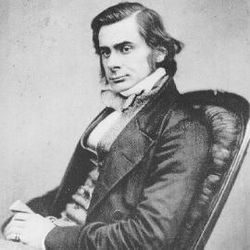 tunicates, and cephalopod mollusks. After leaving the Navy in 1854, Huxley managed to secure a lectureship at the School of Mines in London.
Huxley was a passionate defender of Darwin's theory -- so passionate that he has been called "Darwin's Bulldog" – and also a great biologist in his own right, who did original research in zoology and paleontology.
He is best known for his famous debate in June 1860, at the British Association meeting at Oxford. His opponent, Archbishop Samuel Wilberforce, was not-so-affectionately known as "Soapy Sam" for his renowned slipperiness in debate. During the debate, Archbishop Wilberforce ridiculed evolution and asked Huxley whether he was descended from an ape on his grandmother's side or his grandfather's. Accounts vary as to exactly what happened next, but according to one telling of the story, Huxley muttered "The Lord hath delivered him into my hands," and then rose to give a brilliant defense of Darwin's theory, concluding with the rejoinder, "I would rather be the offspring of two apes than be a man and afraid to face the truth."
All accounts agree that Huxley trounced Wilberforce in the debate, defending evolution as the best explanation yet advanced for species diversity.
However, Huxley did not blindly follow Darwin's theory, and critiqued it even as he was defending it. In particular, where Darwin had seen evolution and a slow, gradual, continuous process, Huxley thought that an evolving lineage might make rapid jumps, or saltations. As he wrote to Darwin just before publication of the Origin of Species, "You have loaded yourself with an unnecessary difficulty in adopting Natura non facit saltum [Nature does not make leaps] so unreservedly."
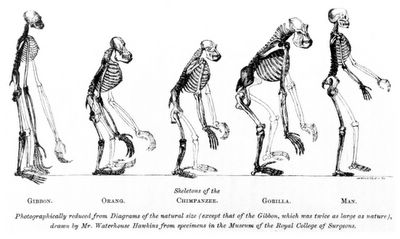
Huxley's most famous writing, published in 1863, is Evidence on Man's Place in Nature. This book, published only five years after Darwin's Origin of Species, was a comprehensive review of what was known at the time about primate and human paleontology and ethology. More than that, it was the first attempt to apply evolution explicitly to the human race. Huxley explicitly presented evidence for human evolution.
Huxley founded a remarkable dynasty of English scientists and thinkers. His son Leonard was a noted biographer and "man of letters." Leonard's oldest son Julian was one of the authors of the evolutionary synthesis of the early 20th century; Julian's son Francis became a noted anthropologist. Julian's brother Aldous Huxley was a novelist, screenwriter and essayist; his best-known book is the anti-utopia Brave New World.
Huxley (May, 4, 1825 - June 29, 1895) was born in Ealing, near London, the seventh of eight children in a family that was none too affluent. At 21, Huxley signed on as assistant surgeon on the H.M.S. Rattlesnake, a Royal Navy frigate assigned to chart the seas around Australia and New Guinea. Huxley collected and studied marine invertebrates, in particular cnidarians,
 tunicates, and cephalopod mollusks. After leaving the Navy in 1854, Huxley managed to secure a lectureship at the School of Mines in London.
 Huxley was a passionate defender of Darwin's theory -- so passionate that he has been called "Darwin's Bulldog" – and also a great biologist in his own right, who did original research in zoology and paleontology.
He is best known for his famous debate in June 1860, at the British Association meeting at Oxford. His opponent, Archbishop Samuel Wilberforce, was not-so-affectionately known as "Soapy Sam" for his renowned slipperiness in debate. During the debate, Archbishop Wilberforce ridiculed evolution and asked Huxley whether he was descended from an ape on his grandmother's side or his grandfather's. Accounts vary as to exactly what happened next, but according to one telling of the story, Huxley muttered "The Lord hath delivered him into my hands," and then rose to give a brilliant defense of Darwin's theory, concluding with the rejoinder, "I would rather be the offspring of two apes than be a man and afraid to face the truth."
All accounts agree that Huxley trounced Wilberforce in the debate, defending evolution as the best explanation yet advanced for species diversity.
However, Huxley did not blindly follow Darwin's theory, and critiqued it even as he was defending it. In particular, where Darwin had seen evolution and a slow, gradual, continuous process, Huxley thought that an evolving lineage might make rapid jumps, or saltations. As he wrote to Darwin just before publication of the Origin of Species, "You have loaded yourself with an unnecessary difficulty in adopting Natura non facit saltum [Nature does not make leaps] so unreservedly."

Huxley's most famous writing, published in 1863, is Evidence on Man's Place in Nature. This book, published only five years after Darwin's Origin of Species, was a comprehensive review of what was known at the time about primate and human paleontology and ethology. More than that, it was the first attempt to apply evolution explicitly to the human race. Huxley explicitly presented evidence for human evolution.
Huxley founded a remarkable dynasty of English scientists and thinkers. His son Leonard was a noted biographer and "man of letters." Leonard's oldest son Julian was one of the authors of the evolutionary synthesis of the early 20th century; Julian's son Francis became a noted anthropologist. Julian's brother Aldous Huxley was a novelist, screenwriter and essayist; his best-known book is the anti-utopia Brave New World.
Monday, May 02, 2011
Born This Day: Sir D'Arcy Thompson
From cscs.umich.edu:
D'Arcy Thompson (May 2, 1860 – June 21, 1948) was a British biologist whose masterwork, On Growth and Form, is a profound consideration of the shapes of living things, starting from the simple premise that "everything is the way it is because it got that way." Hence one must study not only finished forms, but also the forces that moulded them: "the form of an object is a 'diagram of forces', in this sense, at least, that from it we can judge of or deduce the forces that are acting or have acted upon it."
Now by "forces" Thompson meant forces, and one of his great themes is the tremendous light cast on living things by using mathematics to describe their shapes and fairly simple physics and chemistry to explain them. In other words, Thompson wrote a thousand page treatise on self-organization long before the word existed. one another. The most thoroughly worked out modern example of this is Raup's analysis of snail shell shapes with a morphospace.
With some simplification, the axes on the fish grids in here or the snails of the morphospace can be thought of as growth gradients. The evolutionary change between the species would then have been produced by a genetic change in the regulatory mechanisms controlling those gradients.
If we looked at these fish without the grids we might think that an evolutionary change from one into the other would be at least moderately complicated. The interest of D'Arcy Thompson's diagrams is then to show that shape changes could have been produced by heterochrony - a change in the rate or timing of development of some cell lines in the body relative to others.

Figure: a D'Arcy Thompson transformational diagram. The shapes of two species of fish have been plotted on Cartesian grids. Image from HERE.
D'Arcy Thompson (May 2, 1860 – June 21, 1948) was a British biologist whose masterwork, On Growth and Form, is a profound consideration of the shapes of living things, starting from the simple premise that "everything is the way it is because it got that way." Hence one must study not only
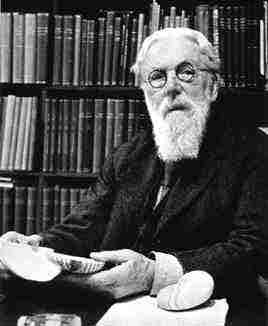 finished forms, but also the forces that moulded them: "the form of an object is a 'diagram of forces', in this sense, at least, that from it we can judge of or deduce the forces that are acting or have acted upon it."
Now by "forces" Thompson meant forces, and one of his great themes is the tremendous light cast on living things by using mathematics to describe their shapes and fairly simple physics and chemistry to explain them. In other words, Thompson wrote a thousand page treatise on self-organization long before the word existed.
From Blackwell Publishing:D'Arcy Thompson found that related species superficially looking very different could in some cases be represented as simple Cartesian transformations of
 one another. The most thoroughly worked out modern example of this is Raup's analysis of snail shell shapes with a morphospace.
With some simplification, the axes on the fish grids in here or the snails of the morphospace can be thought of as growth gradients. The evolutionary change between the species would then have been produced by a genetic change in the regulatory mechanisms controlling those gradients.
If we looked at these fish without the grids we might think that an evolutionary change from one into the other would be at least moderately complicated. The interest of D'Arcy Thompson's diagrams is then to show that shape changes could have been produced by heterochrony - a change in the rate or timing of development of some cell lines in the body relative to others.

Figure: a D'Arcy Thompson transformational diagram. The shapes of two species of fish have been plotted on Cartesian grids. Image from HERE.
Surrounded By Sea Honkers!
Microspectroscopic Evidence of Cretaceous Bone Proteins. 2011. J. Lindgren et al. PLoS ONE 6(4): e19445.
Scientists have visualized type I collagen in a mosasaur fossil. Collagen previously been reported in dinosaur fossils based primarily on mass spectrometric analyses. link
Scientists have visualized type I collagen in a mosasaur fossil. Collagen previously been reported in dinosaur fossils based primarily on mass spectrometric analyses. link

Sunday, May 01, 2011
Published This Day: Species Plantarum by Linnaeus
In 1753, Carolus Linnaeus published the first edition of his Species Plantarum in which he gave systematic names to plants that are still in use today. He was the first to frame principles for defining genera and species of organisms and to create a uniform system for naming them. He is often called the father of classification, and he extended the familiar scheme of dual Latin names to identify animals in 1758. The Species Plantarum was taken by international consent in 1905 as the starting point for modern botanical nomenclature. From Today In Science History.

Born This Day: Pierre Teilhard de Chardin
From the San Jose University webpage:
Teilhard de Chardin (May 1, 1881 – April 10, 1955) was a paleontologist, Jesuit priest and philosopher, who was born in Auvergne, France. He lectured in science at the Jesuit College in Cairo, became professor of geology at the Intitut Catholique in Paris, and studied at the Institute of Human Paleontology at the Museum of Natural History in Paris. In 1922 he obtained his doctorate and a year later left France on a paleontological expedition to China, where he stayed until 1946.
His many writings include Building the Earth, Le Milieu Divin, Trialogues at the Edge of the West, various essays. His major work, The Phenomenon of Man (written 1938-40) was posthumously published. Based on Teilhardís scientific thinking, it argues the humanity is in a continuous process of evolution towards a perfect spiritual state.
Teilhard de Chardin (May 1, 1881 – April 10, 1955) was a paleontologist, Jesuit priest and philosopher, who was born in Auvergne, France. He lectured in science at the Jesuit College in Cairo, became professor of geology at the Intitut Catholique in Paris, and studied at the Institute of Human Paleontology
 at the Museum of Natural History in Paris. In 1922 he obtained his doctorate and a year later left France on a paleontological expedition to China, where he stayed until 1946.
 His many writings include Building the Earth, Le Milieu Divin, Trialogues at the Edge of the West, various essays. His major work, The Phenomenon of Man (written 1938-40) was posthumously published. Based on Teilhardís scientific thinking, it argues the humanity is in a continuous process of evolution towards a perfect spiritual state.
Saturday, April 30, 2011
Died This Day: Joseph Leidy

Sept. 9, 1823 - April 30, 1891
Leidy is known as the "Father of American Vertebrate Paleontology". He described the first relatively complete dinosaur skeleton, Hadrosaurus, and introduced many American and European scientists to the fossil riches of the American West. Leidy's consummate skill in comparative anatomy would allow him to identify and characterize even the most fragmentary fossil material.
Leidy was also the "Founder of American Parasitology," a Professor of Anatomy at the University of Pennsylvania, a pioneering protozoologists, an influential teacher of Natural History, an accomplished microscopist and scientific illustrator, and an expert on a variety of subjects encompasing the earth and natural sciences. He published scientific papers on more than a thousand extinct and living protozoa, fungi and invertebrates and vertebrates as well as an assortment of publications on human biology and medicine. He was also one of the earliest supporters of Charles Darwin.
Friday, April 29, 2011
Died This Day: Julie Ege

Nov. 12, 1943 – April 29, 2008
Born This Day: Richard Carlson

Wednesday, April 27, 2011
Opened This Day: AMNH
From Today In Scince History:
On this day in 1871, the American Museum of Natural History opened to the public in New York City. The Museum’s collection went on view for the first time in the Central Park Arsenal, the Museum’s original home, on the eastern side of Central Park.
The museum began from the efforts of Albert Smith Bickmore, one-time student of Harvard zoologist Louis Agassiz, who was successful in his proposal to create a natural history museum in New York City, with the support of Theodore Roosevelt and J. Pierpont Morgan. The Governor of New York signed a bill officially creating the American Museum of Natural History on April 6, 1869.


On this day in 1871, the American Museum of Natural History opened to the public in New York City. The Museum’s collection went on view for the first time in the Central Park Arsenal, the Museum’s original home, on the eastern side of Central Park.
The museum began from the efforts of Albert Smith Bickmore, one-time student of Harvard zoologist Louis Agassiz, who was successful in his proposal to create a natural history museum in New York City, with the support of Theodore Roosevelt and J. Pierpont Morgan. The Governor of New York signed a bill officially creating the American Museum of Natural History on April 6, 1869.
Wednesday, April 20, 2011
Smells Like Chicken
Evolution of olfaction in non-avian theropod dinosaurs and birds. 2011. D. Zelenitsky, et al. Proc. Roy. Soc. B, on-line April 13.

CLICK TO ENLARGE
“Our discovery that small Velociraptor-like dinosaurs, such as Bambiraptor, had a sense of smell as developed as these birds suggests that smell may have played an important role while these dinosaurs hunted for food.”
The combination of a keener sense of smell, good vision and coordination in early modern-day birds have may proved advantageous to orient themselves when flying and to look for food, mates, or suitable habitats. link

CLICK TO ENLARGE
New research suggests that millions of years ago, birds' sense of smell improved during the dinosaur-bird transition, keeping pace with changes in their vision and balance.The team was able to compare some ancient and modern-day animals under study. They discovered that ancient birds, like Archaeopteryx, had a sense of smell similar to pigeons.
“Our discovery that small Velociraptor-like dinosaurs, such as Bambiraptor, had a sense of smell as developed as these birds suggests that smell may have played an important role while these dinosaurs hunted for food.”
The combination of a keener sense of smell, good vision and coordination in early modern-day birds have may proved advantageous to orient themselves when flying and to look for food, mates, or suitable habitats. link
Born This Day: Sir William Logan
From Today in Science History:
Logan (April 20, 1798 – June 22, 1875) was a Canadian geologist dubbed the "Father of Canadian Geology." He began is career making geologic maps of coalfields in Wales, noting the relationship between the underlying clay layers and fossil tree roots with local coal beds. This substantiated the theory that coal beds are formed in place.
When he began as director (1842-69) of the new Geological Survey of Canada, its geology was virtually unknown. He produced the monumental Report on the Geology of Canada (1863) which recorded 20 years of research, fieldwork, plotting maps, preparing reports, and examining fossil and mineral specimens.
Image and more info from Natural Resources Canada. For a more colourful summary of the man and his life go HERE.
Logan (April 20, 1798 – June 22, 1875) was a Canadian geologist dubbed the "Father of Canadian Geology."
 He began is career making geologic maps of coalfields in Wales, noting the relationship between the underlying clay layers and fossil tree roots with local coal beds. This substantiated the theory that coal beds are formed in place.
When he began as director (1842-69) of the new Geological Survey of Canada, its geology was virtually unknown. He produced the monumental Report on the Geology of Canada (1863) which recorded 20 years of research, fieldwork, plotting maps, preparing reports, and examining fossil and mineral specimens.
Image and more info from Natural Resources Canada. For a more colourful summary of the man and his life go HERE.
Born This Day: Willi Henning
From the Willi Hennig Society :
Hennig (April 20, 1913 – Nov. 5, 1976) is best known for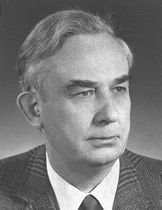 developing phylogenetic systematics, a coherent theory of the investigation and presentation of the relations that exist among species. Contrary to the position generally held during his time, Hennig viewed historical inference as a strictly logical and scientific endeavor. He first summarized his ideas in 1950 in German which became more widely known with the publication of the English revision, Phylogenetic Systematics (Hennig, 1966).

image.
Major Hennigian principles are:
Hennig (April 20, 1913 – Nov. 5, 1976) is best known for
 developing phylogenetic systematics, a coherent theory of the investigation and presentation of the relations that exist among species. Contrary to the position generally held during his time, Hennig viewed historical inference as a strictly logical and scientific endeavor. He first summarized his ideas in 1950 in German which became more widely known with the publication of the English revision, Phylogenetic Systematics (Hennig, 1966).
image.

Major Hennigian principles are:
1. Relationships among species are to be interpreted strictly genealogically, as sister-lineages, as clade relations. Empirically, a phylogenetic hypothesis may be determined.More info about Henning HERE. photo.
2. Synapomorphies provide the only evidence for identifying relative recency of common ancestry. Synapomorphies are understood to be the shared-derived (evolved, modified) features of organisms.
3. Maximum conformity to evidence is sought (his auxiliary principle). Choice among competing cladistic propositions (cladograms) is decided on the basis of the greatest amount of evidence, the largest number of synapomorphies explainable as homologues.
4. Whenever possible, taxonomy must be logically consistent with the inferred pattern of historical relationships. The rule of monophyly is to be followed, thereby each clade can have its unique place in the hierarchy of taxonomic names.

Born This Day: Bruce Cabot

Subscribe to:
Posts (Atom)