Tuesday, August 18, 2009

Gobi Photos # 2

More photos from the Flaming Cliffs:


Eggshell

Ito-san

Caleb Brown

Anand gives a lecture on Mongolia at the 3 Camel Lodge before we head into the gobi.

Emma, Mattie, Maria & Emily contemplate bathroom options in the flat gobi.

This afternoon we made it to the Nemegt basin where we'll be for the next few days. On the 21st the plan is to move to Ultan Ula 2 and work at the Tomb of the Dragons.

Monday, August 17, 2009

Gobi photos 2009

This summer the CMNH and the Montessori High School at University Circle have teamed up for a joint venture taking 10 students from Cleveland to the Gobi desert to learn about geology, palaeontology and to have a new cultural experience. We've been joined here by 2 Mongolian Montessori students and there teacher. Additionally, our mongolian scientific collaborator is Dr. Badamgarov from the Palaeolab in Ulaanbaatar, and I've invited Dr. David Evans from the Royal Ontario Museum and his new Ph.D. student, Caleb Brown, to join us.

Here are a few photos I can squeeze out before the batteries fail- I'll post full labels later.


Dr. Evans at the main square in UB,

The Mongolian National Museum

Dr, Evans talking dinos in the musuem.


Our guide, Anand from Nomadic Expeditions with Whit.

Tarbosaurus skull.


Some photos from our evening of cultural education in UB,

Dr. Badamgarov explains the Flaming Cliffs.


(above) Students explore the Flaming Cliffs.

Premiered This Day: The People That Time Forgot


Directed by Kevin O’Connor, this 1977 film starring Doug McClure was a sequel to “The Land That Time Forgot” (1975).

Saturday, August 15, 2009

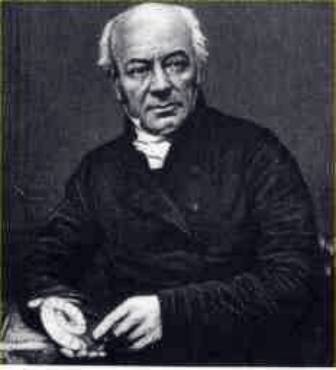
Died This Day: William Buckland

March 12, 1784 – August 15, 1856

From The Victorian Web: Buckland was the first man to identify and name a dinosaur (Megalosaurus), although the name dinosaur had not yet been coined by Richard Owen. Partly in response to the controversial works of Cuvier, Buckland wrote Reliquiae Diluvianae (1823) in which he argued that the evidence of geology alone demonstrated that a great flood had covered the entire globe. This move helped to make geology look more respectable in a religiously conservative England and perhaps to advance Buckland's own career at Oxford by making geology appear to be a respectable companion to the classics.

Buckland was a bit of an eccentric, given to outlandish dress and behavior. Although Buckland was immensely influential as a scientist, his rakish reputation gave many of his staid early Victorian contemporaries considerable difficulty in accepting his work.

More info from HERE. Image from HERE

Happy Birthday to Lori Nelson


Nelson played Helen Dodson in the 1955 film, “Revenge of the Creature”. imdb info

Thursday, August 13, 2009

T. rex: Baby Killer?

Feeding behaviour and bone utilization by theropod dinosaurs. 2009. D. W. E. Hone and O. W. M. Rauhut. Lethaia online, 3 August 2009


“S.R. Bissette’s Tyrant” © and TM S.R. Bissette
"Animals such as Tyrannosaurus are often seen as the perfect 'killing machines' with extremely powerful bites, which were able to bring down even the largest possible prey," says. "But the very few fossils that reflect the hunt of predatory dinosaurs on large herbivores tell a tale of failure – the prey either got away, or both prey and predator were killed."

On the other hand, the also extremely sparse cases of direct evidence for the diet of predatory dinosaurs – stomach contents and coprolites – show that juveniles or much smaller prey species were ingested and the latter were swallowed whole.

Rauhut and Hone propose as a hypothesis that large predatory dinosaurs only as an exception attacked other large dinosaurs, but mainly fed on juveniles. "Even modern predators prefer old and sick animals or unexperienced young individuals," states Hone. "These are an easy prey to bring down and the risk of injury for the predator is much lower. This strategy was probably the same in dinosaurs."

Crocodiles, the closest living relatives of dinosaurs, have extremely strong acids in their stomachs. They can completely dissolve the poorly ossified bones of young animals which adds important nutrients to the reptiles' diet. The fossil finds of juvenile dinosaurs that have been swallowed whole by theropods support the idea that dinosaurs might have profited from this as well.

Missing fossils, though, lend even more plausibility: "Finds of dinosaur nesting sites indicate that they contained large numbers of eggs which should have resulted in a high number of offspring," says Rauhut. "But little of this is reflected in the fossil record: Juvenile dinosaurs are surprisingly rare – maybe because many of them have been eaten by predators. Hopefully there will soon be more evidence to help us really understand the theropods' hunting behavior." link

Premiered This Day: The Land That Time Forgot


Directed by Kevin O’Connor, this 1975 film starred Doug McClure.

Wednesday, August 12, 2009

Off To Mongolia


Rip Hunter © DC Comics
I’m off today for the Gobi desert for a few weeks but I’m got a number of fun auto-posts that will go up while I’m away.

To kick things off Atomic Surgery presents the first adventure of DC’s time traveling hero – Rip Hunter, Time Master – from Showcase #20 (1959). For a story titled “Prisoners of 100 Million B.C.” of course you get lots of dinosaur action (above) courtesy of artist Jack Miller (story) & Ruben Moreira (art).

However, the Atomic Surgeons left out the two pages below, generously allowing me to post them here.


As DC tested the public’s interest in new comic book characters as the post-McCarthy era revival began, many of the books published were along the line of the Pulp era ‘adventure’ heroes but with a Sci-Fi spin thanks to the success of the similarly themed movies of the ’50’s. In a nod to their pseudo-scientific origins many of these books included 1 or 2 pages of real science facts, such as the above.

Monday, August 10, 2009

Debuted This Day: Dinosaurus! (1960)


Dinosaurus! (1960) was directed by Irvin Yeaworth and produced by Jack H. Harris. The movie poster is pretty bland so I’m presenting the cover for the comic adaptation instead.

The film is most notable for the fact that the 'Brontosaurus' model and miniature jungle from the film were used for an episode of the The Twilight Zone (1959) ("The Odyssey of Flight 33). Wikipedia

Sunday, August 09, 2009

Died This Day: Ernst Haeckel

Feb, 16, 1834 - Aug. 9, 1919.

Haeckel was a German zoologist and evolutionist who was a strong proponent of Darwinism and proposed new notions of the evolutionary descent of man. He coined many words commonly used by biologists today, such as phylum, phylogeny, and ecology.

He is noted for the book, The evolution of man: a popular exposition of the principal points of human ontogeny and phylogeny link

Saturday, August 08, 2009

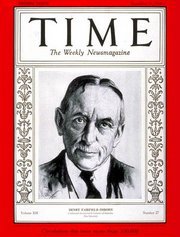
Born This Day: Henry Fairfield Osborn

August 8, 1857 - November 6, 1935

Osborn graduated at Princeton in 1877 and pursued his interest in the biological sciences and paleontology through additional study at several New York City medical schools and with Thomas Henry Huxley in Britain. Returning to the United States, Osborn accepted a position at Princeton, teaching natural sciences from 1881 until 1891, when he moved to Columbia University to organize the Biology Department there, and in 1891, he also helped to organize the Department of Vertebrate Paleontology at the American Museum of Natural History acting as it’s first curator. Osborn's close association with American Museum continued for over 45 years, and included a long tenure as its President, 1908-1933. During these years the museum's collections expanded enormously and it became one of the preeminent research institutions for natural history in the world.

Osborn is noted for describing and naming both Tyrannosaurus rex and Albertosaurus in 1905, Pentaceratops in 1923, and Velociraptor in 1924. One of Osborn's favorite groups for study was the brontotheres, and he was the first to carry out comprehensive research on them. He also wrote an influential textbook, The Age of Mammals (1910).

Apart from his own research, Osborn is perhaps best remembered for the sponsorship of the five immensely successful Central Asiatic Expeditions during the 1920's and 30's led by Roy Chapman Andrews.

Entry from HERE and HERE.

Friday, August 07, 2009

Born This Day: Louis Leakey

Aug 7, 1903 – October 1, 1972.


Louis and Mary Leakey

From Today In Science History:

Leakey, an archaeologist and anthropologist, was born in Kabete, Kenya, of English missionaries parents. Leakey was largely responsible for convincing scientists that Africa, rather than Java or China, was the most significant area to search for evidence of human origins. Leakey led fossil-hunting expeditions to eastern Africa from the 1920's.

He married Mary D. Nicol in 1936 and the couple discovered many important fossils together. In 1964, on an expedition to the Olduvai Gorge in Tanzania, he found fossil remains of, he believed, the earliest member of the genus of human beings. He named the species Homo habilis.

Thursday, August 06, 2009

The Colour of Speciation

Difference in Plumage Color Used in Species Recognition between Incipient Species Is Linked to a Single Amino Acid Substitution in the Melanocortin‐1 Receptor. 2009. A. C. Uy et al. American Naturalist 174: 244–254.


Birds use plumage colour to recognize and select potential mates. A mutation of a single DNA base can lead to a striking colour change, as demonstrated by two closely related flycatcher populations in the Solomon Islands. This tiny genetic difference can potentially lead to the evolution of new species.

Two Monarcha castaneiventris sub-species have the same body shape, but different colored bellies and distinct songs. Birds from these sub-species could mate, but these differences stop them recognizing each other as potential sexual partners. This is evidence of incipient speciation: the beginning of the evolution of new species. Other flycatchers in the Solomon Islands also vary their plumage colour, but the genetic basis is not always as clear as this single mutation.

A single gene can cause colour change in birds, affecting the selection of potential sexual partners. This leads to reproductive isolation and eventually speciation. link

Died This Day: Florentino Ameghino

Sept. 19, 1853 - August 6, 1911

Ameghino was a Argentine paleontologist and anthropologis
t who made significant contributions to the field of vertebrate paleontology and established the Pampas region of Argentina as a rich source of fossils.

He discovered over 6,000 fossil species and classified 35 suborders of mammals. Ameghino's controversial discoveries of stone implements, carved bones, and other signs of a human presence in Argentina during the Pliocene, Miocene, and earlier periods served to increase his worldwide fame. Wikipedia. From: Today In Science History

Sunday, August 02, 2009

Son of Mighty Joe Kong


What if James Garner, Doris Day and Dick Van Dyck had starred in a remake of King Kong? Atomic Surgery fills us in by presenting a great parody from Mad Magazine.

Saturday, August 01, 2009

Reanalysis of T. rex Mass Spectra

Reanalysis of Tyrannosaurus rex Mass Spectra. 2009. M. Bern et al. Journal of Proteome Research.


A new analysis of the remains of a T. rex that roamed Earth 68 million years ago has confirmed traces of protein from blood and bone, tendons, or cartilage. The findings are the latest addition to an ongoing controversy over which biochemical remnants can be detected in the dinosaur.

The authors point out that the first analysis in 2007 of a well-preserved, fossilized T. rex bone identified traces of seven distinct protein fragments, or peptides, from collagen. That material is one of the primary components of bone, tendons and other connective tissue. However, later studies disputed that finding, suggesting that it was a statistical fluke or the result of contamination from another laboratory sample.

The scientists describe reanalysis of the T. rex data and also report finding evidence of substances found in collagen. "In summary, we find nothing obviously wrong with the Tyrannosaurus rex [analysis from 2007]," the report states. "The identified peptides seem consistent with a sample containing old, quite possibly very ancient, bird-like bone, contaminated with only fairly explicable proteins. Hemoglobin and collagen are plausible proteins to find in fossil bone, because they are two of the most abundant proteins in bone and bone marrow." link
Born This Day: Jean-Baptiste de Monet, Chevalier de Lamarck

Aug.1, 1744 – Dec. 18, 1829

From Today in Science History:

Pioneer French biologist who is noted for his speculations about the evolution of living things, particularly his theory that acquired traits are inheritable (such as giraffes who, he said, through stretching to reach tall trees, make their necks longer, and then pass on longer necks to their offspring.) This Lamarckism idea is controverted by Darwinian theory.

He published a flora of France (1778) and a system of classification for invertebrate animals, published in his Histoire naturelle des animaux sans vertebres (7 vols, 1815-22). In 1809 Lamarck published his theory of evolution (in Philosophie zoologique). Lamarck's speculations about the physical and natural world found little favour among his contemporaries and he died blind and in poverty.

From info on Lamarck from The Victorian Web.

Friday, July 31, 2009

1st Vertebrate to Live In Trees

The Late Permian herbivore Suminia and the early evolution of arboreality in terrestrial vertebrate ecosystems. 2009. Jörg Fröbisch1 and Robert R. Reisz. Proceedings of the Royal Society B.


In the Late Paleozoic (260 million years ago), long before dinosaurs dominated the Earth, ancient precursors to mammals took to the trees to feed on leaves and live high above predators that prowled the land. Elongated fingers, an opposable "thumb," and a grasping tail of Suminia getmanovi demonstrate that this small plant-eating synapsid is the earliest known tree-climbing vertebrate.

Suminia was relatively small, about 20 inches from its nose to the tip of its tail. The tree-climbing lifestyle of this Paleozoic relative of mammals is particularly important because for the first time in vertebrate evolution it gives access to new food resources high off the ground, and also provides protection from ground-dwelling predators. The evidence for this lifestyle is based on several excellent skulls and more than a dozen exceptionally well preserved, complete skeletons from a single large block of red mudstone that was discovered in central Russia's Kirov region.


The study also provides the first evidence in the fossil record of food partitioning between small climbing and large ground-dwelling plant-eaters and this happens shortly after the establishment of the modern terrestrial ecosystem with large numbers of plant-eaters supporting few top predators. Earlier terrestrial vertebrate communities did not have this modern hierarchy, but instead were composed of various-sized predators and relatively few plant-eaters, with most of the food resources being provided by insects and aquatic organisms. link.

Thursday, July 30, 2009

Southern Alberta Dinosaur Project Photos #4


Kentaro Chiba and Dr. Dennis Braman (Royal Tyrrell Museum) run a section through the McPheeters bone bed.


Some of the over 600 specimens collected this summer.


Tom Cullen (background; Carleton University) works the ceratopsian bone bed.


Chris from Carleton makes a point.


David Evans talks to kids at the Royal Ontario Museum via a satellite uplink from one of the bone beds. The ROM sent out 2 techs for a week to make sure that everything worked smoothly.


The helicopter lift of the Foremost hadrosaur.


Ryan Schott (U of Toronto) cooks up ribs while Tetsuto Miyashita catches up on field notes.


Evan Scott (CWRU) gives an evening seminar.


Part of the field crew in Orion (population: 4) where we get gas at Boyd's gas station.


Boyd Stevens pumping gas from his truck mounted tanks.


Boyd at work.

Friday, July 17, 2009

Southern Alberta Dinosaur Project 2009 Photos #3


The McPheeters Centrosaurus bone bed in the upper Oldman Fm.


Renee Beaton (Carleton U) maps the Centrosaurus bone bed.


Valley of the Cows


Centrosaurus nasal with horncore.


Bard McFeeters (Carleton U)(no relation to Bill McPheeters who found the site) helps Kentaro Chiba map.


Caleb Brown and Brian Matthews take a break.