Readers of a certain vintage will have fond memories of the Turok, Son of Son series from Dell Comics. Apparently Turok and Andar actually started their adventures in Four Color Comics #567 way back in 1954.
Atomic Surgery presents the first half of their first story, explaining just how they ended up in that Lost Valley.
The deadline for abstracts, and early discounted registration is March 1st for the Frenchman Formation Terrestrial Ecosystem Conference, to be held in Eastend, Saskatchewan, May 17-20, 2009.
Registration is still possible after March 1, up to a total of 100 participants.
Featured speakers include John Storer, Kirk Johnson, and Thomas Holtz, who will reveal aspects of Maastrichtian fossil discovery and paleontology.
To register and for other inquiries please contact the T. rex Discovery Centre at 1 (306) 295-4009
"After over a hundred years of local palaeontological discovery and excavation, the Frenchman Formation Terrestrial Ecosystem Conference will be held in Eastend, Saskatchewan. Attendees from across North America will present research on the wealth of fossils found in southwest Saskatchewan, including Scotty the T. rex. The organizers of this event (the T. rex Discovery Centre, the Royal Saskatchewan Museum, and the University of Alberta) welcome your participation."
Jack Horner has a new book coming out shortly in which he lays out his plan to resurrect a dinosaur. Wired magazine has a Q&A with Jack in its current issue that you can read in its entirety here.
“Flip the right genetic switches in a chicken embryo and you just might hatch a baby dino. Paleontologist Jack Horner intends to do it. He explains his scheme to rewind evolution in a new book, How to Build a Dinosaur: Extinction Doesn't Have to Be Forever. We asked him if there is anything—anything at all—that could possibly go wrong.
Wired: Dinochicken—walk me through the concept.
Jack Horner: Birds are descendants of dinosaurs. They carry their DNA. So in its early stages, a chicken embryo will develop dinosaur traits like a long tail, teeth, and three-fingered hands. If you can find the genes that cancel the tail and fuse the fingers to build a wing—and turn those genes off—you can grow animals with dinosaur characteristics.”
Ancient footprints found at Rutgers' Koobi Fora Field School show that some of the earliest humans walked like us and did so on anatomically modern feet 1.5 million years ago
The footprints were discovered in two 1.5 million-year-old sedimentary layers near Ileret in northern Kenya. These rarest of impressions yielded information about soft tissue form and structure not normally accessible in fossilized bones. The Ileret footprints constitute the oldest evidence of an essentially modern human-like foot anatomy.
The upper sediment layer contained three footprint trails: two trails of two prints each, one of seven prints and a number of isolated prints. Five meters deeper, the other sediment surface preserved one trail of two prints and a single isolated smaller print, probably from a juvenile.
In these specimens, the big toe is parallel to the other toes, unlike that of apes where it is separated in a grasping configuration useful in the trees. The footprints show a pronounced human-like arch and short toes, typically associated with an upright bipedal stance. The size, spacing and depth of the impressions were the basis of estimates of weight, stride and gait, all found to be within the range of modern humans.
Based on size of the footprints and their modern anatomical characteristics, the authors attribute the prints to the hominid Homo ergaster, or early Homo erectus as it is more generally known. This was the first hominid to have had the same body proportions (longer legs and shorter arms) as modern Homo sapiens. Various H. ergaster or H. erectus remains have been found in Tanzania, Ethiopia, Kenya and South Africa, with dates consistent with the Ileret footprints.
Other hominid fossil footprints dating to 3.6 million years ago had been discovered in 1978 by Mary Leakey at Laetoli, Tanzania. These are attributed to the less advanced Australopithecus afarensis, a possible ancestral hominid. The smaller, older Laetoli prints show indications of upright bipedal posture but possess a shallower arch and a more ape-like, divergent big toe. link
A video with some great walking (or at least stomping) in it. It also seems to capture (for me) the essence of the graduate school experience in a ‘Fellini meets Bergman’ sort of way.
Abstract: Stegosaurian dinosaurs have a quadrupedal stance, short forelimbs, short necks, and are generally considered to be low browsers. A new stegosaur, Miragaia longicollum gen. et sp. nov., from the Late Jurassic of Portugal, has a neck comprising at least 17 cervical vertebrae. This is eight additional cervical vertebrae when compared with the ancestral condition seen in basal ornithischians such as Scutellosaurus. Miragaia has a higher cervical count than most of the iconically long-necked sauropod dinosaurs. Long neck length has been achieved by ‘cervicalization’ of anterior dorsal vertebrae and probable lengthening of centra.
All these anatomical features are evolutionarily convergent with those exhibited in the necks of sauropod dinosaurs. Miragaia longicollum is based upon a partial articulated skeleton, and includes the only known cranial remains from any European stegosaur.
A well-resolved phylogeny supports a new clade that unites Miragaia and Dacentrurus as the sister group to Stegosaurus; this new topology challenges the common view of Dacentrurus as a basal stegosaur.
A fossil of the fish Incisoscutum ritchiei from the Upper Devonian period (350 Ma) of the Gogo formation of western Australia contains a 5 cm-long embryo. This specimen is one of the earliest examples of a pregnant vertebrate and shows that internal fertilisation, or sex, started far sooner than previously thought.
The process of internal fertilisation and giving birth to live young, or viviparity, differentiates some fish and mammals from other animals such as reptiles and amphibians. Johanson and her colleagues believe it was the main reproductive method for early fish groups such as the placoderms and could have evolved in other fish groups.
‘Sex was far more common in these primitive prehistoric animals,’ adds Dr Johanson. ‘However, copulation appears to be the main way they reproduced, demonstrating that ‘sex’ started a lot sooner than we thought.’
‘This specimen shows just how important the Museum collections are because knowledge evolves and we have new interpretations that we can apply to fossils in the collections.'link.
Abstract [edit]: Here we report the discovery of embryos in the Arthrodira inside specimens of Incisoscutum ritchiei from the Upper Devonian Gogo Formation of Western Australia (approximately 380 million years ago), providing the first evidence, to our knowledge, for reproduction using internal fertilization in this diverse group. We show that Incisoscutum and some phyllolepid arthrodires possessed pelvic girdles … indicating that the pelvic fin was used in copulation. As homology between similar pelvic girdle skeletal structures in ptyctodontids, arthrodires and chondrichthyans is difficult to reconcile in the light of current phylogenies of lower gnathostomes, we explain these similarities as being most likely due to convergence (homoplasy). These new finds confirm that reproduction by internal fertilization and viviparity was much more widespread in the earliest gnathostomes than had been previously appreciated.
Abstract [edit]: Among the more intriguing deep time co-evolutionary scenarios are those that relate changes in Cretaceous dinosaur faunas to the primary radiation of flowering plants. We have compiled a new database of Cretaceous dinosaur and plant distributions from information in the primary literature. This is used as the basis for plotting taxonomic diversity and occurrence curves for herbivorous dinosaurs (Sauropodomorpha, Stegosauria, Ankylosauria, Ornithopoda, Ceratopsia, Pachycephalosauria and herbivorous theropods) and major groups of plants (angiosperms, Bennettitales, cycads, cycadophytes, conifers, Filicales and Ginkgoales) that co-occur in dinosaur-bearing formations.
Pairwise statistical comparisons were made between various floral and faunal groups to test for any significant similarities in the shapes of their diversity curves through time. We show that, with one possible exception, diversity patterns for major groups of herbivorous dinosaurs are not positively correlated with angiosperm diversity.
The diversification of Late Cretaceous pachycephalosaurs (excluding the problematic taxon Stenopelix) shows a positive correlation, but this might be spuriously related to poor sampling in the Turonian–Santonian interval. Stegosauria shows a significant negative correlation with flowering plants and a significant positive correlation with the nonflowering cycadophytes (cycads, Bennettitales). This interesting pattern is worthy of further investigation, and it reflects the decline of both stegosaurs and cycadophytes during the Early Cretaceous.
I haven’t linked to Steve Bissette’s blog in a while, but this recent posting by Steve made me sit up and take notice. Here’s Steve:
“Cayetano “Cat” Garza and I just finished up a cover art gig for our good friends at Blackcoat Press. We collaborated on the color cover art for the upcoming translation of the never-before-published-in- English 1910 French science-fiction novel, Panic in Paris.
Dinosaurs erupt from beneath the streets of Paris, two years before Sir Arthur Conan Doyle’s classic The Lost World was published (ending with Professor Challenger and his expedition bringing pterodactyls to London for the final chapter) — meaning this is an essential new discovery and addition to the history of paleontological science fiction, and perhaps even the first full-blown entry in the venerable ‘monsters attack metropolis’ genre of giant monster fantasy.”
The emergence of the ribosome constituted a pivotal step in the evolution of life. This event happened nearly four billion years ago, and any traces of early stages of ribosome evolution are generally thought to have completely eroded away. Surprisingly, a detailed analysis of the structure of the modern ribosome reveals a concerted and modular scheme of its early evolution.
The key breakthrough came when they realized that the ribosome is organized by a set of simple structural rules and that it had to be assembled from basic building blocks in a very specific order; otherwise it would have fallen apart. They then mathematically showed that the construction of the ribosome likely followed an ordered series of steps to form the structure found in the first living cell. To this day, that structure exists almost unchanged in our own cells.
"Thanks to the research of Sergey Steinberg and Konstantin Bokov, scientists now have a glimpse of one key event that emerged spontaneously out of the primordial chemical soup of the early Earth," explains Stephen Michnick. link
On this day in 1967 special effects wizard Ray Harryhausen teamed with director Don Chaffey and Raquel Welch to release this classic. Well, at least the animated dinos are great!
Reptilicus (1961), has been described as the “Plan 9 from Outer Space” of giant monster movies and really has to be seen to be believed. It's the grand prize winner in the contest for “poster that is waaay better than the movie” – that wonderous art is by Reynold Brown, by the way.
Study takes new look at skeletal system of pterosaurs and their modern relatives
A new study scientists explain how balloon-like air sacs, which extended from the lungs to inside the skeleton of pterosaurs, provided an efficient breathing system for the ancient beasts. The system reduced the density of the body in pterosaurs, which in turn allowed for the evolution of the largest flying vertebrates.
"We offer a reconstruction of the breathing system in pterosaurs, one that proposes the existence of a mechanism with the same essential structure to that of modern birds — except 70 million years earlier," said study co-author Leon Claessens.
Because fossils rarely preserve soft tissues, the research team conducted a comparative study that included pterosaurs, birds and crocodilians in order to get a better understanding of the relationships among air sacs, lung structure and the skeleton. By using X-ray movies and CT scans, the group characterized how the skeleton works to move air through the lungs in living animals, and also how to identify the signature traces left on bones that have been invaded by air sacs.
The evolution of pneumaticity in pteroaurs
Not only do the extinct pterosaurs show evidence that their bones that were invaded by air sacs, but patterns of pneumaticity throughout the entire skeleton of different pterosaur species parallel trends identified in many living bird groups. For example, there is a direct relationship between the proportion of the skeleton invaded by air sacs and the absolute body size of an animal.
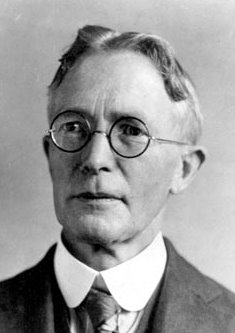
Matthew was a superb mammalian paleontologist and important biogeographic theorist, and also G. G. Simpson's primary mentor. Matthew published voluminiously on the fossil record of mammals and advocated a fully modern approach to taxonomy that emphasized tying scientific names to natural biological populations. His 1930 paper gives a clear statement of this position.
Matthew's key biogeographic theory was that waves of faunal migration repeatedly went from the northern continents southwards. This theory, which had obvious racial and political overtones, was justified by a "stabilist" view of paleogeography (i.e., that the continents had never moved from their modern positions), and by evidence from the relatively young fossil record of mammals, at the expense of other data that would have shown the more ancient interconnections among South America, Africa, India, and Australia. Remarkably, Matthew remained a Darwinian despite working for the autocratic orthogeneticist H. F. Osborn for three decades.
Hedin was a Swedish explorer and geographer, born in Stockholm, who led four multi-year expeditions into Central Asia between 1897 and 1935. Although not as well known as Roy Chapman Andrews his work in the regions revealed a wealth of cultural, archaeological and palaeontological wonders.
During his first major Asian expedition, he crossed the Pamirs, charted Lop Nor (Lake) in China, and finally arrived at Beijing. He then journeyed to Tibet by way of Mongolia, Siberia, and the Gobi Desert. Hedin explored Tibet and Xinjiang (Sinkiang), identified the sources of the Brahmaputra, Indus, and Sutlej rivers, and, in 1906, explored and named the Trans-Himalayas. In 1927 Hedin led an expedition of Chinese and Swedish scientists into Central Asia.
“When a man is wrestling a leopard in the middle of a pond, he's in no position to run.” Cary Grant as paleontologist David Huxley
Coming in at #97 on the American Film Institute's list of greatest films, ‘Bringing Up Baby’, co-starring Cary Grant and Kate Hepburn, is acknowledged as the archetypical screwball comedy.
Directed by Howard Hawks in 1938,Grant plays paleontologist David Huxley who is trying to secure a $1,000,000.00 endowment for his museum. He meets up with Hepburn’s seemingly scatterbrained heiress, Susan Vance, who becomes determined to derail Grant’s next day wedding. Over the course of the next 24 hours Grant gets completely mired in Hepburn’s whirlwind ad hoc plans to catch her new (and completely reluctant) beau that includes hunting for her leopard (the ‘Baby’ of the title), having her steal his clothes, ending up in jail, falling in a stream, and finally losing his “intercostal clavicle” to Hepburn’s dog that was to be the final element needed complete the Brontosaurus skeleton he’s been working on for four years.
In the end they end up in each others arms but suspended over the destroyed skeleton. The fast-paced, witty script, sharp direction and comedic chemistry between Grant and Hepburn all combine to make this film worthy of multiple repeat viewings.
Note: The Palaeoblogger is sick this week. Things should return to normal in a few days
The 3.2-million-year-old bones of 'Lucy', the skeleton of the Australopithecus afarensis hominin discovered in Ethiopia in 1974, have undergone a complete high-resolution computed tomography scan. Researchers at the University of Texas at Austin have thereby created a digitized record that will allow the bones' internal structure to be examined (pictured below).
But interest from US museums in hosting an exhibition featuring the 40% complete skeleton is lagging, and officials say it will go into indefinite storage next month at the Houston Museum of Natural Science in Texas.
A $2.25-million, five-month Lucy exhibition at the Pacific Science Center in Seattle, Washington, which closes on 8 March, is the second leg of what was originally planned to be a ten-city, six-year tour, although concerns were raised over the effects the tour would have on the delicate fossil (see Nature 444, 8; 2006). But total attendance at the Seattle exhibition is likely to be a third of the 250,000 projected, and no other museum has yet signed up for the exhibition.
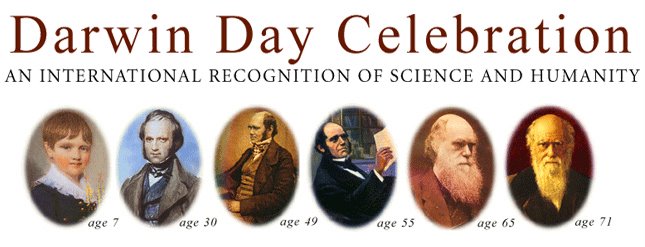
Keenly observing nature in all its forms—from fossil sloths to mockingbirds, primroses to children—Darwin saw that we all are related.Every living thing shares an ancestry, he concluded, and the vast diversity of life on Earth results from processes at work over millions of years and still at work today. Darwin's explanation for this great unfolding of life through time—the theory of evolution by natural selection—transformed our understanding of the living world, much as the ideas of Galileo, Newton and Einstein revolutionized our understanding of the physical universe.
Darwin's theory of evolution by natural selection underlies all modern biology. It enables us to decipher our genes and fight viruses, and to understand Earth's fossil record and rich biodiversity. Simple yet at times controversial, misunderstood and misused for social goals, the theory remains unchallenged as the central concept of biology. Charles Darwin, reluctant revolutionary, profoundly altered our view of the natural world and our place in it.
The greatest dinosaur hunter of the twentieth century was Barnum Brown, who began his career at the American Museum of Natural History in 1897 as an assistant to Henry Fairfield Osborn. Brown traveled all over the world collecting dinosaurs and fossil mammals. Some consider him to be the last of the great dinosaur hunters.
Brown was always impeccably dressed, often wearing a tie and topcoat even in the field. He was a shrewd "horse trader" when it came to wheeling and dealing for fossil specimens. Many of Brown's greatest discoveries, including the first specimens of Tyrannosaurus rex ever found, are displayed in the Museum's Dinosaur Halls.