Friday, December 08, 2006

When Life Took Its First Deep Breath

Late-Neoproterozoic Deep-Ocean Oxygenation and the Rise of Animal Life. 2006. D. E. Canfield et al., Science, published on-line December 7, 2006.
Oxygen may be the clue to first appearance of large animals on Earth.
From the press release:

The sudden appearance of large animal fossils more than 500 million years ago – a problem that perplexed even Charles Darwin and is commonly known as “Darwin’s Dilemma” – may be due to a huge increase of oxygen in the world’s oceans.

In 2002 scientists found the world’s oldest complex life forms between layers of sandstone on the southeastern coast of Newfoundland. This pushed back the age of Earth’s earliest known complex life to more than 575 million years ago, soon after the melting of the massive “snowball” glaciers. New findings reported today shed light on why, after three billion years of mostly single-celled evolution, these large animals suddenly appeared in the fossil record.

“Our studies show that the oldest sediments on the Avalon Peninsula, which completely lack animal fossils, were deposited during a time when there was little or no free oxygen in the world’s oceans,” says Dr. Narbonne. “Immediately after this ice age there is evidence for a huge increase in atmospheric oxygen to at least 15 per cent of modern levels, and these sediments also contain evidence of the oldest large animal fossils.” Chas. Knight painting

Yep, Yep, Yep -- Precambrian critters can talk!

Australopithecus Ruled Out Of Man's Ancestry

U-Pb Isotopic Age of the StW 573 Hominid from Sterkfontein, South Africa. 2006. J. Walker et al. Science 314: 1592 – 1594.
Ancient remains, once thought to be a key link in the evolution of mankind, have now been shown to be 400,000 years too young to be a part of man’s family tree.
From the press release:

The remains of the apeman, dubbed Little Foot, were discovered in a cave complex at Sterkfontein by a local South African team in 1997. It is the most complete Australopithecus fossil skeleton ever found.

New research using uranium-lead chronology now shows the remains are more than a million years younger than earlier estimates. Working on extracts of stalagmite deposits from immediately above and below the body, they dated the skeleton at around 2.2 million years old.

Their findings are controversial. Earlier estimates had put the age of Little Foot at three to four million years old placing it potentially on a direct line to humans.

The first recognisable stone tools appeared in Africa around 2.6 million years ago, but they were not made by australopiths. Rather it is thought the first tool maker was Homo habilis, whose evolution is believed to have led directly to man. Rather than being older than Homo habilis – and a possible direct ancestor – Little Foot is more likely a distant cousin.

Before there was 10cc there was Hotlegs who produced, “Neanderthal Man”:

Thursday, December 07, 2006

Neandertal Cannibalism

Struggling for survival, Neandertals turned to cannibalism—even brain-eating—some 43,000 years ago, says a new study of mutilated bones discovered in a Spanish cave.

In addition to possibly chewing on human flesh, these Neandertal jawbones suggest that their owners looked different from Neandertals elsewhere in Europe. Photo courtesy PNAS
From National Geographic News.com:

Bones from at least eight individuals showed clear signs of cannibalism, including defleshing, dismemberment, and skinning, according to the study team.

The report provides some of the clearest evidence yet that Neandertals ate their own kind, says paleoanthropologist Antonio Rosas of the National Museum of Natural Sciences in Madrid. Rosas is the lead researcher for the study, which is published today in the journal Proceedings of the National Academy of Sciences.

Evidence of cannibalism include cut marks made by stone tools used to remove flesh. The manner in which the fossil skeletons were broken apart is also telling, the study teams says. Bones and skulls look to have been smashed open to get at the marrow and brains inside, Rosas said.

"Brain is quite nutritious for fat and proteins, but especially fat," he added.

Read the rest of the story HERE:

Leakey Fights Church Effort to Hide Hominid Fossils

From Live Science.com (via The Skeptical Inquirer and The Daily Telegraph):

Famed paleoanthropologist Richard Leakey is giving no quarter to powerful evangelical church leaders who are pressing Kenya's national museum to relegate to a back room its world-famous collection of hominid fossils showing the evolution of humans' early ancestors.

Leakey called the churches' plans "the most outrageous comments I have ever heard."

He told The Daily Telegraph (London): "The National Museums of Kenya should be extremely strong in presenting a very forceful case for the evolutionary theory of the origins of mankind. The collection it holds is one of Kenya's very few global claims to fame and it must be forthright in defending its right to be at the forefront of this branch of science."

Leakey was for years director of the museum and of Kenya's entire museum system.

Read the rest of the story HERE.

I’ve been busy and will be for a few more days, hence the slow pace of posting. I missed posting on Phil Anderson’s work on Dunkleosteous from last week. Nice work Phil, now please send me a PDF!

In a story related to the above, Slate.com interviewed me yesterday about “how artists and scientists work together to create images of extinct animals”. That piece is HERE (nope, they didn’t directly use anything I told them).

Tuesday, December 05, 2006

Why Males and Females Are Different

Scientists have shown that in a certain group of insects, sex-differences in appearance are not the product of growing structures in a sex-specific manner, as previously assumed, but rather are generated by the sex-specific loss of structures initially grown alike by both males and females.
From the press release:

Studying a group of beetles famous for their dramatic diversity in the development of male-specific horns (which are used in fights over females), Moczek discovered that growth of horns is surprisingly uniform across sexes. Instead, both sexes undergo a second developmental period during which the female beetles reabsorb massive amounts of horn tissue that they had grown just a few days earlier. The males retain all of their horn tissue into adulthood. As a consequence, fully horned females molt into completely hornless adults.

"From an engineering perspective this seems very inefficient," Moczek says, "especially given that it takes a lot of energy to grow these structures in the first place."

He speculates that growing horns might serve multiple, hidden functions not apparent in the adult, or that the ancestor to the present-day representatives of these beetles actually had horns in both sexes, and that evolution somehow favored the loss of horns in females but not males.

"If this is correct," he argues, "then it seems to have been easier for females to lose their horns by evolving a way to 'ungrow' them, rather than not growing them in the first place. This is yet another example of the quirky paths that evolution has taken to generate the diversity of biological shapes and forms around us."

Pupal Remodeling and the Development and Evolution of Sexual Dimorphism in Horned Beetles. 2006. Armin P. Moczek. American Naturalist. 168: 711–729.

Here’s a different take on the same research.

Sunday, December 03, 2006

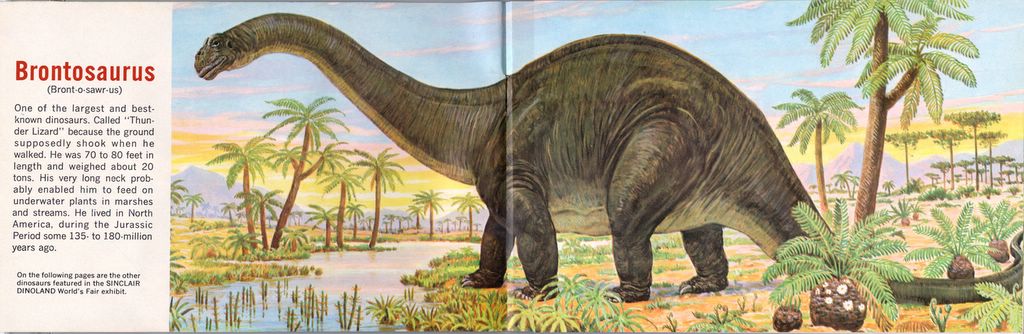
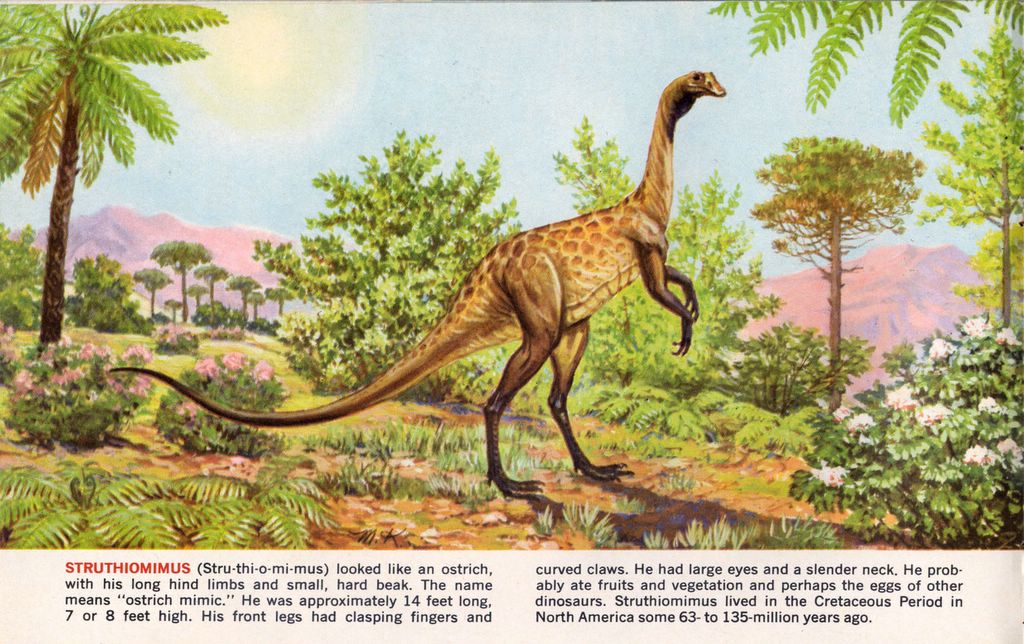
Sinclair Dinoland 1964-65: Part 1

In 1933 the Sinclair Refining Company sponsored a dinosaur exhibit at the Chicago World’s Fair at was seen by over 16 million people. At the 1964-65 World’s Fair in New York City they set up ‘Sinclair’s Dinoland’ that was similarly successful.

This site has a nice overview of Dinoland and what happened to the models after the fair. Apparently the Ankylosaurus went to the Cleveland Zoo and the Cleveland Museum of Natural History has a copy of the Stegosaurus.

I recently acquired a copy of the 16 page brochure that Sinclair produced for the show and I’m reproducing it here in two parts (part 2 next Sunday). Art by Matthew Kalmenoff. Be sure to click on each image to enlarge and view.


Saturday, December 02, 2006

Tagish Meteorite May Hold Clues To The Origin Of Life

Organic Globules in the Tagish Lake Meteorite: Remnants of the Protosolar Disk. 2006. K. Nakamura-Messenger et al. Science 314: 1439-142.
Hollow spheres found in a primordial meteorite found at Tagish Lake could yield clues to the origin of life on Earth.
From BBC.news:

The globules could also be older than our Solar System - their chemistry suggests they formed at about -260C, near "absolute zero".

animation of Tagish meteorite smoke trail
Animated gif showing Tagish meteorite smoke trail recorded over 14 min. on Jan. 18, 2000. Credit: Ewald Lemke (Atlin Realty, Atlin, B.C.)


Analysis of the bubbles shows they arrived on Earth in the meteorite and are not terrestrial contaminants. These hollow spheres could have provided a protective envelope for the raw organic molecules needed for life.

Dr Lindsay Keller told BBC News that some scientists believed such structures were "a step in the right direction" to making a cell wall.

But he emphasised that the globules in Tagish Lake were in no way equivalent to a cell. The hollow spheres seem to be empty, but they do have organic molecules on their surfaces.

The Tagish Lake meteorite was collected immediately after its fall over Canada in 2000. It has been maintained in a frozen state, minimising the potential for terrestrial contamination.

First Amber Fossils Found In Australia

From ABC.news

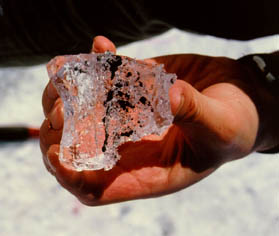
Huge chunks of amber containing the remnants of ancient rainforests have been found along beaches in Far North Queensland, the first amber fossils to be found in Australia.

The amber pieces, some as big as a football, contain flies, beetles, spiders, flowers, fungi, moss, fern spores and pollen as well as bubbles of gas and water from the time, the researchers say. The fossils are at least 4 million years old, they say, possibly much older.

Fisherman Dale Wicks and partner Beth Norris discovered the amber while taking evening walks along the beach on the Cape York Peninsula, says University of New South Wales palaeontologist Henk Godthelp.

"While amber-like substances such as copal and coal resin are found in Australia, no-one had found true amber", he says. The fossilised resin is most likely from kauri pine, which grows in rainforests.

Nevada’s 1st ‘Land Based’ Dinos Unveiled

From the Helena Independent Record:

Put on display for the first time Thursday were the femur of the raptor, dromaeosaur, the teeth of a sauropod, a tyrannosauroid and an iguanodont and unidentified dinosaur eggshell fragments. It marked a breakthrough in a state that had only turned up marine fossils until now, said Eugene Hattori, the state’s curator of anthropology.

The remnants, found at secret excavation sites in southern Nevada, pushed the known range of the ancient reptiles about 250 miles farther west, said Joshua Bonde, a graduate earth science student at Montana State University who is leading the dig.

The area is believed to have once been a flood plain where the creatures lived and died for many generations from 99 million to 112 million years ago, Bonde said.

Bonde and his supervisor, Montana State paleontologist Dave Varricchio, discovered the site while prospecting in an area that had rock formations dating to the dinosaur age.

The find was presented in a tent on the site of a future state museum where they will be housed.

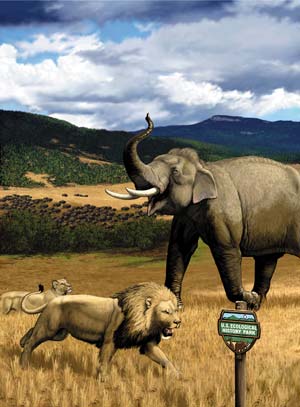
Building a Better Pleistocene

Pleistocene rewilding: an optimistic agenda for 21st century conservation. 2006. C. J. Donlan et al. The American Naturalist 168: 660–681.


Illustration by Carl Buell
Dozens of megafauna--large animals over 100 pounds--such as giant tortoises, horses, elephants, and cheetah--went extinct in North America 13,000 years ago during the end of the Pleistocene. As is the case today in Africa and Asia, these megafauna likely played keystone ecological roles via predation, herbivory, and other processes. What are the consequences of losing such important components of America's natural heritage?

A group of 12 ecologists and conservationists provide a detailed proposal for the restoration of North America's lost megafauna. Using the same species from different locales or closely related species as analogs, "Pleistocene Rewilding" is conceived as carefully managed experiments in an attempt to learn about and partially restore important natural processes to North American ecosystems that were present for millennia until humans played a significant role in their demise 13,000 years ago.

"Over the past 30 years, more and more evidence suggests that if we lose large animals from ecosystems, they often collapse and biodiversity, along with society, are the ultimate losers." Josh Donlan states, "for millions of years, large animals were the norm all over the world–perhaps we should start thinking about reintroducing these large animals and restoring these important processes back to ecosystems."

Friday, December 01, 2006

One Impact or Two?

Impact and extinction in remarkably complete Cretaceous-Tertiary boundary sections from Demerara Rise, tropical western North Atlantic. 2007. K. G. MacLeod et al. Bulletin of the Geological Society of America, in press.
A new study of seabed sediments adds support to the theory that the dinosaurs were wiped out by a single asteroid impact near Chicxulub, Mexico, 65.5 million years ago.
From National Geographic News:

A competing theory, however, holds that at least two asteroid strikes 300,000 years apart, along with global climate change and volcanism, contributed to the extinctions. This theory, championed by Gerta Keller of Princeton University in New Jersey, is based on studies from Mexico and Texas in which two layers of impact-related debris are separated by up to 4.5 meters of intervening sediments.

Keller's group argues that the separation between the layers indicates that they come from different impacts. But single-impact proponents argue that the intervening sediments were created by a gigantic tsunami resulting from the Chicxulub impact.


The new study examined core samples from the Demerara Rise, a submarine plateau near the northeast coast of South America. The location is significant because it would have been out of range of the worst effects of a tsunami but close enough to have still received substantial fallout.

Prior to the impact, he said, there were two million years of normal marine deposits filled with fossils typical of the Cretaceous. Immediately above those are "air fall" deposits from the impact and sediments from the first 10,000 years of the Tertiary.

"We have nothing to indicate another impact," MacLeod said.

Thursday, November 30, 2006

Neal Adams' Fractured Theories On The Earth

Petrology and thermal structure of the Hawaiian plume from Mauna Kea volcano. 2006. C. Herzberg. Nature 444: 605-609.
Science offers new evidence that parts of the Earth’s crust that long ago dove hundreds or thousands of kilometers into the Earth’s interior have resurfaced in the hot lava flow of Hawaiian volcanoes.
From the Press release:

“This concept has been a big issue in the earth sciences,” Herzberg said. While it had been proposed earlier by some geologists, the profession hasn’t embraced it because evidence until now remained sketchy. “Many geologists felt that when Earth’s crust was forced deep into the mantle, a process called subduction, it would simply stay there.”

Herzberg claims to have found telltale chemical evidence at Mauna Kea that pieces of this submerged crust have been forced up through plumes and now make up most of this volcano’s lava flow. “The low calcium in the Hawaiian magma pegs it as crust that had melted and been forced to the surface,” he said. The calcium levels in traditional magma, which comes from melting the Earth’s mantle layer below the crust, are much higher.

Which leads me to this:


Art © (hopefully) Neal Adams. The Spectre © DC Comics

Readers of this blog know that I enjoy sprinkling images remembered from my wayward youth (thank you Google Images!) throughout the stories I post. The above illo has a tenuous link to the ‘real’ news item above & was drawn by Neal Adams, one of the true greats amongst funny-book artists.

Neal is still active in the biz today and runs a successful commercial art agency. He is also an amateur scientific theorist with his own views on everything from dinosaur extinction to his ‘expanding Earth theory’ (it’s been blowing up like a balloon for millennia).

I don’t have the time or the energy to do argue Adams to the ground, nor do I think it would do any good—anyone that has put this much energy into his ‘theories’ is not going to let anything like a few facts stand in his way. But, if you want to see it all for yourself click here:

Why All Of Science Is Wrong And A Comic Book Artist Is Right.

Tuesday, November 28, 2006

Asiahesperornis

A re-analysis of the marine bird Asiahesperornis from northern Kazakhstan. 2006. G. J. Dyke et al. Cretaceous Research 27: 947-953.

Abstract: Fossil bird material is exceptionally rare in the Mesozoic of western Asia. With the notable exception of the Upper Cretaceous foot-propelled diving bird Asiahesperornis bazhanovi from northern Kazakhstan, the only bird fossils described from this region have been bone fragments from the Upper Cretaceous of Uzbekistan. In this paper, all material referred to date to the hesperornithiform Asiahesperornis is reviewed and re-described. New postcranial elements of this taxon from the holotype Kushmurun locality (Maastrichtian Zhuravlovskaya Svita) are presented, and the taxonomic history and likely affinities of this ocean-going bird are discussed. Stamp link

Monday, November 27, 2006

Australian Megafauna Mass Death Due to Drought

Drought-stricken Australia should heed a warning from a new study that shows a series of massive droughts killed giant kangaroos and other "megafauna" in south-east Queensland 40,000 years ago.
From the press release:

Scientists studied the fossil-rich Darling Downs area of south-east Queensland and unearthed giant kangaroos and other large wildlife that roamed the area in the late Pleistocene age that were drought-stressed when they died.

"It provides, for the first time, evidence which suggests that the megafauna kangaroos were greatly affected by a series of catastrophic droughts.”

"These animals of the prehistoric Australian bush were the largest of their time and included gigantic wombats the size of cars, kangaroos that reached almost 2.5 metres tall, and massive emus and goannas.

Dr Price said the layers of fossils in the dig area at the Darling Downs were not consistent with some theories that humans had wiped out megafauna.

"Some scientists believe in the 'blitzkrieg' megafauna extinction hypothesis which blames humans for over-hunting these giant marsupials," he said.

"If that was the case, these fossils dating back thousands of years would show the animals dying out at the same point in time. But they don't. These layers of fossils buried at a single site under the Darling Downs show a progressive, three-stage extinction over time that relates to periods of climate change."

"The research found no evidence of humans being involved in the accumulation of fossils in the catchment at the time of deposition, but is perfectly consistent with their decline being caused by increasing aridity.

The findings will be published next month in the Australian Journal of Earth Science.

Missouri's Dinosaurs


KFVS has a short article on the dinosaur material being collected in Missouri. Thanks to Chad for this.

As you can see from the above photo, the blogging engine ‘blogger’ and its picture uploading software ‘picasa’ are still not working properly. There are ways to deal with this but, short of pulling this blog from blogger, none of them are quick—which is the single most important feature blogger is supposed to bring to the table. Grrr….

Sunday, November 26, 2006

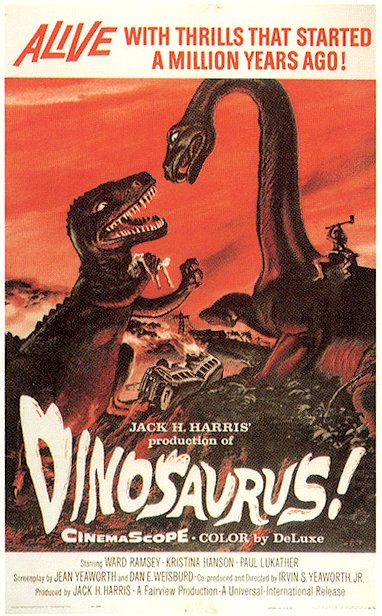
Dinosaurus!

The Comic!:


The Poster!:


The Movie Trailer!:

Permian Mass Extinction Increased the Complexity of Marine Ecosystems

Abundance Distributions Imply Elevated Complexity of Post-Paleozoic Marine Ecosystems. 2006. P. J. Wagner et al. Science 314: 1289 – 1292.
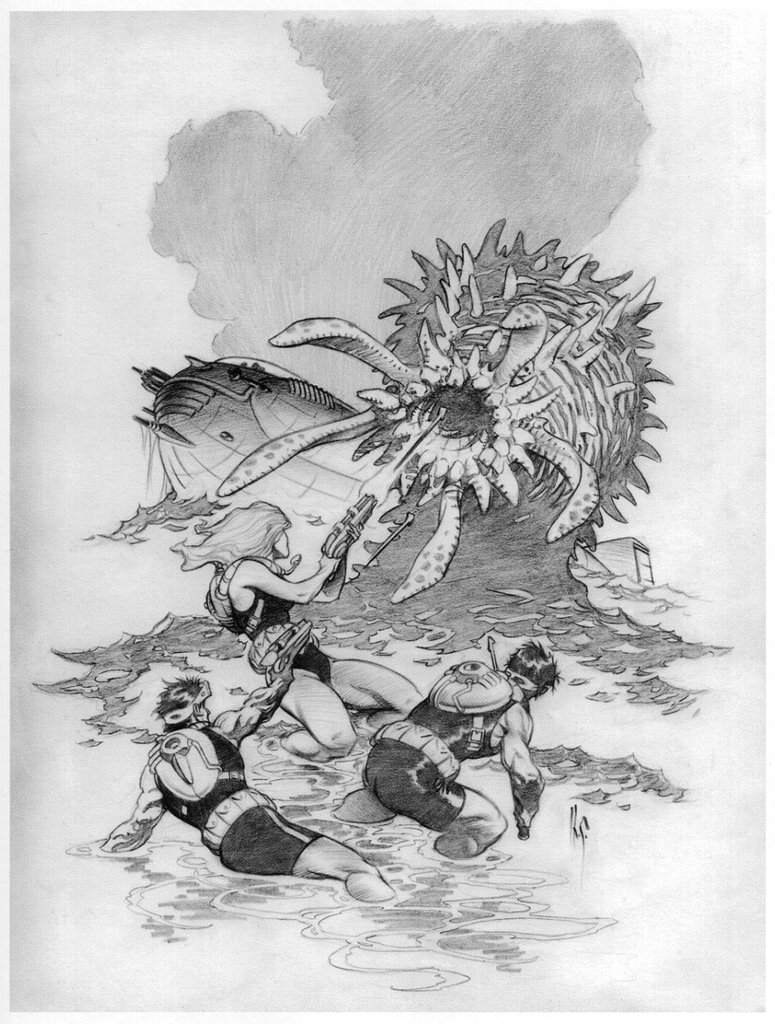
250 million years ago the Earth’s largest mass extinction wiped out 95% of marine species and 70% of land species and fundamentally changed the basic ecology of the world's oceans.

Krill Stromer & Storm Force 10 battle a complex marine ecosystem critter. Art © Mark Schultz from “Various Drawings Vol. 2” available from Flesk Pub. HERE. Krill Stromer, SF10, & SubHuman © M. Ryan & M. Schultz.

Simple communities are dominated by low-metabolism, stationary organisms such as lamp shells and sea lilies that filter nutrients from the water; complex communities are dominated by higher-metabolism, mobile organisms such as snails, clams and crabs that actively find their own food. After the mass extinction ecologically simple marine communities were largely displaced by complex communities.

Using data from the new Paleobiology Database in a new quantitative analyses scientists measured changes in the complexity of marine ecology over the Phanerozoic.

"We think these are the first analyses of this type at this large scale”, said Wagner. “They show that the end-Permian mass extinction permanently altered not just taxonomic diversity but also the prevailing marine ecosystem structure."

Specifically, the data and analyses concern models of relative abundance found in fossil communities throughout the Phanerozoic. The ecological implications are striking. Simple marine ecosystems suggest that bottom-dwelling organisms partitioned their resources similarly. Complex marine ecosystems suggest that interactions among different species, as well as a greater variety of ways of life, affected abundance distributions. Prior to the end-Permian mass extinction, both types of marine ecosystems (complex and simple) were equally common. After the mass extinction, however, the complex communities outnumbered the simple communities nearly 3:1.

"If not for this one enormous extinction event at the end of the Permian, then marine ecosystems today might still be like they were 250 million years ago."

Friday, November 24, 2006

Iced Dinos In China


Long time field volunteer with the Southern Alberta Dinosaur Research Group, Bill McPheeters, sent along this photo from an ice and snow sculpture exhibition in Hurbun in Northern China.

Published This Day: Origin of the Species


image link

From Today In Science History:

In 1859, The Origin of Species by Means of Natural Selection was published in England to great acclaim. In this groundbreaking book by British naturalist Charles Darwin, he argued that species are the result of a gradual biological evolution in which nature encourages, through natural selection, the propagation of those species best suited to their environments. This book is unquestionably one of the most influential in the history of science.

Wednesday, November 22, 2006

More on the Soft Tissue from T. rex

Soft tissue and cellular preservation in vertebrate skeletal elements from the Cretaceous to the present. 2006. M. Schweitzer et al. Proceedings of the Royal Society B: Biological Sciences, early on-line publication.

More on the ‘soft tissue’found in MOR 1125:

Abstract: Soft tissues and cell-like microstructures derived from skeletal elements of a well-preserved Tyrannosaurus rex (MOR 1125) were represented by four components in fragments of demineralized cortical and/or medullary bone: flexible and fibrous bone matrix; transparent, hollow and pliable blood vessels; intravascular material, including in some cases, structures morphologically reminiscent of vertebrate red blood cells; and osteocytes with intracellular contents and flexible filipodia.

The present study attempts to trace the occurrence of these four components in bone from specimens spanning multiple geological time periods and varied depositional environments. At least three of the four components persist in some skeletal elements of specimens dating to the Campanian. Fibrous bone matrix is more altered over time in morphology and less likely to persist than vessels and/or osteocytes. Vessels vary greatly in preservation, even within the same specimen, with some regions retaining pliability and other regions almost crystalline. Osteocytes also vary, with some retaining long filipodia and transparency, while others present with short and stubby filipodia and deeply pigmented nuclei, or are pigmented throughout with no nucleus visible. Alternative hypotheses are considered to explain the origin/source of observed materials.

Finally, a two-part mechanism, involving first cross-linking of molecular components and subsequent mineralization, is proposed to explain the surprising presence of still-soft elements in fossil bone. These results suggest that present models of fossilization processes may be incomplete and that soft tissue elements may be more commonly preserved, even in older specimens, than previously thought. Additionally, in many cases, osteocytes with defined nuclei are preserved, and may represent an important source for informative molecular data.

You can download the entire paper HERE. If the link is not working just go to the Royal Society web page.