Wednesday, February 08, 2006

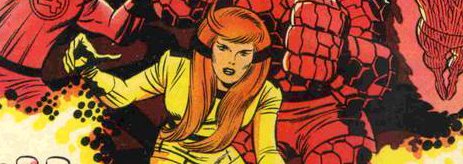
The Incredible Hulk on “I.D.”


Dr. Bruce Banner and his alter ego, The Hulk, debate “intelligent design” in this article by Mike Powers. Some excerpts:
Hulk: Hulk like church. Hulk like songs about how God is good, and Hulk talk to God. God tell Hulk that he is special, and that Hulk is better than puny humans. God made me better than puny humans, God made Hulk in his own image.

Bruce: Hulk, the reason you’re hyper evolved has nothing to do with God. It was a mistake of the cosmos. You got hit by some rays, right place right time, and now you’re bigger and stronger than everyone.

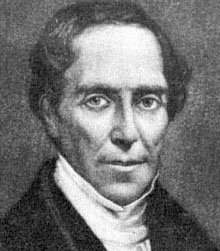
Presented This Day: Mendel's First Paper

From Today In Science History:

In 1865, Gregor Mendel, aged 42, read his first scientific paper to the Brünn Society for the study of Natural Sciences in Moravia (published 1866). He described his investigations with pea plants. Although he sent 40 reprints of his article to prominent biologists throughout Europe, including Darwin, only one was interested enough to reply. Most of the reprints, including Darwin’s, were discovered later with the pages uncut, meaning they were never read. Fortunately, 18 years after Mendel's death, three botanists in three different countries researching the laws of inheritance, in spring 1900, came to realize that Mendel had found them first. Mendel was finally acknowledged as a pioneer in the field which became known as genetics.

Image from HERE

The Evolution of Shark ‘ESP’

Developmental origin of shark electrosensory organs. 2006. Renata Freitas et al. Evolution & Development 8: 74-80

From the U of Florida press release:
Researchers have traced the uncanny ability of sharks to detect electrical signals while hunting and navigating to the same type of embryonic cells that gives rise to many head and facial features in humans.
The discovery identifies neural crest cells, which are common in vertebrate development, as a source of sharks' electrical ESP. It also fortifies the idea that before our early ancestors emerged from the sea, they too had the ability to detect electric fields.


How the lateral line works from HERE

"If you think of this in the big picture of evolution of sensory systems, such as olfaction, hearing, vision and touch, this shows sharks took a pre-existing genetic program and used it to build yet another type of sensory system," Cohn said. The process mirrors the development of the lateral line that allows fish to mechanically sense their environment, and organs of the inner ear that enable people to keep their balance. But scientists suspect as human ancestors emerged from the sea, they discarded their lateral lines as well as their ability to sense electrical fields.

"Our fishy ancestors had the anatomy for it," said James Albert, a former UF biologist who is now at the University of Louisiana. "You can imagine how valuable this system would be if you were aquatic, because water is so conductive. But it doesn't work on land - air doesn't conduct electricity as well. When it happens, it's called a lightning bolt and you don't need special receptors to sense it."

Image from HERE

Tuesday, February 07, 2006

Lost World Found


From the Conservation International press release:
Lost bird of paradise found in isolated Foja mountains of Papua, along with new honeyeater bird, new frogs and a rare tree kangaroo.
An expedition into the depths of New Guinea captured the first photos ever seen of exotic birds such as a male Berlepsch's Six-Wired Bird of Paradise (Parotia berlepschi). It also found a new large mammal for Indonesia – the Golden-mantled Tree Kangaroo (Dendrolagus pulcherrimus), formerly known from only a single mountain in neighboring Papua New Guinea.

"It's as close to the Garden of Eden as you're going to find on Earth," marveled Bruce Beehler, co-leader of the expedition. The discoveries solved one major ornithological mystery – the location of the homeland of Berlepsch's Six-Wired Bird of Paradise. First described in the late 19th century through specimens collected by indigenous hunters from an unknown location on New Guinea, the species had been the focus of several subsequent expeditions that failed to find it.

The expedition took place almost 25 years after Jared Diamond startled the scientific world in 1981 with his discovery of the forest homeland of the Golden-fronted Bowerbird in the same mountain range. This time, scientists captured the first photographs ever of the Golden-fronted Bowerbird displaying at its bower – a tower of twigs and other forest materials it builds for the mating ritual.

The new species of honeyeater, the first new bird discovered on the island of New Guinea since 1939, has a bright orange face-patch with a pendant wattle under each eye. Other discoveries included what may be the largest rhododendron flower on record – almost six inches across – along with more than 20 new frogs and four new butterflies.

Happy Birthday To: Jim Farlow

Jim’s a paleontologist working at Indiana-Purdue University in Fort Wayne. In addition to being a great guy he’s published a lot of interesting papers on dinosaur footprints and behavior. If you’ve not already done so you should pick up the book The Complete Dinosaur that he co-edited with Michael Brett-Surman. All the best to Jim!

Image from HERE.

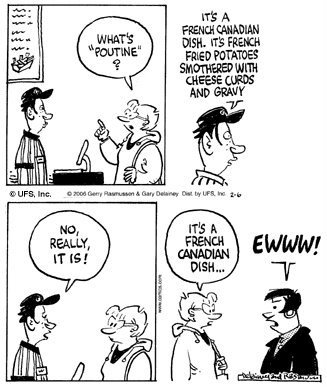
Official Food of SVP 2006


The Society of Vertebrate Paleontology conference will be in my home town of Ottawa, Ontario later this year. As the date approaches I’ll have recommendations to give you on places to see, places to eat, and various other aspects of the city. But for now I couldn’t pass up the opportunity to post the above cartoon that comments on possibly Canada’s only unique culinary delight, poutine. Yes, it really does exist and will render you comatose by the time you’ve finished the plate – be sure to ask for extra gravy!

The cartoon posted above is from ‘Betty’ one of the better nationally syndicated strips, created and drawn by two Canadians, Gary Delainey and Gerry Rasmussen living in Edmonton the last time I checked. And there is even a palaeo-connection. The strip started out as “Bub Slug: Waterfall Repairman” in the University of Alberta’s (now home to Phil Currie and Eva Koppelhus) student newspaper, The Gateway, before graduating to running as a full page colour strip once a week in the Edmonton Journal. Sometime after that the strip was reworked for international success and Bub’s wife Betty took over the strips' title. As far as I know only John (The Nature Nut) Acorn – radio host of the ‘Deep Alberta’ show for the Royal Tyrrell Museum of Palaeontology on CKUA --has a full archived run of all of the pre-Betty strips, all of which I mean to scan one day.

And Edmonton really does have an artificial waterfall which apparently costs a cool one million dollars every time they turn it on.

Monday, February 06, 2006

Born This Day: Mary Leakey

Feb. 6, 1913 – Dec. 9, 1996

From the Minnesota State University site:

Mary Douglas Nicol Leakey was in London, England. She meet her future husband, Louis Leakey, when he asked her to illustrate his book, 'Adam’s Ancestors'. Mary and Louis spent from 1935 to 1959 at Olduvai Gorge in the Serengeti Plains of northern Tanzania where they worked to reconstruct many Stone Age cultures dating as far back as 100,000 to two million years ago. They documented stone tools from primitive stone-chopping instruments to multi-purpose hand axes.

In October of 1947, while on Rusinga Island, Mary unearthed a Proconsul africanus skull, the first skull of a fossil ape ever to be found. It was dated to be twenty million years old. An Australopithecus boisei skull was uncovered in 1959. Not long afterwards, a less robust Homo habilis was found. In 1965 the duo uncovered a Homo erectus cranium.

After her husband died in 1972, Mary continued her work at Olduvai and Laetoli. She discovered Homo fossils at Laetoli which were more than 3.75 million years old, fifteen new species and one new genus. From 1978-81 Mary and her staff worked to uncover the Laetoli hominid footprint trail which was left in volcanic ashes 3.6 million years ago.

Image from HERE where you will also find a slightly more colourful account of her life with Louis.

Sunday, February 05, 2006

A Flock of Dodos

From the blog at Nature.com:

Kendall Powell travels to Kansas City for the first public screening and discussion of a controversial film about the intelligent design debate. She writes back from the scene to tell us about Flock of Dodos: the Evolution-Intelligent Design Circus.

Learn more about the film and watch the trailer at www.flockofdodos.com.

More Bird-Dino Debate


Archaeopteyrx by Pavel Říha from HERE.

Matt Carrano, Thomas R. Holtz Jr., Larry Martin, and Alan Feduccia are amongst those quoted in this Feb. 2 article in the Washington Times about the bird-dinosaur ‘controversy'. You may have to register to read it.
Alan Feduccia, an evolutionary biologist and former chairman of the Biology Department at the University of North Carolina, does not believe the structures found on the Chinese fossils are feathers. He contends in his paper "Do Feathered Dinosaurs Exist? Testing the Hypothesis on Neontological and Paleontological Evidence" that the structures found in these dinosaurs are collagen fibers, which are proteins that often form the connective tissues of animals. "I would contend that there's no such thing as feathered dinosaurs," Mr. Feduccia says. "They have a feathery appearance, but have nothing to do with feathers."
See more of Pavel Říha’s work HERE.

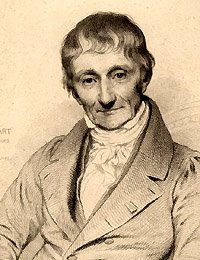
Born This Day: Alexandre Brongniart

Feb. 5, 1770 - Oct. 7, 1847.

Brongniart was a French mineralogist, geologist, and naturalist, who first arranged the geologic formations of the Tertiary Period (from 66.4 to 1.6 million years ago) in chronological order and described them. He made the first systematic study of trilobites that became important in determining the chronology of Paleozoic strata (from 540 to 245 million years ago). He helped introduce the principle of geologic dating by the identification of distinctive fossils found in each stratum and noted that the Paris formations had been created under alternate freshwater and saltwater conditions.

Image from HERE.

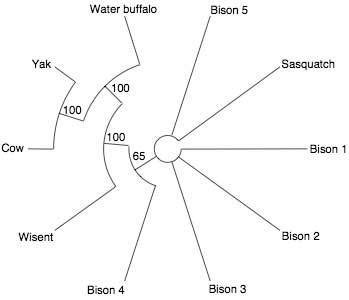
Sasquatch Family Tree

Molecular cryptozoology meets the Sasquatch. 2006. Coltman D and Davis, C. Trends in Ecology and Evolution 21(2):60-61.
"In July 2005, nine residents of Teslin, Yukon, witnessed through a kitchen window a large bipedal animal moving through the brush. The next morning, they collected a tuft of coarse, dark hair and also observed a footprint measuring 43 cm in length and 11.5 cm in width."
When the hair was analyzed here's what they found:


Maximum parsimony tree illustrating the position of the Sasquatch hair sample. Bootstrap support values are given at the nodes. The species and GenBank accession numbers are water buffalo Bubalus bubalis, yak Bos mutus, cow Bos taurus, wisent Bos bonasus, and North American bison Bison bison.

Bipedal, primate-like bison? – the mind boggles!

Thanks to the Pharyngula Blog for pointing this out!

Friday, February 03, 2006

Born This Day: Gideon Mantell

Feb. 3, 1790 – Nov. 10, 1852

Mantell, a physician of Lewes in Sussex in southern England, had for years been collecting fossils in the sandstone of Tilgate forest, and he had discovered bones belonging to three extinct species: a giant crocodile, a plesiosaur, and Buckland's Megalosaurus. But in 1822 he found several teeth that "possessed characters so remarkable" that they had to have come from a fourth and distinct species of Saurian. After consulting numerous experts, Mantell finally recognized that the teeth bore an uncanny resemblance to the teeth of the living iguana, except that they were twenty times larger.
In this paper, the second published description of a dinosaur, he concluded that he had found the teeth of a giant lizard, which he named Iguanodon, or "Iguana-tooth."

Mantell illustrated his announcement with a single lithographed plate. Mantell included at the bottom of the plate a drawing of a recent iguana jaw, which is shown four times natural size, and for further comparison, he added views of the inner and outer surface of a single iguana tooth, "greatly magnified."

The traditional story that Mantell's wife found the first teeth in 1822, while the doctor was visiting a patient, appears, alas, to be unfounded.

Info and plate from HERE.

Night At The Museum


From the article by Marc Gadoury:
“The company beauceronne DinoET received the order to build two animals for the film "Night At the Museum" that starts production next month in Vancouver.

Mr. Eloi Thibodeau is the owner of the company, located in Beauceville, Quebec, which specializes in the manufacture of glass fibre sculptures. He explains that it took two months of work to produce the elephant and the skeleton of Tyrannosaurus rex which will be used in film.” (translated by Google)
Images from HERE.
Thanks to Chad Kerychuk for pointing this out to us!
Check out Chad’s PIXAR blog.

Early Animal Life Linked To Clay Production

Late Precambrian Oxygenation; Inception of the Clay Mineral Factory. 2006. Martin Kennedy et al. Science Express Feb. 2, 2006.


Abstract: An enigmatic stepwise increase in oxygen in the late Precambrian is widely considered a prerequisite for the expansion of animal life. Accumulation of oxygen requires organic matter burial in sediments, which is largely controlled by the sheltering or preservation by detrital clay minerals in modern marine continental margin depocenters. Here we show mineralogical and geochemical evidence for an increase in clay mineral deposition in the Neoproterozoic that immediately predated the first metazoans. Today most clay minerals originate in biologically active soils, so initial expansion of a primitive land biota would greatly enhance production of pedogenic clay minerals (the "clay mineral factory"), leading to increased marine burial of organic carbon via mineral surface preservation.


From the U of C – Riverside press release:

Clay made animal life possible on Earth. A sudden increase in oxygen in the Earth's recent geological history, widely considered necessary for the expansion of animal life, occurred just as the rate of clay formation on the Earth's surface also increased, the researchers report.

"Our study shows for the first time that the initial soils covering the terrestrial surface of Earth increased the production of clay minerals and provided the critical geochemical processes necessary to oxygenate the atmosphere and support multicellular animal life,"

Analyzing old sedimentary rocks, the researchers found evidence of an increase in clay mineral deposition in the oceans during a 200 million year period that fell between 1.1 to 0.54 billion years ago – a stretch of time known as the late Precambrian when oxygen suddenly increased in the Earth's atmosphere. The increases in clay formation and oxygen shortly preceded – in geological time – the first animal fossils about 600 million years ago.


The study emphasizes the possibility that colonization of the land surface by a primitive terrestrial ecosystem (possibly involving fungi) accelerated clay formation, as happens in modern soils. Upon being washed down to the sea, the clay minerals were responsible for preserving more organic matter in marine sediments than had been the case in the absence of clays. Organic matter preservation results in an equal portion of oxygen released to the atmosphere through the chemical reaction of photosynthesis. Thus an increase in the burial of organic carbon made it possible for more oxygen to escape into the atmosphere.

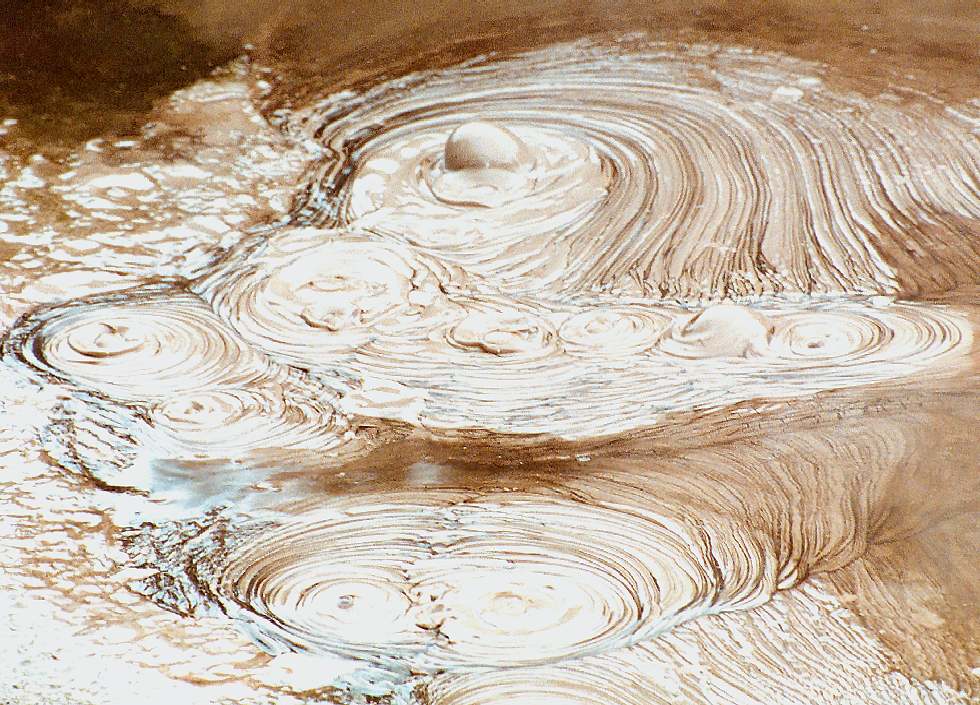
Images from HERE

Complex Genetic Trait Evolves In Lab

Evolution of a Polyphenism by Genetic Accommodation. 2006. Yuichiro Suzuki and H. Frederik Nijhout. Science 311: 650-652.


Abstract: Polyphenisms are adaptations in which a genome is associated with discrete alternative phenotypes in different environments. Little is known about the mechanism by which polyphenisms originate. We show that a mutation in the juvenile hormone-regulatory pathway in Manduca sexta enables heat stress to reveal a hidden reaction norm of larval coloration. Selection for increased color change in response to heat stress resulted in the evolution of a larval color polyphenism and a corresponding change in hormonal titers through genetic accommodation. Evidently, mechanisms that regulate developmental hormones can mask genetic variation and act as evolutionary capacitors, facilitating the origin of novel adaptive phenotypes.

From the Duke University press release:
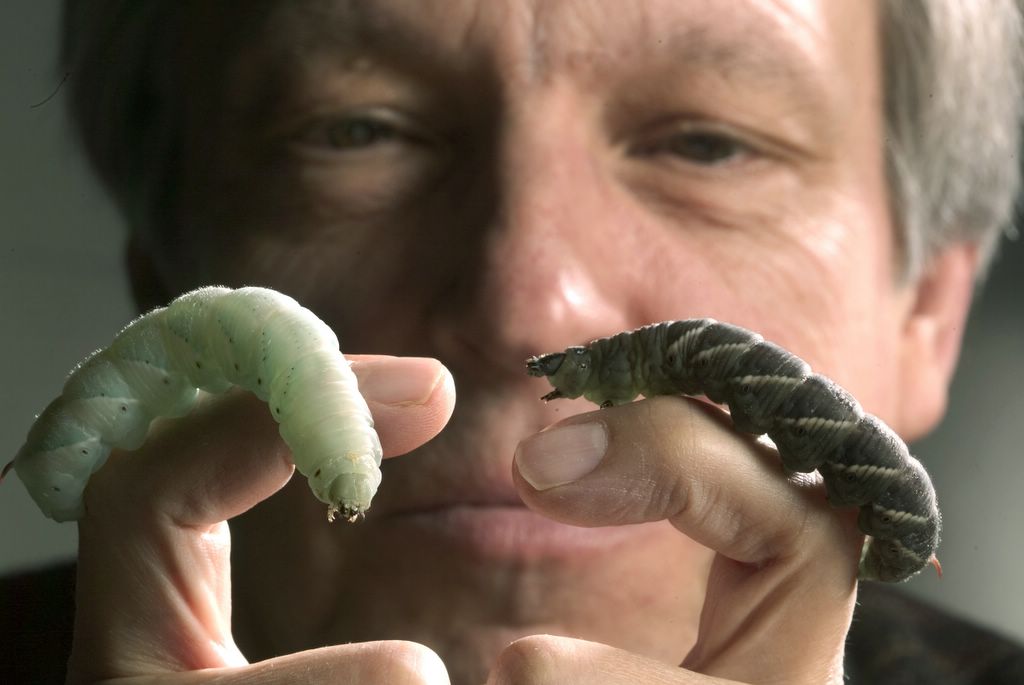
Biologists have evolved a complex trait in the laboratory using the pressure of selection to induce tobacco hornworms to evolve the dual trait of turning black or green depending on the temperature during their development.
Their experiments, they said, offer important insight into how complex traits involving many genes can abruptly "blossom" in an organism's evolution.

The complex traits, or "polyphenisms," they studied are instances in which animals with the same genetic makeup can produce quite different traits, or phenotypes, in different environments. While biologists have understood the basic machinery underlying polyphenisms, the mystery remained how such complex traits, which involve mutations in multiple genes, could evolve and persist.

In their experiments, Suzuki and Nijhout chose a species of finger-sized tobacco hornworm, Manduca sexta, which normally produces only green larvae. Because a related species, Manduca quinquemaculata, develops black or green larvae when exposed to lower or higher temperatures, the researchers theorized that they could use temperature shocks to evolve a similar polyphenism in M. sexta.

After rearing and selecting ten generations of caterpillars, with about 300 caterpillars per generation, the researchers found that they had, indeed, created the two distinct strains. The polyphenic strain would develop a green color at higher temperatures, altering abruptly at a temperature of about 28 degrees C. In contrast, the monophenic strain remained black at all temperatures.

According to Nijhout, the generation of polyphenism in the caterpillar demonstrates an evolutionary phenomenon called "genetic accommodation." In this process, a mutation in a regulatory pathway such as a hormonal pathway changes the hormonal level to bring it closer to a threshold level that could be affected by environmental variation.

Thursday, February 02, 2006

Fossil DNA Preserved in Crystal

Relatively well preserved DNA is present in the crystal aggregates of fossil bones. 2005. Michal Salamon et al. PNAS 102: 13783-13788.

From the press release from the American Committee for the Weizmann Institute of Science:

Fossil DNA is a potential source of information on the evolution, population dynamics, migrations, diets and diseases of animals and humans. But if it is not well preserved or becomes contaminated by modern DNA, the results are uninterpretable.

The scientists, Prof. Steve Weiner and Michal Salamon of the Institute's Structural Biology Department, working in collaboration with Profs. Baruch Arensburg, Tel Aviv University, and Noreen Tuross, Harvard University, may have found a way to overcome these problems.

In 1986 that Weiner first reported the existence of crystal clusters in fresh bones. Even when these bones are ground up and treated with sodium hypochlorite – a substance that removes all traces of organic matter – the clusters of crystals remain intact and the organic material embedded in them is unaffected. Now, almost 20 years later, Weiner and Salamon have returned to these findings, reasoning that fossil bones might possess such crystal structures containing preserved ancient DNA.


After treating two modern and six fossil animal bones with the sodium hypo-chlorite, they found that DNA could be extracted from most of these crystal aggregates that is better preserved and contains longer fragments than DNA from untreated ground bone. The technique for reading the DNA worked better, as well, and the use of sodium hypochlorite reduces the possibility of modern contamination.

The crystal aggregates act as a "privileged niche in fossil bone," protecting the DNA from hostile environments and leaving it relatively undamaged over time. The team's findings suggest that the DNA in these aggregates should be preferred, whenever possible, over DNA from untreated bone.

1934 World's Fair Dinos


click to enlarge

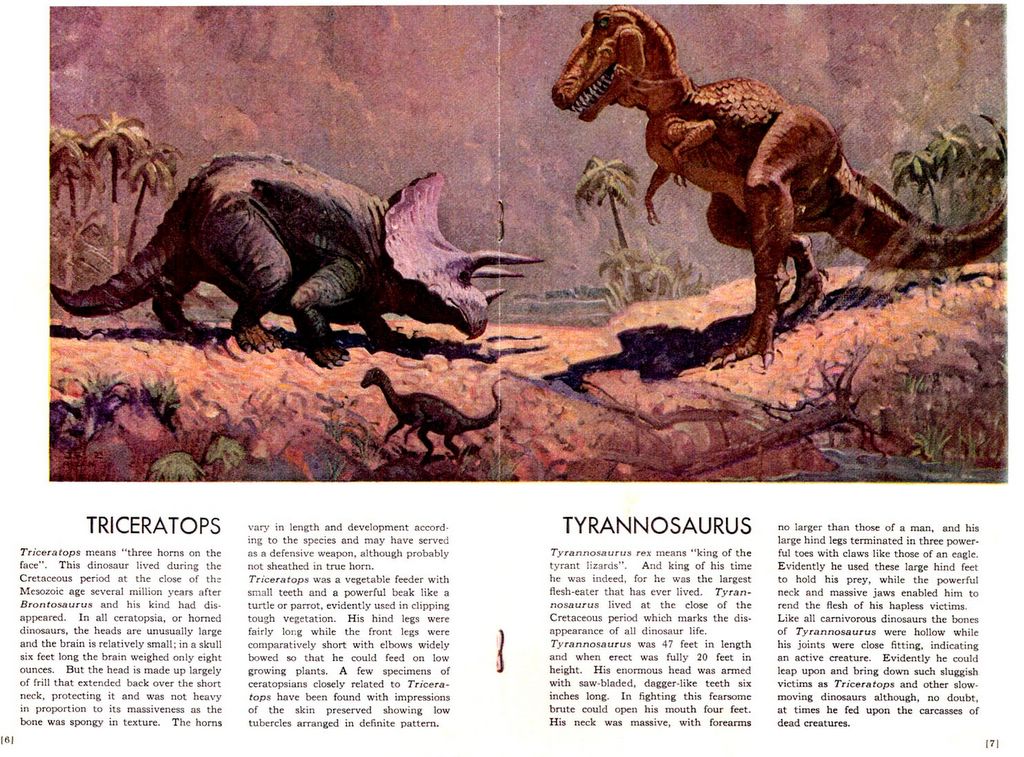
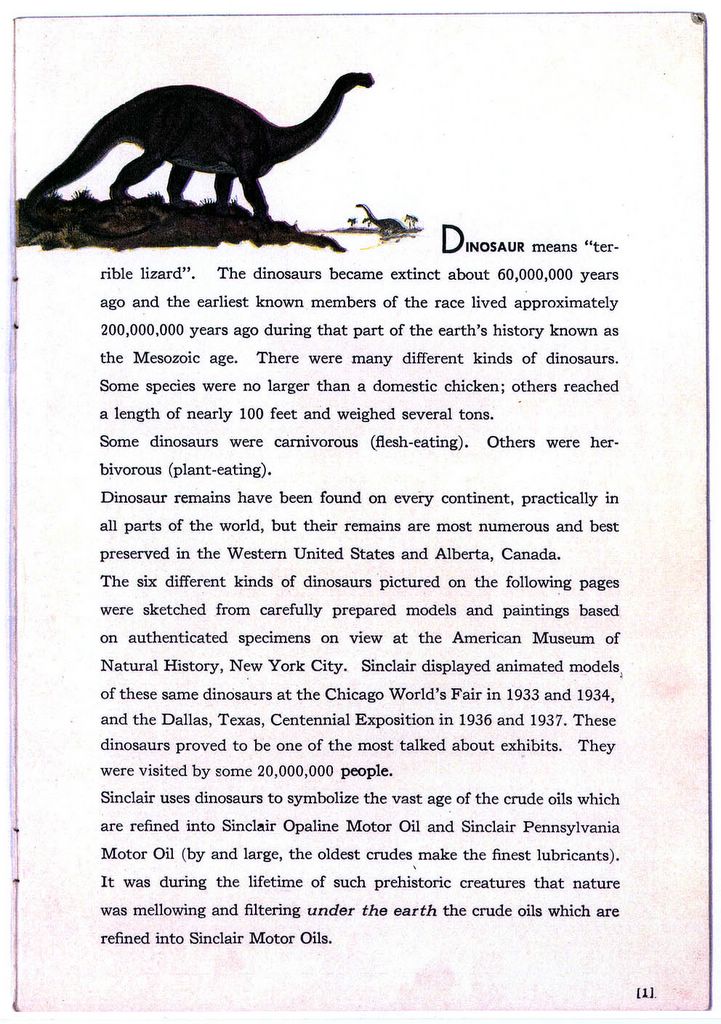
Some pages from the brochure that Sinclair gave away at the 1934 World's Fair at their dinosaur exhibit.

Thanks to Dan V. for the correction!

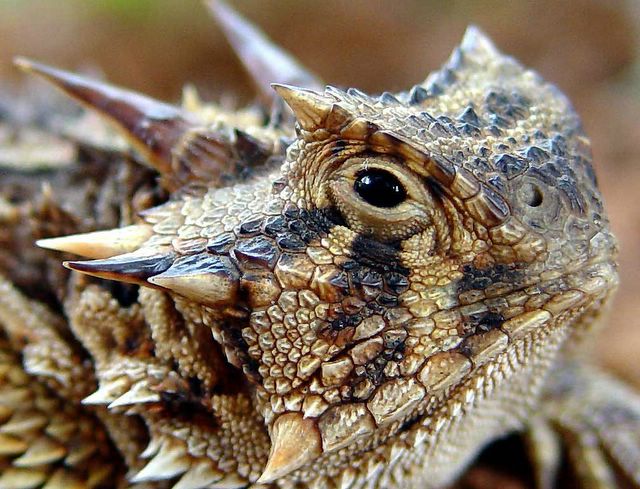
Horned Lizard Blood Squirting Video


Image from HERE.

National Geographic.com has up a short video clip showing how the horned-lizard (Phrynosoma) can squirt blood from its eye socket as a defensive measure. You’ll have to watch a short ad before the clip starts though.

Click HERE to watch the clip.

Wednesday, February 01, 2006

Deep Space + Time = 3D Fossils

Paleobiologist J. William Schopf and colleagues have produced 3-D images of ancient fossils -- 650 million to 850 million years old -- preserved in rocks, an achievement that has never been done before.


If a future space mission to Mars brings rocks back to Earth, Schopf said the techniques he has used, called confocal laser scanning microscopy and Raman spectroscopy, could enable scientists to look at microscopic fossils inside the rocks to search for signs of life, such as organic cell walls. These techniques would not destroy the rocks.

Confocal microscopy uses a focused laser beam to make the organic walls of the fossils fluoresce, allowing them to be viewed in three dimensions. The technique, first used by biologists to study the inner workings of living cells, is new to geology.

Raman spectroscopy allows you to see the molecular and chemical structure of ancient microorganisms in three dimensions, revealing what the fossils are made of without destroying the samples. This technique involves a laser from a microscope focused on a sample; most of the laser light is scattered, but a small part gets absorbed by the fossil.

"It's very difficult to get any insight about the biochemistry of organisms that lived nearly a billion years ago, and this gives it to you. You see the cells in the confocal microscopy, and the Raman spectroscopy gives you the chemistry”, said Schopf.


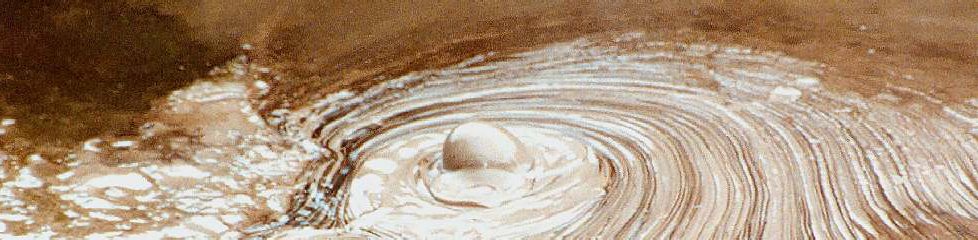
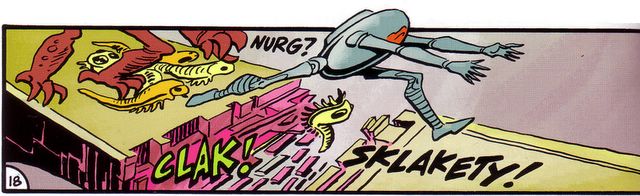
Mars & art © Mark Wheatley & Marc Hempel. Buy Mars HERE

His research is published in the January issue of the journal Astrobiology, in which he reports confocal microscopy results of the ancient fossils. (He published ancient Raman spectroscopy 3-D images of ancient fossils in 2005 in the journal Geobiology.)

Read the rest of the story HERE.

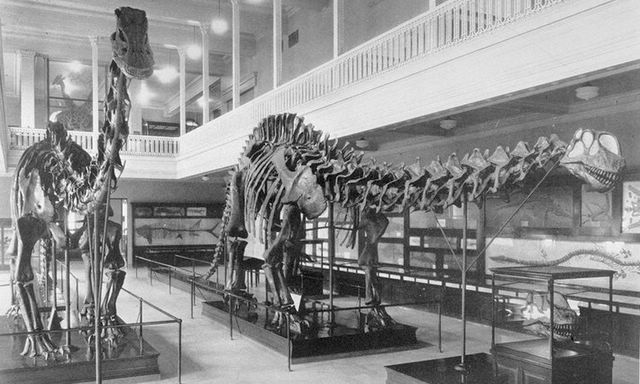
Published This Day: Apatosaurus Monograph


In 1936 Charles Gilmore published the paper “Osteology of Apatosaurus with special reference to specimens in the Carnegie Museum”. Memoirs of the Carnegie Museum 11: 175-300.