Thursday, December 15, 2005

Variable Dinosaur Growth Rates

Developmental Plasticity in the Life History of a Prosauropod Dinosaur. P. Martin Sander and Nicole Klein. 2005. Science 310: 1800 – 1802.

Abstract: Long-bone histology indicates that the most common early dinosaur, the prosauropod Plateosaurus engelhardti from the Upper Triassic of Central Europe, had variable life histories. Although Plateosaurus grew at the fast rates typical for dinosaurs, as indicated by fibrolamellar bone, qualitative (growth stop) and quantitative (growth-mark counts) features of its histology are poorly correlated with body size. Individual life histories of P. engelhardti were influenced by environmental factors, as in modern ectothermic reptiles, but not in mammals, birds, or other dinosaurs.

From the University of Bonn press release:
Plateosaurus engelhardti was apparently able to vary the speed of its growth according the conditions of its environment.
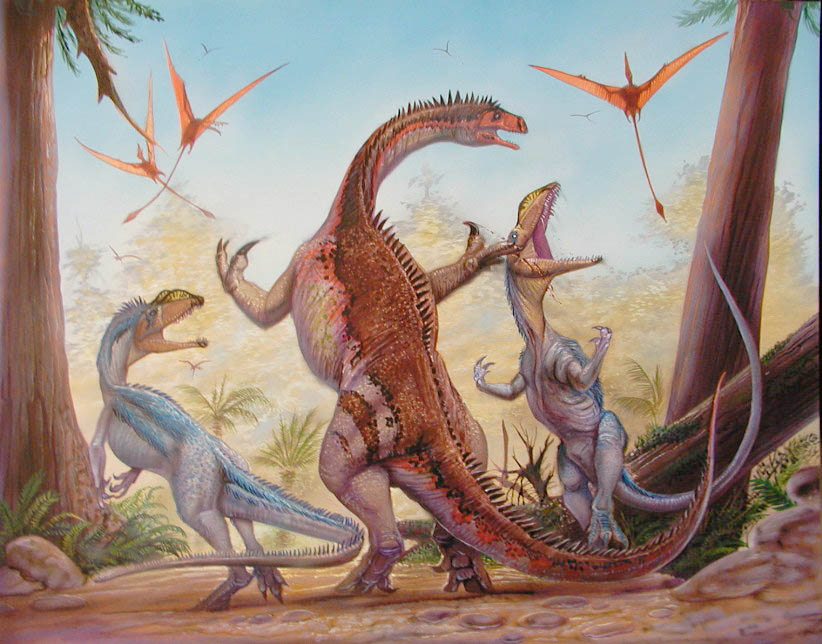
Image © Luis Rey from his web site HERE.

'Basically dinosaurs grew like we do,' the Bonn palaeontologist Dr. Martin Sander explains: 'Each age corresponded to a particular body size.' There was not much leeway involved. Reptiles do things differently: when food is scarce they grow more slowly than when there is food galore. Thus, a tortoise can be 30, 40 or even 60 cm long at the same age. 'Warm-blooded animals, by contrast, cannot so easily turn down their metabolism,' the lecturer says: 'If the food supply is inadequate, there's only one thing they can do – die.'

Dinosaurs lie somewhere in between: although they are descended from the reptiles, many of them had become warm-blooded, most researchers today agree. And they all grew like modern mammals: in accordance with a genetically programmed blueprint and in addition relatively fast. 'At least that's what was thought until recently,' Dr. Sander says. 'However, our findings have thrown this conception into disarray, at least for one dinosaur.'

The growth of dinosaurs' bones was characterised by temporary interruptions, so that 'annual growth rings' can be detected under the microscope, rather like the growth rings of trees. When growth is fast, the distance between the rings is greater. The bone tissue is then permeated with numerous longish cavities. From the bone structure experts can also detect when the animals reached their full size: 'Some had reached their maximum size at 12 years old, others were still growing at 27.

What is above all astonishing is that all the other dinosaurs seemed to show very steady growth. This is not only true of the plateosaur's closest relations, but also of dinosaurs which came onto the evolutionary stage well before plateosaurs and which therefore could perhaps be assumed to have shown a more 'reptilian' type of growth.

Born This Day: Joseph Barrell

Dec. 15, 1869 – May 4, 1919

From Today In Science History:

Barrell was an American geologist who proposed that sedimentary rocks were produced by the action of rivers, winds, and ice, as well as by marine sedimentation. In 1916, he indicated that the coloration of many Devonian rocks was bright red because they had been baked dry, like bricks, in arid conditions. Also, this severe climate was a driving force in the evolution of air-breathing vertebrates, including tetrapods.

In 1917, he used the new results of radioactive dating to reinterpret Earth's age at a few billion years, though many geologists still preferred an age of 100 million years. Barrell emphasized that geological processes vary in intensity in a cyclical rather than a uniform fashion, thus current rates of geological change should not be used as a guide to the past,as in prior estimates.

Read more about him HERE.

Wednesday, December 14, 2005

Nullarbor Cave Fossils

From ABC News OnLine comes this article:

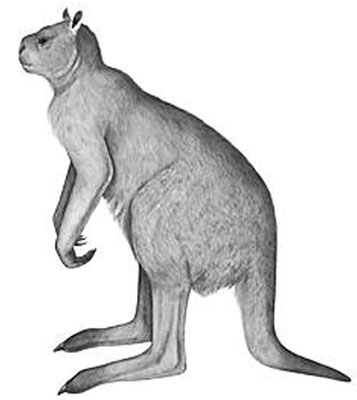
Scientists from the Western Australia Museum have begun an in-depth study of skeletal remains of extinct animals found in a cave on the Nullarbor. The scientists were first alerted to the remains by a group who stumbled across them while exploring a remote cave system in 2002.

Since then about 60 examples of extinct animals have been recovered including well preserved fossils of marsupial lions, giant kangaroos and reptiles. Museum spokesman Dr Gavin Predeau says the aim of the research is to learn more about what types of animals and plants lived on the Nullarbor 500,000-years-ago. "A whole range of other extinct animals, as well including approximately 20 species of kangaroo, which is quite remarkable and about half of those are entirely new to science," he said.

"Some of them are pint-size sort of little bettong or wallaby-sized animals and they range right up to 250 kilogram giants." Dr Predeau says much of the research to date has focused on the marsupial lion but it has now shifted to the many other species found in the cave.

"That includes birds, and lizards, snakes and so it's really quite a diverse fauna," he said. "So basically getting an overall handle on the nature of the fauna as a whole, describing the new species, trying to work out what sort of environment was out on the Nullarbor half-a-million-years ago."

"I'm going to show you the greatest thing your eyes have ever beheld."


Ok, so, the new movie is out.

But, I'd urge you to watch the original first.

You'll be glad you did.

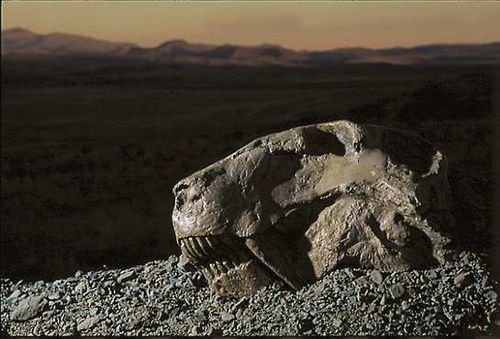
The Return of The Dinosauroid Man


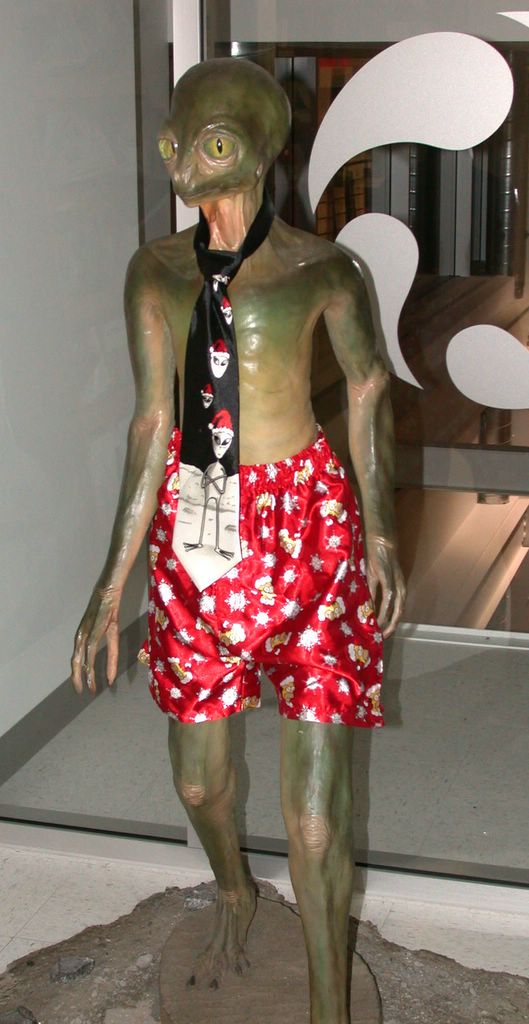
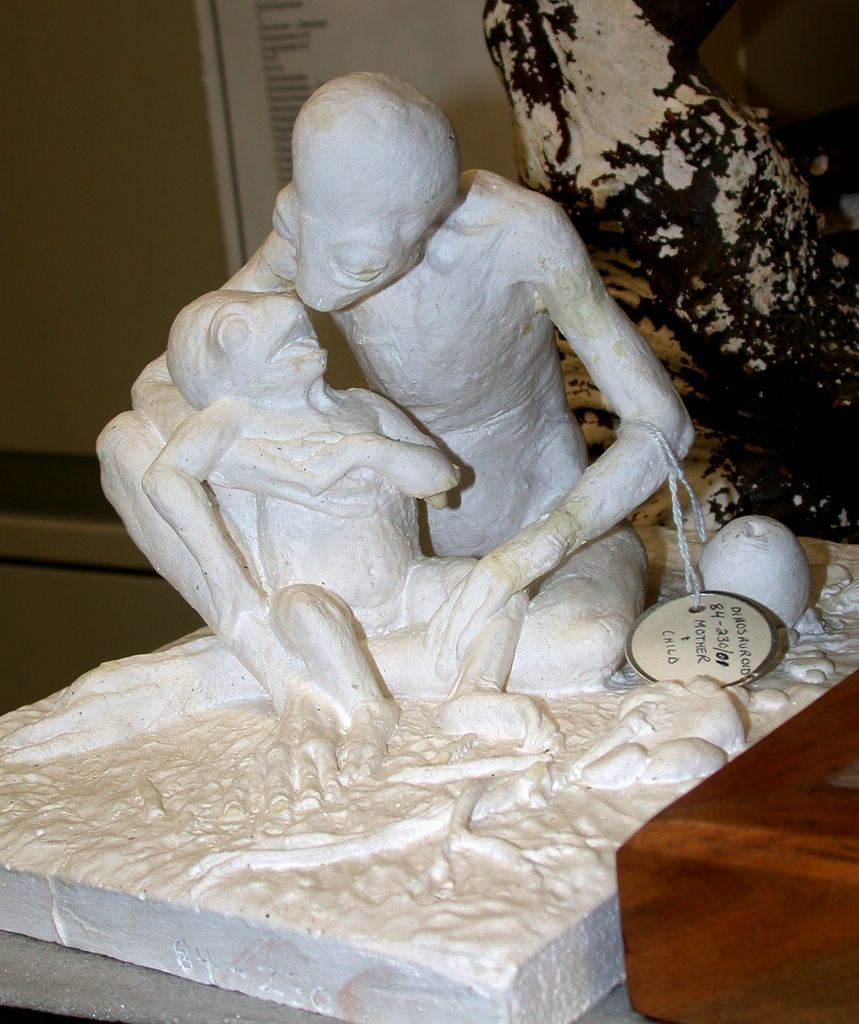
I’m busy working at the Canadian Museum of Nature in Gatineau, Quebec, this week, and I’ll be doing a few postings of some of interesting sights in and around the collections, including a phenomenal computer animation of the Chasmosaurus irvinensis skeleton… but more on that later.

For now, some photos of Dale Russell’s ‘Dinosauroid Man’ (above) currently tucked away in one of the hallways of the Museum. Most people only know of this model as fodder of the supermarket rags, but Dale actually had the model built and wrote a ‘thought experiment’ paper to speculate on the direction that dinosaur evolution might have gone if the ‘brainiest’ small theropod, Troodon, (at the bottom) had of continued to evolve to man-like proportions.

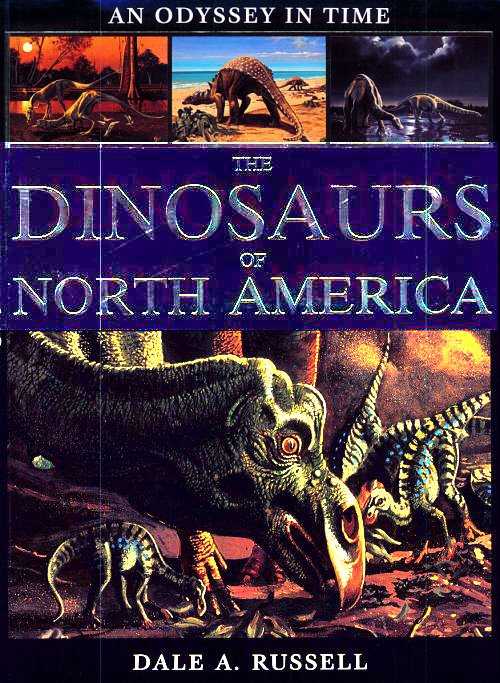
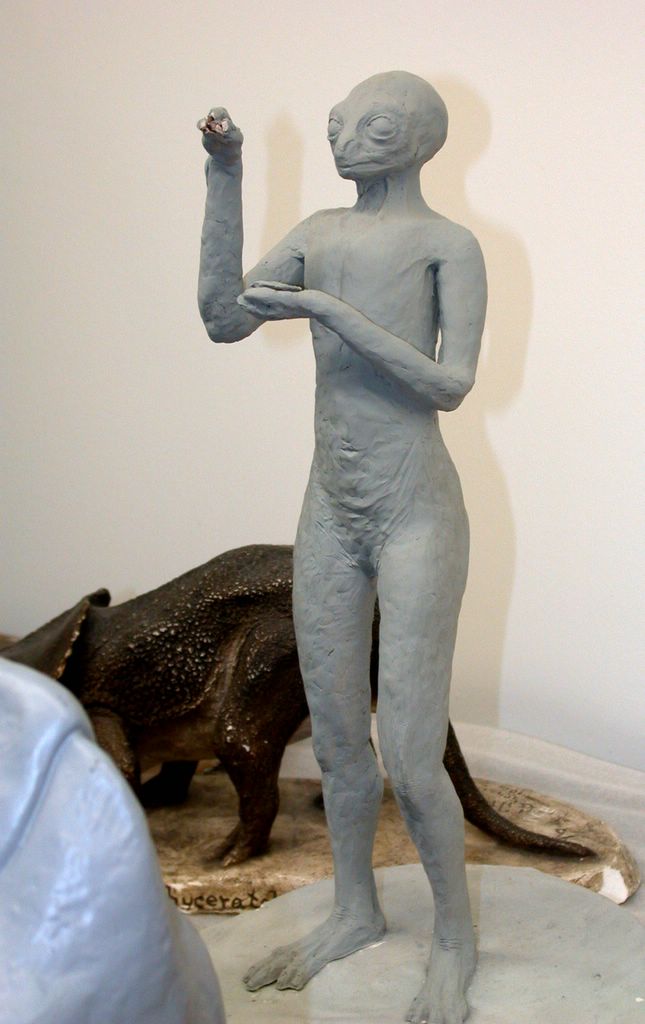
When Dale Russell later wrote his wonderful book, An Odyssey in Time: The Dinosaurs of North America, the artist Eli Kish did some excellent paintings of a number of the well-known dinosaurs of Alberta. Before she started each painting she built a small maquete of each dino which she then based her artistic recreation on. These models are now curated at in the CMN collections and I’ll be posting some photos on these later in the week. Of interest to readers of this blog is that Kish also did at least one beautiful painting of a family of ‘dinosauroids’ that was to be included in the book but was excluded at the last minute. I remember seeing the painting about 15 years ago, but as far as I know it’s never been published anywhere. These are the maquetes she used for her painting, the tallest being about 12 inches high.


Photos by Michael Ryan, 2005.

Monday, December 12, 2005

"Don't be alarmed, ladies and gentlemen. Those chains are made of chrome steel."

Evolution Of A Scientist


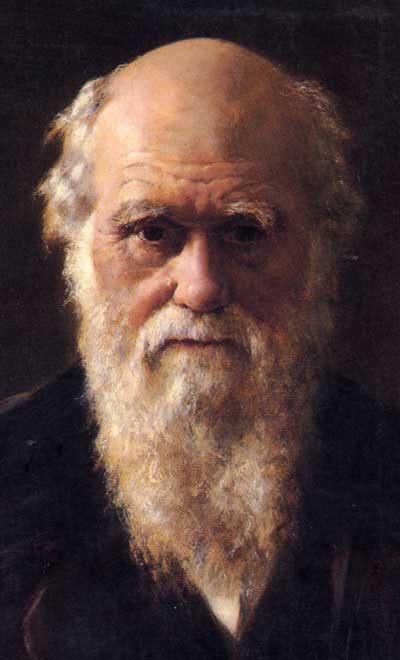
Image from HERE

The latest issue of Newsweek as an article/overview of the new American Museum of Natural History’s exhibit on Charles Darwin.
“Although Darwin struggled with questions of faith his whole life, he ultimately described himself as an "Agnostic." William Howarth, an environmental historian who teaches a course at Princeton called "Darwin in Our Time," dates Darwin's doubts about Christianity to his encounters with slave-owning Christians, which deeply offended Darwin, an ardent abolitionist. More generally, Darwin was troubled by the problem of evil: how could a benevolent and omnipotent God permit so much suffering in the world he created? In any case, it all changed for him after 1851. In that year Darwin's beloved eldest daughter, Annie, died at the age of 10—probably from tuberculosis—an instance of suffering that only led him down darker paths of despair. A legend has grown up that Darwin experienced a deathbed conversion and repentance for his work, but his family has always denied it. He did, however, manage to pass through the needle's eye of Westminster Abbey, where he was entombed with honor in 1882.”
Read the full article HERE.

Sunday, December 11, 2005

"No chains will ever hold that".

Archaeopteryx #10 (collect 'em all!)


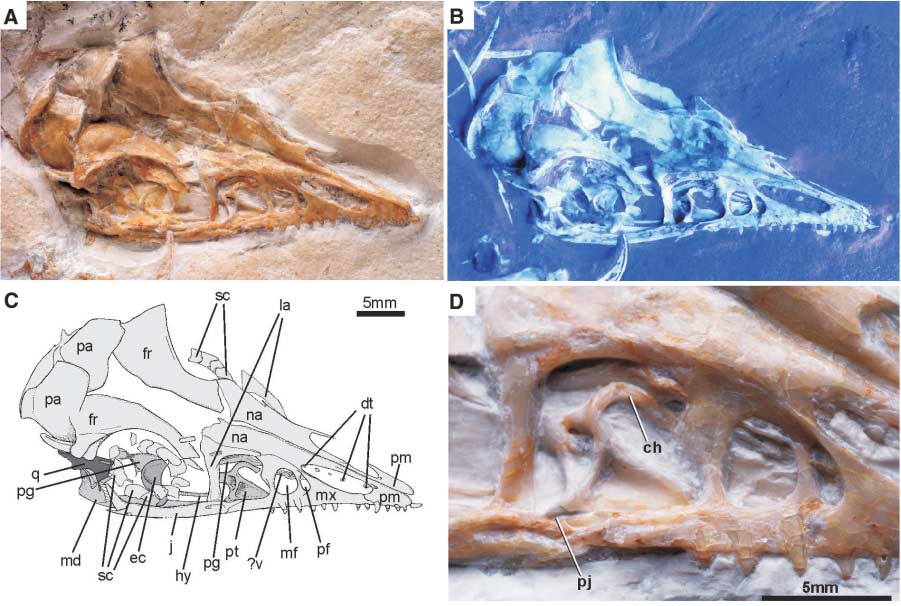
Photographs © Science 2005 (click image to enlarge)
Skull of the new Archaeopteryx specimen. A, dorsal view, B, dorsal view with ultraviolet illumination, C, interpretive drawing, D, detail of antorbital fenestra.
Here’s a excerpt from a recent article by BRODIE FARQUHAR of the Casper Star-Tribune(Wyoming):

One of the world's best-preserved specimens of Archaeopteryx -- the earliest-known birdlike animal -- is headed for a small, privately owned museum in Thermopolis. The Wyoming Dinosaur Center has acquired the precious 150 million-year-old fossil with the help of unnamed benefactors at a high but undisclosed price. A less-intact fossil of the Archaeopteryx fossil sold for $1.3 million in 1999, according to the journal Science, which published details of the discovery this week.

Burkhard Pohl, one of three authors of the Science article, is founder of the 12,000-square-foot museum. He persuaded the widow of a Swedish fossil collector to sell the specimen to an anonymous donor willing to put the fossil on long-term display in Thermopolis. A condition of the deal that Pohl negotiated is the commitment that the specimen will always remain in a museum or public institution, said Scott Hartman, museum science director.

The magpie-sized fossil is one of 10 found in the world and comes from limestone deposits in Bavaria, Germany. The new Thermopolis specimen is second only to a Berlin specimen in terms of completeness, including a well-preserved skull that for the first time gives scientists a "top view" of the head of Archaeopteryx. The fossil will not be moved from Germany to Thermopolis until next Fall, Hartman said. That gives the Wyoming Dinosaur Center time to install a high-tech security system to provide for the safety of the specimen.

Hartman said the well-preserved foot of the Thermopolis specimen shows that its second toe could "hyper-extend," rising off the ground like Velociraptor and Troodon -- birdlike meat-eating dinosaurs. In addition, the Archaeopteryx's feet and ankles were almost identical to those of its close relatives, such as Velociraptor. It also demonstrates that the earliest birds did not spend as much time in trees as had been previously thought.


© Science 2005 (click image to enlarge)

Saturday, December 10, 2005

Irish Elk Not Red


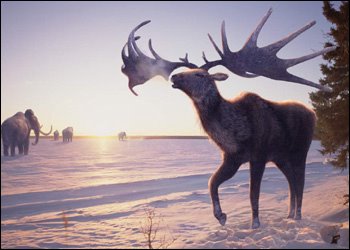
Image from HERE.

The phylogenetic position of the 'giant deer' Megaloceros giganteus. A. M. Lister, et al. Nature 438: 850-853 | doi:10.1038/nature04134

ABSTRACT: The giant deer, or 'Irish elk', has featured extensively in debates on adaptation, sexual selection, and extinction. Its huge antlers—the largest of any deer species, living or extinct—formed a focus of much past work. Yet the phylogenetic position of the giant deer has remained an enigma. On the basis of its flattened antlers, the species was previously regarded as closely related to the living fallow deer. Recent morphological studies8, however, have challenged that view and placed the giant deer closer to the living red deer or wapiti. Here we present a new phylogenetic analysis encompassing morphological and DNA sequence evidence, and find that both sets of data independently support a sister-group relationship of giant and fallow deer. Our results include the successful extraction and sequencing of DNA from this extinct species, and highlight the value of a joint molecular and morphological approach.


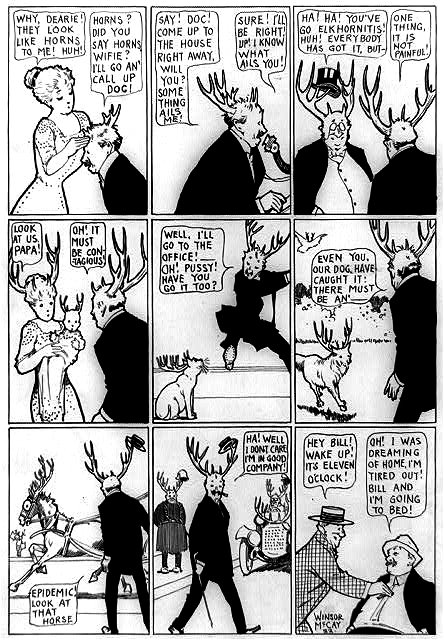
Windsor McCay’s “Dreams of Rarebit Fiend

The Fantasy Island of Creationism

Over at Slate.com William Saletan takes a trip to “Fantasy Island” to examine the dwindling refuges of creationism. An excerpt:
This, more than monkey ancestors, is what alarms creationists. Larson lists the social ills they blame on the teaching of evolution: abortion, eugenics, homosexuality, effeminacy, divorce, communism, long hair. He's been told that Phillip Johnson, the founder of the intelligent design movement, brought up cross-dressing three times in his most recent book. "And those are important issues," Larson adds, trying to sound even-handed, but the journalists laugh. "It is important," a colleague next to me whispers. "There's a lot of shopping involved. You have to buy for two."
Read the rest HERE.

Thursday, December 08, 2005

Tor's T. rex


Art © Joe Kubert.

Things are still busy for me so I'll post this nice fun fact page from volume 1 of the collected 'Tor' stories by Joe Kubert.

Wednesday, December 07, 2005

Alberta Road Trip

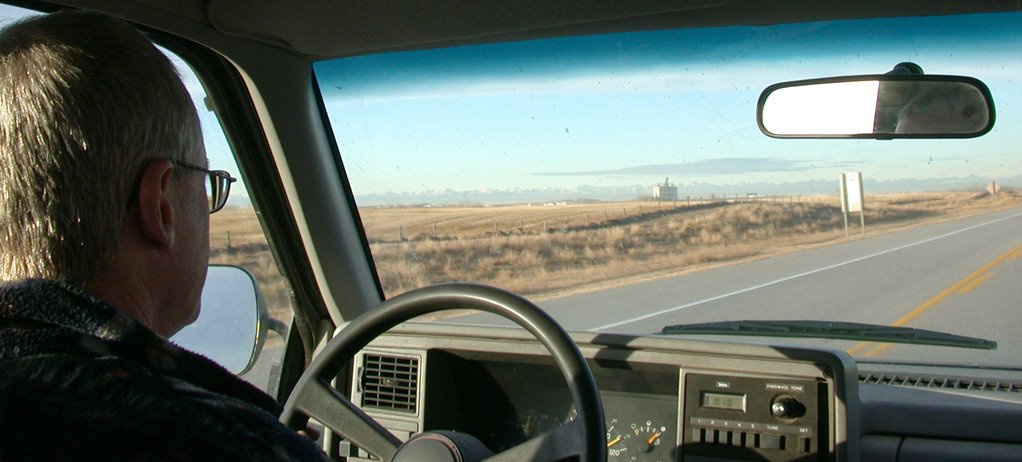
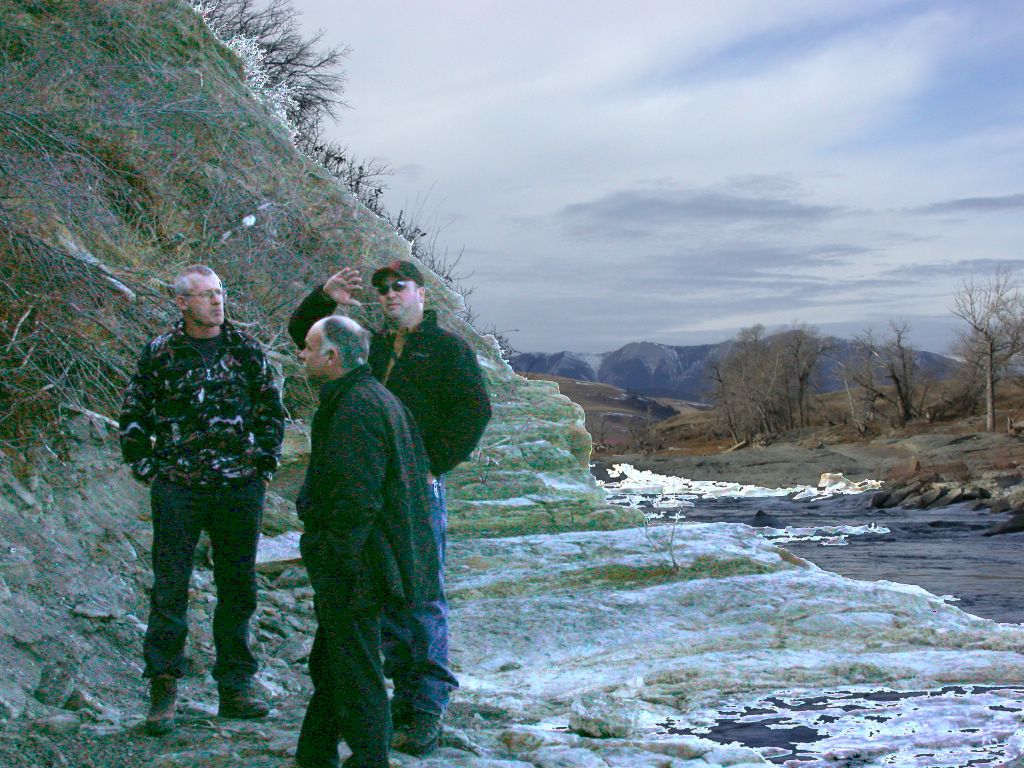
Last week I was back in Alberta for a whirlwind tour of museums and localities (that's why postings have been light recently). I meet up with Don Brinkman (he of the new Centrosaurus brinkmani fame) and Jim McCabe in Drumheller and drove down south to check out a report of a ceratopsian skull found along the Oldman River. It turns out to be in either the upper St. Mary’s River Formation or the Willow Creek Formation – both crop out in the area and Don and I need to consult with Denis Braman who’s been doing palynological work in the area to help nail down its position in section.


Jim McCabe at the wheel. Those are the Rocky Mountains in the distance.


Jim (left) and Don (middle) check out the site with a local contractor.


Don and Jim examine what is exposed of the skull - not much as it turns out.

Tuesday, December 06, 2005

Evolution Happens


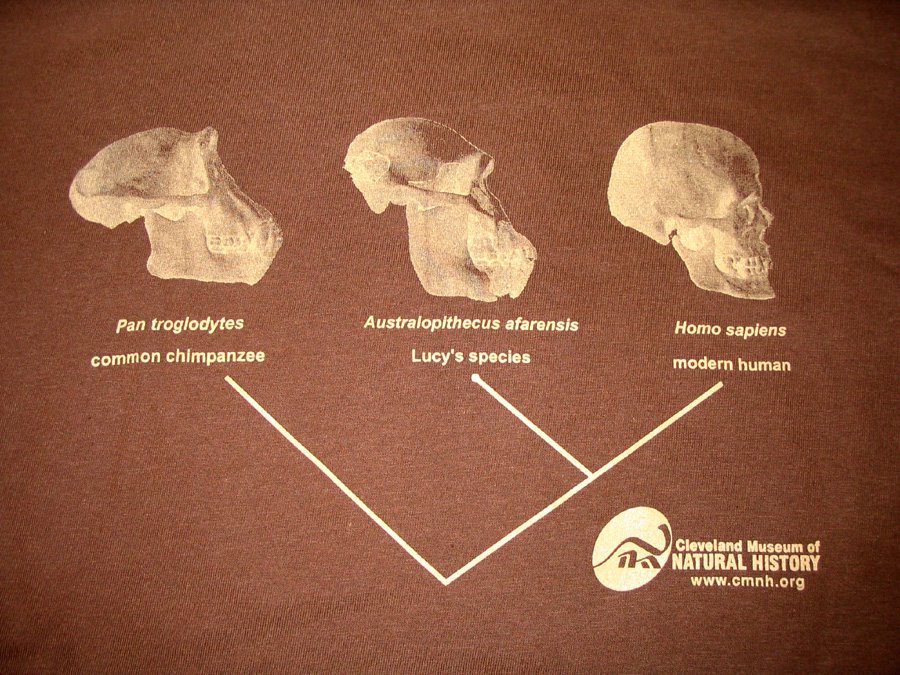
The Cleveland Museum of Natural History has produced these new 'Evolution Happens' t-shirts just in time for the holiday season (nothing says ‘holidays’ like evolutionary theory).

Modeled here by one of the palaeoblogger’s volunteers in his Department of Vertebrate Paleontology, the back (below) features a summary cladogram of one of the museum’s most historically important specimens, the famous Australopithecus known as ‘Lucy’.

The shirts can be ordered directly from the CMNH bookstore by calling:

216-31-4660 ext. 3329, or
1-800-317-9155 ext. 3329 (toll free in the USA only)

Sorry, there are no web sales at this time.


For the younger crowd is the above t-shirt featuring one of the VP department’s signature specimens, the type of Haplocanthosaurus delfsi. These shirts are also available from the museum store.
BECOME A VOLUNTEER!
Interested in dinosaurs, fossil fish or other vertebrate fossils? If so, why not join ‘Ms. D.’ above as a volunteer in our department! If you’re local to the CMNH contact our volunteer coordinator at dbrant@cmnh.org

Thursday, December 01, 2005

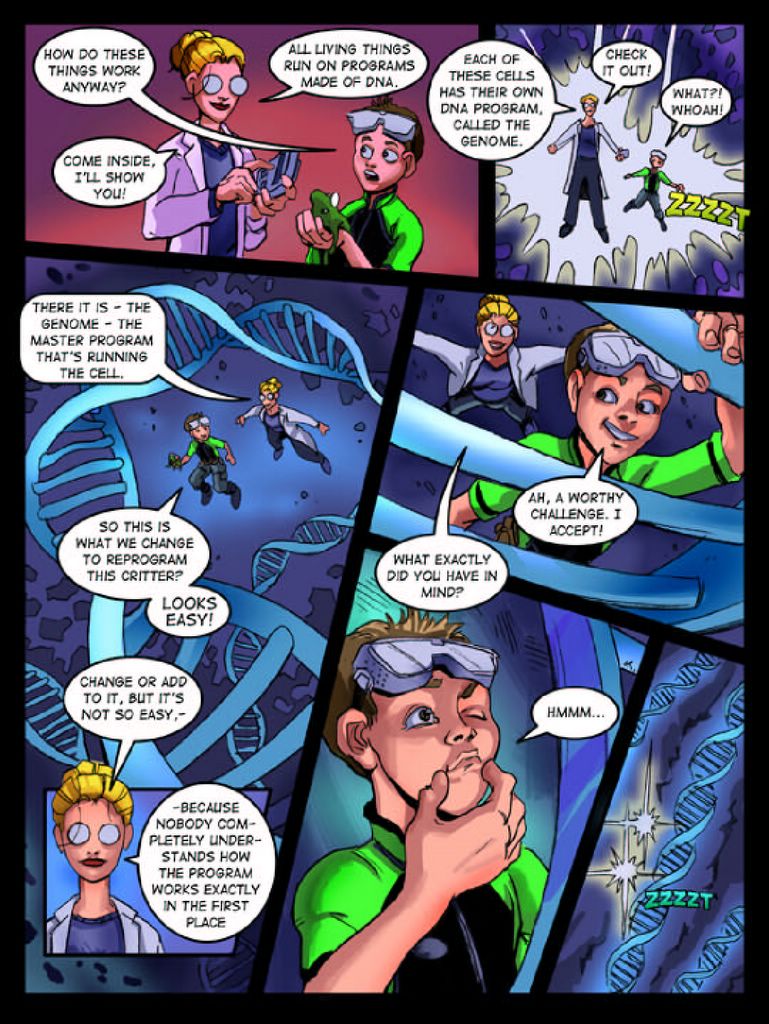
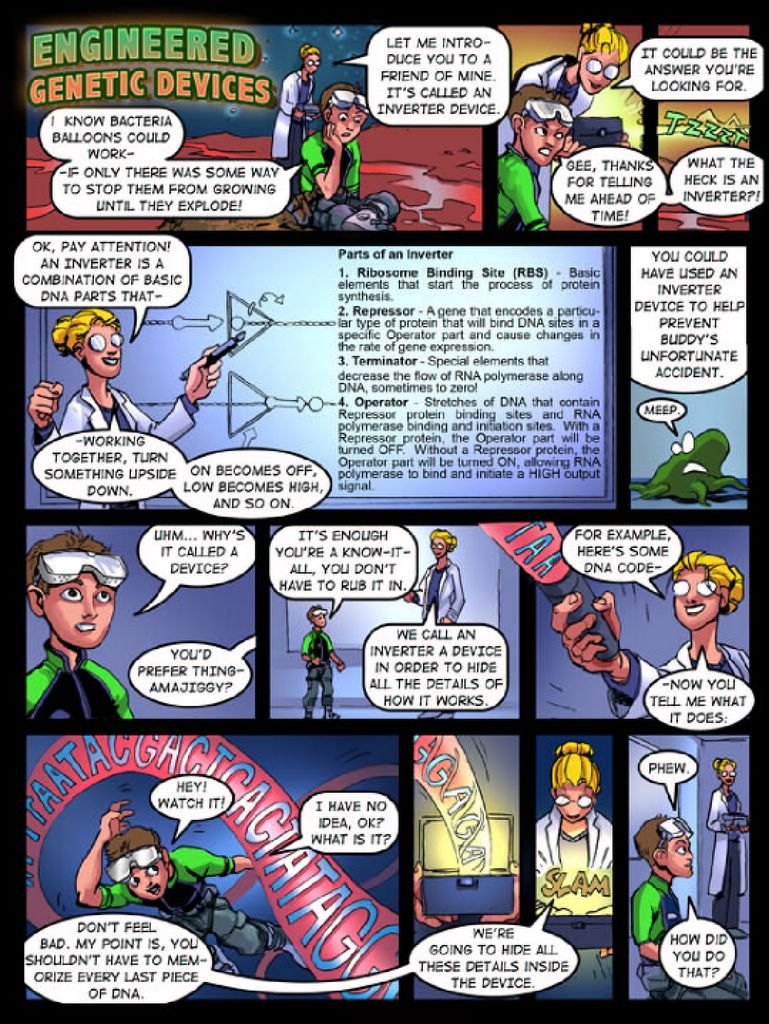
Adventures In Synthetic Biology

Adventures in Synthetic Biology is a comic that appears on the Nature website and was featured on last weeks cover.


Click image to enlarge

It was drawn by Chuck Wadey and written by Drew Endy and Isodora Deese from the MIT Synthetic Biology Working Group. They even explain the process of creating a scientific comic in the comic project wiki.

Archaeopteryx Has Dinosaur Feet

A 150-million-year-old fossil of Archaeopteryx, the earliest known bird, may put to rest any scientific doubt that dinosaurs—specifically the group of two-legged meat-eaters known as theropods—gave rise to modern birds.
A Well-Preserved Archaeopteryx Specimen with Theropod Features. Gerald Mayr, Burkhard Pohl, and D. Stefan Peters. Science 310: 1483-1486.
Abstract: A nearly complete skeleton of Archaeopteryx with excellent bone preservation shows that the osteology of the urvogel is similar to that of nonavian theropod dinosaurs. The new specimen confirms the presence of a hyperextendible second toe as in dromaeosaurs and troodontids. Archaeopteryx had a plesiomorphic tetraradiate palatine bone and no fully reversed first toe. These observations provide further evidence for the theropod ancestry of birds. In addition, the presence of a hyperextendible second toe blurs the distinction of archaeopterygids from basal deinonychosaurs (troodontids and dromaeosaurs) and challenges the monophyly of Aves.

Image courtesy G. Mayr/Senckenberg

From the article at National Geographic News by Nicolas Bakalar:

Until recently, the new crow-size specimen was housed in a private collection. It is now owned by the Wyoming Dinosaur Center in Thermopolis. The fossil is the ninth example of Archaeopteryx known to science. (A tenth specimen of a winged dinosaur from a closely related genus also exists.) All ten fossils were found in a limestone deposit near Solnhofen, Germany.

The latest specimen is among the best preserved. It is a slightly broken skeleton in a single slab of pure limestone, showing clear wing- and tail-feather impressions. The skull is the only Archaeopteryx specimen that reveals a bird's-eye view of the species' upper head surface.

Archaeopteryx, the fossil shows, had a hyperextendible second toe. Until now, the feature was thought to belong only to the species' close relatives, the deinonychosaurs. Contrary to all previous reconstructions of Archaeopteryx, the hind toe of the new specimen is not completely reversed to form a "perching" foot as it is in modern birds.

The researchers believe that the fully reversed hind toe in other Archaeopteryx fossils shifted during preservation and never existed in the live animal. Because Archaeopteryx lacked this stabilizing toe, it almost certainly did not habitually perch in trees.

Permian Mass Gas Extinction

The world's largest mass extinction at the end of the Permian period 250 million years ago was probably caused by poisonous volcanic gas, according to this research published today:
Catastrophic soil erosion during the end-Permian biotic crisis. Mark A. Sephton, Cindy V. Looy, Henk Brinkhuis, Paul B. Wignall, Jan W. de Leeuw and Henk Visscher. Geology 33:941–944.

From a press release from the Imperial College London:

Many scientists had previously thought that an asteroid hitting the earth or a deep-sea methane release had caused the extinction, which obliterated more than two-thirds of reptile and amphibian families.


Photograph by Jonathan Blair

However, analysis of a unique set of molecules found in rocks taken from the Dolomites in Italy has enabled scientists to build up a picture of what actually happened. The molecules are the remains of polysaccharides, large sugar-based structures common in plants and soil, and they tell the story of the extinction. The molecules date from the same time as a major volcanic eruption that caused the greatest ever outpouring of basalt lava over vast swathes of land in present day Siberia.

The researchers believe that the volcanic gases from the eruption, which would have depleted earth's protective ozone layer and acidified the land and sea, killed rooted vegetation. This meant that soil was no longer retained and it washed into the surrounding oceans.

Soil materials in the oceans would have blocked out light and soaked up oxygen. Analysis of rock chemistry suggests that after the soil crisis on land, the marine ecosystem succumbed to the stresses of environmental change and oceanic life faltered, completing a global catastrophe.

Read the rest of the article HERE.

Wednesday, November 30, 2005

Giant Water Scorpion Trackway

Palaeoecology: A gigantic fossil arthropod trackway. Martin A. Whyte. Nature 438: 576.

From National Geographic News:
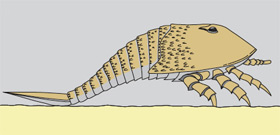
Five foot long tracks of a six-legged water scorpion reveal that Hibbertopterus could have lumbered along the riverbanks of Scotland 330 million years ago,

Illo © Nature 2005

"There's been lot of debate about this particular [species of] water scorpion—whether it could only live in water or if it could come out. What the track shows is they could come out at least for short intervals," Martin Whyte, a geologist at the University of Sheffield in England said.

The track itself is 20 feet (6 meters) long and about 3 feet (1 meter) wide.
The creature walked in-phase, with each pair of limbs moving forward at the same time rather than alternating, like a human gait. Also, the scorpion's stride averaged 10.6 inches (27 centimeters) long, short enough that they overlapped. The track also features a central groove left by the water scorpion's dragging tail, leaving indications of jerky movements.

"The whole thing adds up to fairly look as though the body [was] heavy and the animal was moving quite slowly," Whyte said. "For that reason I think it was out of the water. Had it been in [the water], water would've buoyed up the tail."

By about 360 million years ago the transition of lobe-finned fish—prehistoric fish with fleshy fins—to four-limbed tetrapods was nearly complete. The newly discovered trackway, which is dated to 330 million years ago, therefore suggests that some of the earliest tetrapods would have confronted these giant water scorpions as they scurried about the shore.

Read the whole article From HERE.

1.3 Million Year Old Human ‘Footprints’

Geochronology: Age of Mexican ash with alleged 'footprints'. Paul R. Renne et al. Nature 438: E7-E8

From the University of California –Berkeley press release:
Alleged footprints of early Americans found in volcanic rock in Mexico are either extremely old - more than 1 million years older than other evidence of human presence in the Western Hemisphere - or not footprints at all, according to a new analysis published this week in Nature.
Earlier this year, researchers in England touted these "footprints" as definitive proof that humans were in the Americas much earlier than 11,000 years ago, which is the accepted date for the arrival of humans across a northern land-bridge from Asia.

These scientists dated the volcanic rock at 40,000 years old. They hypothesized that early hunters walked across ash freshly deposited near a lake by volcanoes that are still active in the area around Puebla, Mexico. The so-called footprints, subsequently covered by more ash and inundated by lake waters, eventually turned to rock.

But Paul Renne, director of the Berkeley Geochronology Center and an adjunct professor of earth and planetary science at UC Berkeley, and his colleagues in Mexico and at Texas A&M University report a new age for the rock: about 1.3 million years.

"You're really only left with two possibilities," Renne said. "One is that they are really old hominids - shockingly old - or they're not footprints."

Paleoanthropologist Tim White, professor of integrative biology at UC Berkeley, is familiar with the "so-called footprints" and knows Renne well, frequently collaborating with him in the dating of million-year-old sediments in an area of Ethiopia where White has excavated numerous fossils of human ancestors. He is not surprised at the new finding.

"The evidence (the British team) has provided in their arguments that these are footprints is not sufficient to convince me they are footprints," said Tim White, professor of integrative biology at UC Berkeley. "The evidence Paul has produced by dating basically means that this argument is over, unless indisputable footprints can be found sealed within the ash."

Read the full article HERE.

The Earliest Animals Had Human-Like Genes

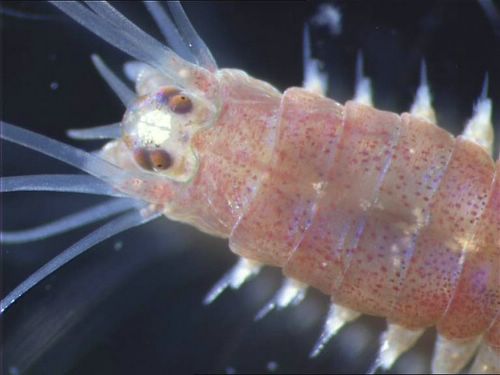
Vertebrate-Type Intron-Rich Genes in the Marine Annelid Platynereis dumerilii. Florian Raible, et al. Science 310: 1325-1326.


Photo of Platynereis from HERE

From EurekAlert comes this article:

Species evolve at very different rates, and the evolutionary line that produced humans seems to be among the slowest. The result, according to a new study by scientists at the European Molecular Biology Laboratory (EMBL), is that our species has retained characteristics of a very ancient ancestor that have been lost in more quickly-evolving animals. This overturns a commonly-held view of the nature of genes in the first animals.

Genes hold the recipes for proteins. The genes of animals usually contain extra bits of DNA sequence, called introns – information which has to be removed as cells create new molecules. The number of introns in genes, however, varies greatly among animals. While humans have many introns in their genes, common animal models such as flies have fewer. From an evolutionary perspective, it was long assumed that the simpler fly genes would be more ancient. The current study reveals the opposite: early animals already had a lot of introns, and quickly-evolving species like insects have lost most of them.

To discover what early animals were like, scientists usually compare their descendents. This is difficult when comparing distantly-related animals such as humans and flies. In these cases, it helps to look at living organisms that have preserved many features of their ancestors. Detlev Arendt's group is doing this with a small marine worm called Platynereis dumerlii. "Similar animals are already found in the earliest fossils from the Cambrium, about 600 million years ago," Arendt explains, "arguing that Platynereis could be something like a 'living fossil'" This makes it an ideal model for evolutionary comparisons to find out what the common ancestors of humans, flies and worms were like."

The discovery that Platynereis also represents a slowly-evolving branch of animal life has important implications for the study of humans. "We've already learned an incredible amount about humans from studies of the fly," Arendt says. "The marine worm might well give us an even better look at important conserved processes. Another thing that this has shown us is that evolution is not always about gain; the loss of complexity can equally be an important player in evolution."

Read the rest of the press release HERE.