Friday, November 11, 2005

Fossil Evidence For Global Warming

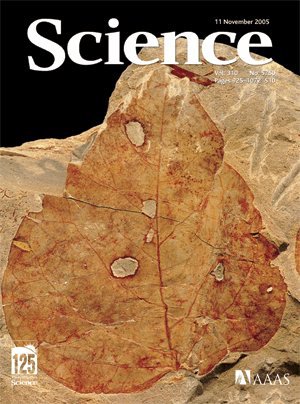
Transient Floral Change and Rapid Global Warming at the Paleocene-Eocene Boundary 2005. Scott L. Wing, Guy J. Harrington, Francesca A. Smith, Jonathan I. Bloch, Douglas M. Boyer, and Katherine H. Freeman. Science 310: 993-996.

From the University of Florida press release:

The beginning of the Eocene was characterized by rapid global warming after a huge release of carbon into the atmosphere and ocean. Plant fossils described document rapid, continental-scale changes in the geographic ranges of plants coincident with the warming.
The findings provide the first evidence that land plants changed drastically during a period of sudden global warming 55 million years ago, said Jonathan Bloch, a University of Florida vertebrate paleontologist and member of the research team.

"It indicates that should we have a period of rapid global warming on that scale today, we might expect very dramatic changes to the biota of the planet, not just the mammals and other vertebrates, but forests also completely changing," said Bloch.
Scientists have known there was significant turnover in mammals during this rapid period of global warming called the Paleocene-Eocene Thermal Maximum, in which temperatures rose by perhaps as much as 10 degrees in the relatively short time span of 10,000 years, then lasting for another 80,000 to 100,000 years, Bloch said. Global warming allowed mammals to emigrate across northern land bridges, marking the first appearance of perissodactlys in the form of the earliest known horse; artiodactyls, a group of even-toed ungulates that includes pigs, camels and hippos; as well as modern primates, he said.

But until now, no clues were available as to what happened to plants during this shift, considered one of the most extreme global warming events during the Cenozoic, the "Age of Mammals," Bloch said. "It was very puzzling because it looked like there was nothing going on with plants, which was rather strange and disconcerting."

Excavations by team leader Scott Wing, in the Bighorn Basin of northwestern Wyoming uncovered fossil leaves and pollen alongside fossilized mammals in rocks that were deposited during this turbulent geologic interval.

"Up until this point we have not had a place in which we have mammal and plant remains preserved in the same rocks spanning what we call the Paleocene-Eocene boundary," Bloch said. "Amazingly, these plants came from what would have been more tropical environments."

Photo by S. Wing

Thursday, November 10, 2005

A Colossal Croc

At the southern tip of South America, researchers have found fossils of an entirely new species of ancient crocodile – one whose massive jaws and jagged teeth would have made it the most fearsome predator in the sea.

The fossilized skull of Dakosaurus andiniensis measures approximately 2.5 feet long. The largest teeth near the snout (on the right side of the photograph) measure approximately four inches. Photo courtesy of Diego Pol, Ohio State University.
An Unusual Marine Crocodyliform from the Jurassic-Cretaceous Boundary of Patagonia. Zulma Gasparini, Diego Pol, and Luis A. Spalletti. Published online November 10 2005; 10.1126/science.1120803 (Science Express Reports). (note: you’ll need a membership to read this.)

Unlike the crocodiles we know today, Dakosaurus andiniensis lived entirely in the water, and had fins instead of legs. But that's not all that made it unusual. Two other features – its hefty size and T. rex-like snout – have earned it a unique place in history – and the nickname “Godzilla.”

Diego Pol, a postdoctoral researcher at the Mathematical Biosciences Institute and the Department of Biomedical Informatics at Ohio State University, determined that the oddly shaped fossil specimens found in Patagonia belong on the crocodile family tree.

Photos of Dakosaurus andiniensis skull, with diagrams and a close-up view of the teeth -- including a microscopic view of one tooth's serrated edge. Figure courtesy of Diego Pol, OSU.
“This species was very unusual, because other marine crocodiles that were around at the same time had very delicate features – long, skinny snouts and needle-like teeth for catching small fish and mollusks,” he said. “But this croc was just the opposite. It had a short snout, and large teeth with serrated edges. It was definitely a predator of large sea creatures.”

Paleontologists Zulma Gasparini and Luis Spalletti of the National University of La Plata in Argentina uncovered the crocodile's fossil bones in Patagonia; Pol used sophisticated software to map the features of those bones and determine its lineage. Together, they describe the creature in the latest issue of the journal Science.

It measured 13 feet from nose to tail. Its jaws were a foot-and-a-half long, with interlocking serrated teeth up to four inches long.

Family tree of ancient marine crocodile Dakosaurus andiniensis. Figure courtesy of Diego Pol, OSU.
The National Geographic Society funded this research, and will feature D. andiniensis in the December 2005 issue of National Geographic Magazine.

The color illo is a computer rendering of Dakosaurus andiniensis which will appear in the December 2005 issue of National Geographic. Taken from HERE & © National Geographic.

New Paleo-Path Tomorrow


Art & characters are © the respective copyright holder.

Tune in tomorrow for the long anticipated return of the Palaeo-Path (part 12) in which Bill Stout takes a look at the art of Roy G. Krenkel.

Gigantopithecus blackii

A gigantic ape standing 10 feet tall and weighing up to 1,200 pounds lived alongside humans for over a million years, according to a new study.


From an article by Bjorn Carey at LiveScience.com:

Scientists have known about Gigantopithecus blackiisince the accidental discovery of some of its teeth on sale in a Hong Kong pharmacy about 80 years ago. While the idea of a giant ape piqued the interest of scientists – and bigfoot hunters – around the world, it was unclear how long ago this beast went extinct.

Now Jack Rink, a geochronologist at McMaster University in Ontario, has used a high-precision absolute-dating method to determine that this ape – the largest primate ever – roamed Southeast Asia for nearly a million years before the species died out 100,000 years ago during the Pleistocene period. By this time, humans had existed for a million years.

"A missing piece of the puzzle has always focused on pin-pointing when Gigantopithecus existed," Rink said. This is a primate that co-existed with humans at a time when humans were undergoing a major evolutionary change. Guangxhi province in southern China, where some of the Gigantopithecus fossils were found, is the same region where some believe the modern human race originated."

Since the original discovery, scientists have been able to piece together a description of Gigantopithecus using just a handful of teeth and a set of jawbones. It may not be much, but the unusually large size of these teeth indicates they belonged to one big ape.

"The size of these specimens – the crown of the molar, for instance, measures about an inch across – helped us understand the extraordinary size of the primate," Rink said.

Read the rest of the story HERE. Image from HERE.

Wednesday, November 09, 2005

Born This Day: Carl Sagan

Nov. 9, 1934 - Dec. 20, 1996

Dr. Sagan deserves a posting longer than I have time write at this moment, so I'll direct you to one of my first postings that gives you something true to think about (and a book recommendation) for these weird times.

Genetic Foundation of Fish Jaws Uncovered

Integration and evolution of the cichlid mandible: The molecular basis of alternate feeding strategies. 2005. R. Craig Albertson, J. Todd Streelman, Thomas D. Kocher and Pamela C. Yelick. Proceedings of the National Academy of Sciences 102: 16287-16292

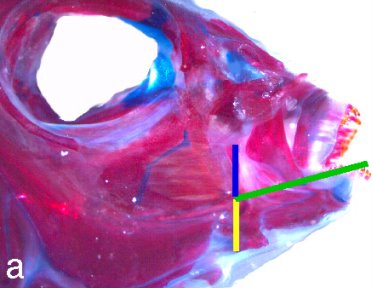
Photo of the lower jaw system of Chilotilapia rhoadesii showing how long closing in-levers are adapted for biting.
From the Georgia Institute of Tecnology press release:

In a study illustrating the apparent linkages between the evolutionary development and embryonic development of species, researchers have uncovered the genetic elements that determine the structure and function of a simple biomechanical system, the lower jaw of the cichlid fish. In addition, they've shown that increasing expression of a particular gene in an embryo can lead to physical changes in the adult fish. The results appear in the November 11, 2005 issue of the Proceedings of the National Academy of Sciences.

"We're using the jaw to think about the genetic basis of biomechanical systems," said J. Todd Streelman, assistant professor in the School of Biology at the Georgia Institute of Technology. "We want to understand the genes that control this lever system. What we found was that this simple biomechanical system is much more complex than previously thought."

Streelman, along with colleagues from the Forsyth Institute at the Harvard School of Dental Medicine and the Hubbard Center for Genome Studies at the University of New Hampshire, predicted that components of the jaw that were functionally or developmentally related would be controlled by the same set of genes, or genetically integrated.

"We were surprised to see that the genetic basis of components involved in opening the jaw is independent of the jaw-closing system," said Streelman.

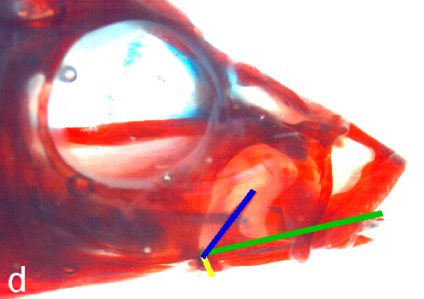
Photo of the lower jaw system of Copadichromis eucinostomus showing how a long closing out-lever is adapted for suction-feeding.
Researchers compared two cichlid species that dwell in Africa's Lake Malawi. One species had force modified jaws that are more adept at biting prey; the other had speed modified jaws, which are more accomplished at using suction to feed on plankton. Each jaw system is essentially a lever system made up of one out-lever and two in-levers.

"We found that as the closing in-lever gets longer, the out-lever gets shorter and vice-versa," explained Streelman.

"When the in-lever is long, this gives the jaw a high mechanical advantage and the jaw can produce more force for biting. When the out-lever is long, that results in a lower mechanical advantage and a better design for suction-feeding. This negative correlation is produced by genetic integration."

But, when the team mapped the regions of the genome controlling the jaw-opening system, they found that these levers are controlled by different chromosomes.

Read the rest of the article HERE.

Tuesday, November 08, 2005

Back To The Swamp

Kansas School Board Redefines Science

CNN.com is reporting that the Kansas Board of Education approved new public school science standards Tuesday that cast doubt on the theory of evolution.


The 6-4 vote was a victory for "intelligent design" advocates who helped draft the standards. Intelligent design holds that the universe is so complex that it must have been created by a higher power.


© Ed Stein 2005

Read all the sad news HERE.

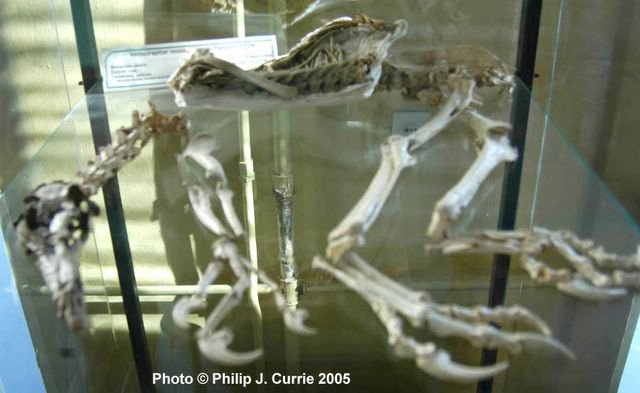
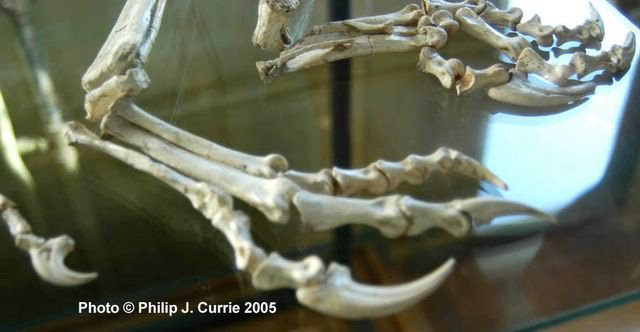
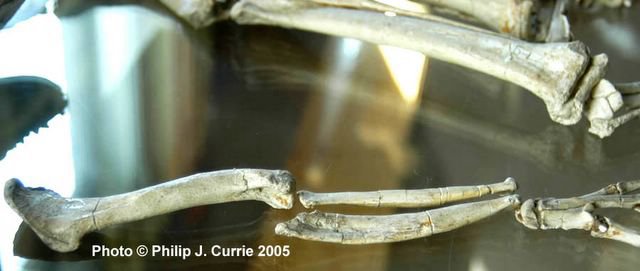
Mongolian Velociraptor

Presented here are some photos of the Velociraptor skeleton on display at the museum in Ulaanbaatar taken by Philip Currie last August & used with his permission. These were shot 'on the fly', hence the blur seen in some of them.


Dr. Tatiana on H5N1 & Evolution

Some extracts from Olivia Judson’s Nov.6 editorial in the The New York Times (via The International Herald Tribune):
“Anyone who supposes that evolution doesn't happen, or doesn't matter, should spare a thought for H5N1, the virus causing avian flu. If we're unlucky, this virus will give us a nasty demonstration of evolution in action."
"The influenza virus that caused the infamous Spanish flu pandemic of 1918 had only eight genes - but it brought about more than 20 million human deaths. And alas, its lethality cannot be blithely attributed to wartime deprivation. For one thing, it was particularly deadly in young, healthy adults. For another, in a remarkable feat of genetic engineering, a team of biologists recently reconstructed the 1918 virus and used it to infect mice. The results are sobering. The 1918 virus is far, far more lethal in mice than are other human flu viruses.

H5N1 also has eight genes (by way of comparison, humans have about 20,000). So far, the virus' effects have been more modest than those of the 1918 influenza: It has killed a lot of birds and about 60 people. That's still worrying, however, because it has killed more than half of the people it has infected. For a virus, that is a high death toll.“


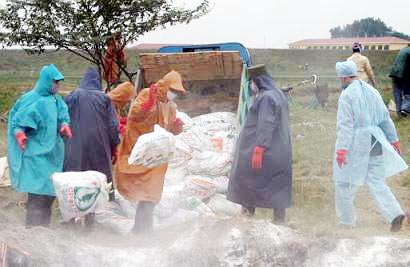
Image from HERE.

“But the most important point is this: Viruses and other pathogens evolve in ways that we can understand and, to some extent, predict. Whether it's preventing a flu pandemic or tackling malaria, we can use our knowledge of evolutionary processes in powerful and practical ways, potentially saving the lives of tens of millions of people. So let's not strip evolution from the textbooks, or banish it from the class, or replace it with ideologies born of wishful thinking. If we do, we might find ourselves facing the consequences of natural selection.”

Read the complete editorial HERE.

Monday, November 07, 2005

CMNH Is Addicted To Cheese!

The Cleveland Museum of Natural History presents:
The Natural History of Cheese
Saturday, November 12, 2005, 7 pm to midnight
For more than 4,000 years, people have practiced the art and science of cheese making. Join a cheese expert from Sammy's for a cocktail reception. Then enjoy a seven-course dinner that highlights some of the world's greatest cheeses, paired with appropriate wines. Classical music performed by students from the Cleveland Institute of Music accompanies this one-of-a-kind occasion. $150 per person.

In honour of this event the Palaeoblog invites you to do the following…... Now! (as The Flaming Lips would say):

Click on the following link!:

Mint Records Videos

Scroll down to 'The Evaporators' and click the 'play quicktime7' for the song, "Addicted to Cheese"!

It'll take a couple of minutes for the video to load, and you might have to click a pop-up that allows MIME, but it's well worth it.


Featuring Canada's National Treasure, Nardwuar The Human Servette, and one of his many bands, The Evaporators (others include The Goblins, Thee Goblins, The Skablins, The Dublins, The Technoblins, and many more variations of these spellings!). Watch and enjoy!

For more info on Nardwuar go to www.nardwuar.com.

Don’t believe me about the ‘National Treasure’ appellation? Then go READ THIS.

Published This Day: Velociraptor


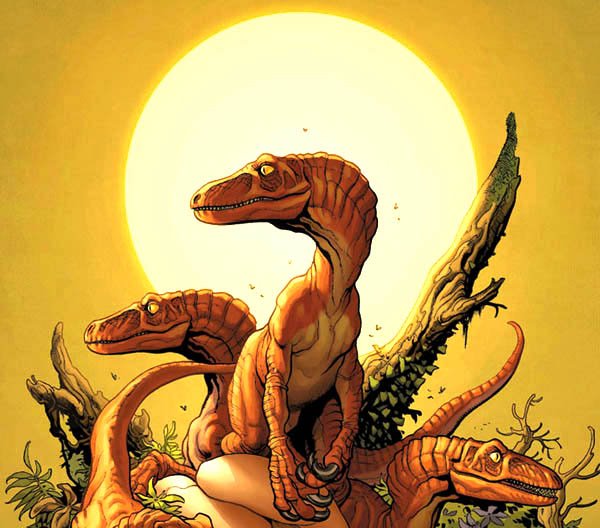
Art © Frank Cho. The rest of the drawing (& poor Shanna!) is HERE.

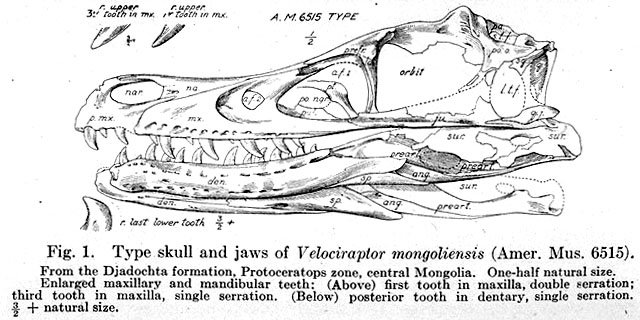
On this day in 1924 Henry Osborn published the first description of Velociraptor;
H.F. Osborn. 1924. Three new Theropoda, Protoceratops zone, central Mongolia. American Museum Novitates 144: 1-12.
I'll try to dig out some photos of some of the specimens on display in Mongolia and post them tomorrow.

Born This Day: Walter Granger

Novemeber 7, 1872 - 1941

Granger was an internationally recognized fossil-collector, paleontologist,expeditioner and author. He was a key figure in the study of vertebrate paleontology from 1894 onward. His collections, stratigraphic studies, and evaluations of fossils and sites in North America, Egypt, Europe, China and Mongolia make major contributions to scientific and evolutionary studies--as well as to the present holdings of the American Museum of Natural History. His lifelong career at the American Museum began in 1890 when he was just 17 years old. He received an honorary doctorate in science from Middlebury College in 1932.

Entry from HERE.

Go to the Granger Papers Project HERE.

Read his biography, "Walter Granger, 1872-1941, Paleontologist" is the first biography of Walter Granger to be published. This is a .pdf version of Morgan, V. L. and Lucas, S. G., 2002, Walter Granger, 1872-1941, Paleontologist: New Mexico Museum of Natural History and Science Bulletin 19, p. 1-58, HERE.

You can also order a hard copy through the same site.

Sunday Comics

OK, it's Monday, but I've been busy... Click the images to enlarge.


Read the original HERE.

And Frank Cho continues to deliver great dinos...


Read the original HERE.

Sunday, November 06, 2005

Died This Day: Henry Fairfield Osborn

August 8, 1857 - November 6, 1935

Osborn graduated at Princeton in 1877 and pursued his interest in the biological sciences and paleontology through additional study at several New York City medical schools and with Thomas Henry Huxley in Britain. Returning to the United States, Osborn accepted a position at Princeton, teaching natural sciences from 1881 until 1891, when he moved to Columbia University to organize the Biology Department there, and in 1891, he also helped to organize the Department of Vertebrate Paleontology at the American Museum of Natural History acting as it’s first curator. Osborn's close association with American Museum continued for over 45 years, and included a long tenure as its President, 1908-1933. During these years the museum's collections expanded enormously and it became one of the preeminent research institutions for natural history in the world.

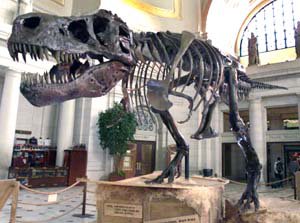
Osborn is noted for describing and naming both Tyrannosaurus rex and Albertosaurus in 1905, Pentaceratops in 1923, and Velociraptor in 1924. One of Osborn's favorite groups for study was the brontotheres, and he was the first to carry out comprehensive research on them. He also wrote an influential textbook, The Age of Mammals (1910).

Apart from his own research, Osborn is perhaps best remembered for the sponsorship of the five immensely successful Central Asiatic Expeditions during the 1920's and 30's led by Roy Chapman Andrews.

Entry from HERE and HERE.

Dinosaur Dental Droppings Deterministic


From an article by Alison Drain at the Washington University in St. Loius:

Josh Smith, Ph.D., assistant professor of earth and planetary sciences at Washington University in St. Louis, has concocted a mathematical scheme for identifying dinosaurs based upon measurements of their copious Mesozoic dental droppings. His method could help paleobiologists identify and reconstruct the lives of the creatures that roamed our terra firma many millions of years ago.

Smith, who claims he's "not very good at math," and his coauthors, David R. Vann and Peter Dodson of the University of Pennsylvania, devised a quantitative methodology by which an isolated tooth of a predatory dinosaur — a theropod — can be correlated with a given genus. They used a variety of measurements — some of which had been defined by previous workers — that describe the basic size and general shape of the teeth as well as devised functions that help quantitatively describe the shapes of the curved surfaces possessed by the teeth. The result was a preliminary but rigorous method of classifying theropod teeth with established genera. Smith and his colleagues published their in work in a recent issue of The Anatomical Record (Vol. 285, 2005).

Read the rest of the article HERE. Photo from HERE.

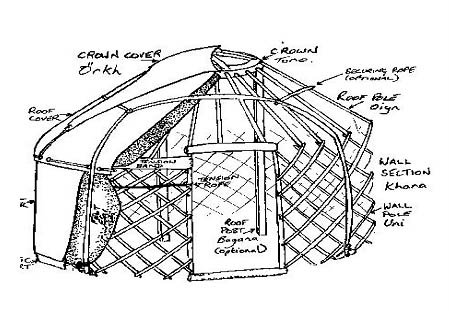
Build Your Own Ger

No need to go to Mongolia to build your own ger. This SITE will give you all the info you'll need.


The Mongolian Ger (describing a Mongolian's tent as a yurt may offend his/her national pride) is a versatile dwelling with a proven pedigree, being home to the nomads of central Asia for many centuries. The oldest complete yurt yet discovered was in a 13th century grave in the Khentei Mountains of Mongolia. Discoveries at Pazaryk, Southern Siberia indicate that the technology to make yurts was in use during the 4th century BC. The BBC Horizon series "Ice Mummies" suggests that yurts were in use at this time. Throughout this time the design has changed little, the ger being perfectly suited to a nomadic lifestyle in one of the worlds most inhospitable climates, with high winds rain and snow, where winter temperatures regularly fall to -50ºC. To this day it is still the preferred home to the majority of Mongolian people, the suburbs of the capital Ulaan Baatar consist entirely of gers. The use of the other two yurt types has declined greatly this century.

Saturday, November 05, 2005

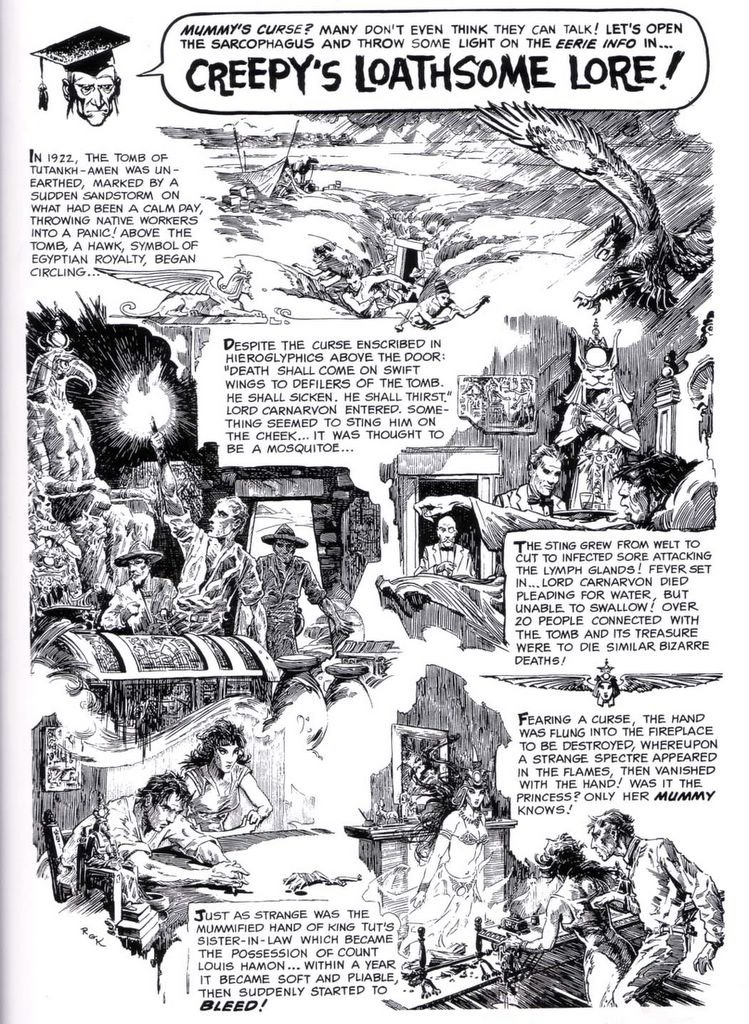
1922: The Tomb Of Tutankh


Art by Roy G. Krenkel. Creepy is © and™ Warren Publishing Company. CLICK IMAGE TO ENLARGE.

Coming soon is a NEW installment of the ‘Paleo-Path featuring an appreciation of legendary fantasy artist, Roy. G. Krenkel, by his close friend, William Stout.

Although the above illustration is not typical of Krenkel’s work (& not directly palaeo in nature), it does feature a fun take on an archaeological dig -- and I had meant to feature it last week on Halloween.

Friday, November 04, 2005

There Goes The Neighbourhood


Cartoon © Sidney Harris

From the University of Chicago press release:

In a major new development in human evolutionary studies, researchers from the University of Cambridge argue that the dispersal of modern humans from Africa to South Asia may have occurred as recently as 70,000 years ago. "Paleoanthropological projects must now be launched in South Asia if we hope to document the spread of our species and if we wish to explain how we became behaviorally modern," writes Michael Petraglia, author of a forthcoming article in Current Anthropology.

The expansion of modern humans into South Asia appears to be part of a complex--at times fatal--story. Once modern humans (Homo sapiens) arrived in regions like India, the researchers argue that they would have met indigenous archaic hominids (such as Homo heidelbergensis). "While the precise explanations for the demise of the archaic populations is not yet obvious, it is abundantly clear that they were driven to extinction, likely owing to competition with modern humans over the long term," Petraglia said.

However, Petraglia and his graduate student Hannah James were not able to find any sign of a sudden "revolution" in modern human behaviour 50,000 years ago, an idea advocated by some researchers working in Africa and Europe. Instead, James said: "The archaeological evidence from South Asia indicates a diversity of behavioral responses in which explicitly symbolic artifacts were sometimes, but not always, produced."

Vatican Says Faithful Should Listen To Science

From Red Orbit comes this article:
A Vatican cardinal said Thursday (Nov. 3, 2005) that the faithful should listen to what secular modern science has to offer, warning that religion risks turning into "fundamentalism" if it ignores scientific reason.


Cardinal Paul Poupard, who heads the Pontifical Council for Culture, made the comments at a news conference on a Vatican project to help end the "mutual prejudice" between religion and science that has long bedeviled the Roman Catholic Church and is part of the evolution debate in the United States.

The Vatican project was inspired by Pope John Paul II's 1992 declaration that the church's 17th-century denunciation of Galileo was an error resulting from "tragic mutual incomprehension." Galileo was condemned for supporting Nicolaus Copernicus' discovery that the Earth revolved around the sun; church teaching at the time placed Earth at the center of the universe.

"The permanent lesson that the Galileo case represents pushes us to keep alive the dialogue between the various disciplines, and in particular between theology and the natural sciences, if we want to prevent similar episodes from repeating themselves in the future," Poupard said.


Poupard and others at the news conference were asked about the religion-science debate raging in the United States over evolution and "intelligent design." Intelligent design's supporters argue that natural selection, an element of evolutionary theory, cannot fully explain the origin of life or the emergence of highly complex life forms.

Monsignor Gianfranco Basti, director of the Vatican project STOQ, or Science, Theology and Ontological Quest, reaffirmed John Paul's 1996 statement that evolution was "more than just a hypothesis."

"A hypothesis asks whether something is true or false," he said. "(Evolution) is more than a hypothesis because there is proof."

Read the full article HERE. Galileo probe from HERE.

England's First Zoo

Although it's not quite 'palaeo' news, I thought this article at National Geographic News might be of interest, especially to friends like Dr. Kevin Seymour at the Royal Ontario Museum who works on all things related to the fossil history of felids:


Photograph courtesy Natural History Museum

In the 1930s researchers discovered this lion skull, which dates to the 13th century, in an old moat at the Tower of London, the former palace of English monarchs. Skulls from a leopard and a second lion were also found. New analysis of the animal remains are revealing secrets about England's first "zoo."