Thursday, June 09, 2005

Born This Day: William J. Arkell

June 9, 1904 - April 18, 1958.

From Today In Science History:

Arkell was an English paleontologist who was an authority on Jurassic ammonites and their environments. He wrote Jurassic Geology of the World (1956), which critically reviewed the information dispersed throughout the world's enormous literature on the world's Jurassic stratigraphy.

He made numerous contributions to knowledge of the Jurassic stratigraphy, and gradually stabilized many stratigraphically significant zonal assemblages. In 1946, his "Standard of the European Jurassic" advocated a commission formulate a code of rules for stratigraphical nomenclature. image

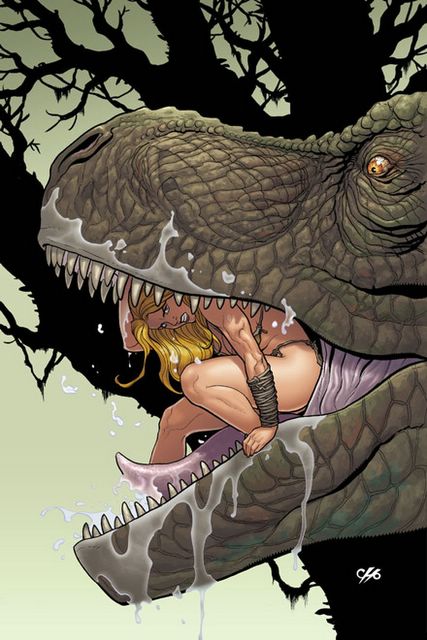
Frank Cho T.rex


Liberty Meadows © Frank Cho. (click image to enlarge)

I recently had a chance to get caught up with Frank Cho over a couple of fine meals. As usual, he has a number of cool projects on the go, some of which he's got information up about on his own site. Click HERE to go to Liberty Meadows.

Wednesday, June 08, 2005

Bissette Interview This Friday

The Palaeblog's "Kirby-vision" tells us the long awaited Steve Bissette interview will run this Friday! Tune in for the latest scoop on what 'Sturdy' Steve is up to!

Darwin's Descendants Carry On His Research

From an article on-line at BBC News:

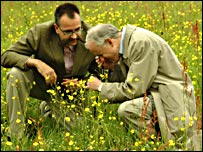
The descendants of Charles Darwin are retracing his footsteps by surveying wild flowers in the meadows around his former home at Down House, in Kent.

In June 1855, Darwin began a study of the local plants, which supported his theories on evolution and was mentioned in his book On the Origin of Species. Now, three generations of the Darwin family - aged from 21 months to 78 years - have begun a repeat survey. It should show how flowering plants have changed over the past 150 years.

The descendants are Erasmus Darwin (great grandson), Randal Keynes (great, great grandson), Sarah Darwin (great, great granddaughter), Chris Darwin (great, great grandson), Allegra Darwin (great, great, great, granddaughter) and Leo Darwin Vogel (great, great, great grandson).

They have been joined in the 2005 survey by scientists from the Natural History Museum and conservationists from English Heritage. It will record a range of flora, including cowslips, red clover, yarrow and yellow vetchling.

Read the rest of the story HERE. Image from HERE.

Dodo Extinction

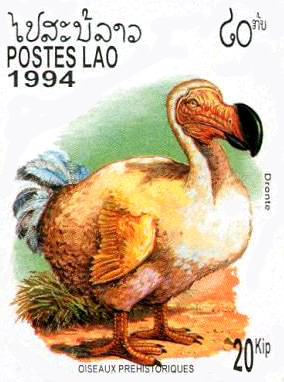
Discovery of isolated dodo bones [Raphus cucullatus (L.), Aves, Columbiformes] from Mauritius cave shelters highlights human predation, with a comment on the status of the family Raphidae Wetmore, 1930. Anwar Janoo. Annales de Paléontologie Volume 91, Issue 2: 167-180.


From the abstract:

The discovery of isolated dodo bones, Raphus cucullatus (L.) in high perched shelters strongly suggests that the bird's extinction was intimately linked with human predation. The dodo was a lowland bird and could not have had access to high level cliffs. Previously, paleontological remains of the dodo had been collected in the lowlands of Mauritius, which is in agreement with its terrestrial habits. The presence of fugitive slaves and convicts from early 17th century Dutch period may have been responsible for the rapid elimination of the species. This probably represents the first concrete evidence of dodo predation to be associated with direct human activity. Alternatively other dodo bones were found in the lava tunnel system in northeast of the island and are relics due to natural death. The familial status of the raphids is no longer valid in view of recent morphological and molecular phylogenetic analyses, and consequently the genus Raphus is included in the family Columbidae.

Stamp from HERE.

Tuesday, June 07, 2005

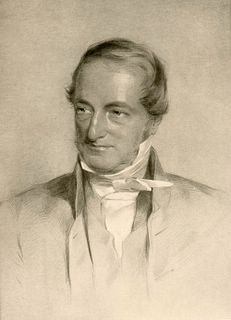
Born This Day: William Daniel Conybeare

June 7, 1787 - August 12, 1857.

From Today In Science History:

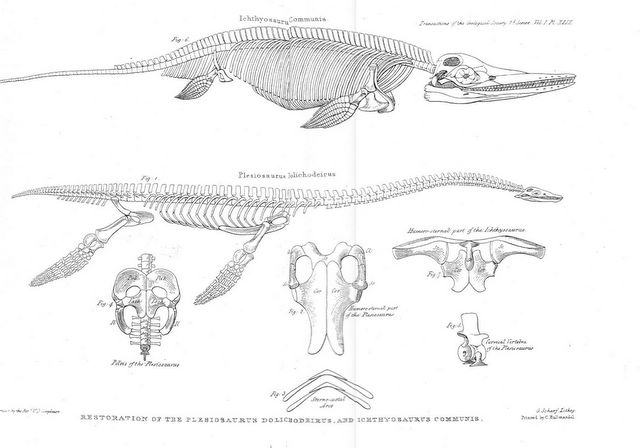
Conybeare was an English clergyman, geologist and paleontologist, known for his classic work, with co-author, William Phillips, on the stratigraphy of the Carboniferous (280-345 million years ago) System in England and Wales, Outline of the Geology of England and Wales (1822), one of the most influential textbooks on stratigraphy of the period. He also described and reconstructed saurian fossils from the Lyme Regis area of England. He wrote the first monograph on the ichthyosaur, drawing it as a lizard with paddle-like limbs. In 1821 he described the skeleton of the plesiosaurus. As a friend and collaborator of William Buckland, Conybeare was an influential member of the Oxford School of Geology.


Portrait from HERE. Plesiosaur plate from HERE.

Australian Megafauna Extinctions

Did climate shift kill giant Australian animals? 2005. Trueman C. N. G., Field J. H., Dortch J., Charles B. & Wroe S. Proc. Natl Acad. Sci. USA102. 8381 - 8385. (Published online: 30 May 2005; | doi:10.1038/news050523-11)


Bones suggest that early humans did not ruthlessly wipe out huge beasts.

From the article by Michael Hopkins at News@nature.com:

An Australian research group may ease humanity's collective conscience over a spate of prehistoric extinctions on the southern continent. The die-off, they say, was not the rapacious work of newly arrived humans, but was due rather to changing climate.

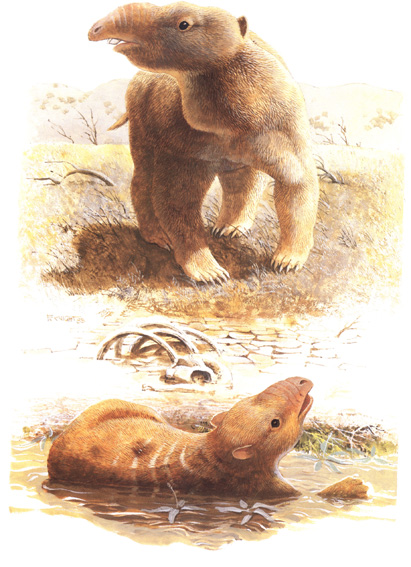
Australia's large prehistoric animals, called megafauna, were as bizarre as anything that lives there today. King of them all was the marsupial lion, a 130-kilogram meat-eater who lived alongside giant kangaroos, huge lizards called goannas, and Diprotodon (above), which resembled a three-tonne wombat.

After the arrival of humans on the continent, at least 45,000 years ago, these weird and wonderful creatures began to die out. Experts blamed the colonizers, arguing that they launched a hunting 'blitzkrieg' that wiped out the megafauna within a few generations.

But the animals may have survived for a lot longer than people thought, argues Judith Field of the University of Sydney, who has analysed fossil remains. Her excavations seem to show that man and beast lived side by side for as long as 15,000 years.

She suspects that as Australia approached the most recent ice age, the growing cold and aridity turned much of the continent into a place where these large animals simply could not survive. Although man probably did hunt the large animals, the fact that they survived for so long argues against the blitzkrieg model, she adds.

Read the full article HERE. Image from HERE.

Monday, June 06, 2005

On The Origin Of Phyla

Derek Briggs reviews the new book by James Valentine for the American Scientist:

"On the Origin of Phyla" is essentially about the Cambrian radiation, the event that gave rise to most of the major animal groups. The book's particular strength is its integration of data from paleontology and biology.

The concept of a phylum is not straightforward. A phylum has been characterized as a group of species that share a unique body plan or organization that reveals no evidence of relationship to other phyla. This definition may be relatively easy to apply to living animals but often proves problematic for extinct ones. Phyla originated hundreds of millions of years ago, and extinction has weeded out intermediate forms, leaving significant differences between the living phyla. There is no difficulty, for example, in distinguishing between an arthropod (say, a spider), an echinoderm (a starfish, for example) and a chordate (such as your department chairperson). Fossils, however, particularly those of the Paleozoic Era (from 543 to 251 million years ago), may be more difficult to deal with. Their morphology may be unfamiliar, and there is the problem that information on the soft tissues has usually been lost through decay and is not preserved.


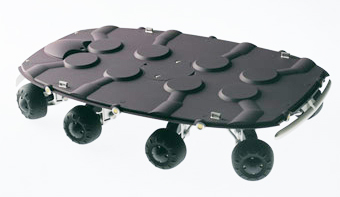
プロトタイプ Hallucigenia 0.1 from HERE.

Stephen Jay Gould's major treatment of the Cambrian radiation, Wonderful Life (1989), was based mainly on the famous fossils of the Burgess Shale. Gould considered many of the Burgess Shale animals to represent extinct phyla or body plans, and he argued that their large number was a measure of the impact of the Cambrian explosion. Just 15 years later, Valentine's book demonstrates that there has been a sea change in the focus on phyla, from considering them as a measure of separation to exploring relationships between them—something that is impossible to do, almost by definition, on the basis of morphological data, but has become a realistic goal in the age of molecular sequencing.

Fossils, however, remain central if we want to understand the early evolution of phyla, we need the evidence provided by fossils from the Neoproterozoic Era (from 1 billion to 543 million years ago) and the Cambrian Period.


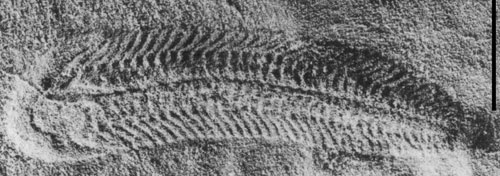
Spriggina from the Ediacaran beds of South Australia (scale bar, 1 cm).

Sunday, June 05, 2005

New Kong Poster


One of many new promo posters that have recently popped up on the web for the upcoming remake of "KK".

The Oceans of Kansas


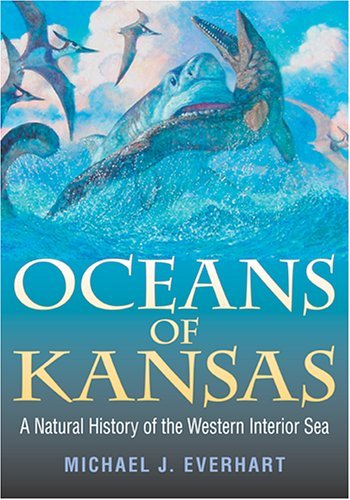
From The Wichita Eagle at Kansas.com come a nice article on Mike Everhart whose new book, “Oceans of Kansas: A Natural History of the Western Interior Sea," is out now.

Read the article HERE.

Also check out his site, www.oceansofkansas.com.


Image from HERE

Ancient Cave Bear DNA Sequenced

Genomic Sequencing of Pleistocene Cave Bears. Noonan et al. Science 2005 0: 11134851.


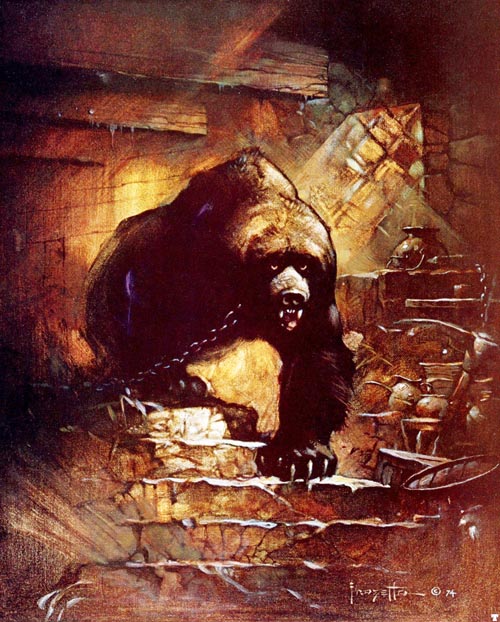
Art © Frank Frazetta (probably not a cave bear).

From an article by Jeff Hecht at New Scientist.com:

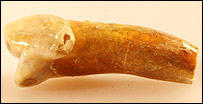
Two cave bears which died in Austria more than 40,000 years ago have had their nuclear DNA sequenced. The technique used to recover sequences from a tooth and a bone has more than doubled the record for the age of successfully recovered nuclear DNA - and Neanderthals could be next.

Recovering genetic material from ancient remains is fraught with difficulty because DNA degrades rapidly and is easily contaminated with external DNA, for example, by people handling the fossil. Most successful studies have focused on the more abundant mitochondrial DNA, but it is much less informative. In exceptional cases it has been possible to extract nuclear DNA from less than 20,000 years ago, preserved in permafrost or desert environments.

Now Eddy Rubin at the US Department of Energy's Joint Genome Institute in Walnut Creek, California, and his team have turned to computers for help. They sequenced everything in the sample, including contaminating DNA, then used a computer to pick out sequences averaging 70 base pairs which matched parts of the dog genome.

They chose the dog because it is the closest relative of bears whose genome has been fully sequenced. They recovered nearly 27,000 base pairs of nuclear DNA from the cave bears, which became extinct about 15,000 years ago. "It is a significant advance to show that so much nuclear DNA is actually being preserved," says Beth Shapiro who studies ancient DNA extraction at Oxford University, UK.

"This is very much a proof of principle,” says Rubin, “We're not interested in cave bears; we're interested in Neanderthals.” Excluding contamination with Neanderthal samples will be much harder though.

Read the original article HERE.

Photos © Joint Genome Institute from HERE.

Barney Bubbles


Photo by Barney Bubbles from HERE.

Once again I bend the rules of the blog to my own personal ends. If anyone has any significant info on the brilliant, late graphic designer, Barney Bubbles, please drop me a line.

Saturday, June 04, 2005

Liquid Water on Early Earth

Zircon Thermometer Reveals Minimum Melting Conditions on Earliest Earth. 2005. E. B. Watson and T. M. Harrison. Science 308: 841-844.


From Red Nova News:

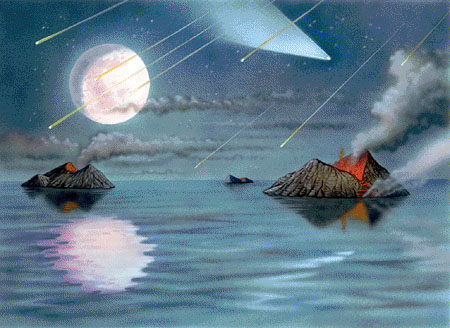
Research funded partly by NASA has confirmed the existence of liquid water on the Earth's surface more than 4 billion years ago.
Scientists have found that the Earth had formed patterns of crust formation, erosion and sediment recycling as early as 4.35 billion years ago. Their findings came during a study of zircon crystals formed during the earliest period of Earth's history, the Hadean Eon (4.5 billion to 4.0 billion years ago).

"NASA is interested in how early the Earth had abundant liquid water. If oceans form early in a planet's history, then so can life," said Carl Pilcher, senior scientist for astrobiology at NASA Headquarters, Washington. "Learning how early oceans formed on Earth will help us understand where else oceans and perhaps even life may have formed in this solar system and in planetary systems around other stars."

"This work provides direct evidence that the Earth was probably habitable within a hundred million years of its formation," said Bruce Runnegar, director of the NASA Astrobiology Institute (NAI) at NASA Ames Research Center, Moffett Field, Calif., which provided some of the study's funding.

Read the rest of the story HERE. Image from HERE.

Valley of Gwangi at CMNH


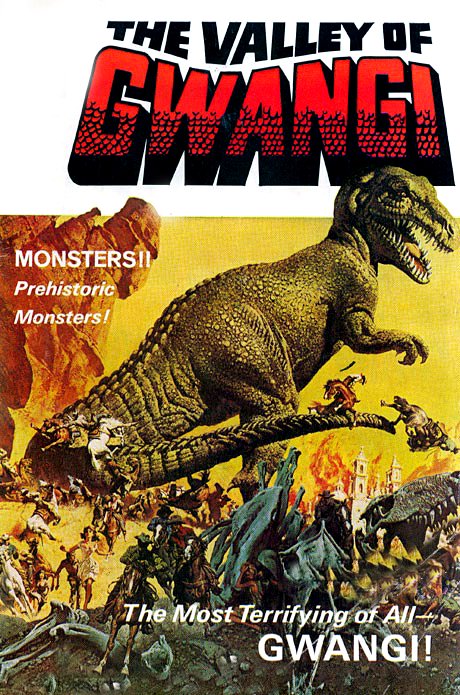
Throughout the summer the Cleveland Museum of Natural History will be hosting a variety of evening activities every Wednesday. Of particular interest to readers of this blog will be June 8, July 20, and August 24 when the CMNH will be hosting “Dino-Mite Movie Nights”. We kick off next Wednesday with Academy Award winner Ray Harryhausen’s classic film, “The Valley of Gwangi”, which features some of Ray’s best stop-motion animation dinosaurs.

On July 20th, we’ll be featuring another great Harryhausen film, “One Million Years, B.C.” This, too, has some great dinosaurs but it is probably best known as the film that pushed Raquel Welch’s career into high gear. Of course her fur bikini probably helped too.

Finally, on August 24th we’re showing the palaeoblogger’s all-time favourite film, the original 1933 “King Kong”!! Thrill to the dinosaurs of Skull Island and witness the genius of stop-motion animator, Willis O’Brien, who not only brought Kong to life, but actually gave the puppet a human soul. Time magazine recently listed “King Kong” as one of the top 100 best films ever made. They noted that the best special effect ever done was the look in Kong’s eye’s at the end of the film when he’s bloody and weak from the airplane attacks and he realizes that he’s lost Ann Darrow (Fay Wray).
Join Dr. Michael Ryan as he hosts “The Valley of Gwangi” next Wednesday evening at the CMNH.


All films are free with admission to the Museum. For more details please visit the Museum’s web site at Cleveland Museum of Natural History.

Friday, June 03, 2005

Where's Steve?

Steve Bissette is busy finishing up his part of the next "Paleo-Path" entry which will be posted as soon as he gets it to me - maybe even today. This installment will be an overview of Steve's work on "Tyrant®", the comic book tracing the life history of a Tyrannosaurus rex. Here's a teaser:


Art © S.R. Bissette. "S.R. Bissette's Tyrant" is © & ® S. R. Bissette.

Thanks to the Digital Dream Machine Blog for the great scans!
Go check out thier affliated Alberta Movie Guide Blog HERE
.

Born This Day: James Hutton

June 3, 1726 - March 26, 1797.

Hutton is considered to be the father of modern geology. He is accredited with proposing that observed geologic processes have been occurring at a uniform rate since the creation of earth, also know as the theory of unconformities. This led to his controversial suggestion that the earth is incredibly old.

Hutton began to notice geologic processes on his land in the 1750’s by following his soil during rainstorms when it would erode into the sea. He also noticed how long the process took and began to apply this idea to other parts of geology. If it took this long for some soil to move a few miles than how long did it take to form the cliffs by the sea? He also took note of other features in the landscape such as angular unconformities. A breakthrough point occurred for Hutton when he found Siccar’s Point. This site shows the build up of sediment over a long period of time as well as other geologic processes. It was this idea of continuous processes that fascinated Hutton for the rest of his life.

Hutton subsequently moved back to Edinburgh, and became very involved with the Royal Society of Edinburgh. In 1785 he had his friend Joseph Black read his lecture on his theories of earth. This was the first time that his full theory had been made public. He was met with much anger and rejection. Even though we take his ideas for granted today, at the time he was presenting this the oldest proposed age of earth was around six thousand years, as laid forth by the church. While he was able to convince a few by showing them prime field examples such as Glen Tilt and Siccar’s Point, for many it remained too radical an idea to consider.

Text modified from HERE. Image from HERE.

Thursday, June 02, 2005

Evolution Conference Starts Next Week In Fairbanks


Evolution 2005 is a jointly sponsored conference of the Society for the Study of Evolution, the Society of Systematic Biologists, and the American Society of Naturalists. The conference will be held June 10-14, 2005 at the University of Alaska Fairbanks and is hosted by the Institute of Arctic Biology and the University of Alaska Museum of the North.

For more info click HERE, where the image is also from.

Pregnant T.rex

Gender-specific Reproductive Tissue in Ratites and Tyrannosaurus Rex. Mary H. Schweitzer and Jennifer L. Wittmeyer, and John R. Horner. 2005. Science 308: 1456-1460.
Unambiguous indicators of gender in dinosaurs are usually lost during fossilization along with other aspects of soft tissue anatomy. We report the presence of endosteally derived bone tissues lining the interior marrow cavities of portions of Tyrannosaurus rex (MOR 1125) hindlimb elements, and hypothesize that these tissues are homologous to specialized avian tissues known as medullary bone. Because medullary bone is unique to female birds, its discovery in extinct dinosaurs solidifies the link between dinosaurs and birds, suggests similar reproductive strategies, and provides an objective means of gender differentiation in dinosaurs.
From the North Carolina State University press release:
Paleontologists at North Carolina State University have determined that a 68 million year-old Tyrannosaurus Rex fossil from Montana is that of a young female, and that she was producing eggs when she died.


Art © Frank Cho. Shanna © Marvel Comics.
In a case of a literal “lucky break,” the scientists discovered unusual bone tissue lining the hollow cavity of the T. rex’s broken leg bone. Schweitzer believes that the unusual tissue inside the T. rex bone is actually medullary bone: a thin layer of highly vascular bone that is found in present-day female birds only during ovulation. This estrogen-linked reproductive bone tissue is laid down inside the hollow leg bones of the birds and persists until the last egg is laid, at which time it is completely resorbed into the bird’s body. Its formation is triggered by an increase in estrogen levels, and the temporary tissue provides the calcium necessary to form eggshells. Medullary bone is only found in present-day female birds; no other egg-laying species – including crocodiles, the other living dinosaur relative – produces this tissue naturally.

Because the dinosaur tissues didn’t look exactly like pictures published of medullary bone in living birds like chicken and quail, Schweitzer’s team compared the tissue from the femur of the T. rex to that taken from leg bones of more primitive ratites, or flightless birds, such as ostriches and emus. These birds share more features with dinosaurs than other present-day birds. They selected an ostrich and an emu in different stages of their laying cycles, when medullary bone is present.

“The discovery of medullary bone in the T. rex is important because it allows us to objectively sex a dinosaur,” says Schweitzer. “It also adds to the robust support linking birds and dinosaurs and shows that their reproductive physiologies may have been similar. Hopefully we’ll be able to identify features within dinosaurs that will help us determine the gender of our other fossils, and lead to more information about their herd structure or family groups.”

Read the complete press release HERE.

More Sauropods From Utah

Yet another of the palaeoblogger's former fellow grad students from the Royal Tyrrell Museum, Dr. Brooks Britt, makes the news in this article from the Deseret Morning News:

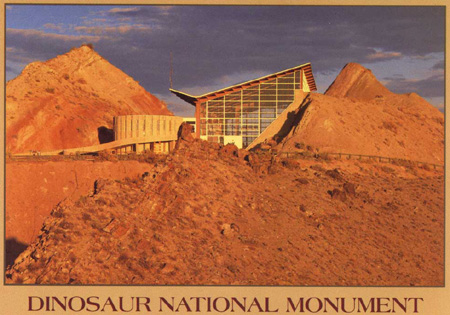
The first known North American skulls of Cretaceous era sauropods found in recent years have been uncovered by Brigham Young University and Dinosaur National Monument researchers. About a dozen sauropod skulls are known from the earlier Jurassic era, but these are the first in North America for the Cretaceous, the final 80 million years of the dinosaur period. The four Cretaceous sauropod skulls or parts of skulls, all believed to be from a new type, were found close to each other at the monument, which straddles the Utah-Colorado border.


The new sauropod, which has not yet been formally named, may have been 25 feet long with an 18-inch skull. In comparison, Apatosaurus could exceed 80 feet in length. Brooks Britt, assistant professor of geology at BYU, said, ''Sauropod skulls are among the rarest of dinosaur finds because they have the thinnest bones, the most delicate skulls.''

In the 1970s, visiting paleontologists discovered the site where the sauropod skulls were later uncovered, which is on the Utah side of the monument in the general vicinity of the visitors center. About a year and a half ago, crews dug out a giant slab of sandstone from the quarry, because they could see traces of fossilized bones in the rock. It was taken to the visitors center, and then last year was transported to BYU in Provo.

Britt's team extracted sauropod body bones and the disarticulated second skull. They also found the snout of a third sauropod of the same species, and at the quarry, scientists recovered the brain case of a fourth.

Image from HERE.

New Short-Necked Sauropod From Patagonia

Discovery of a short-necked sauropod dinosaur from the Late Jurassic period of Patagonia. Oliver W. M. Rauhut, Kristian Remes, Regina Fechner, Gerardo Cladera and Pablo Puerta. 2005. Nature 435: 670-672.
Sauropod dinosaurs are one of the most conspicuous groups of Mesozoic terrestrial vertebrates. They show general trends towards an overall increase in size and elongation of the neck, by means of considerable elongation of the length of individual vertebrae and a cervical vertebra count that, in some cases, increases to 19. The long neck is a particular hallmark of sauropod dinosaurs and is usually regarded as a key feeding adaptation. Here we describe a new dicraeosaurid sauropod, from the latest Jurassic period of Patagonia, that has a particularly short neck. With a neck that is about 40% shorter than in other known dicraeosaurs, this taxon demonstrates a trend opposite to that seen in most sauropods and indicates that the ecology of dicraeosaurids might have differed considerably from that of other sauropods. The new taxon indicates that there was a rapid radiation and dispersal of dicraeosaurids in the Late Jurassic of the Southern Hemisphere, after the separation of Gondwana from the northern continents by the late Middle Jurassic.
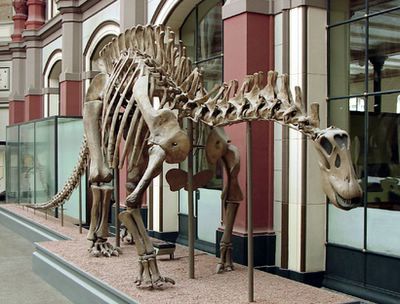
Photo of Dicraeosaurus from HERE.

From News@nature.com:

A fossil has recently been discovered of this short-necked dinosaur that lived in Patagonia, Argentina, about 150 million years ago, during the Late Jurassic period. Brachytrachelopan mesa is a member of the sauropod group of dinosaurs, which includes the 30-metre-long giant Diplodocus.

Sauropods typically had long necks, which is thought to have allowed them to reach high into trees to maximize their food intake. But the fossil of B. mesai shows that it measured less than 10 metres, even after reaching adulthood

A long neck is an unnecessary and energetically expensive asset for a creature if food is readily available on the ground, and this could explain the existence of B. mesai, says Oliver Rauhut of the Bavarian State Collection for Palaeontology and Geology in Munich, Germany. "Nature tends to eliminate structures that are not needed for that reason," he explains.

Paul Barrett, a palaeontologist at the Natural History Museum in London, points out that Patagonia lacked bird-footed dinosaurs called ornithopods, which grazed the Jurassic plains of other continents. This means that B. mesai might have faced little competition for resources.

This particular fossil also provides exciting clues about the evolution of sauropods, the team says. The short-necked dinosaur's closest relative comes from Africa. Brachytrachelopan mesai bears less similarity to more recently evolved sauropods in South America, and even weaker resemblance to those in Northern continents.

All of this hints that it evolved swiftly in the middle Jurassic period, after the separation of continents of the Southern and Northern Hemispheres but before Africa and South America fully broke apart. "It looks like this is a dinosaur that's trying to reinvent itself," says Barrett. "This fossil is telling us a lot about how these ecosystems evolved."
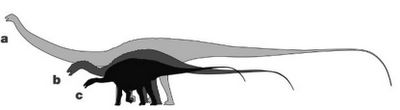

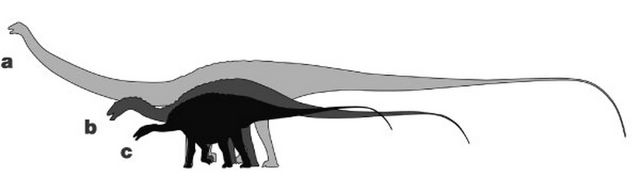
Illustration © Nature 2005

a, Diplodocid Diplodocus carnegii (Upper Jurassic Morrison Formation, USA); b, dicraeosaurid Dicraeosaurus hansemanni (Upper Jurassic Tendaguru Beds, Tanzania); c, dicraeosaurid Brachytrachelopan mesai (Upper Jurassic Cañadón Cálcareo Formation, Argentina).